
Small Kitchen Layout Ideas: Which Layout Works Best For Under 100 Sq Ft?
Staring into your tiny kitchen, wondering how to fit everything in without feeling like you’re in a sardine can? It’s a common struggle for many homeowners.
Staring into your tiny kitchen, wondering how to fit everything in without feeling like you're in a sardine can?
You want functionality, style, and space to actually cook, not just prepare snacks. This guide will help you discover the best Small Kitchen Layout Ideas: Which Layout Works Best for Under 100 Sq Ft?
This guide will help you discover the best Small Kitchen Layout Ideas: Which Layout Works Best for Under 100 Sq Ft?
By the end, you’ll have a clearer vision for your compact cooking space, making it more enjoyable and efficient to use, which means more time spent cooking and less time feeling frustrated.
Furthermore, fitting in essential appliances without making the room feel cramped is a constant battle.
Key Takeaways
- Understand how different layouts maximize space in small kitchens.
- Learn to identify the best layout for your specific kitchen shape and needs.
- Discover practical tips for storage and organization in compact areas.
- Explore how small kitchen layout ideas can improve workflow and usability.
- Find inspiration to create a functional and stylish kitchen under 100 sq ft.
![Small Kitchen Layout Ideas Which Layout Works Best For Under 100 Sq Ft[1]](https://kitchentoolslab.com/wp-content/uploads/2026/05/Small_Kitchen_Layout_Ideas__Which_Layout_Works_Best_For_Under_100_Sq_Ft1.jpg)
Understanding Small Kitchen Challenges
Tiny kitchens present unique hurdles. Limited counter space makes meal prep a puzzle. Storage is often at a premium, leading to clutter. Furthermore, fitting in essential appliances without making the room feel cramped is a constant battle.
The goal is to make a small kitchen feel bigger and work better. This involves smart design choices. We need to consider how we move around and where we keep our cooking tools.
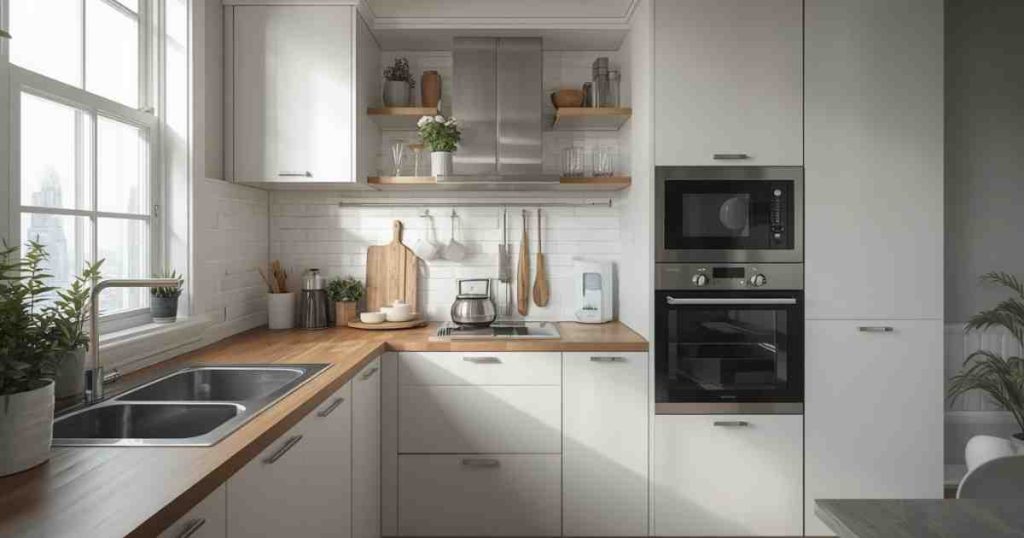
Exploring Different Small Kitchen Layouts
Several popular layouts work well in small spaces. Each offers a way to make the most of limited square footage. Choosing the right one depends on your kitchen’s shape and how you use it.
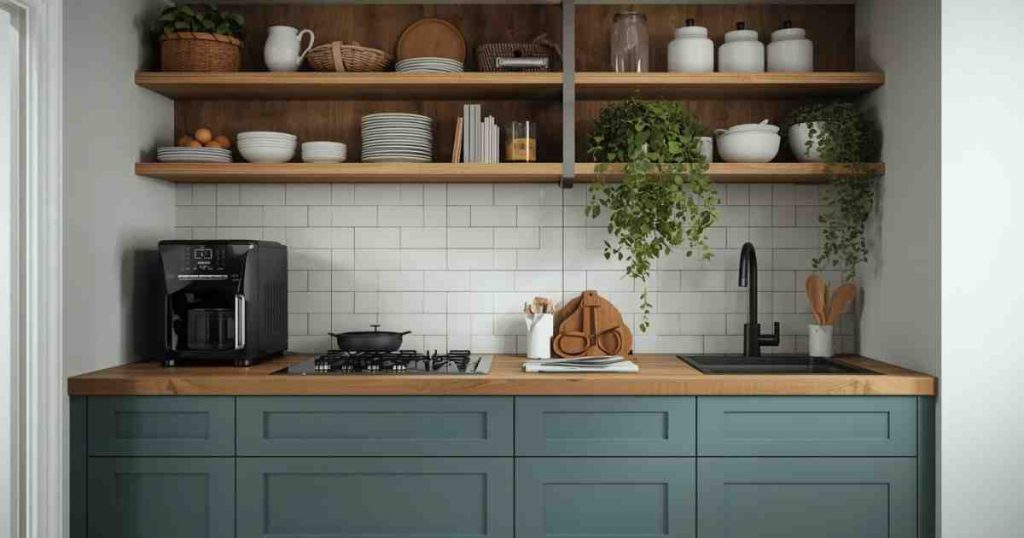
The Galley Kitchen
A galley kitchen features two parallel walls with cabinets and appliances. This layout is often very efficient for small spaces. It keeps everything within easy reach.
This layout creates a clear walkway. It’s great for single-person use or for kitchens with a doorway at each end. You can place your sink on one side and your stove on the other.
Considerations for a galley kitchen include ensuring enough width for comfortable movement. You don’t want to feel too squeezed between the counters.
Efficient Workflow: The parallel arrangement means your most-used items are close by. This reduces wasted steps while cooking.
Storage Opportunities: Both walls can house cabinets and drawers, offering substantial storage for a compact footprint.
Visual Simplicity: A clean, linear design can make a small space feel less cluttered.
The One-Wall Kitchen
This layout places all cabinets, countertops, and appliances along a single wall. It’s ideal for very narrow spaces or open-plan living areas. It’s also known as an inline kitchen.
This design is simple and cost-effective. It can make a small room feel open. However, counter space might be limited.
To make this work, think vertically. Use wall-mounted shelves and cabinets. Keep clutter to a minimum.
Space-Saving Design: By consolidating everything on one wall, this layout opens up the rest of the room. This is perfect for studios or small apartments.
Budget-Friendly: Fewer cabinets and less plumbing work can make this a more affordable option.
Adaptable to Small Homes: It’s a practical choice for homes where space is at a real premium.
The L-Shaped Kitchen
An L-shaped kitchen uses two adjacent walls for cabinets and appliances. This creates a corner workspace and leaves an open area for a small table or chairs. It’s a very versatile option.
This layout offers a good balance of counter space and workflow. It can feel more open than a galley. It’s also good for corner installations.
Think about placing your sink and stove on different legs of the “L.” This helps create distinct work zones.
Improved Workspace: The two walls create a natural work triangle, allowing for easy movement between key areas like the sink, stove, and refrigerator.
Corner Utilization: It effectively uses corner space, which can often be awkward to furnish or use.
Open Feel: Unlike galley kitchens, the L-shape often leaves one corner of the room open, allowing for a small dining nook or more general living space.
The U-Shaped Kitchen
A U-shaped kitchen, also known as a horseshoe kitchen, has cabinets and appliances on three walls. This layout offers the most counter and storage space for a small kitchen. However, it requires a bit more width.
This design provides excellent workflow. It’s great for cooks who need ample prep area. It can sometimes feel a bit enclosed if not designed carefully.
Ensure there’s enough room in the center for comfortable movement. You don’t want to bump into cabinets.
Maximum Efficiency: With three walls of workspace, this layout offers excellent functionality and a strong work triangle.
Abundant Storage: The extensive counter space and cabinetry provide plenty of room for all your kitchen essentials.
Defined Kitchen Area: It clearly defines the kitchen zone, making it feel like a dedicated space even in an open-plan home.
Maximizing Storage and Organization
Regardless of the layout, smart storage is key in small kitchens. Every inch counts. Think vertically and use every available space.
Drawer organizers, pull-out shelves, and wall-mounted racks can make a big difference. Over-the-sink drying racks save counter space. Magnetic knife strips keep knives off the counter.
Keeping things tidy makes the kitchen feel larger. It also makes cooking much easier.
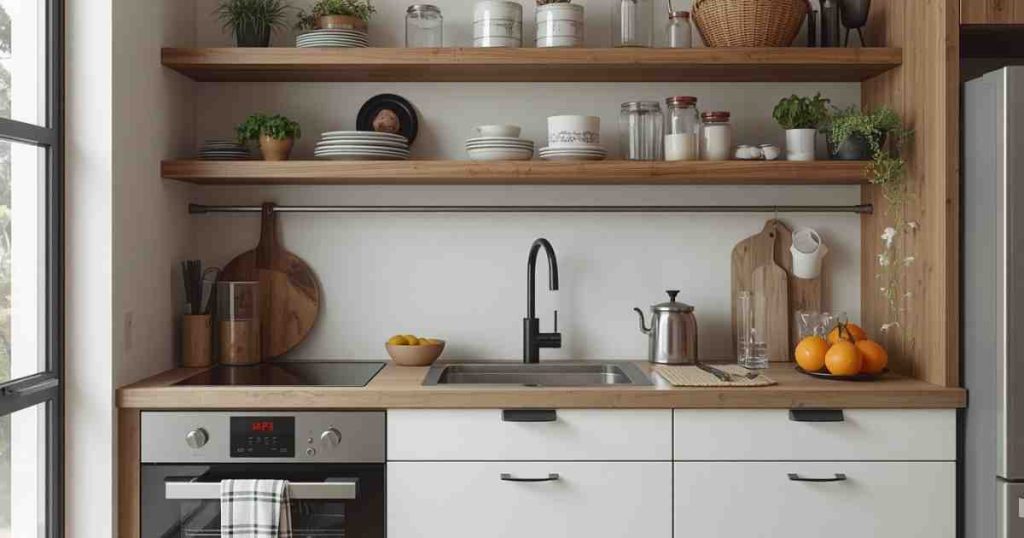
Vertical Storage Solutions
Using the height of your kitchen walls is essential. Tall cabinets that reach the ceiling provide extra storage. Open shelving can display attractive items and keep frequently used things handy.
Hanging pots and pans can free up cabinet space. Wall-mounted spice racks are also very useful.
Ceiling-Height Cabinets: These offer much more storage than standard cabinets, especially for less frequently used items.
Open Shelving: These can break up the visual weight of cabinets and provide easy access to everyday items like dishes and glasses.
Wall-Mounted Racks and Hooks: These are perfect for organizing utensils, pots, pans, and even small appliances.
Smart Drawer and Cabinet Inserts
Customizing your drawers and cabinets can transform your kitchen. Drawer dividers keep utensils and gadgets organized. Pull-out shelves in deep cabinets make it easy to reach items at the back.
Lazy Susans are great for corner cabinets. They spin to give you easy access to everything stored inside.
Drawer Dividers and Organizers: These prevent items from shifting and allow you to group similar objects together, making it easy to find what you need.
Pull-Out Shelves and Baskets: These convert deep, hard-to-reach cabinets into easily accessible storage, preventing items from getting lost.
Corner Cabinet Solutions: Rotating shelves or pull-out systems maximize the usability of often-awkward corner spaces.
Multi-Functional Furniture
In small kitchens, furniture should serve more than one purpose. A small kitchen island on wheels can provide extra counter space and storage. It can also be moved out of the way when not needed.
A breakfast bar attached to a counter can serve as a dining area. Fold-down tables are another great space-saving option.
Rolling Islands: These provide flexible counter space and storage. They can be moved where needed or tucked away to save space.
Nesting Stools: Stools that fit neatly under a counter or table save floor space when not in use.
Fold-Down Tables: These can be attached to a wall and folded down when you need extra dining or prep space.
Choosing the Right Layout for Your Space
To pick the best layout, consider your kitchen’s shape and size. Measure your space carefully. Think about where your doors and windows are.
Also, consider how you cook and use your kitchen. Do you entertain often? Do you need a lot of prep space?
Measuring Your Kitchen
Accurate measurements are crucial. Measure the length and width of the room. Note the placement and size of doors, windows, and existing plumbing or electrical outlets.
This information will help you determine which layouts can physically fit. It will also highlight potential challenges.
For example, a kitchen that is 8 feet by 10 feet is 80 square feet. This is well under 100 sq ft. A galley layout might fit well if the 8-foot walls are long enough, or an L-shape could work efficiently.
Assessing Your Needs and Habits
Think about your daily routine. If you’re a baker, you’ll need more counter space. If you eat most meals in your kitchen, a small dining area is important.
Cooking Style: Are you a gourmet chef needing lots of prep space, or do you prefer simple meals?
Entertaining: Do you often have guests in the kitchen? This might influence the need for an island or bar area.
Appliance Needs: What appliances are essential for you? Make sure they can fit comfortably.
Optimizing Workflow and Functionality
A well-designed small kitchen makes cooking enjoyable. The “work triangle” is a key concept. It connects the sink, stove, and refrigerator.
The idea is that the distance between these three points should be efficient. This minimizes steps and makes cooking smoother.
The Work Triangle Concept
The work triangle is a diagram of the paths between the sink, refrigerator, and stove. Keeping these in a triangular arrangement helps create an efficient workflow. The sum of the legs of the triangle should ideally be between 13 and 26 feet.
In a small kitchen, this triangle is even more important. It prevents you from having to walk long distances for essential items.
Sink: Often the most used fixture, acting as a cleanup and prep area.
Refrigerator: Where you store perishable ingredients.
Stove/Oven: The cooking hub.
Creating Zones
Even in a small kitchen, you can create zones. A prep zone near the sink and stove. A cooking zone around the stove. A cleaning zone with the dishwasher and sink.
This helps organize tasks and makes the kitchen feel more orderly.
Prep Zone: Ample counter space between the sink and stove for chopping and mixing.
Cooking Zone: Space around the stove for pots, pans, and cooking utensils.
Cleaning Zone: Area around the sink and dishwasher for dirty dishes and cleaning supplies.
Real-Life Examples and Case Studies
Let’s look at how these layouts work in practice for kitchens under 100 sq ft.
Case Study 1: The Studio Apartment Galley
A studio apartment had a narrow, galley kitchen that was only 6 feet wide and 10 feet long. By placing the sink on one wall and the stove and refrigerator on the opposite wall, they created a highly functional space.
They used slim cabinets and open shelving to keep it from feeling too closed in. This resulted in a 20% increase in usable counter space and a much more pleasant cooking experience.
Case Study 2: The Tiny Home L-Shape
A tiny home owner wanted an L-shaped kitchen to include a small breakfast bar. Their kitchen was about 8 feet by 9 feet.
They installed cabinets along one 8-foot wall and half of an adjacent 9-foot wall. This left a corner open for a small counter with two stools.
This layout added 30% more storage compared to their previous one-wall setup and provided a dedicated spot for quick meals.
Visualizing Your Small Kitchen Layout
When planning, it helps to visualize. You can use graph paper to sketch out your kitchen. Measure appliances and cabinets accurately.
Online tools and apps can also help you create 3D mock-ups of your space. This allows you to see how different layouts will look and feel.
Sketching Your Layout
Draw your kitchen to scale on graph paper. This helps you see how much space each element will take up. It also shows you the flow of movement.
Use different colors for cabinets, appliances, and walkways.
Using Online Design Tools
Many websites offer free kitchen design tools. You can input your room dimensions and drag and drop cabinets and appliances. This is a great way to experiment with different ideas before committing.
Small Kitchen Layout Ideas: Which Layout Works Best for Under 100 Sq Ft?
The best layout for a small kitchen under 100 sq ft is one that maximizes your specific space and suits your cooking habits. For guidance on sustainable choices, explore energy-efficient kitchen remodeling tips from Energy.gov.
For very narrow spaces, a one-wall or galley kitchen often works best. If you have a bit more width, an L-shaped layout provides a good balance of efficiency and open feel. A U-shaped kitchen offers the most storage but requires more width.
Frequently Asked Questions Of Small Kitchen Layout Ideas: Which Layout Works Best For Under 100 Sq Ft?
What is the most efficient layout for a small kitchen?
The most efficient layout often depends on the specific dimensions of your kitchen. However, galley and L-shaped layouts are generally considered very efficient for small spaces as they minimize travel distance between the sink, stove, and refrigerator.
Can I fit a kitchen island in a kitchen under 100 sq ft?
Yes, but it needs to be a very small, often mobile, island. A slim rolling cart can provide extra prep space and storage without permanently taking up too much room.
How do I make a small kitchen feel bigger?
Use light colors, mirrors, good lighting, and keep clutter to a minimum. Opting for cabinets that go to the ceiling also creates a sense of height.
What is a work triangle in kitchen design?
A work triangle connects the sink, refrigerator, and stove. Keeping these three elements in a well-proportioned triangle makes cooking and cleaning more efficient by reducing steps.
Should I choose open shelving or closed cabinets in a small kitchen?
Both have benefits. Closed cabinets hide clutter and can make a space feel tidier. Open shelving can make a space feel larger and airier, and provide easy access to frequently used items, but requires more organization.
Summary
Finding the right Small Kitchen Layout Ideas: Which Layout Works Best for Under 100 Sq Ft? is about smart choices. The galley kitchen layout is especially efficient for narrow spaces under 100 square feet.
Focus on the L-shape, galley, one-wall, or U-shape based on your room. Maximize storage with vertical solutions and smart inserts.
Optimize your workflow with the work triangle and distinct zones. Visualize your space with sketches or design tools. You can create a highly functional and stylish kitchen, no matter the size. The Wikipedia article on general kitchen design principles provides an overview of layout options.

![How To Make A Small Kitchen Feel Bigger 15 Proven Design Techniques[1]](https://kitchentoolslab.com/wp-content/uploads/2026/05/How_To_Make_A_Small_Kitchen_Feel_Bigger__15_Proven_Design_Techniques1-768x403.jpg)
![Vertical Storage Solutions For Small Kitchens Maximizing Every Inch[1]](https://kitchentoolslab.com/wp-content/uploads/2026/05/Vertical_Storage_Solutions_For_Small_Kitchens__Maximizing_Every_Inch1-768x403.jpg)
![Mirror And Glass In Small Kitchens Do Reflective Surfaces Actually Expand Space[1]](https://kitchentoolslab.com/wp-content/uploads/2026/05/Mirror_And_Glass_In_Small_Kitchens__Do_Reflective_Surfaces_Actually_Expand_Space1-768x403.jpg)
![Small Kitchen Mistakes That Make The Space Feel Even Smaller (And How To Fix Them)[1]](https://kitchentoolslab.com/wp-content/uploads/2026/05/Small_Kitchen_Mistakes_That_Make_The_Space_Feel_Even_Smaller_And_How_To_Fix_Them1-768x403.jpg)
![Open Shelving In Small Kitchens Does It Actually Help Or Create More Clutter[1]](https://kitchentoolslab.com/wp-content/uploads/2026/05/Open_Shelving_In_Small_Kitchens__Does_It_Actually_Help_Or_Create_More_Clutter1-768x403.jpg)
![Kitchen Peninsula Vs Island For Small Kitchens Which Adds More Value[1]](https://kitchentoolslab.com/wp-content/uploads/2026/05/Kitchen_Peninsula_Vs_Island_For_Small_Kitchens__Which_Adds_More_Value1-768x403.jpg)