Cleaning Baked-On Cheese Off a Pizza Oven Stone Surface
The safest and most effective way to clean baked-on cheese from a pizza oven stone is to use a paste of baking soda and water for light to moderate stains or hydrogen peroxide for deeper grease and discoloration. Physical scraping with a plastic or razor scraper quickly removes thick layers of burnt cheese without damaging the stone. Never use soap, as the porous stone absorbs it and can leave a bad taste; always dry the stone completely in a warm oven to prevent cracking.
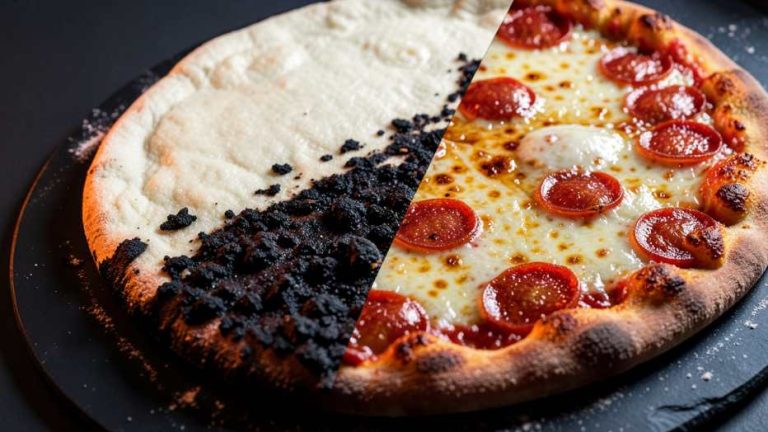
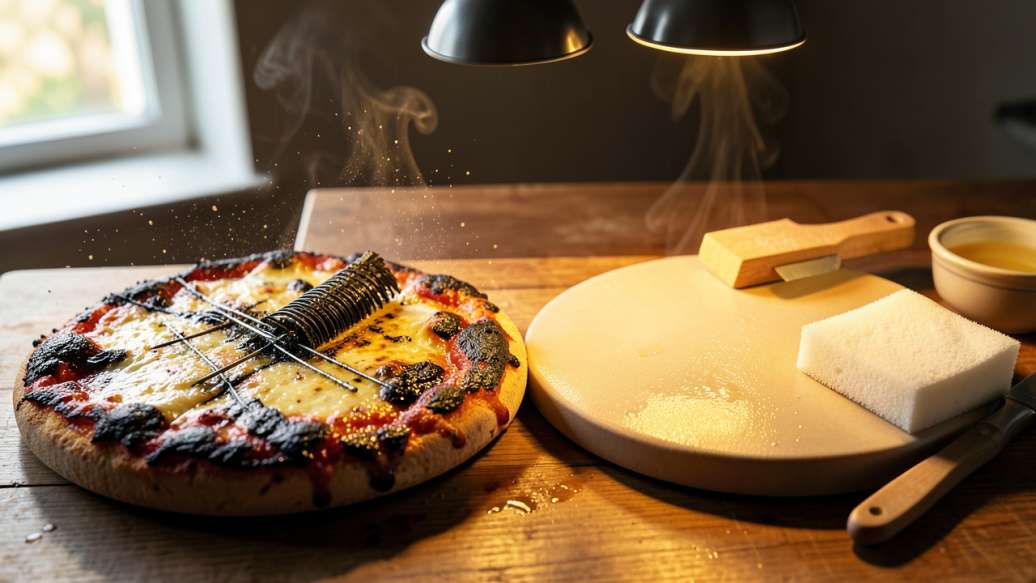
Cleaning baked-on cheese off a pizza oven stone surface is a challenge every home pizza maker faces. This guide explains the safest methods to remove burnt cheese without damaging your stone.
Simply put, the best way to clean baked-on cheese off a pizza stone is with a paste of baking soda and water or hydrogen peroxide. Avoid soap, as the stone absorbs it. Scrub with a non-abrasive tool, rinse thoroughly, and let the stone dry completely in a warm oven.
Key Takeaways
- Soap should never be used on a pizza stone because the porous material absorbs it and leaves a bad taste.
- A paste made from baking soda and water effectively lifts charred cheese without harsh chemicals.
- Hydrogen peroxide acts as a gentle bleaching agent for deep-set grease and stains.
- A razor scraper or stiff plastic scraper removes thick layers of baked cheese quickly and safely.
- Always dry your stone completely in a warm oven to prevent cracking and mold growth.
Why Can’t I Use Soap on My Pizza Stone?
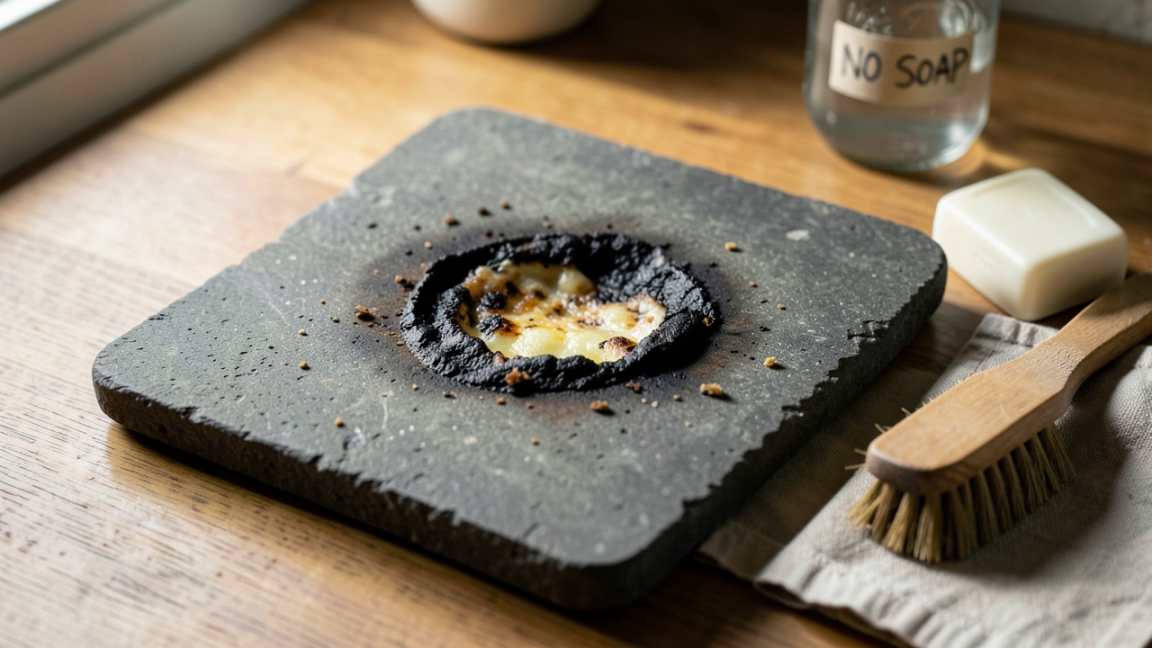
Many people ask this question after they see their stone looking greasy. The answer lies in the material. Most pizza stones are made from porous materials like cordierite, ceramic, or fire clay. According to, porous surfaces trap soap molecules deep inside their pores. Those molecules release slowly during the next few bakes. This leaves your pizza tasting like soap.
The same principle applies to other cleaning agents. Harsh chemicals like bleach or oven cleaner can soak into the stone. They can create toxic fumes when the stone hits high heat. The simple rule is this: if you would not drink it, do not put it on your stone.
Warning: Never put soap, detergent, or chemical oven cleaners on your pizza stone. They will ruin the taste of your food and may release harmful fumes.
What You Need to Clean a Pizza Stone
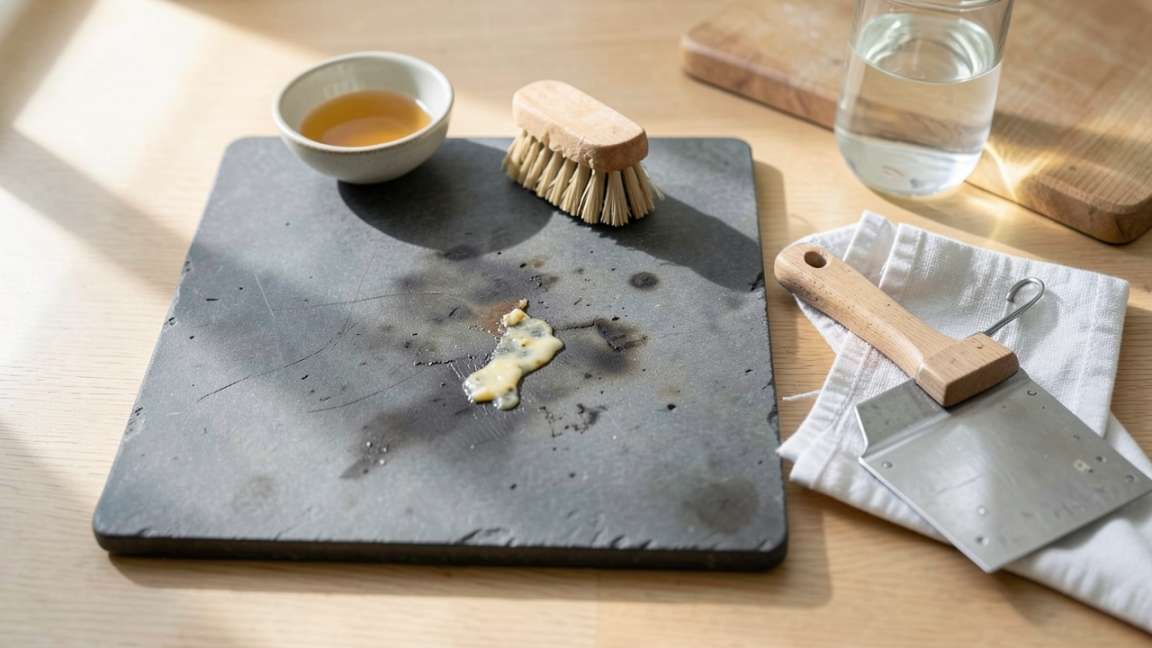
Before you start, gather the right tools and supplies. Using the wrong tool can scratch or crack your stone. Here is a checklist of recommended items:
- Baking soda – The safest and most effective cleaner for food-grade stone surfaces.
- Hydrogen peroxide (3%) – A gentle bleach alternative for tough grease stains.
- Non-abrasive scouring pad – A nylon pad or soft sponge will not scratch the surface.
- Plastic scraper or razor blade – For removing thick, charred cheese layers.
- Clean water – For rinsing away all remaining residue.
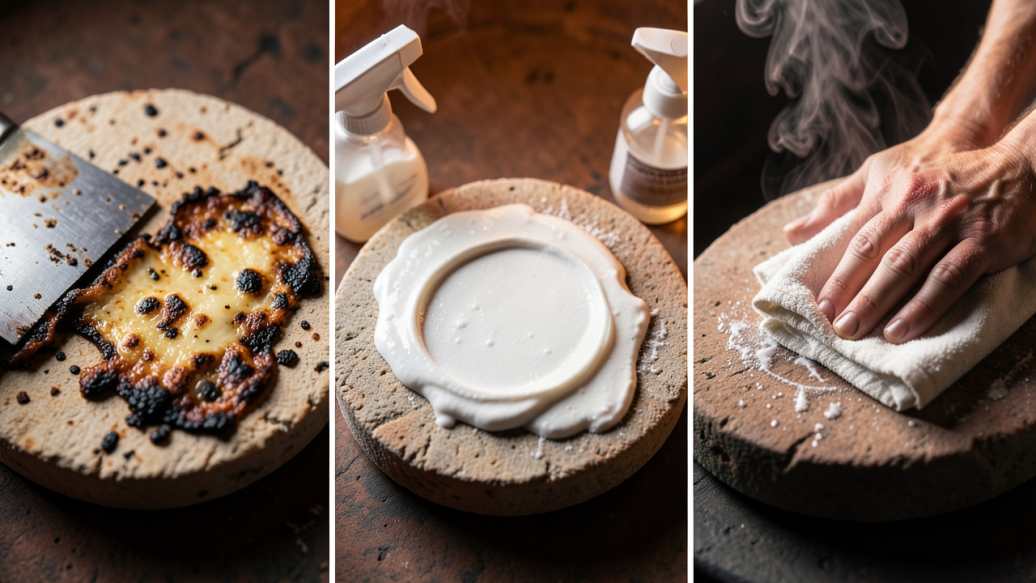
Comparison of Cleaning Methods
| Method | Best For | Time Required | Effort Level | Risk of Damage |
|---|---|---|---|---|
| Baking Soda Paste | Light to moderate stains | 15-30 minutes | Low | Very Low |
| Hydrogen Peroxide | Deep grease and stains | 30-60 minutes | Low | Very Low |
| Razor or Plastic Scraper | Thick, charred cheese chunks | 5-10 minutes | Moderate | Medium |
| Commercial Cleaner (BKF) | Stubborn burnt-on residue | 10-15 minutes | Moderate | Low |
Step-by-Step Cleaning Methods
Each method works best for a different type of mess. Choose the method that matches how dirty your stone is. Always start with the gentlest method first.
Method 1: Baking Soda Paste for Light to Moderate Cheese Stains
This is the go-to method for most cleaning sessions. Baking soda is a mild abrasive. It lifts food particles without scratching the stone. The recognizes baking soda as a safe and effective cleaner for food-contact surfaces.
- Mix three parts baking soda with one part water in a small bowl.
- Stir until it forms a thick paste that spreads easily.
- Spread the paste directly over the baked-on cheese spots.
- Let the paste sit for 15 minutes to break down the residue.
- Scrub gently with a nylon pad or soft brush.
- Rinse the stone thoroughly with clean water.
- Dry the stone completely in a warm oven.
Tip: Add a few drops of water to the paste if it dries out during the rest time. Do not let it harden completely on the stone.
Method 2: Hydrogen Peroxide for Deep Grease and Stains
Hydrogen peroxide is excellent for deep-set stains that baking soda alone cannot remove. It works as a gentle oxygen bleach. It lifts grease and oil out of the pores. According to the, hydrogen peroxide is safe for porous surfaces when used correctly.
- Pour a small amount of 3% hydrogen peroxide directly onto the stained areas.
- Spread it evenly with a brush or sponge.
- Let it sit for 10-15 minutes until it stops bubbling.
- Scrub the surface with a non-abrasive pad.
- Wipe away the residue with a damp cloth.
- Dry the stone thoroughly before storing it.
Important: Test hydrogen peroxide on a small hidden spot first. Some colored decorative stones may react to bleaching agents.
Method 3: Physical Scraping for Thick Burnt Cheese
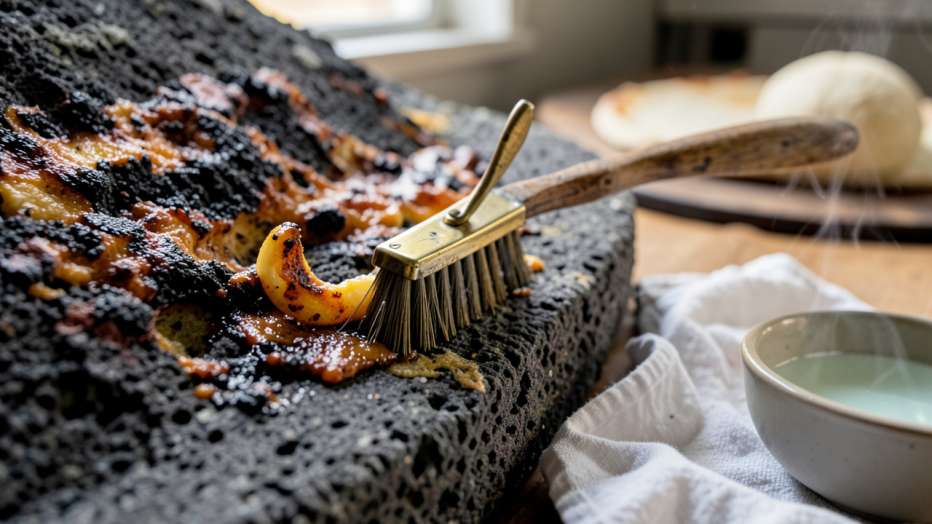
Sometimes you need a manual approach. A razor blade scraper or a stiff plastic putty knife can remove thick layers of burnt cheese quickly. This method works best when the stone is still warm but not hot.
- Let the pizza stone cool down to a warm touch (about 100-120 degrees Fahrenheit).
- Hold the scraper at a 30-degree angle to the surface.
- Push the scraper away from your body in short, firm strokes.
- Collect the loose debris and discard it.
- Follow up with a baking soda paste to remove any remaining residue.
- Rinse and dry the stone completely.
Warning: Do not scrape a stone that is fully cold or fully hot. Thermal shock can cause cracks. Always let the stone reach a warm, stable temperature first.
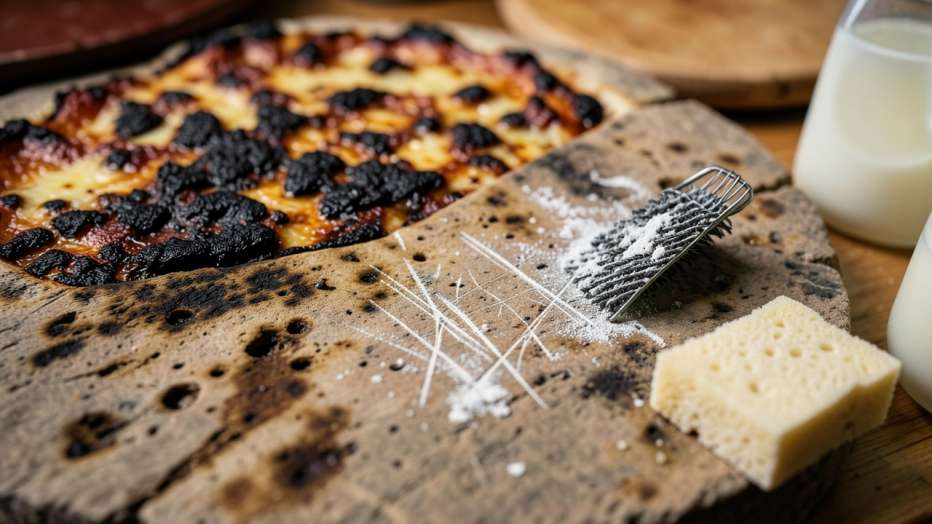
Common Mistakes to Avoid When Cleaning Baked-On Cheese Off a Pizza Oven Stone Surface
Many people make mistakes that ruin their stones. Avoiding these errors will extend the life of your baking surface significantly.
- Using dish soap on the surface – As explained earlier, soap leaves a residue that ruins the taste of future pizzas.
- Submerging a cold stone in water – Cold water hitting a room-temperature stone seems safe, but the sudden moisture penetration can weaken the structure over time.
- Using a metal scraper on a hot stone – Metal scrapers can gouge the surface of soft cordierite stones. Use a plastic scraper or razor blade held flat.
- Putting the stone in the dishwasher – Dishwasher detergent is highly alkaline. The soaking cycle saturates the stone completely. The heat cycle can cause thermal cracking.
- Using oil or cooking spray on the stone – Oil seeps into the pores and turns into sticky, hard-to-remove varnish at high temperatures.
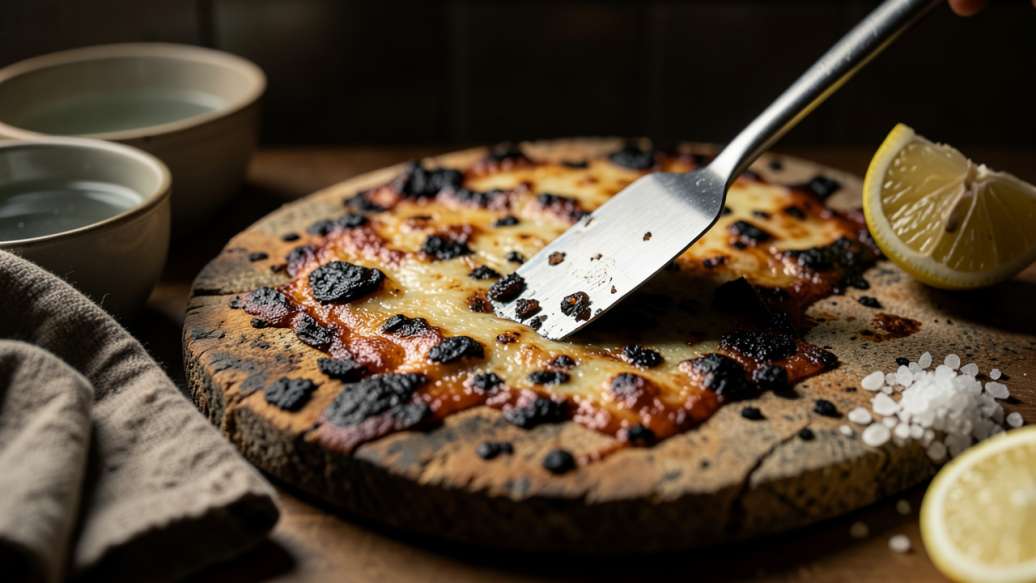
Pro Tips for Keeping Your Pizza Stone Clean
Prevention is better than deep cleaning. A few simple habits will keep your stone looking clean and working well for longer.
- Use parchment paper under your pizza – This creates a non-stick barrier between the dough and the stone. It catches melted cheese and oil drips.
- Scrape the stone immediately after use – While the stone is still warm, use a plastic scraper to remove any loose cheese or flour. This prevents buildup.
- Store the stone in a dry place – Humidity can cause mold growth on porous stones. Always dry your stone completely before putting it away.
- Heat the stone slowly to prevent shock – Put the stone in a cold oven and let it heat up with the oven. Do not place it into a preheated oven.
- Use a perforated pizza peel – A peel with holes allows excess flour and small bits of cheese to fall off before they reach the stone.
Common Myths vs Facts About Pizza Stone Cleaning
Myth 1: Soap destroys the stone permanently.
Fact: Soap does not destroy the stone itself. However, the stone absorbs soap molecules into its porous structure. Those molecules release during cooking and ruin the taste of your food. The effect lasts through multiple bakes.
Myth 2: A hot oven burns off all residue completely.
Fact: High heat chars cheese into pure carbon. This carbon sticks tightly to the stone surface. It does not disappear or turn into ash. You still need to scrape or scrub it off manually.
Myth 3: You must use steel wool to get a pizza stone clean.
Fact: Steel wool scratches the smooth surface of a pizza stone. These scratches create rough spots where food sticks even more. A plastic scraper or a nylon scouring pad is much gentler and just as effective.
Frequently Asked Questions
Can I use a wire brush on my pizza stone?
No. Wire bristles can break off and embed in the stone surface. They can also scratch the material. Use a stiff nylon brush or a plastic scraper instead for safe cleaning.
Does bleach clean a pizza stone effectively?
No. Bleach is too harsh and toxic for porous food surfaces. The stone will absorb the chemicals. They can release fumes when heated. Baking soda or hydrogen peroxide are much safer alternatives.
How do I remove mold from a pizza stone?
Mix a paste of baking soda and hydrogen peroxide. Apply it to the moldy areas. Let it sit for 20 minutes. Scrub and rinse thoroughly. Dry the stone completely in a warm oven at 200 degrees Fahrenheit.
Can I put my pizza stone in the dishwasher?
Never put a pizza stone in the dishwasher. The detergent is too harsh. The soaking water saturates the stone. The heat cycle can cause the stone to crack from thermal shock.
What is the best commercial cleaner for pizza stones?
is a trusted cleaner for stubborn burnt-on residue. It is safe for ceramic and stone surfaces. Always rinse thoroughly and dry the stone completely after using any cleaner.
Final Thoughts
Use baking soda paste as your safe daily cleaner for most messes. Always dry your stone completely to prevent cracks and mold growth. With these simple techniques, your pizza stone will stay in great shape and deliver perfect pizzas for many years.