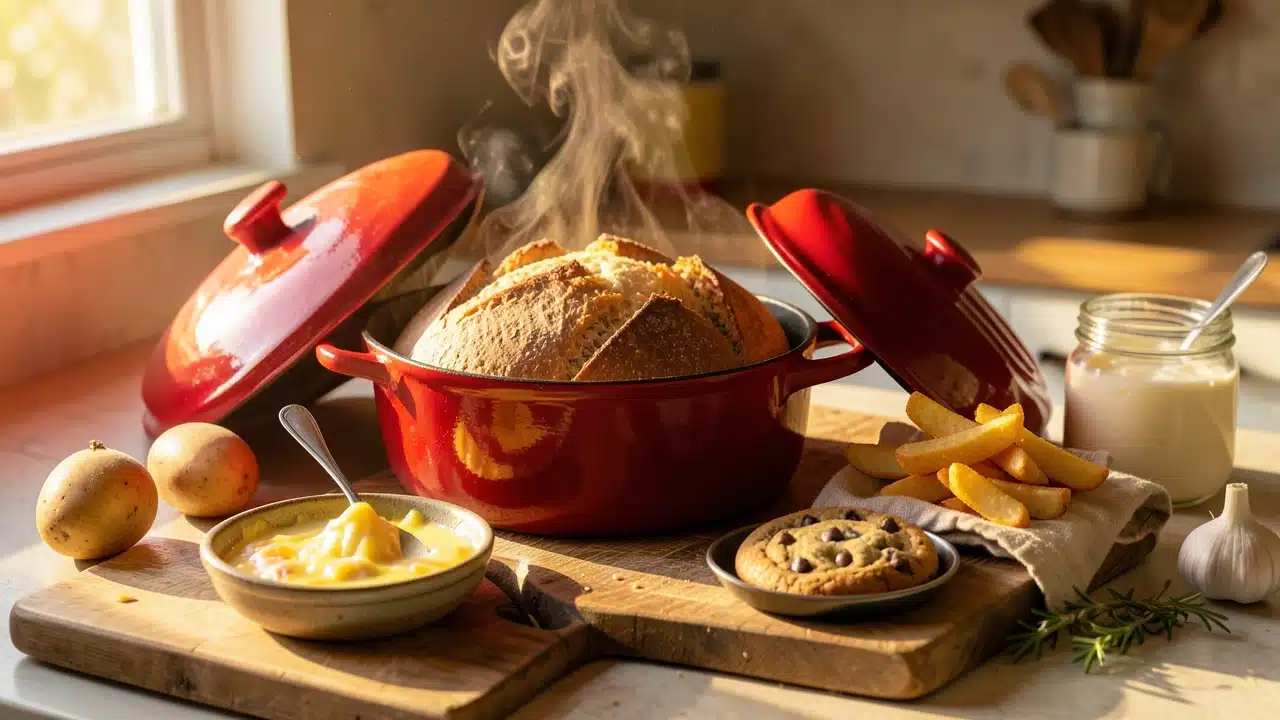
9 Dutch Oven Uses Beyond Braises For Prep, Cooking, And More
Dutch oven uses beyond braises include baking bread, boiling pasta, frying chicken, simmering soups, cooking beans, roasting vegetables, making rice dishes, steaming seafood, and holding make-ahead meals warm.
Its thick walls and heavy lid manage heat, moisture, and even cooking well. Use it for prep, stovetop cooking, oven baking, and serving.
Your Dutch oven is a kitchen workhorse, but if you think it’s only good for slow-cooked stews, you’re missing out!
This versatile pot can do so much more than just braise. Learning about the 9 Dutch Oven Uses Beyond Braises for Prep, Cooking, and More can help you save time, try new recipes, and get even more value from your favorite cookware.
We’ll show you how this one pot can transform your meal prep and cooking, making delicious meals easier than ever.
Key Takeaways
- Dutch ovens are excellent for baking bread, creating a steamy environment for a perfect crust.
- They can be used for deep frying, offering stable heat for crispy results.
- Dutch ovens are ideal for making stocks and broths, simmering for long periods.
- Use them for one-pot pasta dishes, cooking everything together for easy cleanup.
- They excel at making soups and stews, even beyond traditional braises.
- Dutch ovens can be used for steaming vegetables or dumplings.
- They are great for roasting small items or even whole chickens.
- Dutch ovens can be used for making sauces and custards on the stovetop.
- They are perfect for cooking grains like rice or quinoa.
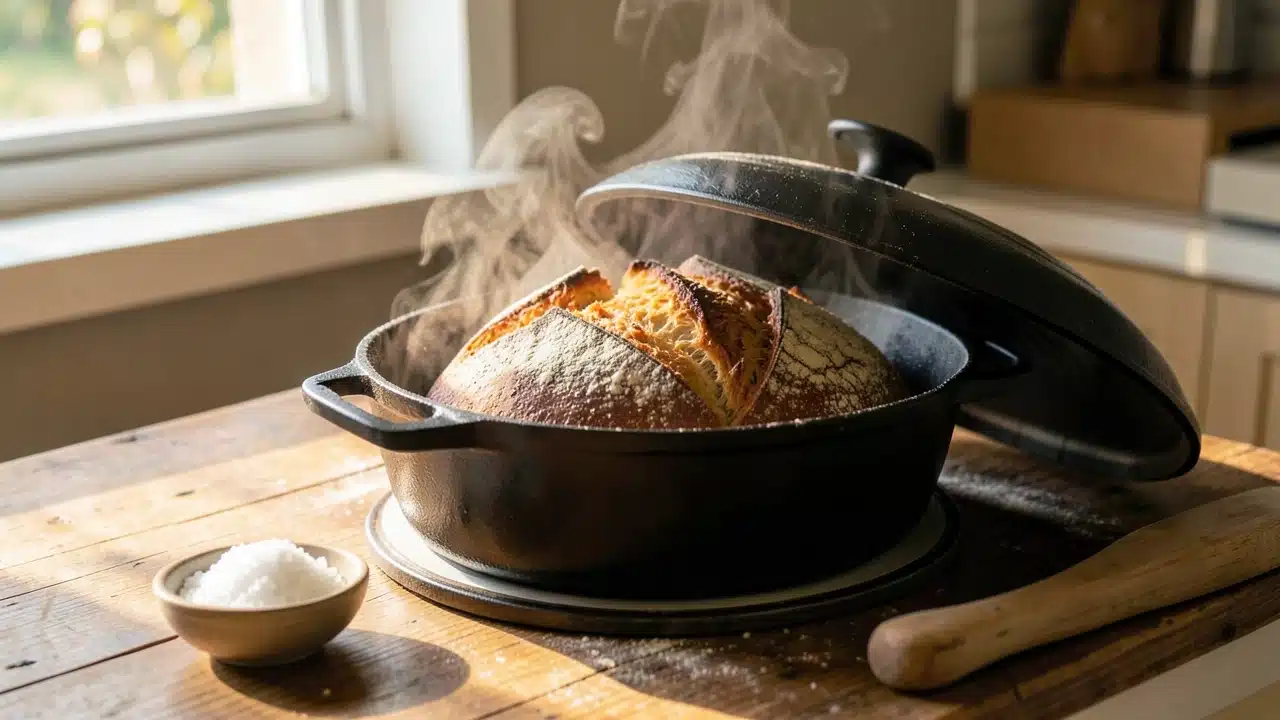
Baking Bread with Dutch Oven Magic
Many home bakers swear by the Dutch oven for making artisan bread. The heavy lid traps steam released from the dough as it bakes. This steam keeps the crust soft initially, allowing the bread to rise to its fullest.
First, preheat your Dutch oven in the oven. Then, carefully place your shaped dough inside. The enclosed, steamy environment mimics a professional bakery oven, giving you that perfect crust and airy crumb every time.
This method is a fantastic example of the 9 Dutch Oven Uses Beyond Braises for Prep, Cooking, and More because it highlights a completely different cooking technique. Instead of simmering, you’re using dry heat and trapped moisture.
You can bake all sorts of bread, from simple no-knead loaves to more complex sourdoughs, with consistent, amazing results.
It truly elevates home baking.
Deep Frying Made Simple and Safer
Frying food at home can be intimidating, but a Dutch oven makes it much more manageable. Its heavy construction provides excellent heat retention, which is key for successful frying. This means the oil temperature stays more stable when you add cold food, preventing greasy results.
You can achieve perfectly crispy fried chicken, donuts, or even french fries.
Second, heat a good amount of cooking oil in your Dutch oven over medium-high heat. Use a thermometer to reach your desired frying temperature, typically between 350°F and 375°F (175°C and 190°C). Carefully lower your food into the hot oil.
The Dutch oven’s depth also helps prevent oil splatters, making the process safer. This is a prime example of the 9 Dutch Oven Uses Beyond Braises for Prep, Cooking, and More, showcasing its versatility for high-heat cooking.
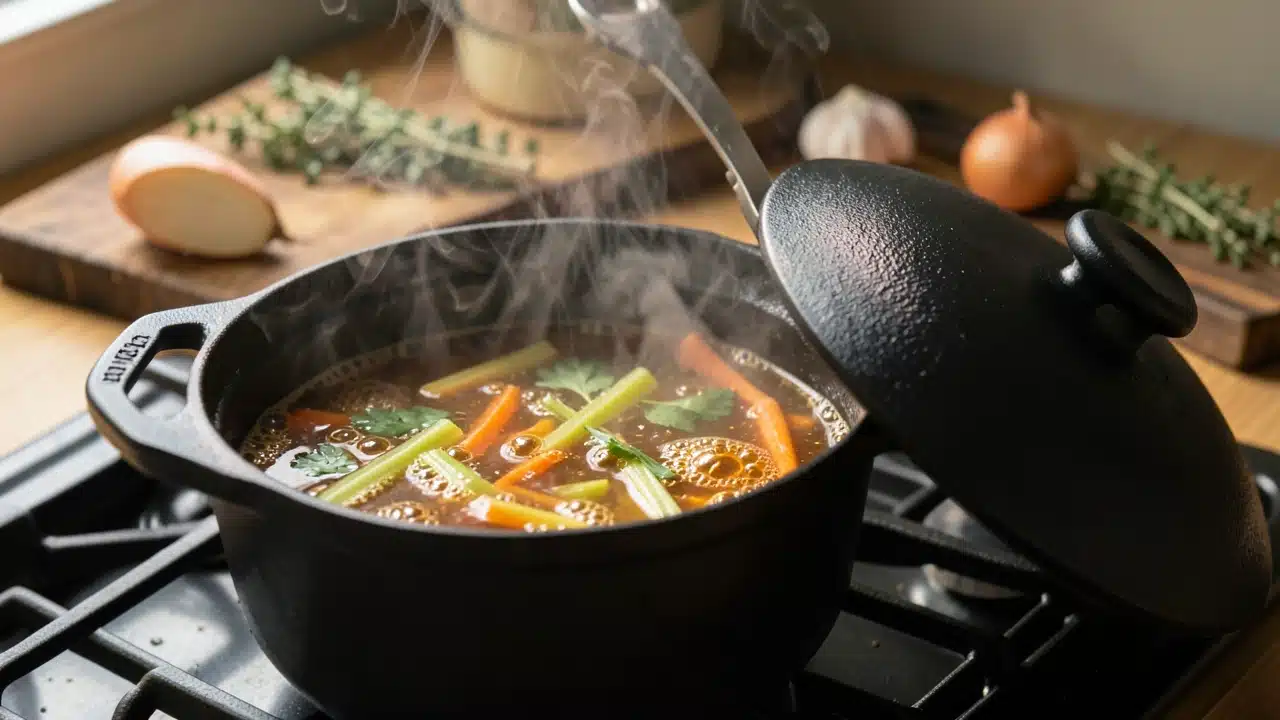
Simmering Stocks and Broths to Perfection
Making homemade stocks and broths is incredibly rewarding, and a Dutch oven is your best friend for this task.
The pot’s ability to maintain a gentle simmer for hours is exactly what you need. Whether you’re making chicken stock, beef broth, or vegetable stock, the long, slow cooking process extracts maximum flavor from your ingredients.
Next, fill your Dutch oven with bones, vegetables, and water. Bring it to a boil, then reduce the heat to a low simmer. Let it cook for at least 4-6 hours for vegetable stock, or 8-12 hours (or even longer) for meat stocks.
The heavy bottom prevents scorching, even with long cooking times. This is a fundamental use among the 9 Dutch Oven Uses Beyond Braises for Prep, Cooking, and More, turning simple ingredients into flavorful bases for countless other dishes.
One-Pot Pasta Dishes for Easy Weeknights
Who doesn’t love a delicious meal with minimal cleanup? One-pot pasta dishes cooked in a Dutch oven are a weeknight savior. You can cook the pasta, sauce, and any added vegetables or proteins all in the same pot.
This saves you from dirtying multiple pans and makes serving a breeze.
To make a one-pot pasta, you’ll typically add uncooked pasta, liquid (like broth or water), sauce ingredients, and any aromatics to the Dutch oven.
Bring it to a boil, then reduce to a simmer, stirring occasionally until the pasta is cooked and the sauce has thickened.
The 9 Dutch Oven Uses Beyond Braises for Prep, Cooking, and More list definitely includes this time-saving technique.It’s a simple yet effective way to get a flavorful meal on the table quickly.
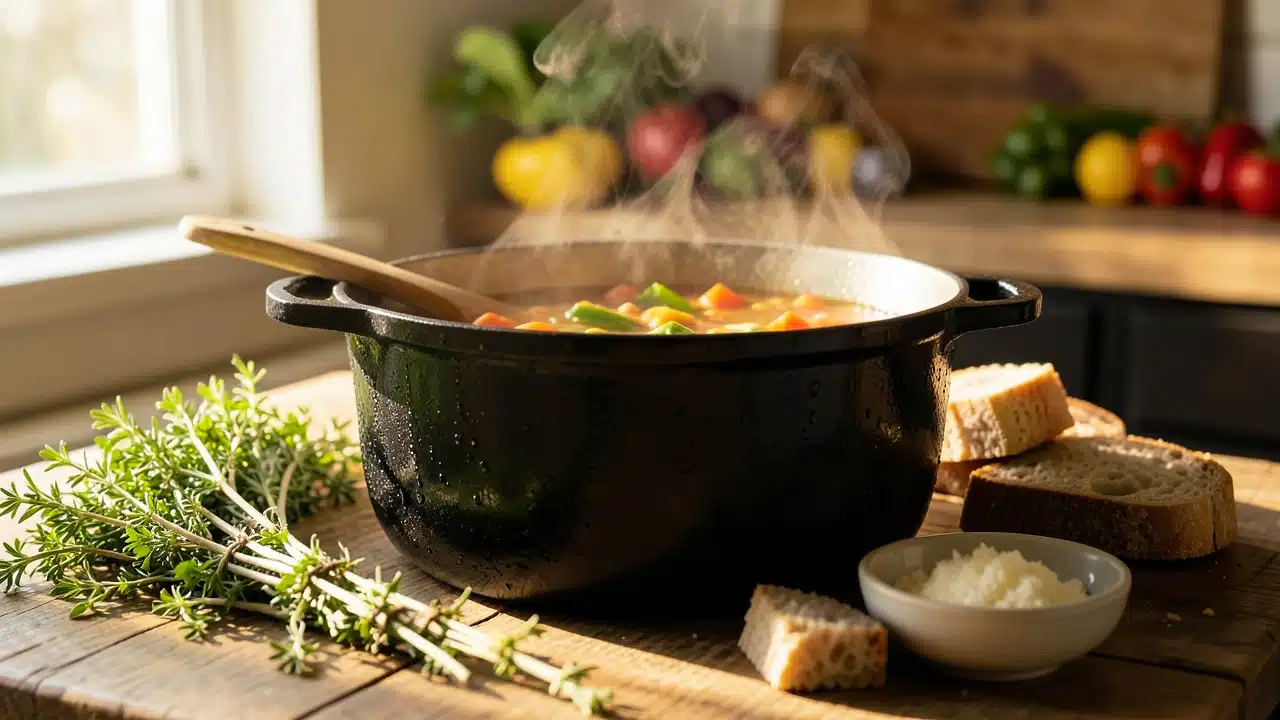
Soups and Stews: Beyond the Basics
While braising is a common use, Dutch ovens are also fantastic for a vast array of soups and stews that don’t involve searing meat first. Think creamy tomato soup, hearty lentil soup, or a flavorful vegetable chowder.
The large capacity of most Dutch ovens means you can make generous batches, perfect for feeding a crowd or having leftovers.
The even heating of a Dutch oven ensures that ingredients cook uniformly, preventing hot spots and sticking. You can sauté your aromatics directly in the pot, then add your liquids and other ingredients. This allows for a smooth transition from prep to cooking.
Exploring the 9 Dutch Oven Uses Beyond Braises for Prep, Cooking, and More, you’ll find that soups and stews are a comfort food staple that this pot handles beautifully. Its ability to maintain a consistent low simmer is ideal for melding flavors.
Steaming Vegetables and Dumplings
Steaming is a healthy way to cook, preserving nutrients and textures. Your Dutch oven can easily be adapted for steaming. You’ll need a steaming rack or insert that fits inside your pot.
Add a few inches of water to the bottom, place your rack above the water level, and bring the water to a boil.
Then, add your vegetables or dumplings to the rack, cover with the lid, and steam until tender. The heavy lid of the Dutch oven is excellent at trapping steam.
This is a simple yet effective use among the 9 Dutch Oven Uses Beyond Braises for Prep, Cooking, and More, offering a lighter cooking alternative.
It’s particularly useful for making fluffy dumplings for your soups or stews.
Roasting Small Items and Whole Chickens
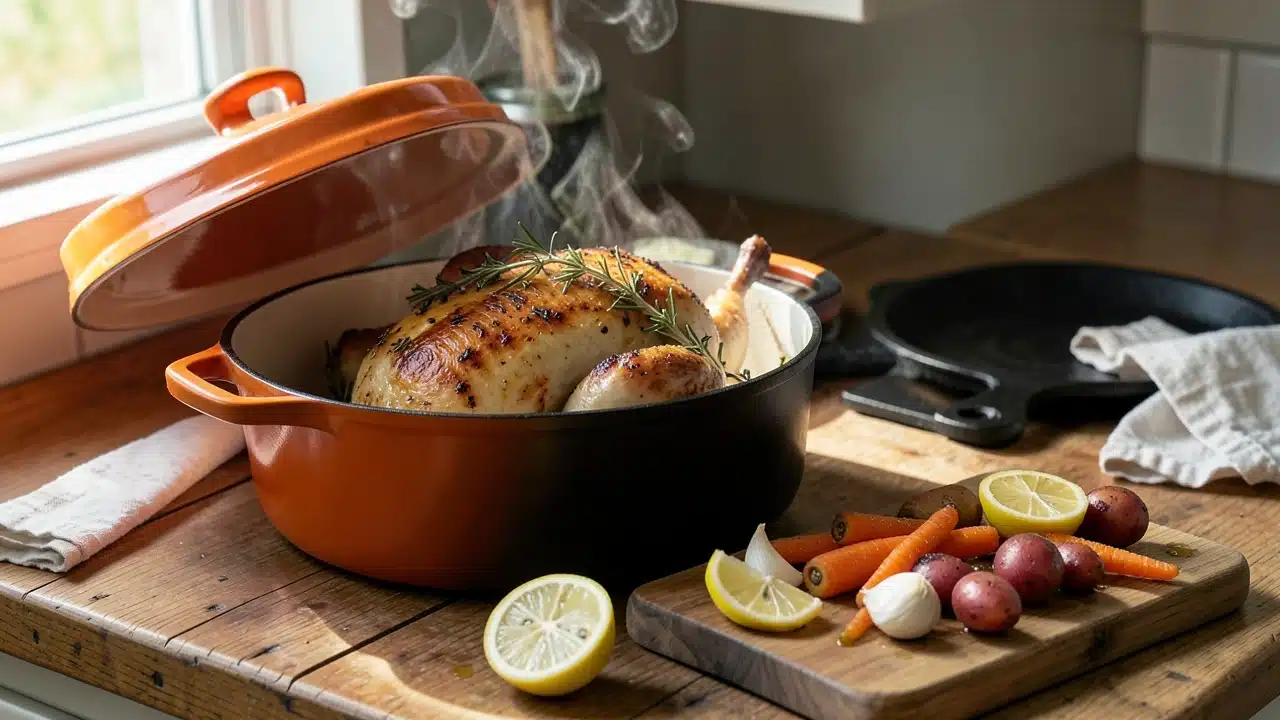
While typically associated with stovetop cooking, Dutch ovens can also be used for roasting in the oven. They are perfect for smaller roasting tasks, like a batch of root vegetables or a few chicken thighs.
The enamel coating helps with browning, and the lid helps keep moisture in, preventing things from drying out.
For a whole chicken, you can place it directly into the Dutch oven, perhaps with some aromatics and vegetables underneath.
The enclosed environment helps the chicken cook evenly and stay moist. You can even achieve crispy skin by removing the lid for the last 20-30 minutes of cooking.
This is another great addition to the 9 Dutch Oven Uses Beyond Braises for Prep, Cooking, and More, proving its versatility for oven cooking beyond just bread.
Crafting Sauces and Custards
Making smooth, lump-free sauces and delicate custards requires precise temperature control. A Dutch oven, with its excellent heat distribution, is ideal for these tasks.
The heavy base prevents scorching, which is a common problem when making milk-based sauces or custards on the stovetop.
You can gently heat milk, whisk in thickeners, and stir constantly until your sauce or custard reaches the desired consistency. The enamel coating is non-reactive, so it won’t impart any metallic taste to your delicate preparations.
This is a refined use within the 9 Dutch Oven Uses Beyond Braises for Prep, Cooking, and More, highlighting its capability for delicate stovetop cooking.
Think béchamel, crème anglaise, or even rich chocolate sauces.
Cooking Grains Like Rice and Quinoa
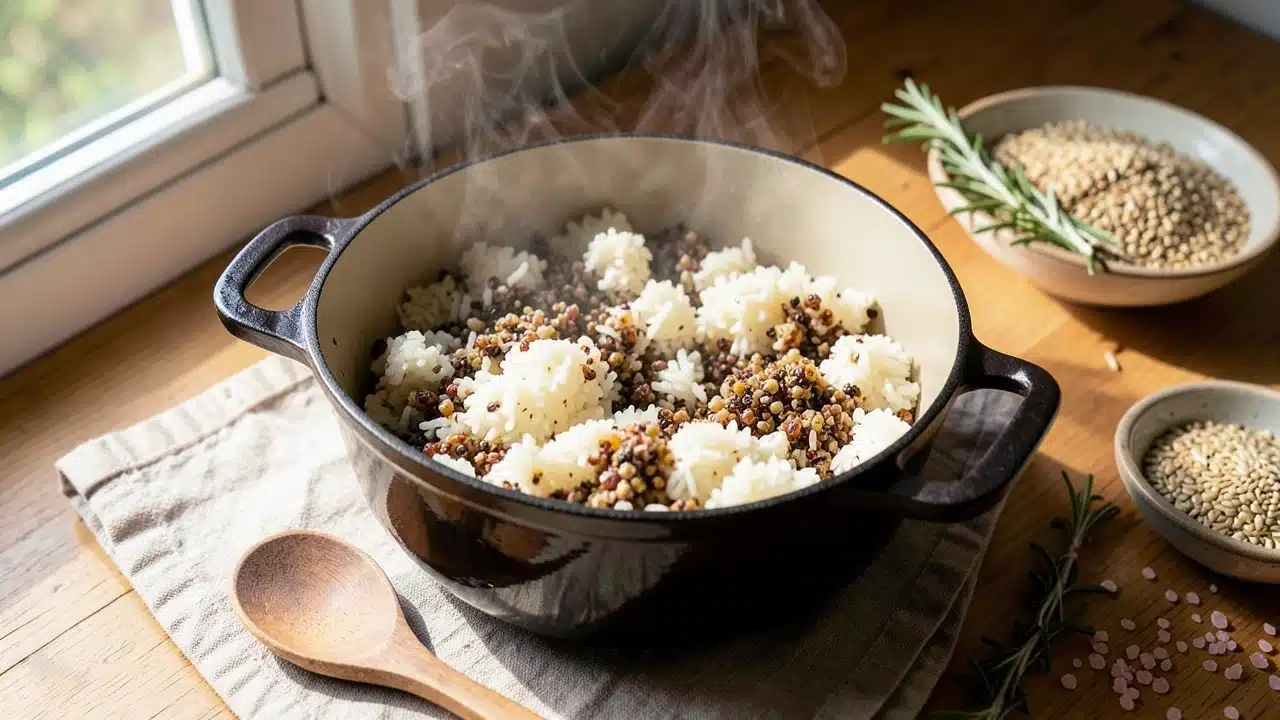
Perfectly cooked rice or fluffy quinoa can be achieved in a Dutch oven. Similar to how it handles pasta, the pot’s ability to hold steady heat is beneficial for grains.
You can sauté any aromatics like onions or garlic first, then add your grains and liquid, and let it simmer until cooked.
Finally, once the liquid is absorbed and the grains are tender, let them rest covered for a few minutes. This allows the steam to finish cooking the grains evenly. Safe cooking grains practices include reaching proper internal temperatures as recommended by the USDA.
This simple grain-cooking method is a practical application of the 9 Dutch Oven Uses Beyond Braises for Prep, Cooking, and More, making it a go-to pot for everyday staples.
It’s an easy way to ensure consistent results without needing a separate rice cooker.
Comparing Dutch Oven Uses
| Baking Bread | Traps steam for crust development | Bakery-quality crust and crumb |
| Deep Frying | Maintains stable oil temperature | Crispy, evenly cooked fried foods |
| Stocks & Broths | Even simmering for long periods | Maximum flavor extraction |
| One-Pot Pasta | Cooks pasta and sauce together | Easy cleanup, quick meal |
| Roasting | Moist heat, good browning | Tender meats, evenly cooked vegetables |
| Sauces & Custards | Prevents scorching, even heating | Smooth, lump-free results |
Frequently Asked Questions Of 9 Dutch Oven Uses Beyond Braises For Prep, Cooking, And More
Question: Besides braising, what is the most popular Dutch oven use?
Answer: Baking artisan bread is incredibly popular due to the Dutch oven’s ability to create a steamy environment for a perfect crust.
Question: Can I really deep fry safely in a Dutch oven?
Answer: Yes, Dutch ovens are excellent for deep frying because their heavy construction provides stable heat, and their depth helps contain splatters.
Question: What kind of bread works best in a Dutch oven?
Answer: No-knead breads and sourdough loaves are particularly well-suited for Dutch oven baking, benefiting most from the trapped steam.
Question: How do I use a Dutch oven for steaming?
Answer: You’ll need a steaming rack placed inside the Dutch oven, with water below it. Bring the water to a boil, then place your food on the rack, cover, and steam.
Question: Is a Dutch oven good for cooking grains like rice?
Answer: Absolutely. A Dutch oven provides consistent heat for cooking grains perfectly, similar to a dedicated rice cooker.
Question: What are the 9 Dutch Oven Uses Beyond Braises for Prep, Cooking, and More that I should try first?
Answer: Trying bread baking, one-pot pasta, or making stock are great starting points to see the versatility beyond traditional braises.
Final Thoughts
Your Dutch oven is more than just for stews; it’s a kitchen powerhouse. From baking crusty bread to whipping up quick one-pot pastas and simmering flavorful stocks, these 9 Dutch Oven Uses Beyond Braises for Prep, Cooking, and More offer incredible versatility. Start experimenting and unlock new meal possibilities with this essential piece of cookware.