
What Are The Three Layers Of Kitchen Lighting? (Ambient, Task, Accent Explained)
Thinking about kitchen lights can sometimes feel a bit tricky, especially when you’re just starting out. You might wonder, What Are the Three Layers of Kitchen Lighting? (Ambient, Task, Accent Explained).
It’s a common question because getting it right makes a big difference in how your kitchen looks and works. Don’t worry, though! We’ll break it down super simply, step by step.
First, we’ll get a handle on what each type of light does, and then we’ll see how they all work together. Ready to make your kitchen shine?
Key Takeaways
- You’ll learn about the three main types of kitchen lighting: ambient, task, and accent.
- We will explain what each light layer does and why it’s important.
- You’ll see how to combine these lights to create a functional and beautiful kitchen.
- We’ll cover how to choose the right fixtures for each lighting layer.
- You’ll get tips on making your kitchen lighting work for different activities.
- We will help you understand how to add personality to your kitchen with lighting.
![What Are The Three Layers Of Kitchen Lighting (Ambient, Task, Accent Explained)[1]](https://kitchentoolslab.com/wp-content/uploads/2026/05/What_Are_The_Three_Layers_Of_Kitchen_Lighting__Ambient_Task_Accent_Explained1.jpg)
Understanding What Are the Three Layers of Kitchen Lighting? (Ambient, Task, Accent Explained)
When we talk about kitchen lighting, it’s not just about one big light in the middle of the ceiling. Good lighting in a kitchen is like having a well-organized toolbox. It has different tools for different jobs.
This idea of using layers of light helps make sure your kitchen is bright enough to cook safely, pleasant enough to hang out in, and pretty enough to show off.
We can think of these layers as a way to build up the light, making sure all the important areas are covered and that the overall feel of the room is just right.
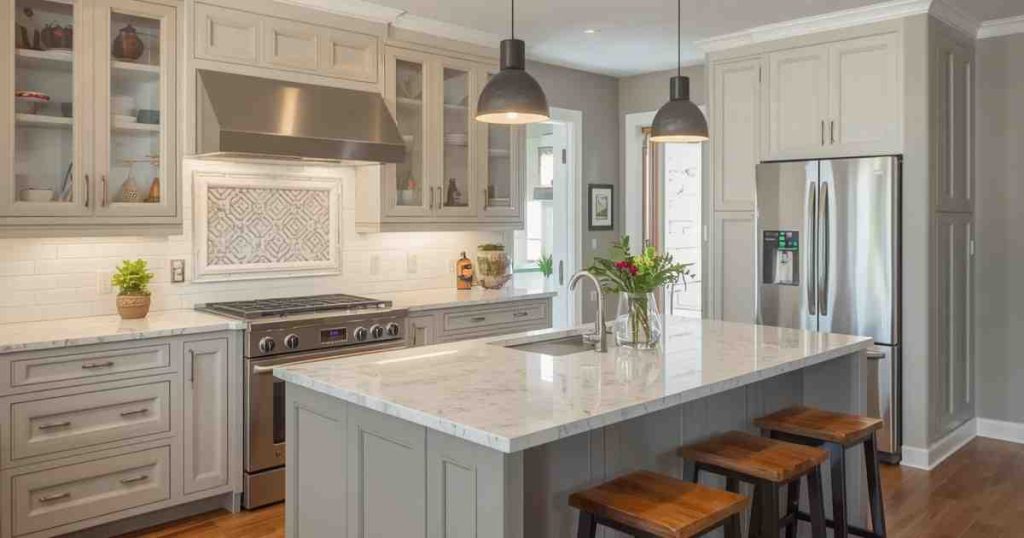
The Big Ambient Lighting
Ambient lighting is the main light for a room. Think of it as the soft, general glow that fills your kitchen. Its main job is to make it easy to see where you’re going and what you’re doing when you’re just walking around or having a casual chat.
Without enough ambient light, a kitchen can feel dark and unwelcoming. This layer provides the foundation for all other lighting in the space.
This type of lighting is essential for safety and comfort. It helps prevent trips and falls and makes the room feel more open. It’s the light you turn on when you first walk into the kitchen, and it’s the light that’s always there in the background.
Good ambient lighting makes sure there aren’t any super dark corners.
Common fixtures for ambient lighting include recessed lights (often called can lights), ceiling-mounted fixtures, and even some stylish chandeliers or pendant lights that spread light downwards and outwards.
The goal is even distribution, so the light isn’t too harsh in one spot and too dim in another. It’s about creating a comfortable, usable base level of brightness throughout the entire kitchen space.
Why Even Light Matters
Having an even amount of ambient light is really important for a kitchen. If some spots are too bright and others are too dark, it can be disorienting. It also makes the room look unbalanced.
Even light helps your eyes adjust better and makes the whole space feel more peaceful and well-designed. It’s the foundation that makes all the other lighting look good and work well.
Imagine trying to read a recipe on a counter that’s dimly lit, but the middle of the room is blindingly bright.
That’s what happens without good ambient light. You want the general brightness to be consistent, so no matter where you are in the kitchen, the light feels comfortable and useful.
This consistency is key to making the kitchen a place where you can relax and work without straining your eyes or feeling awkward.
In many homes, ambient lighting comes from ceiling fixtures. Recessed lights are popular because they sit flush with the ceiling and spread light broadly. Flush-mount or semi-flush fixtures are also good options, especially if you have lower ceilings.
The number and placement of these lights are important for achieving that even spread. It’s about making sure the entire floor area has enough light.
Lighting for Action: Task Lighting
Task lighting is all about focused light for specific jobs. When you’re chopping vegetables, mixing ingredients, or reading a recipe, you need extra light right where you’re working. This is where task lighting comes in.
It’s brighter and more direct than ambient light, and it’s placed strategically above or around work areas like countertops, sinks, and the stove.
Think about what you do in the kitchen. You prepare food, wash dishes, and sometimes even do homework or pay bills at a kitchen table. Each of these activities needs good, clear light so you can see what you’re doing without shadows getting in the way.
Task lighting ensures that these important areas are well-lit, making your kitchen more functional and safer.
The most common type of task lighting in kitchens is under-cabinet lighting. These are long, slim lights that attach to the underside of your upper cabinets. They cast a bright, shadow-free light directly onto your countertops.
Other examples include pendant lights over an island or sink, and adjustable spotlights that can be aimed at specific areas.
Under-Cabinet Lights: A Kitchen Essential
Under-cabinet lighting is a real game-changer for kitchens. It provides brilliant light right where you need it for food prep.
This means no more leaning over to see what you’re doing, and no more dark shadows cast by your own body.
It makes chopping, dicing, and measuring much easier and more precise.
These lights come in different forms, like LED strips, puck lights, or small fluorescent fixtures. LED strips are very popular now because they are energy-efficient, long-lasting, and can be easily cut to fit the length of your cabinets. They also offer a consistent, bright light without much heat, which is a big plus in the kitchen.
Having great task lighting under your cabinets also makes your kitchen look better. It highlights the beauty of your countertops and backsplash, adding a professional, finished look.
It’s one of those lighting elements that makes a huge difference in how you experience and use your kitchen every day.
Island and Sink Lighting
Kitchen islands have become a central hub in many homes, serving as prep areas, casual dining spots, and gathering places. To make them fully functional, they need dedicated task lighting. Pendant lights are a popular choice for islands.
They hang down and provide focused light on the surface below, perfect for chopping or serving food. They also add a decorative element to the room.
The sink area is another spot that benefits greatly from task lighting. Washing dishes or rinsing produce requires good visibility.
A light fixture positioned above the sink, like a small pendant or a recessed light aimed directly at the sink, can make this chore much more pleasant.
It ensures you can see clearly to get things clean without squinting or straining.
When choosing task lighting, consider the color temperature of the bulbs. For food prep, a brighter, cooler white light can be helpful for detail work. However, for a dining area on an island, a warmer light might be more inviting.
The idea is to match the light’s feel to the activity happening there.
Adding Flair: Accent Lighting
Accent lighting is all about drawing attention to specific features in your kitchen. This is the decorative lighting that adds personality and style.
It’s used to highlight artwork, decorative shelves, interesting architectural details, or even the texture of your backsplash.
Accent lights are usually brighter than ambient lights but are focused on a small area.
The purpose of accent lighting isn’t to make the room brighter overall, but to create visual interest and a sense of depth.
It can make your kitchen feel more dynamic and show off the things you love about your space. It’s like putting a spotlight on the best parts of your kitchen, making them stand out.
Common types of accent lighting include track lighting with adjustable spotlights, recessed lights that can be aimed, small wall sconces, and even lights built into cabinets or display shelves.
The key is that these lights are directed, and their effect is more about highlighting than general illumination. They are the finishing touches that elevate the design.
Highlighting Kitchen Features
Imagine you have a beautiful piece of art hanging on your kitchen wall, or a collection of attractive pottery on open shelves.
Accent lighting can make these items pop. A small spotlight aimed at the artwork can make it the focal point of the room.
Lights tucked onto a shelf can illuminate your favorite dishes or plants, making them visible and appreciated.
This type of lighting can also be used to emphasize architectural elements. If you have interesting ceiling beams, unique molding, or a textured backsplash, strategic accent lighting can bring out those details.
It adds a layer of sophistication and visual appeal, making your kitchen feel more custom and well-designed.
It’s about telling a story with light.
When using accent lighting, it’s important to balance it with ambient and task lighting. Too much accent lighting can make a room feel busy or cluttered. The goal is to use it to enhance, not overwhelm, the overall lighting scheme.
A little goes a long way in creating that special touch.
Using Accent Lighting for Atmosphere
Accent lighting can also play a role in creating a mood or atmosphere. Think about soft lights hidden behind toe kicks under cabinets or behind decorative elements.
These can cast a gentle glow that makes the kitchen feel cozy and inviting, especially in the evening.
It’s a subtle way to add warmth and depth.
Another way to use accent lighting for atmosphere is by incorporating dimmable features. This allows you to adjust the intensity of the accent lights to suit the occasion.
For a lively dinner party, you might want them brighter, while for a quiet night in, you can dim them down for a more relaxed feel.
This flexibility is key to making your kitchen lighting adaptable.
Consider how different materials react to light. A shiny backsplash might reflect light beautifully with a well-placed accent light, while a textured wall could benefit from lighting that casts shadows and highlights its surface. Thinking about these details can help you choose the best placement and type of accent lights.
Putting It All Together: A Layered Approach
The magic of great kitchen lighting lies in combining these three layers: ambient, task, and accent. They don’t work in isolation; they work together to create a functional, comfortable, and visually appealing space.
When planned thoughtfully, these layers provide the right amount of light for every activity and highlight the best features of your kitchen.
Think of it like painting a picture. Ambient light is the base coat that covers the whole canvas. Task lighting is where you add the bold strokes for important details, like the faces in a portrait.
Accent lighting is like the fine details, the highlights, and the shadows that give the painting depth and make it come alive. Each layer has its purpose, and together they create a complete and beautiful image.
A well-lit kitchen should feel inviting and be easy to work in. This means ensuring there’s enough general light to move around, bright light where you prepare food, and touches of light to make it look special.
By understanding each layer and how they connect, you can make informed choices that will transform your kitchen’s look and feel.
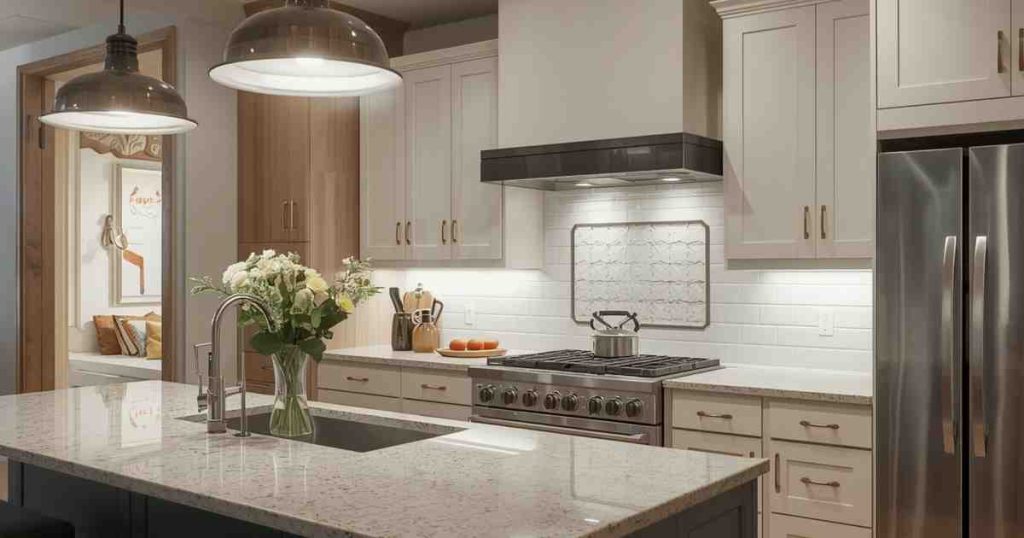
Designing for Different Kitchen Needs
Every kitchen is different, and so are the needs of the people who use it. A busy family kitchen where meals are prepared daily will have different lighting priorities than a small apartment kitchen used mostly for reheating. Understanding your specific usage patterns is key to designing an effective lighting plan.
For a kitchen that’s a central gathering spot, you might want a warmer, more inviting ambient light. Task lighting would be crucial around the main prep areas, and accent lighting could highlight a breakfast bar or a decorative display cabinet. The goal is to create a space that is both practical for cooking and enjoyable for socializing.
In a kitchen where space is limited, layering is even more important. You might use a combination fixture for ambient and task lighting, like a track light that has both general illumination and adjustable spotlights. Accent lighting can add a sense of spaciousness and visual interest without taking up much room.
Every choice should serve a purpose.
Balancing Brightness and Mood
It’s important to find the right balance. Too much bright light can make a kitchen feel sterile, while too little can make it feel gloomy. Dimmers are your best friend here.
They allow you to adjust the intensity of your lights, changing the mood of the kitchen throughout the day or for different occasions.
For example, you might have bright, cool white lights for cooking during the day, but then dim them down to a warmer, softer glow for dinner.
This flexibility ensures your kitchen lighting can adapt to whatever you’re doing. It’s about making the space work for you, from intense meal prep to relaxed evening meals.
Think about the color temperature of your bulbs as well. Warm white (around 2700K) creates a cozy feel, while cool white (around 4000K) is more energizing and good for task areas. Neutral white (around 3000K) offers a good balance.
Mixing these can create different moods in different zones of your kitchen.
Choosing the Right Fixtures
The types of fixtures you choose are critical to achieving the desired lighting effects. For ambient light, you might opt for recessed lights, a central pendant, or a stylish flush-mount fixture. The key is that they spread light evenly throughout the room.
Task lighting often involves under-cabinet lights, focused pendants over islands or sinks, or even track lighting with adjustable heads.
These fixtures are designed to direct light precisely where it’s needed, minimizing shadows and glare. They are the workhorses of kitchen lighting.
Accent lighting uses smaller, more focused fixtures. Think about small spotlights, picture lights, or strip lights. Their purpose is to draw the eye to specific features, adding visual appeal and personality.
The selection of fixtures should complement your kitchen’s overall style and decor.
Fixture Styles and Placement
When selecting fixtures, consider the style of your kitchen. Modern kitchens might suit sleek, minimalist designs, while a farmhouse kitchen could benefit from rustic or industrial-style pendants. The placement is just as important as the style.
Ensure your ambient lights cover the entire ceiling area, your task lights are directly above your work surfaces, and your accent lights are aimed at the features you want to highlight.
For instance, if you have a beautiful tile backsplash, placing accent lights that wash down the wall can really make it stand out.
If you have a kitchen island with seating, pendant lights not only provide task light for the island but also create a warm, inviting atmosphere for those seated there. Proper placement ensures the light does its job effectively and beautifully.
Don’t forget about the overall scale. A tiny kitchen doesn’t need massive, oversized fixtures, and a large kitchen can handle more substantial lighting.
Consider the height of your ceilings too; high ceilings might need longer pendants to bring the light down to a useful level.
Common Kitchen Lighting Challenges and Solutions
One of the most common challenges beginners face is not having enough light. They might rely on a single overhead fixture that leaves corners dark and creates shadows on countertops. This makes food preparation difficult and the kitchen feel less welcoming.
The solution is to embrace the layered approach we’ve discussed.
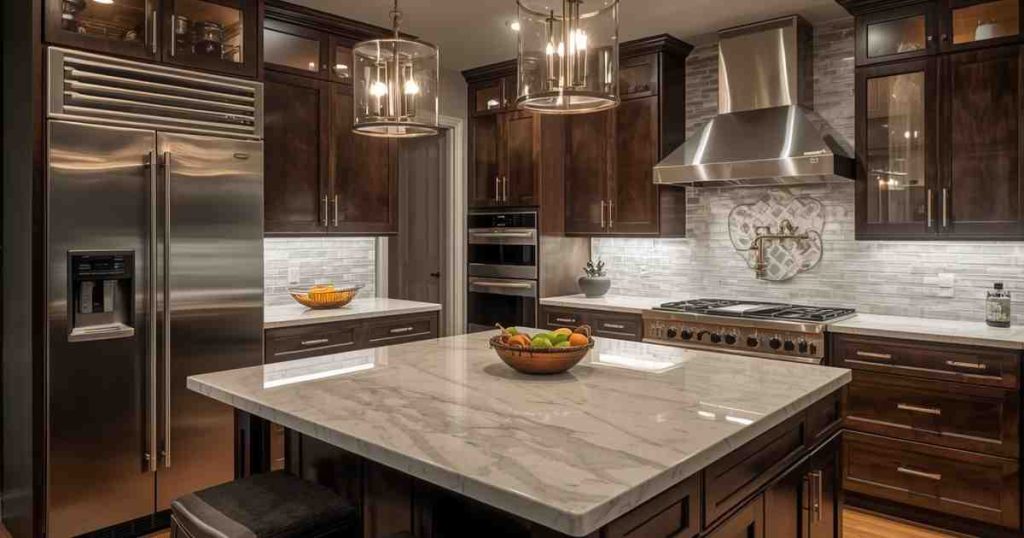
Another issue is glare. Sometimes, lights are too bright or positioned in a way that bounces off shiny surfaces, making it hard to see.
This can often be fixed by using dimmer switches, choosing lights with diffusers, or adjusting the angle of focused lights.
It’s all about directing light where it’s needed without causing discomfort.
People also struggle with choosing the right color temperature. A kitchen that’s too yellow can feel dated, while one that’s too blue might feel cold. Finding a balance that suits the kitchen’s style and the activities performed there is key.
Experimenting with different bulb types can help you find the perfect fit.
Shadows and Glare: The Enemies of Good Light
Shadows are a major problem in kitchens, especially where you’re chopping or prepping food. They can hide ingredients, make it hard to see what you’re doing, and even lead to accidents. Task lighting, particularly under-cabinet lights, is the best defense against these problem shadows.
By bringing light directly to the work surface, you eliminate most of them.
Glare happens when light is too intense or reflects off surfaces directly into your eyes. This can be very uncomfortable and make the kitchen feel harsh. Using lights with frosted glass, diffusers, or shades can help soften the light.
Also, positioning lights so they don’t shine directly into your line of sight is important. Dimmable switches are also excellent for controlling glare.
A good lighting plan considers how light will interact with surfaces. Shiny countertops can reflect light, which can be good if controlled, but bad if it causes glare. Matte finishes absorb more light, which might require a brighter bulb for the same level of illumination.
Understanding these properties helps you avoid issues before they arise.
Solutions for Common Pitfalls
If your kitchen feels too dark, add more ambient lighting or brighter bulbs. If shadows are an issue, install under-cabinet lights or aim your task lights more precisely. For glare, consider dimmers or fixtures that shield the bulb.It’s about identifying the problem and applying the right solution from the three lighting layers.
Think about what activities you do most often. If you spend a lot of time at the kitchen table, make sure that area has sufficient light, perhaps with a decorative pendant. If you have a dark corner that’s rarely used, it might not need as much attention as your main prep zones.
Prioritize based on function.
Don’t be afraid to mix and match. You can have sleek, modern recessed lights for ambient illumination, charming vintage-style pendants over your island, and discreet LED strips under your cabinets. The mix of styles can add character, as long as the light itself serves its purpose effectively.
Example Scenarios for Layered Lighting
Let’s look at a few examples to see how these layers work in practice. Imagine a busy family kitchen. Ambient lighting might come from four evenly spaced recessed lights.
Task lighting is provided by LED strips under the cabinets along the main counters and a set of three pendant lights over a large island where kids do homework and meals are often served.
Accent lighting could be used to highlight a beautiful tile backsplash behind the stove with small, adjustable spotlights, and a few small lights inside a glass-front cabinet displaying decorative plates.
This setup ensures plenty of light for cooking and cleaning, a comfortable atmosphere for homework and family time, and visual interest to make the kitchen feel special.
Another scenario: a smaller, more modern kitchen. Ambient light could be a stylish, modern ceiling fixture.
Task lighting might be integrated into the range hood for the stovetop and a single, sleek pendant over a small breakfast bar.
Accent lighting might involve tiny LED lights set into the toe kick of the cabinets for a soft, ambient glow in the evening, and a strip light above the upper cabinets to highlight the ceiling.
Scenario 1: The Family Hub Kitchen
In a large family kitchen, the focus is on versatility and durability. Ambient lighting uses dimmable recessed lights spread throughout the room for general visibility.
Task lighting includes bright, cool-toned LED strips under the cabinets for food prep and a robust set of pendants over the island, which is often used for homework, crafts, and quick meals. Understanding task lighting benefits helps in selecting fixtures for food prep and island work.
This ensures that no matter the activity, there’s adequate light. Accent lighting might be used subtly to draw attention to a wine rack or a built-in spice display, adding a touch of elegance without being overpowering.
Scenario 2: The Compact Culinary Space
For a smaller kitchen, efficiency is key. Ambient lighting might come from a single, well-placed flush-mount fixture or a series of smaller recessed lights. Task lighting is critical here, perhaps using a slim fixture mounted above the sink and integrated lighting within the range hood. The U.S. Department of Energy offers guidance on energy-efficient kitchen lighting for compact spaces.
If there’s a small counter space for eating, a single decorative pendant can serve as both task and accent lighting.
Under-cabinet lighting remains a must for food prep. Accent lighting could be a simple under-shelf light to highlight cookbooks or a small fixture to illuminate a decorative plant.
Frequently Asked Questions Of What Are The Three Layers Of Kitchen Lighting? (Ambient, Task, Accent Explained)
What is the most important type of kitchen lighting?
While all three layers are important, task lighting is often considered the most critical for functionality in a kitchen, as it directly supports safe and efficient food preparation and cooking.
Can I use just one type of lighting in my kitchen?
You can technically have light with just one type, but it won’t be optimal. Relying only on ambient light can lead to shadows and insufficient brightness for tasks. Using only task lights might make the room feel too harsh or directional.
How do I know if my ambient lighting is good enough?
Your ambient lighting is likely good enough if the kitchen feels evenly lit without very dark corners and you can comfortably move around without bumping into things or straining your eyes.
Should my kitchen lights all be the same color?
Not necessarily. While consistency can be nice, you can use different color temperatures (warm vs. cool) strategically.
Warmer lights are often good for dining or relaxation areas, while cooler lights can be better for detailed tasks.
What’s the difference between accent lighting and general lighting?
General (or ambient) lighting provides the overall illumination for the room, while accent lighting is specifically used to highlight particular features or objects, creating visual interest.
Wrap Up
Getting the lighting right in your kitchen means using ambient, task, and accent lights together. Ambient light sets the overall mood, task lights help you work safely, and accent lights make your kitchen look amazing. By layering these lights, you create a space that’s both functional and beautiful for everyday life. For a comprehensive overview of kitchen lighting design, refer to the Wikipedia article on kitchens.

![What Is Color Rendering Index (Cri) And Why It Matters For Kitchen Lighting[1]](https://kitchentoolslab.com/wp-content/uploads/2026/05/What_Is_Color_Rendering_Index_Cri_And_Why_It_Matters_For_Kitchen_Lighting1-768x403.jpg)
![Kitchen Lighting Over Sink Best Fixture Types And Placement Rules[1]](https://kitchentoolslab.com/wp-content/uploads/2026/05/Kitchen_Lighting_Over_Sink__Best_Fixture_Types_And_Placement_Rules1-768x403.jpg)
![How To Light A Kitchen With No Natural Light Solutions That Actually Work[1]](https://kitchentoolslab.com/wp-content/uploads/2026/05/How_To_Light_A_Kitchen_With_No_Natural_Light__Solutions_That_Actually_Work1-768x403.jpg)
![Pendant Lights Over Kitchen Island How Many, What Size, And How High[1]](https://kitchentoolslab.com/wp-content/uploads/2026/05/Pendant_Lights_Over_Kitchen_Island__How_Many_What_Size_And_How_High1-768x403.jpg)
![How To Retrofit Led Lighting In An Old Kitchen Without Full Rewiring[1]](https://kitchentoolslab.com/wp-content/uploads/2026/05/How_To_Retrofit_Led_Lighting_In_An_Old_Kitchen_Without_Full_Rewiring1-768x403.jpg)
![Smart Kitchen Lighting Dimmer Switches, Motion Sensors, And App Controlled Systems[1]](https://kitchentoolslab.com/wp-content/uploads/2026/05/Smart_Kitchen_Lighting__Dimmer_Switches_Motion_Sensors_And_App-Controlled_Systems1-768x403.jpg)