
Warm Vs Cool Light In The Kitchen: Which Color Temperature Should You Use?
Deciding on the right light for your kitchen can feel tricky, especially when you’re just starting to plan things out. You see terms like “warm” and “cool” light, and it’s not always clear what makes sense for your cooking space. This post will make choosing easy.
We’ll show you exactly how to pick the perfect light color temperature for your kitchen, step-by-step. Get ready to light up your kitchen just right!
Key Takeaways
- You will learn the difference between warm and cool light in simple terms.
- Discover how light color temperature affects the mood and function of your kitchen.
- Find out which light color is best for different kitchen tasks.
- Understand how to choose the right color temperature for your personal style.
- Learn practical tips for installing and using kitchen lighting effectively.
![Warm Vs Cool Light In The Kitchen Which Color Temperature Should You Use[1]](https://kitchentoolslab.com/wp-content/uploads/2026/05/Warm_Vs_Cool_Light_In_The_Kitchen__Which_Color_Temperature_Should_You_Use1.jpg)
Understanding Light Color: Warm vs Cool Light in the Kitchen: Which Color Temperature Should You Use?
Lighting plays a huge role in how your kitchen feels and works. When we talk about light color, we’re talking about its temperature. This isn’t about how hot the bulb is, but the color shade it gives off.
Lighting plays a huge role in how your kitchen feels and works.
Think of it like paint colors; some are cozy and some are sharp. This is a common point of confusion for many because the words “warm” and “cool” can be a bit confusing when applied to light. We’re here to clear that up and help you make a choice that will make your kitchen feel just right.
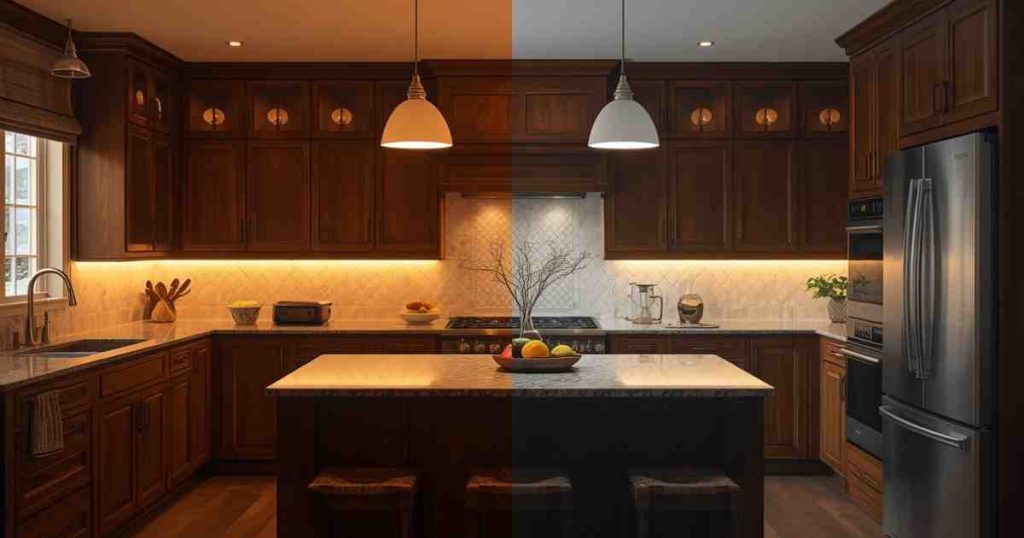
What is Color Temperature?
Color temperature is measured in Kelvin (K). Higher Kelvin numbers mean cooler, bluer light, like the sky on a clear day. Lower Kelvin numbers mean warmer, redder light, like a sunset or a candle flame.
It’s a way to describe the visual appearance of the light itself.
For instance, a very warm light might be around 2000K. This is similar to the glow of a traditional incandescent bulb. It creates a cozy, relaxing atmosphere.
On the other hand, a very cool light could be 6500K. This mimics natural daylight and can make things look very crisp and clear.
Understanding this scale helps you pick the right mood for any room. In the kitchen, this choice can impact everything from food prep to casual dining. We’ll explore how different temperatures work best in this important space.
Kelvin Scale Explained
The Kelvin scale is a standard way to measure light’s color. It’s a scientific scale, but we can think of it in simpler terms for our homes.
- 2000K-3000K (Warm White): This range offers a cozy, inviting glow. It’s similar to the light from old-fashioned incandescent bulbs. This light has more yellow and red tones.
- 3000K-4000K (Neutral White): This is a balanced light. It’s not too warm and not too cool. It’s often described as a clean, bright white.
- 4000K-5000K (Cool White): This light starts to have more blue in it. It feels brighter and more energizing.
- 5000K-6500K (Daylight): This is the coolest and bluest light. It closely resembles natural sunlight and is very stimulating.
Choosing a Kelvin value is like picking a paint color for your walls. You want it to match the feeling you want to create. For a kitchen, where you do many different things, you might even want different temperatures for different areas.
Warm Light: Cozy and Inviting
Warm light is all about creating a comfortable and relaxing feeling. It has a yellowish or reddish hue, making spaces feel more intimate and cozy. Think of a candlelit dinner or a sunset; that’s the kind of warmth we’re talking about.
In a kitchen, warm light can make it feel more like a gathering place, a comfortable spot for family and friends.
Using warm light in your kitchen can make it feel more inviting. It's great for areas where you might be eating or socializing, like a breakfast nook or a dining island. This type of light can make food look more appealing by bringing out richer, warmer tones in ingredients.
It’s also good for general ambient lighting, giving the whole space a welcoming glow.
However, for tasks that require sharp vision, like chopping vegetables or reading a recipe, very warm light might not be ideal. The yellow tones can sometimes make it harder to distinguish subtle colors. We’ll explore where warm light shines best in the next section.
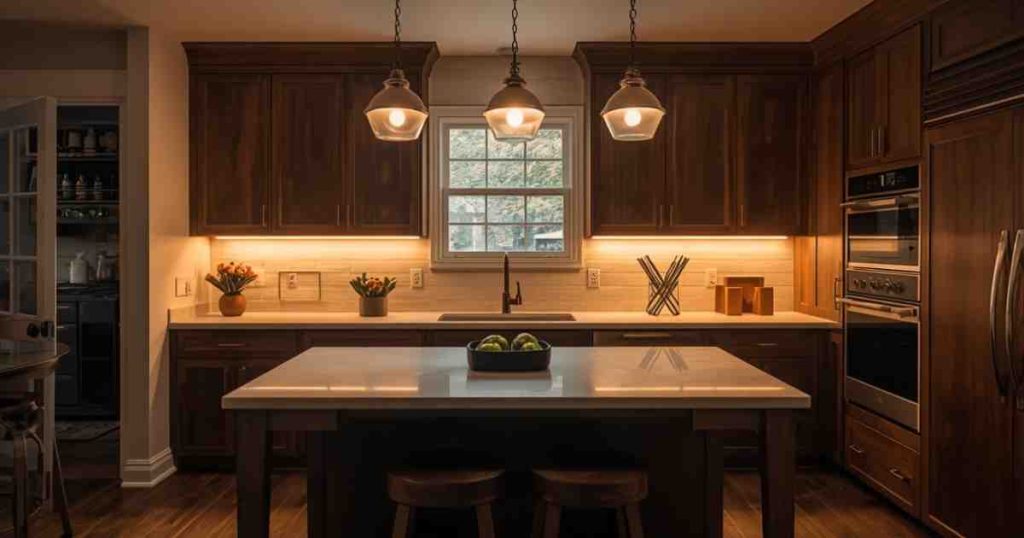
Where Warm Light Works Best
Warm light is perfect for creating a relaxing atmosphere in your kitchen. It’s often used in dining areas or lounges within the kitchen space.
- Dining Areas: A warm glow makes meals feel more special and intimate. It encourages conversation and relaxation after a long day.
- Breakfast Nooks: Starting your day with gentle, warm light can be a pleasant experience. It’s less harsh than bright, cool light first thing in the morning.
- Ambient Lighting: For general lighting that fills the room, warm light provides a welcoming feel to the entire kitchen.
Imagine sitting down for a weekend brunch under a soft, warm light. The food looks delicious, and the mood is relaxed. This is the power of warm light in creating an inviting kitchen environment.
Cool Light: Bright and Energizing
Cool light is the opposite of warm light. It has a bluish tint and is much brighter. Think of the light on a cloudy day or the bright lights in an office.
Cool light can make spaces feel more alert and focused. In a kitchen, this can be really helpful for tasks that need precision and good visibility.
Using cool light can make your kitchen feel more modern and clean. It’s excellent for task lighting, where you need to see clearly. For example, when you’re chopping vegetables or inspecting food, cool light helps you see details better and can make colors appear more true.
However, if your entire kitchen is lit with very cool light, it might feel a bit sterile or less inviting for relaxed activities. It’s powerful for work, but maybe not for winding down. We’ll look at how to balance this.
Where Cool Light Works Best
Cool light is ideal for areas where clear vision and focus are most important. It helps with precision and can make tasks easier.
- Under-Cabinet Lighting: This is a prime spot for cool light. It illuminates your countertops brightly, making food prep safer and more efficient.
- Task Lighting: Any light directed at a specific workspace, like around the stove or sink, benefits from cool light’s clarity.
- General Brightness: If you want your kitchen to feel open and well-lit, cooler tones can contribute to that bright, airy feel.
Consider a scenario where you’re doing intricate decorating on a cake. Bright, cool light under the cabinets will let you see every detail perfectly. This ensures your creative work is precise and looks just as you imagined.
Warm vs Cool Light in the Kitchen: Which Color Temperature Should You Use?
So, to answer the question: Warm vs Cool Light in the Kitchen: Which Color Temperature Should You Use? The answer really depends on what you want your kitchen to do and how you want it to feel. Many kitchens benefit from a mix of both warm and cool lighting.
For instance, you might have cooler, brighter lights under your cabinets for food prep. Then, you could have warmer, softer lights over your dining table or island for a more relaxed feel. This approach gives you the best of both worlds.
Think about your daily routine. Do you spend a lot of time chopping and dicing, or do you mostly use your kitchen for quick meals and socializing? If it’s mostly prep work, lean towards cooler tones for those areas.
If it’s a cozy gathering spot, warmer tones will be more fitting.
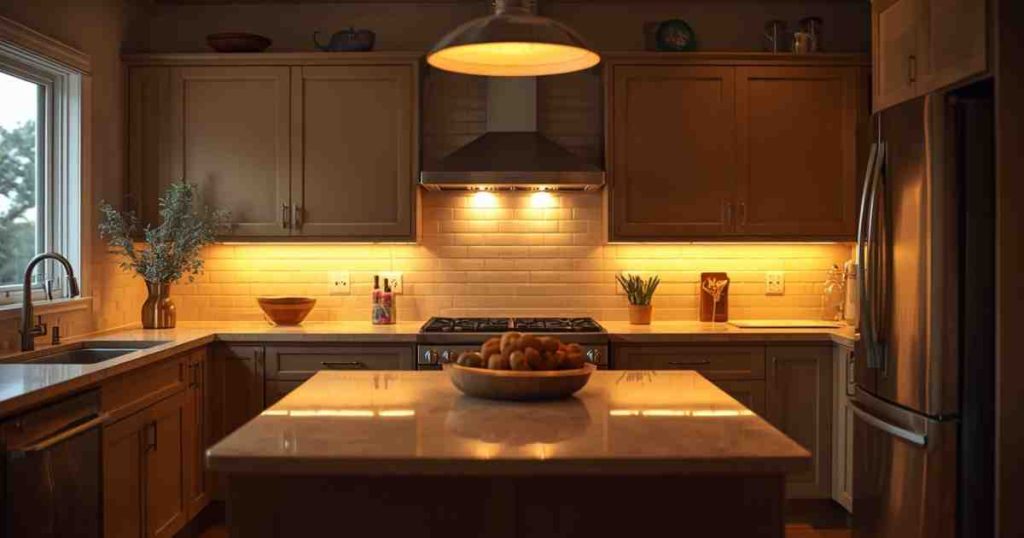
Combining Warm and Cool Lighting
The most effective kitchen lighting often involves layers. You don’t have to pick just one. Mixing different color temperatures can create a dynamic and functional space.
This is called layered lighting. It means using different types of lights for different purposes. Ambient lighting sets the overall mood.
Task lighting helps with specific jobs. Accent lighting highlights features.
By strategically placing warm and cool lights, you can create zones within your kitchen. A bright, cool zone for cooking and a soft, warm zone for relaxing or eating. This makes your kitchen adaptable to any activity.
For example, imagine you have dimmable warm lights over your island for evening chats. You can switch to brighter, cooler lights under the cabinets when it’s time to prepare dinner. This flexibility is key to a well-designed kitchen.
Choosing the Right Brightness (Lumens)
Besides color temperature, the brightness of the light is also important. This is measured in lumens. More lumens mean a brighter light.
Different areas of the kitchen need different levels of brightness.
For example, the area where you chop vegetables needs to be quite bright. This is for safety and precision. The dining area, however, might be better with slightly dimmer, more subdued light.
When you’re looking at light bulbs, you’ll see both Kelvin (color temperature) and Lumens (brightness) listed. Make sure you consider both.
How Many Lumens Do You Need?
Here are some general guidelines for kitchen brightness:
- General Ambient Lighting: Aim for around 20-30 lumens per square foot.
- Task Lighting (Counters, Stovetop, Sink): You’ll want more here, about 70-80 lumens per square foot.
- Dining Areas: Softer light is good, around 10-20 lumens per square foot.
These are just starting points. Your personal preference and the size of your kitchen will also play a role. It’s often better to have more light than you need, as many lights can be dimmed.
Consider a large kitchen island. You might want bright, cool task lights directly above it for food prep. Then, add some softer, warmer pendant lights around it for a cozy evening atmosphere.
This covers all your needs.
Putting It All Together: Practical Tips
Now that you know the difference between warm and cool light, how do you actually put this into practice? It’s all about planning and a little bit of experimentation. Don’t be afraid to try things out.
Start by thinking about the main activities in your kitchen. Where do you do most of your cooking? Where do you eat?
Where do you just hang out? Answering these questions will help you decide which areas need bright, focused light and which need a softer, more relaxed glow.
Remember that most modern light fixtures and bulbs come with options. You can often find dimmable bulbs that allow you to adjust the brightness, and some even let you change the color temperature. This flexibility is a huge advantage.
Sample Kitchen Lighting Plan
Here’s a simple way to plan your kitchen lighting:
- Assess your kitchen layout: Sketch out your kitchen and mark different zones: cooking, prep, dining, and general.
- Choose task lighting for prep areas: Select bulbs with a color temperature between 4000K and 5000K (cool white to daylight). Ensure they are bright enough (high lumens). Under-cabinet lights are great for this.
- Select ambient lighting for general areas: Use bulbs between 2700K and 3000K (warm white) for a welcoming feel. Dimmable options are ideal. Recessed lights or ceiling fixtures work well.
- Add accent or mood lighting: Consider pendant lights over an island or dining table. These can be warmer (2200K-2700K) or even dimmable to change the mood.
One real-life example is a family who found their kitchen felt too harsh with all cool lights. They switched their main ceiling lights to a warmer 3000K and kept the under-cabinet lights at 4000K. The kitchen instantly felt more inviting for family dinners while still being bright enough for cooking. The Energy Star guide explains how brightness and color temperature affect kitchen functionality.
Another scenario: A small apartment kitchen was always dark. By installing bright, 5000K LED strips under the cabinets and using a few 3000K pendant lights over a small table, the space felt much larger and more functional. This shows how mixing temperatures can transform a space.
Statistics show that good lighting can increase perceived kitchen size by up to 15%. The right color temperature also impacts how food is perceived; warmer tones often make food look more appetizing, especially in dining areas. (Source: Home & Decor Magazine, Kitchen Lighting Trends 2023). Understanding the color temperature scale helps you choose the right bulb for each kitchen zone.
Studies also suggest that 70% of homeowners prefer a mix of lighting types in their kitchen for versatility.
Frequently Asked Questions Of Warm Vs Cool Light In The Kitchen: Which Color Temperature Should You Use?
Is warm light or cool light better for a kitchen?
It depends on the area and its purpose. Cool light is better for task areas like countertops for clarity, while warm light is better for dining or relaxation spots to create a cozy atmosphere.
What is the best Kelvin for kitchen task lighting?
For task lighting, a Kelvin range of 4000K to 5000K (cool white to daylight) is generally recommended. This provides bright, clear light that helps with precision tasks.
Can I mix warm and cool lights in my kitchen?
Yes, absolutely! Mixing warm and cool lights is a great way to create different moods and functional zones within your kitchen. It’s often the best approach.
How does light color affect how food looks?
Warmer lights (lower Kelvin) tend to bring out rich, warm colors in food, making it look more appealing for dining. Cooler lights (higher Kelvin) can make colors appear more true and vibrant, which is helpful for food preparation and inspection.
What’s the easiest way to choose kitchen light color?
Think about what you do most in your kitchen. If it’s cooking and chopping, go for brighter, cooler lights in those spots. If it’s eating and chatting, choose softer, warmer lights there.
Wrap Up
Choosing between warm and cool light for your kitchen is about creating the right mood and making tasks easy. Cool light is great for bright, focused work on countertops. Warm light makes dining areas feel cozy and inviting.
By mixing these types, you can make your kitchen both functional and comfortable, perfectly lighting every corner for every activity. A well-planned kitchen lighting design balances ambient, task, and accent lights.

![How To Retrofit Led Lighting In An Old Kitchen Without Full Rewiring[1]](https://kitchentoolslab.com/wp-content/uploads/2026/05/How_To_Retrofit_Led_Lighting_In_An_Old_Kitchen_Without_Full_Rewiring1-768x403.jpg)
![Kitchen Lighting Over Sink Best Fixture Types And Placement Rules[1]](https://kitchentoolslab.com/wp-content/uploads/2026/05/Kitchen_Lighting_Over_Sink__Best_Fixture_Types_And_Placement_Rules1-768x403.jpg)
![Kitchen Lighting Mistakes That Make Your Space Look Cheap (And How To Fix Them)[1]](https://kitchentoolslab.com/wp-content/uploads/2026/05/Kitchen_Lighting_Mistakes_That_Make_Your_Space_Look_Cheap_And_How_To_Fix_Them1-768x403.jpg)
![How To Plan Kitchen Lighting A Step By Step Guide For Homeowners[1]](https://kitchentoolslab.com/wp-content/uploads/2026/05/How_To_Plan_Kitchen_Lighting__A_Step-By-Step_Guide_For_Homeowners1-768x403.jpg)
![Under Cabinet Lighting Led Strips Vs Puck Lights — Which Is Better[1]](https://kitchentoolslab.com/wp-content/uploads/2026/05/Under-Cabinet_Lighting__Led_Strips_Vs_Puck_Lights_—_Which_Is_Better1-768x403.jpg)
![Recessed Vs Surface Mounted Kitchen Lighting Which One Should You Choose[1]](https://kitchentoolslab.com/wp-content/uploads/2026/05/Recessed_Vs_Surface-Mounted_Kitchen_Lighting__Which_One_Should_You_Choose1-768x403.jpg)