
Food Safety Rules Every Sous Vide Beginner Should Understand
Sous vide food safety rules for beginners require strict temperature management because cooking at low temperatures for extended periods places food in the bacterial danger zone between 40°F and 140°F. Food must be held above 130°F during cooking and pasteurized by maintaining that minimum internal temperature for a duration dictated by the thickness of the item. Any food not served immediately after cooking must be rapidly chilled in an ice bath, and proper vacuum sealing is essential to prevent botulism spores from activating in the low-oxygen environment.
Sous vide cooking locks in flavor, but it also creates a perfect breeding ground for bacteria if you ignore safety rules. This guide covers the essential food safety rules every beginner must understand before using a sous vide machine.
Quick Verdict: Simply put, sous vide requires strict temperature control because you cook food at lower temperatures for longer periods than traditional methods. The danger zone – between 40°F and 140°F – allows bacteria to grow rapidly. You must hold food above 130°F for safety and chill it properly after cooking.
Key Takeaways
- Bacteria multiply fastest between 40°F and 140°F, and sous vide cooking often keeps food in this range for hours, making strict temperature management essential.
- You must pasteurize food by holding it at a specific minimum internal temperature for a set duration that depends on the thickness of the item.
- Ice baths and rapid chilling are mandatory for any sous vide food you do not serve immediately after cooking.
- Seal food in proper vacuum bags to prevent botulism spores from activating in low-oxygen environments.
- Always verify your sous vide circulator is calibrated and use a separate probe thermometer to confirm actual water temperature matches the set temperature.
What Is Sous Vide and Why Does Temperature Control Matter?
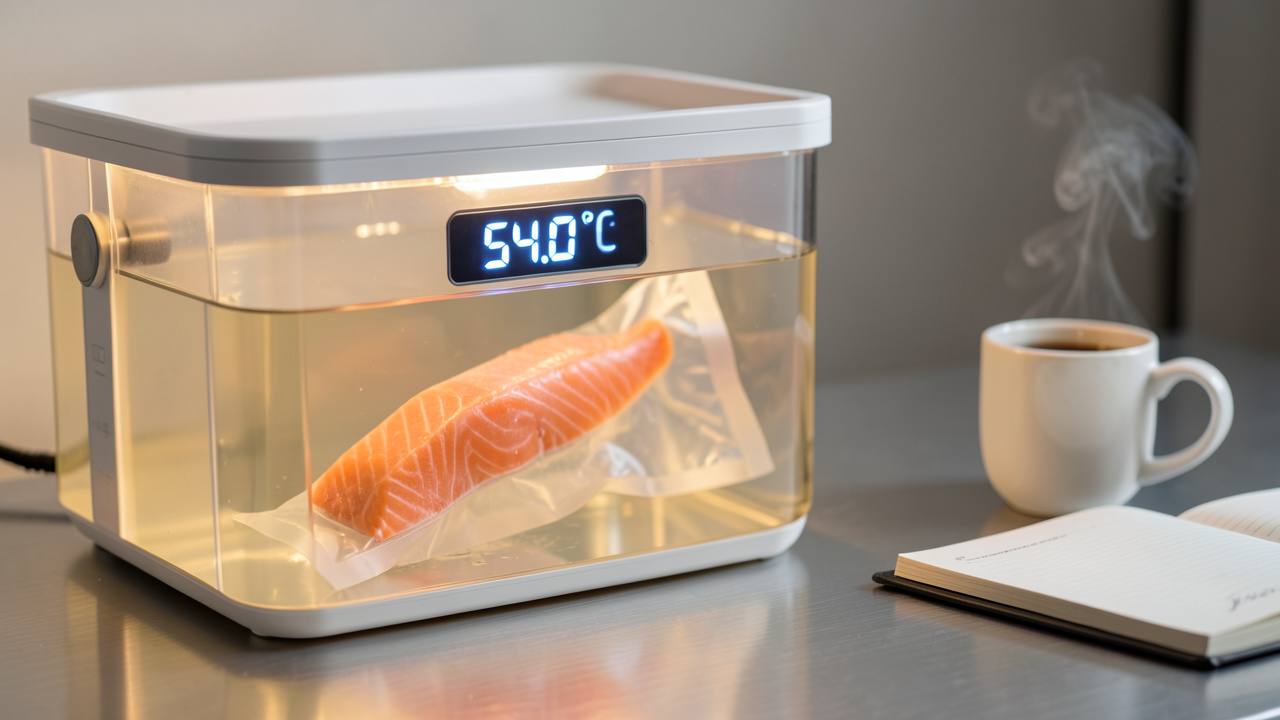
Sous vide is French for “under vacuum.” You seal food in an airtight bag and cook it in a precisely controlled water bath. The machine circulates water and holds a steady temperature for hours or even days.
This cooking method creates unique food safety challenges. Traditional cooking uses high heat that kills bacteria quickly. Sous vide uses lower heat that kills bacteria slowly – only if you hold the right temperature long enough.
According to the, bacteria multiply fastest in the temperature danger zone between 40°F and 140°F. Sous vide cooking frequently operates between 130°F and 160°F – right at the edge of this zone.
Important: The danger zone is not a fixed cutoff. At 130°F, some bacteria still survive but grow very slowly. At 126°F, dangerous pathogens like Salmonella and Listeria can multiply. Never cook sous vide below 130°F for any food.
How Does Sous Vide Pasteurization Work?
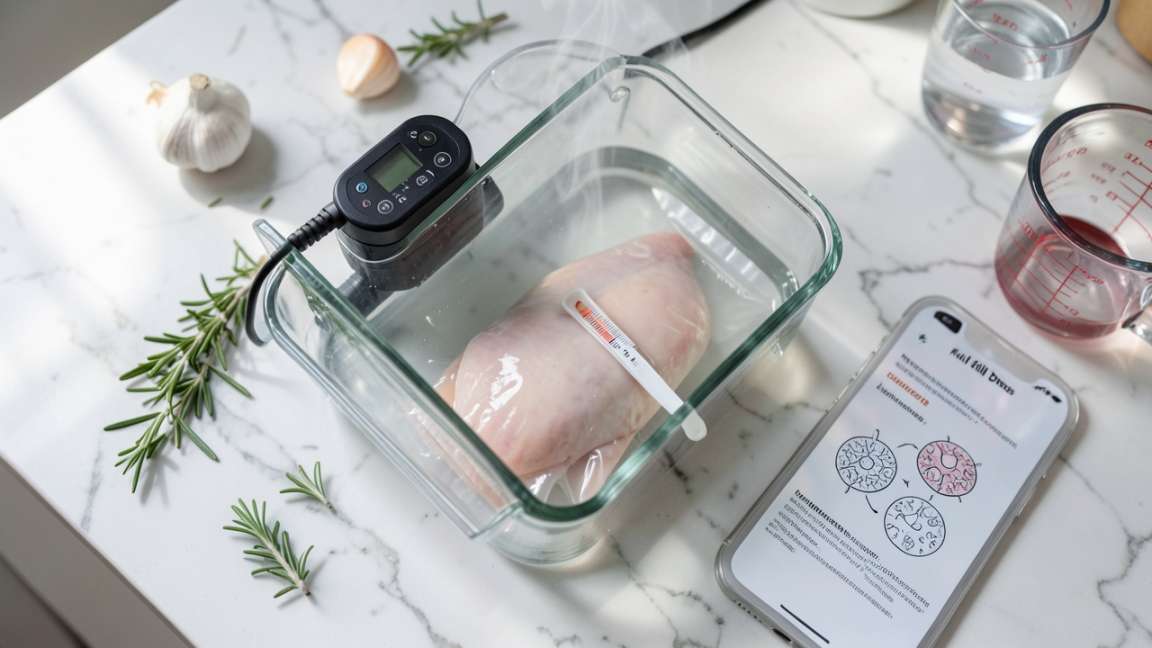
Pasteurization means reducing harmful bacteria to safe levels. In sous vide, this depends on both temperature and time. The thicker the food, the longer it takes for the center to reach the target temperature.
The USDA provides pasteurization tables for common foods. For example, a 1-inch thick chicken breast needs 45 minutes at 140°F to become safe. A 2-inch roast needs 2 hours at the same temperature.
Here is a simplified guide for common foods:
| Food Type | Safe Minimum Temp | Minimum Time (1 inch thick) | ASD Time (1 inch thick) |
|---|---|---|---|
| Chicken breast | 140°F | 45 minutes | 1.5 hours |
| Pork chops | 135°F | 1 hour | 2.5 hours |
| Beef steak (medium-rare) | 130°F | 2 hours | 4 hours |
| Eggs (pasteurized) | 135°F | 45 minutes | 1.5 hours |
ASD stands for “additional safety duration.” This is the time beyond the pasteurization point that ensures the center reaches the correct temperature. You should always cook for at least the ASD time.
Key Food Safety Rules for Sous Vide Beginners
Follow these rules every time you cook sous vide. Skipping any of them puts you at risk of foodborne illness.
Rule 1 – Always Start with Cold Food
Place food directly from the refrigerator into the water bath. Do not let it sit at room temperature first. Starting cold gives you more time before the food enters the danger zone. The USDA recommends keeping perishable food below 40°F until you are ready to cook.
Rule 2 – Never Cook Below 130°F
The FDA Food Code states that food held below 130°F for more than 4 hours must be discarded. Some sous vide recipes call for 125°F or 128°F beef. These temperatures do not provide a safety margin. Stick to 130°F minimum for any meat that you cook for more than 2 hours.
Warning: Cooking at 129°F or below for extended periods is dangerous. Even if the food looks and smells fine, harmful bacteria may have multiplied to unsafe levels. Always use a calibrated thermometer to verify your water temperature.
Rule 3 – Use Proper Vacuum Sealing
Botulism spores thrive in low-oxygen environments. Sous vide bags create exactly these conditions. The warns that improperly stored sous vide food can support Clostridium botulinum growth. Use only food-grade vacuum bags designed for sous vide. Double-seal bags for long cooks over 8 hours.
- Use dedicated sous vide bags, not regular storage bags
- Seal bags fully to remove all air pockets
- Double-seal the open end for cooks longer than 8 hours
- Never reuse vacuum bags that held raw meat
- Check bags for leaks before submerging in water
Rule 4 – Chill Rapidly After Cooking
If you do not serve food immediately, you must cool it quickly. The USDA says food must go from 140°F to 70°F within 2 hours, then from 70°F to 40°F within 4 hours. Place sealed bags in an ice bath for 30 minutes, then transfer to the refrigerator.
For long-term storage, freeze sous vide bags immediately after the ice bath. Do not leave cooked sous vide food at room temperature for more than 30 minutes total.
Rule 5 – Keep the Water Bath Covered
Evaporation can lower water temperature over long cooks. A covered bath maintains stable temperature and prevents contamination. Use a lid or plastic wrap on the container. The recommends covering all cooking vessels to maintain proper heat.
How to Set Up a Safe Sous Vide Workflow
Create a repeatable process that covers every safety step. This workflow works for most home cooks.
- Preheat your sous vide water bath to the target temperature
- Pat food dry and season it before sealing
- Vacuum seal in a food-grade bag, double-sealing the end
- Submerge the bag fully, weighing it down with a rack or plate
- Cook for the minimum pasteurization time plus extra margin
- Test the water temperature with a probe thermometer at the start and halfway through
- For immediate service – sear or finish the food as desired
- For later use – transfer the sealed bag to an ice bath for 30 minutes, then refrigerate or freeze
Common Myths vs Facts About Sous Vide Safety
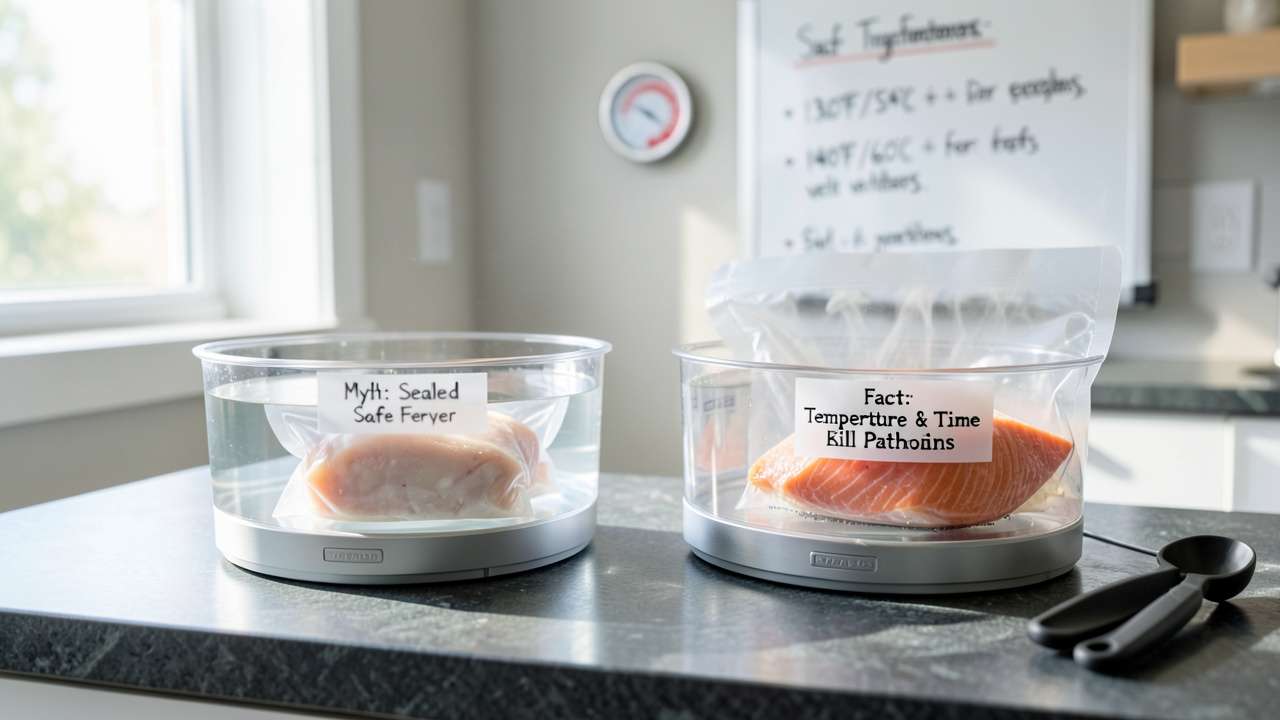
Many beginners hear misleading advice about sous vide food safety. Here are the most common myths and the facts that debunk them.
Myth 1 – “Sous vide kills all bacteria because the food cooks for hours”
Fact – Sous vide does not kill all bacteria. Some heat-resistant spores survive, especially in long cooks below 140°F. According to, pasteurization reduces pathogens to safe levels but does not sterilize food. Proper refrigeration after cooking is essential to prevent spore germination.
Myth 2 – “If the bag doesn’t float, the seal is good enough”
Fact – A floating bag is a sign of air inside, but a sealed bag can still leak. Small pinholes can introduce water and bacteria. Always test the seal by pressing the bag gently. Replace any bag that shows bubbles or leaks during cooking.
Myth 3 – “You can reuse the water bath for multiple batches”
Fact – Reusing water between batches is safe only if you keep the water hot (above 140°F) the entire time. If you cool the water between batches, bacteria can grow. Change the water between different food types like chicken and beef to avoid cross-contamination.
Pro Tips for Safer Sous Vide Cooking
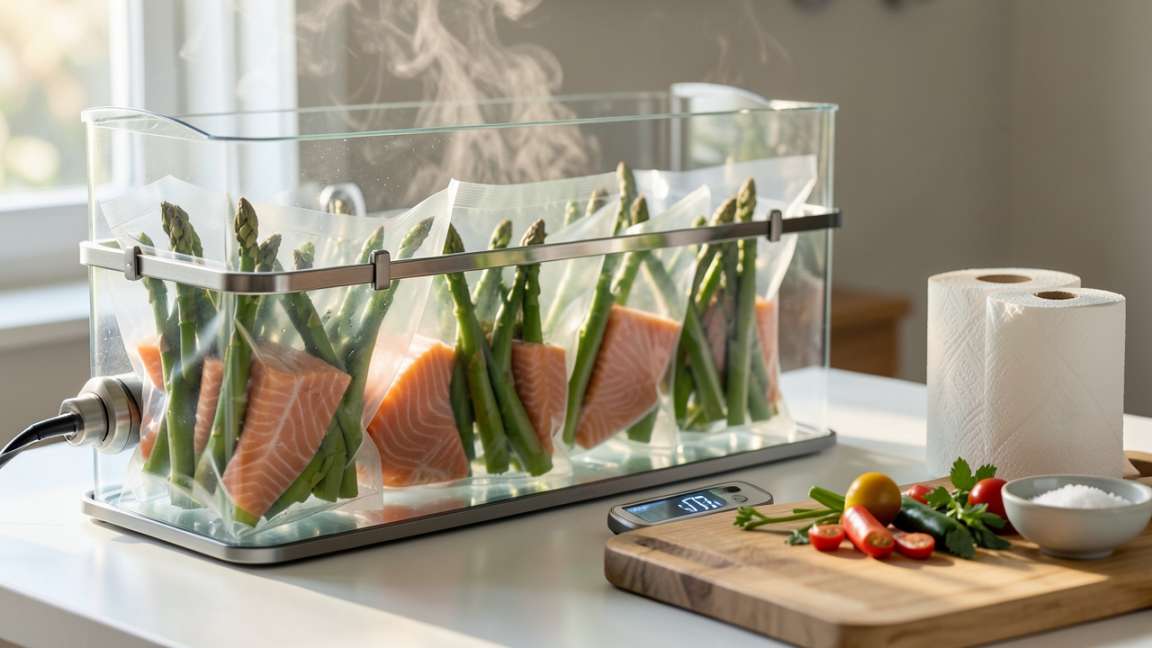
- Label every bag with the food type, cook temperature, and date before freezing – this prevents confusion and food waste
- Use a dedicated thermometer with a probe that reads within 1°F accuracy – test it in ice water and boiling water monthly
- Cook larger cuts of meat at least 1 inch thick to make pasteurization time predictable
- For eggs, cook at exactly 135°F for 45 minutes to pasteurize them without cooking the yolk solid
- Keep a cooking log for your first 10 sous vide meals – note time, temperature, and thickness to build your own safety reference
Tip: The sous vide guide by J. Kenji López-Alt provides pasteurization tables for dozens of foods. Bookmark it as a reference for your first few months of cooking.
Resources and Tools for Safe Sous Vide
- USDA Food Safety Tables – Official pasteurization times for meat, poultry, and eggs.
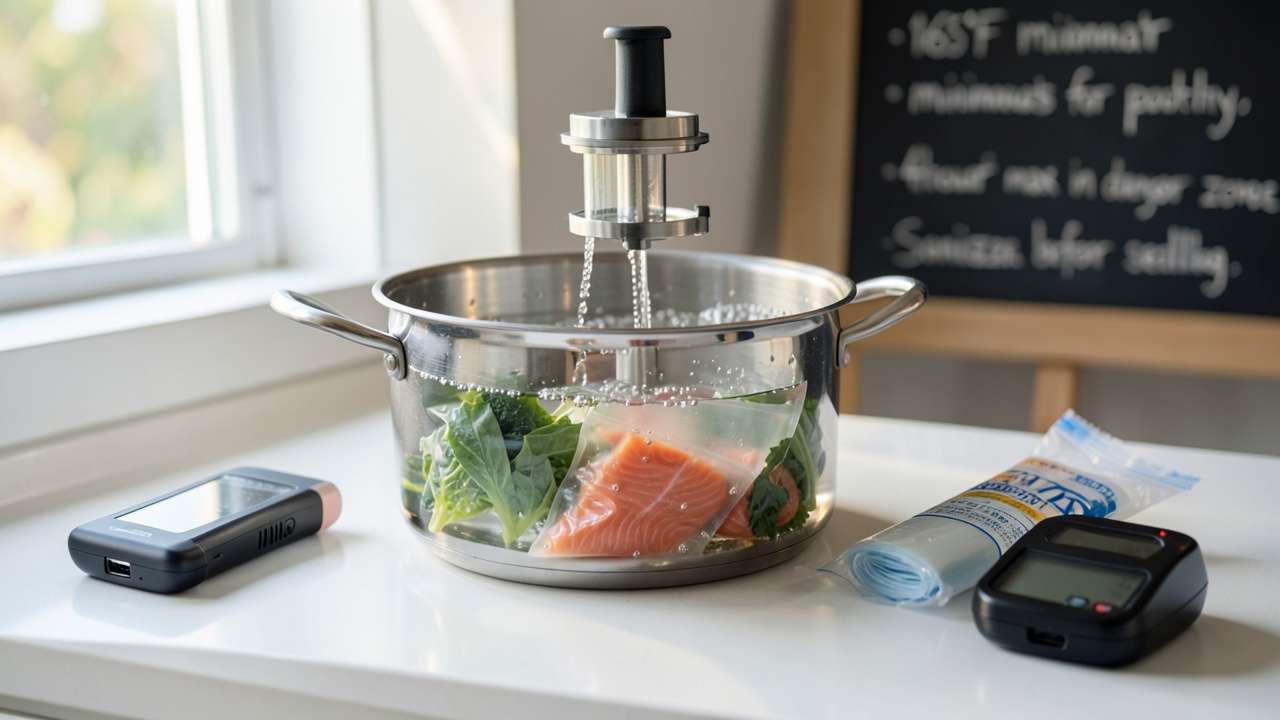
- Thermapen ONE Thermometer – Professional-grade instant-read thermometer accurate to 0.5°F.
- Anova Culinary Sous Vide App – Free app with time and temperature guides for hundreds of recipes.
- CDC Food Safety Guidelines – Reference for safe food handling and storage temperatures.
- FDA Safe Minimum Cooking Temperatures – Quick reference chart for all common foods.
Frequently Asked Questions
Can I sous vide food at 125°F for 24 hours?
No. Cooking below 130°F for more than 4 hours is not safe. Bacteria like Salmonella and E. coli can multiply at 125°F. Stick to a minimum of 130°F for any cook longer than 2 hours.
How long can I leave sous vide food in the water bath after it is done?
You can leave food in the water bath up to 4 hours past the minimum cook time, as long as the temperature stays above 130°F. After 4 hours, the risk of bacterial growth increases. Remove and chill the food promptly.
Do I need to sear meat after sous vide cooking?
Searing is not required for safety, but it improves flavor and kills surface bacteria that survive the water bath. The USDA recommends searing or grilling for 30-60 seconds per side to achieve a safe and delicious result.
Can I save and reuse the water from my sous vide bath?
You can reuse water if you keep it above 140°F between batches. If the water cools below 130°F, discard it and start fresh. Change water between different food types to prevent cross-contamination.
Is it safe to cook frozen meat directly in sous vide?
Yes, but you need to add extra cooking time. Frozen meat takes 50% longer to reach pasteurization temperature. Add at least 1 hour to the minimum cook time for any frozen item. The USDA confirms this practice is safe when you account for the extra time.
Final Thoughts
Sous vide gives you incredible control over texture and doneness, but it demands respect for temperature rules. Always cook above 130°F, use proper sealing, and chill food rapidly after cooking. Follow these food safety rules every time, and you will enjoy perfectly cooked meals without risk.