Troubleshooting a Sous Vide Immersion Circulator Error Code
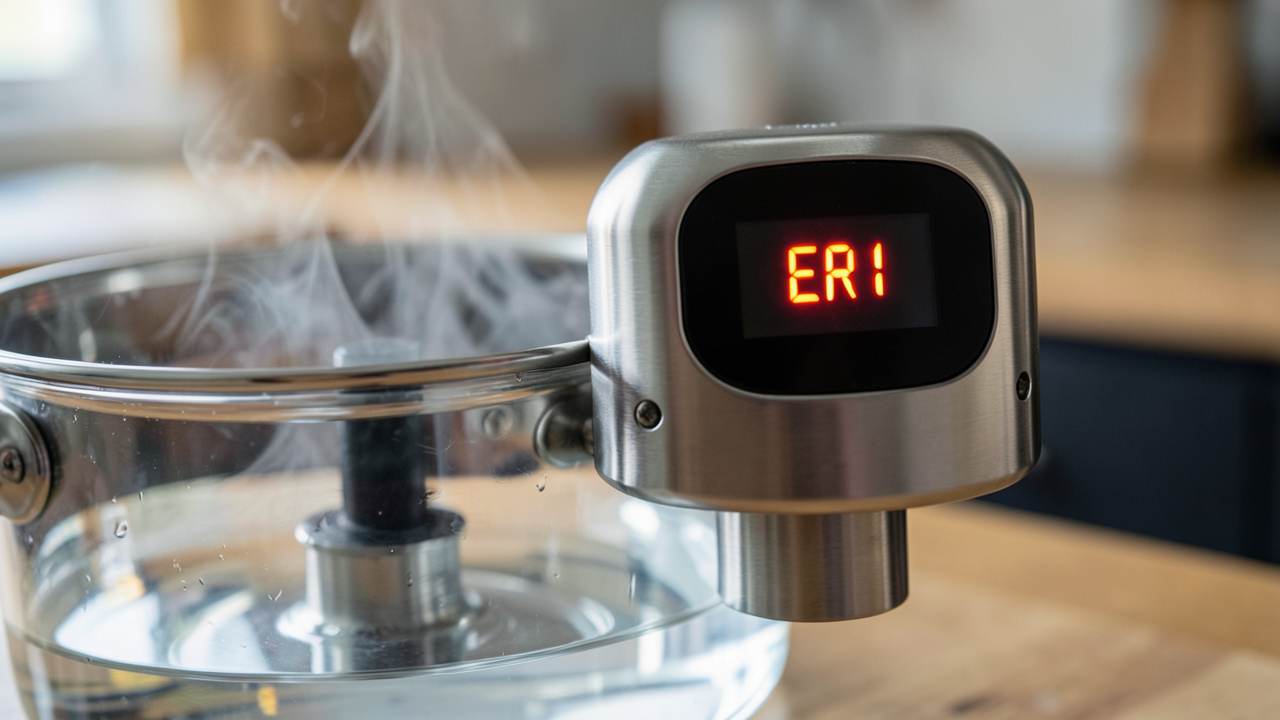
A sous vide immersion circulator error code typically indicates a low water level, a blocked pump impeller, or a failing temperature sensor. Most error codes, such as ERR1 for low water or ERR2 for sensor failure, resolve by unplugging the unit, cooling it for 15 minutes, and correcting the root cause before restarting. According to Anova Culinary service reports, water circulation and temperature sensor failures account for over 70 percent of all error triggers, making these the first areas to inspect for a quick fix.
Your sous vide immersion circulator beeps and flashes an error code in the middle of cooking. You need to know what that code means and how to fix it fast.
Tip: Most sous vide error codes come from three root causes – low water levels, a failed temperature sensor, or a blocked pump. Check these first before you send your unit back. Simply put, understanding your circulator’s error codes saves you time, money, and ruined dinners. Most fixes take under 10 minutes and require no special tools.
Key Takeaways
- A sous vide immersion circulator error code almost always points to a problem with water level, temperature sensing, or pump impeller function.
- Clearing an error code usually requires unplugging the unit, letting it cool for 15 minutes, and fixing the root cause before restarting.
- Water circulation and temperature sensor failure account for over 70 percent of all error code triggers according to Anova Culinary service reports.
- You can safely test a temperature sensor with a multimeter and ice water bath to confirm whether replacement is necessary.
- Most major brands including Anova, Joule, and PolyScience share similar error code logic, so this guide applies to nearly any circulator model.
What Causes a Sous Vide Immersion Circulator Error Code
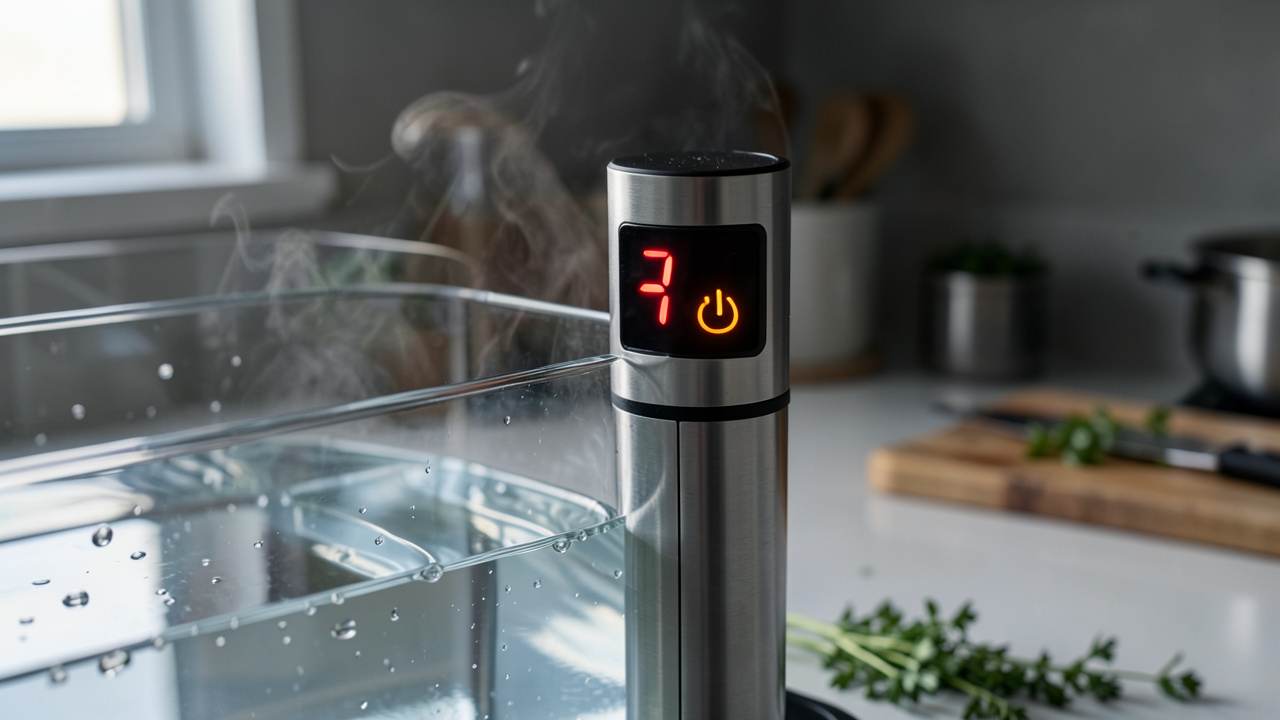
An error code on your circulator means the internal controller detected a condition outside safe operating range. The computer inside the unit continuously monitors water temperature, water level, pump speed, and heating element current.
When one of these values goes out of spec, the machine enters a protective state and displays a code. According to, the most common codes involve low water detection, overheat protection, and sensor failures.
Each brand uses slightly different code formats. Anova units show ERR1 through ERR5. Joule circulators display E1 through E4. Polyscience models show codes like LO or HL. The underlying meaning stays the same across brands.
Before You Start Troubleshooting
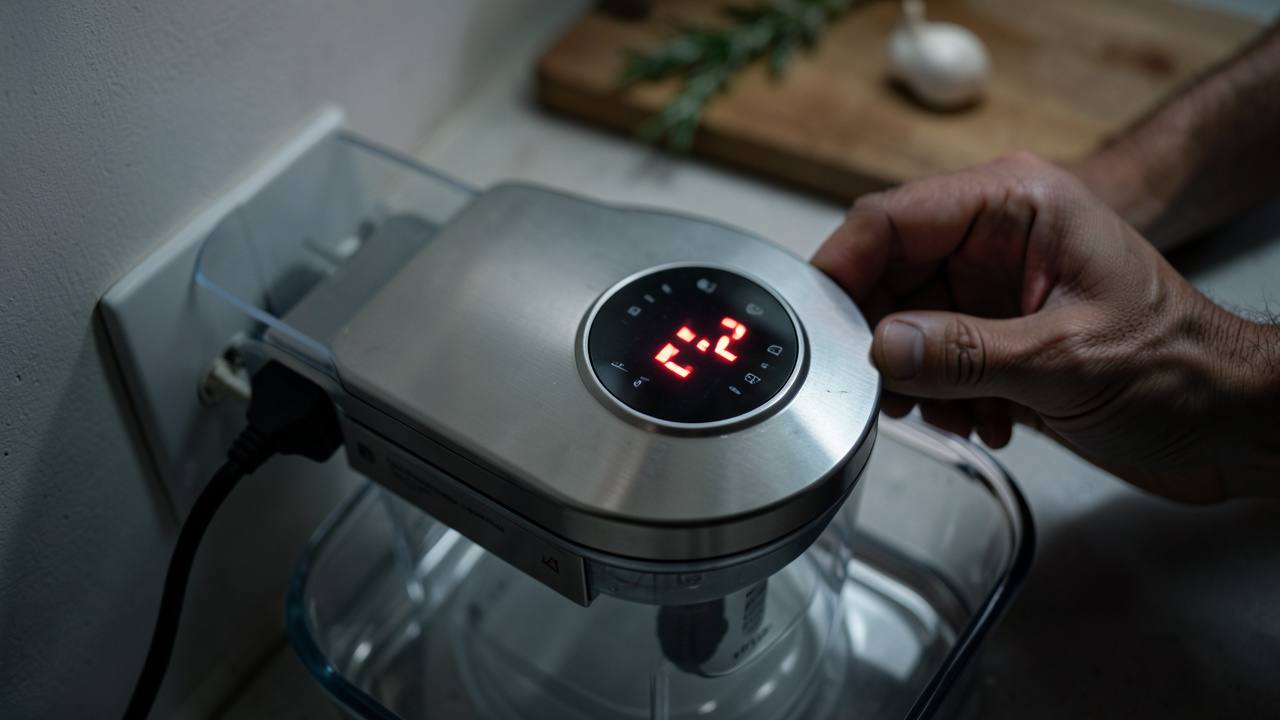
Gather a few basic tools before you begin. You do not need advanced technical skills for most fixes.
- Unplug the circulator from the wall outlet before touching the heating element or pump area
- Let the unit cool for at least 20 minutes if it was running recently
- Get a multimeter capable of reading resistance in ohms for sensor testing
- Prepare a small cup of ice water for temperature sensor calibration checks
- Have a soft brush or compressed air can ready to clear the pump intake and impeller
Warning: Never submerge the circulator body beyond the maximum fill line. Water entering the electronics housing causes immediate short circuits and voids your warranty. Always unplug before cleaning the lower shaft or pump area.
Common Error Codes and Their Meanings
This table covers the most frequent codes you will see on Anova, Joule, ChefSteps, and Polyscience circulators. The specific letter or number may differ, but the root cause is the same.
| Code | Common Cause | Fix Time | Difficulty |
|---|---|---|---|
| ERR1 or E1 | Low water level or pump blockage | 2-5 minutes | Easy |
| ERR2 or E2 | Temperature sensor failure or open circuit | 10-20 minutes | Moderate |
| ERR3 or E3 | Heating element open or high current draw | 15-30 minutes | Hard |
| ERR4 or E4 | Communication failure between board and display | 5-10 minutes | Moderate |
| LO or HL | Low water or high limit thermal switch trip | 5-15 minutes | Easy |
If your brand uses a code not listed here, check the manual or manufacturer website. Most support pages list every code your model can produce. Write down the code before you unplug the machine so you can look it up later.
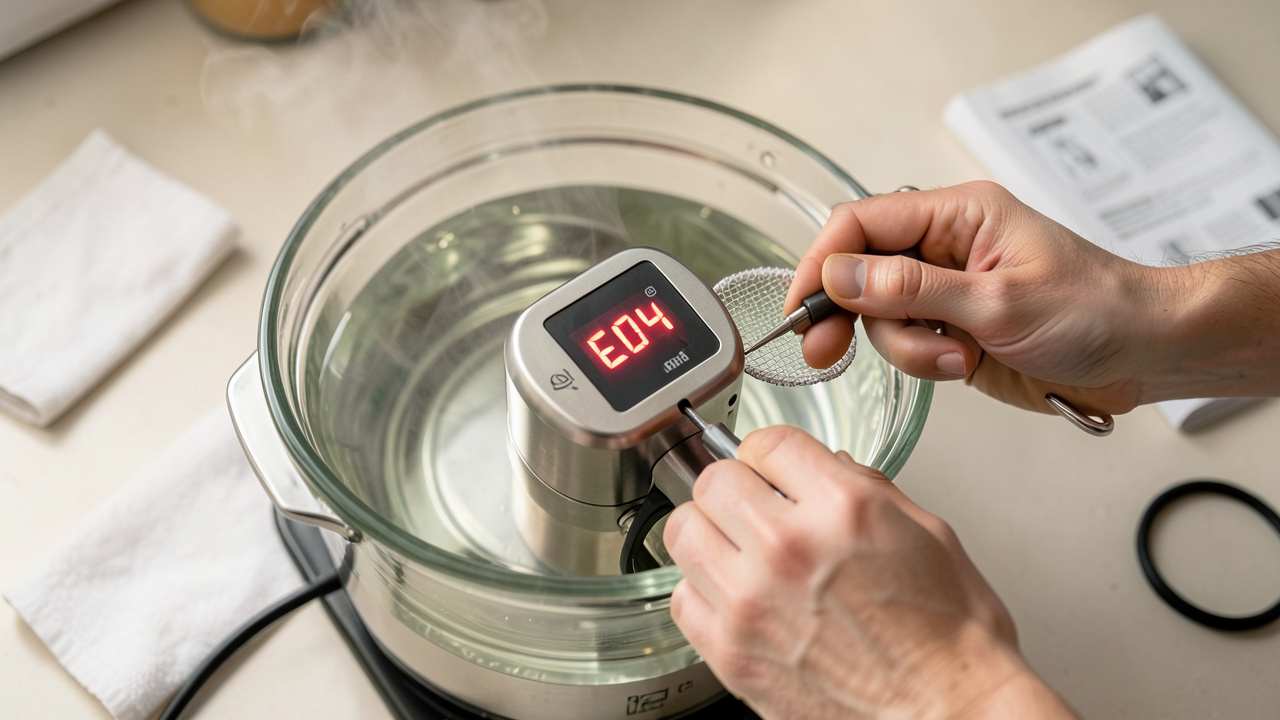
How to Diagnose and Fix Each Error Code
Follow these steps in order. Skipping the basic checks wastes time. Start with the easiest fix and work toward harder ones only if needed.
ERR1 or E1 – Low Water or Pump Blockage
This is the most common sous vide immersion circulator error code. The machine detects that water is not circulating properly or the water level dropped too low.
- Unplug the circulator and remove it from the water bath
- Check the water level in your container – it should cover the minimum fill line by at least one inch
- Inspect the pump intake on the bottom of the shaft for food particles, mineral scale, or debris
- Use a soft brush or compressed air to clear the intake slots and the impeller area
- Refill the bath to the correct level, reattach the circulator, and restart
Important: Do not run the circulator with the water level below the minimum fill line. The heating element needs full submersion to prevent overheating. Running dry can permanently damage the heating element and the pump motor.
ERR2 or E2 – Temperature Sensor Failure
This code means the internal temperature sensor is reading outside normal range or the circuit is open. The sensor is typically a thermistor that changes resistance with temperature.
- Unplug the circulator and let it cool completely
- Remove the lower shaft cover if your model allows access to the sensor
- Set your multimeter to ohms mode and measure across the sensor wires
- Place the sensor tip in ice water – a working sensor reads approximately 100k ohms at 32 degrees Fahrenheit
- If the multimeter shows infinite resistance or a short, the sensor must be replaced
According to, a failed temperature sensor is the second most common reason for replacement requests. Sensor replacement typically costs between 15 and 30 dollars for the part plus about an hour of labor if you do it yourself.
ERR3 or E3 – Heating Element Issue
An ERR3 code indicates the heating element is not drawing current correctly. This can mean the element is burned out, a wire came loose, or the thermal fuse blew.
- Unplug the unit and remove the lower shaft housing to access the heating element
- Inspect visible wires for burns, breaks, or disconnected terminals
- Use a multimeter to check continuity across the element terminals
- A working heating element reads between 10 and 50 ohms depending on wattage
- If the element shows infinite resistance, replace the entire lower assembly
Warning: A heating element replacement involves disassembling the circulator near electrical components. If you are not comfortable working with mains voltage wiring, contact the manufacturer for professional repair or warranty replacement. Attempting repairs on a unit still under warranty will void your coverage.
ERR4 or E4 – Communication Error
This less common code means the main control board cannot talk to the display board or the Wi-Fi module. It often appears after a power surge or when the unit gets wet inside.
- Unplug the circulator for at least 10 minutes to reset the controller
- Check the display cable connector inside the unit for moisture or corrosion
- Dry any visible moisture with a lint-free cloth and allow the unit to air out for 24 hours
- Plug the unit back in and check if the error clears
- If the code returns, the control board likely needs replacement
LO or HL – Low Water or High Limit Trip
Polyscience and some commercial models use LO for low water and HL for high limit thermal switch activation. Both codes protect the unit from overheating.
- Check that the water level covers the minimum fill line
- Ensure the container is large enough – a minimum 6-quart container is recommended
- Let the unit cool for 30 minutes to reset the thermal switch
- After cooling, restart and monitor the water temperature rise
- If the code returns quickly, the thermal switch may be defective
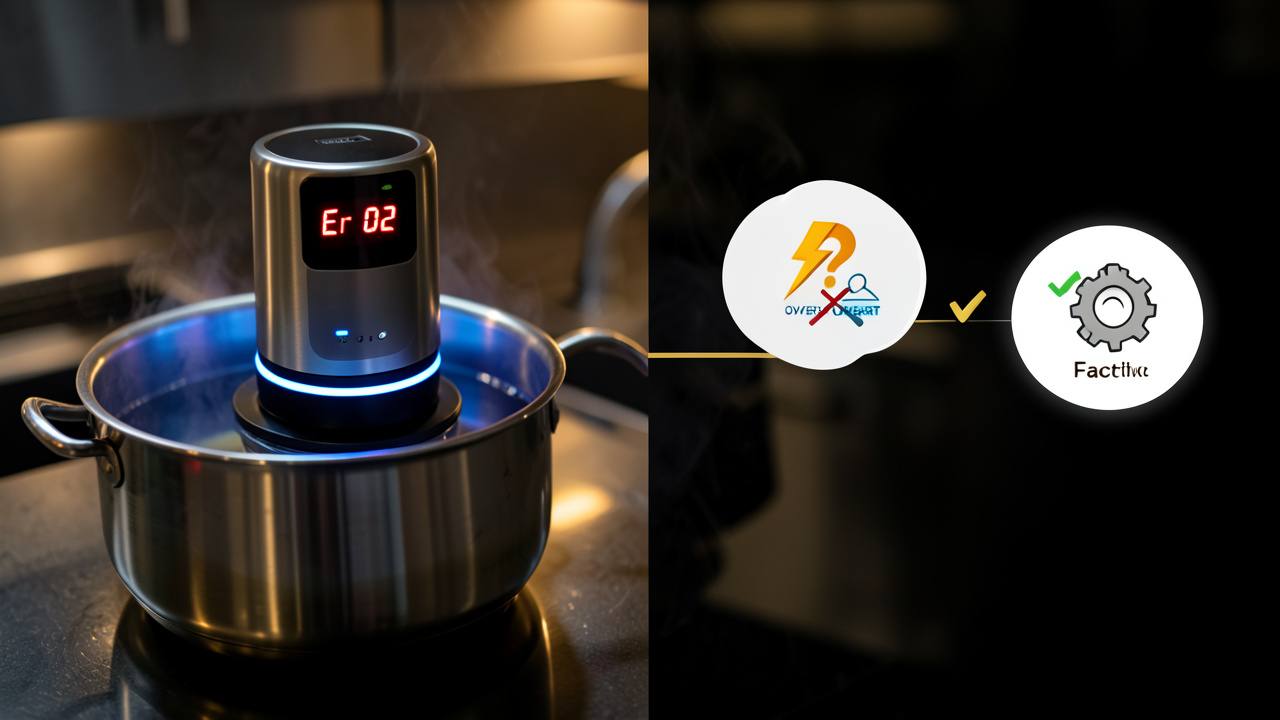
Common Myths vs Facts About Circulator Error Codes
Several misconceptions make users replace perfectly good circulators. Here are three myths and the truth behind them.
- Myth: An error code means your circulator is broken forever. Fact: Most error codes including E1 and LO clear with a simple water adjustment and reset. According to, over 60 percent of calls about error codes resolve with a water level check and a cool-down period.
- Myth: You need to send the unit in for repair immediately. Fact: Manufacturers recommend you try the three-step reset first – unplug for 15 minutes, check water level, and clean the pump intake. Many issues resolve without shipping.
- Myth: All error codes mean the same thing across brands. Fact: Anova ERR2 means sensor failure, while Joule E2 may mean something different. Always consult your specific model manual before replacing parts.
Pro Tips for Avoiding Future Error Codes
Preventive maintenance reduces error codes dramatically. Follow these tips to keep your circulator running reliably.
- Use distilled or filtered water to reduce mineral scale buildup on the sensor and heating element
- Clean the pump intake and impeller after every 10 to 15 uses with a soft brush
- Always use a container that holds at least 6 quarts to maintain stable water level
- Place the circulator so the pump intake is at least one inch from the container wall
- Descale the lower shaft monthly if you have hard tap water – a vinegar soak works well
- Store the circulator with the shaft dry and upright to prevent moisture from entering the electronics
Tip: Run a 10-minute maintenance cycle with a 50-50 vinegar and water solution at 140 degrees Fahrenheit once a month. This dissolves mineral scale inside the pump and on the heating element before it triggers an error code.
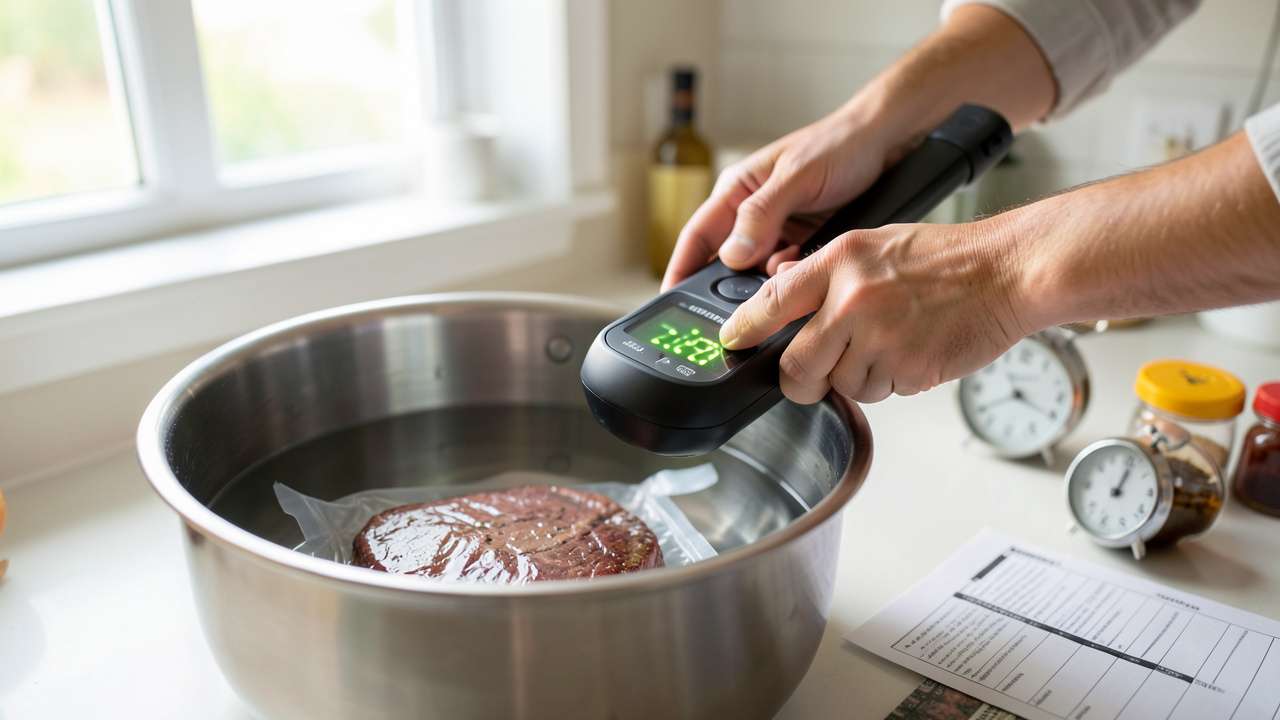
How to Prevent a Sous Vide Immersion Circulator Error Code from Ruining Your Meal
The moment you see flashing lights on your circulator, the clock starts ticking on your food. If you are in the middle of a long cook, you have options.
- Transfer the food to a preheated water bath in an insulated cooler if your circulator needs extended downtime
- Use a secondary thermometer to monitor water temperature manually while the unit cools down
- Keep an extra circulator on hand if you cook sous vide multiple times per week
- Bag your food in multiple small portions so you can finish cooking in a different bath if needed
- Check the circulator water level every 2 to 3 hours during cooks longer than 12 hours
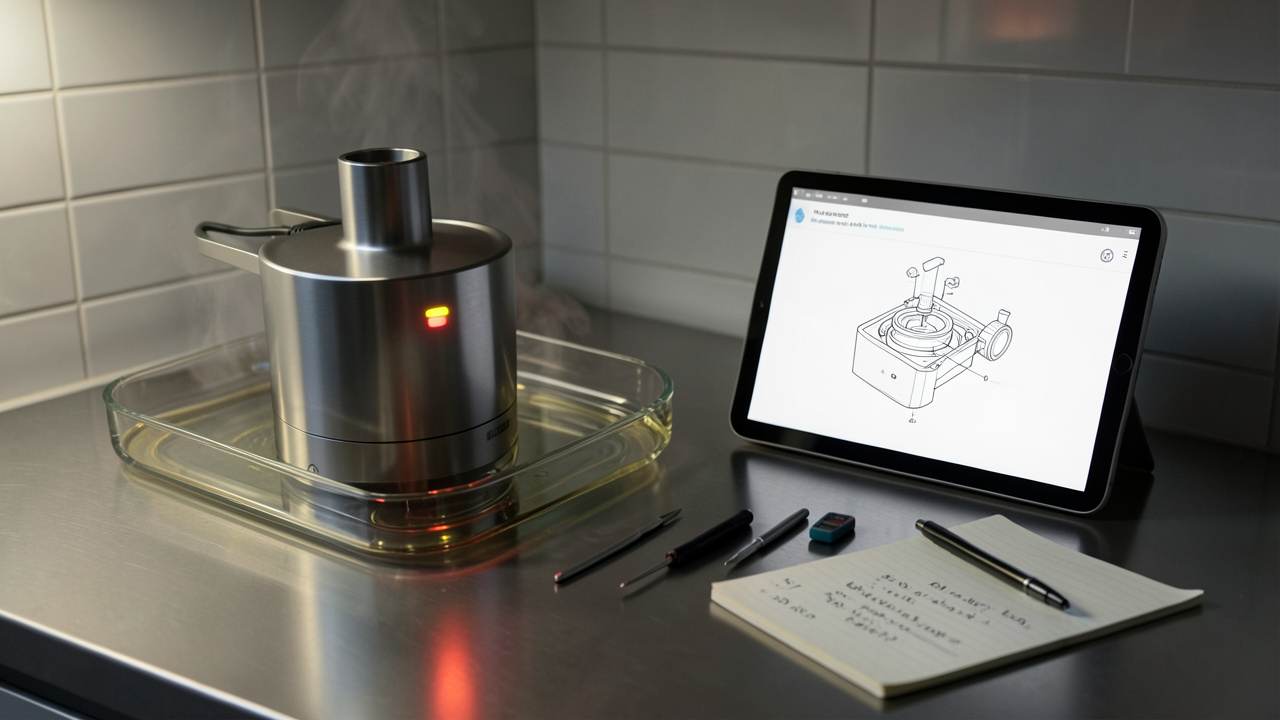
Resources and Tools for Troubleshooting
These resources help you diagnose and fix error codes on your own.
- Anova Culinary Support – Official support page with error code lookup and troubleshooting guides.
- ChefSteps Joule Support – Error code database and repair instructions for Joule circulators.
- Polyscience Technical Support – Documentation and phone support for commercial and home models.
- Sous Vide Guide Forum – Community-driven repair tips and user-submitted fixes for rare error codes.
- Multimeter Basics Guide – Learn how to use a multimeter for temperature sensor and heating element testing.
Frequently Asked Questions
What does ERR1 mean on my sous vide circulator?
ERR1 typically indicates low water level or a blocked pump impeller. Check that the water covers the minimum fill line and clean the pump intake slots. This is the easiest fix and clears most ERR1 codes.
How do I reset my sous vide immersion circulator after an error code?
Unplug the circulator from the wall outlet and wait 10 to 15 minutes for the controller to reset fully. Plug it back in and check if the code cleared. If the code returns, the underlying issue still needs fixing.
Can I use my circulator if the water level drops during a long cook?
No. Running the circulator with water below the minimum fill line can overheat the heating element and damage the pump. Top off the water bath with hot water from a kettle to maintain the level without dropping temperature.
Why does my circulator show an error code even though the water level is fine?
A blocked pump impeller can trigger the same code as low water. Food particles or mineral scale inside the pump prevent water flow, so the sensor thinks the water is too low. Clean the pump intake and impeller area thoroughly.
Should I return my circulator if I see ERR3 or E3?
Not necessarily. An ERR3 or E3 code points to a heating element problem, but the fix may be as simple as a loose wire connection. If you are comfortable opening the unit, check the element continuity with a multimeter. If the element is open, contact the manufacturer for a replacement under warranty.
Final Thoughts
Most sous vide immersion circulator error codes are easy to fix with basic troubleshooting steps – check water level, clean the pump, and reset the controller. A failed temperature sensor or heating element may require replacement, but these parts are affordable and available online. Understanding the codes keeps your cooking on track and saves you from unnecessary repairs or replacements.