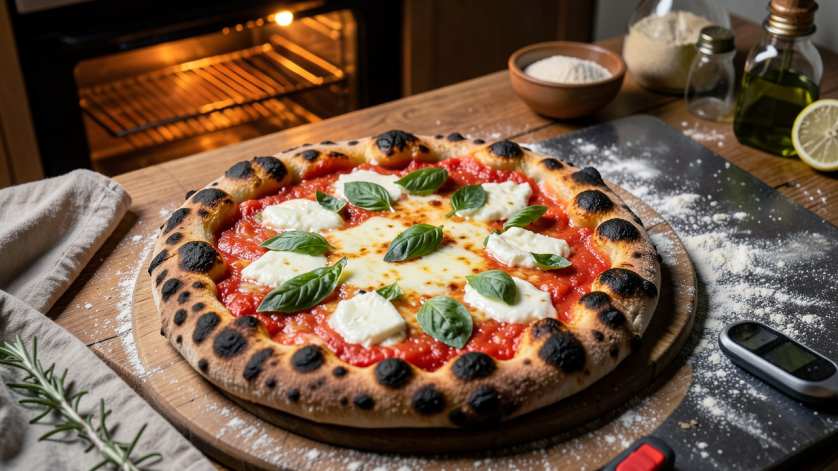
Achieving Neapolitan-Style Char Without an Outdoor Wood Oven
Achieving Neapolitan-style char without an outdoor wood oven requires a home oven preheated to at least 550°F combined with a pizza steel and a broiler technique. The steel transfers heat over 20 times faster than a stone to create bottom char in under four minutes, while 60 to 90 seconds under the broiler produces the top blistering that mimics wood-fired results. A dough hydration between 62 and 65 percent using Caputo 00 flour ensures the crust cooks through before the top burns under intense top-down heat.
Making Neapolitan pizza at home without a wood-fired oven is absolutely possible. This guide shows you the exact methods, tools, and techniques to achieve that signature charred crust.
Quick Verdict: You can achieve Neapolitan-style char using a home oven preheated to its maximum temperature (550°F or higher) combined with a pizza steel and a broiler technique. The key is thermal mass and intense top-down heat. A standard oven produces results that rival wood-fired baking.
Key Takeaways
- You need an oven that reaches at least 500°F to create the Maillard reaction responsible for char and leopard spotting on Neapolitan pizza crust.
- A pizza steel transfers heat 20 times faster than a stone, which creates the necessary bottom char in under 4 minutes of bake time.
- Using the broiler for the final 60 to 90 seconds gives the top of the crust the dark blistering that mimics a wood-fired oven.
- Hydration levels around 62% to 65% with Caputo 00 flour produce a dough that cooks through before the top burns in a home oven.
- Preheating the steel or stone for at least 45 minutes ensures it reaches equilibrium temperature for consistent results.
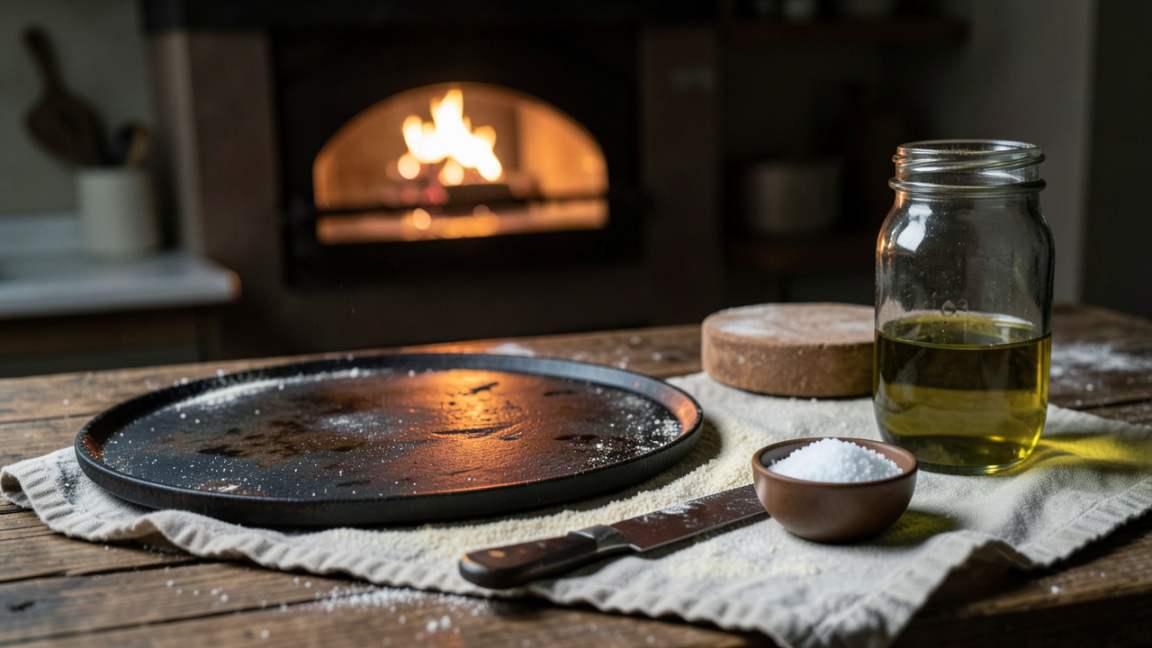
What You Need to Get Started
The right equipment makes the difference between a good pizza and one that rivals a pizzeria. You do not need a $3,000 outdoor oven. You need specific tools that maximize your existing oven’s performance.
Essential Equipment
You cannot fake thermal mass. The heating element or gas flame provides heat, but the cooking surface stores it and transfers it to the dough quickly. Here is what you need:
- Pizza steel – A 1/4-inch to 3/8-inch thick steel plate that sits on the oven rack. It holds more heat than a ceramic stone and transfers energy faster.
- Pizza stone – A good alternative if you already own one, but expect 30 to 60 seconds longer cook time than steel.
- Oven thermometer – Most home ovens run 25 to 50 degrees cooler than the dial shows. You need accuracy for Neapolitan results.
- Pizza peel – A wooden or metal peel for launching and turning the pizza. Wood absorbs moisture and prevents sticking.
- 00 flour – Caputo Pizzeria or similar high-protein flour designed for high-heat baking. All-purpose flour burns at these temperatures.
Tip: Search for a used welding steel plate at local metal supply shops. A 14 x 14 inch piece of A36 steel costs about $20. Sand it smooth and season it like cast iron.
Temperature Targets
Neapolitan pizza requires specific temperature zones. The standard requires a dome temperature of 800°F to 900°F. Your home oven cannot hit that, but you can simulate it with a two-phase cooking method.
| Zone | Typical Temperature | What It Does |
|---|---|---|
| Oven air temperature | 500°F to 550°F | Bakes the pizza through and melts cheese |
| Steel surface temperature | 550°F to 600°F | Creates bottom char and leopard spotting |
| Broiler element temperature | 1500°F+ (surface) | Gives top blistering and char in 60 seconds |
The steel collects radiant heat from the broiler during the last phase. This combination creates the thermal shock that chars the dough without burning it.
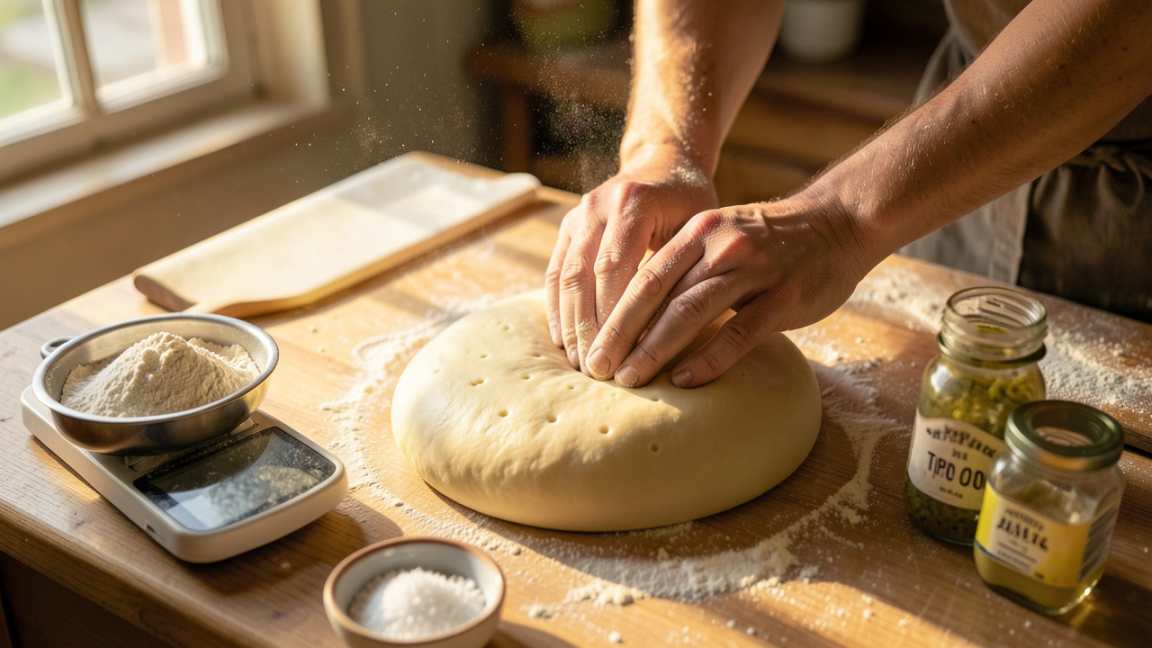
How to Prepare the Dough for High Heat
Dough hydration and ingredient ratios change when you bake at lower temperatures than a wood oven. You need a formula that prevents burning while still cooking through.
The Right Dough Formula
Use a hydration level between 62% and 65%. A dough that is too wet takes longer to set the crust structure, which leads to a pale bottom and raw interior. Here is a simple recipe for two 10-inch pizzas:
| Ingredient | Amount | Baker’s Percentage |
|---|---|---|
| 00 flour | 500 grams | 100% |
| Water (room temp) | 320 grams | 64% |
| Fine sea salt | 12 grams | 2.4% |
| Instant yeast | 3 grams | 0.6% |
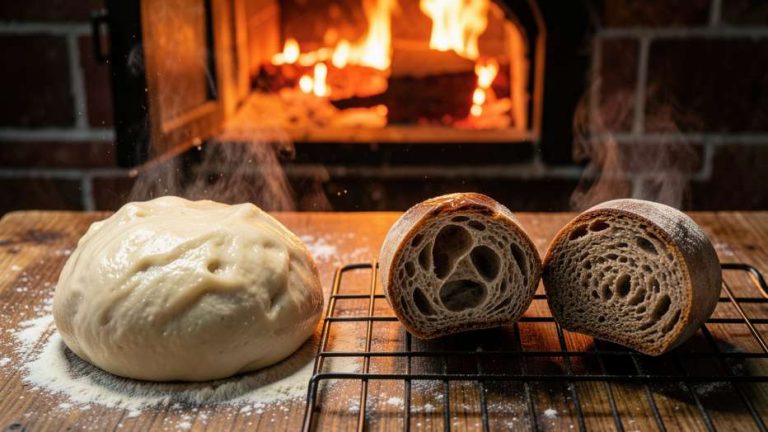
Mix the flour and water by hand until no dry spots remain. Let it rest for 20 minutes for autolyse. Add salt and yeast and knead for 8 to 10 minutes until smooth. Ferment at room temperature for 8 hours, then cold ferment for 24 to 72 hours in the refrigerator.
Important: Cold fermentation develops flavor and strengthens the gluten network. Pizzas made with a 48-hour cold ferment develop more complex browning and a lighter, airier crumb than same-day doughs.
Shaping and Topping Tips for Fast Bakes
You have about 3 to 4 minutes total bake time. Every second counts. Follow these rules for toppings:
- Use no more than 3 ounces of whole milk low-moisture mozzarella per 10-inch pizza. Too much moisture prevents the bottom from charring.
- Pat the mozzarella dry with paper towels for 10 minutes before using. This removes surface water that turns to steam.
- Apply sauce sparingly – about 2 tablespoons per pizza. A wet center creates a soggy middle that never chars.
- Spread toppings evenly and avoid large chunks that block heat transfer to the dough surface.
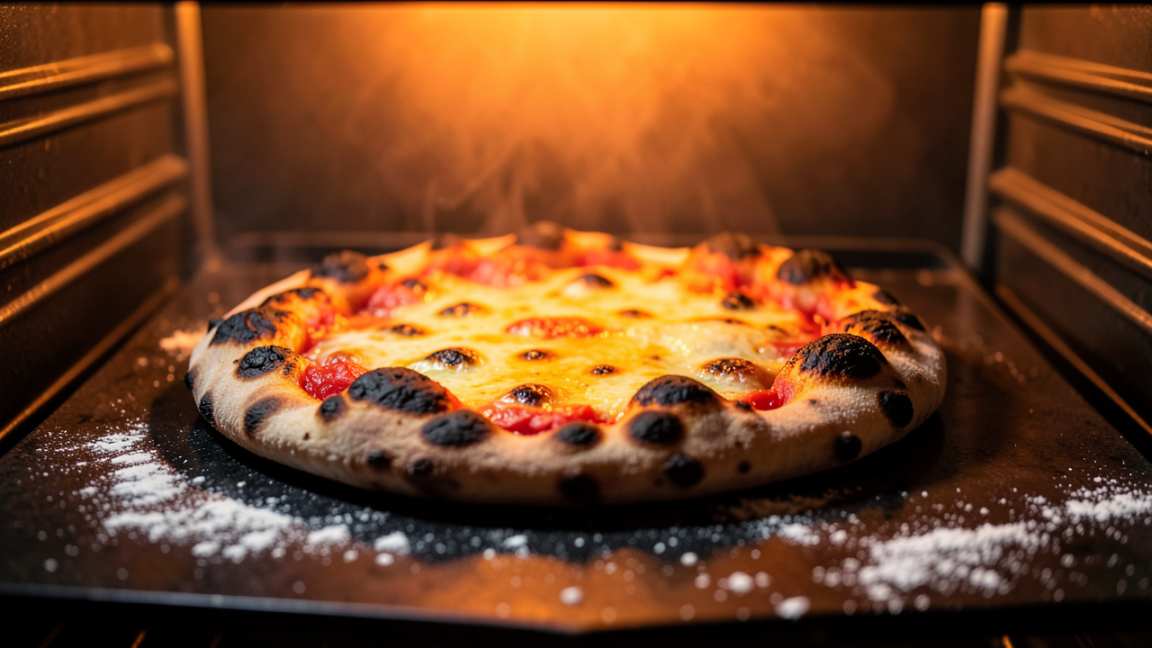
Step-by-Step Process for Char Using a Home Oven
The two-phase method mimics the wood oven environment where heat comes from below and above simultaneously. Your home oven can do this with careful timing.
Phase 1: Bottom Heat Bake
- Place the pizza steel on the top rack, 3 to 4 inches below the broiler element. Position a second rack on the lowest slot for a backup stone (optional).
- Preheat the oven to its maximum temperature – usually 500°F to 550°F. Let it preheat for at least 45 minutes after the oven signals it is ready. The steel needs time to absorb and store heat.
- Use an infrared thermometer to check the steel surface temperature. It should read 550°F to 600°F before you bake.
- Stretch the dough ball into a 10 to 12 inch circle. Place it on a lightly floured peel. Apply sauce, cheese, and toppings in under 60 seconds to prevent sticking.
- Launch the pizza onto the steel in one smooth motion. Close the oven door immediately to trap heat.
- Bake for 2 minutes and 30 seconds to 3 minutes. The bottom should show leopard spotting and the crust edges should be puffed but still pale on top.
Warning: Do not open the oven during the first 2 minutes. Every opening drops the steel temperature by 100°F or more and resets the baking process. Use the oven light and window to check progress.
Phase 2: Broiler Char
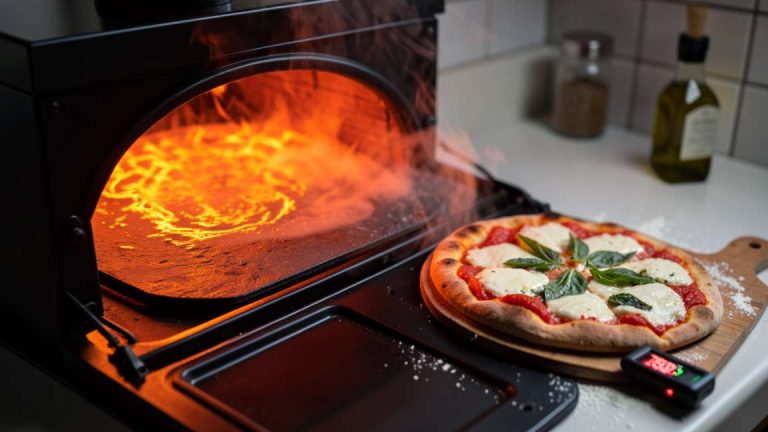
- After the initial bake, switch the oven setting to broil. Leave the pizza on the steel. The top element now delivers intense radiant heat.
- Watch the pizza closely through the window. The crust will start to blister and darken within 45 to 90 seconds. Do not walk away.
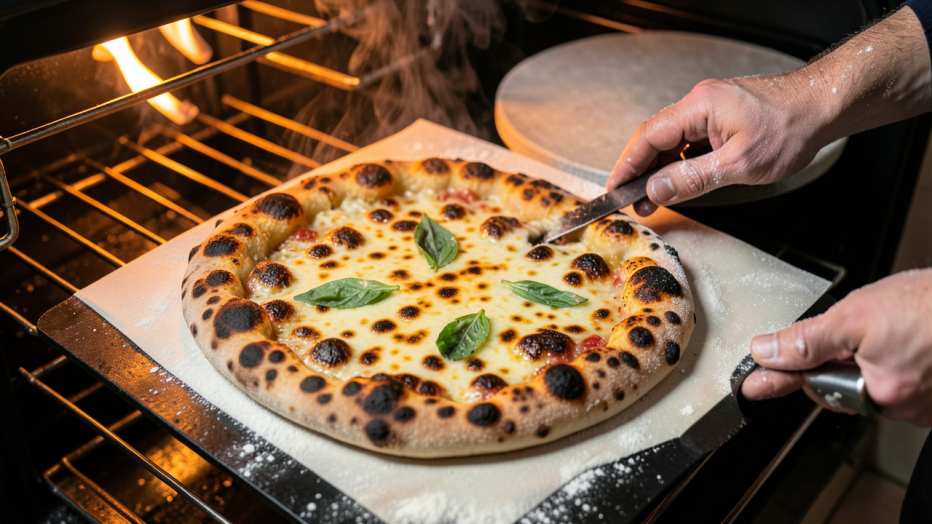
- When the top reaches the desired char – dark brown spots with small black patches – remove the pizza immediately. The target look is 70% brown with 30% black spots.
- Use the peel to slide the pizza onto a wire cooling rack. Let it rest for 2 minutes before slicing. This allows the cheese to set and the crust to retain its crunch.
Total bake time with this method: 3 to 4 minutes. Compare this to 60 to 90 seconds in a wood oven. The result is very close to authentic Neapolitan char.
What to Expect: Timeline and Results
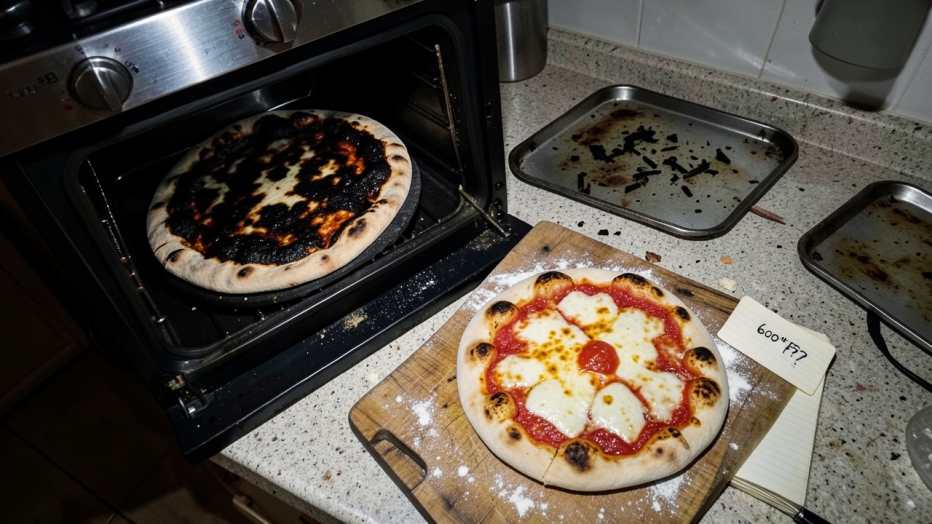
Your first few attempts will not look like a pizzeria pie. Expect a learning curve of 3 to 5 bakes before you achieve consistency. Here is what typical results look like at each stage:
| Attempt | Common Result | Likely Cause |
|---|---|---|
| 1st bake | Pale bottom, burnt top | Broiler time too long, steel not hot enough |
| 2nd and 3rd bake | Uneven char, soggy middle | Dough too wet, toppings too heavy |
| 4th to 5th bake | Leopard spotting, good rise | Steel heat soaked, dough properly fermented |
The cost of this setup ranges from $50 for a basic steel and peel to $200 for a premium 3/8-inch steel with handles. A dedicated pizza oven typically costs $300 to $900, so the home oven method saves significant money.
Common Mistakes to Avoid
Even experienced home cooks make these errors when chasing Neapolitan char. Identify and correct them early.
- Using too much flour on the peel – Excess flour burns on the steel and creates bitter ash. Use semolina flour instead of white flour. It does not burn until 600°F.
- Launching a cold pizza onto a hot steel – If the dough is refrigerator-cold, the bottom sets before the heat penetrates. Let shaped pizzas sit at room temperature for 15 minutes before baking.
- Baking at maximum oven temperature without preheating the steel – The steel needs 45 minutes to 1 hour to absorb enough energy. A 15-minute preheat gives a pale bottom every time.
- Opening the oven during the broiler phase – Cold air rushes in and drops the surface temperature. The char stops forming and the crust can go leathery.
- Using a dark non-stick pizza pan – Dark surfaces absorb heat but distribute it poorly. They create hot spots that burn the crust in some areas while leaving others pale.
Pro Tips for Consistent Char
These advanced techniques come from competition pizza bakers who win awards using home ovens. Apply them to elevate your results.
Thermal Management
- Preheat a second stone or steel on the bottom rack. The second surface radiates heat upward and maintains oven temperature when you open the door. This matters for multiple pizzas.
- Between pizzas, let the steel recover for 10 minutes. The surface temperature drops by 200°F after the first bake. Use this time to stretch and top the next pizza.
- If your oven has a convection setting, use it during the initial bake phase. The fan circulates hot air and cooks the top more evenly before the broiler finishes the job.
Tip: For even better heat retention, place a layer of unglazed quarry tiles on the bottom of the oven. They absorb excess moisture and stabilize the temperature. You can find tiles at hardware stores for under $10.
Dough and Topping Hacks
- Add 2% sugar or diastatic malt powder to the dough. The extra sugars caramelize faster and produce deeper char at lower oven temperatures.
- Use a very thin sauce layer under the cheese. The water in the sauce evaporates and steams the top of the pizza, which can obscure char. A thin layer bakes faster.
- Brush the outer cornicione edge with olive oil before baking. The oil conducts heat and creates a crisp, dark rim that resembles wood-oven results.
- Switch to a perforated peel for launching. The holes let excess flour drop off and prevent the dough from sticking during the slide.
Common Myths vs Facts
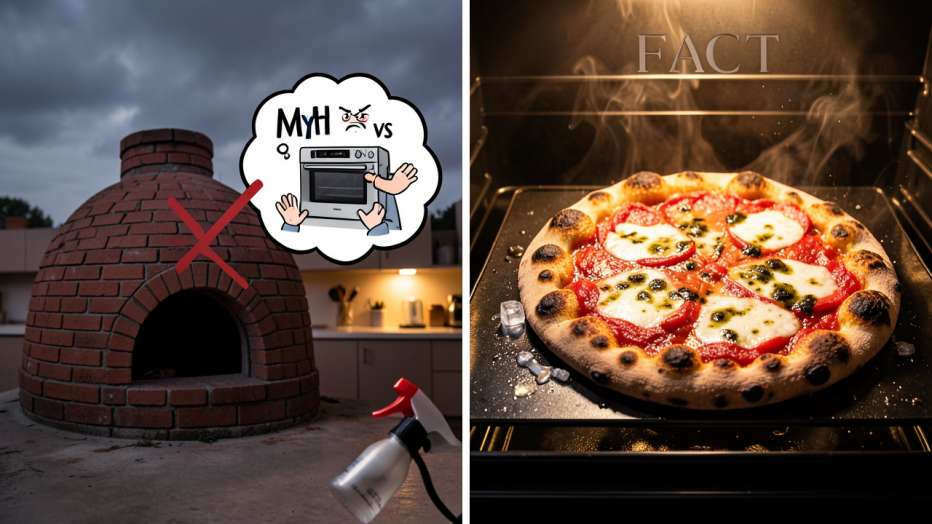
Many myths surround the idea of making Neapolitan pizza without a wood oven. Here are the facts.
Myth 1: You need a wood-fired oven to get real char
Wood ovens produce char through a combination of intense bottom heat and radiant overhead heat. A properly preheated pizza steel plus a broiler creates the same thermal environment. The char comes from the Maillard reaction and caramelization, which require temperatures above 330°F. Both methods reach that threshold.
Myth 2: Gas ovens cannot get hot enough for Neapolitan pizza
Most home gas ovens peak at 500°F to 550°F. A steel surface at 550°F transfers enough energy to char a pizza in 3 to 4 minutes. The broiler component adds the top heat that replicates the wood oven dome. The result is not identical but falls within the range of acceptable Neapolitan style.
Myth 3: A pizza stone is just as good as a steel
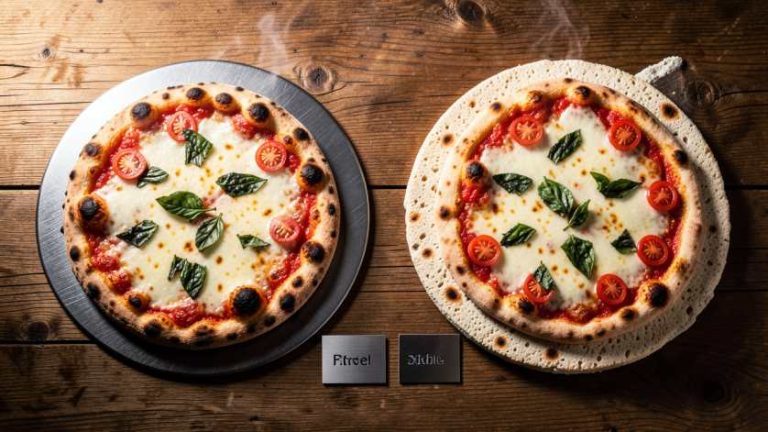
Stones have a thermal conductivity of about 1.5 W/mK. Steel conducts at roughly 43 W/mK – almost 30 times faster. Stones also have lower heat capacity. A steel stores more energy per unit volume and transfers it faster. The result is a better bottom char in less time.
Frequently Asked Questions
What temperature should my oven be for Neapolitan char?
Set your oven to its highest temperature, typically 500°F to 550°F. The steel surface should read 550°F to 600°F before you bake. According to a study by the, a steel preheated to 550°F for 45 minutes produces the best balance of bottom heat and top char.
Can I use a regular baking sheet instead of a pizza steel?
No. A baking sheet is thin and heats unevenly. It cannot store enough thermal energy to char a pizza in under 4 minutes. You need either a 1/4-inch pizza steel or a 1/2-inch thick pizza stone to achieve Neapolitan-style results.
How long do I preheat the pizza steel?
Preheat for at least 45 minutes after the oven reaches temperature. The steel requires this time to absorb and distribute heat evenly. An infrared thermometer reading confirms readiness – look for a surface temperature of 550°F or above.
Why is my pizza bottom charred but the top is pale?
This means the bottom heat is too high or the bake time is too long before the broiler phase. Reduce the initial bake time by 30 seconds. Move the oven rack closer to the broiler element so the top receives more radiant heat during the final phase.
Do I need special flour for Neapolitan pizza?
Yes. Use 00 flour with a protein content of 12% to 13%. Caputo Pizzeria flour is the standard. Regular all-purpose flour develops less gluten and burns at the high temperatures needed for char. The requires 00 flour for authentic Neapolitan pizza.
Final Thoughts
Getting Neapolitan char without an outdoor wood oven comes down to three things: a preheated steel, a 2-phase bake method, and a dough made for high heat. Your home oven can produce crust with leopard spotting, blistering, and a crisp bite. Start with a simple margherita, adjust your timing, and refine your technique over a few sessions. The results will surprise you.