How Rotating the Stone Prevents Uneven Pizza Baking Results
Rotating a pizza stone 180 degrees halfway through baking corrects uneven heat distribution caused by oven hot spots, ensuring a uniformly baked crust. This repositioning shifts the cooler part of the stone into the hotter zone, where it absorbs heat, while the previously hot side cools and recharges its thermal energy. Proper preheating for at least 45–60 minutes is essential for this technique to eliminate burnt edges and soggy centers consistently.
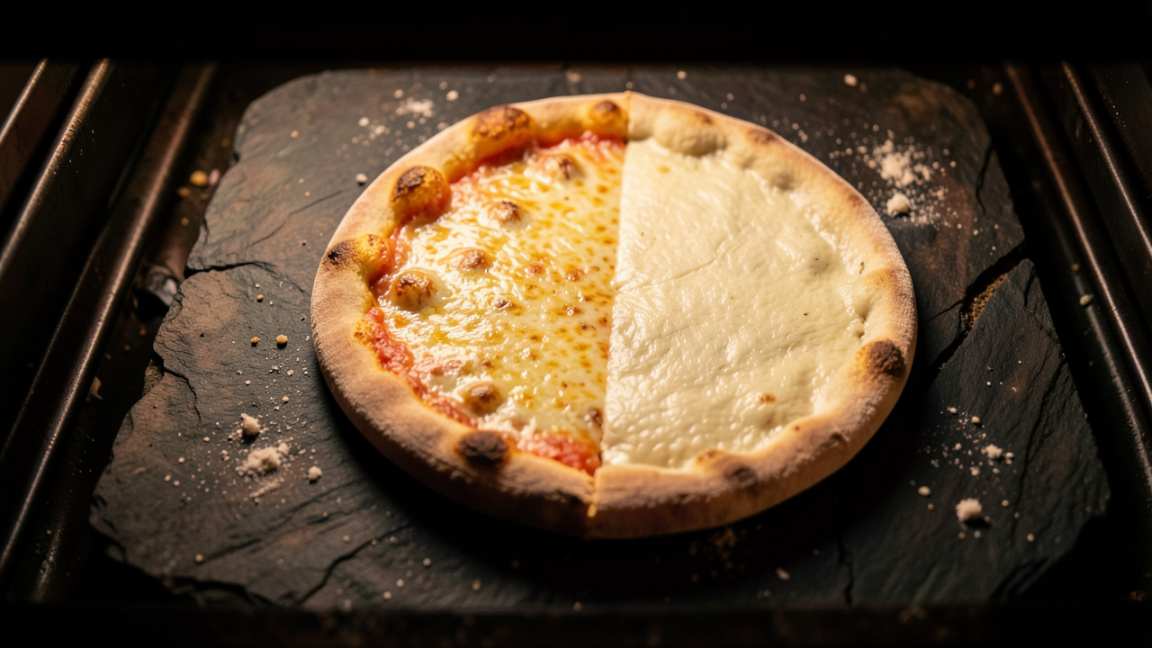
Does your pizza come out with a burnt edge on one side and a soggy center on the other? This guide explains how rotating the stone fixes this common problem.
Simply put, rotating your pizza stone 180 degrees halfway through baking solves the uneven heat problem caused by oven hot spots. This action shifts the cooler part of the stone into the hotter zone, allowing it to absorb heat while the already-hot side recharges. Rotating the stone consistently produces a perfectly baked crust with even browning across the entire pizza.
Key Takeaways
- Ovens naturally have hot spots that create uneven baking zones on your pizza stone.
- Rotating the stone 180 degrees repositions the pizza relative to these hot spots.
- This rotation allows the cooler side of the stone to absorb heat while the hotter side discharges stored energy.
- Proper preheating of the stone for at least 45-60 minutes is critical for this technique to work effectively.
- Using an infrared thermometer helps you map your oven’s specific hot spots for precise rotation timing.
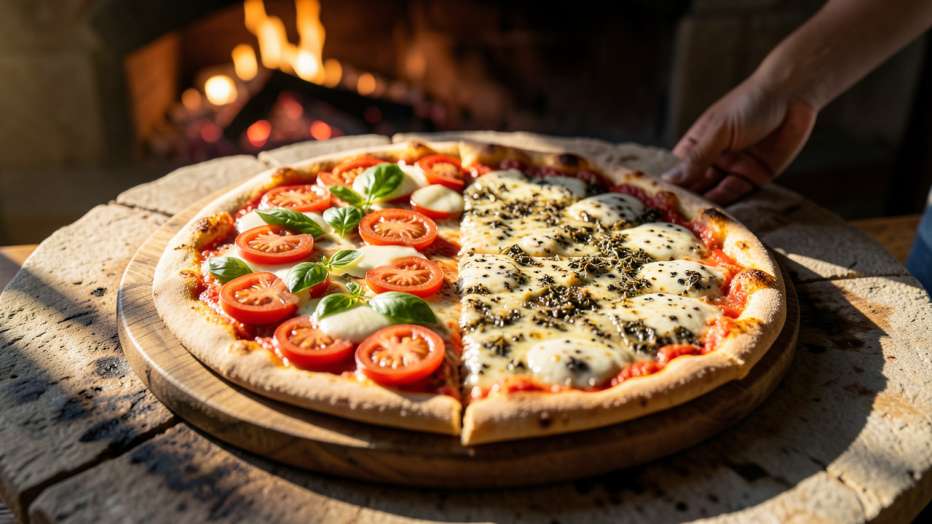
What Causes Uneven Pizza Baking Results?
Every home oven has temperature inconsistencies. The heating elements cycle on and off. The back of the oven is typically 30-50 degrees hotter than the front. According to a study by, most standard home ovens have a significant temperature variance between the front and back walls. This creates a heat gradient on your pizza stone.
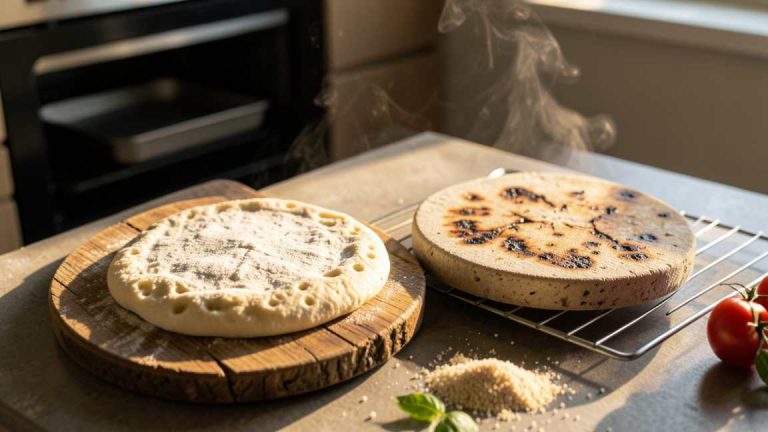
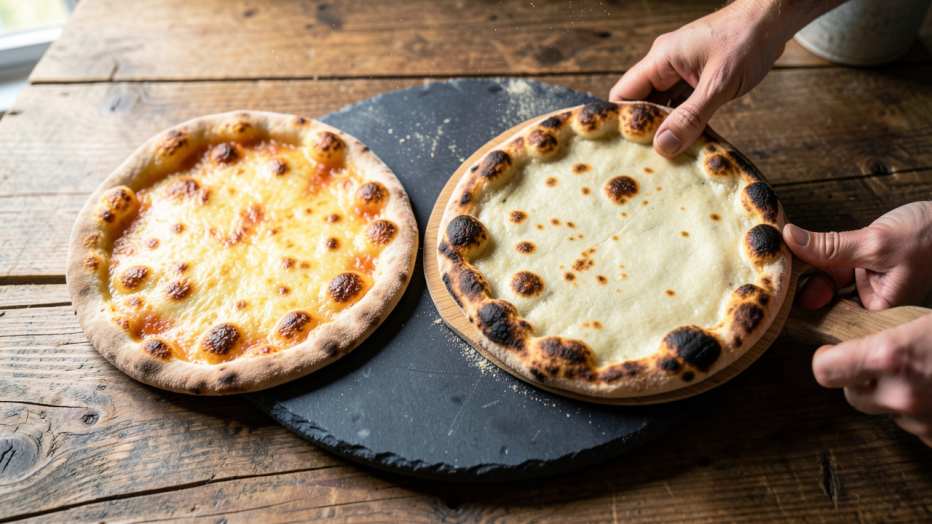
The stone acts like a thermal battery. It absorbs heat from the oven air and stores it. When you launch a cold pizza, the dough draws thermal energy rapidly from the stone. The area directly under the pizza cools down. The exposed stone stays very hot. If you let the pizza sit in one position, the side facing the hot zone (usually the back) gets scorched. The side facing the cool zone (the front) stays pale and undercooked. This is why rotating the stone is a necessary solution.
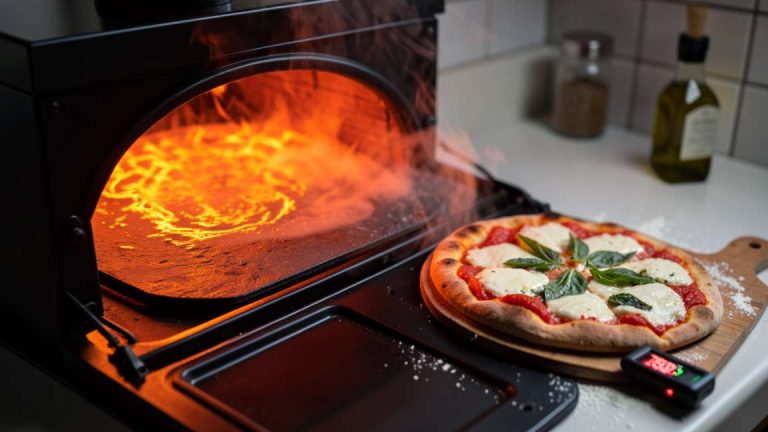
Tip: Use an infrared thermometer to measure your stone’s temperature before launching. The center should read at least 500 degrees Fahrenheit. The back edge will often read 50-70 degrees hotter than the front edge.
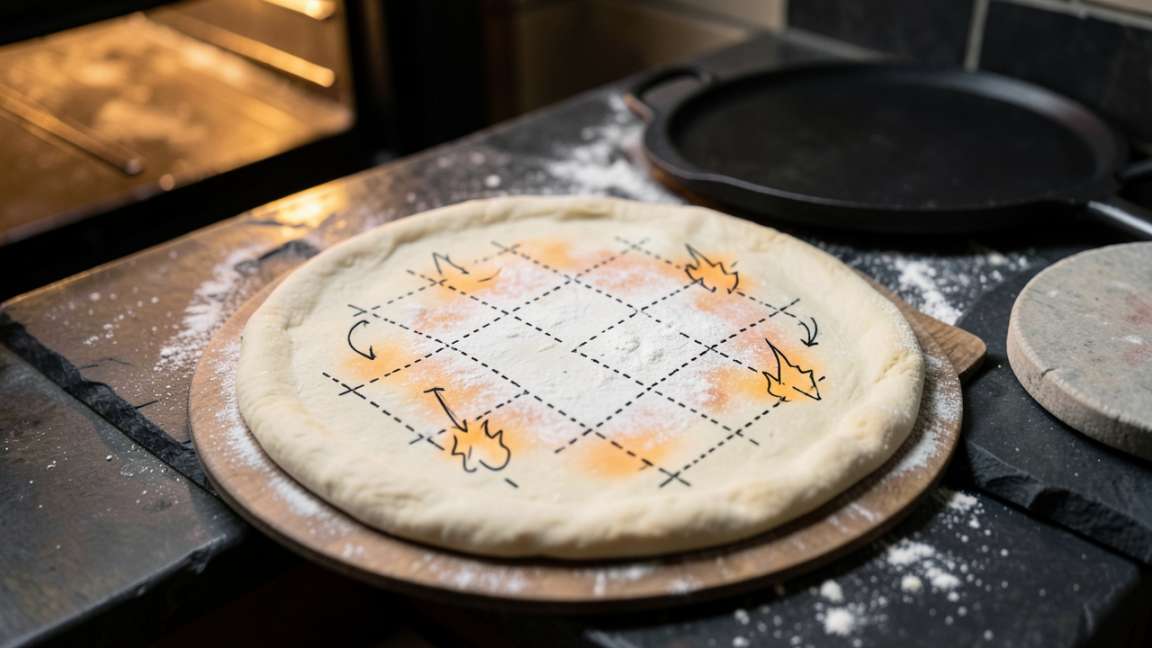
How to Map Your Oven’s Hot Spots Before Baking
Before you master the rotation, you must know where your hot spots are. This saves your pizza from burning while you learn.
- Preheat your stone normally. Set your oven to 500 degrees Fahrenheit. Let the stone heat for 60 minutes.
- Perform a toast test. Place a single slice of white bread directly on the stone for 3 minutes. Check the color pattern. The side facing the back will be darker.
- Mark your stone. Use a permanent marker on the bottom edge of the stone (the side that rests on the rack). Mark the side that faces the back of the oven. This gives you a reference point.
- Map the gradient. Move the bread to different positions on the stone. Note where it burns first. This is your hottest zone.
- Plan your rotation. You will rotate the stone so that the cold front zone moves to the back halfway through the bake.
How to Rotate the Pizza Stone for Even Baking
This is the core technique. Speed and confidence are critical. You must rotate the entire stone, not just the pizza.
- Preheat fully for 60 minutes. Place the stone on the middle rack. Do not skip this step. A cold stone cannot recover thermal energy quickly enough.
- Launch the pizza efficiently. Slide your pizza onto the hot stone using a well-floured peel. Close the door immediately to trap the heat.
- Wait for the initial set. Let the pizza bake for 2-3 full minutes. The bottom crust must solidify. The cheese should start to melt. If you rotate too early, the dough will tear.
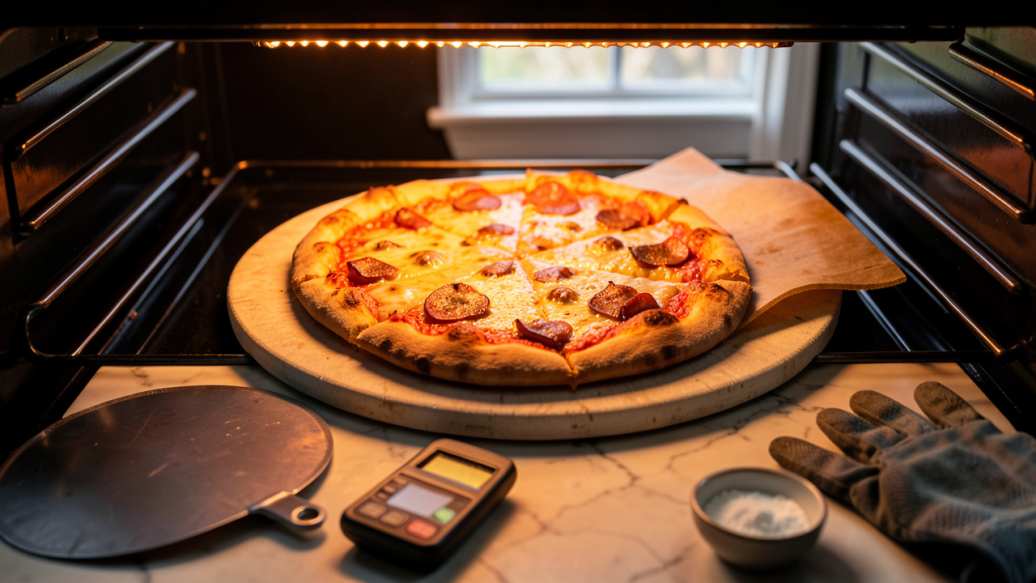
- Open the door and rotate sharply. Use a thin metal peel or heavy-duty oven mitts. Lift the stone carefully. Rotate it exactly 180 degrees. Do this in under 10 seconds to minimize heat loss.
- Finish the bake. Close the door. Let the pizza bake for another 2-4 minutes. The side that was in the front (cooler) is now in the back (hotter). It will catch up in browning.
Warning: Do not try to slide the pizza off the stone and rotate it separately. This breaks thermal contact. The stone stays cold under the pizza. You must lift and rotate the stone with the pizza on it for the thermal recharge to work.
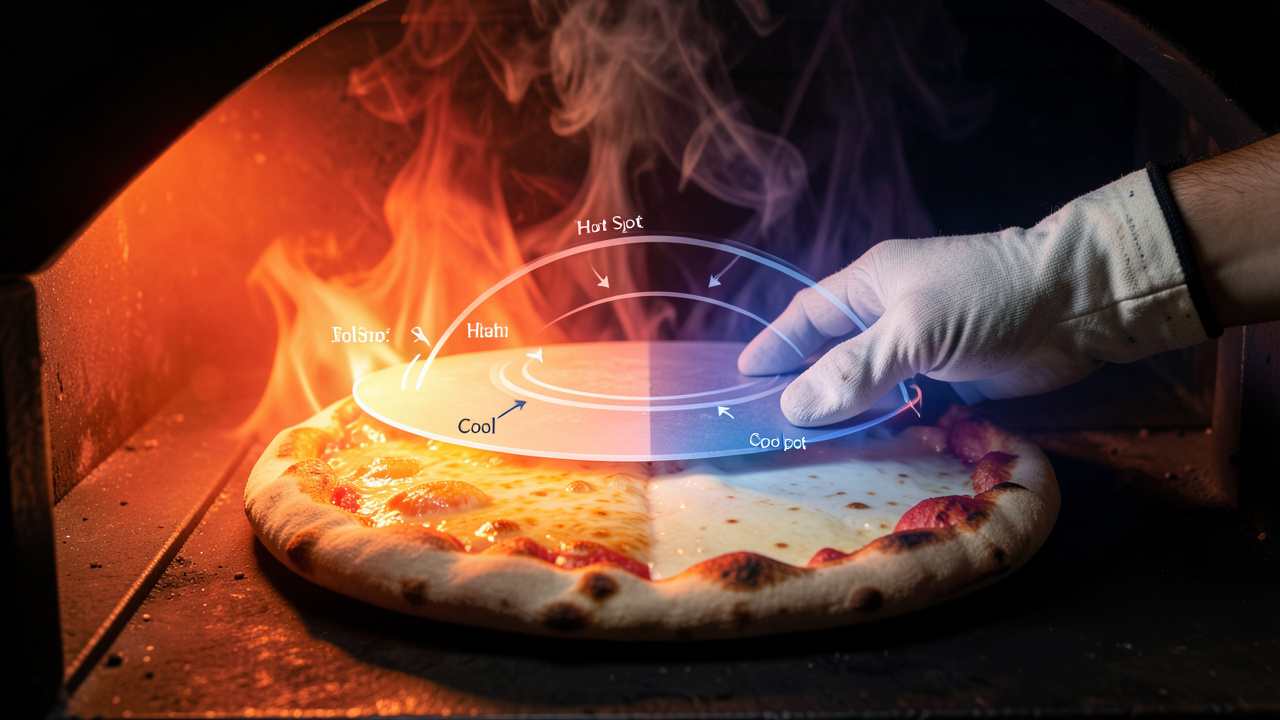
How Rotating the Stone Fixes the Heat Gradient
The science behind this technique is simple thermodynamics. When you rotate the stone, you physically swap the cold spot with the hot spot. The cold side of the stone (the area under the pizza) faces the back of the oven. This side now absorbs intense radiant heat from the oven walls and element. It recharges rapidly.
The hot side of the stone (the exposed rim) moves to the front. It discharges its stored heat into the cooler oven air and into the pizza crust. This balancing act prevents one side of the pizza from burning while the other side finishes baking.
Important: The stone is a thermal capacitor. It charges and discharges. Rotating the stone guarantees both the front and back zones get equal time in the heat source for a complete recharge.
Expected Results and Timing
Here is what happens to the stone’s surface temperature during a typical bake.
| Bake Phase | Action | Stone Temp Change (Under Pizza) |
|---|---|---|
| 0 – 3 Minutes | Pizza launches. No rotation. | Drops 30-50 degrees Fahrenheit |
| 3 Minute Mark | Rotate stone 180 degrees | Cold side faces the back heat source |
| 3 – 6 Minutes | Final bake. No door opening. | Recovers 15-25 degrees. Discharges to pizza. |
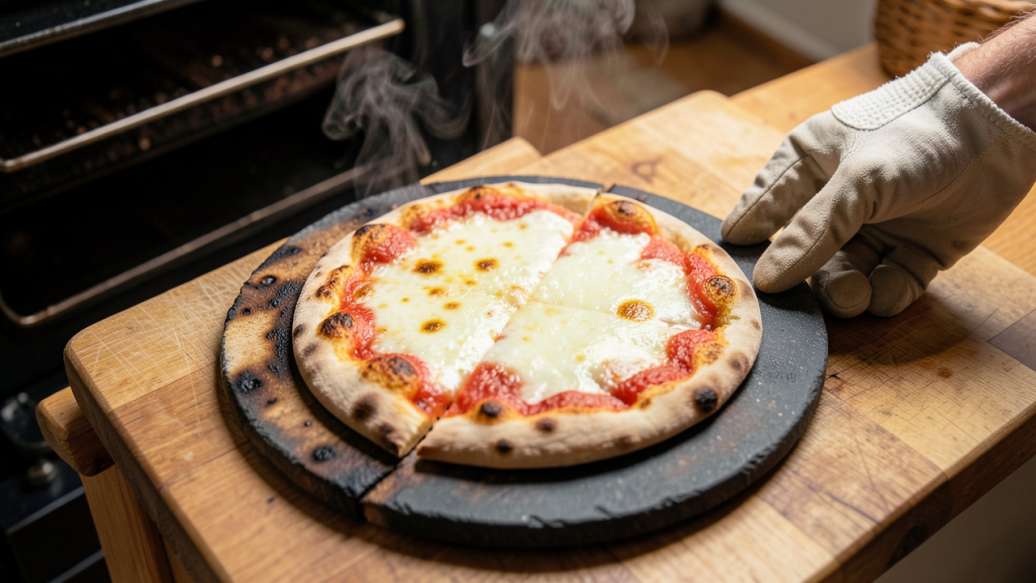
Common Mistakes When Rotating the Stone
Avoid these errors to get a perfect bake every time.
- Rotating too early before the crust sets. If you rotate before 2 minutes, the dough is still raw and sticky. You will tear the crust. Wait for the bottom to firm up. This usually takes 2-3 minutes depending on your dough hydration.
- Rotating only the pizza. Sliding the pizza off the stone and turning it does not fix the cold stone problem. The area under the pizza stays depleted of heat. You must lift and rotate the stone itself to allow the depleted area to recharge.
- Not preheating long enough. According to, a stone needs 45-60 minutes to reach full thermal saturation. A stone that is not fully heated cannot recharge fast enough during the bake to prevent a soggy center.
- Leaving the oven door open too long. Every 10 seconds the door is open, the temperature drops by 50 degrees. Open the door, rotate the stone in one smooth motion, and close it immediately. Practice the motion while the oven is cold.
- Forgetting to preheat between bakes. If you bake multiple pizzas, let the stone reheat for 10-15 minutes between launches. This allows the entire stone to return to a uniform temperature before the next rotation.
Why Thermal Mass Matters for Consistent Results
The material of your stone or steel affects how well rotation works. Materials with high thermal conductivity recover faster. Materials with low conductivity need more time between bakes.
| Material | Thermal Conductivity | Recharge Speed | Best For |
|---|---|---|---|
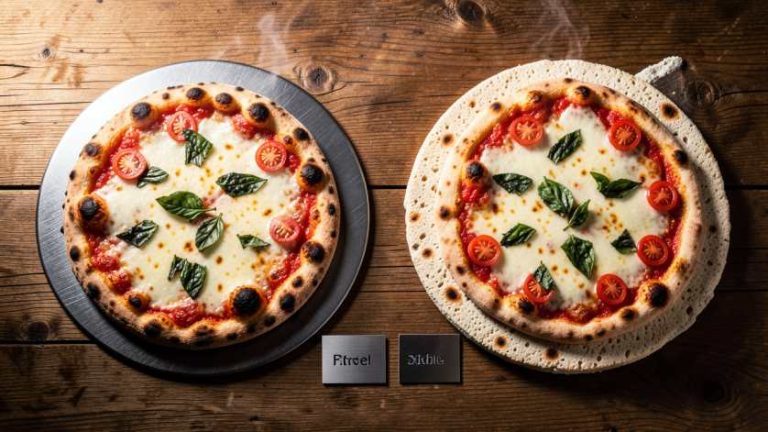
| Baking Steel | Very High | Very Fast (2-4 mins) | New York style, high heat |
| Cordierite Stone | Medium | Medium (5-7 mins) | General home oven use |
| Ceramic Stone | Low | Slow (8-12 mins) | Extra crispy thin crust |
The reports that their steel recovers to 90% of peak temperature within 4 minutes of launching a pizza. This fast recovery makes rotation highly effective because the depleted area recharges almost instantly when moved to the hot zone. With ceramic stones, the recharge is slower, so the rotation timing must be more precise to prevent the crust from burning before the recovery finishes.
Common Myths vs Facts About Stone Rotation
- Myth: A thicker stone means no rotation is needed. Fact: Thicker stones have more thermal mass, but they still develop a strong thermal gradient between the front and back of the oven. The center of a thick stone under a pizza will still cool down by 30-40 degrees. Rotation is still necessary for even heat distribution.
- Myth: You should rotate only the pizza, not the stone. Fact: Rotating the pizza on the stone does not allow the cold spot on the stone to recharge. The cold stone under the pizza stays cold. The pizza will have a soggy bottom on the side that was originally in the front. You must rotate the stone with the pizza on it.
- Myth: Pizza steels never need to be rotated. Fact: While steel conducts heat faster than stone, it also transfers heat to the crust much faster. If a steel is not rotated, the side facing the back of the oven will burn the crust within 3-4 minutes. Rotation is essential for steel as well as stone.
Frequently Asked Questions
Do I need to rotate the stone if I use a convection oven?
Yes. Convection fans reduce hot spots by circulating hot air, but they do not eliminate the heat gradient entirely. The front of the oven still loses heat faster than the back. Rotation is still recommended for completely even browning across the whole pizza.
Can I rotate the stone without a pizza peel?
You can use heavy-duty oven mitts rated for 500 degrees or more. Grip the opposite edges of the stone carefully. Lift it straight up slightly, twist 180 degrees, and set it back down. Be careful of steam that may escape from the stone’s edges.
How often should I rotate the stone during a single bake?
Once is usually enough. A single 180-degree rotation at the halfway mark balances the thermal load perfectly. Rotating twice disrupts the thermal recovery cycle. The stone needs at least 2 minutes in each position to establish a thermal transfer.
Does rotating the stone fix uneven top browning?
Rotating the stone primarily fixes bottom browning and crust heat distribution. For uneven top browning (cheese and toppings), you may need to rotate the pizza itself or use the oven’s convection fan. A stone rotation helps but does not directly control overhead radiant heat.
Will rotating the stone prevent a burnt crust on a gas oven?
Yes, gas ovens often have very hot spots directly above the flame. The back tend to be significantly hotter. Rotating the stone moves the pizza away from these intense hot zones before the crust can char. This gives you a golden brown crust instead of a burnt one.
Resources and Tools
ThermoWorks Infrared Thermometer – Maps your oven’s exact hot spots on the stone surface.
Gi.Metal Two-Piece Pizza Peel – Essential for launching pizza and safely rotating the stone.
King Arthur Baking Guide – Detailed instructions on pizza stone care and preheat times.
Baking Steel Original – High thermal conductivity material that excels with the rotation technique.
Final Thoughts
Rotating the stone is the single most effective technique for fixing uneven pizza bakes at home. It compensates for the physical limitations of home ovens by actively managing heat distribution across the stone’s surface. Master this simple 180-degree rotation, and every pizza you pull out of the oven will have a perfectly cooked, evenly browned crust from edge to edge.