How Electric Pressure Cookers Build and Release Pressure
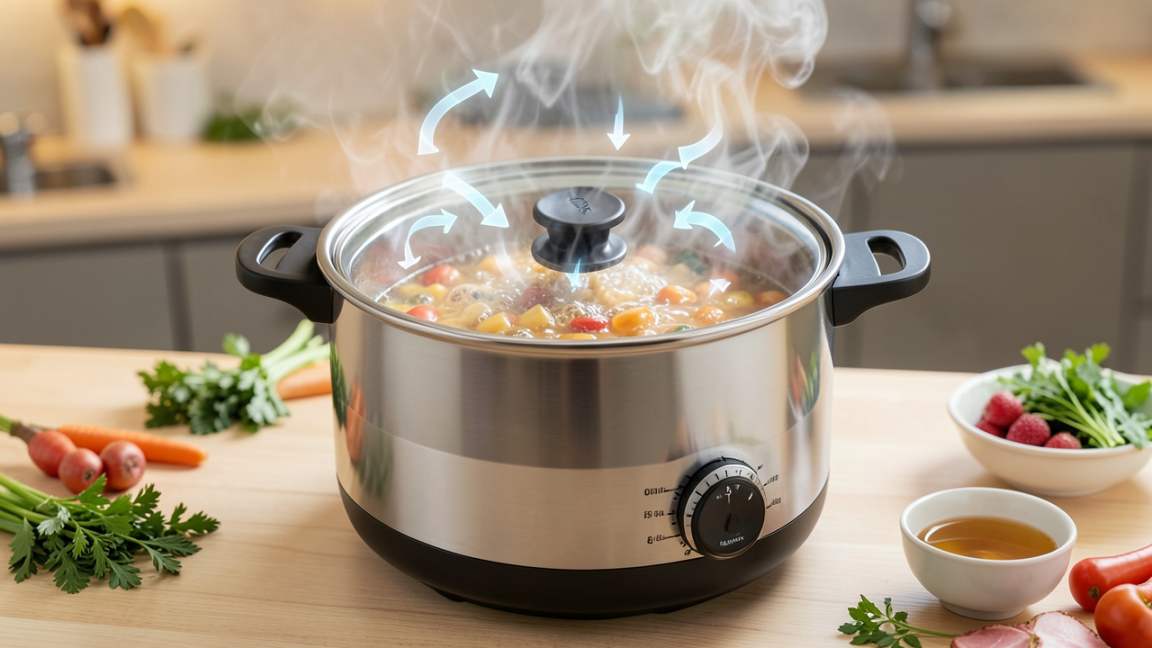
Electric pressure cookers build pressure by heating liquid in a sealed pot, raising the boiling point to around 240°F for faster cooking. Pressure is controlled by a regulator that releases excess steam, while the sealing ring and float valve maintain an airtight environment. Pressure releases either naturally through slow cooling over 10 to 30 minutes, suitable for large meats, or quickly via a manual valve for delicate foods like vegetables.
Electric pressure cookers use steam pressure to cook food faster than traditional methods. This guide explains exactly how these appliances build and release pressure so you can use them safely and effectively.
Quick Verdict: Electric pressure cookers build pressure by heating liquid inside a sealed pot, creating steam that raises the internal temperature above boiling point. Pressure releases naturally through slow cooling, or quickly through a manual valve. Understanding both processes keeps you safe and improves your cooking results.
Key Takeaways
- Electric pressure cookers trap steam inside a sealed pot, raising the boiling point of water to around 240 degrees Fahrenheit for faster cooking.
- The sealing ring and float valve work together to create an airtight environment that allows pressure to build safely.
- A pressure regulator controls the internal pressure by releasing excess steam when levels get too high.
- Natural pressure release takes 10 to 30 minutes and is best for large cuts of meat and foods that foam or expand.
- Quick pressure release uses a manual valve to vent steam rapidly and works best for vegetables, seafood, and delicate foods.
What Is Pressure Cooking?
Pressure cooking is a method that uses steam pressure to cook food at temperatures higher than the normal boiling point of water. At sea level, water boils at 212 degrees Fahrenheit. Inside a pressure cooker, the boiling point rises to about 240 to 250 degrees Fahrenheit.
This higher temperature allows food to cook much faster than boiling, steaming, or simmering. According to, pressure cooking reduces cooking time by 30 to 50 percent compared to conventional methods.
Electric pressure cookers differ from stovetop models because they use a heating element and computer-controlled sensors. The appliance monitors temperature and pressure automatically. This makes them safer and more consistent for everyday cooking.
Important: The United States Department of Agriculture (USDA) confirms that pressure cooking reaches temperatures high enough to kill bacteria and pathogens. This makes it a safe method for cooking meats, poultry, and beans.
How Do Electric Pressure Cookers Build Pressure?
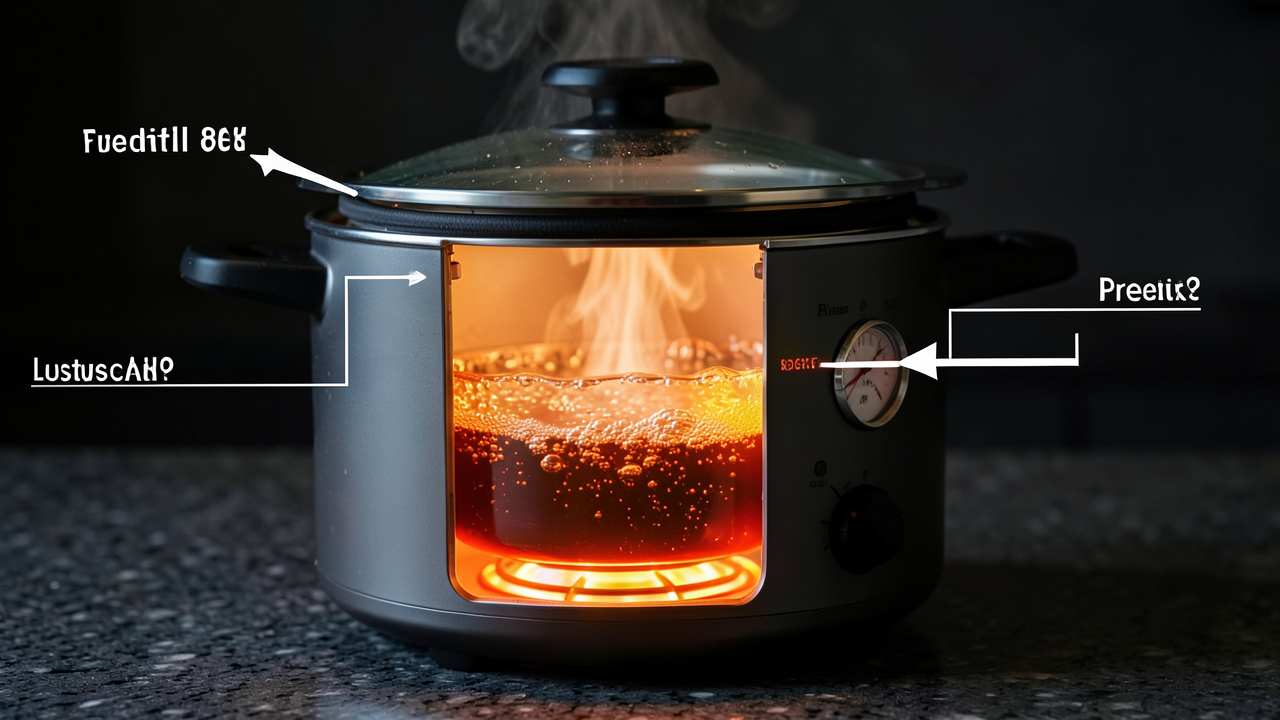
Building pressure involves four key components working together. Each part plays a specific role in creating and maintaining the high-pressure environment inside the pot.
The Sealed Cooking Environment
The lid locks into place using a twist-and-seal mechanism. A silicone sealing ring sits around the lid’s edge and compresses against the pot rim when closed. This ring creates an airtight seal that prevents steam from escaping.
Without a proper seal, the cooker cannot build pressure. Over time, sealing rings absorb odors and lose elasticity. Most manufacturers recommend replacing the ring every 12 to 18 months.
The Float Valve
The float valve is a small pin that rises as pressure builds inside the pot. When the pin pops up, it locks the lid in place. This safety feature prevents the lid from opening while pressure is present.
You cannot open the lid until the float valve drops back down. This indicates that pressure has fully released and it is safe to open the cooker.
Heating the Liquid
Every recipe requires at least one cup of liquid, usually water or broth. The heating element at the bottom of the pot warms this liquid until it reaches the boiling point. As the liquid boils, it turns into steam.
Steam occupies about 1,600 times more volume than liquid water. In a sealed pot, this expanding steam has nowhere to go. The pressure inside the cooker rises rapidly as more steam is generated.
The Pressure Regulator
The pressure regulator controls how much pressure builds inside the pot. In electric pressure cookers, this is typically set to about 10 to 12 psi (pounds per square inch). Some models offer dual pressure settings – low pressure (5 to 7 psi) and high pressure (10 to 12 psi).
When the internal pressure exceeds the set limit, the regulator releases a small amount of steam to bring it back down. This cycle of building and releasing keeps the pressure stable during the entire cooking time.
Warning: Never fill the pressure cooker more than two-thirds full with food and liquid. For foods that expand like rice or beans, fill only half full. Overfilling can block the pressure release valve and create a safety hazard.
How Does Pressure Release Work?
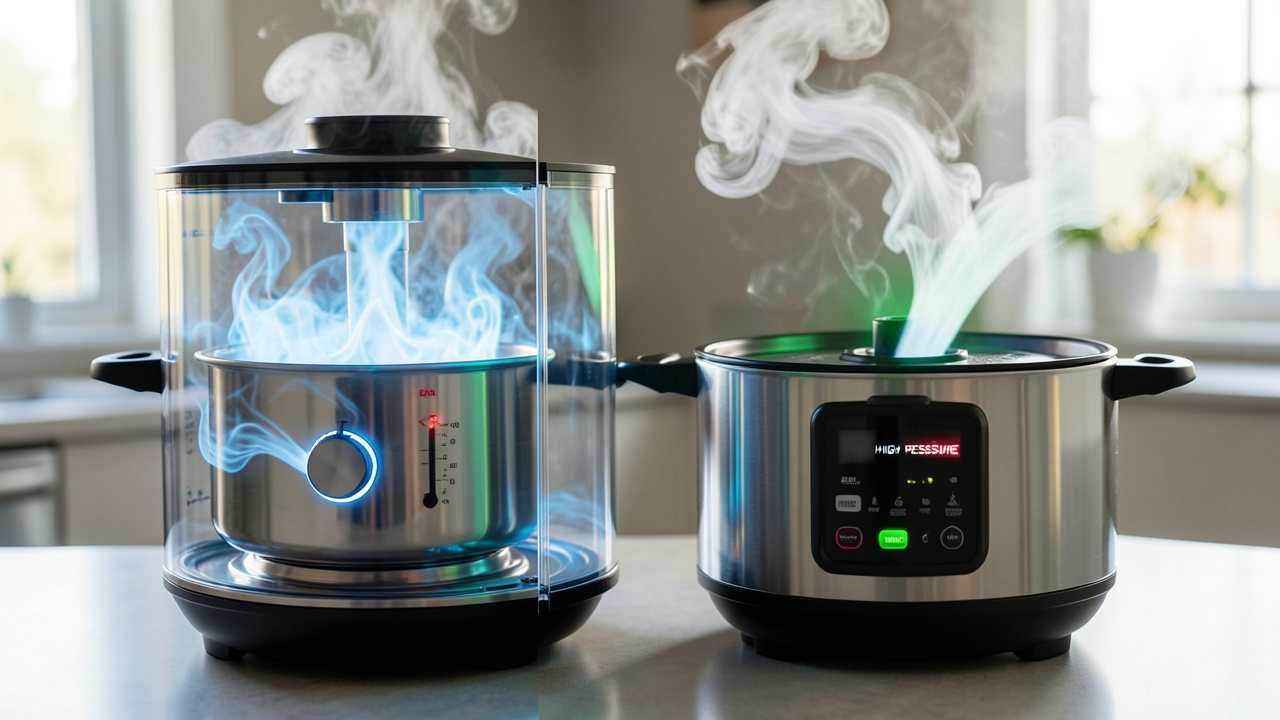
Releasing pressure safely is just as important as building it. There are two main methods for releasing pressure: natural release and quick release. Each method serves a different purpose depending on the food you are cooking.
Natural Pressure Release (NPR)
Natural pressure release means letting the cooker cool down on its own after the cooking cycle ends. You do not touch the valve or lid. The pressure drops gradually as the internal temperature decreases.
This process takes between 10 and 30 minutes depending on the amount of food and liquid inside. During natural release, food continues cooking in the residual heat. This is ideal for large roasts, whole chickens, and tough cuts of meat that benefit from extra cooking time.
Natural release also works well for foods that foam or froth during cooking, such as beans, oats, and pasta. Quick release can cause foamy liquid to shoot out of the valve and create a mess.
Quick Pressure Release (QPR)
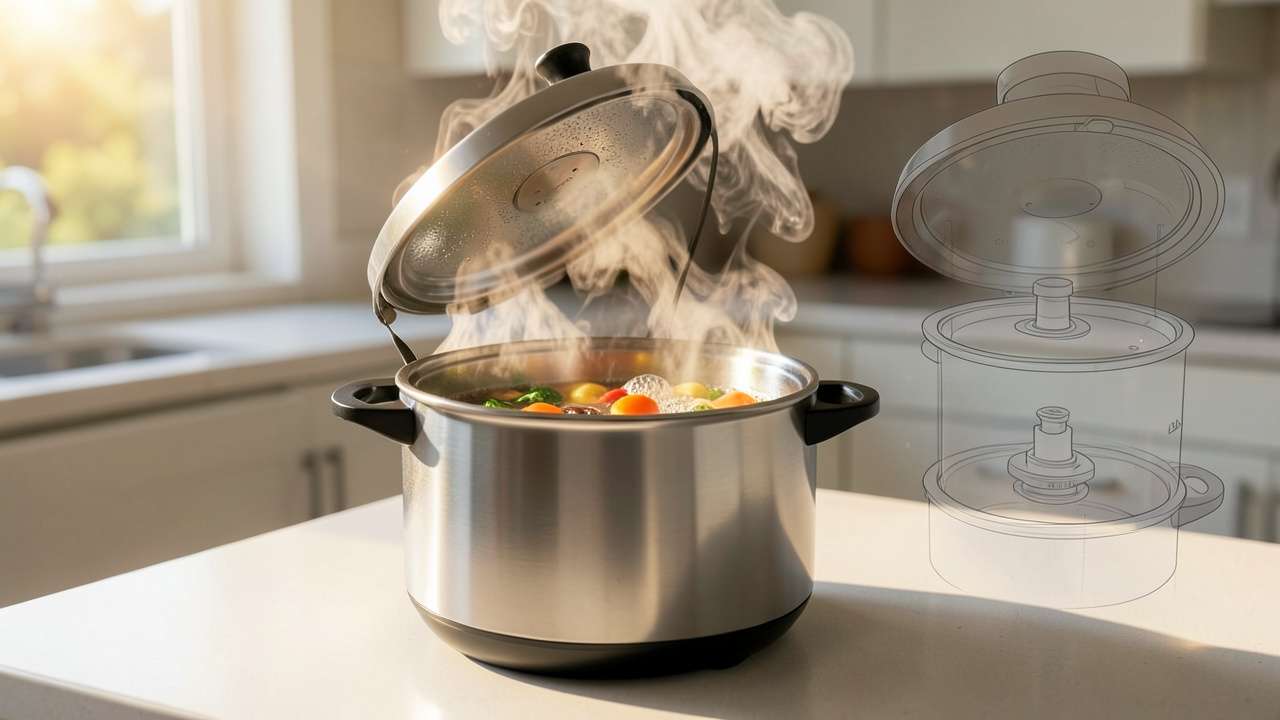
Quick release uses a manual valve to vent steam from the pot. You turn the valve from the sealing position to the venting position using a knob or button. This allows steam to escape rapidly, lowering pressure in under a minute.
Steam shoots out forcefully during quick release. The stream is extremely hot and can cause burns. Always use a long utensil or wear an oven mitt when turning the valve. Keep your face and hands away from the steam vent.
Quick release is best for foods that cook quickly and need precise timing. Vegetables, seafood, eggs, and delicate fish tend to overcook during natural release. Venting the pressure right away stops the cooking process immediately.
Timed Natural Release
Some recipes call for a combination of both methods. You let the pressure release naturally for a set amount of time, usually 5 to 10 minutes, before opening the valve for quick release. This gives you partial carryover cooking without the full wait.
Timed natural release is common for recipes like hard-boiled eggs, cheesecake, and rice pudding. It provides a softer texture than full quick release and a firmer texture than full natural release.
| Release Method | Time Required | Best For | Not Recommended For |
|---|---|---|---|
| Natural Pressure Release | 10 to 30 minutes | Large meats, beans, grains, soups | Delicate vegetables, quick-cooking foods |
| Quick Pressure Release | 30 to 60 seconds | Vegetables, seafood, pasta, eggs | Foaming foods, large roasts |
| Timed Natural Release | 5 to 10 minutes natural, then quick | Eggs, cheesecake, rice pudding | Recipes needing immediate stop |
Types of Pressure Release Methods
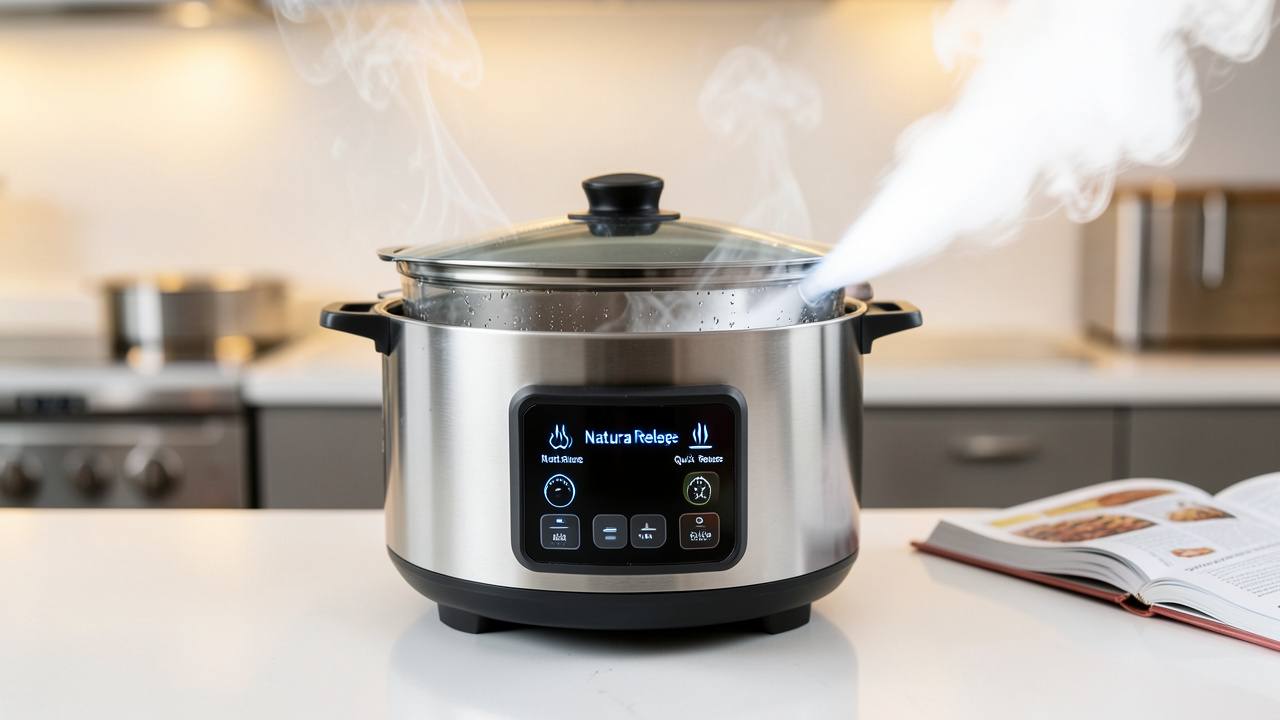
Electric pressure cookers offer several ways to release pressure. The method you choose affects texture, moisture, and safety. Below are the most common release methods and how each one works.
Automatic Natural Release
Most electric pressure cookers switch to the Keep Warm mode after the cooking cycle ends. This keeps the pot warm while pressure releases naturally. The cooker stays sealed until the float valve drops on its own.
Automatic natural release is the safest method because you do not need to interact with the hot appliance. It is also the quietest method since no steam vents.
Manual Quick Release Using a Steam Valve
You manually turn or press the steam release valve to vent pressure. On some models, you press a button. On others, you flip a switch or turn a knob. Steam shoots out immediately with a loud hissing sound.
Manual quick release is fast but requires caution. Stand to the side of the steam vent when opening the valve. Keep children and pets away from the cooker during this process.
Cold Water Quick Release (Stovetop Only)
Some stovetop pressure cookers allow cold water release, where you run cold water over the pot to lower pressure fast. This method does not work for electric pressure cookers. Never submerge an electric pressure cooker in water or pour water over the heating base.
Electric models rely on either natural release or manual venting. Do not attempt to cool an electric pressure cooker with water – this damages the electrical components and voids the warranty.
Pro Tips for Safe Pressure Cooking
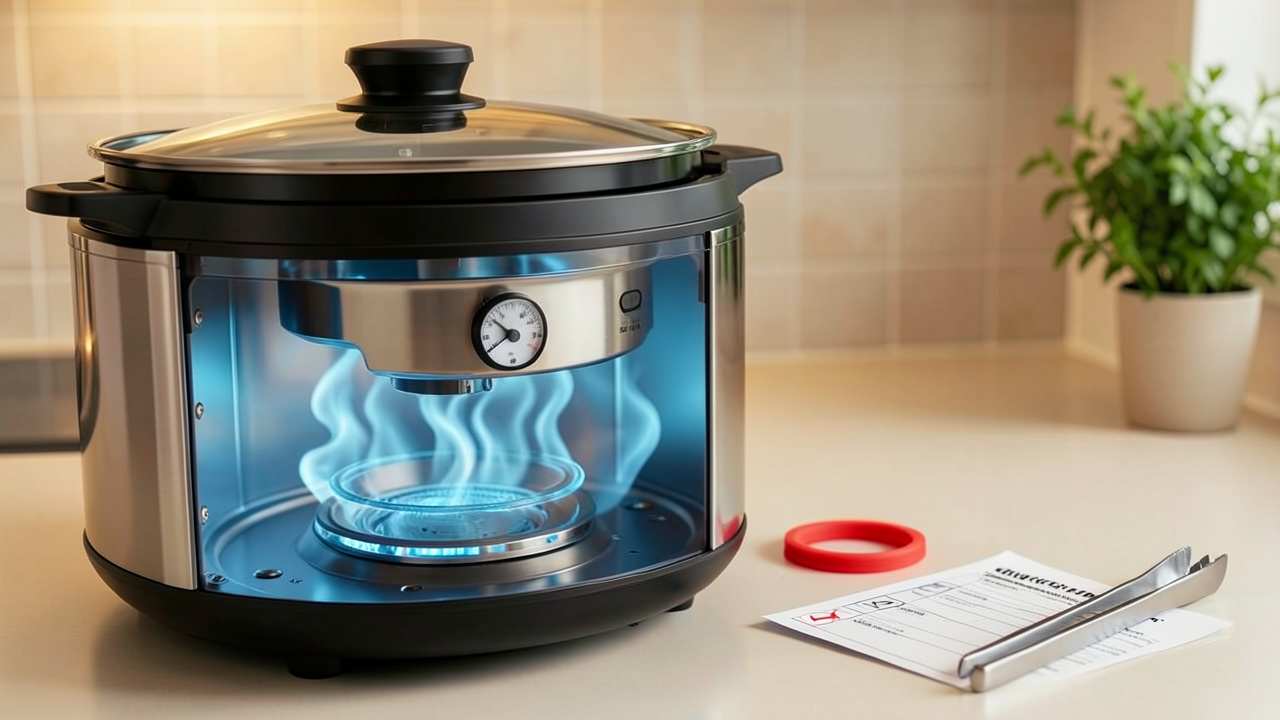
Using an electric pressure cooker is safe when you follow basic guidelines. These tips help you avoid common mistakes and get the best results from your cooking.
- Check the sealing ring before each use. Make sure it is seated properly with no cracks or warping. A damaged ring prevents pressure from building.
- Clean the pressure release valve regularly. Food particles can clog the valve and cause pressure buildup issues. Remove the valve and wash it after every few uses.
- Always add enough liquid. You need at least one cup of water or broth to create steam. Using too little liquid prevents pressure from building and can trigger the burn warning.
- Use a natural release for large cuts of meat. Quick release causes tough meats to seize up and become chewy. Let the pressure drop naturally for fall-apart tenderness.
- Keep the float valve and steam valve clear. These parts must move freely for pressure to build and release correctly. A stuck float valve can trap pressure inside the cooker.
Important: The Good Housekeeping Institute recommends checking the rubber gasket and valve before every use. A simple inspection takes 10 seconds and prevents most pressure cooker accidents.
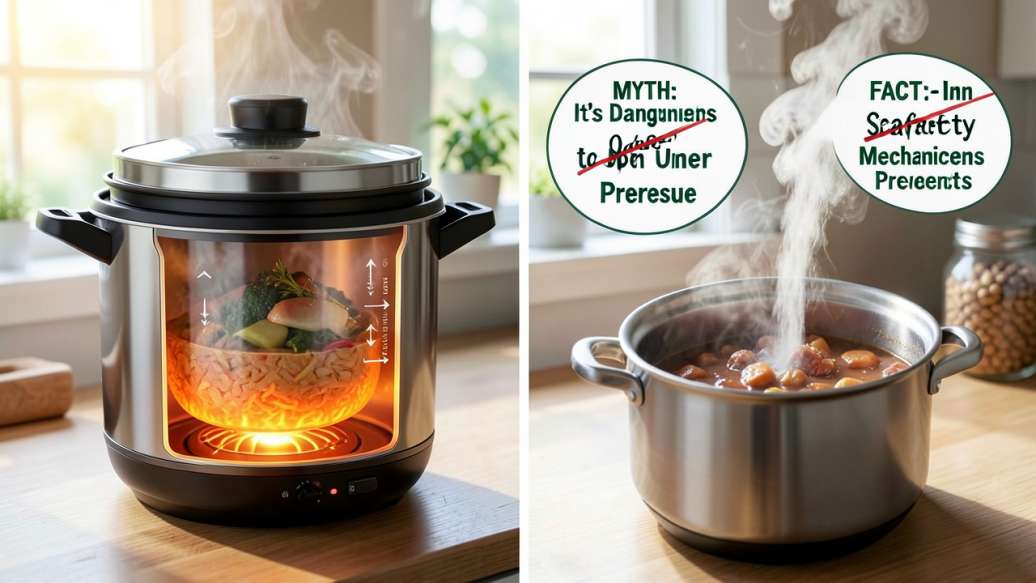
Common Myths vs Facts
Myth 1: Electric pressure cookers explode
Fact: Modern electric pressure cookers have multiple safety features that prevent explosions. The lid locks when pressure is present, the pressure regulator releases excess steam automatically, and the heating element shuts off if temperatures get too high. According to, properly maintained electric pressure cookers are very safe for everyday use.
Myth 2: Quick release ruins all food
Fact: Quick release works perfectly for many foods. Vegetables, fish, and eggs need precise timing, and venting pressure immediately stops the cooking process. The key is matching the release method to the food you are cooking.
Myth 3: You cannot open the lid during cooking
Fact: You cannot open the lid while pressure is inside the pot, but you can perform a quick release to vent the pressure and then open it. This is useful when you need to add ingredients or check doneness partway through cooking.
Frequently Asked Questions
How long does it take for an electric pressure cooker to build pressure?
Building pressure typically takes 5 to 15 minutes depending on the amount of food and liquid. A full pot with cold ingredients takes longer to pressurize. Smaller amounts with hot liquid reach pressure faster.
Can you open an electric pressure cooker while it is pressurized?
No. The float valve locks the lid when pressure is inside. You must release the pressure first, either naturally or using the quick release valve, before the lid unlocks. Never force the lid open while it is locked.
Why does my pressure cooker take too long to build pressure?
Common causes include a worn sealing ring, not enough liquid, or a partially open steam valve. Check the ring for damage, ensure you have at least one cup of liquid, and make sure the valve is set to the sealing position.
Is natural release or quick release better for meat?
Natural release is better for most meats. The residual heat continues cooking the meat gently, which breaks down connective tissues and keeps the meat moist. Quick release can make meat tough and dry.
What does the burn warning mean on an electric pressure cooker?
The burn warning indicates that the bottom of the pot has gotten too hot. This usually happens when food sticks to the bottom or there is not enough liquid. Turn off the cooker, release pressure safely, and scrape the bottom before restarting with more liquid.
Final Thoughts
Understanding how electric pressure cookers build and release pressure helps you cook better and stay safe. Natural release works best for meats and hearty dishes, while quick release gives you speed and precision for delicate foods. Match your release method to what you are cooking, and your meals will come out right every time.