
Under-Cabinet Lighting: Led Strips Vs Puck Lights — Which Is Better?
Choosing the right lights for under your kitchen cabinets can feel a bit tricky, especially if you’re new to home lighting projects.
You see terms like LED strips and puck lights and wonder, Under-Cabinet Lighting: LED Strips vs Puck Lights — Which Is Better? It’s a common question! Don’t worry, we’ll make it super simple.
We’ll walk you through everything, step by step, so you can pick the perfect lights. Get ready to see your kitchen in a whole new light!
Key Takeaways
- LED strips offer continuous, flexible lighting that can be cut to fit any space.
- Puck lights are individual, easy-to-install units that provide focused illumination.
- Strips are great for creating a uniform glow, while puck lights are ideal for task lighting.
- Installation complexity varies, with puck lights generally being simpler for beginners.
- Cost can differ significantly, with strips often being more budget-friendly for large areas.
- Consider the look you want and how you’ll use the space when making your choice.
![Under Cabinet Lighting Led Strips Vs Puck Lights — Which Is Better[1]](https://kitchentoolslab.com/wp-content/uploads/2026/05/Under-Cabinet_Lighting__Led_Strips_Vs_Puck_Lights_—_Which_Is_Better1.jpg)
Understanding Your Lighting Options
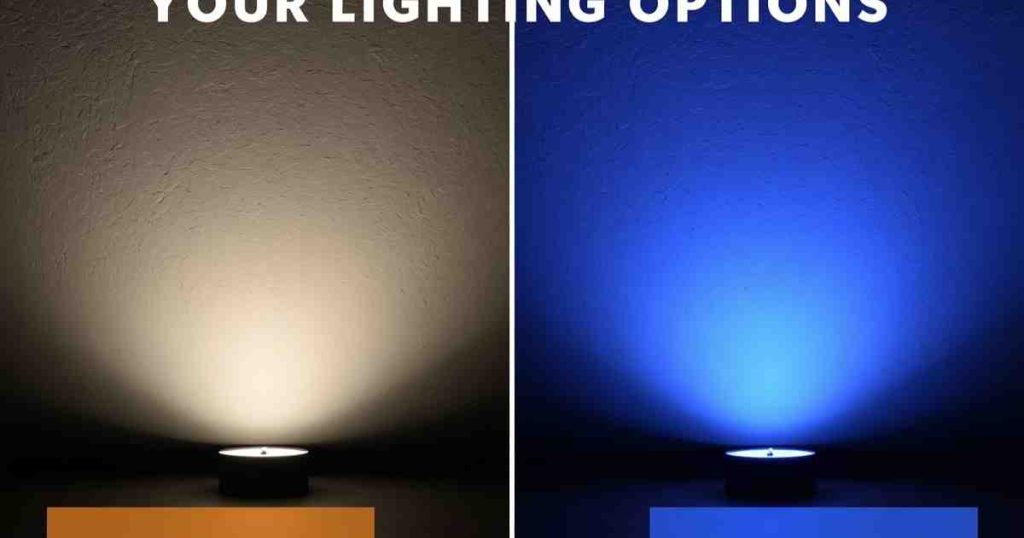
When you’re looking to brighten up the space under your kitchen cabinets, two popular choices stand out: LED strips and puck lights.
Both have their own unique features that can transform your kitchen’s look and feel. Thinking about Under-Cabinet Lighting: LED Strips vs Puck Lights — Which Is Better? is the first step to getting the lighting you want.
We’ll break down what each one is, how they work, and what makes them good for different situations.
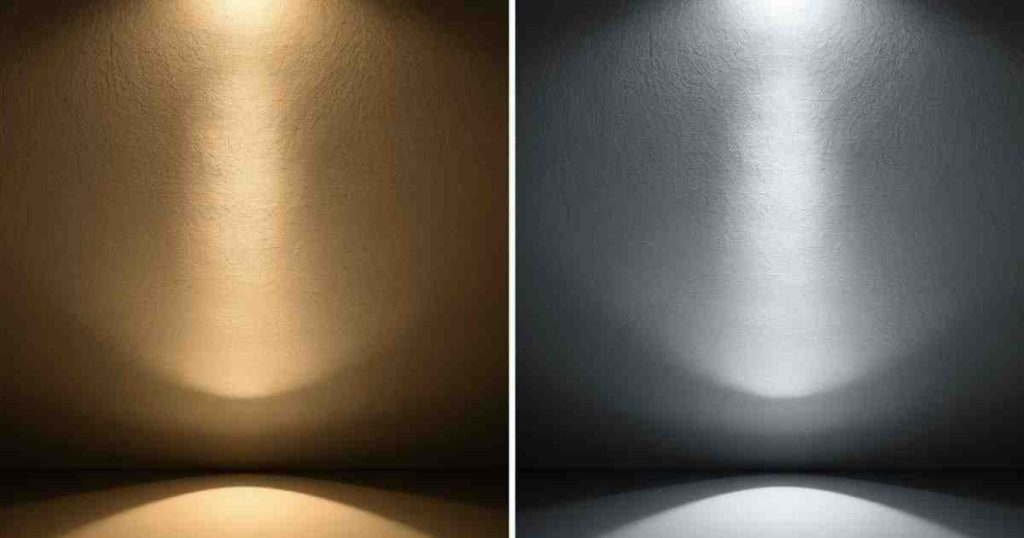
What Are LED Strips?
LED strips are long, flexible bands embedded with tiny light-emitting diodes (LEDs). They come on a roll and can often be cut to specific lengths. This makes them super adaptable for covering the entire length of a cabinet run.
They usually stick to the underside of cabinets with an adhesive backing. Power is typically supplied by plugging a transformer into an outlet, or sometimes by hardwiring them.
The main advantage of LED strips is their ability to create a continuous line of light. This provides a smooth, even glow that can illuminate your countertops thoroughly. They are also very versatile in terms of color and brightness.
You can find them in different shades of white, and some even offer color-changing options. This lets you set the mood for your kitchen.
Their flexibility means they can bend around corners, making them suitable for various cabinet shapes and sizes.
They are a popular choice for those seeking a modern and integrated lighting solution.
Continuous Illumination
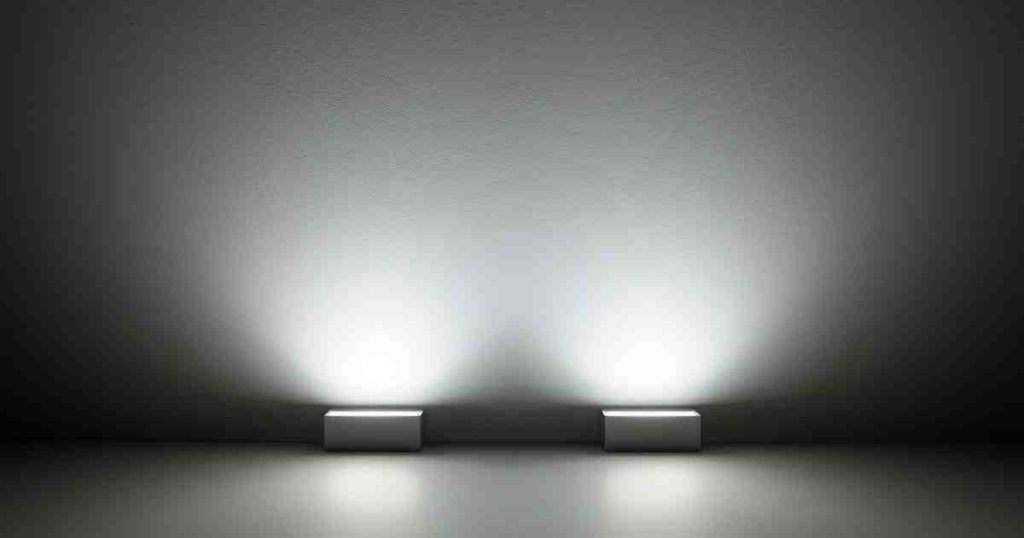
One of the biggest benefits of LED strips is their continuous illumination. Unlike puck lights, which create distinct pools of light, strips cast a uniform beam. This helps to eliminate shadows on your countertops, making food prep easier and safer.
The light flows seamlessly, providing a consistent brightness across the entire lit area. This effect is especially noticeable in larger kitchens where multiple cabinet sections need lighting.
Flexibility and Customization
LED strips are designed to be cut to size. Most strips have marked cutting points, allowing you to get the exact length you need. This is a huge advantage if your cabinets aren’t a standard size.
You can tailor the lighting precisely to fit your space. Some strips can also be connected together to cover longer distances. This customizability ensures that you can achieve a perfect fit without any awkward gaps or overlaps.
Installation of LED Strips
Installing LED strips usually involves cleaning the cabinet surface, measuring, cutting the strip, and then peeling off the adhesive backing to stick it in place. You’ll then need to connect the strip to a power supply. For simple plug-in kits, this is straightforward.
For hardwired setups, you might need to consult an electrician or have some DIY wiring experience. Some kits come with clips for added security, though the adhesive is often strong enough on its own.
Benefits of LED Strips
- Provides a smooth, unbroken line of light for even countertop coverage.
- Highly customizable lengths to fit any cabinet space perfectly.
- Available in various colors and brightness levels, including color-changing options.
- Can create a modern and sleek look.
- Generally energy-efficient and long-lasting.
A study by the U.S. Department of Energy found that LED lighting can use up to 80% less energy than traditional incandescent bulbs. This means lower electricity bills and a reduced environmental impact.
When considering LED strips, this energy efficiency is a significant plus, especially if you plan to have them on for extended periods.
What Are Puck Lights?
Puck lights are small, disc-shaped light fixtures. They are individual units, meaning each light is a separate piece. They are typically installed with screws or adhesive pads.
Puck lights are often battery-powered, but some are wired or plug-in models. They are known for their ease of installation and are a great choice for quick lighting upgrades.
These lights are fantastic for targeted illumination. If you have a specific task area on your counter, like a cutting board or a coffee maker, a puck light can shine directly on it. They create a more concentrated beam of light compared to the broad wash of an LED strip.
This can be beneficial if you want to highlight certain features or provide focused task lighting. They also offer a different aesthetic, with visible fixtures that can add a decorative element.
Focused Task Lighting
Puck lights excel at providing focused light. Each puck emits a beam that is perfect for illuminating a specific spot on your countertop.
This makes them ideal for areas where you do a lot of detailed work, like chopping vegetables or reading recipes.
The concentrated light helps reduce eye strain and makes these tasks much easier. You can strategically place them where you need the most light.
Ease of Installation
One of the biggest draws of puck lights is how simple they are to install. Many battery-operated models can be attached with adhesive strips or a few small screws in just a few minutes. This makes them a perfect DIY project for beginners.
You don’t need any special tools or electrical knowledge for most battery-powered versions. Even plug-in models are generally quite straightforward to set up.
Individual Control
Since puck lights are separate units, you can often control them individually. This means you can turn on only the lights you need, saving energy and customizing the illumination. For example, you might turn on the lights above your sink but not above your stove.
This level of control allows for a highly personalized lighting experience. Some advanced systems even offer remote controls for all the pucks.
Power Options for Puck Lights
Puck lights come with a variety of power sources. Battery-powered ones are the simplest, requiring no wiring at all. They are great for renters or those who want a quick fix.
Plug-in models need to be near an outlet, while hardwired versions offer a cleaner look but require more complex installation. Choosing the right power option depends on your setup and comfort level with electrical work.
Benefits of Puck Lights
- Easy and quick to install, ideal for DIY beginners.
- Provide focused light for task areas on countertops.
- Often battery-powered, eliminating the need for wiring.
- Individual control over each light allows for customized brightness.
- Can add a decorative touch with visible fixtures.
Research indicates that task lighting, like that provided by puck lights, can improve productivity by up to 20% in workplaces.
While your kitchen isn’t an office, the principle of focused light improving efficiency and comfort applies equally well to food preparation. Having the right light where you need it makes cooking and other kitchen tasks more enjoyable.
Comparing LED Strips and Puck Lights
Now that we know what each type of light offers, let’s directly compare Under-Cabinet Lighting: LED Strips vs Puck Lights — Which Is Better? for your needs. We’ll look at how they measure up in terms of installation, appearance, cost, and overall performance. This comparison will help you decide which option best fits your kitchen and your DIY skills.
Installation: Who’s Easier to Install?
For beginners, puck lights usually win when it comes to installation ease. Battery-powered puck lights often just stick on with adhesive or mount with a couple of screws. This means you can have them up and running in minutes without needing any tools beyond maybe a screwdriver.
No need to worry about cutting wires or complex connections.
LED strips, while not overly complicated, typically require a bit more attention. You need to measure precisely, cut the strip correctly, and then carefully apply it. The main part that can be tricky for beginners is connecting the strip to the power supply.
While many kits come with simple plug-in adapters, some might require basic wiring, which can be intimidating for those new to home improvement projects. However, many modern LED strip kits are designed to be user-friendly with snap-together connectors.
Installation Steps: Puck Lights (Typical Battery Model)
- Clean the surface under the cabinet where you want to place the light.
- Peel off the adhesive backing from the light fixture.
- Press the puck light firmly into place.
- Insert batteries.
- Turn on the light!
Installation Steps: LED Strips (Typical Plug-in Model)
- Clean the surface under the cabinet.
- Measure the desired length and cut the LED strip at the marked points.
- Peel off the adhesive backing and carefully press the strip into place.
- Connect the LED strip to the power adapter.
- Plug the adapter into a nearby electrical outlet.
Appearance: The Aesthetic Difference
The visual outcome of LED strips and puck lights is quite different. LED strips create a continuous, modern, and often subtle line of light.
They are fantastic if you want your lighting to blend in seamlessly with your cabinets and provide a uniform glow across your entire countertop.
They can make your kitchen look very polished and high-end, especially when the strip is hidden from direct view.
Puck lights, on the other hand, offer a more distributed look. Each light creates its own distinct circle of illumination. This can be attractive if you like the look of multiple light sources or if you want to highlight specific areas.
The fixtures themselves are visible, and some people find their design appealing. They can offer a more traditional or modular aesthetic compared to the sleekness of strips.
When to Choose Strips for Appearance:
- You want a seamless, uniform light across all your countertops.
- You prefer lighting that is less visible and more integrated.
- You are aiming for a modern, minimalist kitchen design.
- You want to avoid shadows and create a bright, open feel.
When to Choose Puck Lights for Appearance:
- You want to create focused lighting zones for specific tasks.
- You like the look of individual light fixtures.
- You want the flexibility to turn on only certain lights for a varied effect.
- Your kitchen style is more traditional or eclectic, where visible fixtures can fit in.
Cost: Budget Considerations
When thinking about Under-Cabinet Lighting: LED Strips vs Puck Lights — Which Is Better? from a budget perspective, it can go either way depending on your needs.
For covering long stretches of cabinets, LED strips are often more cost-effective per foot. You buy a longer strip and cut it to size, which can be cheaper than buying many individual puck lights to cover the same area.
However, if you only need to light a small section or a few key spots, a small pack of puck lights might be cheaper upfront.
Battery-powered puck lights have the advantage of not needing an electrical outlet nearby, saving on installation costs if you don’t have one conveniently located.
For larger projects, LED strips can offer better value, especially considering their energy efficiency, which saves money on electricity bills over time.
The initial cost of a full LED strip kit might be higher than a small set of puck lights, but the long-term savings can be significant.
| Feature | LED Strips (Typical Cost) | Puck Lights (Typical Cost) |
|---|---|---|
| Initial Purchase (per foot/unit) | $5 – $20 per foot | $10 – $30 per 2-pack or 3-pack |
| Installation Cost | Low to moderate (DIY possible, electrician may be needed for hardwiring) | Very Low (DIY, often no tools needed for battery models) |
| Running Cost (Electricity) | Very Low (highly energy-efficient) | Low to Very Low (especially battery models; can vary) |
| Long-Term Value | Good, especially for larger areas and long-term energy savings | Good for targeted lighting, but cost can add up for many fixtures |
A report from the National Renewable Energy Laboratory (NREL) highlights that LEDs are significantly more energy-efficient and last much longer than older lighting technologies.
This means that while the upfront cost might seem higher for some LED products, the total cost of ownership is often lower. For both LED strips and puck lights, choosing LED technology is a smart move for long-term savings.
Performance: Brightness and Coverage
When it comes to how well they light up your space, LED strips and puck lights perform differently. LED strips provide a broader, more diffused light.
They are excellent for general illumination of your countertops, ensuring that the entire surface is well-lit and free from shadows.
This makes them ideal for creating a bright, welcoming kitchen environment.
Puck lights are designed for focused lighting. Each light directs its beam downwards, creating a brighter spot directly below it.
This is perfect for task lighting where you need clear visibility for activities like chopping or reading.
However, if you use only a few puck lights, you might have areas on your countertop that are not as well-lit, leading to shadows.
The overall brightness and coverage depend heavily on how many puck lights you install and where you place them.
Coverage Comparison
- LED Strips: Offer continuous, uniform coverage along their length. Ideal for illuminating entire countertop sections.
- Puck Lights: Provide focused beams of light. Coverage is limited to the area directly beneath each light.
Consider a scenario where you’re baking. With LED strips, the entire workspace, from mixing bowl to cutting board, is evenly lit.
With puck lights, you might have bright spots where the lights are, but shadows could form in between, making it harder to see the exact consistency of your batter or the exact measurement of flour.
The choice depends on whether you prioritize an overall bright space or specific, bright work areas.
Choosing Between LED Strips and Puck Lights
Deciding between Under-Cabinet Lighting: LED Strips vs Puck Lights — Which Is Better? really comes down to your personal preferences, the layout of your kitchen, and what you plan to use the lights for.
There’s no single “right” answer; it’s about finding the best fit for your home. Let’s look at some common situations to help guide your choice.
Scenario 1: The Ambitious Home Cook
If you spend a lot of time in the kitchen cooking, baking, and preparing meals, good task lighting is essential.
You need to see clearly what you’re doing to ensure safety and precision. For this, a combination might be best, but if you have to choose one, consider the pros and cons.
For the ambitious home cook, bright and consistent lighting over the entire workspace is key. This suggests that LED strips might have an edge.
They provide an even wash of light that covers large countertop areas, reducing shadows and making it easier to see fine details, like the consistency of dough or the accuracy of measurements.
The continuous light also means you won’t have distracting dark spots between light fixtures.
However, some cooks might also appreciate the targeted illumination of puck lights. Placing puck lights directly over specific work areas like the stove or a dedicated prep zone can provide extra brightness where it’s most needed.
For instance, a cook might use LED strips for general countertop illumination and then add a few puck lights directly above the stove for intense cooking light.
Needs of the Ambitious Home Cook
- Clear visibility: Need bright, shadow-free light for detailed tasks.
- Even coverage: Prefer uniform lighting across large prep areas.
- Durability: Lights should withstand heat and frequent use.
- Energy efficiency: Long hours of use mean lower bills are desirable.
A study on visual performance in kitchens found that improved lighting conditions significantly reduce errors in food preparation.
For someone who cooks frequently, investing in good lighting isn’t just about aesthetics; it’s about practicality and safety.
The even, broad light from LED strips often makes them the preferred choice for primary countertop illumination for passionate home cooks.
Scenario 2: The Renter Looking for Easy Upgrades
If you’re renting your home, you likely want lighting solutions that are easy to install and, more importantly, easy to remove without causing any damage.
This makes battery-powered options very attractive. For renters, the simplicity of installation and non-permanent nature are huge factors.
In this situation, battery-powered puck lights are usually the top choice. They require no wiring, no drilling permanent holes, and can be easily detached when you move out.
The adhesive backing is usually strong enough to hold them securely but can be removed without damaging cabinet surfaces with a little care.
This makes them a perfect temporary lighting upgrade.
While there are plug-in LED strips available that don’t require hardwiring, they still involve applying a long strip of adhesive.
Removing these can sometimes leave residue or even peel paint if not done carefully. Battery-powered puck lights offer the most convenient and damage-free solution for renters.
You can also easily move them around to find the best placement without worrying about outlet locations.
Priorities for Renters
- Easy Installation: Needs to be quick and require minimal tools.
- Non-Damaging Removal: Must not leave holes, residue, or damage surfaces.
- Portability: Lights should be easy to move and reinstall.
- No Wiring: Battery-powered is often preferred.
A survey on renter satisfaction found that simple aesthetic upgrades, like improved lighting, are highly valued. Options that don’t involve permanent changes allow renters to personalize their space without risking their security deposit.
Puck lights, particularly the battery-operated kind, fulfill these needs perfectly, offering an instant aesthetic improvement with zero long-term commitment.
Scenario 3: The Design-Focused Homeowner
If your main goal is to enhance the aesthetic appeal of your kitchen and create a specific mood or look, the design implications of your lighting choice become paramount. You might be looking for lighting that is both functional and a statement piece.
For a sleek, modern look, LED strips are often preferred. Their ability to provide a continuous, almost invisible line of light under cabinets can create a sophisticated ambiance.
They blend seamlessly with cabinet designs and can make a kitchen feel more spacious and contemporary.
The subtle glow they cast can highlight decorative backsplashes or create a soft, inviting atmosphere in the evening.
Puck lights can also contribute to a kitchen’s design, but in a different way. Their visible nature means they can act as decorative elements themselves.
They can be chosen in finishes that match cabinet hardware or create a more layered lighting effect with multiple points of light.
Some homeowners might opt for puck lights with dimming capabilities to precisely control the mood, from bright task lighting to a soft, ambient glow for entertaining.
Design Considerations
- Aesthetic integration: How well the lights blend with or complement the cabinet style.
- Ambiance creation: The mood and atmosphere the lights help to set.
- Light quality: Color temperature and diffusion of the light.
- Fixture visibility: Whether the lights themselves are meant to be seen.
According to interior design trends, integrated and understated lighting is increasingly popular in modern kitchens.
This plays to the strengths of LED strips, which can be recessed or mounted to be almost invisible. However, decorative lighting is also a key trend, and well-chosen puck lights can serve this purpose effectively, adding character and a designer touch. The U.S. Department of Energy explains LED lighting benefits on its official website.
FAQ Of Under-Cabinet Lighting: Led Strips Vs Puck Lights — Which Is Better?
Are LED strips or puck lights better for a small kitchen?
For a small kitchen, either can work well. LED strips provide a uniform light that can make the space feel larger and brighter. Puck lights are great for task lighting in specific spots, but too many might make a small area feel cluttered.
Can I mix LED strips and puck lights in my kitchen?
Absolutely! Many people find that combining both offers the best of both worlds. You can use LED strips for general ambient lighting and add puck lights for focused task illumination where needed.
Do LED strips get hot?
Modern LED strips generate very little heat, especially compared to older types of lighting. They are generally safe to install under cabinets without concerns about overheating or damaging the cabinet material.
Are battery-powered puck lights bright enough for cooking?
Battery-powered puck lights can be bright enough for basic tasks, but for serious cooking, you might prefer plug-in or hardwired options which often offer higher brightness and consistency. Always check the lumen output (brightness measurement) of the puck lights.
How long do LED strips and puck lights typically last?
LEDs are known for their long lifespan. Both LED strips and puck lights can last for tens of thousands of hours, often many years, significantly outperforming traditional bulbs.
Conclusion
Choosing between LED strips and puck lights for your under-cabinet lighting boils down to your priorities.
LED strips offer a continuous, even glow perfect for overall brightness and a modern look. Puck lights provide focused task lighting and are often easier for beginners to install. Homeowners interested in the technology behind LED strip lights can find detailed information on Wikipedia.
Consider how you use your kitchen and the look you want to achieve. With these options, you can easily brighten your countertops.

![Statement Pendant Lights For Kitchens Trends In Brass, Black, And Mixed Metals[1]](https://kitchentoolslab.com/wp-content/uploads/2026/05/Statement_Pendant_Lights_For_Kitchens__Trends_In_Brass_Black_And_Mixed_Metals1-768x403.jpg)
![How To Retrofit Led Lighting In An Old Kitchen Without Full Rewiring[1]](https://kitchentoolslab.com/wp-content/uploads/2026/05/How_To_Retrofit_Led_Lighting_In_An_Old_Kitchen_Without_Full_Rewiring1-768x403.jpg)
![Warm Vs Cool Light In The Kitchen Which Color Temperature Should You Use[1]](https://kitchentoolslab.com/wp-content/uploads/2026/05/Warm_Vs_Cool_Light_In_The_Kitchen__Which_Color_Temperature_Should_You_Use1-768x403.jpg)
![Kitchen Lighting Over Sink Best Fixture Types And Placement Rules[1]](https://kitchentoolslab.com/wp-content/uploads/2026/05/Kitchen_Lighting_Over_Sink__Best_Fixture_Types_And_Placement_Rules1-768x403.jpg)
![What Is Color Rendering Index (Cri) And Why It Matters For Kitchen Lighting[1]](https://kitchentoolslab.com/wp-content/uploads/2026/05/What_Is_Color_Rendering_Index_Cri_And_Why_It_Matters_For_Kitchen_Lighting1-768x403.jpg)
![How To Plan Kitchen Lighting A Step By Step Guide For Homeowners[1]](https://kitchentoolslab.com/wp-content/uploads/2026/05/How_To_Plan_Kitchen_Lighting__A_Step-By-Step_Guide_For_Homeowners1-768x403.jpg)