
Pendant Lights Over Kitchen Island: How Many, What Size, And How High?
Thinking about how to put up lights over your kitchen island can feel a little tricky, especially if you’re new to decorating.
Questions like Pendant Lights Over Kitchen Island: How Many, What Size, and How High? pop up a lot because getting them just right makes a big difference in how your kitchen looks and feels. Don’t worry, though!
We’re going to break it all down in a simple, step-by-step way. Get ready to learn the easy answers so you can make your kitchen shine.
Key Takeaways
- You can figure out how many pendant lights to use based on the size of your kitchen island.
- The size of your pendant lights should match the scale of your island and the room.
- Hanging pendant lights at the right height is important for both looks and function.
- There are easy rules of thumb to follow for spacing your pendant lights.
- Considering your island’s shape helps decide on the best pendant light style and number.
- Getting the lighting right can really make your kitchen feel more inviting and work better.
![Pendant Lights Over Kitchen Island How Many, What Size, And How High[1]](https://kitchentoolslab.com/wp-content/uploads/2026/05/Pendant_Lights_Over_Kitchen_Island__How_Many_What_Size_And_How_High1.jpg)
Choosing the Right Number of Pendant Lights Over Kitchen Island
Figuring out how many pendant lights to put over your kitchen island is a common question. The number really depends on the length of your island. For most standard kitchens, you’ll likely use two or three pendant lights.
This number creates a balanced look and provides enough light without making the space feel too busy.
It’s all about making sure the lights fit the island’s size and don’t overpower it. We’ll explore the simple math behind this.
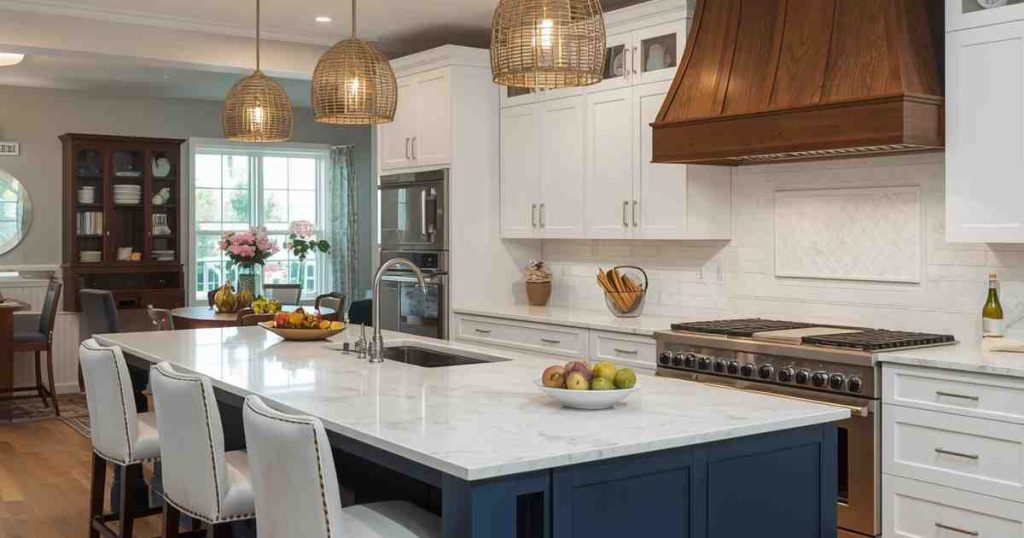
Island Length and Pendant Count
A good starting point for deciding how many pendant lights to use is to think about the length of your kitchen island.
For islands that are about 3 to 4 feet long, one pendant light might be enough. If your island is between 5 to 7 feet long, two pendant lights are usually the best choice.
For larger islands, say 8 feet or more, three pendant lights can create a beautiful, symmetrical arrangement.
The idea is to spread the light evenly across the surface of the island. You don’t want dark spots, but you also don’t want too many lights crammed together. Think of it like placing furniture in a room; you want good spacing and balance.
This principle applies directly to how you hang your pendant lights.
This even spacing ensures that every part of your island is well-lit. This is super helpful when you’re preparing food, eating, or just gathering with family and friends. The visual appeal is also important; a well-proportioned number of lights makes the island look more grounded and inviting.
Spacing Guidelines for Pendant Lights
When you’re figuring out how many lights to use, spacing them correctly is key. A common rule of thumb is to leave about 24 to 30 inches of space between each pendant light. This measurement is taken from the center of one pendant to the center of the next.
You also want to make sure there’s about 6 inches of space from the ends of the island to the center of the outermost pendant light.
This spacing helps prevent the pendants from looking too crowded. It also makes sure that the light they cast is spread out nicely over the countertop.
If you have two lights, for instance, you’d want them to be centered on the island and spaced apart so they don’t overlap too much or leave big gaps.
Imagine your island as a canvas. You’re placing your lights to create a pleasing composition. Too close, and they look messy.
Too far apart, and you lose the intended effect. These simple measurements are designed to help you achieve that perfect balance for your kitchen’s look and feel.
Example Scenarios for Pendant Light Count
Let’s look at some real-life examples. If you have a kitchen island that measures 6 feet long, you’d likely want to use two pendant lights. You would position them so they are roughly centered within their halves of the island.
This means each light would have about 3 feet of island length to illuminate.
For a longer island, perhaps 9 feet, three pendant lights would work well. You could space them out with roughly 30 inches between each light. This would leave about 15 inches from each end of the island to the closest pendant.
This arrangement offers excellent coverage and a stylish, symmetrical appearance.
Consider a smaller island, maybe 4 feet. One larger pendant light might be ideal. Centering it perfectly over the island will provide ample light and a strong focal point without overwhelming the space.
These examples show how a little planning based on size leads to great results.
Selecting the Perfect Size of Pendant Lights for Your Kitchen Island
Choosing the right size for your pendant lights is just as important as deciding how many to use. The size of the pendants should match the scale of your kitchen island and the overall room. Big lights on a small island can look out of place, and tiny lights on a huge island might get lost.
We’ll go over some simple ways to make sure your lights fit perfectly.
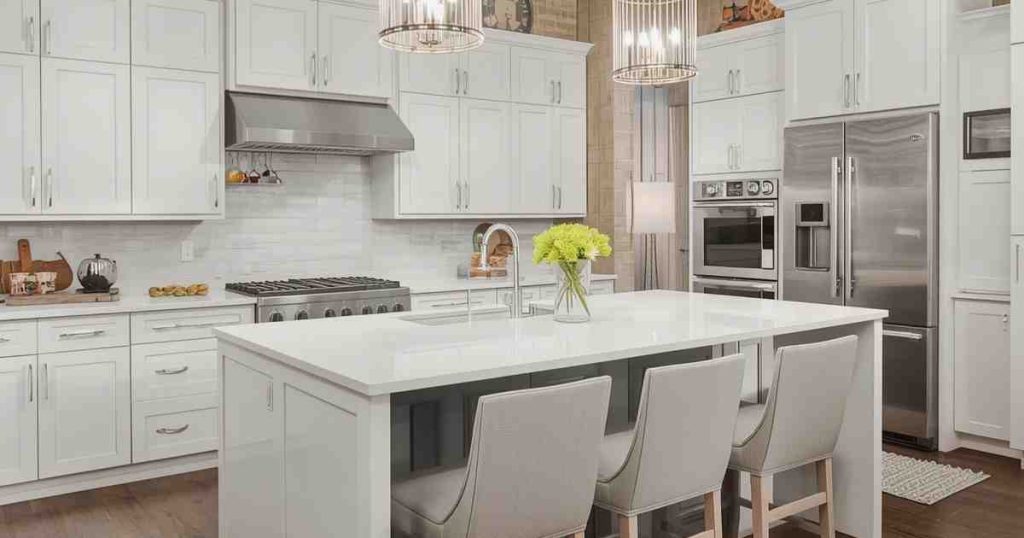
Matching Pendant Size to Island Dimensions
A good rule of thumb is to consider the width of your kitchen island. The total width of your pendant lights, when placed side-by-side, should ideally be about one-third of the island’s length.
This means if your island is 6 feet long, the combined width of your two pendants should be around 2 feet.
Another way to think about it is by looking at the diameter of a single pendant light. For most standard islands, pendant lights with a diameter of 10 to 15 inches work very well.
If you have a very large island, you might consider larger pendants, perhaps 18 to 20 inches in diameter, or even a set of three smaller ones to maintain proportion.
The goal is to create a visual balance. The pendants should feel substantial enough to be noticed but not so large that they dominate the space or make the island seem cramped. This balance makes the kitchen look more put-together and inviting.
Visual Balance and Scale
Think about the visual weight of the pendant lights. A very large, heavy-looking pendant will have a different impact than a small, delicate one. The style of your kitchen also plays a role.
A modern kitchen might suit sleeker, larger pendants, while a rustic kitchen might look better with smaller, more intricate ones.
The height of your ceilings can also influence the perceived size of the pendants. If you have high ceilings, you can get away with slightly larger or more elaborate pendants without them seeming overwhelming.
Conversely, in a kitchen with lower ceilings, it’s often best to opt for smaller, more streamlined fixtures.
It’s about making sure the elements in your kitchen work together harmoniously. The pendant lights should complement the island and the room, not compete with them. This careful consideration of scale helps achieve a polished and professional look in your home.
The ‘Imaginary Box’ Method
Here’s a neat trick called the ‘imaginary box’ method to help you choose pendant sizes. Imagine a box for each pendant light. The width of this box should not be more than the width of the island divided by the number of pendants you plan to use, minus the spacing between them.
For example, on a 6-foot island with two pendants and 30 inches between them, each ‘box’ would be about 2.25 feet wide (6ft = 72 inches; 72 – 30 = 42 inches for two pendants; 42 / 2 = 21 inches or 1.75 feet, plus half the spacing on each side).
Alternatively, a simpler version of this rule is that the diameter of a pendant should not be more than one-third of the width of the island. So, for a 3-foot wide island, a pendant with a diameter of around 12 inches would be a good fit. This helps ensure that the lights don’t hang too far out over the countertop, potentially bumping into people.
This method is especially useful when you’re looking at pendants online and can’t see them in person. It gives you a solid guideline to work with, helping you visualize how the lights will look once installed. It’s a practical way to avoid mistakes and ensure you choose the right scale.
When to Choose Larger or Smaller Pendants
You might choose larger pendants if your island is quite long, or if you are only using one or two. A single, statement-making pendant can be a great focal point for a smaller island or a peninsula.
For islands that are very wide, you might opt for wider, flatter pendant styles, sometimes called ‘drum’ or ‘bowl’ pendants, to cover more surface area.
Conversely, if you have a long, narrow island, or if you plan to hang three or more pendants, smaller, more delicate fixtures might be better.
This prevents the area from feeling cluttered. Think about clusters of small pendants or slender, rod-like fixtures that add light without taking up too much visual space.
The material and finish also affect perceived size. A dark, opaque pendant will look heavier than a clear glass or a light-colored metal one. Consider how the light will fill the space and the overall ambiance you want to create.
These details contribute to the final aesthetic.
Determining the Ideal Height for Pendant Lights Over Kitchen Island
Getting the height right for your pendant lights is crucial for both looks and functionality. Too high, and they might not provide enough light or look awkward. Too low, and people might bump their heads.
We’ll show you how to find that perfect sweet spot.
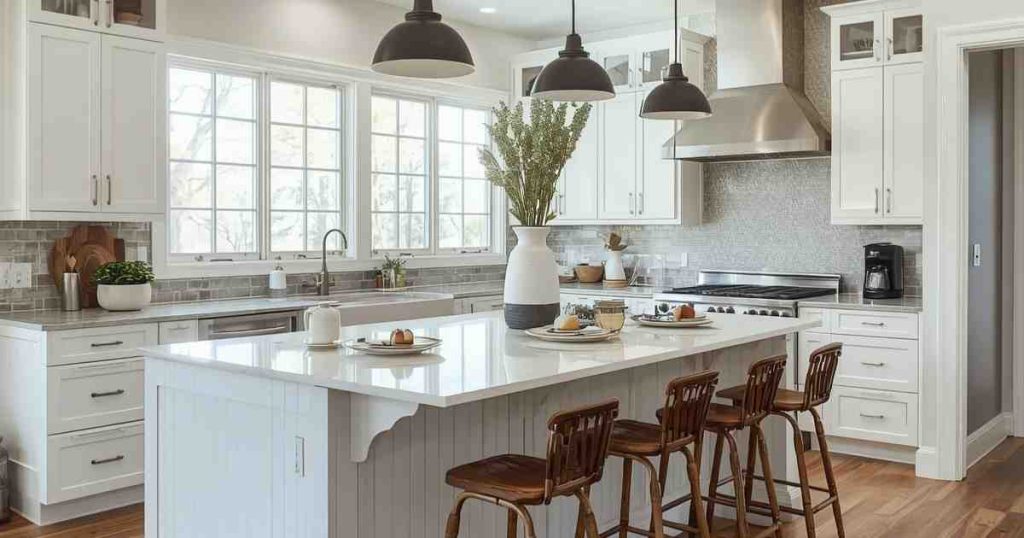
Standard Hanging Height Guidelines
The most common recommendation for hanging pendant lights over a kitchen island is to have them about 30 to 36 inches above the countertop.
This height range provides ample task lighting for food preparation and dining without being too close to eye level when people are seated.
When measuring, make sure to consider the height of the people who will be using the kitchen regularly. If you have particularly tall individuals in your household, you might opt for the higher end of this range. Conversely, if most people are on the shorter side, the lower end might feel more comfortable.
It’s also important to remember that this measurement is from the countertop surface to the bottom of the pendant light fixture.
This is a key detail that often gets overlooked. Always double-check your measurements before making any permanent installations.
Considering Task Lighting Needs
The primary purpose of pendant lights over a kitchen island is often to provide task lighting. This means the light needs to be directed effectively onto the work surface.
If the pendants are hung too high, the light might spread too thinly, leaving areas of the island in shadow.
When you’re chopping vegetables, reading a recipe, or doing other detailed work, you need sufficient light directly above you.
Hanging the pendants at the recommended height ensures that the light is concentrated where you need it most, making your kitchen a more efficient and enjoyable space to work in.Think about how you use your kitchen island. Is it mostly for quick meals, or is it your primary food prep area? Your answer will help you fine-tune the height.
If it’s a high-traffic prep zone, slightly lower might be better for focused light. For more casual dining, a bit higher could work.
Eye Level and Seating Clearance
Another important factor is ensuring the pendant lights are not at eye level for people sitting at the island.
You don’t want to be staring directly into a bright light bulb when you’re trying to have a conversation or enjoy a meal. The 30-36 inch range typically keeps the lights below seated eye level.
For standard counter-height stools (around 24 inches high), the bottom of the pendant at 30-36 inches above the counter will generally be well above their heads. If you have bar-height stools (around 30 inches high), you might need to hang the pendants closer to the 36-inch mark, or even a little higher, to ensure comfortable clearance.
Always measure from the top of the seating area to the bottom of the pendant. Aim for at least 6 inches of clearance, but ideally more, for comfortable seating. This ensures that the lighting is both functional and comfortable for everyone using the space.
Adjusting for Different Ceiling Heights
Ceiling height plays a significant role in how you hang your pendant lights. While 30-36 inches above the counter is a good general rule, you might need to adjust it based on your ceiling.
If you have very high ceilings (9 feet or more), you might hang the pendants slightly lower relative to the ceiling, but still within that 30-36 inch range above the counter.
Conversely, if you have lower ceilings (8 feet or less), you might need to hang the pendants slightly higher above the counter to avoid making the space feel too enclosed. The key is to maintain that visual balance and ensure adequate clearance for people.
It’s also about how the pendants look in the overall room. If they look too close to the ceiling, they might seem out of proportion. If they look too low, they can make the room feel smaller.
Consider the overall visual flow and ensure the pendants are a harmonious part of the room’s design.
Example Scenarios for Pendant Height
Let’s imagine a standard kitchen island with a 36-inch high countertop. For good task lighting and comfortable seating, you would hang your pendant lights about 30-36 inches above that counter. This means the bottom of the pendant would be between 66 and 72 inches from the floor.
Now, consider a kitchen with very high ceilings, say 10 feet (120 inches). The island countertop is still 36 inches high. If you hang the pendants at 33 inches above the counter, they would be 69 inches from the floor.
They would still look well-proportioned against the high ceiling and provide excellent light.
For a kitchen with 8-foot ceilings (96 inches), the same 36-inch island countertop applies. Hanging the pendants at 36 inches above the counter puts them at 72 inches from the floor. This ensures they don’t feel too low and still allow comfortable head clearance for seated guests.
Designing Your Pendant Light Layout
Creating a layout for your pendant lights involves more than just placing them. It’s about how they work with the shape of your island, the room’s style, and your personal preferences. Let’s explore how to make this decision with confidence.
Considering Island Shape and Style
The shape of your kitchen island can influence the number and style of pendants you choose. A rectangular island is the most common and works well with linear arrangements of two or three pendants.
For islands with an overhang for seating, you’ll want to ensure the pendants are hung high enough not to obstruct heads.
Curved islands or islands with unique shapes might call for a more artistic approach. You might use a cluster of smaller pendants at varying heights for a dynamic look, or a single, larger pendant that echoes the island’s curve.
The style of the island itself—whether it’s modern, traditional, or farmhouse—should guide your pendant selection.
A sleek, minimalist island might look best with simple, geometric pendants. A more ornate island could handle more decorative or vintage-inspired fixtures. The goal is to create a cohesive look where the lights and the island complement each other beautifully.
Uniform vs. Varied Pendant Styles
For a clean, classic look, using identical pendant lights is a popular choice. This symmetry creates a sense of order and elegance, making the island a focal point without being visually chaotic. Three identical pendants spaced evenly over a long island are a timeless design.
However, mixing pendant styles can add personality and visual interest. You might use two identical pendants on either side of a larger, central pendant, or choose pendants that share a similar material or color but differ in shape. This approach requires a bit more careful planning to ensure the styles don’t clash.
If you opt for varied styles, ensure there’s a connecting element, like the same finish (e.g., all brushed nickel) or a similar color palette.
This helps tie the different pendants together, making the arrangement look intentional rather than accidental. It’s a way to express your unique taste.
The Role of Other Kitchen Lighting
Pendant lights over your kitchen island are usually part of a larger lighting scheme. They provide task lighting and add decorative flair.
But you’ll also need ambient lighting (like ceiling lights) to illuminate the whole room and accent lighting to highlight specific features.
Make sure your pendant lights don’t compete with your other light sources. For instance, if you have very bright recessed lighting all over, you might choose pendants that offer a softer, more diffused light. The goal is to layer your lighting to create different moods and functionalities.
Consider dimmers for all your kitchen lights, including pendants. This allows you to adjust the brightness for different activities and times of day. A bright setting is great for cooking, while a dimmer setting is perfect for a relaxed dinner or evening.
This flexibility is key to a well-designed kitchen.
Professional Installation vs. DIY
While some DIY enthusiasts might tackle pendant light installation, it’s often best left to professionals. Electrical work can be dangerous if not done correctly, and ensuring the fixtures are securely mounted is vital. A professional can also offer advice on placement and wiring. Understanding how to safely install pendant lighting fixtures can help you decide between DIY and professional help.
If you’re unsure about electrical wiring, finding a qualified electrician is a smart move. They can safely connect the lights to your home’s power supply and ensure everything meets local building codes. This peace of mind is invaluable.
For those comfortable with basic electrical work, remember to always turn off the power at the breaker box before you start.
Follow the manufacturer’s instructions carefully. If at any point you feel uncertain, it’s always safer to call a professional to complete the job.
Statistics on Kitchen Lighting Impact
According to a study by the American Lighting Association, good lighting can make a kitchen feel up to 20% larger.
Additionally, 85% of homeowners say that kitchen lighting is a significant factor in their home’s overall appeal.
Well-placed pendant lights over the island contribute greatly to both perceived space and aesthetic value.
Another survey indicated that over 70% of people consider updated lighting to be one of the most impactful renovations for resale value.
This highlights how important it is to get the lighting right, not just for your enjoyment but also for your home’s investment potential. Pendant lights are often a central feature of kitchen renovations, drawing positive attention. Well-planned kitchen island design often incorporates pendant lights to enhance both function and style.
The right lighting can also influence how people feel in a space. Studies have shown that warm, inviting light can encourage longer stays and more social interaction in kitchens, turning them into true gathering hubs. This underscores the power of thoughtful lighting design.
Frequently Asked Questions Of Pendant Lights Over Kitchen Island: How Many, What Size, And How High?
What is the most common mistake people make with pendant lights over a kitchen island?
A very common mistake is hanging them too high or too low, or choosing lights that are too big or too small for the island. This can make the kitchen look unbalanced or feel cramped.
Can I use different styles of pendant lights over my island?
Yes, you can mix and match pendant styles, but it’s best to choose ones that have a common element, like the same finish or color, to keep the look cohesive.
How far apart should pendant lights be if I have a very long island?
For long islands, you can use more pendants. A good rule is to maintain about 24 to 30 inches between the centers of each light. You can also space them out to cover the island evenly.
Do pendant lights need to be the same height?
For a symmetrical and balanced look, it’s best to hang them at the same height. If you’re going for a more eclectic or modern look, you might vary the heights, but this requires careful design.
How much light do pendant lights provide?
Pendant lights primarily provide task lighting, meaning they are focused on the area directly below them. The amount of light depends on the bulb wattage and the design of the pendant itself. You’ll likely need other lights for general room illumination.
Summary
Choosing Pendant Lights Over Kitchen Island: How Many, What Size, and How High? is made simple by following these guidelines. Choosing energy-efficient lighting for your kitchen island can lower electricity bills and reduce environmental impact.
Consider your island’s length for the number of lights, its width for their size, and counter height for the perfect hanging distance. Getting these basics right creates a beautiful and functional kitchen space for everyone to enjoy.

![Kitchen Lighting For Dark Countertops What Color Temperature Works Best[1]](https://kitchentoolslab.com/wp-content/uploads/2026/05/Kitchen_Lighting_For_Dark_Countertops__What_Color_Temperature_Works_Best1-768x403.jpg)
![Under Cabinet Lighting Led Strips Vs Puck Lights — Which Is Better[1]](https://kitchentoolslab.com/wp-content/uploads/2026/05/Under-Cabinet_Lighting__Led_Strips_Vs_Puck_Lights_—_Which_Is_Better1-768x403.jpg)
![What Is Color Rendering Index (Cri) And Why It Matters For Kitchen Lighting[1]](https://kitchentoolslab.com/wp-content/uploads/2026/05/What_Is_Color_Rendering_Index_Cri_And_Why_It_Matters_For_Kitchen_Lighting1-768x403.jpg)
![How To Light A Kitchen With No Natural Light Solutions That Actually Work[1]](https://kitchentoolslab.com/wp-content/uploads/2026/05/How_To_Light_A_Kitchen_With_No_Natural_Light__Solutions_That_Actually_Work1-768x403.jpg)
![Warm Vs Cool Light In The Kitchen Which Color Temperature Should You Use[1]](https://kitchentoolslab.com/wp-content/uploads/2026/05/Warm_Vs_Cool_Light_In_The_Kitchen__Which_Color_Temperature_Should_You_Use1-768x403.jpg)
![Kitchen Lighting Mistakes That Make Your Space Look Cheap (And How To Fix Them)[1]](https://kitchentoolslab.com/wp-content/uploads/2026/05/Kitchen_Lighting_Mistakes_That_Make_Your_Space_Look_Cheap_And_How_To_Fix_Them1-768x403.jpg)