
What Is Color Rendering Index (Cri) And Why It Matters For Kitchen Lighting
Sometimes, learning about things like light bulbs can feel a little confusing, especially when terms like CRI pop up.
You might wonder, “What Is Color Rendering Index (CRI) and Why It Matters for Kitchen Lighting?” Don’t worry! It’s a common question, and it doesn’t have to be tricky.
We’ll break it down super simply, step by step. Get ready to see your kitchen in a whole new light!
Key Takeaways
- You’ll learn what the Color Rendering Index (CRI) actually is.
- You’ll discover why CRI is important for making your kitchen look its best.
- You’ll find out how to choose the right lights for your kitchen based on CRI.
- You’ll understand how high CRI lights affect the look of food and colors.
- You’ll get simple tips for improving your kitchen lighting.
![What Is Color Rendering Index (Cri) And Why It Matters For Kitchen Lighting[1]](https://kitchentoolslab.com/wp-content/uploads/2026/05/What_Is_Color_Rendering_Index_Cri_And_Why_It_Matters_For_Kitchen_Lighting1.jpg)
Understanding Light and Color
Light seems simple, but it’s actually quite amazing. It’s what lets us see everything around us. But light isn’t just about brightness; it also affects how we see colors.
Think about how colors look different indoors compared to outside in the sun. This difference is often because of the type of light we’re using. Certain lights can make colors look dull, while others make them pop and look true to life.
This is where the idea of color rendering comes into play, and it’s especially important when we’re trying to make our kitchens look and feel their best. We want our food to look appetizing and our cabinets to have the right hue, don’t we?
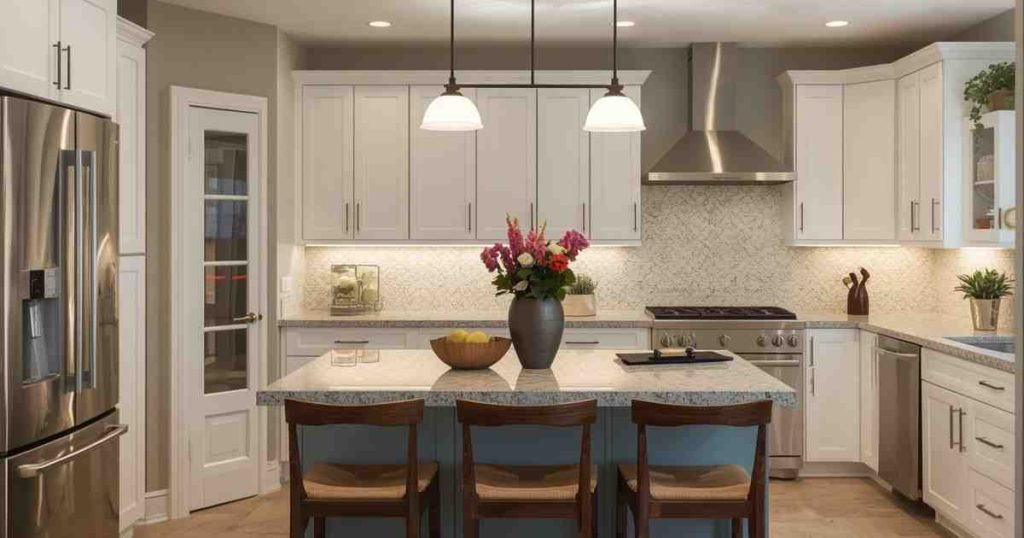
What is the Color Rendering Index (CRI)?
The Color Rendering Index, or CRI for short, is a way to measure how well a light source makes colors look compared to a natural light source, like the sun. It’s a number that goes from 0 to 100. A CRI of 100 means the light source shows colors exactly as they would look in bright sunlight.
The higher the CRI number, the better the light is at showing true colors. So, if a light bulb has a low CRI, colors might look a bit off or washed out.
Imagine you’re painting a picture. You want to use colors that are as close as possible to the real thing. CRI helps us do that with light.
It’s like a quality score for how a light bulb handles colors. A bulb with a high CRI will make a red apple look like a vibrant red apple, not a dull, brownish-red.
Many common light bulbs, especially older types, don’t show colors very well. This can make everything in a room look a bit bland. For places like kitchens, where we want to see food clearly and appreciate the colors of our decor, a good CRI is a big deal.
It helps make the space feel more inviting and functional.
How CRI is Measured
Scientists measure CRI by comparing the light from a bulb to a standard, natural light source. They use a special set of colored samples. These samples are designed to show how well different colors are reproduced.
The light from the bulb is shone on these samples, and then a camera measures how accurate the colors look. The results are then compared to how those same colors look under a reference light, usually daylight.
The index uses a scale of 0 to 100. A CRI of 90 or above is considered excellent and means colors will look very true to life. Most people find that a CRI of 80 or higher is good enough for general home use.
However, for specific areas like kitchens, where seeing true colors is important, aiming for a higher CRI is often recommended. It’s like choosing the best tools for a job; you want the ones that give you the most accurate results.
The scale isn’t just a single number. CRI actually looks at how 15 different colors are rendered. But for simplicity, a general CRI value is usually given.
This makes it easier for us to understand and compare different light bulbs when we’re shopping. We don’t need to be scientists to pick good lighting!
Why is CRI Important for Kitchen Lighting?
Kitchens are busy places where we prepare food, gather with family, and often do other tasks. The quality of the light can really change how we experience this space. When you have good CRI lighting in your kitchen, food looks more appealing.
A bright red tomato will look bright red, and fresh green herbs will look vibrant green. This makes cooking and serving food a more enjoyable experience.
Beyond food, good CRI lighting helps you see true colors in your kitchen decor. The color of your cabinets, countertops, and walls will appear as intended. This means you can better appreciate the design choices you’ve made.
It also helps with tasks like checking if something is clean or if your makeup is applied evenly at the kitchen counter if that’s where you do it.
Poor CRI lighting can make colors look dull or even strangely colored. Imagine slicing into a piece of fruit and not being able to tell its true ripeness because the light is making it look off. Or perhaps your beautifully chosen tile backsplash looks muted and uninteresting because the lights aren’t showing its true color.
This is why understanding CRI for your kitchen is so valuable.
The Impact of Low CRI on Your Kitchen
When you use light bulbs with a low Color Rendering Index in your kitchen, you might notice some disappointing results. Colors can appear washed out, as if they’ve lost their vibrancy. Red foods might look more orange or brown, and green vegetables could seem dull.
This can make your meals look less appetizing, which is the opposite of what we want in a kitchen.
Your kitchen’s design might also suffer. Those lovely cabinet colors you chose could look different under low CRI lights. Your countertops might not shine as brightly, and the overall ambiance of the room could feel less welcoming.
It’s like looking at a photograph with bad color balance – it just doesn’t look right.
Low CRI can also affect how accurately you perceive things. For instance, if you’re trying to match colors, perhaps for cooking ingredients or even when doing minor repairs, inaccurate color representation can be frustrating. It makes tasks that rely on precise color recognition harder to perform correctly.
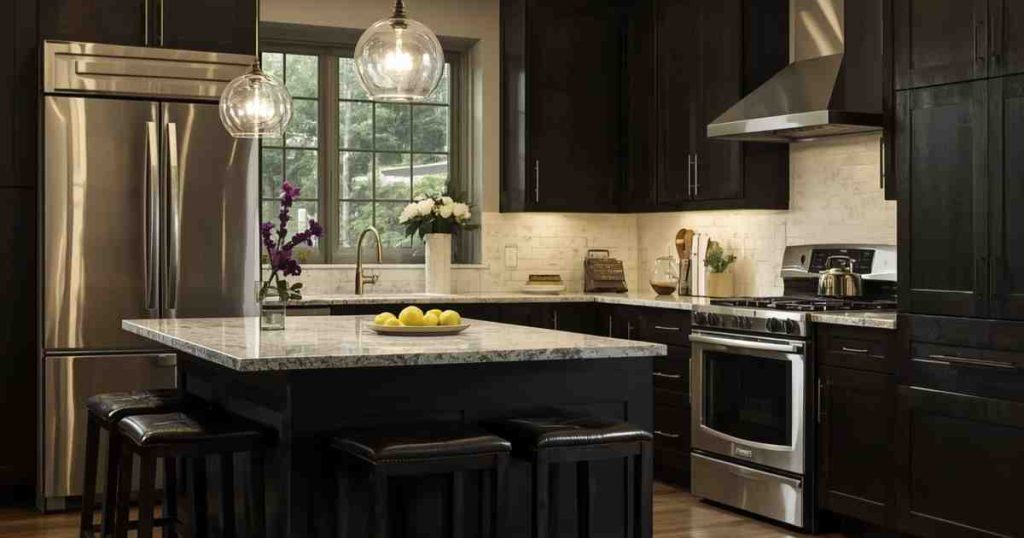
Examples of Low CRI Effects
Let’s look at a couple of scenarios. Imagine you’ve just bought some fresh strawberries, bright red and juicy. Under a low CRI light, they might look more like a muted, dull pink or even a brownish-red.
This makes them seem less fresh and appealing, even though they are perfectly fine.
Another example is your kitchen cabinets. If you chose a warm, inviting wood tone or a soft pastel color, low CRI lighting can make them appear muddy or off-color. The warmth might disappear, and the subtle undertones of the color could be lost, making your kitchen feel less cozy.
Even simple tasks like checking if your dish is fully cooked can be affected. If the browning on a roast looks different under low CRI light, you might misjudge its doneness. This shows how practical, everyday activities can be impacted by the quality of light we use.
A study found that in homes, lighting with a CRI below 80 could lead to a 20% perceived decrease in color accuracy for common household items. This highlights how significant the difference can be even with moderately low CRI values.
When Low CRI Might Be Okay
While high CRI is generally better for kitchens, there are some areas or situations where extremely high CRI isn’t as critical. For example, in a pantry or a utility closet where you just need to see to find things, a lower CRI light might be acceptable. The main goal there is just basic illumination, not accurate color representation.
However, when it comes to the main parts of your kitchen – where you prepare food, eat, or spend time – prioritizing a good CRI makes a big difference. It’s about enhancing the experience and ensuring everything looks its best. Think of it as choosing the right tools for the job.
For tasks where color accuracy matters, you need the right tools, and for kitchens, that means good CRI lights.
It’s also worth noting that very old incandescent bulbs, while producing warm light, often had good CRI. However, they use a lot of energy. Modern LED technology allows us to get high CRI with much greater energy efficiency, making them a great choice for today’s kitchens.
It's also worth noting that very old incandescent bulbs, while producing warm light, often had good CRI.
Choosing Lights with Good CRI for Your Kitchen
When you’re shopping for new light bulbs for your kitchen, pay close attention to the packaging. You’ll often see the CRI listed, usually as a number followed by “CRI.”
Aim for bulbs with a CRI of 80 or higher for good color rendering. For the best results, especially in areas where you do a lot of food prep or want colors to look their absolute best, a CRI of 90 or above is ideal.
For the best results, especially in areas where you do a lot of food prep or want colors to look their absolute best, a CRI of 90 or above is ideal.
Consider the types of light you need in your kitchen. You might have overhead lights, under-cabinet lights, and perhaps a pendant light over an island.
For all these applications, especially those close to where food is handled or viewed, a high CRI is beneficial.
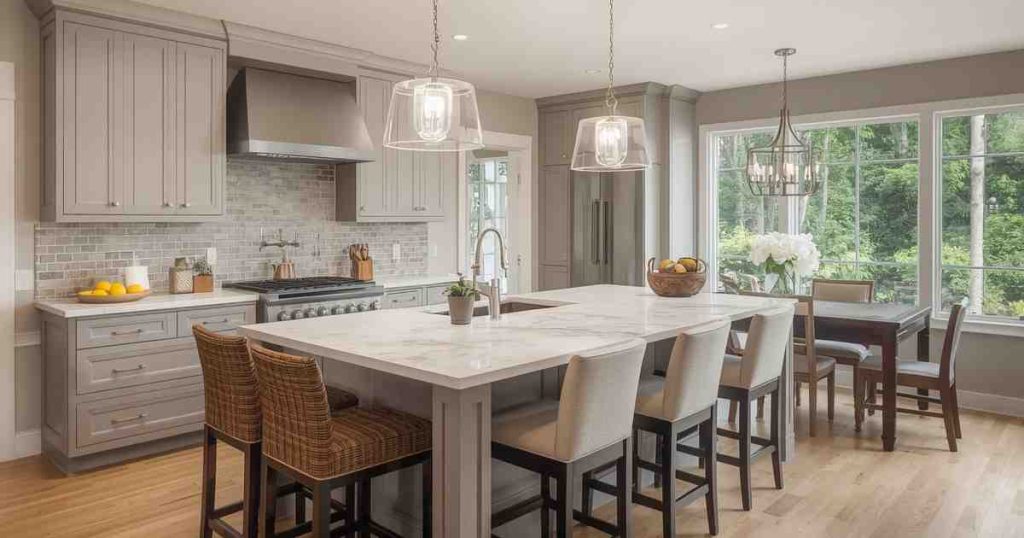
This ensures consistency in how colors appear throughout the space.
Don’t be afraid to ask for help at the store or look for reviews online. Many lighting brands are now highlighting the CRI of their products because consumers are becoming more aware of its importance. This makes it easier to find the right bulbs for your needs.
What CRI Numbers Mean in Practice
Let’s break down what those numbers actually mean for you and your kitchen. A CRI of 70-79 is considered good. It’s better than very low CRI, but colors might still appear a bit muted or not quite true.
For a budget-friendly option or for areas where color accuracy isn’t critical, this might suffice.
A CRI of 80-89 is generally considered very good. This is a sweet spot for most home lighting needs, including kitchens. You’ll notice a significant improvement in how colors look compared to lower CRI bulbs.
Food will appear more vibrant, and your kitchen decor will look more accurate.
A CRI of 90 or higher is excellent. This means colors will look exceptionally natural and true, just as they would under daylight. If you are a foodie, enjoy showcasing your kitchen’s design, or simply want the most accurate color representation for all your tasks, aiming for CRI 90+ is the way to go.
If you are a foodie, enjoy showcasing your kitchen's design, or simply want the most accurate color representation for all your tasks, aiming for CRI 90+ is the way to go.
Many professional kitchens and art studios use lighting with CRI 90+ for this reason.
Bulb Types and Their CRI
Different types of light bulbs have different typical CRI values.
- Incandescent bulbs: These traditional bulbs usually have a very high CRI, often 95-100. They show colors very accurately. However, they use a lot of energy and produce a lot of heat, making them less efficient than newer options.
- Halogen bulbs: Halogen bulbs are a type of incandescent. They also have a high CRI, typically around 95-100, and are known for producing bright, crisp light that renders colors well. Like incandescent bulbs, they are not very energy efficient.
- Fluorescent bulbs: These bulbs can vary greatly in CRI. Older fluorescent tubes might have a CRI of 70-80. Newer, higher-quality fluorescent bulbs can reach CRI 85 or even higher, but you need to check the specifications.
- LED bulbs: LED technology has advanced significantly. While early LEDs sometimes had lower CRI, modern LEDs are available with excellent CRI ratings, often 80, 90, or even 95+. They are highly energy-efficient and long-lasting, making them a popular choice for kitchens.
When choosing, always look for the specific CRI number on the packaging, as quality can vary even within the same bulb type.
For a modern kitchen that balances efficiency and excellent color rendering, high-CRI LEDs are often the best choice.
Where to Use High CRI Lights in the Kitchen
In your kitchen, there are several key areas where using lights with a high CRI will make the biggest difference.
- Over the stove and countertops: This is where most food preparation happens. You want to see the true colors of your ingredients and ensure everything is cooked properly. High CRI lighting here helps with both accuracy and presentation.
- In the dining area: If you have a kitchen island or a breakfast nook, using high CRI lights will make your meals look more appealing. It enhances the dining experience by showing food and beverages in their true colors.
- Pantry and cabinet interiors: While not as critical as prep areas, good CRI in these spaces can help you easily identify items and their freshness. It’s helpful for distinguishing between similar-looking spices or ingredients.
- General overhead lighting: For the overall ambiance and to ensure all colors in the room are represented accurately, high CRI for your main ceiling lights is important. This affects how the entire space is perceived.
Using a mix of lighting types is also common. For instance, task lighting under cabinets might be a bright, high-CRI LED, while accent lighting could be a different type. However, for the core functions of the kitchen, prioritizing high CRI is key to a successful and visually pleasing outcome.
Enhancing Your Kitchen Lighting
Improving your kitchen lighting doesn’t always mean a complete overhaul. Sometimes, small changes can make a big impact. One of the easiest ways is to swap out old light bulbs for new ones with a higher CRI.
If your current bulbs have a CRI below 80, upgrading can make a noticeable difference in how colors appear.
Consider the color temperature of your lights too. This refers to whether the light looks warm (yellowish) or cool (bluish).
For kitchens, a neutral to slightly warm white (around 2700K to 3500K) often works well, especially when paired with a high CRI.
This combination creates a welcoming and accurate visual environment.
Think about layering your lighting. This means using different types of lights for different purposes. You can have bright task lighting for cooking, softer ambient lighting for general use, and accent lighting to highlight features.
Ensuring all these layers have good CRI will contribute to a cohesive and attractive look.
Practical Tips for Better Kitchen Light
Here are some simple things you can do to make your kitchen lighting better:
- Check your current bulbs: Look at the packaging or the bulb itself for the CRI rating. If it’s low, consider replacing them.
- Choose LED bulbs: For energy efficiency and longevity, LEDs are a great choice. Just make sure to pick ones with a high CRI (90+ is best for kitchens).
- Use task lighting: Install under-cabinet lights or spotlights where you chop and prepare food. This focused light makes tasks easier and safer.
- Consider dimmer switches: Dimmers allow you to adjust the brightness, which can change the mood of your kitchen. Pair dimmers with high-CRI bulbs for flexible, accurate lighting.
- Clean your fixtures: Dust and grime on light fixtures can dim the light. Regularly cleaning them ensures you get the full brightness and best color rendering from your bulbs.
These steps can transform how your kitchen looks and feels. It’s about making the space both functional and beautiful, by paying attention to the details that matter, like the quality of light.
Sample Scenarios for Kitchen Lighting
Let’s imagine two kitchen scenarios:
- Scenario A: The Budgets-Conscious Cook Maria wants to improve her kitchen lighting without spending a lot of money. Her current overhead lights have a CRI of around 75. She decides to
- Scenario B: The Food Enthusiast’s Dream Chef Antoine is renovating his kitchen and wants the absolute best for food preparation and presentation. He chooses sleek, modern pendant lights over his island and high-quality LED strips under his custom-built cabinets. All his lighting fixtures are equipped with bulbs boasting a CRI of 95. This ensures that the rich colors of his spices, the precise ripeness of his produce, and the beautiful marbling on his meats are all displayed perfectly. Even the presentation of his finished dishes benefits from the accurate color rendition, making his kitchen a joy for both cooking and entertaining.
These examples show how different budgets and goals can lead to different, yet effective, approaches to kitchen lighting, with CRI playing a central role in the visual outcome.
The Link Between CRI and Kitchen Appeal
The overall appeal of your kitchen is strongly linked to its lighting. When colors look true and vibrant, the space feels more alive and inviting. High CRI lighting makes your food look more delicious, your paint colors richer, and your decor more impactful. Modern LED lighting technology offers high CRI options ideal for kitchen environments.
It contributes to a feeling of quality and care in your home.
Low CRI lighting can make even the most beautifully designed kitchen feel a bit drab or uninspired. Colors might seem muddy, and food might look unappetizing. This can indirectly affect how you feel about spending time in your kitchen and how you perceive the effort you put into cooking and decorating. The Department of Energy provides guidelines on selecting quality LED lighting for home use.
Think about it: you invest time and money into choosing your kitchen’s look. Good lighting ensures that your investment is showcased in the best possible way. It’s the final touch that brings everything together, making your kitchen a space you truly enjoy.
Frequently Asked Questions Of What Is Color Rendering Index (Cri) And Why It Matters For Kitchen Lighting
What is the minimum CRI recommended for kitchen lighting?
For kitchen lighting, it is generally recommended to aim for a CRI of 80 or higher. For the best color accuracy and to make food and decor look their most vibrant, a CRI of 90 or above is ideal.
Do I need to replace all my light bulbs if they have low CRI?
Not necessarily all of them. If your current bulbs have a low CRI (below 80) and you’re not satisfied with how colors look, consider replacing the ones in high-traffic or important areas first, like over countertops and the dining area. You can upgrade others later as needed.
Can CRI affect how food tastes?
CRI doesn’t directly change the taste of food. However, it affects how we perceive the food’s appearance. When food looks more appetizing under good lighting, we often enjoy the eating experience more, which can influence our perception of taste.
Are LEDs with high CRI more expensive?
High-CRI LED bulbs can sometimes be a bit more expensive than their lower-CRI counterparts. However, the difference in cost is often small, and the improvement in light quality is usually well worth the small extra investment, especially for kitchens.
How can I easily check the CRI of my current light bulbs?
You can usually find the CRI rating printed on the light bulb’s packaging. If you no longer have the packaging, you might be able to find the product information on the manufacturer’s website by searching for the bulb’s model number.
Final Thoughts
Choosing the right lights for your kitchen matters a lot. Understanding What Is Color Rendering Index (CRI) and Why It Matters for Kitchen Lighting helps you make smart choices. Aim for high CRI bulbs, especially for food prep areas.
This makes your food look its best and your kitchen design shine. Simple bulb swaps can transform your space. Enjoy your beautifully lit kitchen!

![How To Light A Kitchen With No Natural Light Solutions That Actually Work[1]](https://kitchentoolslab.com/wp-content/uploads/2026/05/How_To_Light_A_Kitchen_With_No_Natural_Light__Solutions_That_Actually_Work1-768x403.jpg)
![Pendant Lights Over Kitchen Island How Many, What Size, And How High[1]](https://kitchentoolslab.com/wp-content/uploads/2026/05/Pendant_Lights_Over_Kitchen_Island__How_Many_What_Size_And_How_High1-768x403.jpg)
![Kitchen Lighting For Dark Countertops What Color Temperature Works Best[1]](https://kitchentoolslab.com/wp-content/uploads/2026/05/Kitchen_Lighting_For_Dark_Countertops__What_Color_Temperature_Works_Best1-768x403.jpg)
![What Are The Three Layers Of Kitchen Lighting (Ambient, Task, Accent Explained)[1]](https://kitchentoolslab.com/wp-content/uploads/2026/05/What_Are_The_Three_Layers_Of_Kitchen_Lighting__Ambient_Task_Accent_Explained1-768x403.jpg)
![Recessed Vs Surface Mounted Kitchen Lighting Which One Should You Choose[1]](https://kitchentoolslab.com/wp-content/uploads/2026/05/Recessed_Vs_Surface-Mounted_Kitchen_Lighting__Which_One_Should_You_Choose1-768x403.jpg)
![Kitchen Lighting Over Sink Best Fixture Types And Placement Rules[1]](https://kitchentoolslab.com/wp-content/uploads/2026/05/Kitchen_Lighting_Over_Sink__Best_Fixture_Types_And_Placement_Rules1-768x403.jpg)