
Smart Kitchen Lighting: Dimmer Switches, Motion Sensors, And App-Controlled Systems
Getting your kitchen lights just right can seem tricky at first, especially with all the new tech. You might wonder about Smart Kitchen Lighting: Dimmer Switches, Motion Sensors, and App-Controlled Systems. It sounds complicated, but it doesn’t have to be!
You might wonder about Smart Kitchen Lighting: Dimmer Switches, Motion Sensors, and App-Controlled Systems.
You might wonder about Smart Kitchen Lighting: Dimmer Switches, Motion Sensors, and App-Controlled Systems.
We’ll break it down into simple steps. You’ll learn how to make your kitchen a brighter, more helpful space with cool lighting. Let’s see what we can do to make your kitchen smarter and easier to use.
Key Takeaways
- You will learn how dimmer switches work and why they are useful in the kitchen.
- We will explain what motion sensors do for kitchen lighting and their benefits.
- You’ll discover how app-controlled systems make managing your kitchen lights simple.
- We will show you how to combine these features for a better kitchen experience.
- You will get easy-to-follow advice on setting up your smart kitchen lights.
![Smart Kitchen Lighting Dimmer Switches, Motion Sensors, And App Controlled Systems[1]](https://kitchentoolslab.com/wp-content/uploads/2026/05/Smart_Kitchen_Lighting__Dimmer_Switches_Motion_Sensors_And_App-Controlled_Systems1.jpg)
What is Smart Kitchen Lighting?
Smart kitchen lighting is all about making your kitchen lights work for you in new ways. It means using special switches and gadgets that you can control easily. Think about lights that turn on when you walk into the room, or lights that you can dim to a softer glow for dinner.
This type of lighting makes your kitchen more useful and can even save you energy. We are talking about things like dimmer switches that let you change how bright the lights are, motion sensors that detect when someone is there, and apps on your phone or tablet that let you control everything from anywhere. It’s about making your kitchen work better for your daily life.
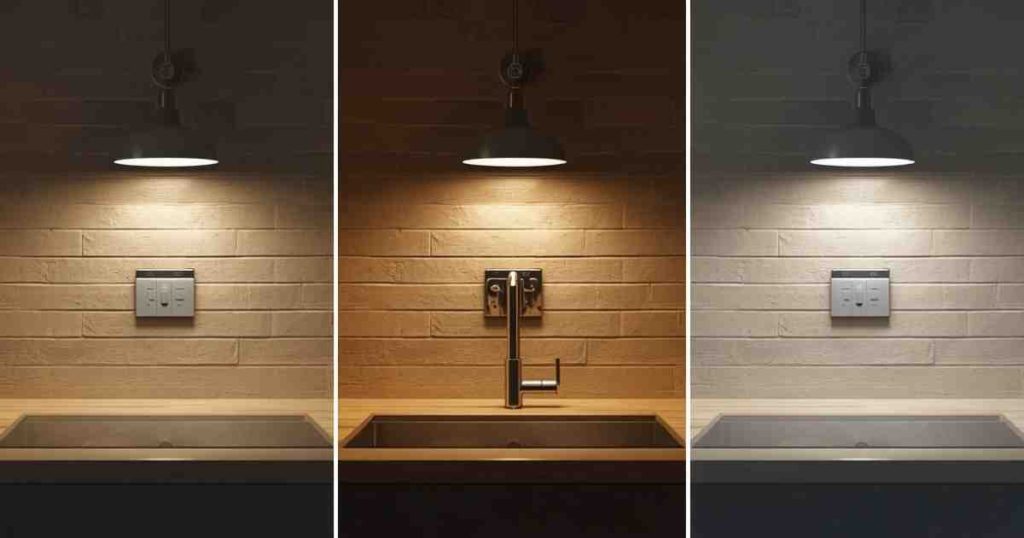
Why Smart Lighting Matters in the Kitchen
The kitchen is a busy place in most homes. It’s where meals are made, homework is done, and families gather. Good lighting makes all these tasks easier and safer.
Smart lighting takes this a step further. It can adapt to different times of day and different activities. For example, bright lights are great for cooking, but softer lights are better for a relaxed breakfast.
Smart systems can even help you save money by turning off lights when they are not needed. This makes your kitchen not just smarter, but also more energy-efficient.
When we talk about smart kitchen lighting, we often think about adding dimmer switches. These simple devices let you adjust the brightness of your lights. This is super helpful in a kitchen.
You can make the lights brighter when you are chopping vegetables or need to see clearly for a recipe. Then, you can dim them down for a cozy family dinner or when you’re just having a snack. This control over light levels can really change the feel of your kitchen.
Motion sensors are another big part of smart kitchen lighting. Imagine walking into your kitchen late at night to get a glass of water. You don’t have to fumble for the light switch.
The lights simply turn on as you enter the room. Then, when you leave, they turn off automatically after a short time. This is very convenient and also a great way to save energy.
No more forgetting to turn off the lights!
App-controlled systems take things to the next level. With an app on your phone or tablet, you can control all your kitchen lights from anywhere. You can set schedules for your lights to turn on and off at certain times.
You can also create different lighting “scenes” for different moods or activities. For instance, you could have a “cooking” scene with bright lights and a “relaxing” scene with dim, warm lights. This level of control makes managing your kitchen lighting very easy and fun.
Understanding Dimmer Switches for Kitchens
Dimmer switches are a fantastic way to add flexibility to your kitchen lighting. They let you control how bright your lights are. This is a big deal because kitchens are used for many different things.
You need bright light for preparing food safely, but you might want softer light for eating or just hanging out. Dimmer switches make this easy. You can adjust the light to exactly what you need at any moment.
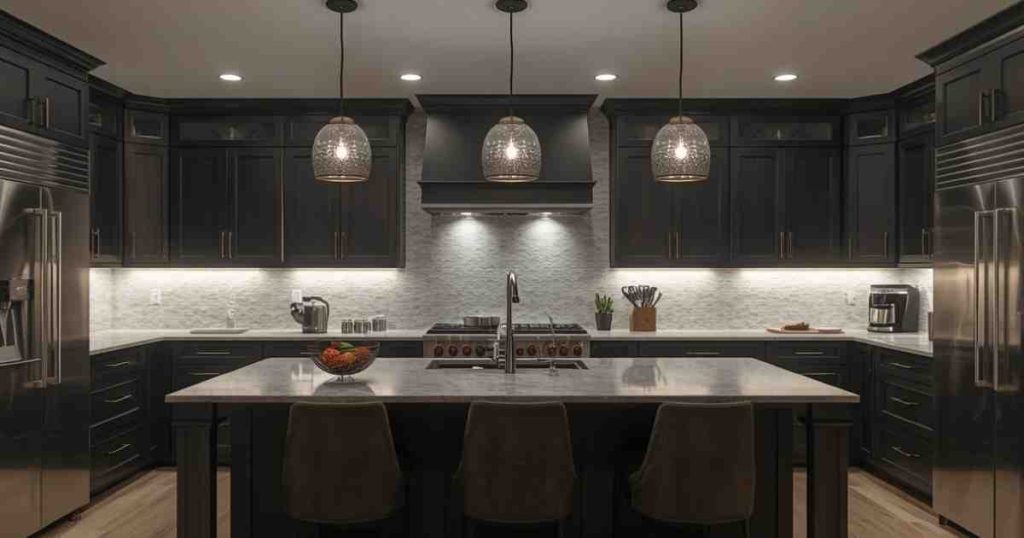
How Dimmer Switches Work
At their core, dimmer switches work by controlling the amount of electricity flowing to your lights. Older types of dimmers used a dial that would physically reduce the voltage.
Modern dimmers, especially for LED lights, use electronic components like TRIACs or MOSFETs.
These components rapidly switch the power on and off to the light bulb. The speed of this switching is so fast that your eyes don’t see it as blinking. Instead, you perceive it as a steady light that is dimmer than full brightness.
The result is smooth control over the light output.
It’s important to know that not all dimmer switches work with all types of light bulbs. For a long time, dimmers were designed for incandescent bulbs, which are being phased out. Now, most people use LED bulbs.
However, you can’t just put any LED bulb on an old dimmer switch. You need to make sure your LED bulbs are “dimmable.” They will usually say so on the packaging. Also, you need a dimmer switch that is specifically designed to work with dimmable LED bulbs.
LED vs. Incandescent Dimming
Dimming incandescent bulbs was pretty straightforward. These bulbs work by heating a filament until it glows. By reducing the power, the filament gets less hot, and the light is dimmer.
It was a simple electrical process.
Dimming LED bulbs is more complex. LEDs are semiconductors that emit light when electricity passes through them. They don’t have a filament that heats up.
Instead, dimming LEDs involves carefully controlling the electronic signals that power them. This is why you need dimmable LEDs and compatible LED dimmers. Using the wrong type can lead to flickering, buzzing, or the bulb not dimming properly at all.
It can even damage the bulb or the dimmer.
Some newer dimmer switches are called “smart dimmers.” These can be controlled with a smartphone app or a voice assistant. They offer even more control. You can set schedules, dim lights remotely, and create custom lighting scenes.
This adds a layer of convenience and sophistication to your kitchen lighting. For example, you could dim the kitchen lights from your living room sofa if you want a cozier atmosphere for watching a movie.
Benefits of Using Dimmer Switches in the Kitchen
There are many good reasons to put dimmer switches in your kitchen. They make your kitchen more comfortable and useful. You can change the light to suit whatever you are doing.
This makes cooking, eating, and just being in the kitchen a better experience for everyone.
- Adjustable Brightness for Tasks: You can make the lights brighter for detailed tasks.
- Creating Ambiance: Dimming lights makes the kitchen feel more relaxed and cozy.
- Energy Savings: Using less bright light means using less electricity, which saves money.
- Extending Bulb Life: Dimming bulbs can sometimes make them last longer.
When you are cooking, especially late at night or early in the morning, you need good, bright light. A dimmer switch allows you to turn the lights up to their full brightness.
This ensures you can see clearly to chop vegetables, measure ingredients, and follow recipes without straining your eyes.
It also helps prevent accidents in the kitchen by making sure the workspace is well-lit.
On the other hand, when you are sitting down for a casual family dinner or just having a cup of coffee in the morning, you might not want harsh, bright lights. Dimming the lights creates a softer, more inviting atmosphere. This can make your kitchen feel more like a comfortable dining or living space.
It’s a simple change that can significantly improve the mood of the room.
Dimmer switches also contribute to energy efficiency. When you dim a light, you are reducing the amount of power it uses. For example, dimming a light by 50% can cut its energy consumption by up to 50%.
Over time, this can lead to noticeable savings on your electricity bill. This is especially true if you often use lower light levels in your kitchen. The energy savings from dimmers can add up, making them a smart investment for your home.
Additionally, dimming lights can help extend the lifespan of your light bulbs. When bulbs are constantly on at full power, they experience more stress. Dimming them reduces this stress, meaning they may last longer than if they were always at maximum brightness.
This means you’ll have to replace your bulbs less often, saving you both time and money on replacements.
Common Issues and Solutions with Dimmer Switches
Sometimes, using dimmer switches with kitchen lights can lead to a few common problems. These might include lights flickering, buzzing sounds, or bulbs not dimming correctly. Luckily, most of these issues have simple solutions.
Often, the problem is not with the dimmer itself, but with the type of bulb being used or how it’s connected.
- Flickering Lights: This often happens when the dimmer and the bulb aren’t a good match.
- Buzzing Sounds: This can occur if the dimmer isn’t powerful enough or if it’s an older type not suited for LEDs.
- Bulbs Not Dimming Properly: The bulb might not be dimmable, or the dimmer might not be compatible.
The most frequent cause of flickering or buzzing is using incompatible light bulbs. Older dimmers were made for incandescent bulbs. If you use them with LED bulbs, you might get problems.
Make sure your LED bulbs are labeled as “dimmable.” Even then, not all dimmable LED bulbs work perfectly with all dimmers. You might need to try a different brand of LED bulb or a different type of dimmer switch specifically designed for LEDs.
If you hear a buzzing sound, it could mean the dimmer is working too hard or not properly matched to the load. Some dimmers have a minimum wattage requirement. If your bulbs use less power than this minimum, the dimmer might hum or buzz.
Also, some cheaper dimmers can be noisy. Investing in a higher-quality dimmer designed for LED lights can often solve this issue. Check the dimmer’s specifications for compatibility with LED bulbs and their power range.
When bulbs don’t dim down very low, or the dimming range is limited, it’s also usually a compatibility problem. Some dimmers just can’t control the low-power output of LEDs effectively. Universal dimmers or specific LED-compatible dimmers are designed to handle this.
You might need to check the manufacturer’s website for a compatibility list of bulbs that work well with their dimmer model. Sometimes, simply updating to a newer, more advanced dimmer switch can resolve all these issues.
Exploring Motion Sensors in Kitchen Lighting
Motion sensors are a brilliant addition to kitchen lighting. They add a layer of convenience and can help save energy without you even thinking about it. Imagine walking into your kitchen with your hands full and the lights turning on automatically.
That’s the magic of motion sensors. They detect your movement and switch on the lights, and then turn them off when you leave.
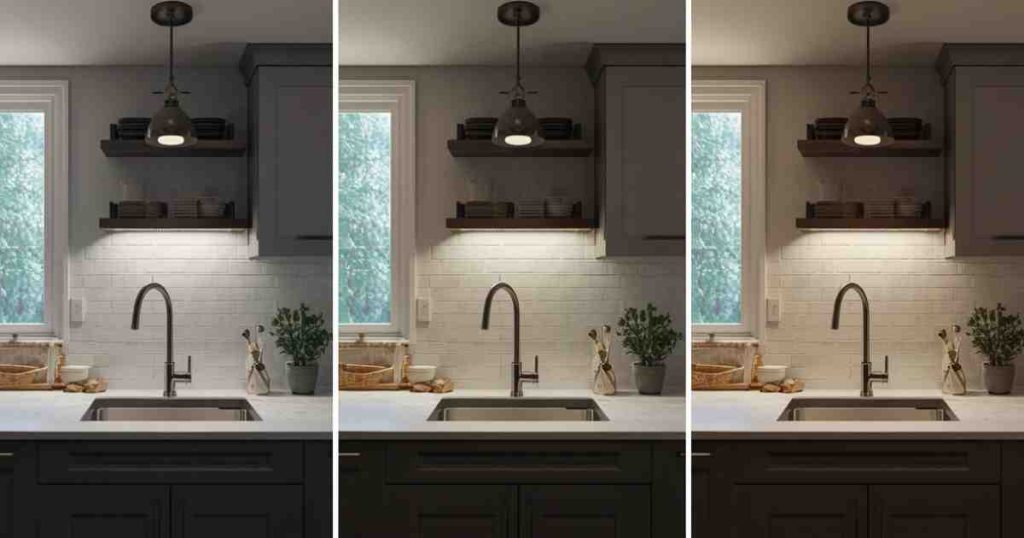
How Motion Sensors Detect Movement
Motion sensors work by detecting changes in their environment. The most common type used in homes is called a Passive Infrared (PIR) sensor. PIR sensors detect infrared energy, which is essentially heat.
All living things, including people, give off heat. The PIR sensor has special lenses that divide the detection area into zones. When a warm body moves from one zone to another, the sensor detects this change in infrared radiation and triggers an action, like turning on a light.
These sensors are designed to be sensitive to movement but not to stationary objects. This means your lights won’t just stay on if you're sitting still at the kitchen table for a long time. However, most motion sensors have a built-in timer.
Once triggered, they will keep the lights on for a set period. If the sensor detects more movement during that time, it resets the timer and keeps the lights on. If no movement is detected for the set duration, the lights will turn off.
Another type of motion sensor is an ultrasonic sensor. These emit high-frequency sound waves and then listen for the echoes. When an object moves, it changes the way the sound waves bounce back.
This change in echoes tells the sensor that there is movement. Ultrasonic sensors can be more sensitive and can detect movement behind some obstacles, but they can sometimes be triggered by things like air currents or vibrations.
Many smart kitchen lighting systems allow you to adjust the sensitivity of the motion sensor. You can also often set the duration for how long the lights stay on after the last detected motion. This customization is key to making the system work perfectly for your kitchen.
You want it to be responsive enough to turn on when you enter, but not so sensitive that it turns off while you’re still working.
Advantages of Motion-Activated Kitchen Lights
Using motion sensors in your kitchen lighting offers several significant benefits. They make your kitchen more user-friendly, help you save energy, and can even add a touch of modern convenience to your home. These advantages make them a popular choice for many homeowners looking to upgrade their kitchens.
- Hands-Free Convenience: Lights turn on automatically, perfect when your hands are full.
- Energy Savings: Lights are only on when needed, reducing electricity use.
- Enhanced Safety: Helps prevent trips and falls in dimly lit areas.
- Security: Can deter potential intruders when you’re away by simulating occupancy.
The hands-free operation is a major plus in the kitchen. When you’re carrying groceries, cooking, or have little ones running around, the last thing you want to do is search for a light switch. With a motion sensor, the lights simply come on as you enter the room.
This makes navigating your kitchen much easier and more efficient, especially during busy moments. It’s a small convenience that makes a big difference in daily tasks.
Energy savings are another key benefit. Homes often waste electricity because lights are left on in empty rooms. Motion sensors eliminate this waste in the kitchen.
Lights are only active when someone is present. If no movement is detected for a set period, the lights turn off automatically. This can lead to a noticeable reduction in your electricity bill over time.
It’s an effortless way to make your kitchen more eco-friendly.
For safety, motion-activated lighting can be very helpful. Kitchens can be areas where spills happen, or where you might need to walk through in the dark, like going for a late-night snack. Automatically turning on the lights when you enter can prevent trips and falls.
This is especially important for older adults or homes with young children, where visibility is crucial for safety.
Beyond convenience and energy, motion sensors can also play a role in home security. When you are away from home, setting your lights to come on with motion at random times can make it appear as though someone is home. This can act as a deterrent to burglars who might be looking for an empty house to target.
It’s a simple, effective way to add an extra layer of security to your home.
Integrating Motion Sensors with Other Smart Features
The real power of motion sensors comes when they are integrated with other smart kitchen features. They don’t just have to turn on a light. They can be part of a larger system that makes your kitchen even smarter and more responsive.
For instance, a motion sensor can be linked to a smart dimmer switch. When the sensor detects motion, it could not only turn on the lights but also set them to a specific brightness level. This means you could have the lights come on at 50% brightness when you enter the kitchen in the evening, and then at 100% brightness when the sensor detects movement in the main cooking area during the day.
This creates a more dynamic and personalized lighting experience.
Another integration could involve connecting motion sensors to smart plugs or smart appliances. Imagine a motion sensor in the pantry. When it detects you entering, it could turn on a small light inside the pantry and also trigger a smart plug connected to a radio or a tablet, so you have music or a recipe display ready as soon as you walk in.
This kind of interconnectedness makes everyday tasks smoother.
Some advanced smart home systems allow motion sensors to trigger alerts. If a motion sensor in the kitchen detects movement when the house is supposed to be empty (e.g., when you’re on vacation), it could send a notification to your phone. This adds a layer of security and peace of mind.
You can quickly check if everything is alright, even when you’re far away.
Combining motion sensors with other smart lighting controls, like smart bulbs or smart switches, opens up a world of possibilities.
You can create complex routines. For example, a motion sensor could detect you entering the kitchen, turn on the main lights, and then, after five minutes of no motion, slowly fade out the lights.
This makes the lighting feel natural and responsive to your presence and absence.
App-Controlled Smart Kitchen Lighting Systems
App-controlled smart lighting systems offer the ultimate in convenience and customization for your kitchen.
With these systems, you can manage your lights using a smartphone or tablet, often from anywhere in the world.
This technology brings a new level of control and functionality to your kitchen environment, making it more responsive to your needs and lifestyle.
How App-Controlled Lighting Works
App-controlled lighting systems typically work using wireless communication technologies like Wi-Fi or Bluetooth.
Smart bulbs or smart switches contain a small chip that allows them to connect to your home network or directly to your device. The corresponding app on your smartphone or tablet acts as a remote control.
You use the app to send commands to your lights, such as turning them on or off, adjusting brightness, or changing color (if your bulbs support it).
For Wi-Fi-based systems, the smart lights connect to your home’s Wi-Fi router. This allows them to be controlled from any device connected to the same network.
If you set up remote access through the app and your router, you can even control your lights when you are away from home, as long as your lights and your device have an internet connection.
This is incredibly useful for security or energy saving when you’re on vacation.
Bluetooth systems connect directly from your smartphone or tablet to the lights or switches. This is simpler to set up for individual devices or small groups of lights, but the range is typically limited to the area around your home.
Some systems use a combination of both, with a central hub that connects to your Wi-Fi and then communicates with the lights via Bluetooth or another radio frequency.
The apps themselves are designed to be user-friendly. They usually feature intuitive interfaces where you can see all your connected lights, group them into rooms, and create custom scenes.
For example, you could create a “Dinner Time” scene that dims the lights to a warm glow and a “Morning Prep” scene that sets them to a bright, cool white light.
Many systems also allow you to set schedules for your lights to turn on and off automatically, mimicking your daily routine.
Key Features of App-Controlled Kitchen Lighting
App-controlled systems offer a wealth of features that can transform how you use your kitchen lighting.
These features go far beyond simple on-off control, providing a truly smart and adaptable lighting experience for your home.
- Remote Control: Turn lights on or off from anywhere using your smartphone.
- Scheduling: Set lights to turn on or off at specific times or days.
- Scene Creation: Design custom lighting moods for different activities.
- Voice Control Integration: Connect with voice assistants like Alexa or Google Assistant.
- Dimming and Color Adjustment: Control brightness and, with some bulbs, color temperature and hue.
Remote control is a standout feature. Imagine you’re on your way home and want to have your kitchen lights on when you arrive. You can simply open the app and turn them on from your car.
Or, if you left the kitchen lights on by accident, you can turn them off remotely, saving energy. This level of control provides both convenience and peace of mind.
Scheduling allows you to automate your lighting. You can set your kitchen lights to turn on gradually in the morning to help you wake up.
Or, you can schedule them to turn off at a specific time each night, ensuring you don’t leave them on accidentally.
This automation can make your home feel more lived-in and can contribute to energy savings without requiring constant manual adjustments.
Scene creation is where smart lighting truly shines for ambiance. You can set up a “Cooking” scene with bright, cool white light for food preparation. Then, create a “Relaxing Dinner” scene with dim, warm light.
With a tap in the app, you can switch between these scenes, instantly changing the mood of your kitchen. Some systems even allow you to create dynamic scenes, like lights that gently pulse or change color, though these are less common for purely functional kitchen lighting.
Voice control integration is another popular feature. By linking your smart lighting system to a voice assistant like Amazon Alexa, Google Assistant, or Apple’s Siri, you can control your lights using voice commands.
You can say things like, “Hey Google, dim the kitchen lights to 30 percent,” or “Alexa, turn off the kitchen lights.” This offers a truly hands-free way to manage your lighting, which is incredibly useful when your hands are busy.
Finally, the ability to adjust brightness and color is a key aspect of modern smart lighting. Most app-controlled systems allow you to dim your lights precisely.
Many smart bulbs also offer adjustable color temperature, letting you switch between bright, cool white light (good for tasks) and warm, soft white light (good for relaxing).Some advanced bulbs can even display a full spectrum of colors, offering creative possibilities, though these are often more for accent lighting than general kitchen illumination.
Choosing the Right App-Controlled System
With so many smart lighting options available, choosing the right system for your kitchen can feel overwhelming. It’s important to consider a few key factors to ensure you get a system that meets your needs and integrates well into your home.
- Compatibility: Ensure the system works with your existing Wi-Fi network and any voice assistants you use.
- Ease of Use: Look for an app that is intuitive and easy to navigate.
- Scalability: Can you easily add more lights or other smart devices later?
- Reliability: Read reviews to gauge how dependable the system is.
- Cost: Smart lighting can range from affordable smart bulbs to more expensive integrated systems.
First, consider compatibility. If you already use Amazon Alexa or Google Assistant, look for systems that explicitly state they work with these platforms. This ensures seamless integration with your current smart home setup.
Also, check if the system requires a separate hub or if it connects directly to your Wi-Fi network, as this impacts setup and potential clutter.
The user interface of the app is crucial. You’ll be using it frequently, so it should be simple and easy to understand. Some apps are very basic, while others offer advanced features that might be more confusing for beginners.
Try to find a system with a clean design and clear instructions. Many companies offer free apps that you can download and explore before buying any hardware.
Think about the future. Do you plan to add more smart devices to your kitchen or other parts of your house? Choose a system that is scalable.
This means you can easily add more smart bulbs, switches, or even other types of smart home devices down the line without having to replace your entire system. Brands like Philips Hue or Wyze offer a wide range of compatible products.
Reliability is also key. You want your lights to work when you need them. Read online reviews and see what other users say about the system’s stability and responsiveness.
Look for systems that have a good track record and regular software updates. A system that frequently disconnects or has bugs can be very frustrating.
Finally, consider the cost. Smart LED bulbs can be more expensive upfront than traditional bulbs, but they offer energy savings and advanced features. Smart switches can be a good option if you want to control multiple lights on a single circuit.
Determine your budget and find a system that offers the best balance of features, reliability, and price for your needs. Sometimes, starting with a few smart bulbs is a great way to test the waters.
Putting It All Together: Creating Your Smart Kitchen Lighting Setup
Now that we’ve explored dimmer switches, motion sensors, and app-controlled systems, it’s time to think about how they can work together.
Combining these technologies can create a kitchen lighting setup that is not only smart but also perfectly suited to your daily life. The goal is to make your kitchen more convenient, efficient, and enjoyable to be in.
Designing a Lighting Plan for Your Kitchen
Before you buy anything, it’s helpful to plan out your kitchen lighting. Think about how you use your kitchen. Where do you need the most light?
Are there areas where you prefer softer lighting? Sketching a simple layout of your kitchen and marking these areas can be very useful. Consider the main work zones: the sink, the stove, and the countertops where you do most of your prep work.
For task lighting over countertops and the stove, you’ll want bright, focused light. This is where dimmers are essential, allowing you to adjust the brightness from very bright for cooking to a moderate level for general use. Motion sensors can also be great in these areas, turning on the light automatically when you’re ready to start cooking.
In dining areas within or adjacent to the kitchen, softer, more ambient lighting is usually preferred. Dimmers are perfect here to create a cozy atmosphere for meals. You might not want motion sensors in these spots if you prefer to control the ambiance manually.
However, if it’s a high-traffic pathway to the dining area, a motion sensor could be useful.
Consider the overall lighting. Do you have recessed lights in the ceiling? Pendant lights over an island?
Under-cabinet lighting? Each of these can be upgraded to smart versions. For example, you can get smart recessed lights, smart dimmer switches that control existing fixtures, or even smart under-cabinet LED strips.
Sample Scenarios for Smart Kitchen Lighting
Let’s look at a couple of examples of how smart kitchen lighting can work in real life.
- Scenario 1: The Busy Morning Rush You wake up and head to the kitchen. As you walk in, the motion sensor turns on the under-cabinet lights to a bright, cool white, perfect for making coffee and toast. You then move to the counter to prepare breakfast. The main overhead lights, controlled by a smart dimmer, come on to a moderate brightness. You realize you need more light for chopping fruit, so you use your phone app to instantly brighten the overhead lights. As you finish breakfast and leave the kitchen, the motion sensor detects you’re gone, and after a minute, all the lights gently fade off.
- Scenario 2: Relaxed Evening Dinner It’s dinnertime. You open your app and select the “Dinner” scene. The overhead lights dim to a warm, soft glow, and a few accent lights under the cabinets turn on to a gentle amber. You don’t need to touch any switches or sensors. Later, when you’re cleaning up, you can use your voice assistant to turn the main lights back up to a brighter setting for easier cleaning, and then dim them again once you’re done.
Step-by-Step Setup for Beginners
Getting started with smart kitchen lighting doesn’t have to be complicated. Here’s a simple approach for beginners: Energy.gov offers guidance on using motion sensors to save energy in your home.
- Start Small: Begin with one or two smart LED bulbs or a single smart dimmer switch. This lets you get comfortable with the technology without a big investment.
- Choose Your Smart Tech: Decide if you want smart bulbs (which screw into existing fixtures) or smart switches/dimmers (which replace your wall switches). For motion sensors, you can get standalone ones or smart switches that have built-in motion detection.
- Install the Hardware: Follow the manufacturer’s instructions carefully. Smart bulbs are usually as simple as screwing them in. Smart switches might require basic electrical wiring – if you’re not comfortable with this, hire an electrician.
- Download the App: Find the app for your chosen smart device in your phone’s app store.
- Connect to Wi-Fi: Open the app and follow the prompts to connect your smart device to your home Wi-Fi network. This usually involves putting the device into pairing mode.
- Configure Settings: Once connected, use the app to name your lights, group them (e.g., “Kitchen Ceiling Lights”), adjust brightness, set schedules, or create scenes.
- Test and Adjust: Use your new smart lights and observe how they work. Fine-tune settings in the app as needed. For instance, adjust the timer on a motion sensor if the lights are turning off too quickly.
For example, if you install a smart dimmer switch on your main kitchen lights, you would first turn off the power at the breaker box.
Then, you would remove the old switch and wire in the new smart switch according to the instructions. After restoring power, you would download the associated app, put the switch into pairing mode, and connect it to your Wi-Fi through the app.
Once paired, you can then use the app to dim the lights, set them to turn on at a certain time, or even integrate them with a voice assistant.
If you opt for smart LED bulbs, the process is even simpler. You just screw the smart bulbs into your existing light fixtures. Then, you turn on the light switch.
The bulb will usually flash to indicate it's ready for pairing. Open the app, and it should detect the new bulb. You follow the on-screen steps to connect it to your Wi-Fi.
After that, you can control the bulb’s brightness and other features directly from your phone.
It’s important to remember that some systems might require a “hub” or “bridge.” This is a small device that connects to your router and acts as a central point for all your smart devices.
Brands like Philips Hue use a hub. Other systems, like many Wi-Fi bulbs, connect directly to your router and don’t need a separate hub, making them simpler to start with.
Frequently Asked Questions Of Smart Kitchen Lighting: Dimmer Switches, Motion Sensors, And App-Controlled Systems
Can I use any light bulb with a smart dimmer switch?
No, you generally need to use dimmable LED bulbs with smart dimmer switches that are designed for LEDs. Incandescent or halogen bulbs might work with older dimmers, but they are less energy-efficient and are being phased out. Always check the compatibility between your dimmer switch and your light bulbs.
How do I know if my kitchen lights are compatible with smart bulbs?
If your current lights use standard screw-in bulbs (like E26 or E27), they are likely compatible with smart LED bulbs. The main thing to ensure is that the fixture can physically hold the smart bulb and that the existing light switch remains in the “on” position for the smart bulb to receive power and be controlled by its app or voice commands.
Do I need a strong Wi-Fi signal for smart kitchen lighting?
Yes, a strong and stable Wi-Fi signal is important for app-controlled smart lighting systems that connect via Wi-Fi. If your signal is weak in the kitchen, you might experience delays, connectivity issues, or the lights may not respond properly. You might consider a Wi-Fi extender if your signal is poor.
How can motion sensors help save energy in the kitchen?
Motion sensors help save energy by ensuring lights are only on when someone is actually in the kitchen. When no movement is detected for a set period, the lights automatically turn off. This prevents lights from being left on unnecessarily, which reduces electricity consumption and lowers your energy bill.
Can I control my smart kitchen lights with my voice?
Yes, most app-controlled smart lighting systems can be integrated with voice assistants like Amazon Alexa, Google Assistant, or Apple’s Siri. You can then use voice commands to turn lights on or off, adjust brightness, or activate scenes.
Final Thoughts
Making your kitchen smarter with Smart Kitchen Lighting: Dimmer Switches, Motion Sensors, and App-Controlled Systems is simpler than you might think. You can easily add convenience and control. Start with a smart bulb or switch.
Then, explore dimming, motion detection, and app control step by step. Your kitchen will become more useful and enjoyable. Many beginners start with smart dimmer switches to add simple control to their kitchen lighting.

![How To Plan Kitchen Lighting A Step By Step Guide For Homeowners[1]](https://kitchentoolslab.com/wp-content/uploads/2026/05/How_To_Plan_Kitchen_Lighting__A_Step-By-Step_Guide_For_Homeowners1-768x403.jpg)
![How To Light A Kitchen With No Natural Light Solutions That Actually Work[1]](https://kitchentoolslab.com/wp-content/uploads/2026/05/How_To_Light_A_Kitchen_With_No_Natural_Light__Solutions_That_Actually_Work1-768x403.jpg)
![Kitchen Lighting Over Sink Best Fixture Types And Placement Rules[1]](https://kitchentoolslab.com/wp-content/uploads/2026/05/Kitchen_Lighting_Over_Sink__Best_Fixture_Types_And_Placement_Rules1-768x403.jpg)
![Pendant Lights Over Kitchen Island How Many, What Size, And How High[1]](https://kitchentoolslab.com/wp-content/uploads/2026/05/Pendant_Lights_Over_Kitchen_Island__How_Many_What_Size_And_How_High1-768x403.jpg)
![What Is Color Rendering Index (Cri) And Why It Matters For Kitchen Lighting[1]](https://kitchentoolslab.com/wp-content/uploads/2026/05/What_Is_Color_Rendering_Index_Cri_And_Why_It_Matters_For_Kitchen_Lighting1-768x403.jpg)
![Warm Vs Cool Light In The Kitchen Which Color Temperature Should You Use[1]](https://kitchentoolslab.com/wp-content/uploads/2026/05/Warm_Vs_Cool_Light_In_The_Kitchen__Which_Color_Temperature_Should_You_Use1-768x403.jpg)