
Kitchen Lighting Over Sink: Best Fixture Types And Placement Rules
Figuring out Kitchen Lighting Over Sink: Best Fixture Types and Placement Rules can feel a bit tricky when you’re just starting out.
You want your kitchen to look good and work well, but sometimes the choices seem overwhelming. Don’t worry!
We’ll walk through everything simply, step-by-step. We’ll show you the best lights and where to put them so your sink area is bright and looks great. Let’s get your kitchen looking its best, starting with that important sink spot.
Key Takeaways
- You will learn about different light fixture styles perfect for above your kitchen sink.
- We will explain the best places to position these lights for maximum brightness and style.
- You will discover why good lighting over the sink is so important for kitchen tasks and mood.
- We will cover common mistakes to avoid when choosing and placing sink lights.
- You will find tips for making your sink lighting blend with your overall kitchen design.
- We will help you choose the right type and number of lights for your specific sink area.
![Kitchen Lighting Over Sink Best Fixture Types And Placement Rules[1]](https://kitchentoolslab.com/wp-content/uploads/2026/05/Kitchen_Lighting_Over_Sink__Best_Fixture_Types_And_Placement_Rules1.jpg)
Why Kitchen Lighting Over Sink Matters
The area above your kitchen sink is a busy spot. You wash dishes, prepare food, and often do other tasks there. Good lighting makes all these jobs easier and safer.
It also affects how your kitchen feels. A dark or poorly lit sink area can make the whole room feel less inviting. Proper lighting can brighten the space, making it feel larger and more welcoming.
It helps you see what you’re doing clearly, preventing accidents and making chores less of a drag. Thinking about your Kitchen Lighting Over Sink: Best Fixture Types and Placement Rules is key to a functional and beautiful kitchen.
When we talk about kitchen lighting, the sink area often gets special attention. This is because it’s a primary workspace. Many people spend a good portion of their kitchen time here.
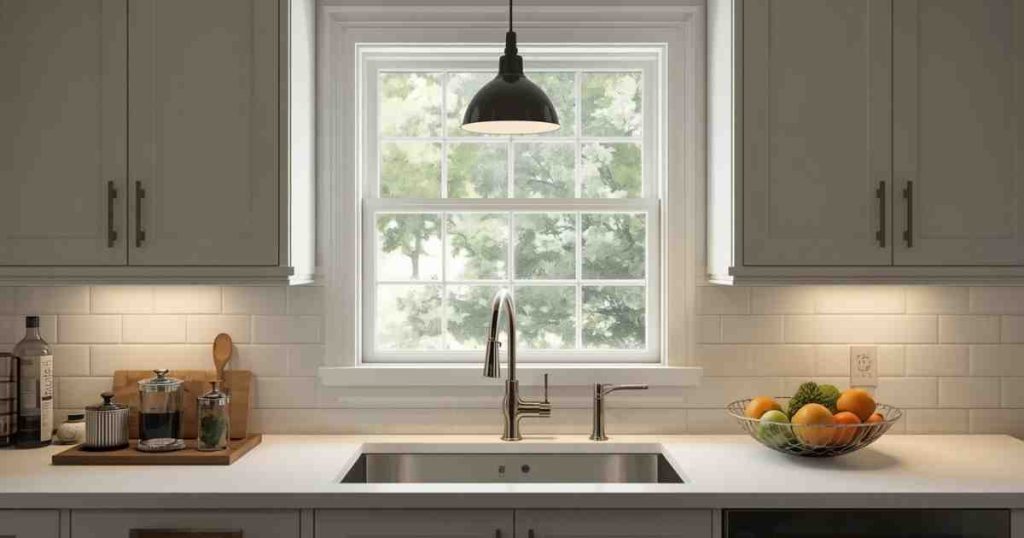
Think about it: washing vegetables, rinsing dishes, filling pots, and even just washing your hands all happen at the sink. Without enough light, these simple tasks can become annoying. You might squint to see if a dish is clean, or miss a bit of food you’re rinsing off.
Proper lighting solves these issues. It creates a zone of clear visibility and comfort.
Beyond just function, lighting plays a big role in the overall look of your kitchen. A stylish fixture above the sink can act as a focal point. It can add personality and tie the room’s design together.
Conversely, the wrong light can look out of place or even detract from your kitchen’s style. That’s why getting the type of fixture and its placement right is so important. It’s about both form and function.
Let’s explore the options to make your sink area shine.
The Importance of Task Lighting
Task lighting is specifically designed to illuminate a particular work area. For the kitchen sink, this means making sure you can see clearly when you’re performing tasks like washing, chopping, or cleaning. Without good task lighting, shadows can form, making it hard to see.
This can lead to mistakes or even injuries. For instance, when chopping vegetables, you need to see the knife and the food clearly. Poor lighting increases the risk of cutting yourself.
Similarly, when washing dishes, you need to see if they are truly clean.
Task lighting is different from ambient lighting, which provides general illumination for the whole room. While ambient light is important, it’s often not enough for focused activities. Think of it like this: ambient light is like the sun on a cloudy day, providing general brightness.
Task lighting is like a spotlight that focuses on what you need to see right now. For the kitchen sink, this focused light is essential for safety and efficiency. It makes the chore of washing up much more pleasant and less error-prone.
In kitchens, task lighting is most commonly found above work surfaces like countertops and the sink. It ensures that these areas are well-lit, regardless of the time of day or the brightness of the general room lighting.
Investing in good task lighting for your sink area is one of the most practical improvements you can make to your kitchen.
It directly impacts your daily experience and the functionality of your space. It’s a simple fix with a big impact on how you use and enjoy your kitchen.
Setting the Mood with Accent Lighting
While task lighting focuses on function, accent lighting is all about adding style and ambiance. It can highlight features, create visual interest, and make your kitchen feel more inviting. Above the sink, accent lighting can draw attention to a beautiful faucet, a stylish backsplash, or a window with a view.
It adds layers of light, making the space feel richer and more dynamic. This kind of lighting is less about seeing every detail and more about the overall feel of the room.
Accent lights are typically smaller and often directed to highlight specific elements. They can be incorporated into other fixtures or used as standalone decorative pieces. For example, small spotlights can be aimed at artwork or decorative items near the sink.
Even subtle lighting that washes the wall behind the sink can create a beautiful effect. It’s about adding a touch of elegance and personality to a functional space. It shows that a kitchen can be both practical and beautiful.
Combining task and accent lighting is the best way to achieve a well-rounded lighting plan for your kitchen sink.
You get the necessary brightness for chores, along with the visual appeal that makes your kitchen a place you love to be. It’s about creating a space that works perfectly and looks stunning.
This balance is what transforms a basic kitchen into a truly special one. The right lighting can make all the difference in how you feel in your home.
Best Fixture Types for Over the Sink
When you’re looking for lights to go above your kitchen sink, you have several great options. The best choice often depends on your kitchen’s style and the amount of light you need. We’ll explore popular fixture types, explaining what they are and why they work well in this spot.
Understanding these types helps you pick the perfect fit for your space and needs.
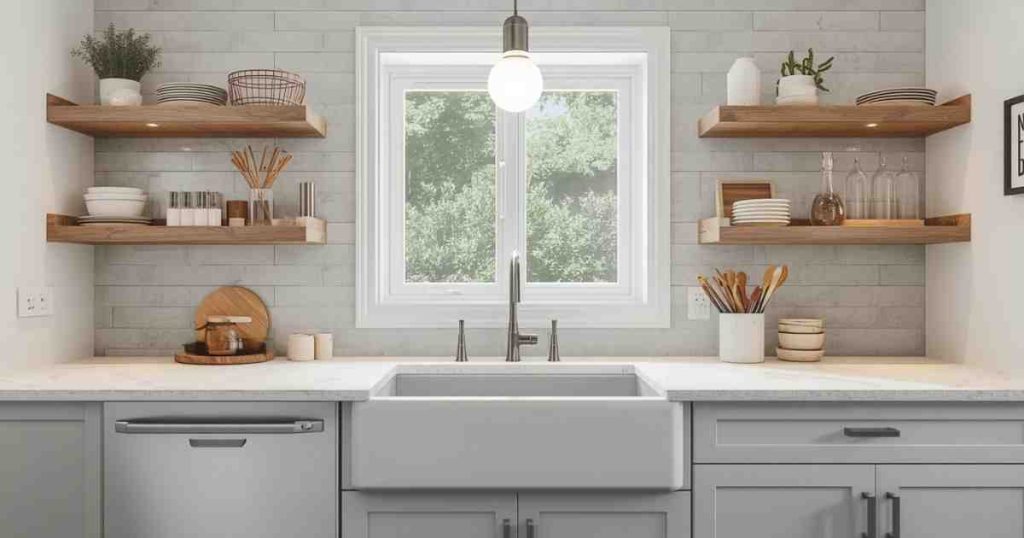
Pendant Lights
Pendant lights hang down from the ceiling, often by a cord, chain, or rod. They are very popular for kitchen island and sink lighting because they add a decorative touch while providing focused light. For a sink, a single pendant can be striking, especially if it’s a statement piece.
You can also use two or three smaller pendants hung in a row. They offer great task lighting and can also contribute to the room’s style. Many styles are available, from modern minimalist designs to classic glass globes.
One of the main benefits of pendant lights is their versatility. You can choose a fixture that is purely functional, or one that is a work of art. The height at which you hang them is important.
They should hang low enough to provide good light on the sink area but not so low that they get in the way or cause glare.
The material of the shade also affects the light: metal shades direct light downwards, while glass or fabric shades can diffuse light more softly.
For a kitchen sink, consider pendants with a wider shade to cast light over a larger area. If you have a large sink or a wide counter space, multiple pendants can ensure even lighting.
Think about the style of your kitchen: a sleek, industrial-style pendant might suit a modern kitchen, while a vintage-inspired glass pendant could work well in a more traditional setting.
They are a fantastic way to add personality and focused light right where you need it most.
Chandeliers
While often associated with dining rooms, smaller chandeliers can also be a stunning choice for a kitchen sink area.
They add a touch of elegance and can be a real focal point. A mini-chandelier or a more streamlined, modern chandelier can provide ample light.
They are great for kitchens aiming for a more luxurious or decorative feel. Unlike pendants that hang straight down, chandeliers often spread light in multiple directions.
When choosing a chandelier for your sink, size is crucial. You don’t want something too large that overwhelms the space, but a well-chosen chandelier can elevate the look of the entire kitchen. They can offer a mix of task and ambient lighting.
The arms and bulbs of a chandelier are often positioned to spread light outwards, which can be beneficial for illuminating the surrounding counter space as well as the sink itself. Ensure the bulbs are bright enough for tasks.
The style of chandelier should complement your kitchen’s overall design. A crystal chandelier can add sparkle to a glam kitchen, while a wrought-iron piece might fit a farmhouse style. Even a simple, drum-shaped chandelier can offer a modern twist.
It’s important to consider the height again; chandeliers should hang high enough to avoid obstructing views or movement but low enough to provide effective lighting over the sink. They are a bold choice that can make a big statement.
Recessed Lighting (Can Lights)
Recessed lights, often called can lights, are installed flush with the ceiling. They offer a clean, minimalist look and are excellent for providing general illumination. When placed strategically over a sink, they can provide bright, direct task lighting without taking up any visual space.
This is a great option for kitchens where you want a streamlined appearance and don’t want a fixture hanging down. They offer a modern and uncluttered look.
The key to using recessed lights effectively over a sink is placement and spacing. You need enough of them to create a bright, even wash of light across the entire sink area. One or two can lights might not be enough.
They are often used in conjunction with other lighting types, but they can also serve as the primary light source over the sink.
Their main advantage is that they disappear into the ceiling, leaving the focus on the rest of your kitchen design.
When choosing recessed lights, look for trims that are designed to reduce glare. This is especially important over a sink where water can create reflections. Adjustable or gimbal trims allow you to direct the light where you need it most.
For a sink, aiming the lights slightly towards the front of the basin can help illuminate your hands and the task at hand. They are a practical and discreet choice for functional lighting.
Sconces
Wall sconces can be a charming and stylish choice for lighting above a kitchen sink, especially if you have space on the wall beside or above the sink.
They offer a softer, more diffused light than some overhead options and can add a decorative element. Sconces can be particularly effective in kitchens with a more traditional, rustic, or eclectic style.
They offer a unique way to bring light into the area.
Unlike ceiling-mounted fixtures, sconces are mounted on the wall. This means their placement needs to be carefully considered so they don’t interfere with faucets, windows, or cabinetry. They can provide good task lighting if positioned correctly.
For a sink, you might use one sconce on each side of a window above the sink, or a single decorative sconce centered above it. They can add a lovely ambient glow as well.
The style of sconce you choose will greatly influence the overall look. A metal sconce with a clear glass shade can offer a more industrial or modern feel, while a fabric shade sconce might lend a softer, more classic touch. Ensure the bulb is bright enough for practical use, or consider using them alongside other, brighter task lights.
Sconces are a great way to add a personal touch and layered lighting to your sink area.
Track Lighting
Track lighting offers great flexibility. It consists of a bar or track with adjustable light heads that can be positioned along it. This is a fantastic option for kitchens where you might not be sure of the exact lighting needs or want the ability to change things later.
You can adjust the track lights to shine directly on the sink, the countertops, or even nearby cabinets. This makes it a very adaptable lighting solution.
The main advantage of track lighting is its adjustability. You can move the light heads to target specific areas. This is useful because your needs might change, or you might discover you have shadow spots.
For a sink, you can angle the lights to illuminate the basin, the faucet, and the surrounding workspace. It’s a practical choice for getting light exactly where you need it. The fixtures themselves come in various styles, from sleek modern designs to more industrial looks.
Track lighting can also be a good choice if you have an irregularly shaped sink area or need to illuminate multiple zones. You can install a single track or a more complex system. The number of light heads you use will determine the overall brightness.
For a sink area, you’ll want enough heads to provide good coverage. This type of lighting is known for its functional advantages and ability to adapt to different layouts.
Placement Rules for Kitchen Lighting Over Sink
Getting the placement of your kitchen lights just right is as important as choosing the fixture itself. Poor placement can lead to glare, shadows, or simply not enough light where you need it. These guidelines will help you position your lights effectively for both function and appearance.
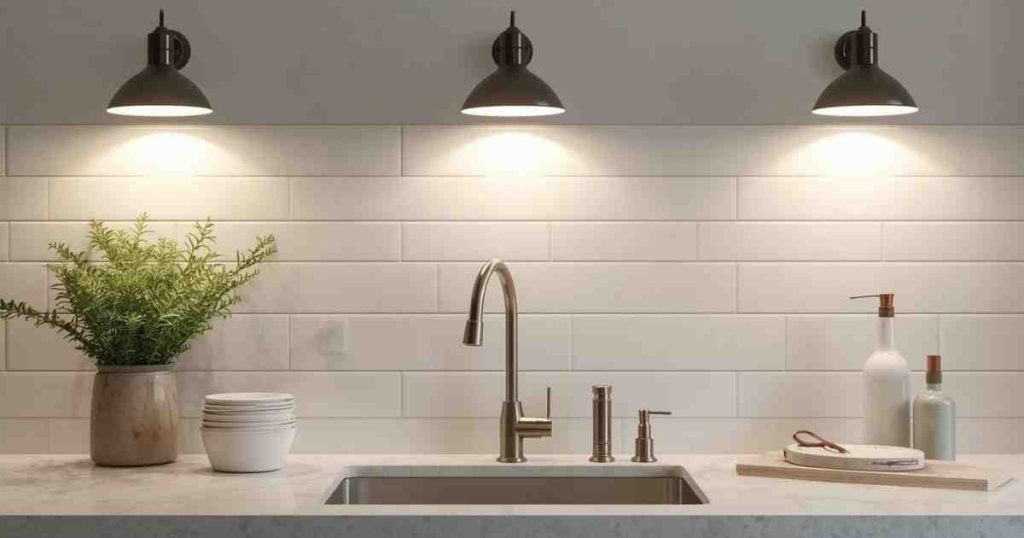
Height Considerations
The height at which you hang your light fixture is crucial for optimal illumination and avoiding glare. For pendant lights or chandeliers, the bottom of the fixture should typically be about 30-36 inches above the countertop.
This height usually ensures that the light shines down onto your workspace without being directly in your eyes.
However, this can vary based on the fixture’s design and your ceiling height.
If you have very high ceilings, you might need to hang fixtures lower to provide adequate task lighting. Conversely, in a kitchen with lower ceilings, you may need to hang them higher to avoid a cluttered feel. It’s also important to consider the reach of the light.
The fixture should be positioned so that its light covers the entire sink basin and a bit of the surrounding counter space. If you stand at the sink, you want the light to be directly above you or slightly in front of you.
For recessed lighting, the spacing and angle are more important than a specific hanging height. The goal is to create an even wash of light. If the lights are too far back, they might cast shadows on your face as you lean over the sink.
If they are too far forward, they might cause glare on the water. Experimenting with the angle of adjustable recessed lights can help you find the sweet spot. It’s all about directing light where it’s most needed.
Spacing and Coverage
How many lights you install and how far apart they are spaced determines the coverage and brightness of your sink area.
For task lighting over a sink, you want to avoid dark spots or harsh shadows. If you have a single-bowl sink, one well-placed pendant or a couple of centered recessed lights might suffice.
For a double-bowl sink or a wider sink area, you’ll likely need more than one fixture to ensure even lighting.
A good rule of thumb for pendant lights is to space them about 24-30 inches apart. This spacing often works well for providing light across the width of the sink. For recessed lighting, the spacing depends on the beam angle of the bulbs and the ceiling height.
A common recommendation is to space them about 4-5 feet apart, but for focused task lighting over a sink, you might need them closer together, perhaps 2-3 feet apart. The goal is to create a continuous pool of light.
When planning spacing, think about the typical activities you do at the sink. Do you need light to cover the entire basin, or also the immediate counter space around it? Consider the width of your sink and countertop.
It’s often better to have slightly more light than you think you need, as you can always dim some fixtures if they are too bright. Proper spacing ensures that your entire workspace is well-lit, making tasks easier and safer.
Minimizing Glare and Shadows
Glare occurs when light is too bright or directly in your line of sight, causing discomfort and making it hard to see. Shadows happen when light sources are not positioned correctly, leaving dark areas. Both are common problems with sink lighting if not addressed.
To minimize glare from overhead fixtures, ensure they are not hung too low and that the shades diffuse the light. For recessed lights, choose trim kits that reduce glare, such as those with deeper set bulbs or a frosted finish.
Positioning lights slightly in front of where you stand at the sink can help illuminate your task without your body casting a shadow.
For example, if you’re washing dishes, the light should ideally be behind you, shining down on the sink basin. This way, your hands and the dishes are well-lit.
If you have a window above your sink, try to balance the artificial light with the natural light to avoid harsh contrasts. Sometimes, sheer curtains can help soften window light.
Using dimmer switches is an excellent way to control glare and adjust the light level. You can dim the lights for a softer ambiance or brighten them for intense task lighting. It gives you flexibility.
Also, consider the finish of your faucet and sink. Highly reflective surfaces can create glare if the light source is directly hitting them. Angling lights slightly can help distribute the light more evenly and reduce harsh reflections.
A well-placed light is a shadow-free light.
Practical Examples and Scenarios
Let’s look at some real-world examples to see how these lighting principles work in practice. Seeing how others have solved similar lighting challenges can provide inspiration and practical advice.
Example 1: The Busy Family Kitchen
In a busy family kitchen, the sink area is constantly in use for everything from washing bottles to preparing snacks and cleaning up after meals.
The homeowner chose two medium-sized brushed nickel pendant lights hung above a large, double-bowl sink. The ceiling is standard height, so the pendants hang about 32 inches above the countertop.
This placement provides excellent task lighting, ensuring that both bowls of the sink are well-lit, and the surrounding counter space is bright enough for food prep.
The pendants have simple, frosted glass shades that diffuse the light softly, reducing glare. The brushed nickel finish complements the other hardware in the kitchen.
The homeowner reports that the lighting makes cleaning dishes much easier and safer, especially for the kids helping out.
They also mentioned that the pendants add a stylish touch, making the sink area a more attractive part of the kitchen. The focused light helps to delineate the workspace.
This setup effectively balances functionality and aesthetics. The two pendants provide ample light coverage without being overwhelming. They are spaced to cover the entire width of the sink and the adjacent counter areas.
The height is optimized for clear visibility and comfort. It’s a classic and effective solution for a high-traffic kitchen sink.
Example 2: The Small Apartment Kitchen
For a small apartment kitchen with limited space, a homeowner opted for recessed lighting over the sink. The ceiling is lower, so they installed three smaller, 4-inch recessed can lights in a row.
The lights are spaced about 2 feet apart, centered over the sink and extending slightly onto the counter on either side.
They used LED bulbs with a wide beam angle and a slightly frosted lens to reduce glare.
This choice kept the ceiling feeling open and uncluttered, which is vital in a small kitchen. The three lights provide bright, consistent illumination directly over the sink and the main prep area. The homeowner found that this setup made the small kitchen feel brighter and more functional.
It eliminated the shadows that were present with just general overhead lighting. The clean look of recessed lights also fits the modern aesthetic of the apartment.
They deliberately chose bulbs with a high Color Rendering Index (CRI) so that food colors would look natural under the light.
This is important for food preparation. The placement ensures that when they stand at the sink, their body doesn’t block the light.
It’s a discreet yet powerful solution that maximizes the perceived space and functionality of the kitchen. This approach proves that effective lighting doesn’t always require large, prominent fixtures.
Scenario 1: Choosing Lights for an Island Sink
Imagine you have a kitchen island with a sink. You want lighting above it that is both functional and adds to the island’s design. Consider installing two or three pendant lights.
The number depends on the island’s length. For a standard island, two pendants spaced about 30 inches apart, and about 30-36 inches above the countertop, often work best.
Choose pendants that complement your island’s material and your kitchen’s overall style, perhaps with metal shades for a modern look or glass shades for a softer feel.
Placement is key here. The lights should be centered over the island sink to provide light for washing and food prep. They should also illuminate the front edge of the island where people might sit.
The height is important to avoid glare for those sitting at the island and to ensure adequate light for tasks. If the island also has seating, consider dimmable options so you can adjust the brightness for dining versus cooking.
The goal is to create a well-lit and inviting workspace on the island. The pendants act as both functional task lights and decorative elements, enhancing the island’s visual appeal. This setup makes the island a prime spot for food preparation and casual dining.
It turns the island into the heart of the kitchen.
Scenario 2: Lighting a Sink with a Window Above
If you have a window directly above your kitchen sink, you have a wonderful source of natural light. However, you still need artificial light for evenings and cloudy days. The trick is to balance the natural and artificial light.
You might choose wall sconces on either side of the window. These can provide a softer, more ambient light and highlight the window area.
Alternatively, a shallow recessed light centered above the window, or a single pendant hung slightly forward of the window, can provide focused task light without competing with the natural view.
It’s important to avoid placing lights directly in front of the window, as this can create glare or make it hard to see out. Aim to position your artificial lights so they supplement, rather than overpower, the natural light.
Dimmable controls are especially useful in this scenario, allowing you to adjust the artificial light to match the daylight levels.
You can brighten them when it’s dark outside and dim them when daylight is strong.
The goal is to create a seamless transition between natural and artificial light. The artificial lighting should enhance the usability of the sink area without obscuring the pleasant view from the window. It’s about adding function while respecting the beauty of the natural light source.
This approach ensures the sink area is always comfortably lit, day or night.
Common Mistakes to Avoid
When upgrading your kitchen lighting, especially over the sink, it’s easy to make a few missteps. Knowing these common errors can help you avoid them and ensure a successful lighting project.
- Using only one small overhead light: This often leads to insufficient brightness and creates shadows. A single light source may not cover the entire sink area, leaving corners dark. You need focused task lighting that can illuminate the whole basin and surrounding workspace.
This mistake is very common, especially in older kitchens. People might think one central light is enough, but the reality is that the sink is a primary work zone. It needs dedicated, bright lighting to be functional and safe.
Without enough light, tasks like washing vegetables or cleaning dishes become tedious and potentially hazardous due to poor visibility.
Consider that your own body can block light from a single source, creating shadows right where you need to see.
- Ignoring glare: Placing lights too close to the water’s surface or using fixtures that emit harsh, direct light can cause significant glare. This makes it uncomfortable to work at the sink and can even be blinding. The reflection off wet surfaces can be particularly problematic.
Glare is a common complaint with poorly planned lighting. It’s not just about having light; it’s about having the right quality of light.
Lights that are too bright or positioned poorly can bounce off shiny surfaces like faucets, stainless steel sinks, or even wet countertops, creating uncomfortable brightness.
This can make it difficult to see properly. Choosing fixtures with diffusers or shades, and angling lights appropriately, are key to preventing this issue.
- Choosing style over function: While aesthetics are important, a beautiful fixture that doesn’t provide adequate light defeats the purpose of sink lighting. You need a balance between how the light looks and how well it performs its job.
It’s tempting to pick the most stylish fixture you see, but if it’s not bright enough or positioned correctly, it won’t serve its purpose.
The sink area is a workspace, and good lighting is essential for safety and efficiency. A fixture might look amazing, but if it casts dim shadows or doesn’t illuminate the tasks you perform there, it’s not the right choice.
Always prioritize functionality for task lighting areas.
- Incorrect height or spacing: Hanging lights too high or too low, or spacing them too far apart, can result in uneven lighting or shadows. This compromises the effectiveness of the task lighting.
The physical placement of the light fixture is critical. If a pendant light hangs too high, the light might spread too thinly over the sink. If it’s too low, it can be a hazard and create glare.
Similarly, if recessed lights are too far apart, you’ll get dark patches. Getting the height and spacing right ensures that the light covers the intended area evenly and effectively. This is why planning the layout is so important.
- Not considering dimmable options: Not all tasks require bright light. The ability to dim lights adds flexibility, allowing you to adjust the brightness for different activities or moods.
Having dimmable lights over the sink offers a huge advantage. Sometimes you need bright light for scrubbing tough pots, but other times you might want a softer glow for a more relaxed atmosphere. Dimmers give you this control.
They allow you to fine-tune the lighting to suit your needs at any given moment. It adds a layer of convenience and comfort that’s often overlooked.
Statistics on Kitchen Lighting
Good kitchen lighting, especially over task areas like the sink, has a measurable impact. Research shows that well-lit kitchens are perceived as more modern and attractive. The Department of Energy provides guidelines on energy-efficient lighting choices for kitchens.
For instance, a survey by Houzz found that 80% of homeowners consider lighting a key factor in kitchen renovations.
Furthermore, adequate task lighting can improve safety and reduce eye strain. Studies in workplace environments, which can translate to home kitchens, indicate that proper lighting can increase productivity and decrease errors by up to 15%. This highlights the practical benefits of investing in good sink lighting.
Another statistic from the American Lighting Association suggests that an updated lighting system can increase a home’s resale value by as much as 5%.
The National Kitchen & Bath Association (NKBA) reports that task lighting is among the top three most desired kitchen features, with over 70% of homeowners specifically requesting it for their kitchens. This underscores the importance of functional lighting in modern kitchen design.
Consumers are increasingly aware of how lighting affects both the usability and overall feel of their homes.
Frequently Asked Questions Of Kitchen Lighting Over Sink: Best Fixture Types And Placement Rules
How bright should the light be over my sink?
For task lighting over a sink, aim for a brightness that allows you to see clearly without strain. This is often measured in lumens. A good general guideline for task lighting is around 750-1000 lumens per fixture, but this can vary depending on the size of your sink area and the number of fixtures.
LED bulbs are a great choice as they are energy-efficient and come in various brightness levels.
Should I use the same type of light everywhere in my kitchen?
No, it’s best to layer your kitchen lighting. You’ll want ambient lighting for general room brightness, task lighting for work areas like the sink and countertops, and accent lighting to highlight decorative features. The fixture types can and should be different to serve these various purposes.
Can I use a dimmer switch for my sink light?
Yes, using a dimmer switch for your kitchen sink light is highly recommended. It allows you to adjust the brightness for different tasks and moods, providing both bright task lighting when needed and softer ambient light at other times. Make sure the light fixture and bulbs are compatible with dimmer switches.
How do I clean light fixtures over my sink?
Cleaning frequency and method depend on the fixture material. Generally, turn off the power to the light before cleaning. For glass shades, use a mild soap and water solution or a glass cleaner.
For metal fixtures, a damp cloth and mild detergent are usually sufficient. Always ensure the fixture is completely dry before turning the power back on.
What is the best color temperature for kitchen lights over the sink?
For task lighting over the sink, a “cool white” or “daylight” color temperature (around 4000K to 5000K) is often preferred. This range mimics natural daylight, which is excellent for visibility and making colors appear true, aiding in tasks like food preparation and cleaning. However, some people prefer a slightly warmer light (around 3000K) for a more comfortable feel.
Conclusion
Choosing the right Kitchen Lighting Over Sink: Best Fixture Types and Placement Rules makes a big difference. You’ve learned about different lights like pendants and recessed cans. We showed you where to hang them for best results.
Now you can confidently pick fixtures that light up your sink area perfectly for any task.

![What Is Color Rendering Index (Cri) And Why It Matters For Kitchen Lighting[1]](https://kitchentoolslab.com/wp-content/uploads/2026/05/What_Is_Color_Rendering_Index_Cri_And_Why_It_Matters_For_Kitchen_Lighting1-768x403.jpg)
![How To Plan Kitchen Lighting A Step By Step Guide For Homeowners[1]](https://kitchentoolslab.com/wp-content/uploads/2026/05/How_To_Plan_Kitchen_Lighting__A_Step-By-Step_Guide_For_Homeowners1-768x403.jpg)
![Smart Kitchen Lighting Dimmer Switches, Motion Sensors, And App Controlled Systems[1]](https://kitchentoolslab.com/wp-content/uploads/2026/05/Smart_Kitchen_Lighting__Dimmer_Switches_Motion_Sensors_And_App-Controlled_Systems1-768x403.jpg)
![What Are The Three Layers Of Kitchen Lighting (Ambient, Task, Accent Explained)[1]](https://kitchentoolslab.com/wp-content/uploads/2026/05/What_Are_The_Three_Layers_Of_Kitchen_Lighting__Ambient_Task_Accent_Explained1-768x403.jpg)
![Kitchen Lighting Mistakes That Make Your Space Look Cheap (And How To Fix Them)[1]](https://kitchentoolslab.com/wp-content/uploads/2026/05/Kitchen_Lighting_Mistakes_That_Make_Your_Space_Look_Cheap_And_How_To_Fix_Them1-768x403.jpg)
![Pendant Lights Over Kitchen Island How Many, What Size, And How High[1]](https://kitchentoolslab.com/wp-content/uploads/2026/05/Pendant_Lights_Over_Kitchen_Island__How_Many_What_Size_And_How_High1-768x403.jpg)