
How To Design A Kitchen For Tall People: Counter Heights, Cabinet Reach, And More
Designing a kitchen can feel tricky, especially when you’re figuring out what works best for taller folks. It might seem like a lot to consider, from how high the counters should be to how far you can reach cabinets. But don’t worry!
This guide makes it super simple. We’ll walk you through everything step-by-step, so you can create a kitchen that’s perfect for everyone. Get ready to learn all about How to Design a Kitchen for Tall People: Counter Heights, Cabinet Reach, and More without any fuss.
Key Takeaways
- You’ll learn the ideal counter heights for tall individuals to avoid back strain.
- Discover how to set cabinet heights for easier access to upper storage.
- Understand the importance of appliance placement for comfortable use.
- Find tips on organizing your kitchen for maximum efficiency, no matter your height.
- Get ideas for customizing your kitchen to fit your specific needs and preferences.
![How To Design A Kitchen For Tall People Counter Heights, Cabinet Reach, And More[1]](https://kitchentoolslab.com/wp-content/uploads/2026/05/How_To_Design_A_Kitchen_For_Tall_People__Counter_Heights_Cabinet_Reach_And_More1.jpg)
Kitchen Ergonomics for Taller Bodies
When we talk about designing a kitchen, thinking about who will use it is key. For taller people, standard kitchen measurements often don’t fit well. This can lead to uncomfortable bending, stretching, and even pain over time.
Adjusting the basic layout, like counter heights and cabinet spacing, makes a big difference in daily use. It’s all about making your kitchen a place where cooking is easy and safe for everyone, no matter their height. This section covers the main reasons why these adjustments matter.

Understanding Standard Kitchen Measurements
Most kitchens are built with a one-size-fits-all approach. Standard counter heights are usually around 36 inches from the floor. This is often comfortable for people in the average height range, but it can be too low for someone who is significantly taller.
Similarly, upper cabinets are typically placed with a 15-18 inch gap above the counter. This gap, meant for backsplash and ease of use, might mean the top shelves of cabinets are still out of comfortable reach for taller individuals.
These standard measurements are based on historical building codes and common preferences. They aim for a general balance that works for most people. However, the average height has changed over time, and individual body proportions vary greatly.
What feels natural and efficient for one person can be awkward for another. This is why customizing kitchen dimensions is so important for specific user needs.
The Impact of Incorrect Kitchen Height
Using a kitchen designed for shorter people can cause a lot of discomfort for taller individuals. Constantly bending over to chop vegetables at a counter that’s too low strains the back and neck. Reaching for items on high shelves requires awkward stretching, which can lead to shoulder pain or the risk of dropping things.
Even simple tasks like washing dishes at a sink that’s too shallow can cause strain.
Over time, these physical stresses can contribute to chronic pain and injuries. It’s not just about minor inconveniences; it can affect the enjoyment and feasibility of cooking and spending time in the kitchen. Making adjustments means the kitchen works for you, not against you, promoting better posture and reducing physical effort.
Consider this: a study from the Ergonomics Society found that extending a workstation’s height by just 2 inches can reduce bending by up to 20% for taller users. This simple change significantly lowers the risk of musculoskeletal disorders.
Benefits of Ergonomic Kitchen Design
A kitchen designed with taller users in mind offers numerous benefits. The most immediate is increased comfort. When counters are at the right height, there’s less strain on your back and shoulders.
You can stand naturally while preparing food, making the process more enjoyable.
Efficiency also improves greatly. When cabinets are placed so you can reach them easily, you waste less time stretching and searching. Items are more accessible, and you can move around the kitchen with greater ease.
This leads to a smoother workflow and less frustration.
Safety is another major advantage. Less stretching means fewer items falling from high shelves. Easier access to appliances and workspaces reduces the chance of accidents.
Ultimately, an ergonomic kitchen promotes better health and makes cooking a more pleasant activity for taller individuals.
- Reduced Physical Strain: Standing at a properly heighted counter minimizes bending and stretching, protecting your back and neck.
- Improved Efficiency: Easily accessible cabinets and workspaces allow for quicker meal preparation and better organization.
- Enhanced Safety: Less reaching and stretching means fewer dropped items and a lower risk of accidents in the kitchen.
- Greater Comfort: Cooking and spending time in the kitchen become more pleasant when the space is designed to fit your body.
Adjusting Counter Heights for Tall People
The counter height is perhaps the most critical element in an ergonomic kitchen for taller individuals. Getting this right means a huge difference in how comfortable you feel while cooking, cleaning, and prepping. We will explore how to determine the best height and why it matters so much for your physical well-being.
Finding Your Ideal Counter Height
The general rule for determining the ideal counter height is to stand with your arms relaxed at your sides. Measure the distance from the floor to just below your elbow. Then, subtract about 3 to 6 inches from this measurement.
This will give you a good starting point for your counter height. For example, if the distance to your elbow is 45 inches, a counter height between 39 and 42 inches might be perfect for you.
It’s not just about being tall; it’s also about your arm length and torso proportion. Some people might have longer legs and shorter torsos, while others have the opposite. Experimenting with different heights before making a permanent change can be very helpful.
You can use temporary setups, like placing sturdy boxes or books on your current counters, to simulate higher surfaces.
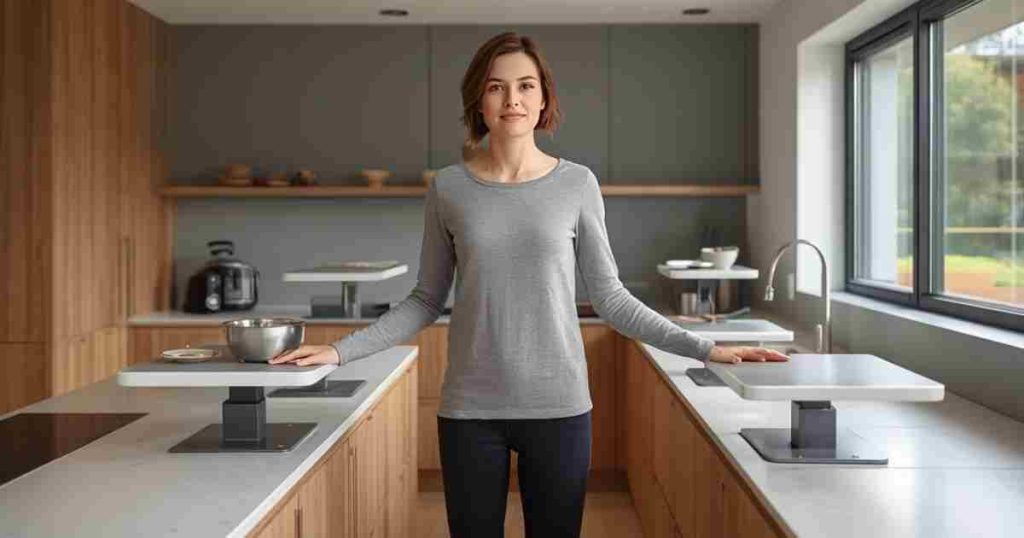
Remember, this is a guideline. The goal is to be able to work at the counter without hunching over or straining your arms. You should be able to stand upright with your shoulders relaxed while performing tasks like chopping or mixing.
Standard vs. Custom Countertops
Standard kitchen counters are typically 36 inches high. This is often too low for individuals over 5’10”. For someone 6 feet tall, a 36-inch counter might require them to bend their elbows significantly, leading to discomfort.
For someone 6’5″, this difference becomes even more pronounced, potentially causing back strain.
Custom counter heights allow you to set the height precisely for your needs. This means counters can be built at 38 inches, 39 inches, or even higher, depending on your specific measurements. This customization ensures that every task, from rolling dough to washing dishes, is performed comfortably.
For instance, a professional chef who is 6’3″ might opt for counters at 39 inches. This allows them to comfortably chop vegetables without looking down too much. A baker might prefer a slightly lower height, around 37 inches, for tasks like kneading dough, giving them more leverage.
Counter Height Recommendations for Different Heights
While individual proportions vary, here are some general recommendations for counter heights based on overall height:
- For individuals 5’10” to 6’1″: Counter heights between 37.5 and 39 inches are often ideal. This provides a comfortable working level without requiring excessive bending.
- For individuals 6’2″ to 6’5″: Counter heights between 39 and 41 inches may be more suitable. This accommodates longer torsos and arm lengths, allowing for a more natural posture.
- For individuals over 6’5″: Consider counter heights of 41 inches or even higher. It is always best to measure your personal ideal height as described earlier.
It’s important to remember these are starting points. The most accurate way is to measure your elbow height as described before. If you have a partner or friend who is also tall, you can compare your measurements and experiences to find a collective ideal.
Practical Considerations for Higher Counters
When raising your counter height, consider how it affects other elements in the kitchen. The sink needs to be compatible with the new height. If you’re installing a new countertop, you’ll likely be installing a new sink or undermount sink to match.
The plumbing will need to be adjusted accordingly.
Also, think about the height of your appliances. If you have a standard-height dishwasher, it might look a bit awkward or function less efficiently if placed under a significantly higher counter. Some dishwashers come in taller models, or you might need to build a custom cabinet for it.
The same applies to ovens and stovetops.
Lastly, consider seating. If you have bar stools or counter stools, their height needs to complement the new counter height. You want to ensure comfortable seating for those times you’re not actively working in the kitchen.
Optimizing Cabinet Reach and Storage
After setting the right counter height, the next major consideration for tall people is cabinet reach. Standard cabinet placement can mean that the most accessible shelves are too low, and the higher ones are difficult to use. This section focuses on how to arrange your cabinets for maximum reachability and efficient storage.
Standard Upper Cabinet Placement Issues
Upper cabinets are typically installed with their bottoms about 15 to 18 inches above the countertop. For shorter individuals, this spacing provides easy access to the entire cabinet. However, for taller people, this might mean the majority of the cabinet space is above their comfortable reaching height.
This forces them to constantly use step stools or stretch awkwardly.
For example, a standard 30-inch high upper cabinet, when placed 18 inches above a 36-inch counter, means the bottom of the cabinet is at 54 inches. The top of the cabinet would be at 84 inches. For someone who is 6 feet tall (72 inches), the top shelves are still a significant stretch away.
For someone 6’5″ (77 inches), this is even more challenging.
This common placement is a major pain point because it makes using the top shelves inefficient and potentially unsafe. It’s a classic example of a design that works for some but creates a hurdle for others.

Strategies for Accessible Cabinet Storage
There are several ways to make your upper cabinets more accessible. One common strategy is to increase the distance between the countertop and the bottom of the upper cabinets. Instead of 15-18 inches, consider increasing this gap to 20-24 inches.
This would mean the bottom of a standard 30-inch cabinet would be at 56-60 inches, making the lower and middle shelves much more reachable for taller individuals.
Another effective approach is to use pull-down shelving or storage systems within the cabinets. These mechanisms allow you to lower the contents of the cabinet down to your working height, making it easy to retrieve items from even the highest shelves. These are often seen in modern kitchen designs.
Consider the types of items you store. Frequently used items should be on the most accessible shelves. Less frequently used items can be stored on higher shelves, perhaps with the help of a step stool that is always kept nearby.
Smart organization can make even challenging cabinet spaces work well.
Cabinet Depth and Height Adjustments
Beyond placement, the depth and height of the cabinets themselves can be adjusted. Standard upper cabinets are typically 12 inches deep. For taller people, this is usually adequate.
However, if you have particularly long arms, a slightly deeper cabinet might feel more natural.
When it comes to cabinet height, taller individuals might benefit from taller cabinets that extend closer to the ceiling. If the gap above the counter is increased, the cabinet itself can be taller, providing more storage space without sacrificing reachability on the lower shelves. For example, instead of a 30-inch tall cabinet, you might opt for a 36-inch or even 42-inch tall cabinet, placed higher from the counter.
Case Study: The Johnson Family Kitchen Remodel
The Johnson family, with parents over 6’2″, found their old kitchen inefficient. They opted for custom cabinets. They increased the space above the counter to 22 inches.
They also chose 36-inch tall upper cabinets. This meant the bottom of their cabinets started at 58 inches (22-inch gap + 36-inch cabinet height from that point). This brought the top of their cabinet space to 94 inches.
The bottom of these cabinets is now at a more accessible height, and the increased height of the cabinets means they still have plenty of storage. They reported a significant decrease in back strain and an easier time finding what they need.
Utilizing Pull-Out Shelves and Organizers
Pull-out shelves are a game-changer for any kitchen, but especially for those with reachability challenges. These shelves slide out from the cabinet, bringing items to the front and easily accessible. This completely eliminates the need to reach into the back of deep cabinets or strain to see what’s there.
In upper cabinets, specialized pull-down organizers are available. These are mounted on a track and can be pulled down with a handle, bringing the entire contents of the shelf down to waist or chest height. This makes storing and retrieving items from high cabinets effortless.
Consider installing pull-out shelves in your lower cabinets as well. This is beneficial for everyone, as it makes it easier to access pots, pans, and small appliances stored below the counter. No more crawling around on your hands and knees to find that one specific lid!
Appliance Placement and Workflow
Beyond fixed elements like counters and cabinets, the placement of your appliances significantly impacts kitchen usability, especially for taller people. Think about how you move through your kitchen and interact with your oven, refrigerator, and dishwasher. Getting this right can make your cooking experience much smoother and safer.
Refrigerator Height and Access
Standard refrigerators are often around 65-70 inches tall. For very tall individuals, the top of the refrigerator might be at or below eye level, which is generally fine. However, the height of the refrigerator door can impact how easy it is to access items stored on the top shelf.
Consider models with counter-depth features or French doors. Counter-depth refrigerators stick out less from your cabinetry, creating a more streamlined look and easier access around the unit. French door models have two doors that open outwards, allowing for wider access to the interior without a single large door blocking your path.
If you opt for a taller refrigerator, ensure there’s enough clearance above it for ventilation and door opening. Sometimes, refrigerators are installed beneath upper cabinets, which can limit the door swing. For tall people, ensuring the door can open fully without hitting cabinets is crucial for comfortable use.
Oven and Cooktop Ergonomics
Wall ovens, often placed at waist height or higher, can be a great ergonomic choice for taller people. Unlike a standard range oven where you have to bend down significantly to access the oven interior, a wall oven can be installed at a height that minimizes bending. This makes putting food in and taking it out much easier and safer.
When choosing a wall oven, consider its height and the height of its controls. Some ovens have controls on the front, while others have them at the top. Ensure the controls are within easy reach without stretching.
For cooktops, the main consideration is the height of the burners. Standard cooktops are integrated into the countertop, so their height is determined by the counter height. If you’ve raised your counters, the cooktop will be at that higher, more comfortable level.
However, if you have a freestanding range, ensure the stovetop is at a comfortable height.
Dishwasher Placement and Drawers
Standard dishwashers are designed to fit under a standard counter. If you’ve raised your counter height, you might need to consider a taller dishwasher model or a custom cabinet solution to accommodate the difference. Some dishwashers are designed to be drawer-style, which can offer more flexibility in placement and can sometimes be installed at a slightly different height.
Dishwasher drawers can be particularly useful. Instead of one large appliance, you have one or two drawers that pull out. This means you can load and unload dishes without bending as much, especially if the drawers are installed at a slightly higher level within a custom cabinet.
This offers a more ergonomic approach to dishwashing.
Scenario: The Single Cook’s Workflow
Imagine a chef who is 6’4″ cooking a complex meal. They start by pulling ingredients from the refrigerator, which is a counter-depth model with French doors, allowing wide access. They then move to a 39-inch high counter to chop vegetables.
Scenario: The Single Cook's WorkflowImagine a chef who is 6'4" cooking a complex meal.
The wall oven, installed at 37 inches, makes it easy to preheat and place trays. They can easily reach all the controls. The dishwasher drawers, installed at 34 inches (slightly higher than standard), mean less bending when loading dirty dishes.
This streamlined workflow significantly reduces physical strain throughout the cooking process.
Microwave and Other Small Appliance Locations
Microwaves are often placed on the counter or above the range. For taller individuals, placing a microwave on the counter can mean it’s at a comfortable height for use, avoiding the need to bend down. If it’s placed above the range in a microwave/hood combo, ensure it’s not too high to reach comfortably.
Consider alternative placements for microwaves, such as in a dedicated cabinet niche or a pull-out shelf in a base cabinet. This keeps the counter clear and can position the microwave at an ideal height. For other small appliances like toasters or coffee makers, place them on the counter at a height that is easy to access without straining.
Designing for Comfort and Customization
Creating a kitchen that truly works for taller people goes beyond just adjusting heights. It involves thoughtful design choices that prioritize comfort, efficiency, and personalization. This section looks at other ways to customize your kitchen to make it a more pleasant space to be in.
Ventilation and Lighting Considerations
Proper ventilation is essential in any kitchen, but it becomes even more important when you’re working at higher counters. Ensure your range hood is adequately sized and positioned correctly to capture steam and cooking odors effectively. For taller individuals, a range hood that is mounted slightly higher might be necessary to avoid bumping your head, but it still needs to be effective at ventilation.
Good lighting is crucial for any kitchen. Ensure that your workspaces, especially the higher countertops, are well-lit. Under-cabinet lighting is excellent for illuminating your primary work surfaces.
Task lighting above the stove and in other key areas also helps prevent shadows and makes tasks easier and safer.
Flooring and Step Stool Solutions
While you’re aiming to minimize the need for step stools, it’s wise to have one accessible for those very top shelves. Choose a sturdy, stable step stool that is easy to move and store. Consider a model with a wider base for added safety.
The flooring in your kitchen also plays a role in comfort. While not directly related to height, comfortable flooring can reduce fatigue from standing for long periods. Anti-fatigue mats can be placed in key work areas, like in front of the sink or stove, to provide cushioning.
Material Choices and Aesthetic Appeal
When choosing materials for your countertops and cabinets, consider durability and ease of maintenance, especially for higher surfaces. Materials like quartz or granite are popular for countertops due to their durability and resistance to stains and heat. For cabinets, choose finishes that are easy to clean.
Aesthetically, a kitchen designed for taller people can look just as stylish as any other. Custom cabinets can be designed with taller door panels or different hardware placements to suit the overall scale. The key is to integrate these functional adjustments seamlessly into the overall design so the kitchen feels cohesive and welcoming. The growing importance of ergonomic design in home kitchens is highlighted by recent surveys.
Statistic: According to a survey by the National Association of Home Builders (NAHB), over 60% of homeowners who renovated their kitchens did so to improve functionality and accessibility. This highlights the growing importance of ergonomic design in home kitchens.
Sample Kitchen Layout for Tall Individuals
Let’s visualize a kitchen designed with taller users in mind.
- Countertops: Set at a comfortable 39-inch height, allowing standing with relaxed arms.
- Sink Area: A deeper sink basin at the 39-inch counter height, with a pull-out faucet for easy use.
- Upper Cabinets: Placed with a 20-inch gap above the counter. Cabinets are 36 inches tall, starting at 59 inches from the floor.
- Wall Oven: Installed at 36 inches from the floor for easy access to the oven cavity.
- Dishwasher: A taller unit or a drawer dishwasher integrated into a slightly raised base cabinet.
- Refrigerator: Counter-depth French door model for ease of access and to avoid blocking pathways.
- Storage: Base cabinets feature pull-out shelves. Upper cabinets have optional pull-down mechanisms for the highest shelves.
Frequently Asked Questions of How To Design A Kitchen For Tall People: Counter Heights, Cabinet Reach, And More
What is the standard counter height in most kitchens?
The standard counter height in most kitchens is 36 inches from the floor.
How can I determine the best counter height for myself if I’m tall?
Stand with your arms relaxed at your sides, measure the distance from the floor to just below your elbow, and then subtract 3 to 6 inches. This gives you a good starting point for your ideal counter height.
Are there special cabinets for tall people?
Yes, you can get custom cabinets. You can also adjust the spacing above the counter and use pull-down shelves or organizers to make standard cabinets more accessible.
Should I worry about appliance heights too?
Yes, consider how appliance heights complement your custom counter height. Wall ovens and drawer dishwashers can offer more ergonomic benefits for taller individuals.
How much space should be between the counter and upper cabinets for tall people?
For taller individuals, increasing the space between the counter and the bottom of upper cabinets to 20-24 inches can greatly improve accessibility compared to the standard 15-18 inches.
Wrap Up
Designing a kitchen that fits your height makes cooking much easier and more comfortable. By adjusting counter heights, optimizing cabinet reach, and placing appliances thoughtfully, you create a space that works for you. Enjoy your new, custom-designed kitchen that feels just right! Using a 39-inch height for countertops is recommended by ergonomic guidelines to prevent strain.

![What Is Kitchen Ergonomics How Good Design Reduces Fatigue And Injury[1]](https://kitchentoolslab.com/wp-content/uploads/2026/05/What_Is_Kitchen_Ergonomics__How_Good_Design_Reduces_Fatigue_And_Injury1-768x403.jpg)
![The Kitchen Work Triangle Explained Is It Still Relevant[1]](https://kitchentoolslab.com/wp-content/uploads/2026/05/The_Kitchen_Work_Triangle_Explained__Is_It_Still_Relevant1-768x403.jpg)
![Kitchen Work Zones How To Organize Your Kitchen Into Functional Areas[1]](https://kitchentoolslab.com/wp-content/uploads/2026/05/Kitchen_Work_Zones__How_To_Organize_Your_Kitchen_Into_Functional_Areas1-768x448.jpg)
![What Is The Correct Height For Kitchen Countertops (Based On Body Height)[1]](https://kitchentoolslab.com/wp-content/uploads/2026/05/What_Is_The_Correct_Height_For_Kitchen_Countertops__Based_On_Body_Height1-768x403.jpg)