Why Rock Salt Is Still Needed in Traditional Ice Cream Makers
Rock salt remains essential in traditional ice cream makers because it lowers the freezing point of ice, creating a sub-zero environment necessary to freeze the cream mixture. This process allows the ice bath to reach temperatures well below 32 degrees Fahrenheit, maintaining consistent cold during churning without affecting the flavor of the ice cream. The salt only contacts the ice and water, not the sealed canister containing the cream, ensuring the final product is not salty while still enabling proper freezing.
Rock salt has been part of homemade ice cream for more than a century. This article explains why rock salt is still needed in traditional ice cream makers and how it helps turn simple cream and sugar into a frozen treat.
Quick Verdict: Rock salt lowers the freezing point of ice, creating temperatures well below 32 degrees Fahrenheit. This extra cold environment is necessary to freeze the cream mixture into ice cream. Without rock salt, the ice would melt too quickly and the cream would stay liquid. The salt only touches the ice bath, not the cream inside the sealed canister.
Key Takeaways
- Rock salt lowers the freezing point of ice, creating a sub-zero environment that traditional ice cream makers need to freeze cream properly.
- The salt does not enter the ice cream mixture, so it does not affect the taste or saltiness of the final product.
- Traditional ice cream makers require rock salt to maintain a consistent freezing temperature during the entire churning process.
- Rock salt is the most cost-effective and widely available option for home ice cream makers, costing less than table salt per batch.
- Understanding the science of freezing point depression helps you use the correct amount of rock salt for the best texture and consistency.
What Is the Role of Rock Salt in Ice Cream Making?
Rock salt serves one primary purpose in a traditional ice cream maker. It lowers the temperature of the ice bath so the cream mixture freezes solid.
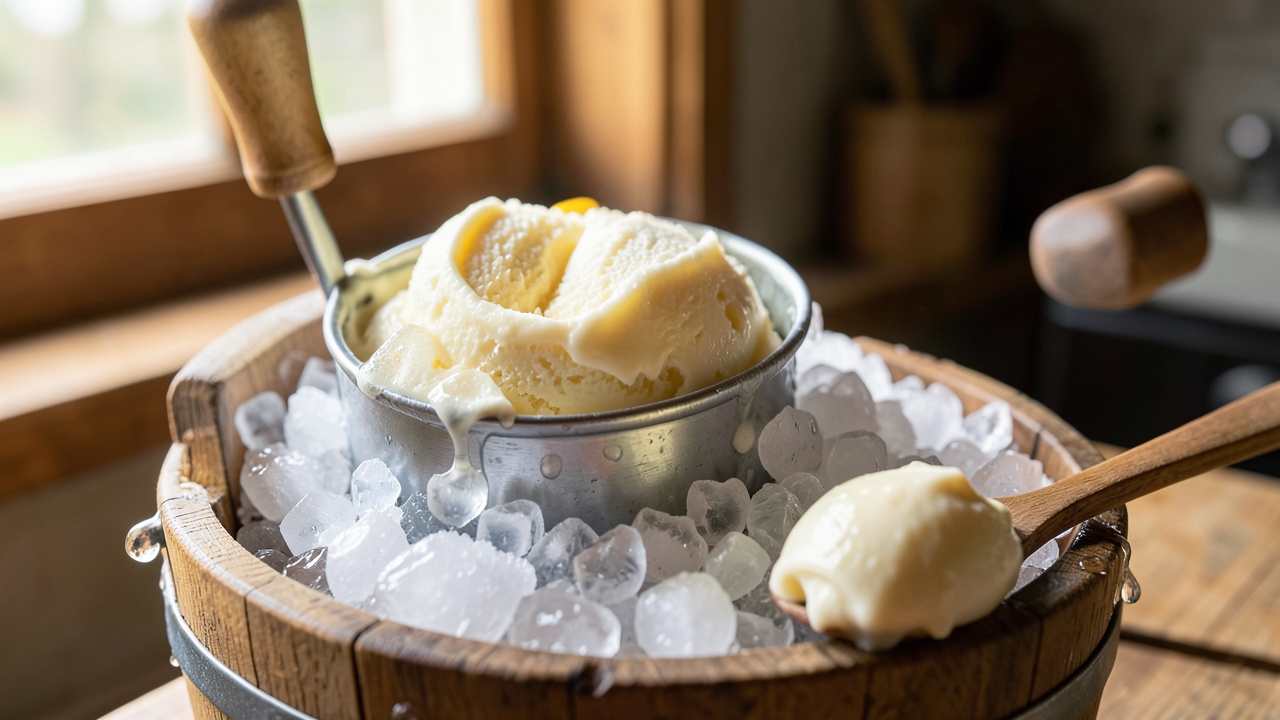
When you pack ice around the canister, the ice alone can only cool the cream to about 32 degrees Fahrenheit. That is not cold enough to freeze a liquid cream mixture. According to the, adding rock salt to ice lowers the freezing point to approximately 20 to 22 degrees Fahrenheit, depending on the salt-to-ice ratio. That extra cold makes all the difference.
The salt works by dissolving into the thin layer of water on the surface of each ice cube or chip. This saltwater solution has a much lower freezing point than pure water. The ice responds by melting further, which pulls heat away from the cream canister.
Tip: Use a ratio of about 1 cup of rock salt for every 4 to 5 pounds of ice. This ratio creates the ideal freezing environment for most traditional ice cream makers.
How Does Rock Salt Work in a Traditional Ice Cream Maker?
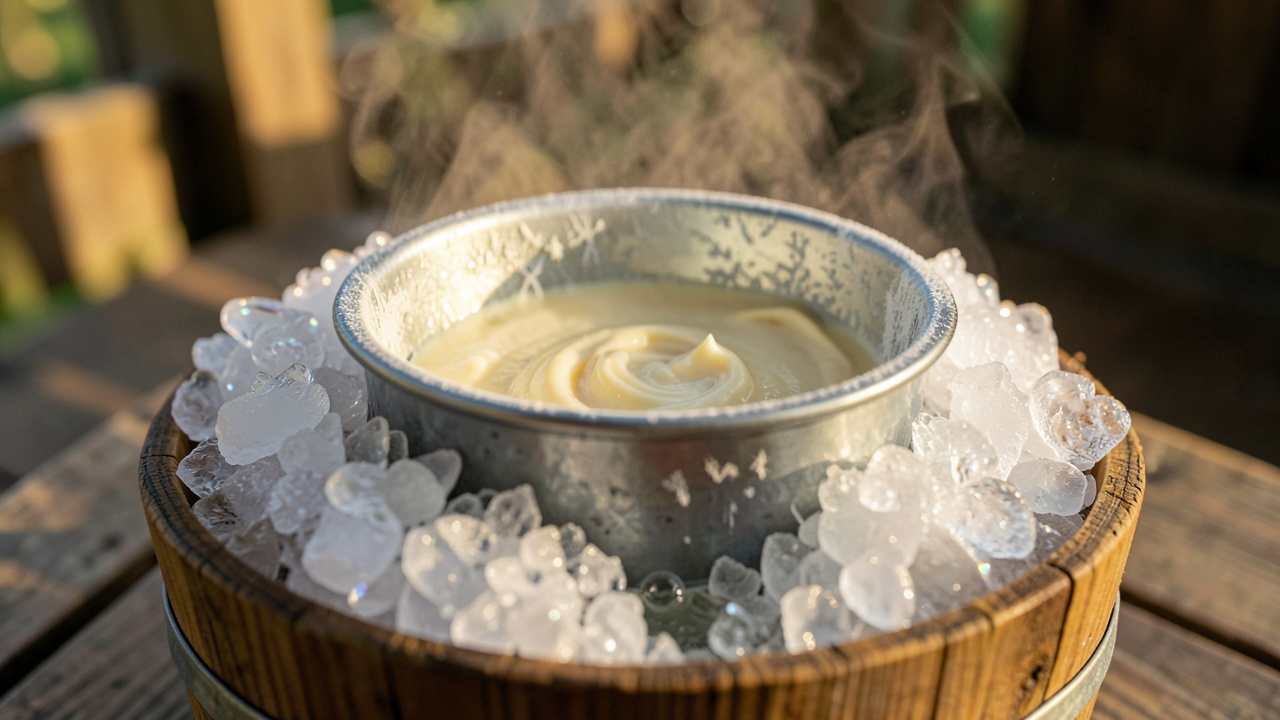
The process is a direct application of a chemistry principle called freezing point depression. When you add rock salt to ice, the salt dissolves into the liquid water that already exists between the ice particles. This saltwater solution cannot freeze until it gets much colder than the original ice temperature.
The ice then begins to melt to try to dilute the salt solution. That melting process absorbs heat from the surrounding environment. The canister holding the cream sits in the center of this ice bath, so the heat leaves the cream and moves into the melting ice.
The result is a drop in temperature inside the canister from about 40 degrees Fahrenheit (the temperature of the chilled cream) to about 22 degrees Fahrenheit. That lower temperature causes the cream to freeze as it is churned.
Why rock salt is still needed in traditional ice cream makers comes down to basic thermodynamics. The notes that ice cream must freeze at temperatures below 25 degrees Fahrenheit to achieve the proper texture and to meet food safety standards. Ice alone cannot reach that temperature. Rock salt makes it possible.
The Science Behind Rock Salt and Freezing
Understanding the science helps you use rock salt correctly. The key concept is freezing point depression, which is a colligative property of solutions.
A colligative property depends on the number of dissolved particles in a liquid, not on what those particles are. When you dissolve salt (sodium chloride) in water, you create two particles for each salt molecule: one sodium ion and one chloride ion. This doubles the particle count and lowers the freezing point further than sugar or other solutes would.
According to the, the ideal freezing temperature for churned ice cream falls between 22 and 27 degrees Fahrenheit. A standard ice-and-salt mixture with the correct ratio produces a temperature of about 20 to 22 degrees Fahrenheit.
The table below shows how different salt-to-ice ratios affect the temperature of the ice bath.
| Salt to Ice Ratio | Approximate Temperature | Result for Ice Cream |
|---|---|---|
| 1 cup salt to 5 lb ice | 22 to 24 degrees F | Good freezing, smooth texture |
| 1.5 cups salt to 5 lb ice | 18 to 20 degrees F | Faster freezing, slightly icier |
| 0.5 cup salt to 5 lb ice | 26 to 28 degrees F | Slow freezing, may stay soft |
| No salt (ice only) | 32 degrees F | Will not freeze cream at all |
Types of Salt Used in Ice Cream Makers
Not all salt works the same way in an ice cream maker. The type of salt you choose affects the freezing speed, the texture of the ice cream, and the cleanup process.
| Type of Salt | Grain Size | Effectiveness | Best Use |
|---|---|---|---|
| Rock Salt | Large, chunky crystals | Excellent | Traditional ice cream makers |
| Ice Cream Salt | Medium, uniform grains | Excellent | Home ice cream machines |
| Table Salt | Very fine grains | Good but wasteful | Emergency backup only |
| Kosher Salt | Large, flaky crystals | Moderate | Not recommended, expensive |
Rock salt is the standard choice for a reason. According to, rock salt has been the preferred option for traditional ice cream makers since the 19th century because of its large crystal size and slow dissolution rate. The large crystals dissolve gradually, providing steady cooling over the 20 to 30 minutes it takes to churn a batch of ice cream.
Table salt dissolves too quickly. It creates an intense cold burst at the start, but the cooling effect fades fast. You would need to add more table salt partway through the process, which makes it less convenient. Table salt also contains anti-caking agents that can leave a residue in the ice bath.
Ice cream salt is essentially rock salt that has been cleaned and sorted into uniform grain sizes. It works well but costs more. For most home users, standard rock salt from a hardware store or grocery store works just as well.
Who Needs Rock Salt for Ice Cream Making?
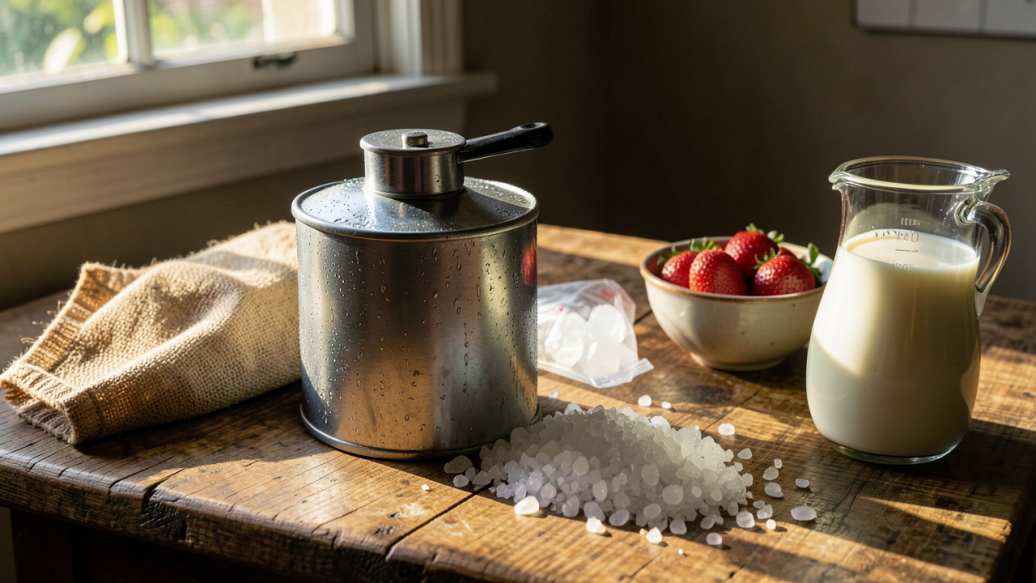
Anyone who uses a traditional hand-crank or electric ice cream maker with an outer bucket needs rock salt. These machines require an ice-and-salt mixture in the outer chamber to freeze the inner canister.
You need rock salt if you own any of these types of ice cream makers:
- Wooden bucket hand-crank models, which are the classic style that has been used for generations.
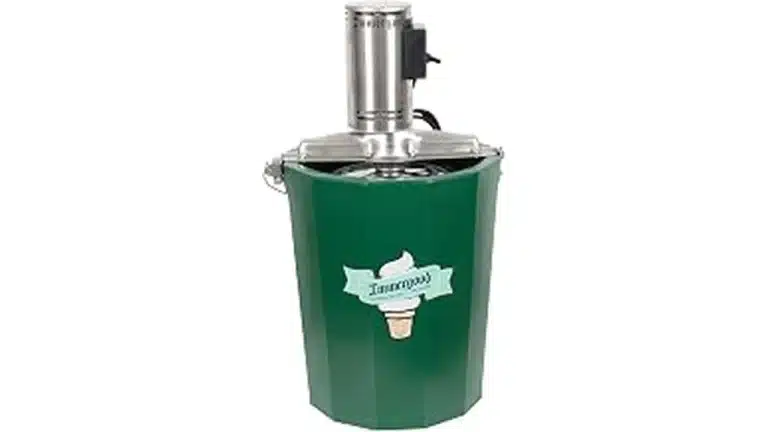
- Electric bucket-style models from brands like White Mountain or Cuisinart that have an outer bucket for ice and salt.
- Commercial-grade countertop machines that use an ice-and-salt bath, typically found in diners or ice cream shops.
- DIY or antique ice cream makers that rely on the traditional layered ice and salt method.
Modern compressor-style ice cream makers do not need rock salt. These machines have built-in freezers that chill the canister directly. However, they cost more and cannot make the same large batches that a traditional bucket machine can produce.
If you want to make large quantities of ice cream for parties or family gatherings, rock salt remains the most practical solution. A single batch in a traditional maker can yield up to 4 quarts of ice cream.
How to Use Rock Salt in a Traditional Ice Cream Maker
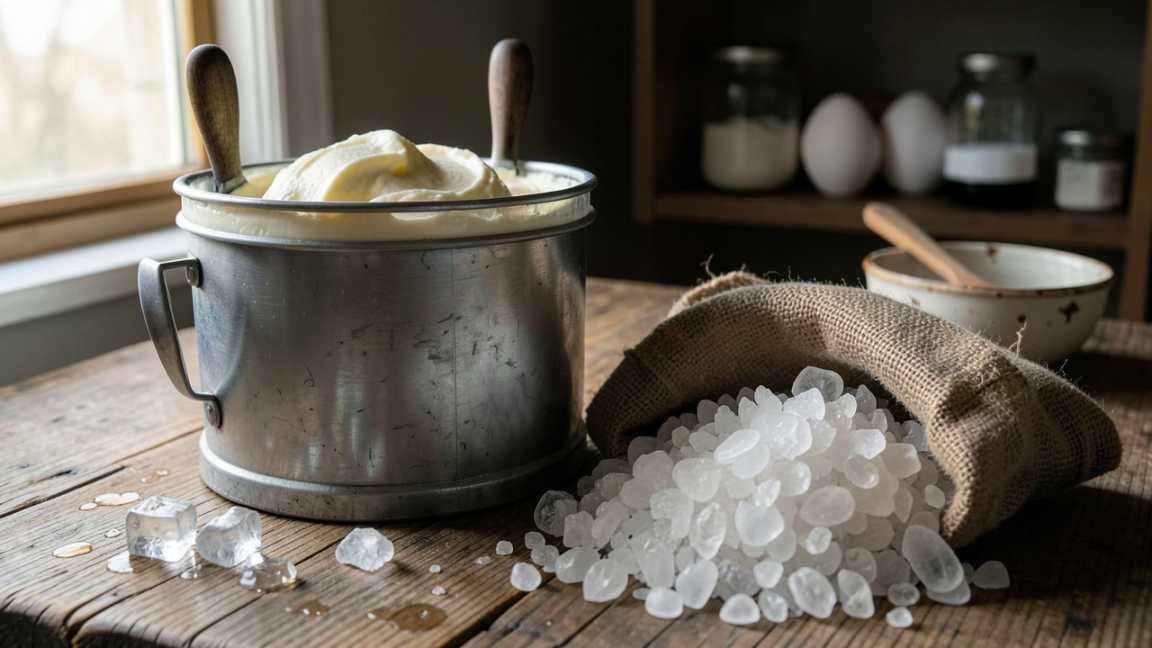
Using rock salt correctly is simple once you understand the layering process. Follow these steps for the best results.
- Prepare the ice cream base. Mix your cream, sugar, and flavorings in a bowl. Chill the mixture in the refrigerator for at least 30 minutes before starting.
- Fill the inner canister. Pour the chilled base into the metal canister. Fill it no more than two-thirds full to leave room for expansion as the mixture freezes.
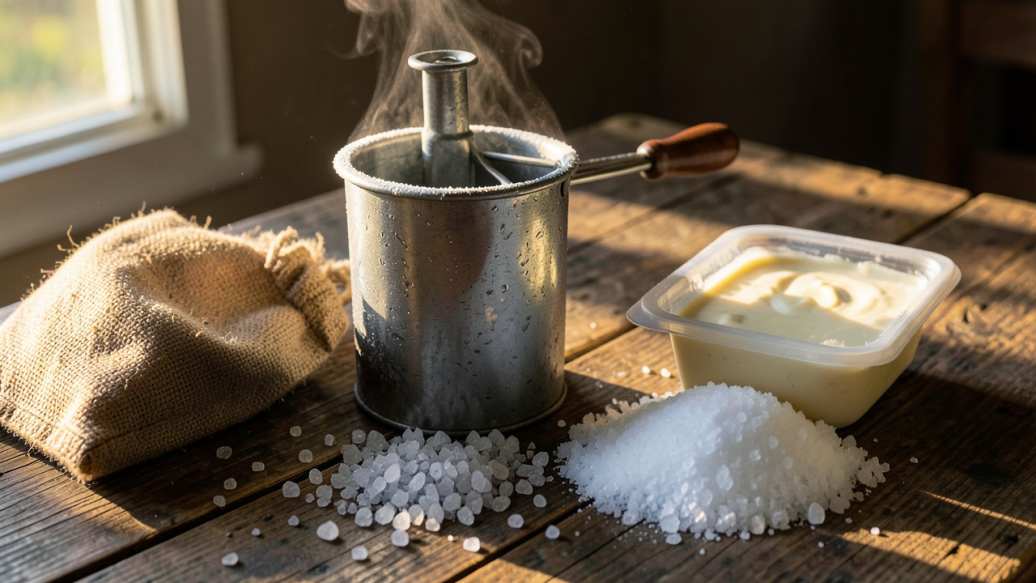
- Layer ice and rock salt in the bucket. Start with a 2-inch layer of ice at the bottom. Add a handful of rock salt. Repeat this layering process until the ice and salt reach the top of the canister.
- Add the final layer of ice. Top off the bucket with ice and a final sprinkle of rock salt. Do not pack the ice too tightly, as the melting process needs room to circulate.
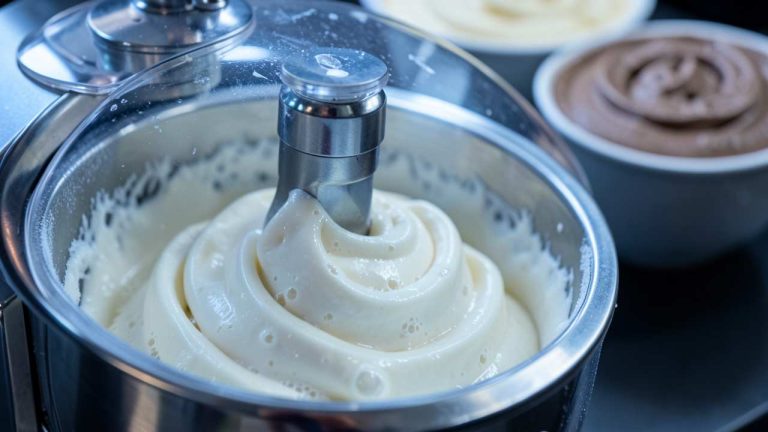
- Crank or start the motor. Begin churning at a steady pace. Hand-crank models require about 20 to 30 minutes of continuous cranking. Electric models run automatically.
- Check the consistency. Stop when the motor struggles or the crank becomes hard to turn. The ice cream should be thick and soft-serve in texture.
- Add more ice and salt as needed. If the ice melts before the ice cream is ready, drain some of the water and add fresh layers of ice and salt.
Warning: Never let the saltwater solution enter the ice cream canister. Even a small amount will ruin the batch. Make sure the canister lid is sealed tightly before you start layering ice and salt around it.
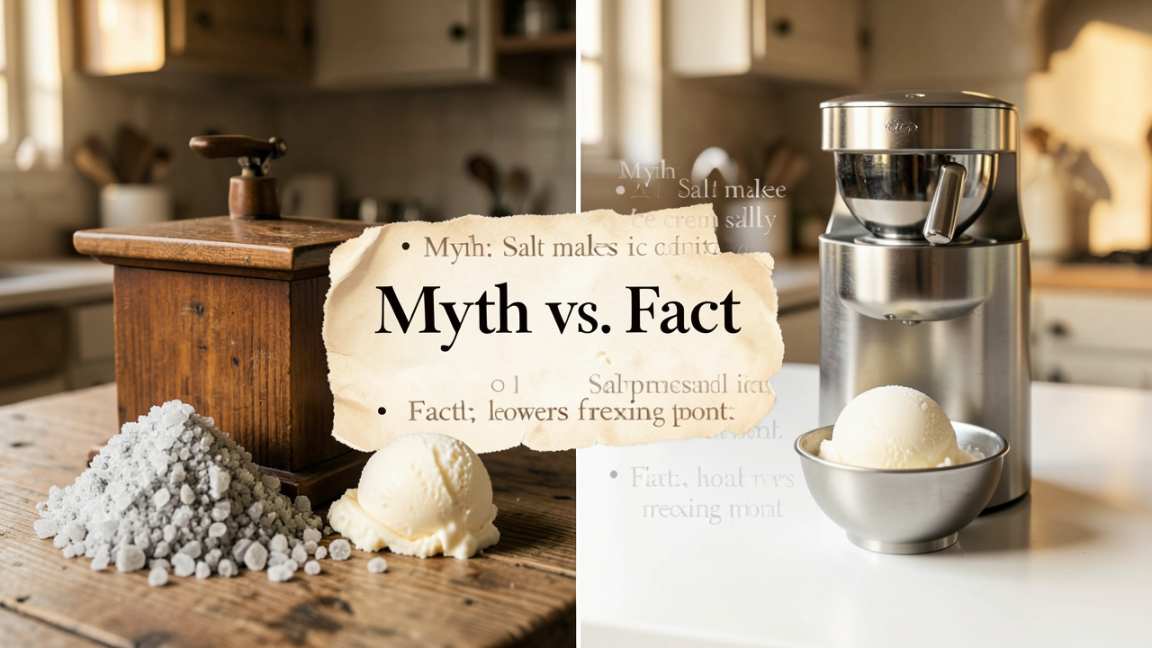
Common Myths vs Facts About Rock Salt in Ice Cream
Several myths surround the use of rock salt in ice cream makers. Here are the most common ones, corrected with facts.
Myth: Rock salt makes the ice cream taste salty
Fact: Rock salt never touches the ice cream. The ice cream mixture is sealed inside a metal canister with a tight lid. The rock salt only dissolves in the ice bath outside the canister. No salt particles can enter the canister, so the ice cream remains unaffected in taste.
Myth: You can use any salt and get the same result
Fact: Different salts dissolve at different rates. Fine table salt dissolves too quickly and creates an uneven cooling effect. Rock salt dissolves slowly and provides steady cold over the full churning time. According to the, the dissolution rate of the salt directly affects how consistently the ice bath stays at the target freezing temperature.
Myth: Modern electric ice cream makers do not need rock salt
Fact: Many modern electric bucket-style models still require rock salt. Only compressor-based machines with built-in refrigeration can operate without salt. Brands like White Mountain and Cuisinart still sell electric models that use an ice-and-salt bucket. Always check the manufacturer instructions before assuming a machine is salt-free.
Frequently Asked Questions
Does rock salt affect the flavor of homemade ice cream?
No, rock salt does not affect the flavor. The salt only dissolves in the ice water outside the sealed canister. The ice cream inside remains completely separate from the saltwater solution.
Can I use table salt if I do not have rock salt?
You can use table salt in an emergency, but it is not ideal. Table salt dissolves too quickly and provides uneven cooling. You will need to add more salt during the churning process to maintain the correct temperature.
How much rock salt do I need for a standard batch of ice cream?
Most traditional ice cream makers require about 1 cup of rock salt for every 4 to 5 pounds of ice. A standard batch of 4 quarts needs roughly 10 to 12 pounds of ice and 2 to 2.5 cups of rock salt.
Why does the ice cream freeze faster with rock salt than without it?
Rock salt lowers the freezing point of the ice bath from 32 degrees Fahrenheit to about 20 degrees Fahrenheit. This colder temperature pulls heat from the cream mixture much faster, allowing it to freeze within 20 to 30 minutes instead of several hours.
Is rock salt safe to use around children during ice cream making?
Rock salt is generally safe, but you should keep children away from the salt and the saltwater solution. The salt can irritate skin if handled for long periods, and the saltwater mixture is very cold. Supervise children if they help with the churning process.
Final Thoughts
Rock salt remains essential for traditional ice cream makers because it provides the sub-zero temperatures needed to freeze cream properly. The science is simple: salt lowers the freezing point of ice, and that extra cold is what turns liquid cream into solid ice cream. Whether you use a hand-crank bucket or an electric model with an outer chamber, rock salt is the key to getting the right texture and consistency. Understanding why rock salt is still needed in traditional ice cream makers helps you use it correctly and make better homemade ice cream every time.