How Incubation Time Changes Yogurt Tanginess and Final Texture
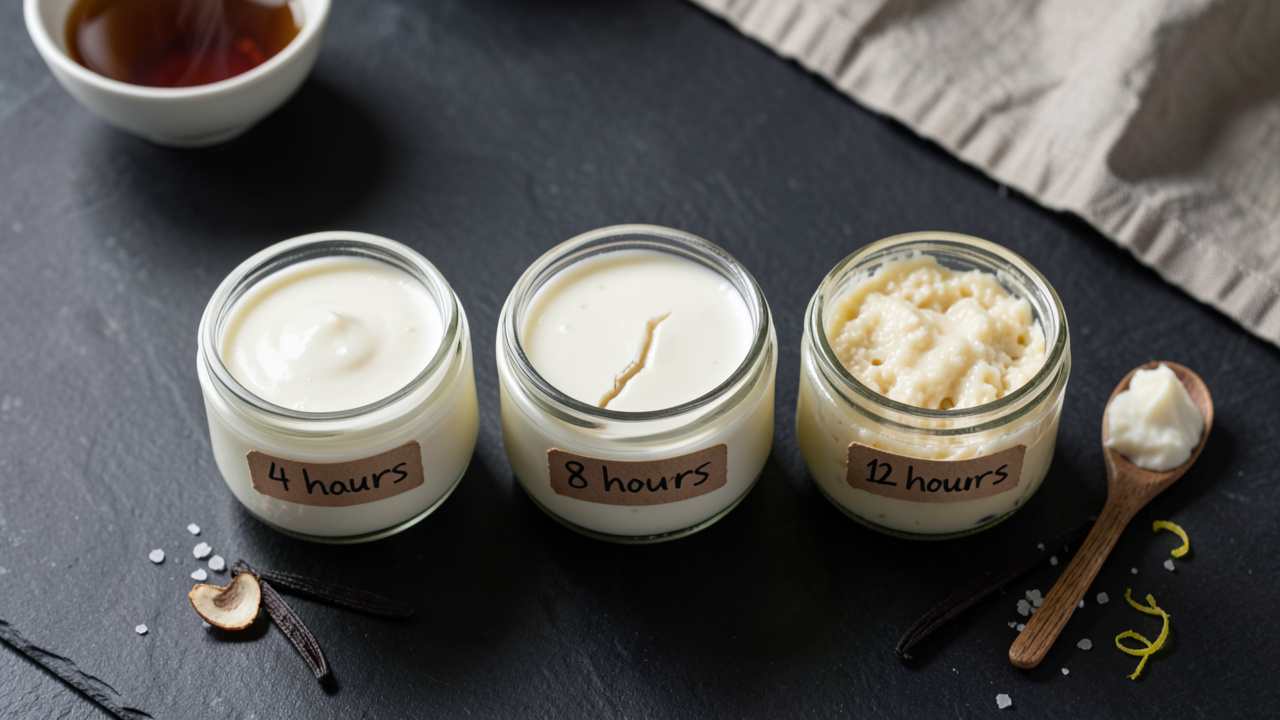
Incubation time directly determines yogurt tanginess and texture by controlling lactic acid production and gel formation. Longer fermentation of 8 to 12 hours produces tangier, thicker yogurt, while shorter times of 4 to 6 hours yield a mild, softer result. The key takeaway is that adjusting incubation between 4 and 12 hours allows precise control over flavor and consistency to match personal preference.
Yogurt’s tanginess and texture come from one key factor: incubation time. The longer you ferment yogurt, the more lactic acid builds up, changing both flavor and consistency.
Quick Verdict: Longer incubation (8-12 hours) produces tangier, thicker yogurt by converting more lactose into lactic acid. Shorter incubation (4-6 hours) yields mild, softer yogurt. The ideal time depends on your taste preference and desired consistency.
This guide explains exactly how incubation time affects tanginess and texture. You will learn the science behind fermentation and get practical tips for perfect yogurt every time.
Key Takeaways
- Lactic acid production increases with incubation time, making yogurt more tart and tangy.
- Longer incubation produces a thicker gel structure by allowing more whey expulsion.
- Short incubation (4-6 hours) gives mild flavor and a softer, spoonable texture.
- Medium incubation (7-8 hours) balances tanginess and creaminess for most home cooks.
- Incubating beyond 12 hours can cause separation, graininess, or excessive sourness.
The Science Behind Yogurt Tanginess
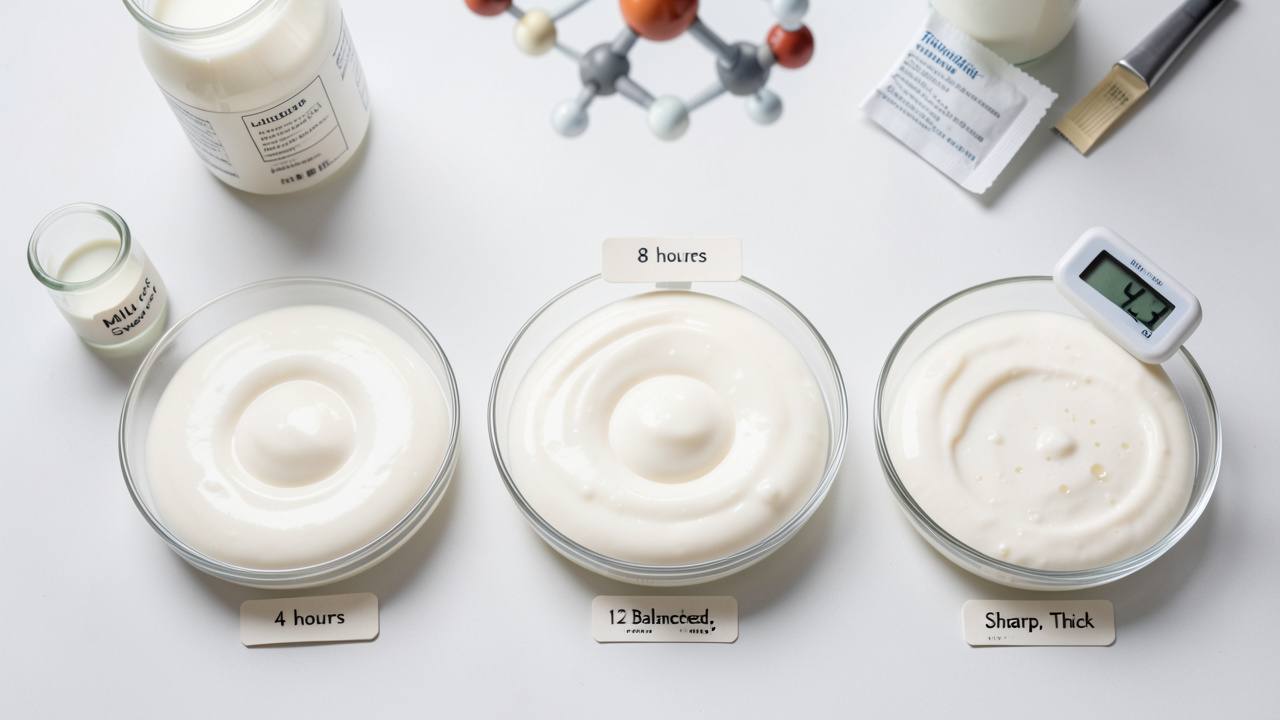
Yogurt gets its tang from lactic acid. When you add starter cultures – typically Lactobacillus bulgaricus and Streptococcus thermophilus – they consume lactose (milk sugar) and produce lactic acid. According to the, pH drops from around 6.7 to 4.6 during typical yogurt fermentation. The more lactic acid present, the lower the pH and the tangier the yogurt.
Incubation time directly controls how much lactic acid forms. After about 3-4 hours, the pH reaches 5.0-5.2, which tastes mild. By 7-8 hours, pH drops to 4.4-4.6, giving a noticeable tang. At 10-12 hours, pH falls below 4.2, producing sharp, sour yogurt.
Tip: Use a pH meter or test strips to monitor acidity. Target pH 4.4 for balanced tanginess. Stop incubation when you reach your preferred pH level.
How Texture Changes With Time
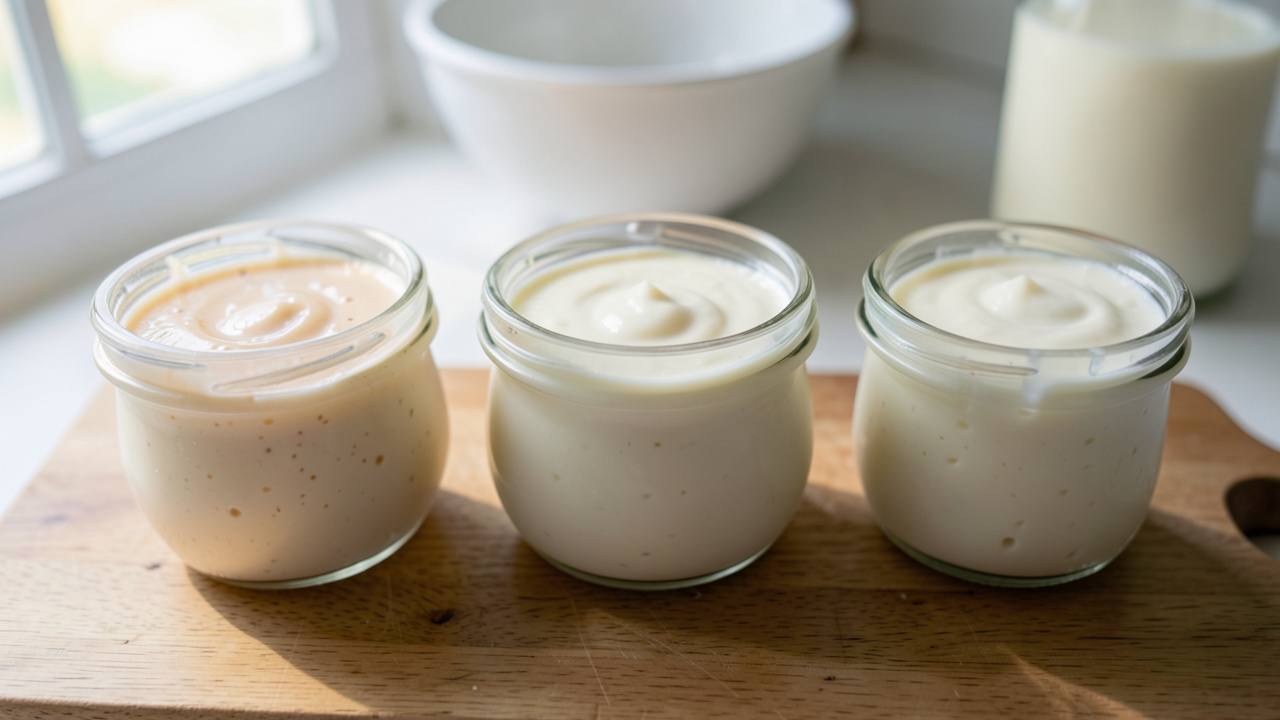
Texture in yogurt comes from a protein network. Milk proteins (casein) form a gel when acid causes them to coagulate. According to research from, longer incubation strengthens this gel and expels more whey (syneresis). The result is thicker, firmer yogurt.
However, there is a limit. Incubating beyond 12 hours can break down the protein structure, leading to a grainy or watery texture. The whey separates more dramatically. This is why commercial yogurts often add stabilizers like pectin or gelatin to maintain consistency with mild incubation.
Here is how incubation time affects texture in plain yogurt:
| Incubation Time | pH Range | Tanginess Level | Texture | Best Use |
|---|---|---|---|---|
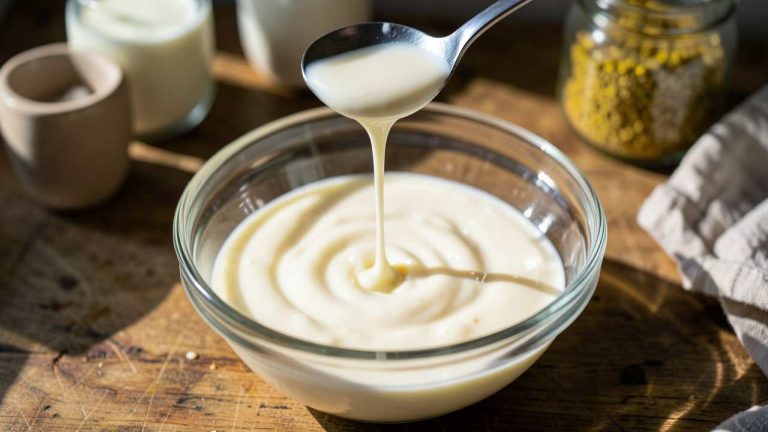
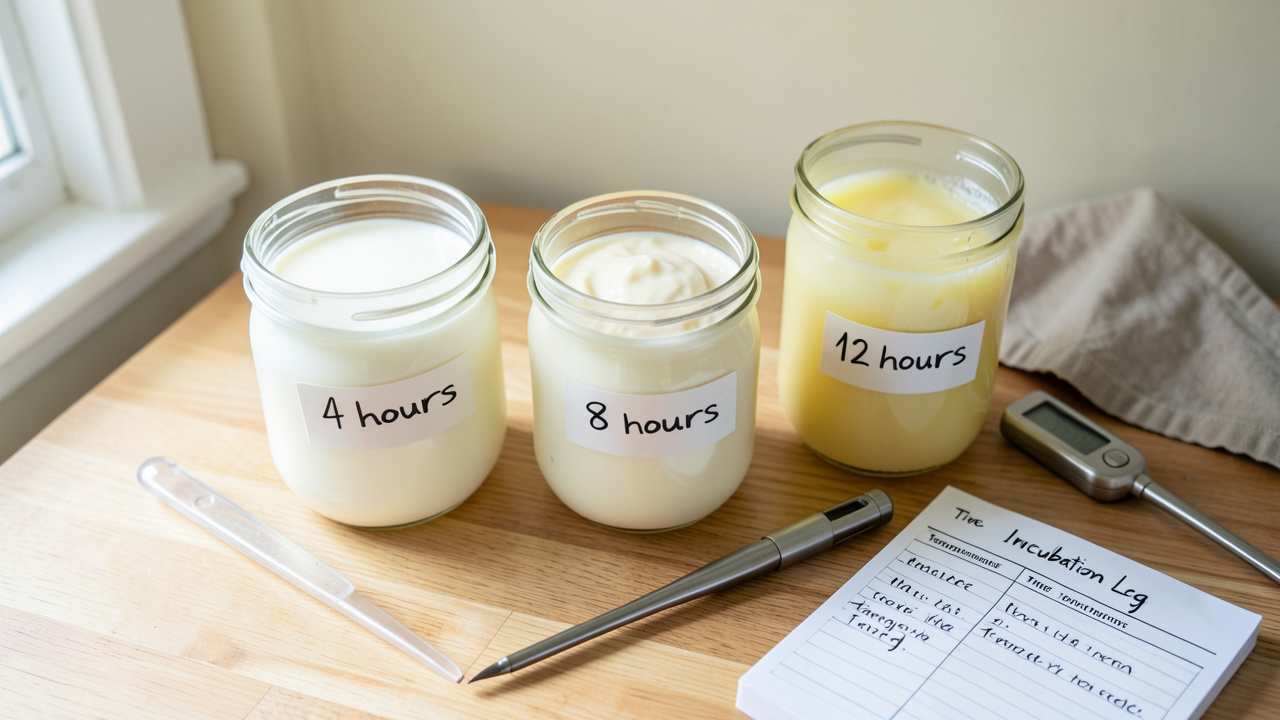
| 4-6 hours | 5.0-5.2 | Mild, barely tart | Soft, pourable, like thin custard | Drinking yogurt, smoothies, children |
| 7-8 hours | 4.4-4.6 | Moderate tang, pleasant | Creamy, spoonable, holds shape | Breakfast bowls, baking, general use |
| 9-12 hours | 4.0-4.3 | Strong, sour, sharp | Very thick, almost Greek-style, possible whey separation | Cooking, dressings, tangy dips |
| 12+ hours | Below 4.0 | Extremely sour, unpleasant | Grainy, curdled, excess whey | Avoid. Only for labneh or cheese |
What Factors Influence Incubation Time?
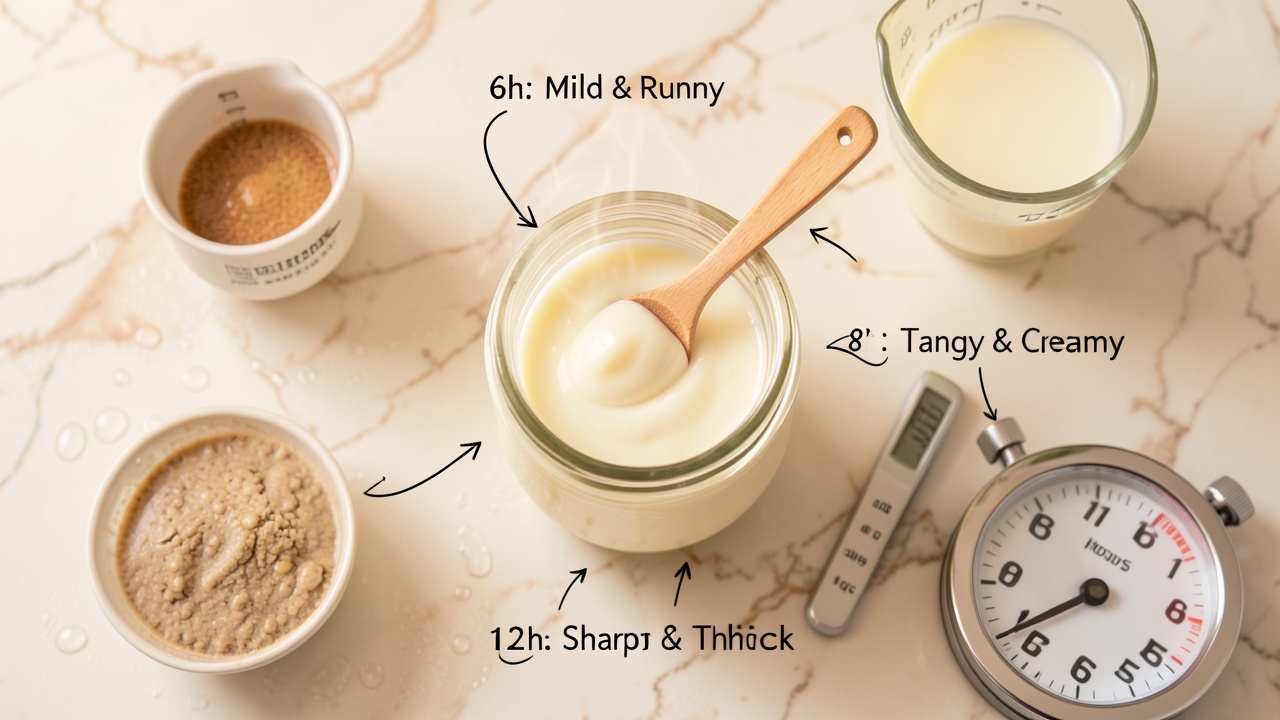
Many variables affect how quickly bacteria produce acid. You cannot rely solely on a clock. These factors change the needed incubation time:
- Starter culture type: Some cultures are fast-acting. Commercial starters often include acid-producing strains that work in 4-5 hours. Heirloom cultures may need 10-12 hours.
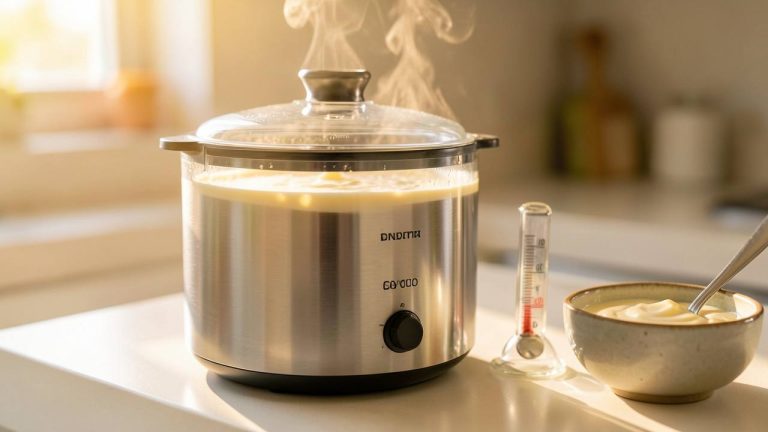
- Incubation temperature: Ideal range is 108-112°F (42-44°C). Lower temperatures slow the bacteria. Higher temperatures can kill them or cause separation.
- Milk fat content: Whole milk yields thicker yogurt than skim milk. Fat slows acid production slightly, so skim may ferment faster.
- Initial pH of milk: Fresh milk has pH 6.7. Older milk or milk with added powdered milk may have lower starting pH, speeding fermentation.
- Amount of starter: Using more starter (2-3 tablespoons per quart) reduces incubation time. Using less extends it.
Warning: Do not incubate yogurt above 115°F (46°C). High heat kills the beneficial bacteria and ruins the texture. Always use a reliable thermometer.
How to Control Tanginess by Adjusting Incubation
You can customize yogurt tanginess by simply changing the fermentation duration. Here is a practical approach:
Step-by-Step Process to Achieve Desired Tanginess
- Heat milk to 180°F (82°C) and hold for 10 minutes to denature proteins. This improves texture.
- Cool milk to 110°F (43°C). Add starter and mix gently.
- Pour into clean jars. Place in a yogurt maker or warm oven (with pilot light) at 108-112°F.
- Check pH or taste after 4 hours. Use a clean spoon each time to avoid contamination.
- Continue checking every hour after 5 hours. When tanginess reaches your preference, move jars to the refrigerator immediately.
- Cooling stops fermentation. Yogurt will become slightly more tangy in the first 12 hours of refrigeration, so stop incubation a bit earlier than desired.
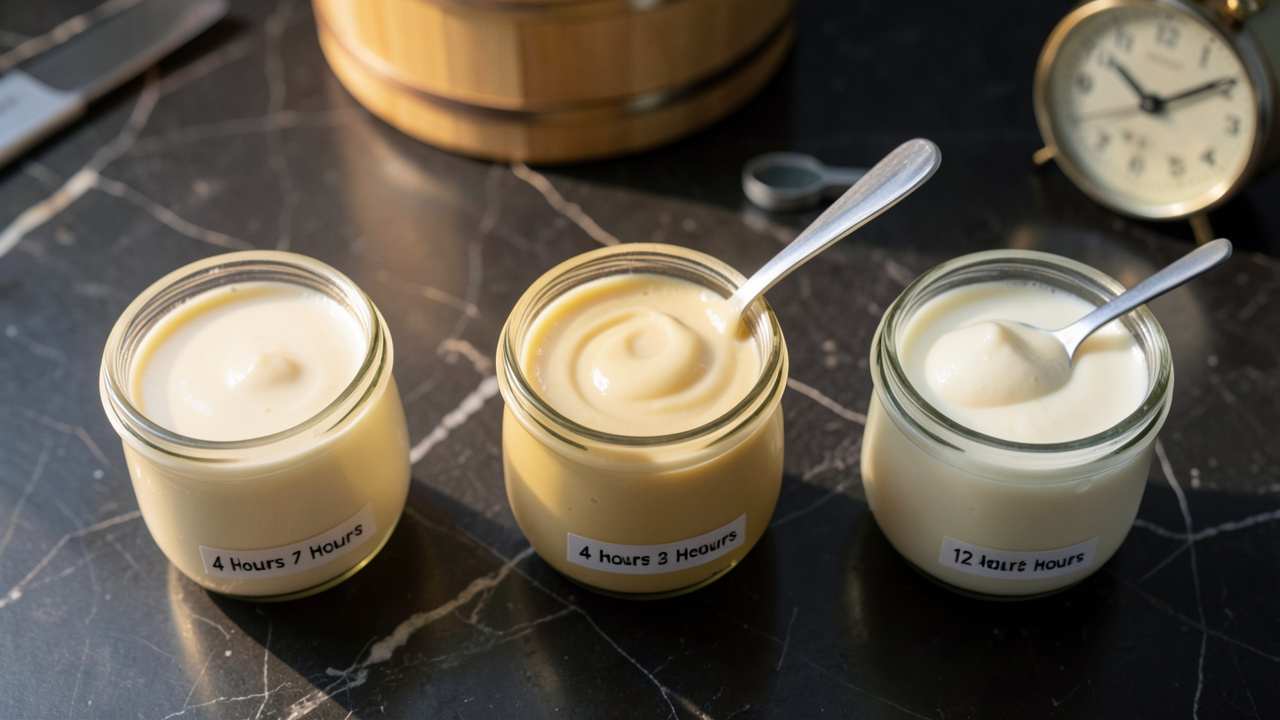
For mild yogurt, pull the jars after 4-5 hours. For medium tang, stop at 7-8 hours. For a strong, Greek-style yogurt, incubate 10-12 hours and then strain the whey.
How to Control Thickness by Adjusting Incubation
Thickness is tied to tanginess because both come from acid development. However, you can influence texture separately. The protein network becomes firmer as pH drops. To get thick yogurt without extreme tang, use these tricks:
- Add milk powder: Mix 1-2 tablespoons of nonfat dry milk per quart before heating. This increases protein content and thickens the gel.
- Use a longer hold at 180°F: Heating milk for 20-30 minutes instead of 10 creates a stronger gel.
- Strain after incubation: For thick, creamy yogurt without extra tang, incubate 7-8 hours (medium tang) then strain through cheesecloth for 2-4 hours.
- Add gelatin or pectin: Stir in 1 teaspoon of unflavored gelatin dissolved in water before incubation. This stabilizes the gel even with shorter fermentation.
Important: Thickness from incubation alone plateaus at around 10-12 hours. Beyond that, texture degrades. For extra thick yogurt, always strain rather than over-incubate.
Common Myths vs Facts
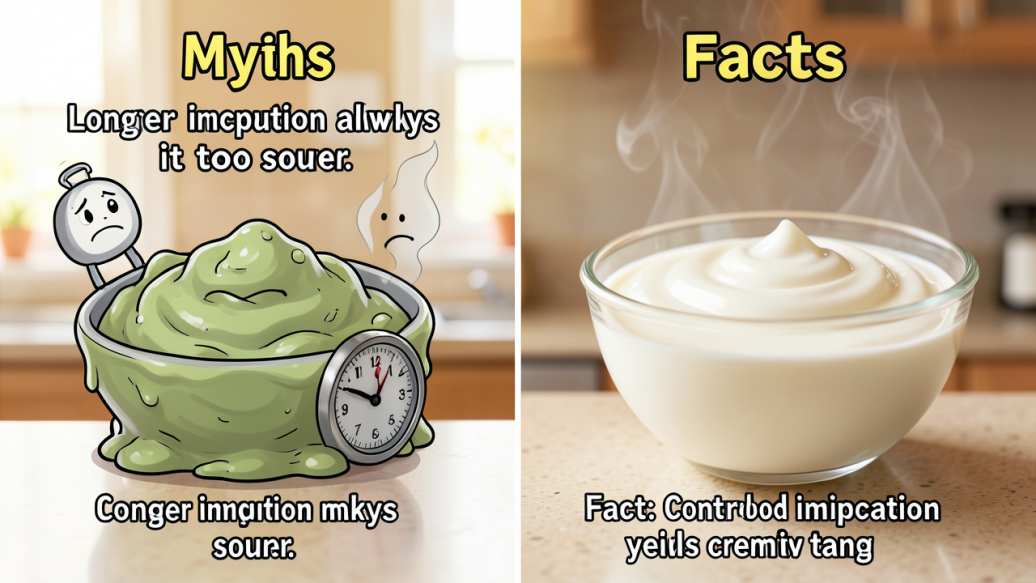
Many home yogurt makers believe misconceptions about incubation time. Here are three common ones:
- Myth: Longer incubation always gives thicker yogurt.
Fact: While thickening occurs up to about 12 hours, longer times break down the protein gel, making yogurt thin and watery. Texture peaks before tanginess becomes extreme. - Myth: You need to incubate yogurt for exactly 8 hours for it to set.
Fact: Setting time depends on temperature, starter amount, and milk type. Check by tilting the jar – if it stays solid and cleanly separates from the sides, it is set. This can happen anywhere from 4 to 12 hours. - Myth: Yogurt will continue fermenting in the fridge.
Fact: Cold temperatures slow bacteria dramatically. The pH changes very little after refrigeration. However, a slight increase in tanginess can occur during the first 12 hours as the yogurt cools slowly. After that, it stabilizes.
Resources and Tools
- Thermoworks Thermapen – Instant-read thermometer for precise milk heating and incubation monitoring.
- Yogurt Starter Cultures – Freeze-dried cultures from Cultures for Health with specific fermentation times.
- pH Test Strips – Affordable strips to measure acidity during incubation, available at homebrew stores or Amazon.
- USDA Yogurt Guidelines – Official food safety recommendations for homemade yogurt.
Frequently Asked Questions
Can I incubate yogurt for 24 hours?
Incubating for 24 hours is not recommended. The yogurt becomes excessively sour and the texture turns grainy or separated. If you want extremely thick, tangy yogurt, incubate 12 hours and then strain. According to the, fermentation beyond 12 hours leads to syneresis and off-flavors.
Why did my yogurt turn out too runny?
Runny yogurt usually comes from under-incubation (not enough acid to coagulate proteins) or over-heating during incubation. Also, using low-fat milk without added solids can cause thin texture. Check incubation temperature and increase time by 1-2 hours next batch.
Does incubation time affect probiotic content?
Yes, longer incubation increases the number of live bacteria until the pH drops too low. Most probiotics thrive between pH 4.0-5.0. Incubating 8-10 hours gives a good balance of tanginess and high bacterial count. The notes that yogurt with pH below 4.2 may have fewer viable cultures.
How do I stop incubation at the right time?
Use a pH meter or test strips. Stop when pH reaches 4.4-4.6 for balanced tanginess. Alternatively, taste test every 30 minutes after the 5-hour mark. Once you notice a pleasant tang, move jars to the refrigerator immediately. Cooling stops fermentation within 2-3 hours.
Can I speed up incubation time?
Yes. Use more starter (up to 4 tablespoons per quart) or incubate at the higher end of the safe temperature range (112°F/44°C). Also, use a fast-acting commercial starter. However, do not exceed 115°F or rush the process too much – texture may suffer.
Final Thoughts
Incubation time is the most direct control you have over yogurt tanginess and texture. Short times give mild, soft yogurt. Longer times produce tangy, thick yogurt. The sweet spot for most people is 7-8 hours. Experiment with small batches to find your perfect balance. Always monitor pH or taste to avoid over-fermentation. With practice, you will make yogurt that matches your preferences every time.