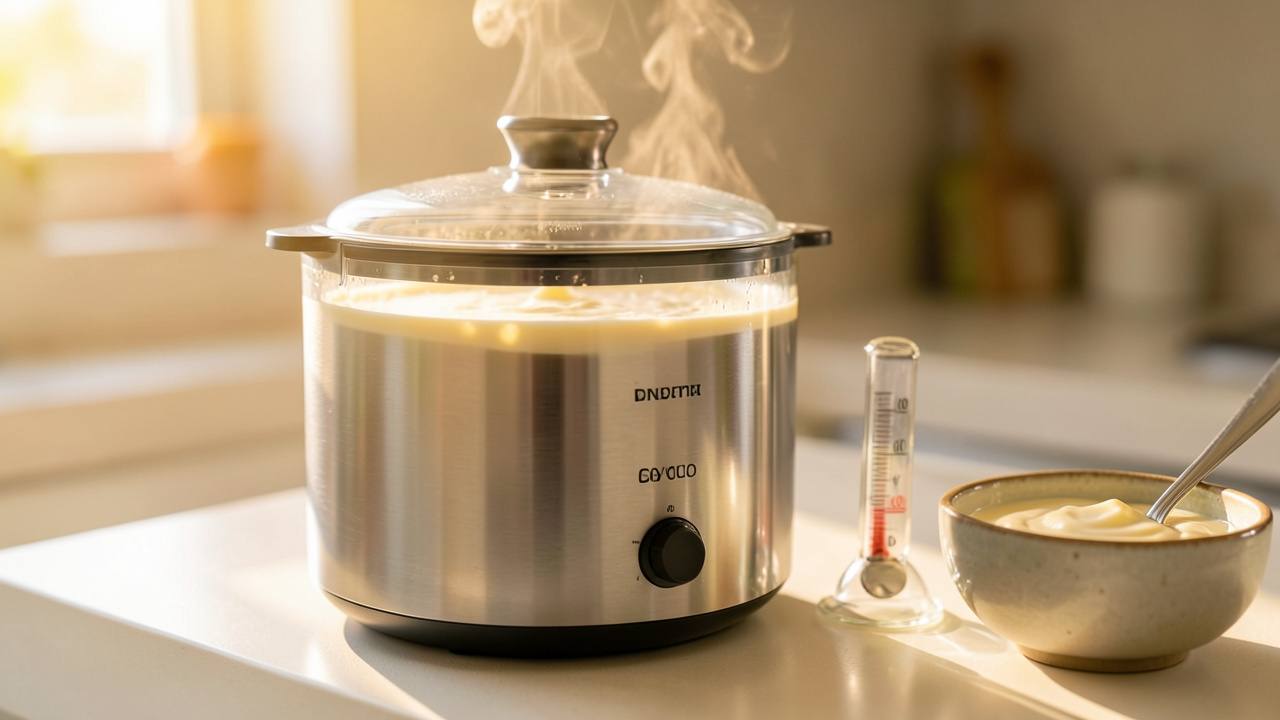
How Yogurt Makers Maintain Steady Heat for Fermentation
Yogurt makers maintain steady heat for fermentation by using thermostatically controlled warmers, insulated chambers, or water baths to hold the milk culture at a precise 110–115°F for 4 to 12 hours. Dedicated yogurt machines are the most reliable option because their built-in heaters and thermostats keep the temperature stable without user intervention, while sous vide circulators and Instant Pots with yogurt functions also work but require careful calibration. The key takeaway is that any method must avoid temperature swings above 120°F, which kill beneficial bacteria, or below 100°F, which stall fermentation, ensuring thick, tangy yogurt every time.
Yogurt needs a stable temperature between 110°F and 115°F for the bacteria to turn milk into thick, tangy yogurt. This guide explains the methods and tools you can use to hold that heat steady, whether you are using a dedicated machine or a DIY setup.
Quick Verdict: In short, yogurt makers maintain steady heat using thermostatically controlled warmers, insulation, or water baths. The best method keeps the culture at a precise 110-115°F for 4-12 hours without temperature swings above 120°F or below 100°F, which would kill or stall the bacteria.
Key Takeaways
- Yogurt fermentation requires a consistent temperature of 110-115°F to activate and sustain the thermophilic bacteria that thicken milk.
- Dedicated yogurt makers use built-in heaters and thermostats to hold temperature without user intervention, making them the most reliable option.
- Sous vide circulators and Instant Pots with yogurt functions can also maintain steady heat, but they need careful setup or calibration.
- Common DIY methods like oven with pilot light or cooler with hot water perform well but require monitoring to avoid temperature drops.
- Using a dairy thermometer or an instant-read probe is essential to verify that your incubation stays in the correct range.
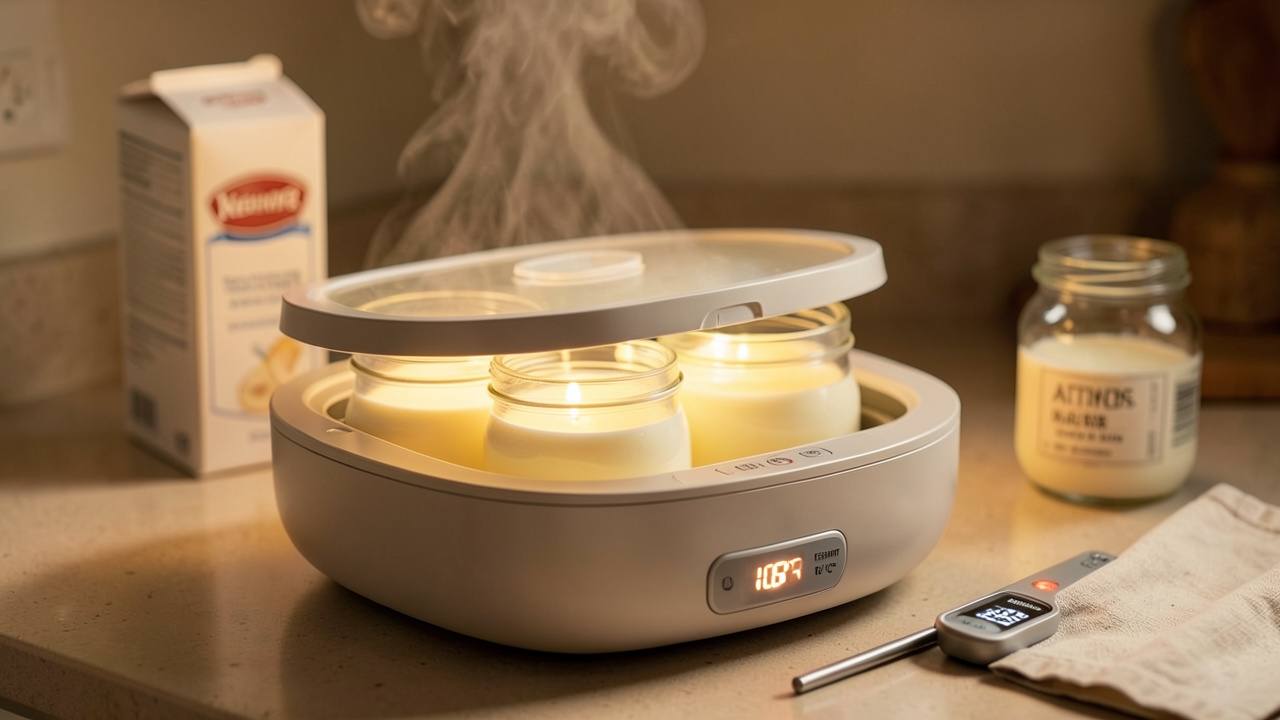
What You Need to Maintain Steady Heat for Yogurt Fermentation
Before you start, gather the right equipment. The most important item is a reliable heat source that you can control within a narrow range. According to, the ideal fermentation temperature for standard yogurt is 110°F, with an acceptable range of 105-115°F. Exceeding 120°F kills the live cultures.
Here is what you need for any method:
- Milk – Whole, reduced-fat, or nonfat milk (pasteurized or ultra-pasteurized)
- Yogurt starter – A few tablespoons of plain store-bought yogurt with live cultures, or freeze-dried starter powder
- Yogurt maker or alternative heat source – Choose from the options described below
- Thermometer – A digital probe thermometer or an instant-read model to check milk and incubation temperature
- Containers – Jars, cups, or a single large bowl that fits your warming device
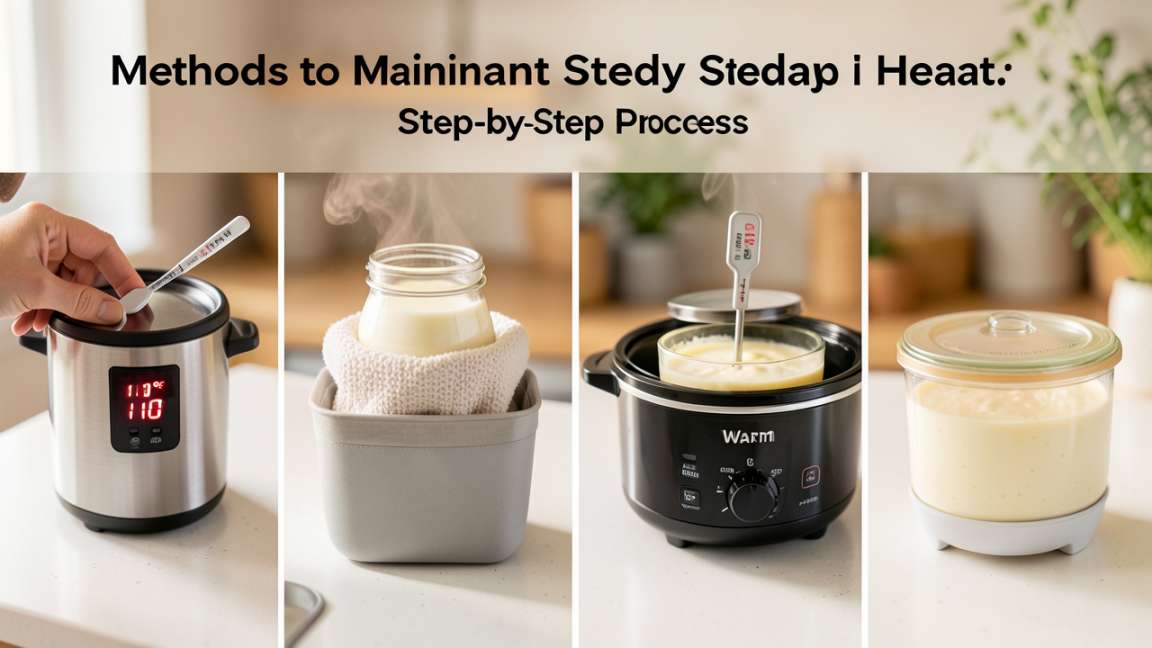
Methods to Maintain Steady Heat: Step‑by‑Step Process
Method 1: Dedicated Yogurt Maker
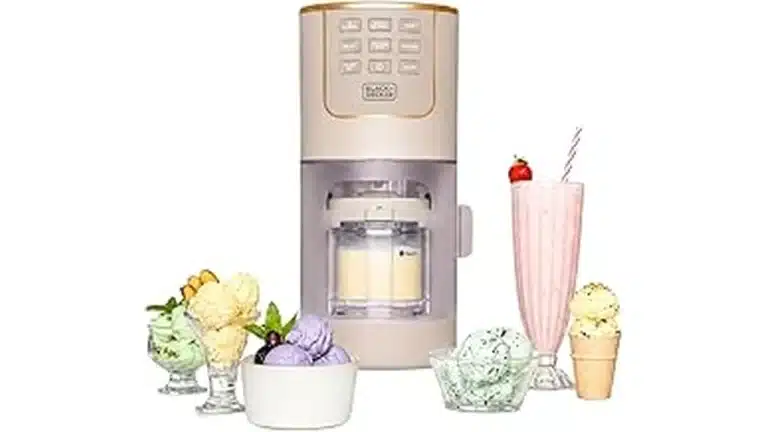
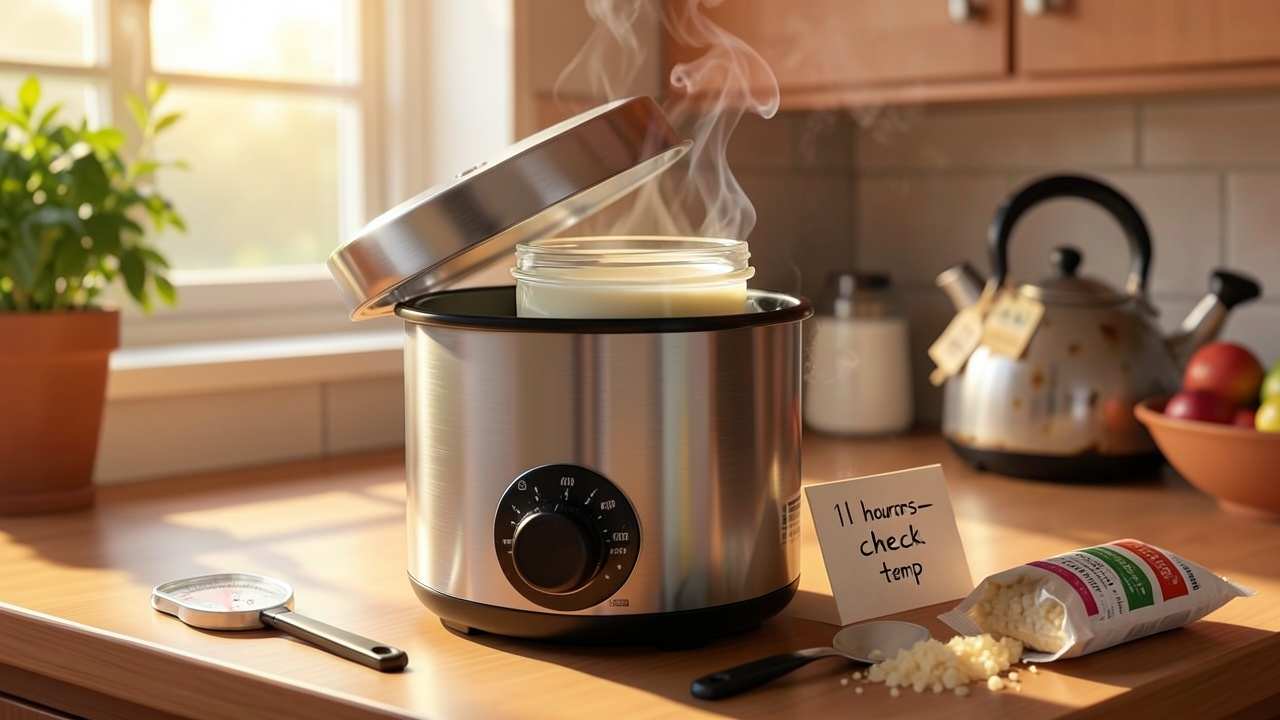
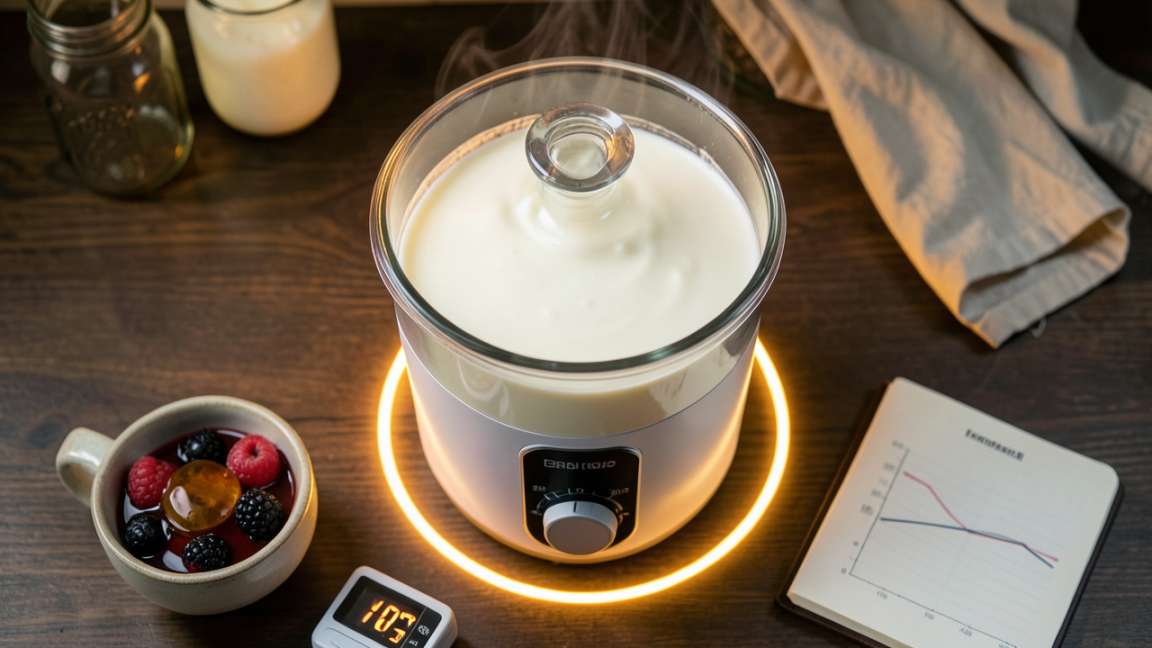
Dedicated yogurt makers are designed to keep a steady temperature automatically. They have a heating element and a thermostat that cycles the heat on and off to maintain 110-115°F. Most models come with multiple glass jars or a single large container.
- Heat milk to 180°F on the stove to denature proteins (optional but improves thickness). Cool to 110°F.
- Stir in the starter culture.
- Pour into the yogurt maker jars or container.
- Place the jars in the machine, close the lid, and plug it in.
- Let it incubate for 5-12 hours, depending on how tangy you want it.
- Check temperature with a thermometer after 1 hour to confirm it stays in range.
Important: Most yogurt makers do not let you adjust temperature. They are pre‑calibrated to run around 110°F. If you suspect yours runs too hot or cold, test it with a thermometer before your first batch.
Method 2: Sous Vide Circulator
Sous vide is the most precise method for holding milk at an exact temperature. You set the circulator to 110°F and it keeps the water bath within 0.1°F. The milk incubates directly in the water or sealed in jars.
- Fill a large pot or container with water and attach the sous vide circulator.
- Set the temperature to 110°F.
- Inoculate milk with starter and pour into jars or a sealed bag.
- Submerge the containers in the water bath.
- Incubate for 6-8 hours.
- No monitoring needed – the circulator handles stability.
Method 3: Instant Pot or Multi‑Cooker with Yogurt Function
Many Instant Pot models have a dedicated yogurt button. The unit safely warms the milk to 110°F, then holds that temperature for the duration you set. This is nearly as reliable as a dedicated yogurt maker.
- Use the “Yogurt” function to boil milk first (optional step).
- Cool milk to 110°F naturally.
- Add starter and stir.
- Select the “Yogurt” setting again and set time (6-12 hours).
- The Instant Pot switches to a low‑power warm cycle that stays around 110°F.
Warning: Avoid using the “Keep Warm” setting on a regular slow cooker. Those usually run at 150°F or higher, which will kill your yogurt cultures. Only use the yogurt‑specific function.
Method 4: Oven with Pilot Light or Light‑on Method
An oven with a pilot light (gas models) or the interior light left on can provide enough gentle warmth. The temperature inside can be 100-120°F depending on the oven. You must verify with a thermometer.
- Preheat the oven to 110°F using the lowest setting, then turn it off.
- Place the inoculated milk inside the oven and switch on the interior light.
- Leave the door closed for the full incubation period.
- Check the temperature every 2 hours. If it drops below 100°F, briefly turn the oven on the lowest setting for 5 minutes to warm it.
Method 5: Cooler or Insulated Box with Hot Water
A camping cooler or a styrofoam box works as an incubator if you add hot water bottles or jars filled with warm water. This method is portable and uses no electricity.
- Place your inoculated milk jars in the cooler.
- Add one or two 1‑quart jars filled with water at 120°F. Do not use water hotter than 130°F – it may leak heat that raises the milk too much.
- Close the cooler lid tightly.
- Let it sit undisturbed for 6-8 hours. The mass of warm water holds steady temperature for several hours.
- After 4 hours, check the temperature and replace the hot water jars if needed.
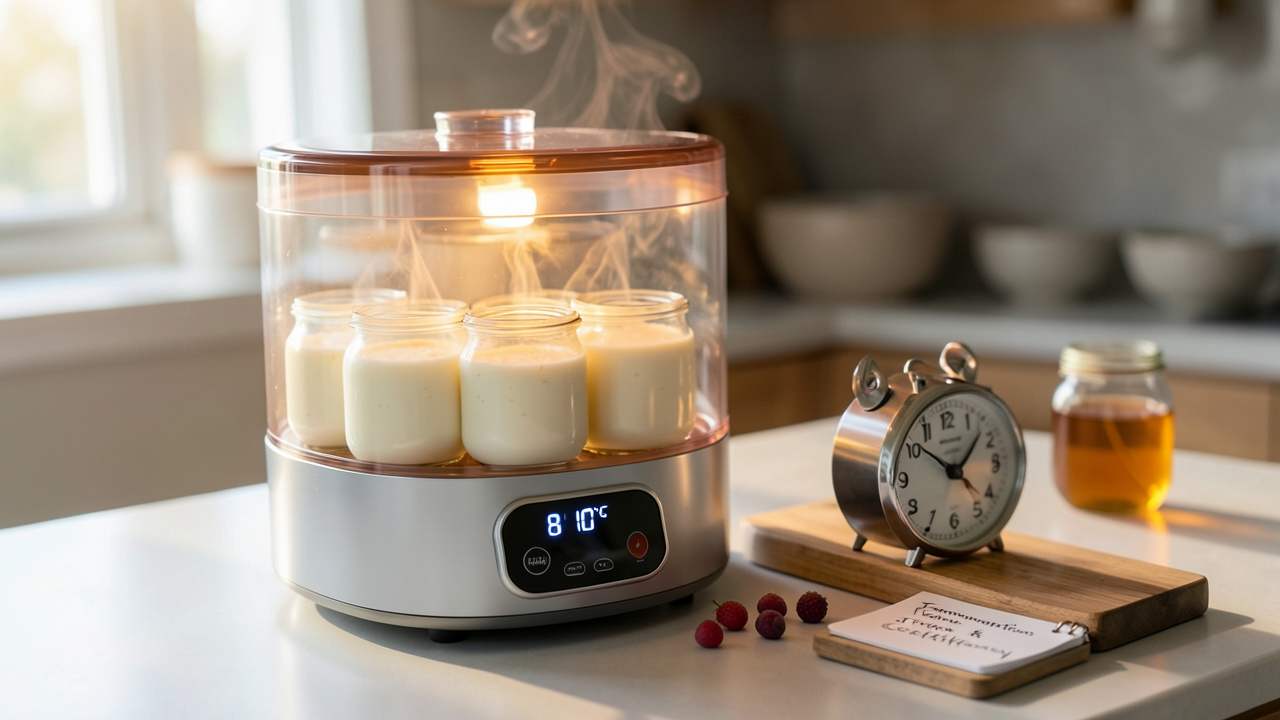
What to Expect: Timeline and Costs
Incubation time directly affects yogurt thickness and tang. According to the, the target pH for yogurt is 4.5. Achieving pH 4.5 at 110°F takes about 5 hours with a strong starter, but many home cooks prefer 8-12 hours for a firmer set and more acidity.
| Method | Initial Cost | Temperature Stability | Hands‑Off Time | Best For |
|---|---|---|---|---|
| Dedicated yogurt maker | $20-$60 | Very high (pre‑set) | Full batch | Beginners and consistent results |
| Sous vide circulator | $70-$200 | Extreme (±0.1°F) | Full batch | Precision enthusiasts |
| Instant Pot (yogurt function) | $50-$120 (if already owned) | High (±2°F) | Full batch | Multi‑purpose cooks |
| Oven with light | $0 (if oven owned) | Moderate (±5°F) | Requires monitoring | Occasional no‑cost batches |
| Cooler with hot water | $0-$30 (if cooler owned) | Good for 4‑6 hours | May need one water change | Camping, power outages |
Common Mistakes to Avoid
Many home yogurt makers struggle to keep the temperature steady. Here are the most frequent problems and how to fix them.
- Using milk that is too hot when adding starter – If you mix the culture into milk above 120°F, the bacteria die. Always cool the milk to 110°F before stirring in the starter.
- Opening the incubator too often – Every time you open the oven door or lift the yogurt maker lid, heat escapes. Use a thermometer that lets you read the temperature from outside, or only check once after the first hour.
- Assuming the temperature is correct without a thermometer – The “yogurt” setting on one brand of Instant Pot may run at 108°F, while another brand runs at 114°F. Always confirm with a probe thermometer.
- Incubating too long or too short – Fermentation time changes the taste and texture. Short times (4-5 hours) yield mild yogurt; long times (12+ hours) make it very tart and sometimes grainy. Start with 7 hours and adjust.
- Using a starter that is weak or old – If your yogurt starter has been sitting in the fridge for months, the bacteria count may be too low. Replace with fresh commercial yogurt or new freeze‑dried powder.
Pro Tips for Perfect Heat Control
- Warm your containers – Rinse your jars with hot tap water before filling them with warm milk. This prevents a cold glass from pulling down the temperature in the first 20 minutes.
- Use a thermal mass – Place a 1‑quart glass jar of water at 110°F inside your cooler or oven next to the yogurt. The water mass slows down temperature changes in case the heating element cycles.
- Location matters – Keep the incubator away from drafty windows, air conditioning vents, or direct sunlight. Air movements cause uneven heating.
- Preheat the machine – Turn on a yogurt maker or sous vide circulator 10 minutes before adding the milk so the chamber is already warm.
- Test your device with water – Run an empty batch: fill the device with water at room temperature, set it on yogurt mode, and measure the water temperature after 2 hours. Adjust your method if it is more than 5°F off.
Tip: If you make yogurt often, invest in a yogurt thermometer that records data. Some smart thermometers (like a ThermoWorks Dot) let you set an alarm if the temperature drifts outside your desired range. That way you can leave the incubator alone all night.
Common Myths vs Facts About Yogurt Fermentation
This topic has several misconceptions that can ruin a batch. Here are three of the most widespread myths and the truth behind them.
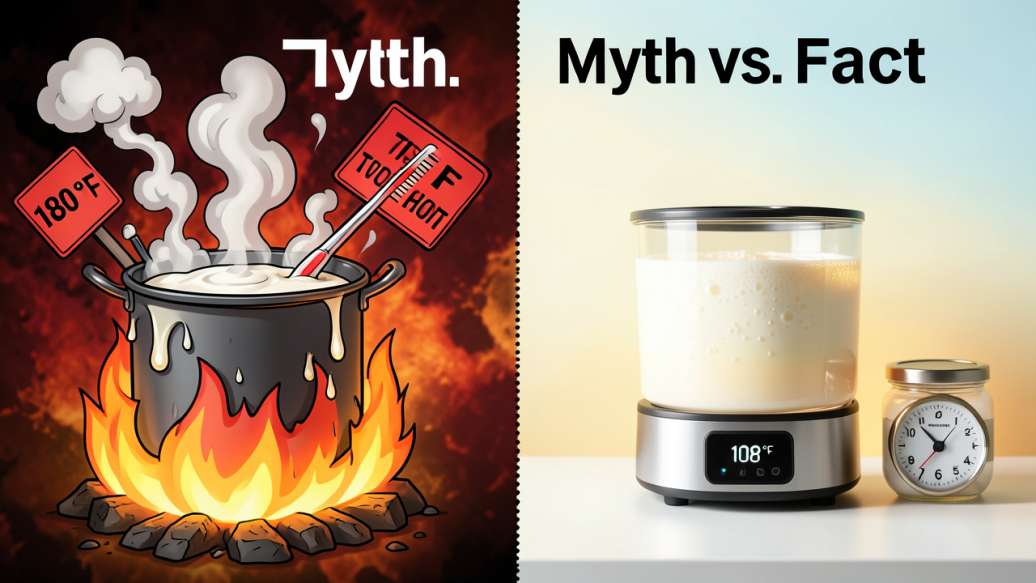
- Myth: Higher temperature makes thicker yogurt faster. Fact: Temperatures above 120°F kill the beneficial bacteria, especially Lactobacillus delbrueckii subsp. bulgaricus and Streptococcus thermophilus. The ideal range remains 110-115°F regardless of your timeline.
- Myth: You need a special yogurt maker to get consistent results. Fact: Many home cooks achieve perfect batches using a sous vide circulator or even an Instant Pot with the yogurt function. The key is a stable heat source and a thermometer – not a designated appliance.
- Myth: Leaving yogurt to ferment longer always makes it thicker. Fact: Beyond 12 hours, the whey separates and the texture can become grainy or runny. The pH drops too low, and the protein network collapses. Stick to 7-8 hours for a balanced result.
Frequently Asked Questions
What is the best temperature for yogurt fermentation?
The optimal temperature is 110°F (43°C). The acceptable range is 105°F to 115°F. Temperatures below 100°F slow down the bacteria, while temperatures above 120°F kill them.
How does a yogurt maker keep heat steady without a digital thermostat?
Most basic yogurt makers use a bimetallic strip thermostat. This mechanical switch turns the heating element on when the temperature drops and off when it rises. They are pre‑calibrated to hover around 110°F.
Can I use a slow cooker on low to make yogurt?
Only if your slow cooker has a dedicated yogurt setting. Standard “low” on most slow cookers reaches 180°F or more. That is too hot for live cultures. Check your manual or test with water and a thermometer first.
Why does my yogurt turn out watery when I use the oven method?
Watery yogurt often means the temperature was too low (below 100°F) or fluctuated widely. The oven light alone may not produce enough heat in a large oven. Try placing a bowl of hot water inside the oven to buffer the temperature.
Is it safe to leave yogurt fermenting overnight?
Yes, if your heat source is reliable and the temperature stays under 115°F. Many people ferment for 10-12 hours overnight. Use a thermometer with a remote alarm if you are worried, or stick to 8 hours for the first attempt.
Final Thoughts
Maintaining steady heat for yogurt fermentation comes down to choosing the right method and verifying with a thermometer. Dedicated yogurt makers are the easiest, but sous vide or an Instant Pot work just as well. Focus on keeping the temperature in the 110-115°F range, avoid sudden drops, and give the bacteria enough time to culture. With a little practice, you will be able to produce thick, tangy yogurt without any guesswork.