Why Fresh Pasta Dough Sticks Inside the Extruder Chamber
Fresh pasta dough sticks inside the extruder chamber primarily because of excessive hydration levels above 32%, high dough temperature exceeding 75 degrees Fahrenheit, or insufficient resting time under 20 minutes. Reliable extrusion with semolina flour requires a hydration ratio between 28% and 32% by weight and a rest period that fully hydrates the flour and reduces surface stickiness. Keeping dough temperature below 75°F and using coarse semolina flour—which absorbs water more slowly than all-purpose flour—prevents gluten overdevelopment and premature binding that cause clogs.
You press start on your extruder, but the dough just clogs the chamber. This article explains exactly why your fresh pasta dough sticks inside the extruder chamber and how to fix it.
Fresh pasta dough sticks inside the extruder chamber mainly due to excessive hydration, high dough temperature, or insufficient resting time. Semolina flour requires 28% to 32% water by weight for optimal extrusion. Higher moisture levels cause the dough to smear against the barrel walls and clog the die head.
Key Takeaways
Here are the key points to remember about preventing extruder clogs:
- Maintain a hydration ratio between 28% and 32% when mixing semolina for an extruder.
- Resting the dough for at least 20 minutes allows the flour to fully hydrate and reduces surface stickiness.
- High dough temperatures above 75 degrees Fahrenheit cause butterfat in eggs to soften and gluten to become overly elastic.
- Coarse semolina flour absorbs water slower than all-purpose flour, which prevents sudden gluten binding.
- Cleaning the extruder chamber and die parts after each use prevents residue buildup that causes sticking.
What Is an Extruder Chamber?
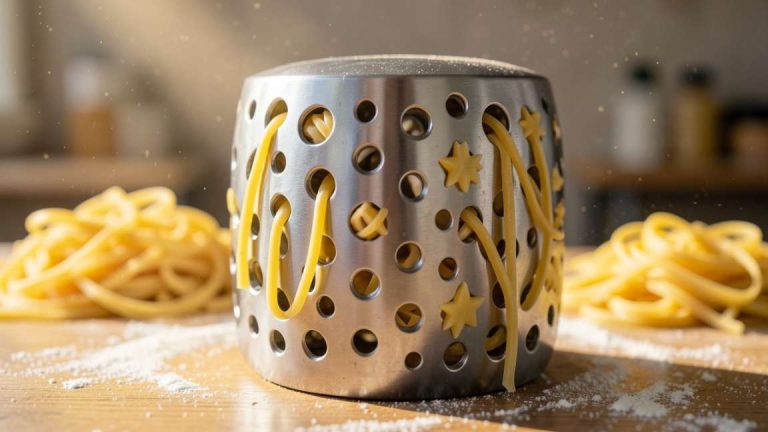
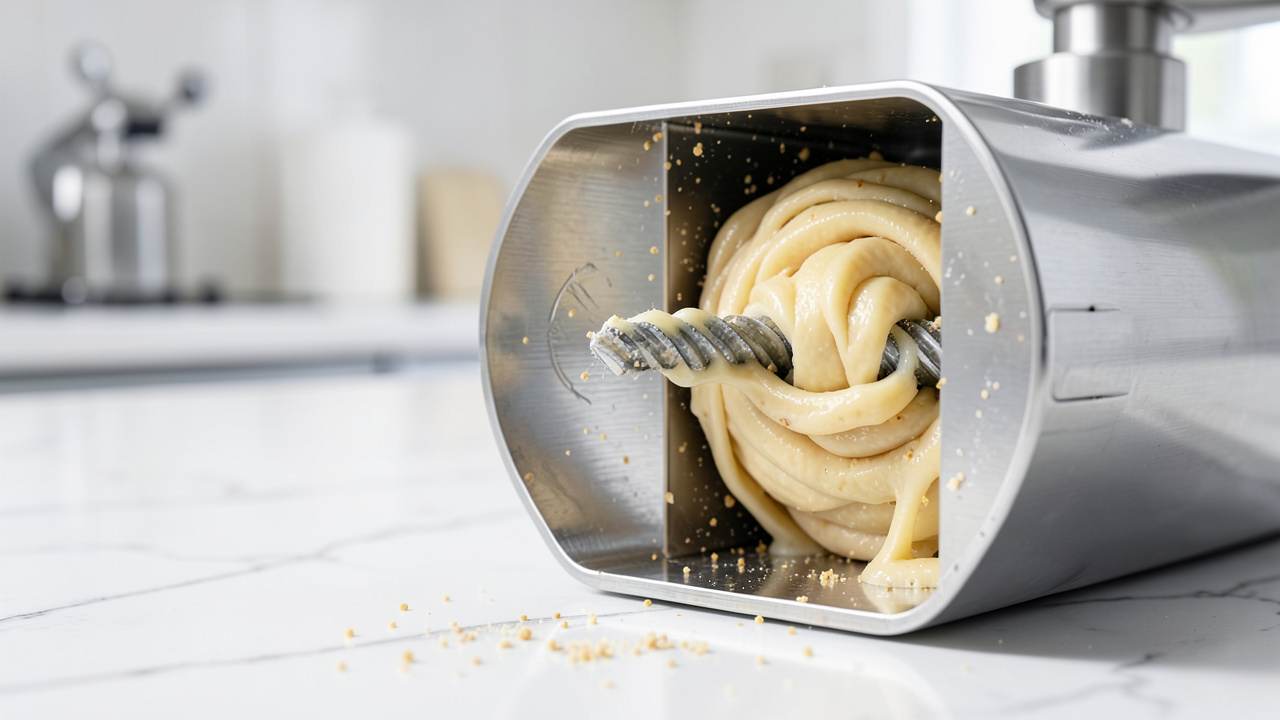
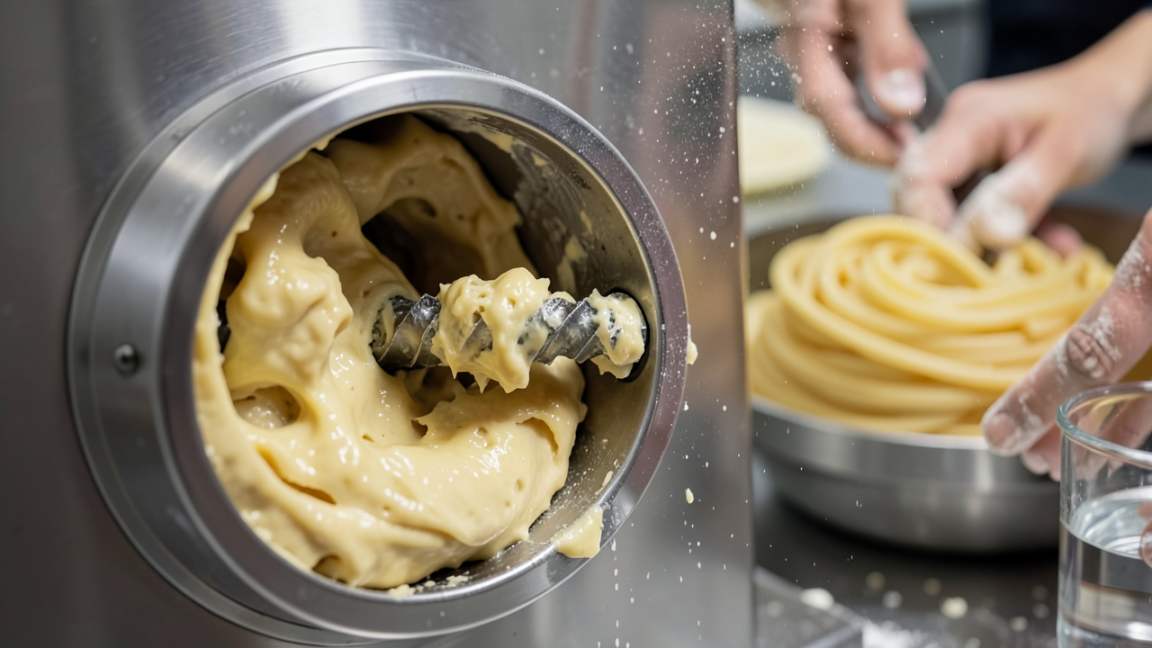
The extruder chamber is the metal cylinder where the auger pushes dough toward the die head. This component creates pressure that forces the dough through small holes. The walls of the chamber are typically stainless steel.
Understanding how the chamber works helps you troubleshoot sticking problems. The auger agitates the dough, which can activate gluten if the moisture level is too high. Some high-end extruders use Teflon-coated chambers to reduce friction.
Why Does Pasta Dough Stick Inside the Extruder Chamber?
Several factors cause dough to adhere to the chamber walls and auger. Here is a breakdown of why fresh pasta dough sticks inside the extruder chamber.
High Hydration Levels
Too much water is the primary culprit. When you add water beyond 33% of the flour weight, the dough becomes a paste. According to food scientists at the University of Milan, semolina dough for extrusion should target a moisture content of 28% to 32%.
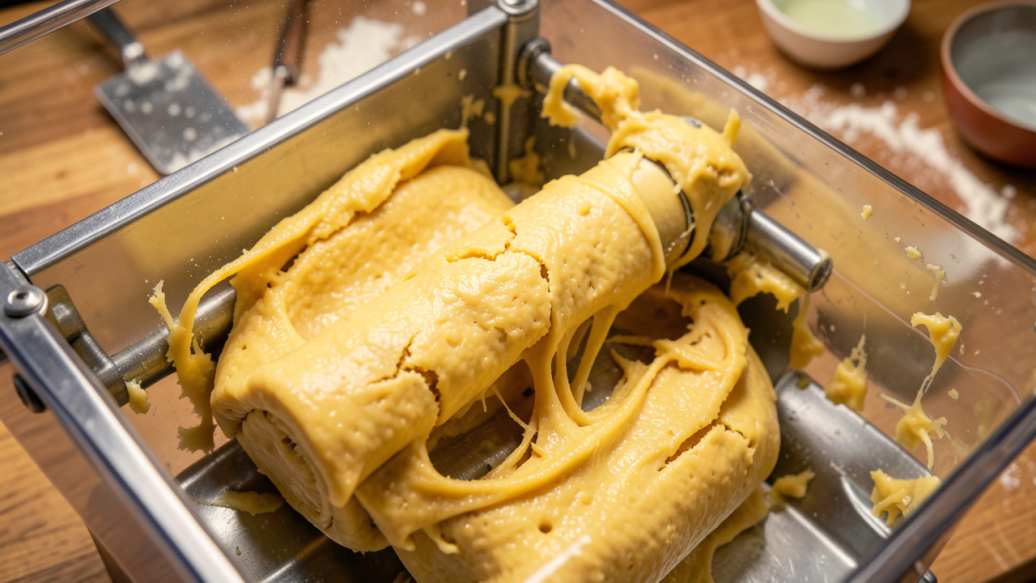
Any higher and the dough loses its granular structure. It turns into a homogenous glue that coats the metal surfaces. The auger cannot grip the paste, so the flow stops completely.
Dough Temperature
Warm dough is soft and sticky. The friction of the auger generates heat inside the chamber. If your kitchen is above 80 degrees Fahrenheit, the dough can overheat quickly.
Cold dough holds its shape and pushes through the die cleanly. According to the USDA, the ideal protein content in pasta flour is between 11% and 14%, but protein behaves differently at different temperatures. Warm protein becomes overly elastic and tacky.
Gluten Overdevelopment
Kneading develops gluten. Extruders are not mixers, but agitation still forms gluten strands. If the dough is too wet, the auger creates long protein chains.
These chains wrap around the screw and block the flow. This is why overworking the dough is just as bad as underworking it for extrusion.
Insufficient Resting Time
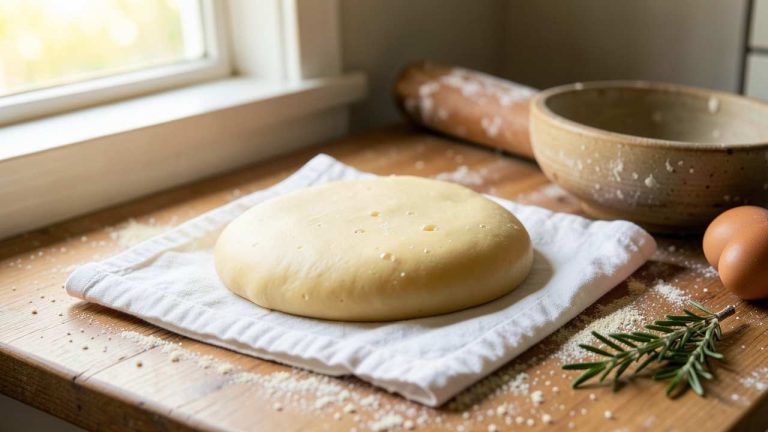
Freshly mixed dough is dry on the outside and wet on the inside. Resting allows the water to distribute evenly throughout the flour particles. A 20-minute rest under a bowl prevents the outer layers from turning into glue inside the machine.
Without rest, the surface of the dough is sticky while the core remains crumbly. This uneven texture causes inconsistent feeding into the auger.
Flour Type and Quality
All-purpose flour has lower protein than semolina. It absorbs water differently. Using fine flour creates a smooth paste that sticks to metal.
Coarse semolina retains a gritty texture that pushes through the barrel easier. These days, most pasta experts recommend semolina rimacinata for home extrusion because it offers the best balance of water absorption and structural integrity.
Hydration Guide for Different Pasta Shapes
Use this table to find the correct water ratio for your specific pasta shape. The sticking risk changes based on the dough consistency required.
| Pasta Shape | Flour Type | Hydration Ratio | Sticking Risk |
|---|---|---|---|
| Spaghetti | Semolina | 28% – 30% | Low |
| Fettuccine | 00 Flour | 30% – 32% | Medium |
| Rigatoni | Semolina | 29% – 31% | Low |
| Bucatini | Semolina | 28% – 29% | Very Low |
| Egg Pasta | 00 Flour | 33% (with eggs) | High |
The Science of Hydration and Gluten
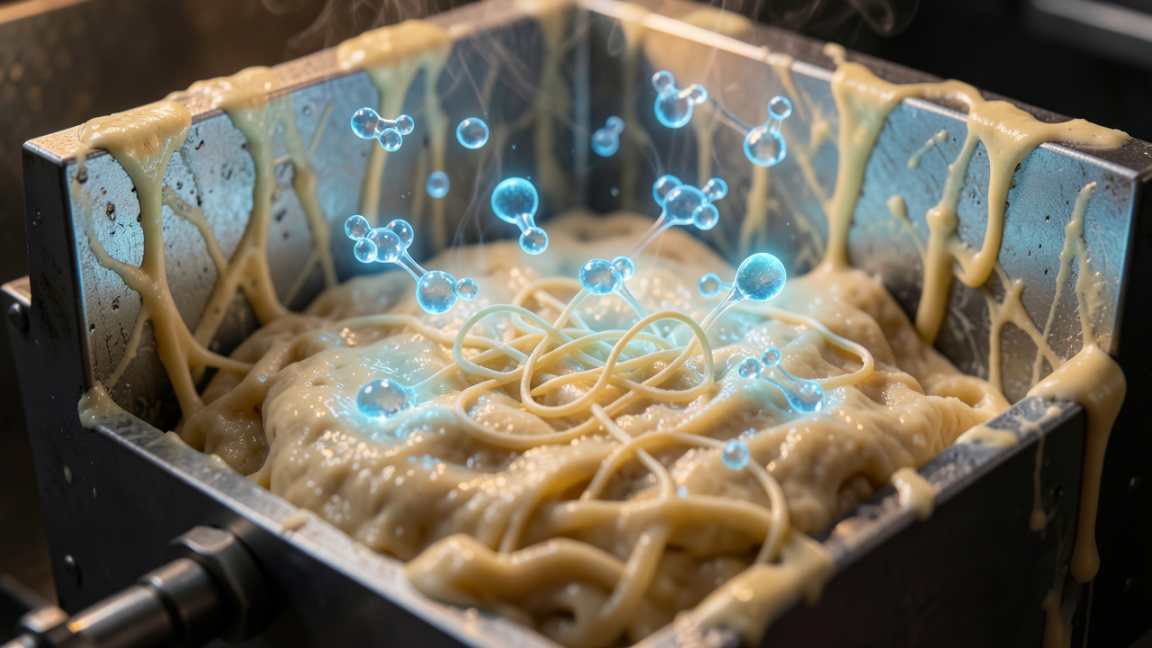
Water activates two proteins in flour: gliadin and glutenin. These combine to form gluten. Gluten gives pasta its structure and chewiness.
But too much gluten makes the dough tough and elastic. Inside the extruder, the auger applies shear force to the dough mass. Overly hydrated dough cannot handle this force. It breaks down into a cohesive, sticky paste.
The extrusion process is different from hand rolling. Hand rolling shears the dough horizontally. Extrusion forces it through a narrow die under high pressure. This pressure amplifies the stickiness of wet dough.
Tip: Use a kitchen scale to measure your flour and water. Volume measurements for hydration are inaccurate. Weighing gives you exact control over the moisture percentage.
What Causes Dough to Clog the Chamber?
Beyond basic stickiness, specific mechanical issues cause complete clogs. Here are the most common physical reasons for blockages.
- Blocked Die Holes: Dried dough residue in the die head creates back pressure. The chamber fills up and the dough has nowhere to go. This causes the machine to labor and stop.
- Cold Machine Parts: If the extruder is cold, the fat in the eggs or oil solidifies on the metal. This creates friction that grips the dough rather than letting it slide.
- Worn Auger or Barrel: Over time, the screw loses its tolerance. Dough gets trapped in the widened gaps and bakes onto the hot metal surfaces.
How to Stop Pasta Dough from Sticking
You can stop fresh pasta dough sticks inside the extruder chamber by following these proven steps. Each adjustment targets a specific cause of sticking.
- Reduce Water: Drop your hydration to 28% for semolina. Drop it to 30% for 00 flour. Weigh everything to be precise.
- Rest the Dough: Wrap it in plastic and let it sit for 20 to 30 minutes at room temperature. This allows even water distribution.
- Cool the Ingredients: Use cold water or refrigerate your eggs. A cooler dough mixture handles extrusion much better and stays firm in the barrel.
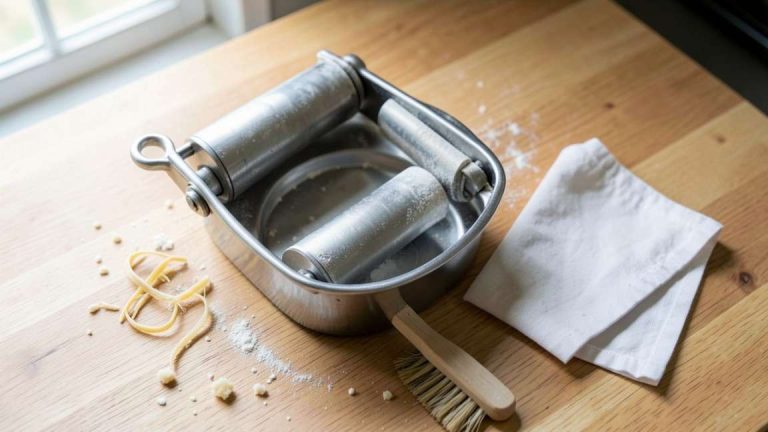
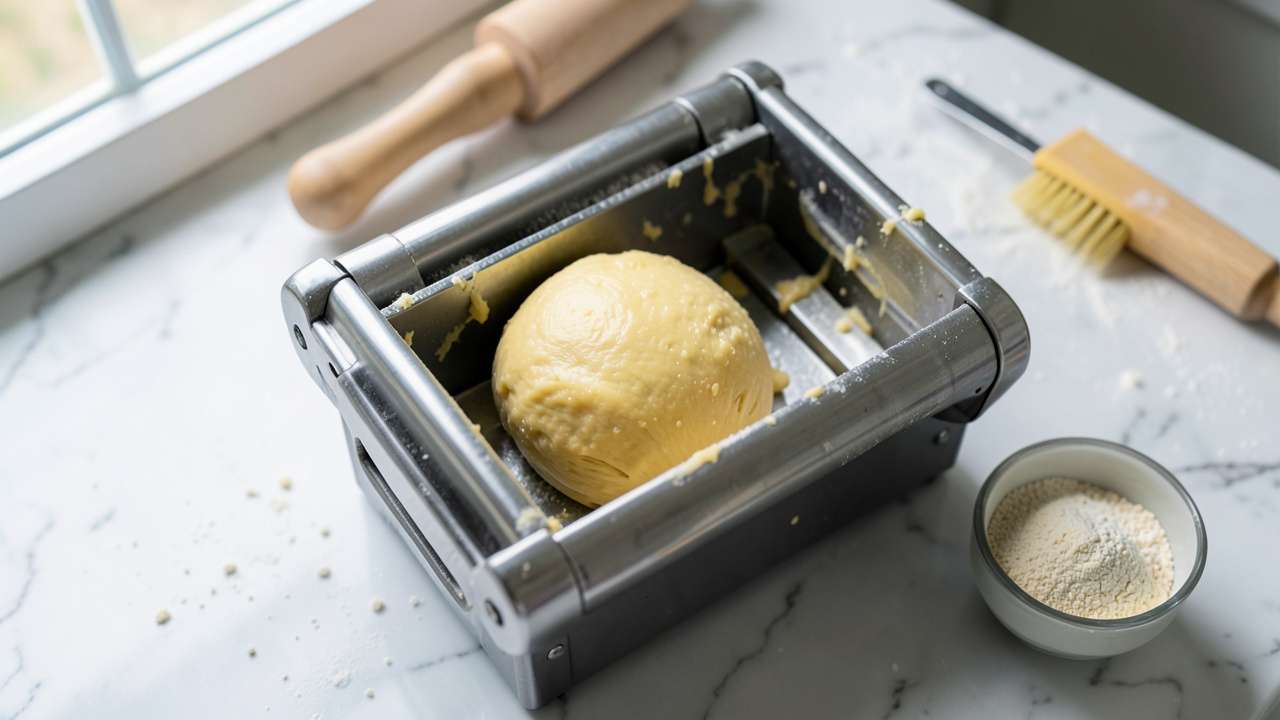
- Clean the Die: Scrub the die head with a brass brush to remove old dough residue. A clean die allows smooth initial flow.
- Use Coarse Flour: Semolina rimacinata has a gritty texture. This grit helps the dough slide through the chamber instead of smearing against it.
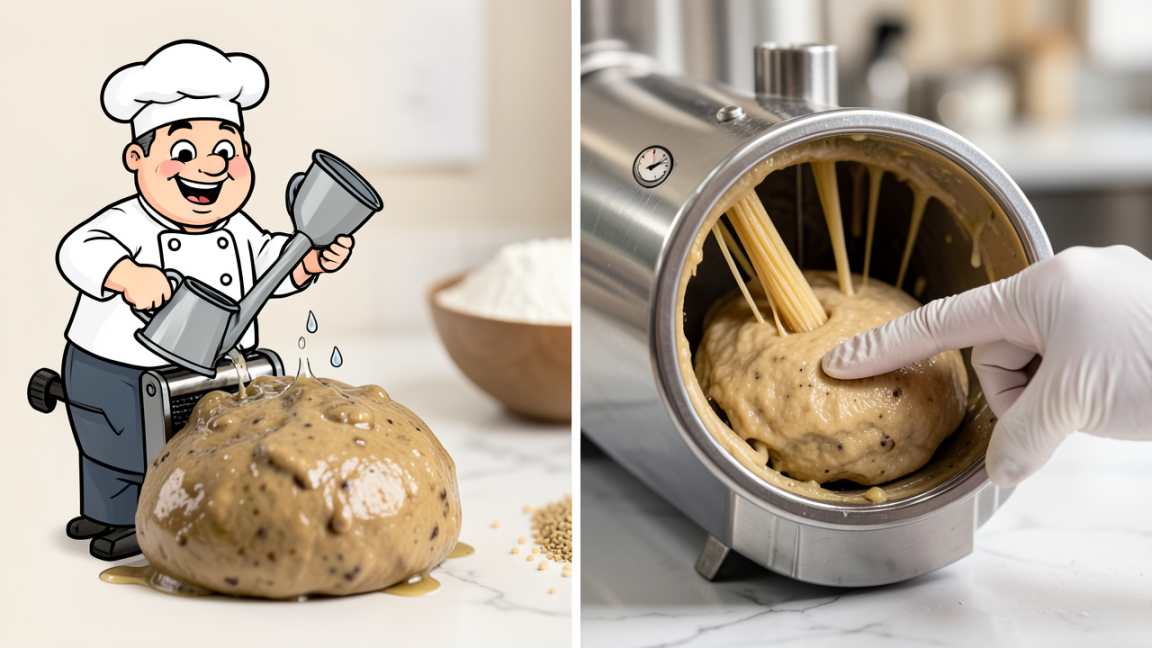
Warning: Never spray water or oil into the extruder chamber while it is running. This creates a hydraulic lock that can damage the machine or cause it to burst.
How to Diagnose a Sticking Problem
Use this systematic approach to find out why your machine is clogging. Follow the steps in order.
- Check the dough consistency. Does it feel tacky or dry? Tacky dough needs more flour mixed in by hand.
- Feel the extruder barrel. Is it hot to the touch? If yes, stop and let it cool down for 15 minutes.
- Inspect the extruded pasta. Is it rough and cracked? That means the dough is too dry. Is it shiny and sticky? That means it is too wet.
Here are the common signs that your dough is too wet:
- The dough feels tacky and sticks to your fingers without leaving dry residue.
- The extruder struggles to push the dough out in a continuous strand.
- The pasta comes out shiny, wet, and collapses on itself immediately.
Common Myths vs Facts
Many home cooks believe incorrect information about pasta extrusion. Here are the most common myths and the facts behind them.
Myth 1: Adding olive oil prevents sticking inside the chamber.
Fact: Oil does not prevent sticking. It actually weakens the gluten structure. Oil lubricates the die, which makes the pasta surface slippery, but it does not stop the dough from adhering to the chamber walls.
Myth 2: You must use eggs for good pasta.
Fact: Traditional dry pasta uses only semolina and water. Eggs increase the liquid content and make the dough sticker. For extrusion, water-only dough is easier to handle and produces a firmer texture.
Myth 3: A stronger motor solves the sticking problem.
Fact: Forcing sticky dough through the die creates excessive heat and pressure. This cooks the dough inside the chamber. The solution is to fix the dough hydration, not to overpower the machine.
Troubleshooting Checklist
Use this quick reference table to solve your most common extrusion problems.
| Problem | Cause | Solution |
|---|---|---|
| Dough wraps around the auger | Dough is too wet or warm | Reduce hydration by 2% and chill the dough |
| Pasta comes out bent or twisted | Die head is partially blocked | Soak and scrub the die with a brass brush |
| Machine makes a clicking sound | Dough is too dry or hard | Add a teaspoon of water and mix again by hand |
| Pasta has white specks or cracks | Dough is too dry or under-hydrated | Rest the dough longer or add 1% more water |
| Dough leaks from the back of the chamber | Overfilled chamber or worn seal | Reduce dough amount or replace the gasket |
Resources and Tools
These resources will help you master pasta extrusion and avoid sticking issues.
Serious Eats – Pasta Guide – Comprehensive guide to flour types and hydration ratios for fresh pasta.
Marcato Atlas Extruder – A high-quality home extruder with interchangeable dies for different shapes.
Modernist Cuisine – Pasta and Extrusion – In-depth science on dough rheology and extrusion mechanics.
Food Extrusion Process (Wikipedia) – Technical overview of how extruders work across food production.
Frequently Asked Questions
Why does my pasta dough come out as a paste instead of strands?
Your dough is too wet. Reduce the water content to 28%-30% of the flour weight. If you are using eggs, count the eggs as part of the total liquid weight.
Can I fix sticky dough by adding more flour to the extruder?
No. Adding flour directly into the chamber creates uneven mixing and clogs. Take the dough out, knead in more flour by hand, and let it rest again.
Does the type of flour matter for preventing extrusion problems?
Yes. Coarse semolina flour is best for extrusion. It absorbs water slowly and reduces gluten development. Fine 00 flour or all-purpose flour creates a sticker dough.
How do I clean the extruder chamber after a sticky dough disaster?
Disassemble the machine and soak the parts in warm water for 10 minutes. Use a stiff brush to remove the residue. Never use soap on aluminum parts as it can cause oxidation.
Is it normal for the extruder to get hot during use?
Some warmth is normal due to friction. But if the chamber becomes too hot to touch, stop the machine. Overheating cooks the dough and causes it to stick permanently to the walls.
Final Thoughts
Sticking dough is almost always a hydration or temperature problem. Measure your water carefully and keep your ingredients cool. Once you find the right moisture balance for your flour, your extruder will run smoothly every time.