Why Pasta Dough Needs to Rest Before You Start Rolling It
Pasta dough must rest before rolling because the gluten strands formed during kneading are tight and elastic, and resting allows them to relax for easier handling. Full hydration of the flour during rest creates a smooth, uniform texture that prevents the dough from snapping back or tearing. For best results, wrap the dough tightly and let it rest for 30 minutes to 2 hours depending on flour type, ensuring pliable dough that rolls without resistance.
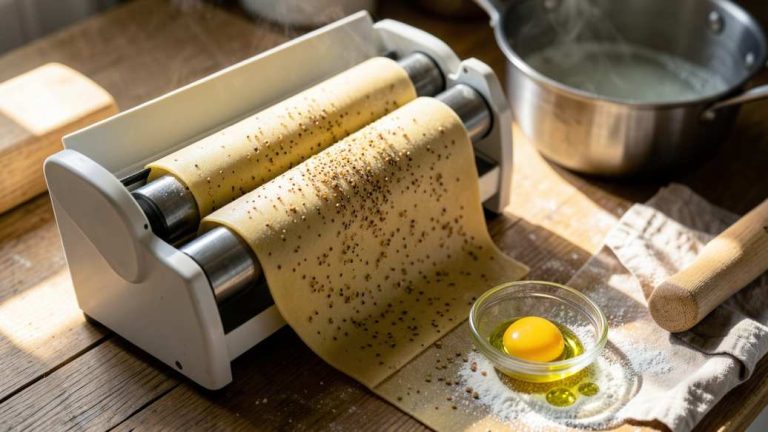
Have you ever tried rolling fresh pasta dough straight after mixing it, only to watch it snap back like a rubber band? That frustrating fight with the dough tells you one thing: it needed a rest.
Quick Verdict: Pasta dough must rest because the gluten strands formed during kneading are tight and elastic. Resting allows the gluten to relax, the flour to fully hydrate, and the dough to become pliable. Without rest, the dough will shrink and tear when rolled. The standard rest time is 30 minutes to 2 hours at room temperature, wrapped tightly to prevent drying.
Key Takeaways
- Resting pasta dough allows the gluten proteins to relax, which makes rolling easier and prevents the dough from snapping back.
- During rest, the flour particles absorb all the moisture from eggs and olive oil, creating a smooth and uniform texture.
- The ideal resting time depends on the flour type and hydration level – egg dough needs at least 30 minutes, while semolina dough may need up to 2 hours.
- Wrapping the dough tightly in plastic wrap during rest prevents a dry skin from forming on the surface.
- Skipping the rest leads to tough, elastic dough that tears easily and produces less tender pasta.
How Does Pasta Dough Resting Work?
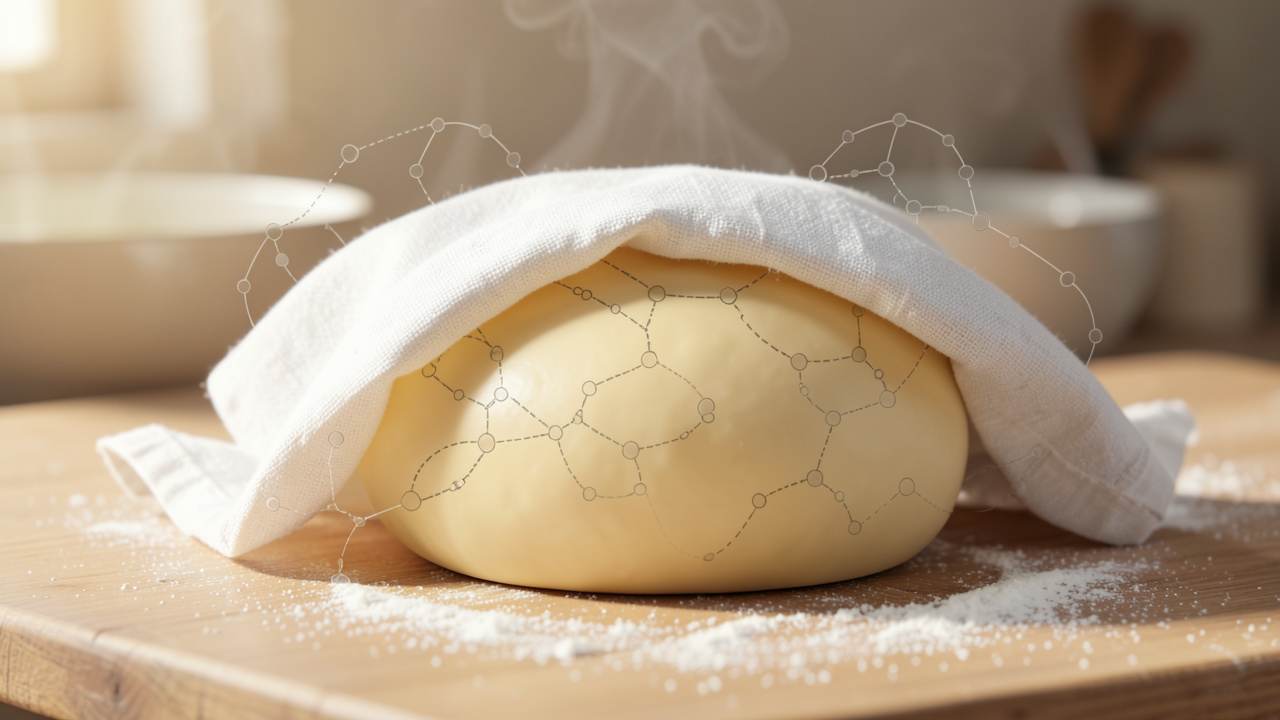
When you knead pasta dough, you actively develop the gluten network. Gluten is a protein complex that gives dough its structure and elasticity. After kneading, the gluten strands are long and tight, like stretched rubber bands. If you try to roll the dough right away, those strands fight back. The dough contracts and becomes harder to shape.
Resting gives the gluten time to relax. The protein bonds loosen, and the dough becomes more extensible – meaning it stretches easily without snapping. At the same time, the starches in the flour continue to absorb water. According to the, full hydration of pasta dough takes about 30 minutes at room temperature. This process creates a smoother, more uniform dough.
Important: The chemical change during rest is permanent. Once the gluten relaxes, it does not re-tighten unless you over-knead again. That is why rested dough stays pliable for hours if kept covered.
Why Does Pasta Dough Need to Rest?
Three main reasons make rest essential for pasta dough success.
Gluten Relaxation
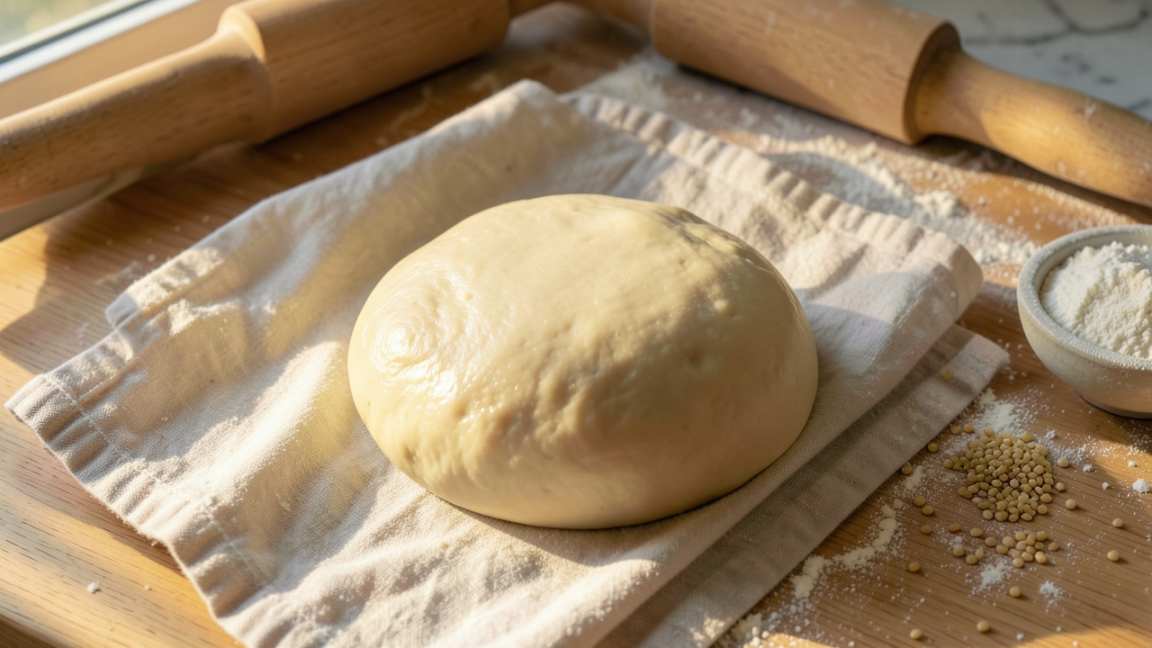
Freshly kneaded dough is elastic and stiff. The gluten strands are coiled tight from mechanical work. Resting allows these strands to slide past each other, reducing resistance. A study from the shows that gluten relaxes significantly within the first 30 minutes of rest. Without this step, you will struggle to roll thin sheets. The dough shrinks back after each pass through the machine or rolling pin.
Full Hydration
Flour grains are like tiny sponges. Water takes time to penetrate the center of each starch particle. In the first few minutes after mixing, the dough feels sticky and uneven because surface particles absorb all the moisture while inner particles stay dry. Resting gives water time to diffuse evenly. This creates a cohesive, non-sticky dough that holds together perfectly when rolled.
Improved Workability
Rested dough is soft, smooth, and easy to handle. It does not stick to your work surface or the pasta machine. You can roll it to paper-thinness without tearing. The finished pasta cooks evenly and has a tender, silky bite. notes that resting pasta dough reduces the amount of flour you need for dusting, which keeps the pasta from becoming tough.
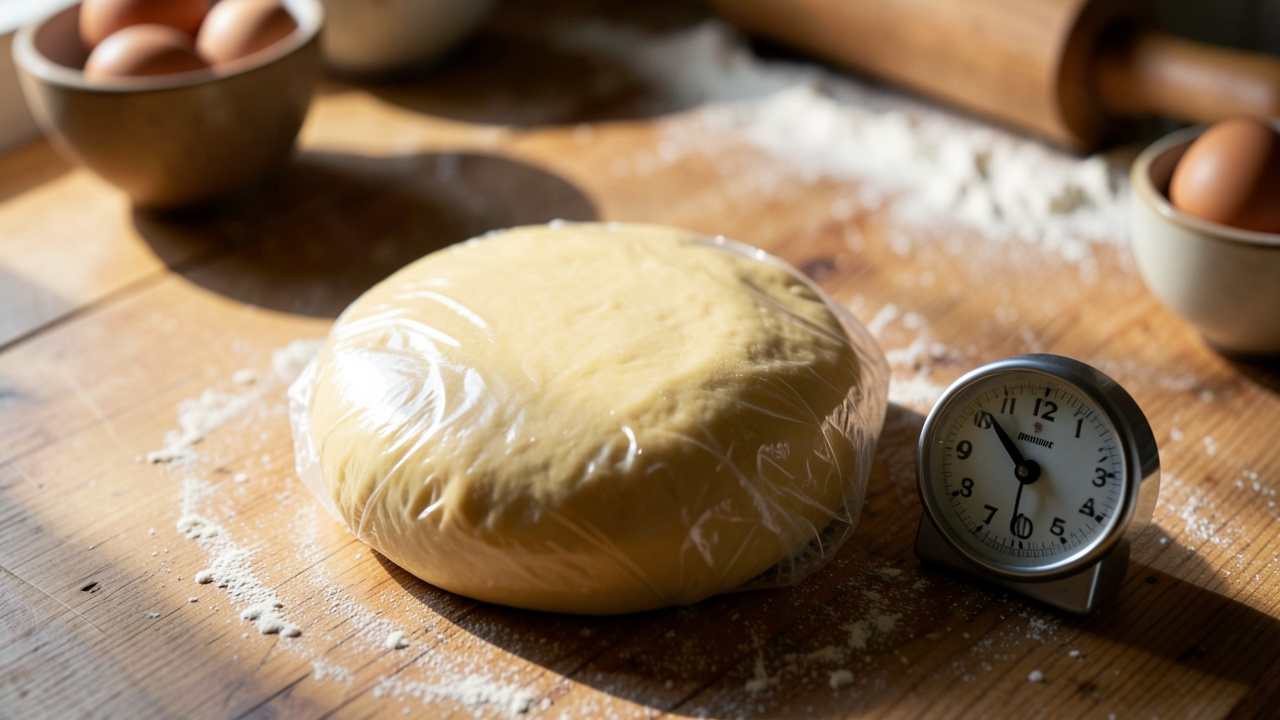
How Long Should You Rest Pasta Dough?
The resting time varies based on the ingredients. Use this table as a guide.
| Dough Type | Main Ingredients | Recommended Rest Time | Notes |
|---|---|---|---|
| Classic egg pasta | All-purpose flour, eggs, olive oil | 30 minutes to 1 hour | Longer rest makes rolling easier |
| Semolina pasta | Semolina flour, water | 1 to 2 hours | Coarser grain needs more hydration time |
| Whole wheat pasta | Whole wheat flour, eggs or water | 1 to 2 hours | Bran absorbs more water |
| Pasta with spinach or tomato | Base recipe plus puree | 30 minutes to 1 hour | Extra moisture may require longer rest |
Warning: Do not rest dough for longer than 4 hours at room temperature. After that, the dough may begin to oxidize, turning grayish, and the eggs may risk spoilage. Refrigerate if resting overnight.
What Happens If You Skip Resting?
Rolling unrested pasta dough is possible but frustrating. Here are the most common problems.
- The dough shrinks back every time you roll it, making it impossible to achieve thin sheets.
- Tears and holes appear because the gluten is too tight and cannot stretch evenly.
- The dough feels stiff and tough, requiring excessive force to flatten, which can hurt your hands.
- After cooking, the pasta has a dense, chewy texture rather than the desired tender bite.
- You must use extra flour to prevent sticking, which dries out the dough and creates a gummy surface.
Professional pasta makers and home cooks agree: resting is not optional. The difference between rested and unrested dough is dramatic. Even a 15-minute rest makes rolling noticeably easier.
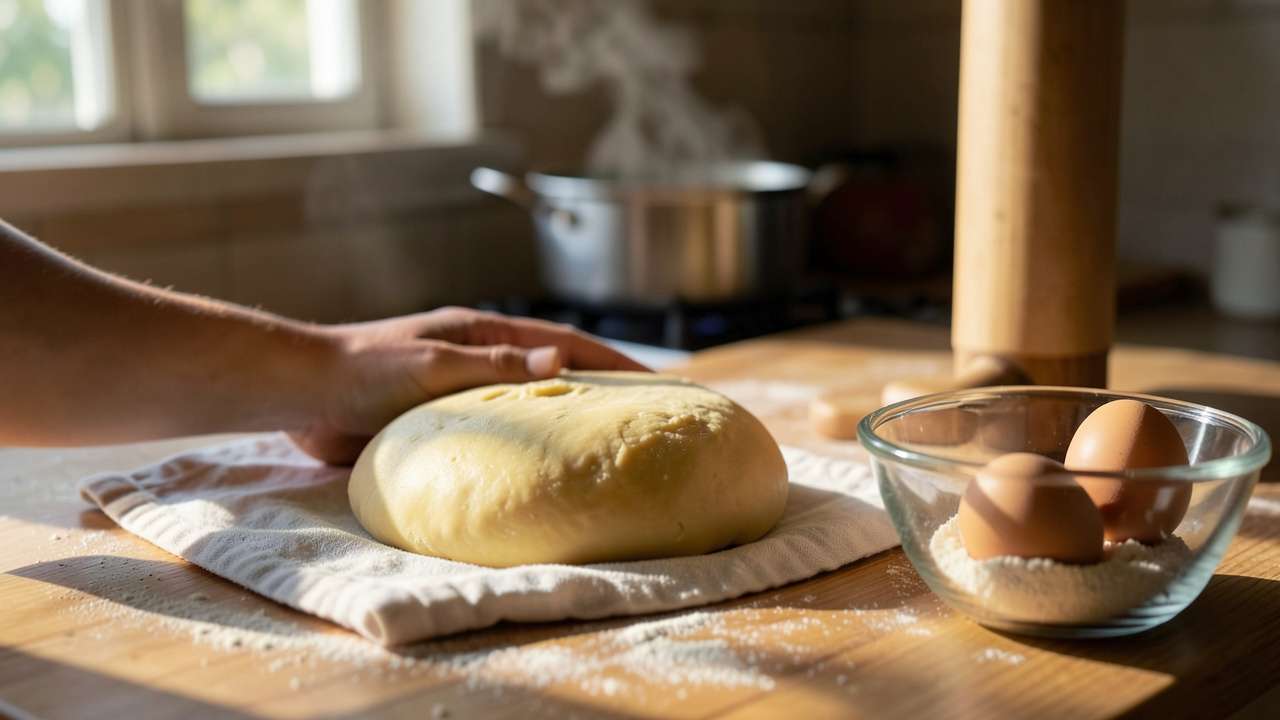
Who Needs This?
Every person making fresh pasta at home or in a professional kitchen needs to rest the dough. This applies to:
- Home cooks trying handmade fettuccine or ravioli for the first time
- Pasta enthusiasts who want restaurant-quality texture
- Bakers who already understand bread dough resting but assume pasta is different
- Chefs teaching pasta-making classes
- Anyone using a pasta roller for the first time
If you are using store-bought fresh pasta sheets, they have already been rested and rolled. You do not need to rest them again. But when you mix your own dough, the rest is essential.
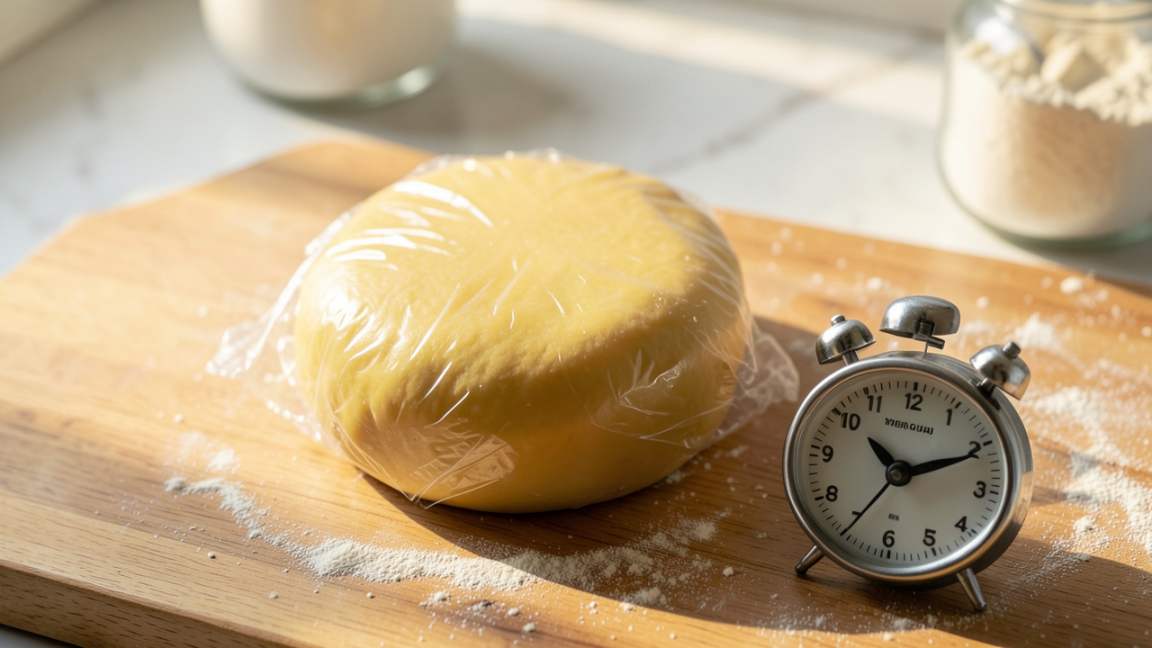
How to Rest Pasta Dough Properly
Follow these steps to get the best results.
- Shape the dough into a smooth ball or a thick disc. A disc is easier to roll later.
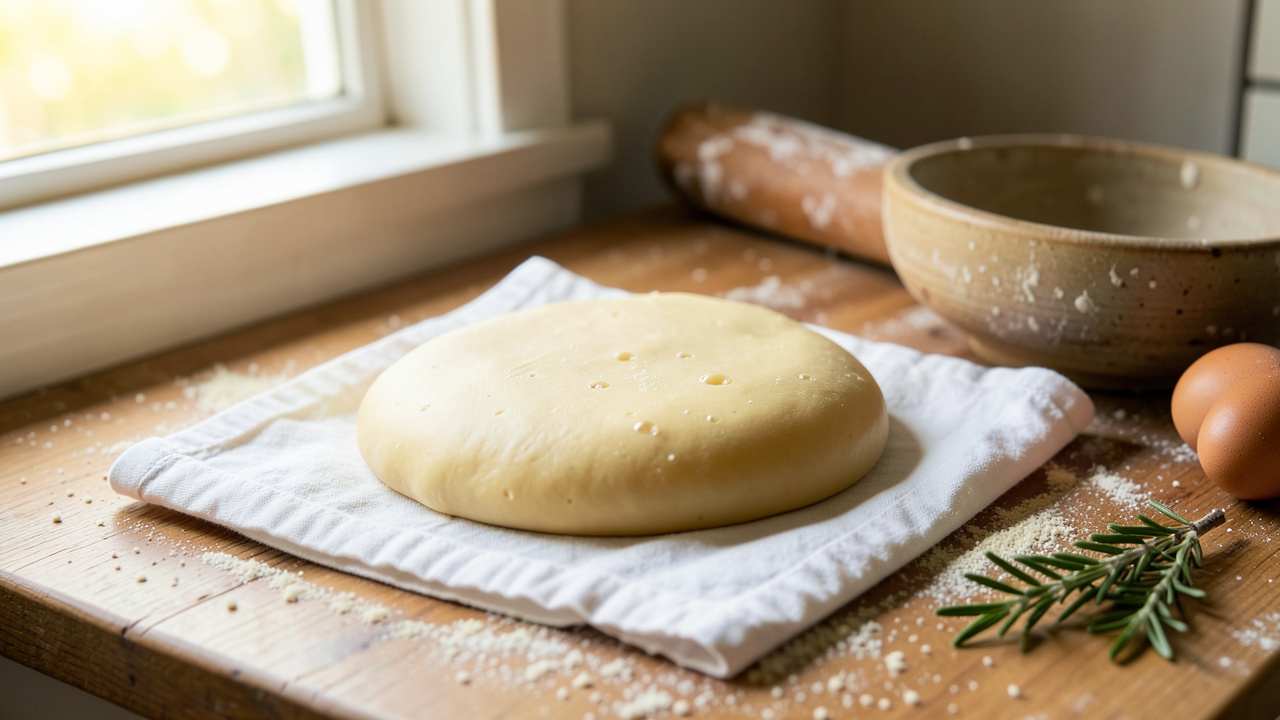
- Wrap tightly in plastic wrap or place in a zipper-lock bag. Squeeze out as much air as possible. This prevents a dry crust from forming.
- Let it sit at room temperature for the recommended time. Do not refrigerate unless resting longer than 4 hours.
- Unwrap and check the dough before rolling. It should feel slightly softened and not sticky. If it feels tacky, dust with a little flour before rolling.
- Roll immediately after unwrapping. If the dough sits exposed for more than 5 minutes, it may start to dry on the surface.
Tip: For even better results, rest the dough twice – once after mixing and once after shaping it into sheets. Some chefs rest the rolled sheets for 10 minutes before cutting shapes to reduce shrinkage during cooking.
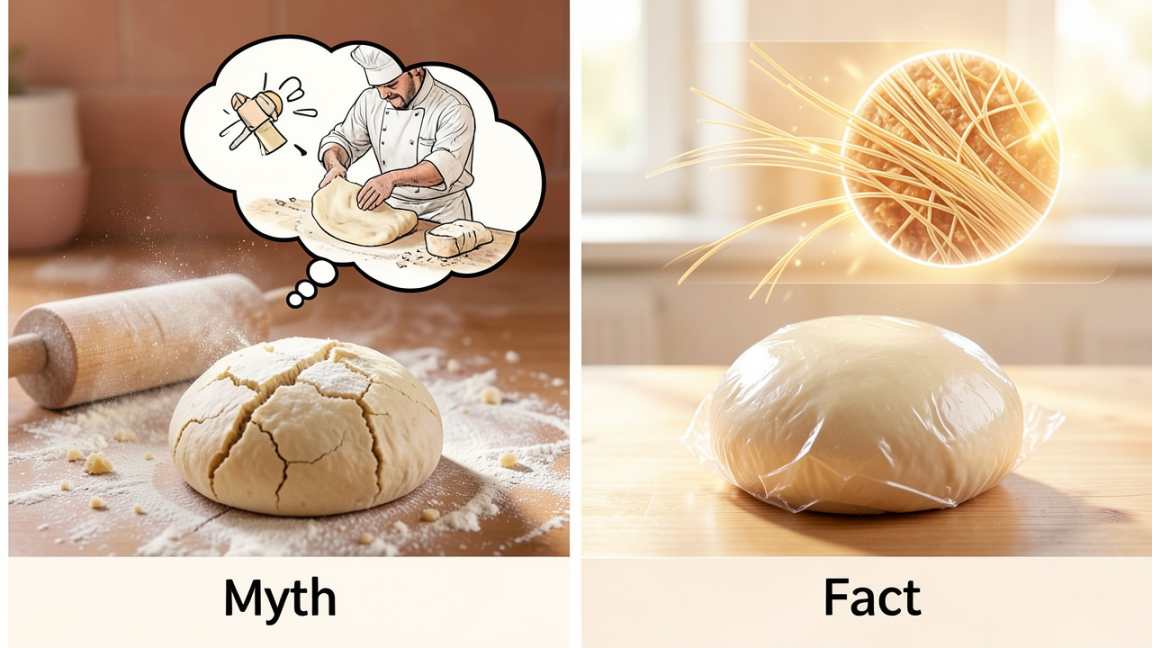
Common Myths vs Facts
Myth 1: Pasta dough rests only to make it easier to roll
Fact: While easier rolling is a benefit, the primary purpose is gluten relaxation and hydration. The dough also becomes more uniform, which improves the texture after cooking. According to, resting allows the starch granules to swell, which gives the pasta a silkier mouthfeel.
Myth 2: You can rest pasta dough in the fridge for the same effect
Fact: Cold slows down gluten relaxation and hydration. Refrigeration is fine for overnight storage, but you must let the dough come back to room temperature before rolling. Otherwise, the cold dough will be stiff and hard to roll. The rest time should be counted from when the dough is at room temperature.
Myth 3: Over-resting makes dough too soft and unworkable
Fact: Pasta dough does not become over-rested like bread dough. You can rest it for up to 4 hours at room temperature. After 4 hours, the surface may start to dry slightly or oxidize, but the dough inside remains usable. If it feels too soft, simply re-knead for 1 minute and rest again for 15 minutes.
Frequently Asked Questions
Can I rest pasta dough in the fridge overnight?
Yes, you can refrigerate pasta dough for up to 24 hours. Wrap it tightly in plastic wrap to prevent drying. Before rolling, let it sit at room temperature for about 20 minutes to soften. The cold will make the gluten tighter, so a short rest at room temperature brings back pliability.
What if my dough still feels tight after resting?
If the dough snaps back, it may not have rested long enough. Wrap it again and let it sit for another 30 minutes. Alternately, you may have over-kneaded the dough initially, creating excessive gluten. In that case, try adding a teaspoon of water and re-kneading for 1 minute before resting again.
Does the type of flour affect required resting time?
Yes. High-protein flours like bread flour or semolina need longer rests because they form stronger gluten networks. Pastry flour or 00 flour with lower protein relaxes faster. The table above provides general guidelines. The best test is the dough’s feel: it should be soft and stretchy, not tough.
Should I rest pasta dough before or after adding flavorings like herbs?
Add herbs or spices during the mixing stage. Rest the dough after mixing. The flavors will distribute evenly during the rest. For highly acidic additions like tomato paste, the acid may slightly tighten the gluten. In that case, you may need a slightly longer rest of 45 minutes to 1 hour.
Is it necessary to rest dough for filled pasta like ravioli?
Absolutely. Filled pasta requires rolling the dough very thin – often to a thickness of 1 millimeter. Unrested dough will tear easily when you press the filling and close the ravioli. A full 30-minute rest ensures the sheets roll out thin without breaking.
Final Thoughts
Resting pasta dough is a simple step that transforms your beginner attempts into professional results. The relaxation of gluten and full hydration create a dough that rolls like a dream and cooks to a silky finish. Do not skip this rest – give your dough 30 minutes, and you will feel the difference the moment you start rolling.