Why Homemade Pasta Sometimes Turns Gummy After You Cook It
Homemade pasta becomes gummy primarily because over-hydration allows too much water to saturate the dough, causing the starch to gelatinize too quickly during cooking, often combined with overworked gluten or insufficient resting. The most common culprits are using all-purpose flour instead of a higher-protein 00 or semolina, skipping a 30-minute rest, and boiling fresh pasta in water that isn't at a full rolling boil. To prevent gumminess, reduce the water content by 5–10%, rest the dough adequately, and cook only until al dente.
You roll out perfect sheets, cut beautiful strands, and they turn into a sticky clump in the pot. This guide explains the exact reasons and shows you how to fix it.
Quick Verdict: Simply put, homemade pasta gets gummy when too much water saturates the dough, gluten overdevelops, or the pasta is cooked too long. The main causes are over-hydration, insufficient resting, using the wrong flour, and boiling in water that isn’t hot enough. Fix it by reducing water by 5-10%, resting the dough for 30 minutes, and cooking only until al dente.
Key Takeaways
- Over-hydration is the number one cause of gummy pasta because excess water makes the starch gelatinize too quickly.
- Resting the dough for at least 30 minutes allows gluten to relax, which reduces toughness and stickiness after cooking.
- Using all-purpose flour instead of high-protein 00 flour or semolina leads to weaker gluten and a gummy texture.
- Boiling fresh pasta in water that isn’t at a full rolling boil causes the starch to clump instead of releasing evenly.
- Drying fresh pasta for 20-30 minutes before cooking significantly lowers the risk of gumminess.
What Is the Science Behind Gummy Pasta?
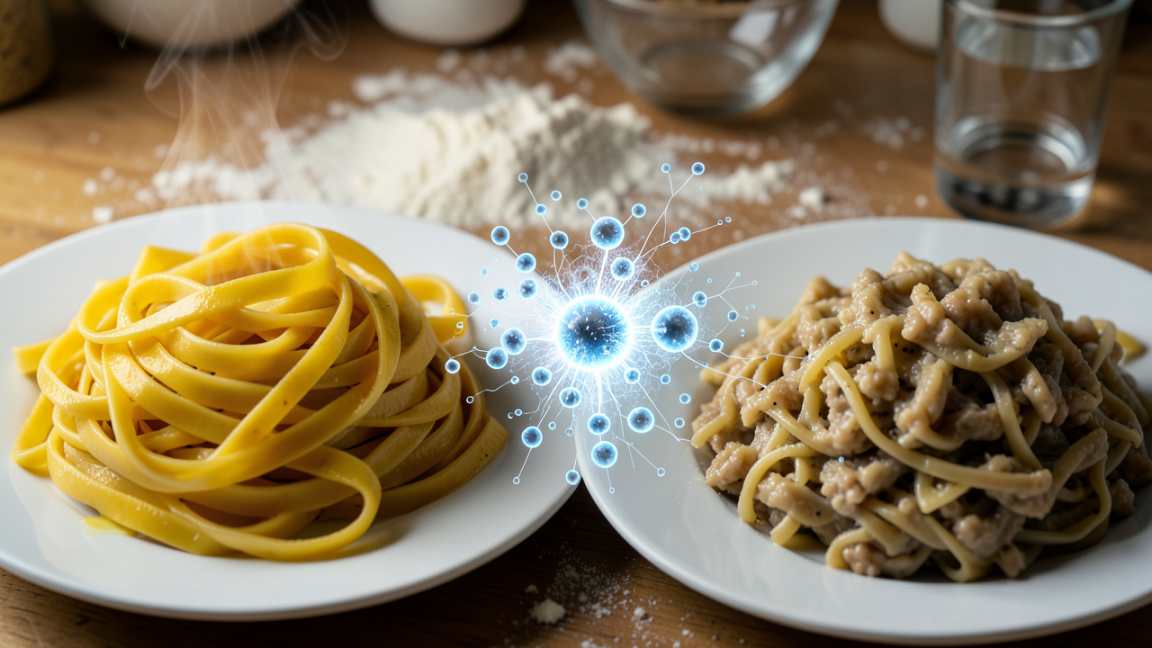
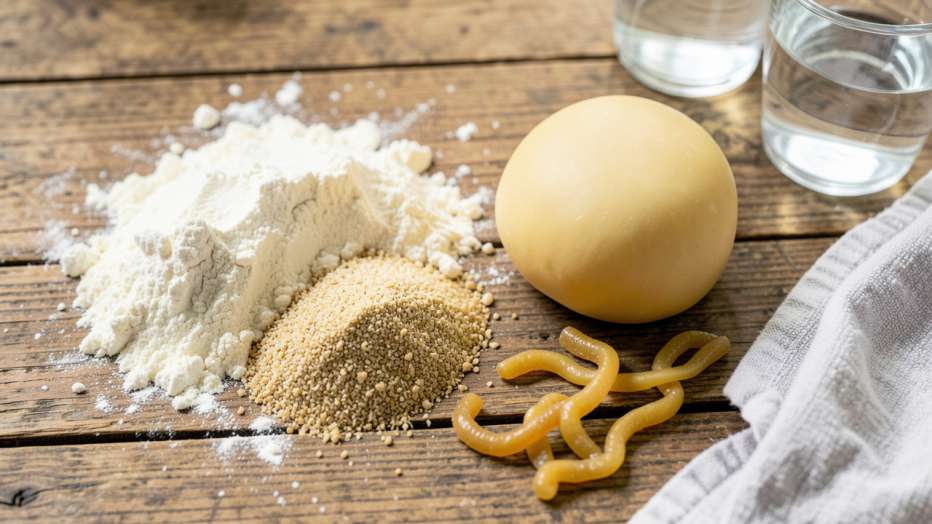
Gummy pasta happens when too much starch absorbs water and swells before the gluten network can hold it together. According to, the ideal hydration for pasta dough is around 40-45% water weight relative to flour. When you exceed that, the starch granules break open in the cooking water and release excess starch. This starch forms a sticky gel on the pasta surface.
Gluten proteins give pasta its firm bite. If you knead the dough too long, the gluten becomes tight and springy. When you cook it, the tight gluten snaps back and traps moisture inside. The result is a dense, chewy, almost gummy center.
Tip: Use a kitchen scale to measure ingredients by weight. Even an extra 10 grams of water can shift the texture from perfect to gummy.
How Does Flour Type Affect Gumminess?
Not all flours behave the same in pasta dough. The protein content of the flour directly determines how much gluten can form. Gluten holds the pasta shape and prevents it from turning into glue.
Important: A study by found that pasta made with 00 flour (12-13% protein) had 30% less stickiness than pasta made with all-purpose flour after cooking.
| Flour Type | Protein Content | Best For | Gummy Risk |
|---|---|---|---|
| 00 Flour (soft wheat) | 11-13% | Tender egg pasta | Low (with proper hydration) |
| Semolina (durum wheat) | 13-14% | Dried pasta, extruded shapes | Very low |
| All-Purpose Flour | 9-11% | Quick fresh pasta | Moderate to high |
| Bread Flour | 12-14% | Chewy pasta | Low (but can be tough) |
For homemade pasta, a blend of 00 flour and semolina gives you the best of both worlds: tender structure and a firm bite. Why homemade pasta sometimes turns gummy after you cook it often traces back to a flour choice that is too low in protein.
What Are the Most Common Culprits?
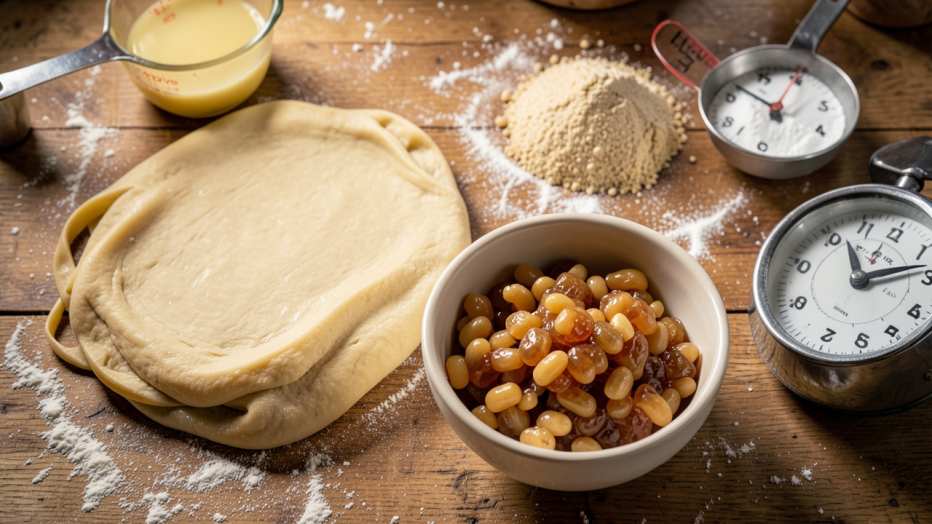
Several mistakes during preparation and cooking can turn your pasta into a sticky mess. Here are the main causes:
- Over-hydration: Using more than 45% water relative to flour weight floods the starch.
- Skipping the rest: Gluten needs 20-30 minutes to relax after kneading.
- Over-kneading: Too much gluten development creates a rubbery, moisture-trapping pasta.
- Not drying before cooking: Fresh pasta straight from the cutting board has too much surface moisture.
- Boiling in cold water: Starch dissolves slowly in under-212°F water, creating a gummy paste.
Warning: Do not add oil to the pasta water. It does not prevent sticking and only coats the noodles, making it harder for sauce to cling.
Why Does Overworking the Dough Cause Gumminess?
Gluten forms when you knead flour and water. The more you work it, the tighter the protein network becomes. When you cook over-kneaded dough, the strong gluten shrinks around the starch granules and traps steam inside.
According to, pasta dough kneaded for more than 12 minutes by hand (or 8 minutes in a stand mixer) becomes excessively elastic. During boiling, the elastic strands contract and squeeze the starch out onto the surface. The surface becomes sticky while the interior stays dense.
Stop kneading once the dough feels smooth and bounces back slightly when you poke it. This typically takes 8-10 minutes by hand and 6-8 minutes with a mixer.
The Role of Resting and Drying
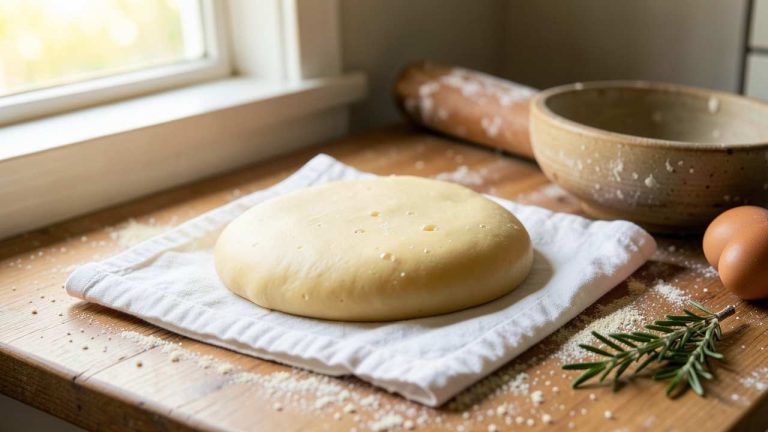
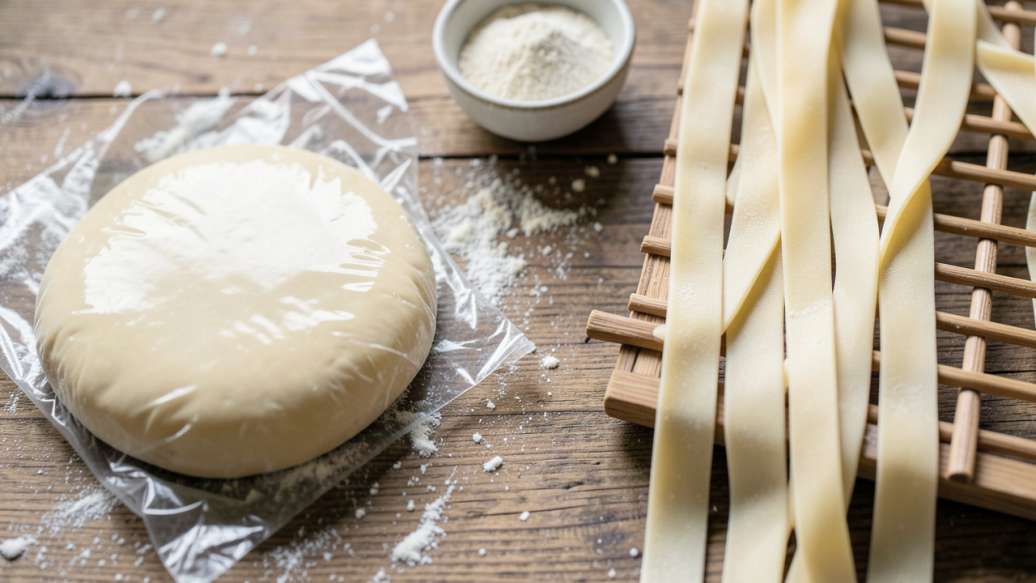
Resting the dough is not optional. When you let it sit at room temperature, the gluten relaxes. Relaxed gluten absorbs water more evenly and does not snap back during cooking.
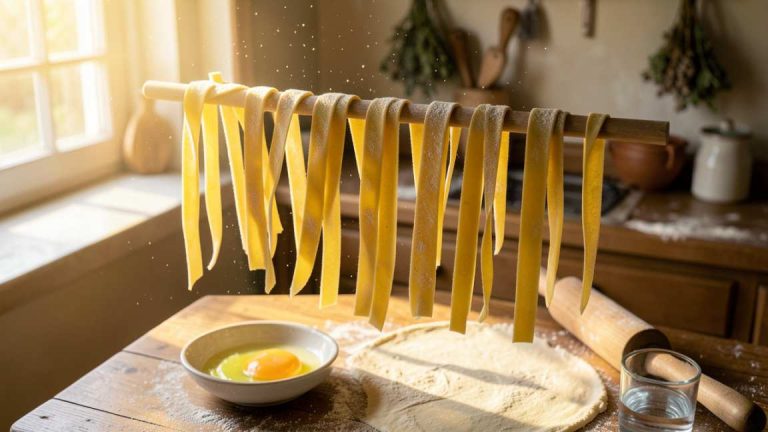
After rolling and cutting, you also need to dry the pasta. The recommends that fresh pasta be dried for at least 30 minutes before boiling. This removes surface moisture that causes starch granules to fuse together in the pot.
You can dry fresh pasta on a floured sheet pan or hang it over a pasta drying rack. If you skip this step, the wet noodles release excess starch into the water, making the water cloudy and the pasta gummy.
Common Myths vs Facts
Myth: Adding oil to pasta dough prevents stickiness
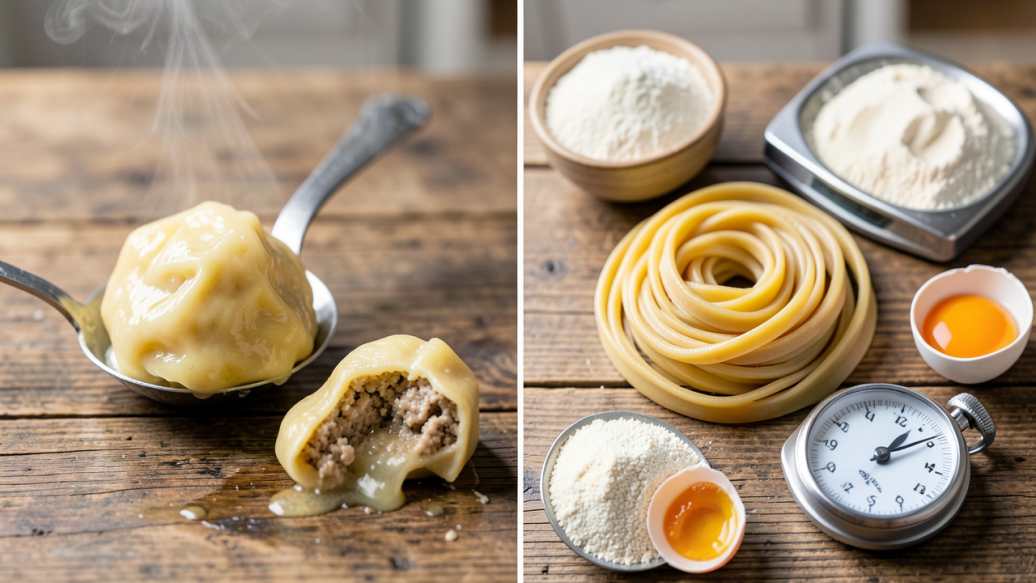
Fact: Oil coats the flour particles and blocks water absorption. This actually reduces gluten formation and leads to a weaker, more brittle pasta that can still stick together when cooked. Why homemade pasta sometimes turns gummy after you cook it is rarely solved by oil; better hydration control and resting work better.
Myth: More eggs = less gummy pasta
Fact: Eggs add fat and protein, but too many eggs (more than 3 per cup of flour) make the dough overly rich and heavy. The extra fat inhibits gluten bonds, so the pasta can still be gummy if undercooked. A standard ratio is 1 whole egg plus 1 yolk per 100 grams of flour.
Myth: Rinse pasta after cooking to remove stickiness
Fact: Rinsing washes away the surface starch that helps sauce stick. It also cools the pasta, which can cause it to clump. Instead, toss the cooked pasta immediately with sauce or a drizzle of olive oil.
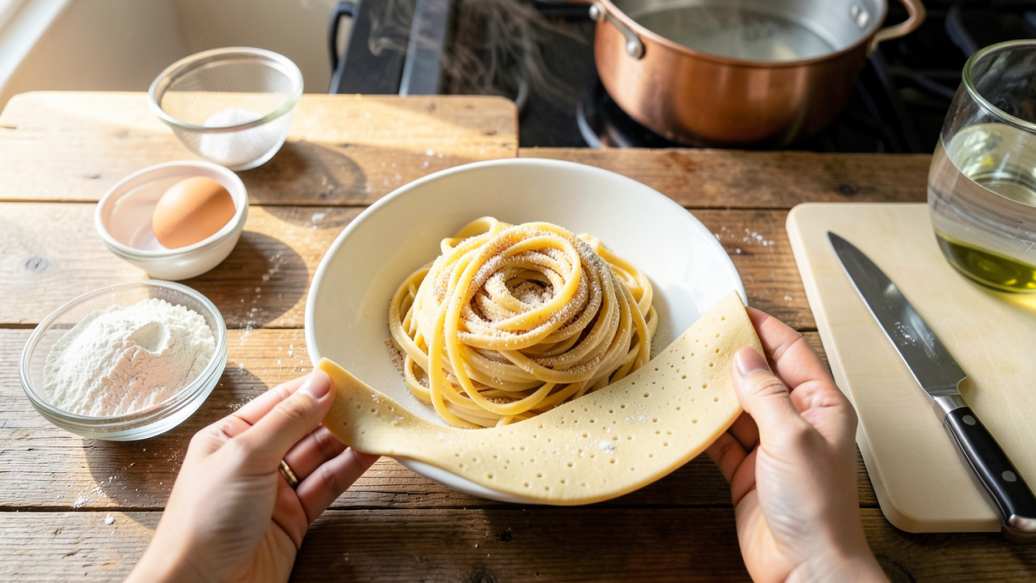
How to Fix Gummy Pasta: A Step-by-Step Guide
If your pasta already came out gummy, you can still salvage it. Follow these steps to reduce stickiness and improve texture.
- Rinse and reheat quickly: Pour the gummy pasta into a colander and run cool water over it for 10 seconds. This removes loose starch. Then toss it in a hot pan with sauce for 30 seconds to reheat.
- Add a splash of pasta water: Reserve a cup of the cooking water before draining. Stir a tablespoon of the starchy water into the pasta along with sauce. The starch helps the sauce cling without adding gumminess.
- Toss with olive oil: If the pasta is clumped beyond rescue, coat it lightly with olive oil to separate strands. Use this only as a last resort because oil blocks sauce adhesion.
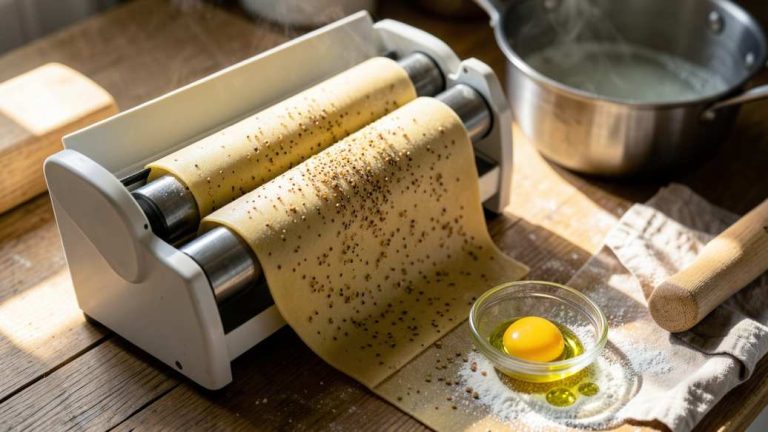
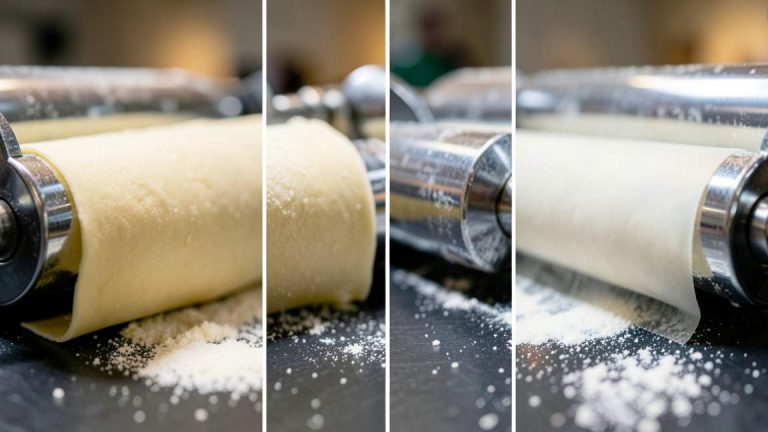
Tip: For future batches, use a pasta machine to roll the dough thinner than you think. Thicker strands trap more moisture and turn gummy faster.
Frequently Asked Questions
Can I rescue gummy pasta after it sits for hours?
No. Gummy pasta left at room temperature becomes a solid block. You can reheat it in a pan with sauce and a little water, but the texture will remain sticky. Prevention is the best solution.
Why does restaurant pasta never get gummy?
Restaurants use high-protein 00 flour or semolina, precise hydration ratios, and they always dry fresh pasta for a few minutes before boiling. They also boil in large volumes of vigorously salted water.
Does using a pasta roller prevent gumminess?
Yes. A pasta machine creates thin, even sheets that cook uniformly. Hand-rolled pasta often ends up uneven, with thick parts that remain undercooked and gummy.
Should I add salt to the pasta dough?
Salt is fine in moderation (about 1% of flour weight). It strengthens gluten slightly, which can help reduce gumminess. The test kitchen recommends salting the water instead, because it dissolves more evenly.
What is the ideal cooking time for fresh pasta?
Fresh pasta cooks in 1-3 minutes, depending on thickness. Start tasting after 1 minute. Overcooking by even 30 seconds can trigger gumminess.
Final Thoughts
Gummy pasta comes down to three things: too much water, not enough rest, and wrong cooking technique. Use a scale for hydration, let the dough relax, and boil in a full rolling boil. With these fixes, your homemade pasta will turn out tender, not sticky.