How to Dry Fresh Pasta Properly Without It Cracking Apart
Drying fresh pasta without cracking requires maintaining dough hydration between 30% and 35%, using a clean surface with excellent airflow, and allowing a slow drying process at room temperature between 65°F and 75°F. Flip the pasta shapes halfway through drying to ensure even moisture evaporation, and avoid direct sunlight or fans that cause uneven drying. Properly dried pasta can be stored in an airtight container for several months, with cracking prevented by adhering to these precise drying conditions.
You shaped beautiful fresh pasta, but now it sticks together and cracks apart. Preventing this requires the right drying technique and a careful approach.
This guide walks you through every step to dry fresh pasta properly without it cracking apart, from dough hydration to long-term storage.
Simply put, drying fresh pasta without cracking requires balanced dough hydration between 30% and 35%, a clean drying surface with excellent airflow, and a slow drying process at room temperature. Avoid direct sunlight and fans. Flip the pasta halfway through to ensure even moisture evaporation. The key is patience and a gentle hand.
Key Takeaways
- Drying fresh pasta without cracking starts with the dough hydration level – keep it at 30% to 35% moisture for best results.
- Always dry fresh pasta on a clean surface like a wooden board, sheet pan, or dedicated drying rack with good air circulation.
- Room temperature drying between 65 F and 75 F is ideal for preventing cracking and maintaining the pasta texture.
- Flip your pasta shapes halfway through the drying process to ensure even moisture evaporation on all sides.
- Store fully dried pasta in an airtight container at room temperature for up to one year without quality loss.
What You Need to Dry Fresh Pasta
You need the right tools and ingredients. Proper equipment prevents sticking and cracking. Most items are already in your kitchen.
Essential Equipment
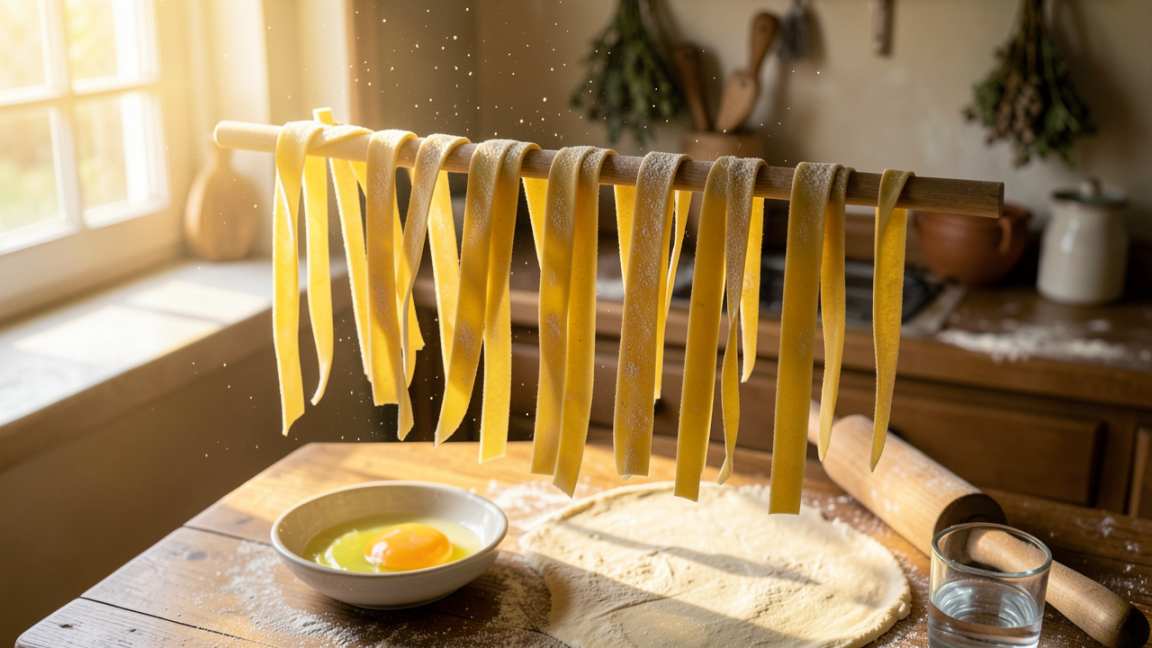
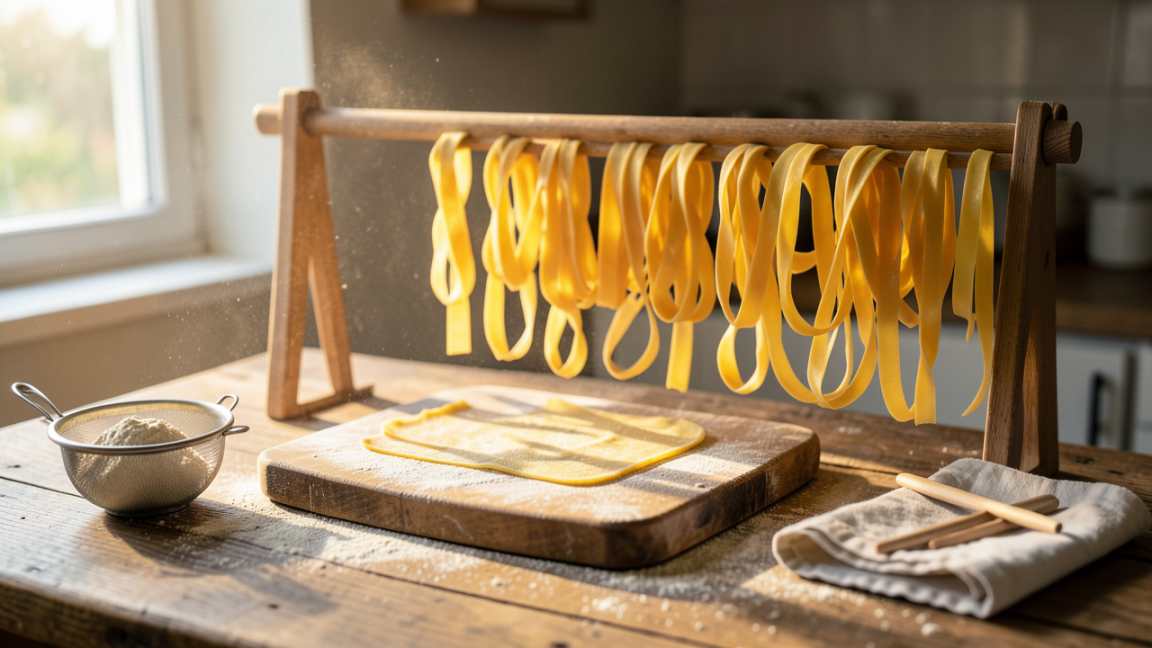
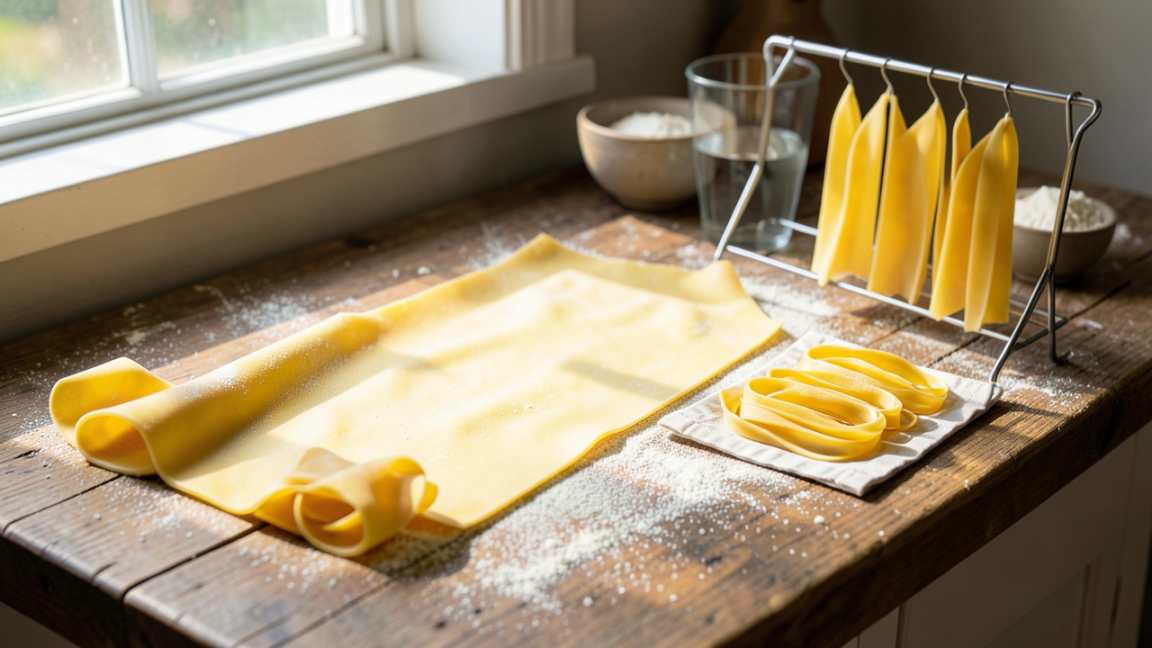
- Pasta drying rack or wooden dowels – These allow air to circulate around long pasta shapes like fettuccine and pappardelle.
- Sheet pans lined with parchment paper – Perfect for short shapes like farfalle, penne, or orecchiette.
- Coarse semolina flour for dusting – Semolina is coarser than “00” flour. It creates a barrier that prevents sticking and absorbs extra moisture.
- Clean kitchen towels – Use them to gently pat down stuffed pasta before drying.
- Digital kitchen scale – Measuring your dough ingredients by weight ensures consistent hydration levels.
Ideal Dough Hydration
According to, the ideal dough hydration for drying is between 30% and 35%. For example, 100 grams of flour needs 30 to 35 grams of liquid. Eggs count as liquid since they contain about 75% water.
Tip: Use a mix of 50% semolina flour and 50% “00” flour. Semolina absorbs moisture slowly, which reduces the risk of cracking during drying. This blend is a standard choice at.
How to Dry Fresh Pasta Step by Step
Follow this exact process to dry your pasta evenly. Each step reduces stress on the dough and prevents cracks from forming.
- Prepare your drying surface. Dust the surface generously with coarse semolina. If you use a rack, make sure the dowels are clean and dry. Lay out a clean towel underneath to catch any excess flour.
- Shape the pasta immediately after rolling. Cut your pasta into the desired shapes. For long pasta, create small nests. For short pasta, spread each piece individually. Do not let the shaped pasta sit before drying begins.
- Space the pieces apart. No piece of pasta should touch another. Sticking pasta will tear and crack when you try to separate them later. Use multiple sheet pans if needed.
- Dry at room temperature. Place the pasta in a room that is between 65 F and 75 F. Humidity levels should be below 60%. Drying typically takes 4 to 8 hours depending on the shape.
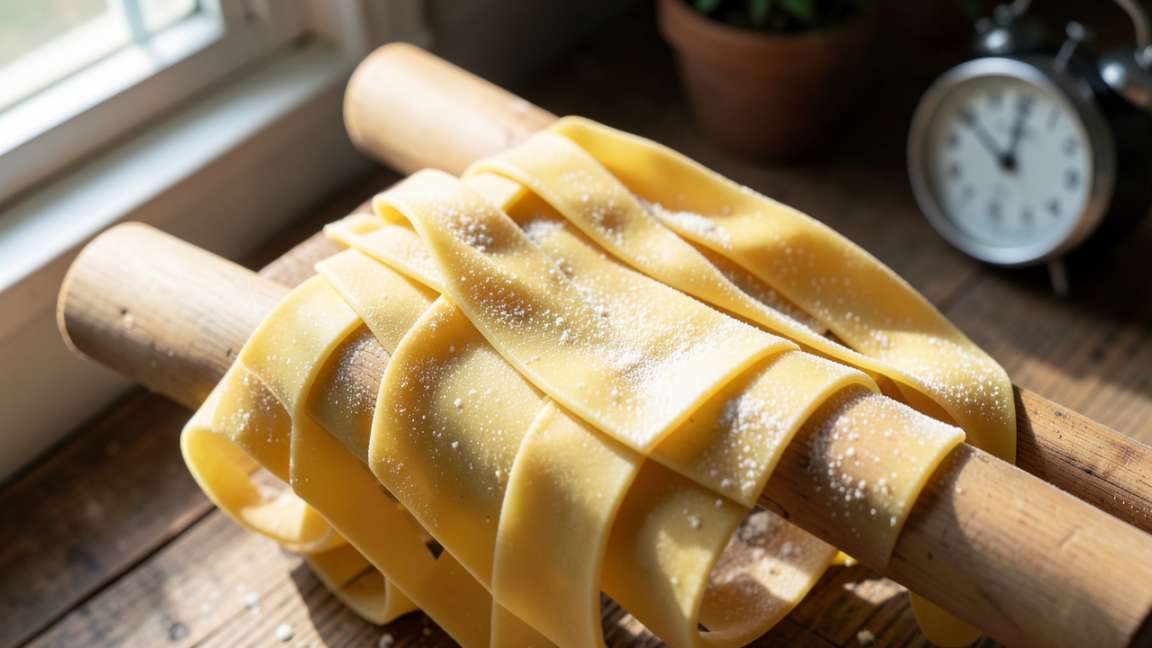
- Flip the pasta halfway through. After 2 to 4 hours, gently flip each piece. This allows moisture to escape from the bottom. Use a bench scraper or your fingers. Handle the pasta carefully to avoid breakage.
- Test for dryness. A fully dried piece of pasta should snap cleanly in half. If it bends instead of snaps, it needs more drying time. Check thick shapes like pappardelle in the center.
Warning: Never use a fan directly on fresh pasta. It dries the outside too fast and traps moisture inside. This trapped moisture creates steam inside the pasta, which leads to cracking and splitting.
How Long Does It Take to Dry Fresh Pasta?
Drying time depends on the shape, thickness, and room humidity. Thicker pasta takes longer. Stuffed pasta dries fastest because it has a filling inside. Use this table to estimate your timing.
| Pasta Shape | Drying Time | Crack Risk |
|---|---|---|
| Fettuccine (thin) | 2 to 4 hours | Low |
| Pappardelle (wide) | 4 to 6 hours | Medium |
| Farfalle (bows) | 6 to 8 hours | Medium |
| Stuffed (Ravioli / Tortellini) | 1 to 2 hours | High |
Important: Stuffed pasta has a high crack risk because the filling contains moisture. Dry stuffed pasta on a floured surface, not a rack. Flip them every 30 minutes. The for home food storage recommend drying stuffed pasta for at least 1 hour before freezing.
5 Common Pasta Drying Mistakes That Cause Cracking
Most cracking happens because of these five errors. Avoid them to get perfect results every time you dry fresh pasta properly without it cracking apart.
- Using a high hydration dough. Dough with more than 40% moisture is too soft for drying. It releases water too fast during drying, which creates stress fractures. Stick to 30% to 35% hydration.
- Drying in a humid room. Humidity above 70% prevents moisture from evaporating evenly. The pasta surface stays sticky while the inside dries. This imbalance causes cracking. Use a dehumidifier if necessary.
- Forced heat from ovens or fans. Heat speeds up drying on the outside but leaves the center wet. The expanding center pushes against the dry shell and creates cracks. Always dry at room temperature.
- Crowding the pasta together. Pasta pieces that touch each other trap moisture. This creates weak spots that crack when you separate them. Give each piece at least half an inch of space.
- Skipping the flip. The bottom of the pasta stays on a wet surface if you do not flip it. The moisture seeps back into the dough and softens one side. Flipping ensures even drying throughout.
Pro Tips for Perfectly Dried Pasta
These expert techniques will improve your results. Use them alongside the basic steps above for the best texture and flavor.
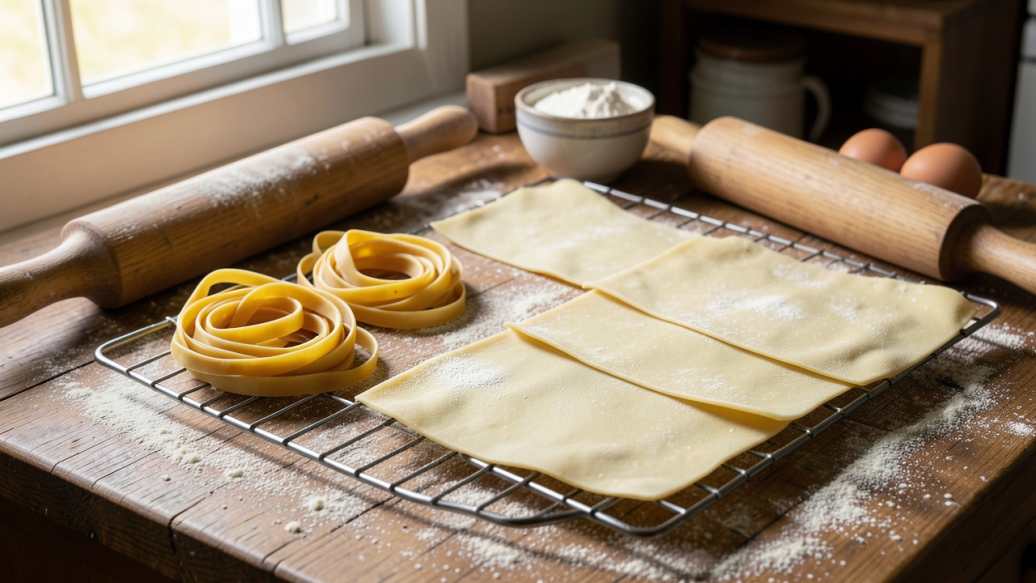
- Use coarse semolina for dusting. Fine flour absorbs into the pasta dough. Coarse semolina sits on the surface and creates a protective layer. It prevents sticking and reduces moisture loss.
- Dry long pasta in nests. Coil your fettuccine or spaghetti into small nests on a sheet pan. Nests dry uniformly and store easily. They also resist cracking because the strands support each other.
- Check the weather before drying. Rainy days increase indoor humidity. Plan to dry pasta on dry, clear days. A simple hygrometer costs little and helps you monitor the room conditions.
- Egg yolks make stronger pasta. Dough made with egg yolks has more fat and less water. According to, egg yolks create a tender structure that resists cracking.
- Store with a silica gel packet. Adding a food-grade silica gel packet to your storage container absorbs any remaining moisture. This keeps your pasta brittle and crack-free for months.
What to Do If Your Pasta Starts Cracking
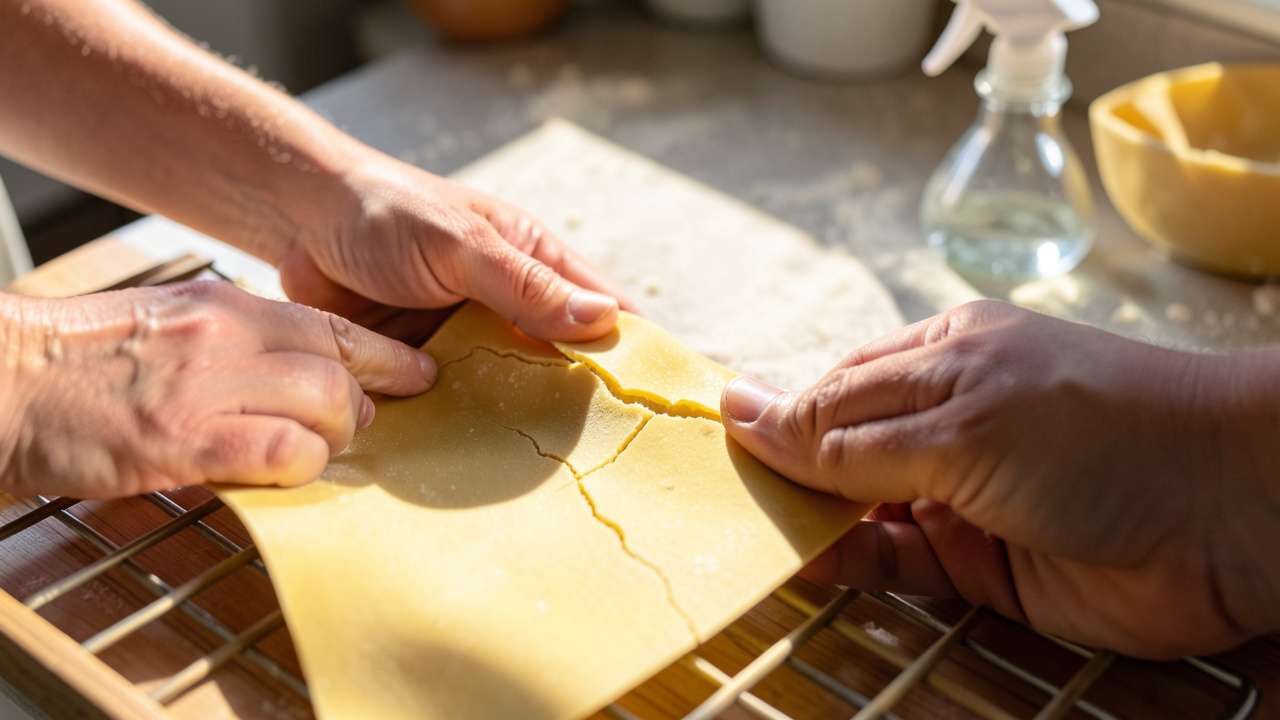
Sometimes cracks still appear even with careful technique. Do not throw the pasta away. You can often fix or save it.
If you see small surface cracks early in the drying process, lightly mist the pasta with water. Use a spray bottle set to a fine mist. Let the pasta rest for 15 minutes. The moisture rehydrates the dry surface and seals the cracks. Then continue drying slowly.
If the pasta is fully dry and has cracks, use it for soups or broths. Broken pasta pieces are perfect for minestrone or pasta e fagioli. The cracks do not affect the flavor. They might even help the pasta absorb broth better.
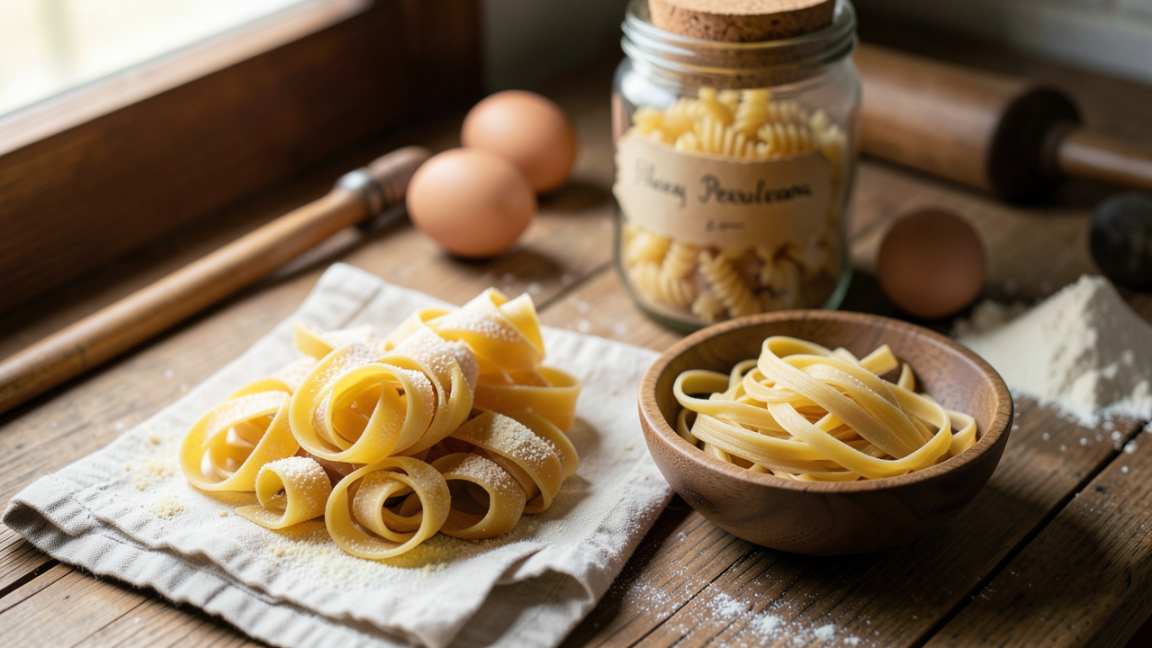
How to Store Dried Fresh Pasta
Proper storage keeps your pasta fresh and crack-free for months. Follow these simple rules.
- Use airtight containers. Glass jars or BPA-free plastic containers work best. They lock out humidity and pests.
- Store in a cool, dark place. A pantry or cupboard away from the stove is ideal. Heat and light degrade the pasta quality over time.
- Do not refrigerate dried pasta. The fridge introduces moisture through condensation. This moisture makes the pasta soggy and prone to mold.
- Label with the drying date. Fully dried pasta lasts up to one year. Write the date on the container so you know when to use it.
Frequently Asked Questions
Can I dry pasta in the oven on low heat?
No, this is not recommended. Oven heat dries the outer surface too quickly. The inside stays moist, which creates steam and causes cracks. Always dry pasta at room temperature for the best result.
Why does my homemade pasta crack when I dry it?
The most common reasons are too much water in the dough, high room humidity, or drying too fast with a fan. Check your hydration level first. Aim for 30% to 35% water content. Then make sure the drying room is below 60% humidity.
How do I store dried fresh pasta?
Store fully dried pasta in an airtight container at room temperature. Keep it in a dark pantry away from heat and moisture. Add a food-grade silica gel packet to absorb any extra humidity. It stays good for up to one year.
Can I dry stuffed pasta like ravioli?
Yes, but you need to be careful. Dry stuffed pasta on a floured surface, not on a rack. Flip the ravioli every 30 minutes. Dry for only 1 to 2 hours. After that, freeze the ravioli for longer storage. The recommend freezing stuffed pasta for safety.
How do I know when my pasta is completely dry?
Perform the snap test. Take a piece of pasta and try to bend it. If it snaps cleanly in half, it is fully dry. If it bends without breaking, it needs more drying time. Check thick pieces in the center where moisture hides.
Final Thoughts
Drying fresh pasta without cracking comes down to three things: low hydration dough, a gentle room temperature environment, and patience. Flip your pieces halfway through and give them enough space to breathe. With these techniques, you can enjoy your homemade pasta for months without quality loss.