Cleaning a Pasta Maker Without Getting the Rollers Wet Inside
Cleaning a pasta maker without getting the rollers wet requires using dry brushes, wooden skewers, and a stiff cleaning dough to remove flour and residue, avoiding water on the main body entirely to prevent rust and lubricant loss. The key risk of wetting the rollers is that water seeps into the bearings, stripping factory lubricant and causing corrosion that jams the machine. For long-term performance, always use dry cleaning methods and never submerge or rinse the roller assembly, as recommended by manufacturer manuals.
A pasta maker is a precision tool. Getting water inside the roller assembly causes rust and strips the factory lubricant. You need the right tools to clean it safely.
Simply put, cleaning a pasta maker without getting the rollers wet means using dry brushes, wooden scrapers, and stiff dough to push out old residue. You avoid water entirely on the main body to prevent rust and lubricant loss. This dry-cleaning method keeps your machine running smoothly for decades.
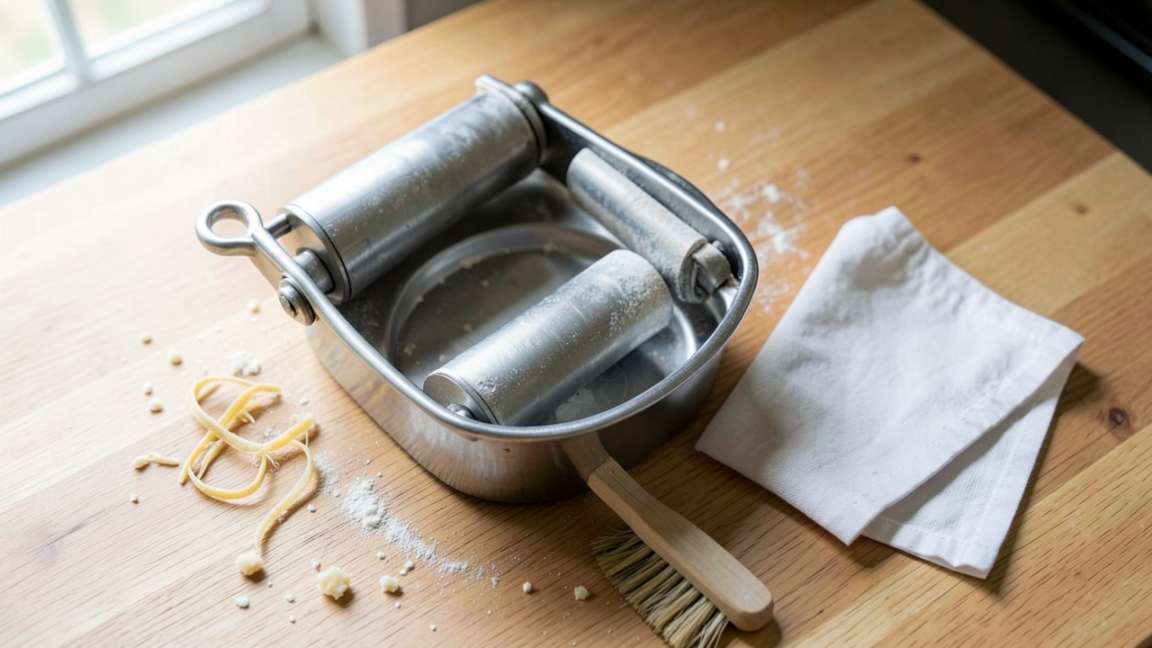
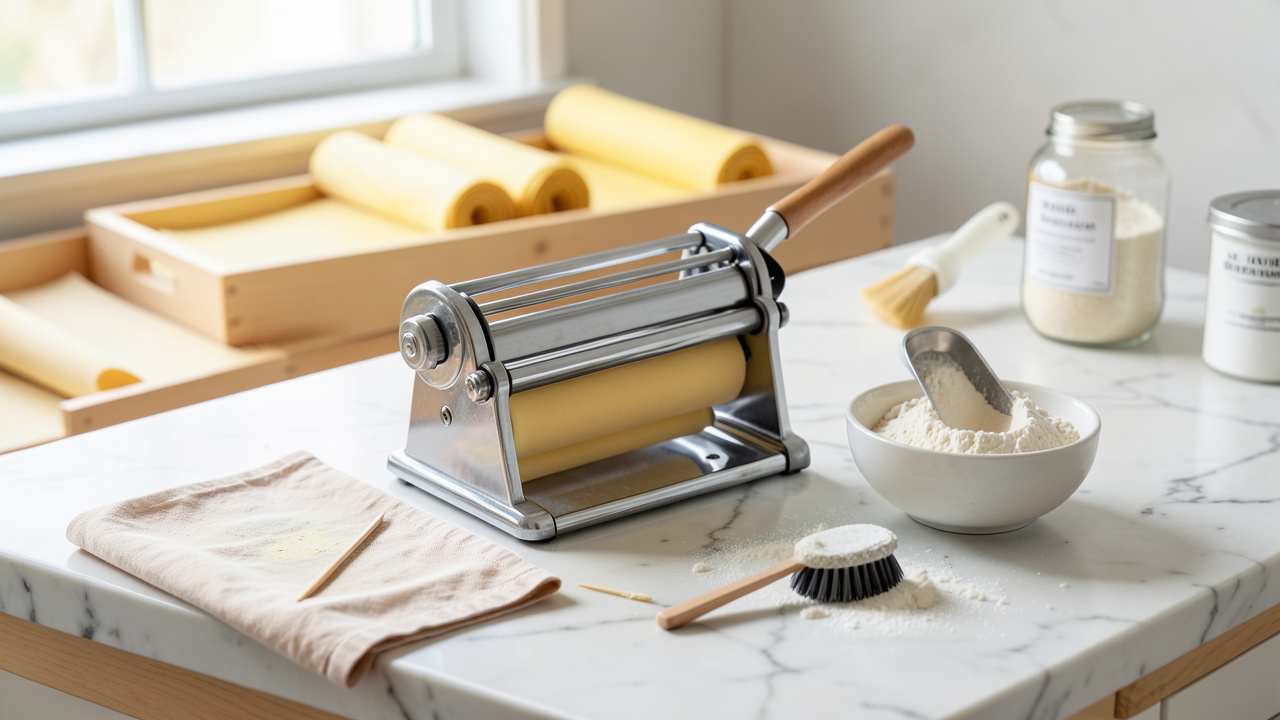
Before you start, gather these items. Stiff nylon brushes remove the most flour. Wooden skewers or toothpicks reach stuck dough. A clean, dry microfiber cloth works for the exterior. Stale bread or a dry dough scrap picks up grease from the rollers.
According to, the machine should never be submerged or washed under running water. The instructions specifically warn against wetting the roller bearings.
Key Takeaways for Cleaning Your Pasta Maker
- You should never submerge the main body of a pasta maker in water because the internal gears require dry lubrication to function properly.
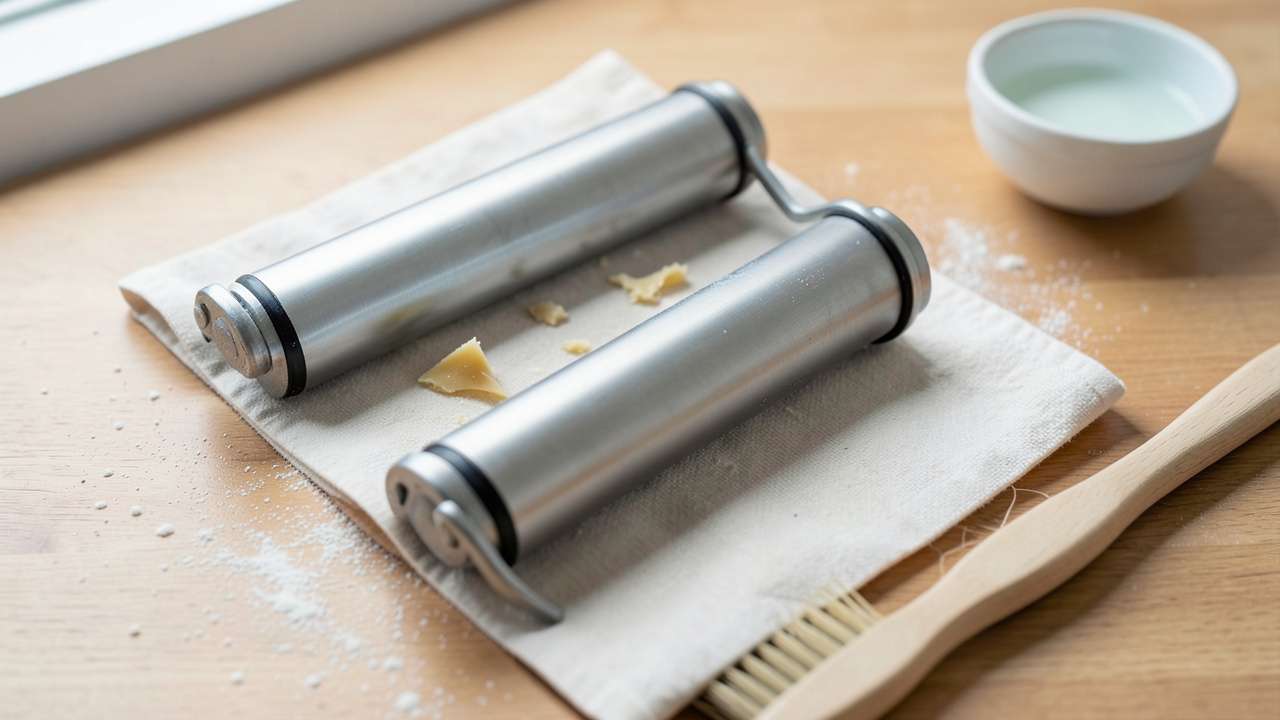
- Using a stiff nylon brush and a wooden skewer to remove dried dough from the rollers is the safest and most effective dry-cleaning method.
- Running a piece of stale bread or a dry dough scrap through the rollers picks up grease and stuck-on flour without introducing any moisture into the machine.
- Wiping the exterior with a barely damp cloth and drying it immediately prevents any moisture from seeping into the roller bearings or cutter assembly.
- You must dry every part thoroughly after cleaning to prevent rust, especially on chrome-plated machines and steel cutters.
What Are the Main Risks of Getting the Rollers Wet?
Water damages pasta makers in three specific ways. First, it washes away the food-grade grease inside the gearbox. Second, it causes rust on the steel rollers and cutters. Third, it creates a sticky paste inside the machine that is harder to remove than dry flour.
The International Pasta Organisation reports that pasta consumption has grown globally by over 25% in the last decade. More home cooks own machines now. Yet many still ask how to clean them properly.
Warning: Never use soapy water on the main body of your pasta machine. Soap residue attracts dirt and can cause the rollers to become sticky. Stick to dry methods only.
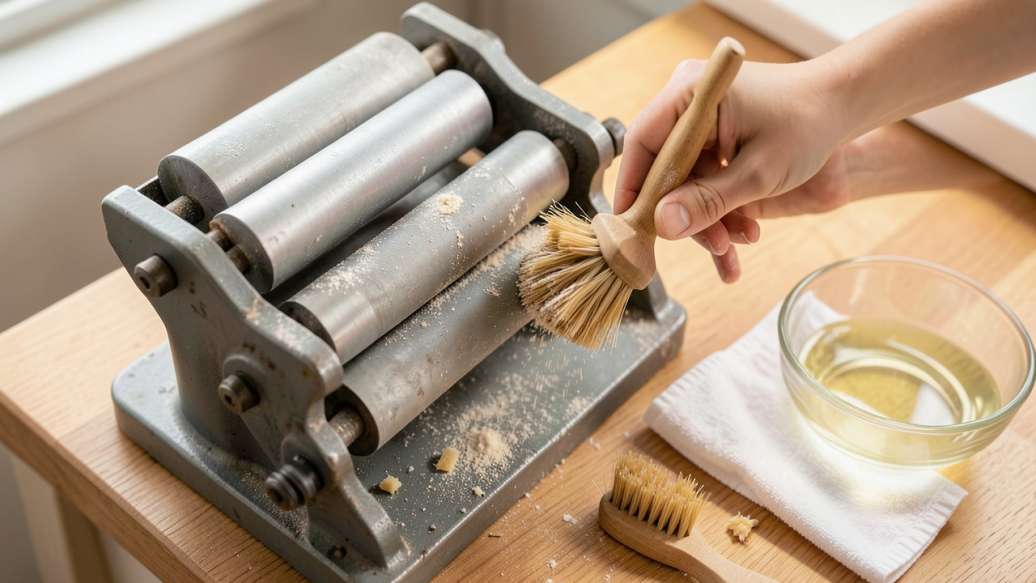
How to Clean Your Pasta Maker Without Getting the Rollers Wet Inside
Follow this process every time you finish making pasta. It takes about 10 minutes and protects your investment.
Step 1: Brush Off Loose Flour Immediately
Do this right after you finish cutting your pasta. A stiff nylon brush removes 90% of the flour dust. Hold the machine over a trash bin or sink. Brush the rollers in a downward motion. Brush the cutting attachment from the inside out.
Step 2: Use a Wooden Skewer for Stuck Dough
Dried dough often sticks between the roller grooves and cutter teeth. A wooden skewer is hard enough to dislodge the dough but soft enough to avoid scratching the metal. Gently guide the skewer along each groove. Do not use metal picks or knives.
Tip: If the dough is very hard, let it soften for 30 minutes by placing the pasta maker in a plastic bag with a damp paper towel (not touching the machine). The humidity softens the dough without wetting the rollers.
Step 3: Run a Cleaning Dough Through the Rollers
This is the most effective technique. Take a small piece of stale bread or a dry dough scrap. Flatten it slightly. Run it through the rollers at the thickest setting. The dough acts like an eraser. It picks up grease, dust, and any remaining flour. Repeat until the cleaning dough comes out clean.
Step 4: Wipe the Exterior
Dampen a microfiber cloth with water. Wring it out until it is barely damp. Wipe the outer frame, the knobs, and the hand crank. Dry the exterior immediately with a separate dry cloth. This prevents moisture from seeping into the seams.
Step 5: Dry the Cutting Attachments
Remove the cutting attachments if your model allows it. Brush them thoroughly. Use a wooden skewer to clean each slot of the tagliolini or fettuccine cutter. Wipe them with a dry cloth only. Let them air dry for one hour before storing.
What Happens If Water Gets Inside Your Pasta Maker?
- Rust forms inside the gear housing. You cannot see this rust until it flakes out and stains your pasta dough.
- Food-grade grease breaks down. The gears run dry and begin to grind against each other, creating metal shavings.
- Roller bearings seize up. The crank becomes hard to turn, and the machine stops producing even sheets.
- Chrome plating peels. Water gets under the chrome surface and causes it to bubble and flake off.
Many premium pasta makers, like the Imperia or Marcato Atlas 150, come with a lifetime warranty. However, water damage is almost always excluded from coverage.
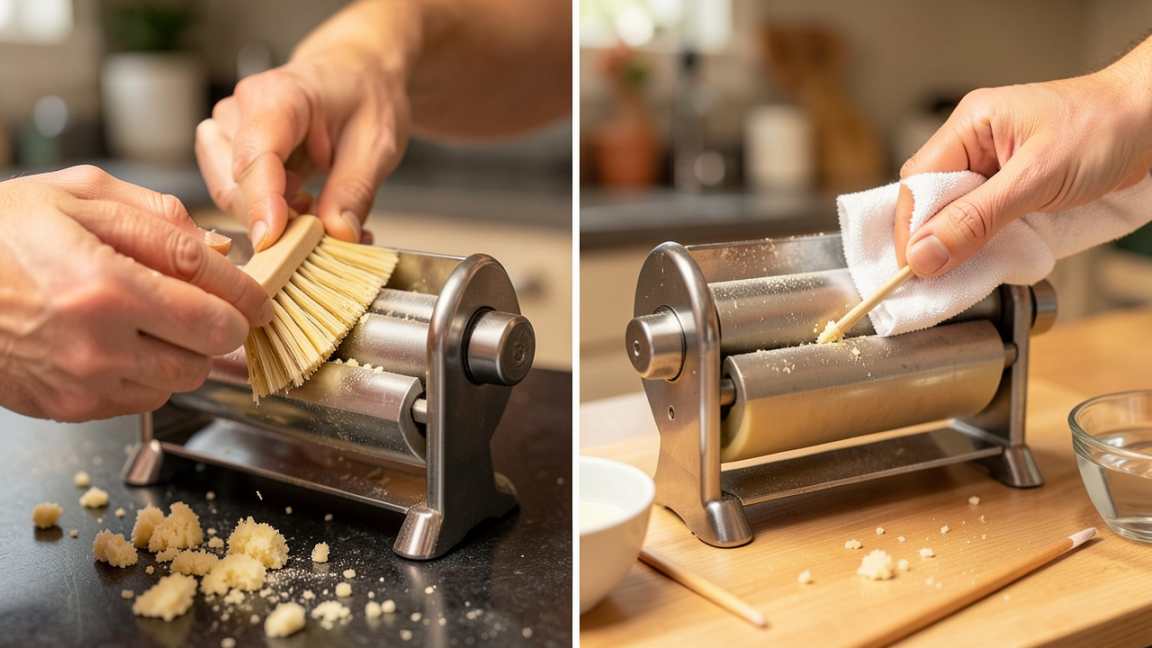
Comparison of Cleaning Methods
| Method | Best For | Risk to Machine | Time Required |
|---|---|---|---|
| Dry stiff brush | Loose flour and fresh dough | Very low | 2 minutes |
| Wooden skewer / toothpick | Dried dough in grooves | Very low | 3-5 minutes |
| Cleaning dough / stale bread | Grease and embedded residue | Very low | 1 minute |
| Barely damp cloth (exterior only) | Dust and smudges on frame | Medium (if not dried) | 2 minutes |
| Running water / dishwasher | Not recommended | Very high | N/A |
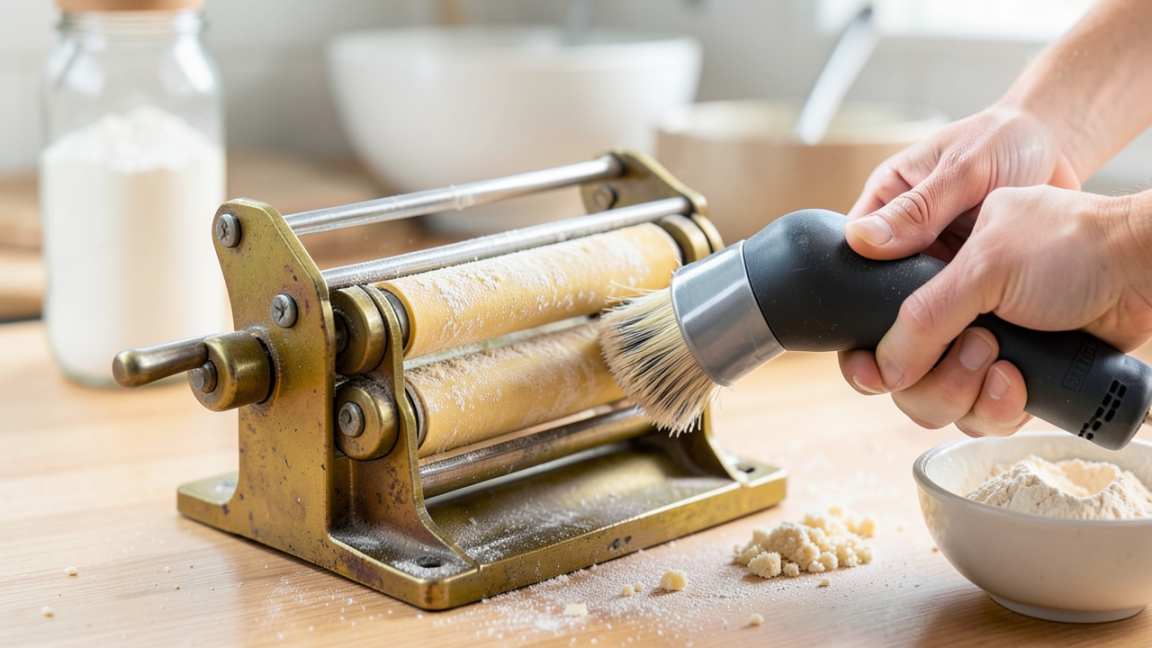
Common Mistakes to Avoid When Cleaning a Pasta Maker
- Using a dishwasher. The high heat and water pressure destroy the internal lubrication and warp the metal components. Your machine will never work the same way again.
- Soaking the rollers in water. Even a quick rinse causes rust inside the gear housing. Water gets trapped in the bearings and causes permanent damage.
- Using metal tools to scrape dough. Metal picks scratch the chrome surface. These scratches create rough spots where dough sticks more easily in the future.
- Oiling the rollers. Food-grade oil attracts dust and creates a sticky residue. This makes your pasta sheet uneven and difficult to roll.
- Storing the machine while damp. Any moisture left on the surface causes rust within 24 hours. Always air dry every part completely before putting it away.
Important: The notes that most home models use carbon steel rollers. Carbon steel rusts quickly if exposed to moisture. Dry cleaning is essential for these machines.
What Cleaning a Pasta Maker Without Water Is Not
Myth 1: A Pasta Maker Needs Regular Deep Cleaning with Soap
This is false. Pasta machines do not come into contact with raw meat or dairy. There is no need for antibacterial soap. A dry brush removes all the flour residue effectively. Soap leaves a film that contaminates your next batch of dough.
Myth 2: You Can Wipe the Rollers with a Wet Paper Towel
This causes more harm than good. A wet towel pushes moisture into the roller bearings. The bearings are not sealed. Water inside the bearing housing causes them to grind and seize. Always use a dry method for the rollers.
Myth 3: Stainless Steel Models Are Safe to Wash
Stainless steel resists rust on the surface. However, the internal gears and bushings in most stainless models are still made of brass or plated steel. Water damages these internal components regardless of the outer casing material.
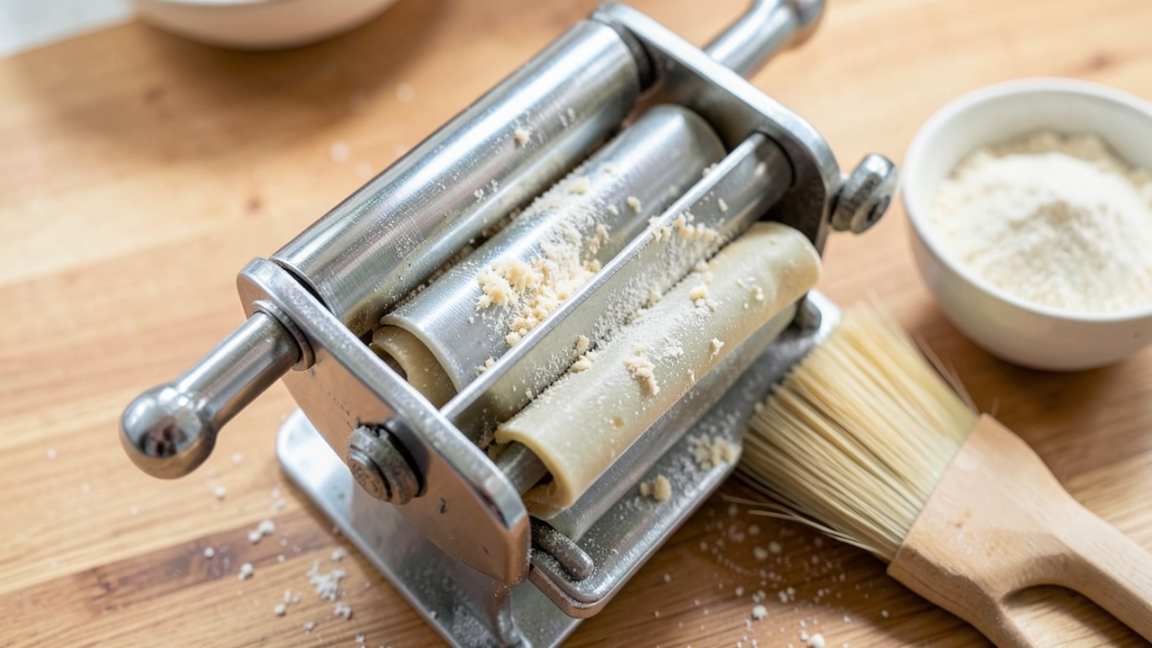
Pro Tips for Maintaining Your Pasta Maker
- Clean immediately after use. Fresh dough brushes off easily. Dried dough requires more effort and risks scratching the rollers.
- Use a dedicated stiff brush. A 1-inch nylon brush fits perfectly between the roller grooves. Keep it stored with your pasta maker.
- Make a cleaning dough ball. Save a scrap of dough from your batch. Flatten it and run it through the rollers at the end. This picks up oil and dust without any effort.
- Check the clamp and frame. Flour tends to build up in the clamp mechanism. Brush it out regularly to ensure a tight grip on your counter.
- Store in a dry place. Humidity is the enemy of a pasta maker. Keep it in a drawer or cabinet away from the stove and sink.
Frequently Asked Questions
Can I use a vacuum cleaner to clean my pasta maker?
Yes, a small brush attachment on a vacuum works well for loose flour. Do not use a high-powered vacuum directly on the rollers, as it can pull the lubricant out of the bearings. Use the brush attachment gently.
What do I do if my pasta maker is already rusty?
Light surface rust on the rollers can be removed with a fine steel wool pad (0000 grade). Wipe the rollers dry immediately after. If the rust is inside the gear housing or on the cutters, contact the manufacturer for repair or replacement.
How often should I clean my pasta maker?
Clean it after every use. A full dry-brush cleaning takes 5 minutes. Running a cleaning dough through the rollers takes 30 seconds. Do not wait for dough to harden on the machine.
Can I wash the pasta cutter attachments in water?
Only if the manufacturer explicitly states the attachments are dishwasher safe. Most standard pasta cutters are not. They have tight spaces where water gets trapped. Dry brushing is safer and more effective for cutters.
Does the type of flour I use affect cleaning difficulty?
Yes. Coarse semolina flour is drier and brushes off easily. Finer all-purpose flour can create a paste-like residue that sticks to the rollers. Egg pasta dough is stickier than water-based dough. Clean semolina machines can often skip the wooden skewer step.
Resources and Tools
- Marcato Atlas 150 Manual – Official instructions for the most popular home pasta machine.
- King Arthur Baking Guide – Detailed tips for making pasta dough that rolls easily and leaves less residue.
- Serious Eats Pasta Maker Review – Independent testing of different pasta makers and their long-term durability.
- National Pasta Association Recipes – Official resource for pasta types and cooking times.
- Wikipedia: Pasta Machine – General overview of pasta machine history and mechanics.
Final Thoughts
Cleaning a pasta maker without getting the rollers wet inside is simple once you know the right technique. Use a stiff brush, a wooden skewer, and a cleaning dough ball to keep your machine in top condition. Avoid water completely on the main body to prevent rust and gear damage. Your pasta maker will reward you with smooth, even sheets for many years.