Making Gluten-Free Pasta Dough Actually Work in a Home Machine
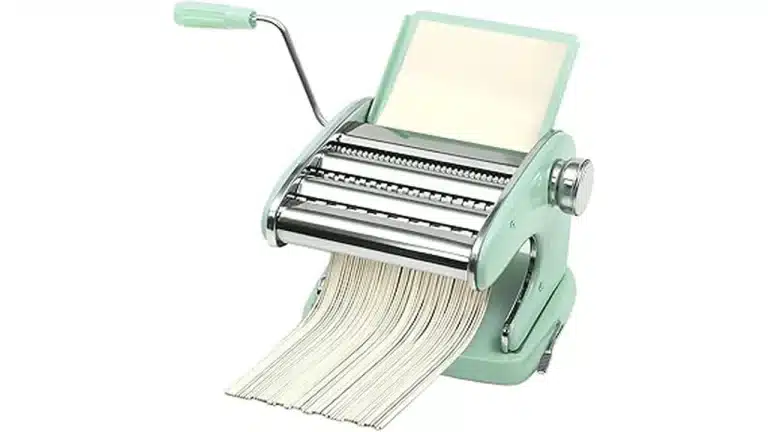
Making gluten-free pasta dough work in a home machine requires replacing gluten’s elasticity with a precise blend of binders such as xanthan gum, psyllium husk, or egg whites, combined with pre-gelatinized starches like cornstarch or potato starch for better hydration and texture. Resting the dough for 30 minutes at room temperature is critical to allow starches to absorb liquid, preventing cracking during rolling, and machines with a dedicated pasta roller attachment or strong kneading ability handle sticky gluten-free dough far more reliably than manual crank models. The most successful results come from flour blends containing at least 20% protein from sources like almond or chickpea flour, ensuring the dough holds together without crumbling.
Making pasta at home is a rewarding process. But gluten-free pasta dough often turns into a crumbly mess in your machine.
“Simply put, making gluten-free pasta dough work in a home machine requires replacing gluten’s elasticity with a blend of binders like xanthan gum, psyllium husk, and high-protein flours. Success depends on using a pre-gelatinized starch base, resting the dough properly, and selecting a machine with strong kneading ability.”
Key Takeaways
- Gluten-free pasta dough must contain binders such as xanthan gum, psyllium husk, or egg whites to mimic gluten’s structure.
- Pre-gelatinized starches like cornstarch or potato starch absorb liquid faster and create a smooth, workable dough.
- Resting the dough for 30 minutes at room temperature hydrates the starches and prevents cracking during rolling.
- Machines with a dedicated pasta roller attachment work better than manual crank models for sticky gluten-free dough.
- The best results come from blends that include at least 20% protein from sources like almond flour or chickpea flour.
What Makes Gluten-Free Dough Different
Gluten is a protein complex that gives traditional pasta its stretch and strength. Without gluten, dough lacks the elasticity needed to roll thin without tearing.
Important: Gluten-free flours absorb liquid at different rates than wheat flour. You must adjust hydration levels by feel, not by recipe alone.
The Science Behind the Failure
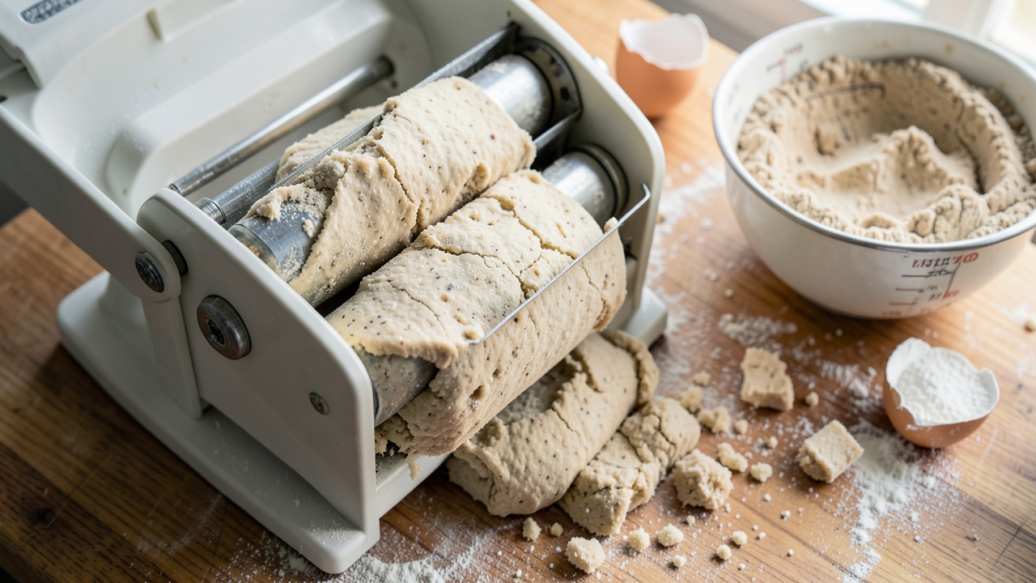
When you mix gluten-free flours with water, the starches absorb moisture and swell. But they do not form a continuous protein network. This is why dough crumbles or breaks apart.
According to, gluten-free doughs need an additional 10 to 20 percent more liquid than wheat-based doughs. This extra hydration compensates for the lack of gluten.
Why Home Machines Struggle
Home pasta machines rely on friction and pressure to sheet dough. Without gluten, the dough cannot withstand this force. It sticks to rollers or breaks into pieces.
The reports that 1 in 133 people in the United States has celiac disease, driving demand for gluten-free pasta at home. But most standard machines are built for elastic wheat dough.
Essential Ingredients for Success
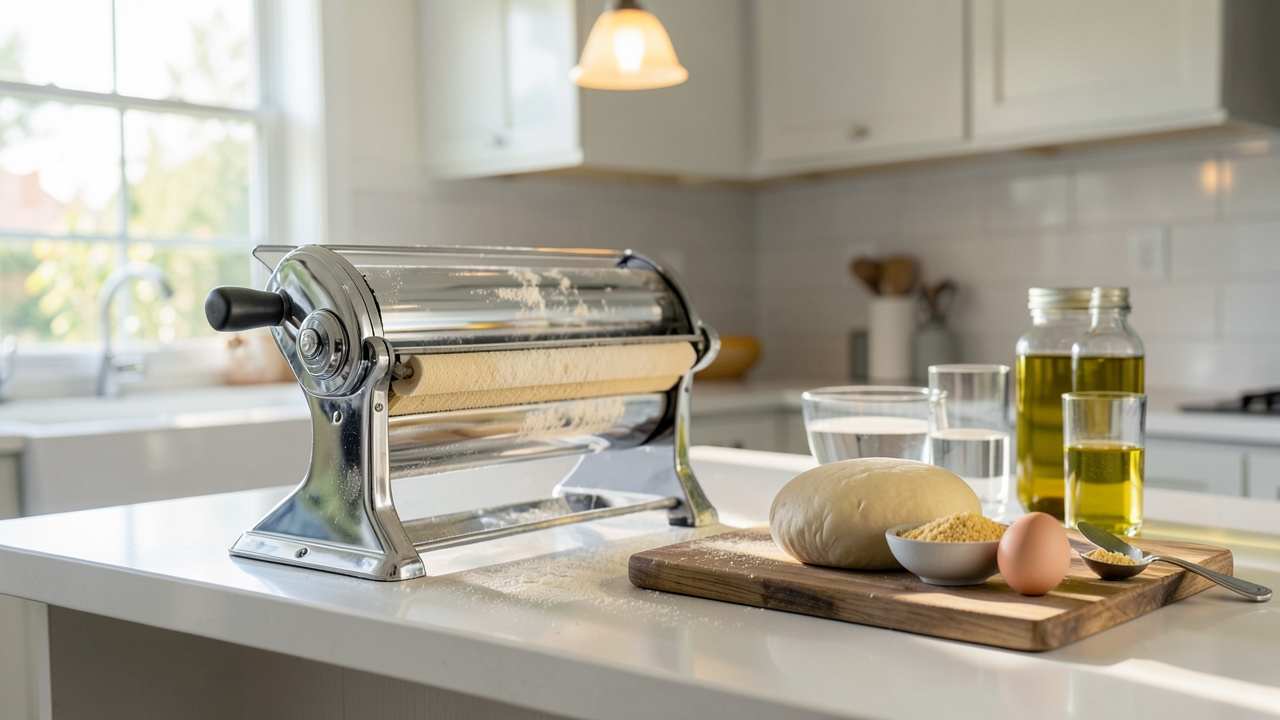
Choosing the right ingredients is the single most important factor for making gluten-free pasta dough work in a home machine.
- Xanthan gum adds elasticity and prevents crumbling. Use 1 teaspoon per 2 cups of flour blend.
- Psyllium husk powder forms a gel when mixed with water, mimicking gluten’s stretch. Use 1 tablespoon per 2 cups of flour.
- Egg whites provide protein structure. Use 2 egg whites per cup of flour for firmer dough.
- Pre-gelatinized cornstarch absorbs water instantly and creates a smooth paste. Replace 25 percent of your flour with cornstarch.
- High-protein almond flour adds strength and flavor. Use 20 percent of the total flour weight as almond flour.
Comparing Top Gluten-Free Flour Blends for Pasta
| Blend Type | Protein Content | Best Use | Machine Compatibility |
|---|---|---|---|
| Rice flour base | 7 g per cup | Fettuccine, pappardelle | Moderate; add xanthan gum |
| Chickpea flour base | 12 g per cup | Spaghetti, linguine | Excellent; high strength |
| Caputo Fioreglut | 14 g per cup | All shapes | Best for home machines |
| Bob’s Red Mill 1-to-1 | 6 g per cup | Lasagna sheets | Good; use extra egg |
Step-by-Step Process for Your Home Machine
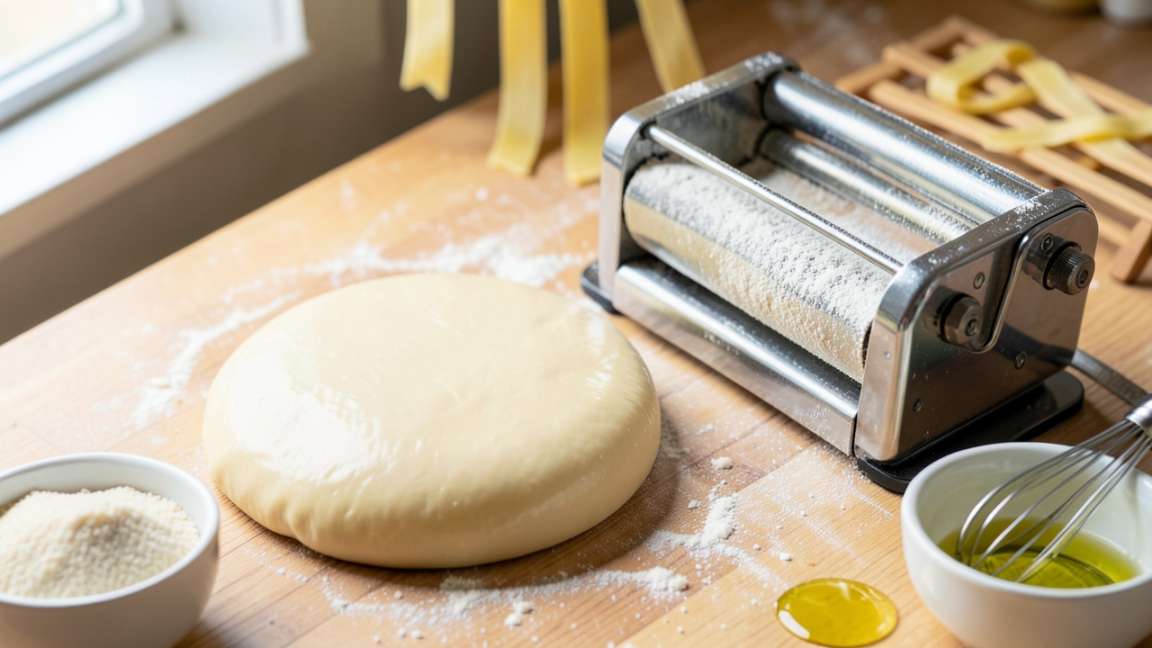
Making gluten-free pasta dough requires a specific workflow. Follow these steps to avoid failure.
Step 1: Prepare the Dry Ingredients
Weigh your flour blend on a digital scale. Accuracy matters more with gluten-free flours because they absorb liquid differently.
- Measure 200 grams of flour blend.
- Add 1 teaspoon of xanthan gum.
- Mix in 1 teaspoon of salt.
- Sift everything together into a large bowl.
Step 2: Create the Liquid Base
In a separate bowl, combine the wet ingredients.
- Crack 2 large eggs into the bowl.
- Add 1 egg yolk for extra richness.
- Pour in 1 tablespoon of olive oil.
- Whisk until smooth and fully combined.
Tip: For vegan dough, substitute eggs with 3 tablespoons of aquafaba (chickpea water) mixed with 1 tablespoon of psyllium husk powder. This combination mimics egg white structure effectively.
Step 3: Form the Dough
Pour the wet ingredients into the dry mixture. Use a fork to stir until a shaggy dough forms.
- Scrape the sides of the bowl.
- Knead the dough in the bowl for 3 minutes by hand.
- The dough should feel slightly tacky but not sticky.
Step 4: Rest the Dough
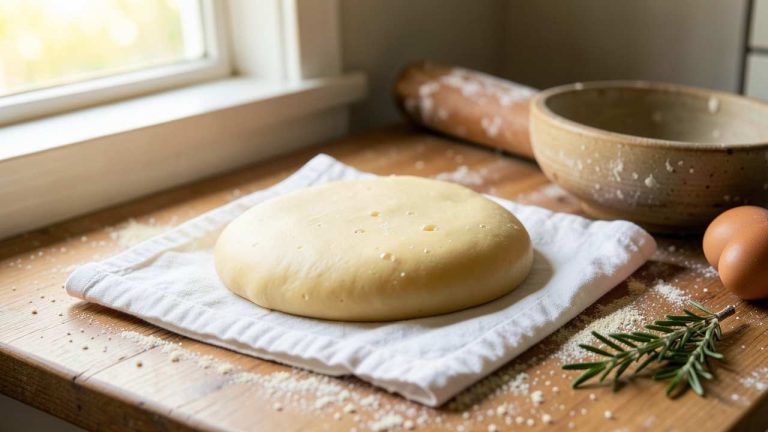
Wrap the dough in plastic wrap. Let it rest at room temperature for 30 minutes.
Important: Do not skip the rest. During this time, the starches absorb moisture and the binders activate. Dough without rest will stick to the machine rollers or break apart.
Step 5: Set Up Your Machine
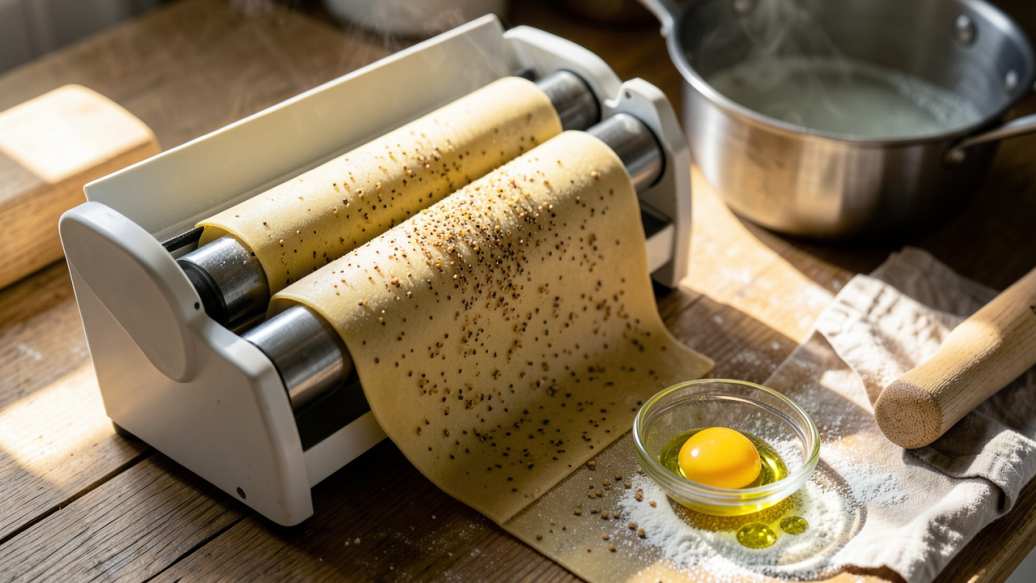
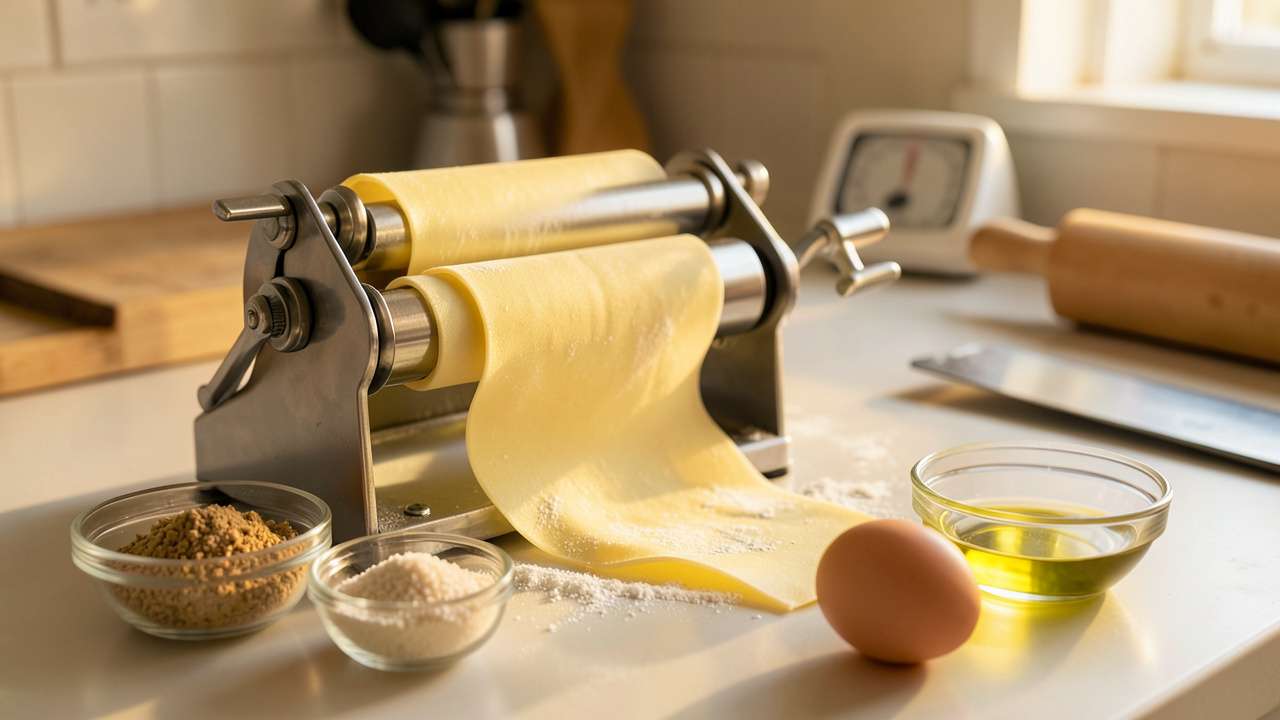
Attach the pasta roller to your machine. Set it to the widest setting (usually number 1).
- Flatten the rested dough into a disc.
- Dust both sides lightly with rice flour or cornstarch.
- Feed the dough through the rollers on setting 1.
- Fold the dough in half and run it through again.
- Repeat folding and rolling 4 times to build layers.
Step 6: Thin the Sheets Gradually
Reduce the roller setting one number at a time. Never skip more than one setting.
- Roll the dough through setting 2 once.
- Switch to setting 3 and roll once.
- Continue until you reach setting 5 or 6.
- If the dough sticks, dust with more rice flour.
Warning: Do not force the dough through the rollers. If it resists or tears, wrap it in plastic and rest for 10 more minutes. Forcing causes the dough to rip and clog the machine.
Step 7: Cut the Pasta
Switch to the cutting attachment for your desired shape. Feed the sheet through at a steady, moderate speed.
- For fettuccine, use the wider cutting die.
- For spaghetti, use the thinner die.
- Hold the cut pasta with your hand to prevent tangling.
Common Mistakes to Avoid
Even experienced home cooks make these errors with gluten-free pasta dough.
- Using a single flour – Rice flour alone produces brittle dough. Always blend at least two flours plus a starch.
- Skipping the binder – Without xanthan gum or psyllium husk, the dough has zero elasticity. Your result will be crumbly.
- Over-kneading – Gluten-free dough does not benefit from extended kneading. It can make the dough stiff and dry.
- Rolling without dusting – Gluten-free dough sticks to rollers more than wheat dough. Use rice flour generously between passes.
- Boiling immediately – Fresh gluten-free pasta needs to rest for 10 minutes after cutting to firm up. Boiling wet dough makes it disintegrate.
Pro Tips for Perfect Gluten-Free Pasta
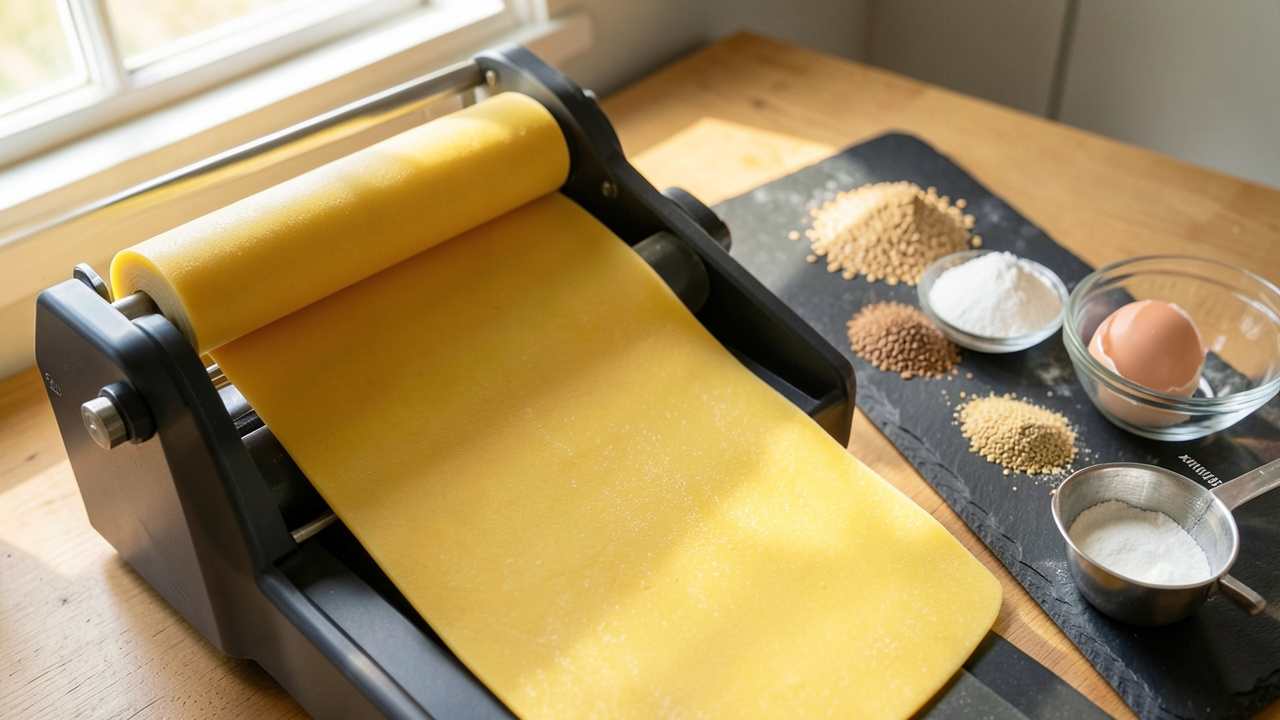
These advanced techniques come from bakers who use gluten-free pasta dough in home machines every day.
- Use warm liquid – Warm water or warm eggs help hydrate the starches faster, creating a smoother dough.
- Add a bit of potato starch – Potato starch gives a softer bite. Replace 10 percent of your flour blend with potato starch.
- Freeze the sheets – After rolling but before cutting, place the sheets on a baking sheet in the freezer for 5 minutes. This firms the dough for cleaner cuts.
- Cook in salted water – Use 1 tablespoon of salt per 4 quarts of water. The salt seasons the dough without affecting its structure.
- Do not rinse after boiling – Rinsing washes away the surface starch that helps sauces cling to the pasta.
What Gluten-Free Pasta Dough Is Not
Many beginners expect gluten-free dough to behave exactly like wheat dough. It does not.
- It is not stretchy – Gluten-free dough tears more easily. Handle it gently and avoid pulling or tugging.
- It is not forgiving – Small changes in hydration cause big problems. Weigh ingredients for consistent results.
- It is not fast – The resting and folding steps add time. Expect 45 minutes from start to the first cut.
Frequently Asked Questions
Why is my gluten-free pasta dough crumbly?
Crumbly dough means you have too little liquid or binder. Add 1 tablespoon of water and knead again. If the dough still crumbles, mix in 1/2 teaspoon of psyllium husk powder along with the water. Let it rest for 10 minutes before trying again.
Can I use all-purpose gluten-free flour for pasta?
Yes, but only blends that contain binders. King Arthur Baking Company’s Measure for Measure flour works well for pasta dough. Plain rice flour blends will fail because they lack the protein and gums needed for structure.
Why does my gluten-free pasta stick to the machine rollers?
This happens when the dough is too wet or when you skip dusting. Dust the dough sheet with rice flour or cornstarch before every pass through the rollers. Reduce the liquid by 1 tablespoon in your next batch.
How do I store fresh gluten-free pasta?
Lay the cut pasta in a single layer on a baking sheet. Freeze for 20 minutes, then transfer to a zip-top bag. It stays fresh in the freezer for up to 1 month. Cook directly from frozen without thawing.
Can I make gluten-free pasta dough without a machine?
Yes. Roll the dough by hand with a rolling pin and cut ribbons with a knife. The same binder and hydration rules apply. Hand-rolled pasta works best for pappardelle and lasagna sheets.
Resources and Tools
KitchenAid Pasta Roller Attachment – Reliable electric roller for consistent sheets. Works well with gluten-free dough when properly dusted.
Marcato Atlas 150 Manual Machine – Durable manual roller with adjustable thickness settings. Best for control.
Caputo Gluten-Free Flour – Pre-blended formula developed specifically for pasta and pizza. Contains binders and pre-gelatinized starches.
Bob’s Red Mill Gluten-Free 1-to-1 Baking Flour – Convenient all-purpose blend with xanthan gum. Good for beginners.
Final Thoughts
Making gluten-free pasta dough work in a home machine is about understanding binders, hydration, and process. Use a blend that includes protein and pre-gelatinized starch. Rest the dough. Dust generously. Use these techniques and your home machine will produce gluten-free pasta that holds together, cooks evenly, and tastes great.