How Sous Vide Machines Maintain Exact Water Bath Temperature
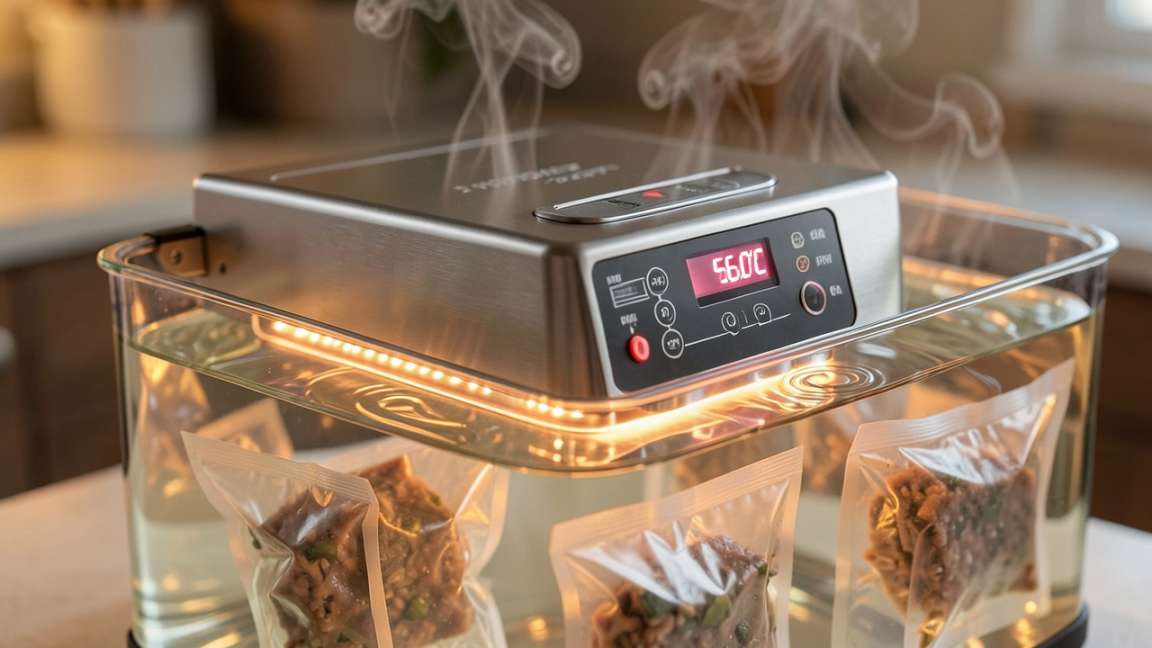
Sous vide machines maintain exact water bath temperature by using a PID controller that reads the temperature sensor hundreds of times per second and adjusts the heating element's power output accordingly, while an immersion circulator pump eliminates thermal gradients to ensure uniform heat distribution. The combination of proportional, integral, and derivative control allows the system to anticipate and correct temperature deviations before they affect the bath. This closed-loop precision is critical for both food safety and achieving consistent texture results during long cooking sessions.
A sous vide machine performs a surprisingly complex task. It keeps a large volume of water at a specific temperature for hours without fluctuation. This guide breaks down every component and process that makes this precision possible.
In short, sous vide machines use a closed-loop system with a PID controller, a temperature sensor, a heating element, and a circulation pump. The controller reads the water temperature from the sensor hundreds of times per second. It adjusts the heater power based on these readings. The pump keeps the water moving so every part of the bath stays at the exact same temperature.
Key Takeaways
- Sous vide machines rely on a PID controller that continuously calculates the optimal power level for the heating element based on real-time feedback from a temperature sensor.
- An immersion circulator pump is critical for eliminating thermal gradients in the water bath, ensuring the food cooks evenly from all sides.
- High-end sous vide machines use RTD sensors for superior accuracy, while budget-friendly models often use thermocouples or thermistors.
- The temperature precision of a sous vide machine allows you to cook food to a specific level of doneness that is impossible to achieve with conventional stovetop methods.
- Heat loss to the surrounding air is automatically compensated by the machine’s feedback loop, though an insulated container improves efficiency and reduces power draw.
What Parts Make Up a Sous Vide Immersion Circulator?
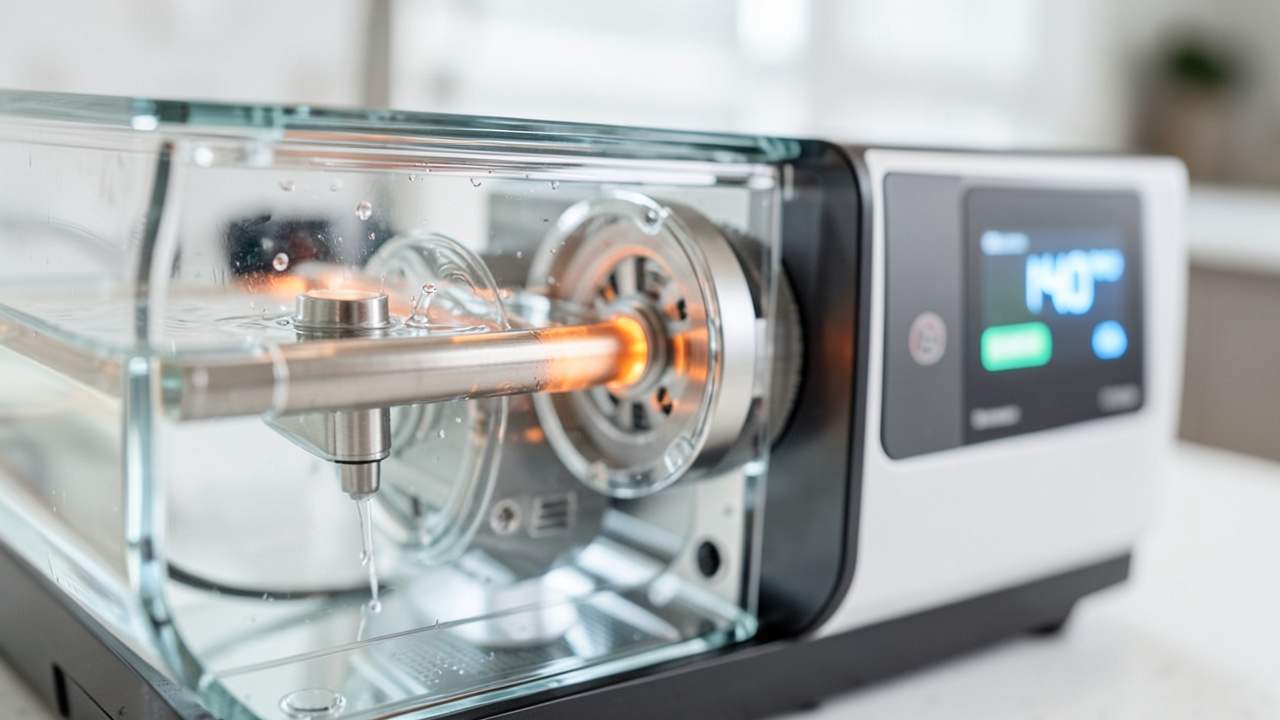
Every sous vide machine contains four essential components that work together as a system. Each part has a specific job that contributes to the overall accuracy.
How Sous Vide Machines Maintain Exact Water Bath Temperature depends on how well these four parts communicate with each other.
- The Temperature Sensor – This measures the current water temperature and sends that data to the controller.
- The PID Controller – This is the brain of the operation. It processes the sensor data and decides how much power to send to the heater.
- The Heating Element – This converts electrical energy into heat. It warms the water based on the power level the controller sets.
- The Circulation Pump – This moves water through the machine and around the bath so the temperature stays uniform throughout the container.
Important: The pump is not just an accessory. Without water circulation, the water near the heater becomes much hotter than the water near the food. This creates a temperature gradient that ruins cooking precision.
How Does a PID Controller Work?
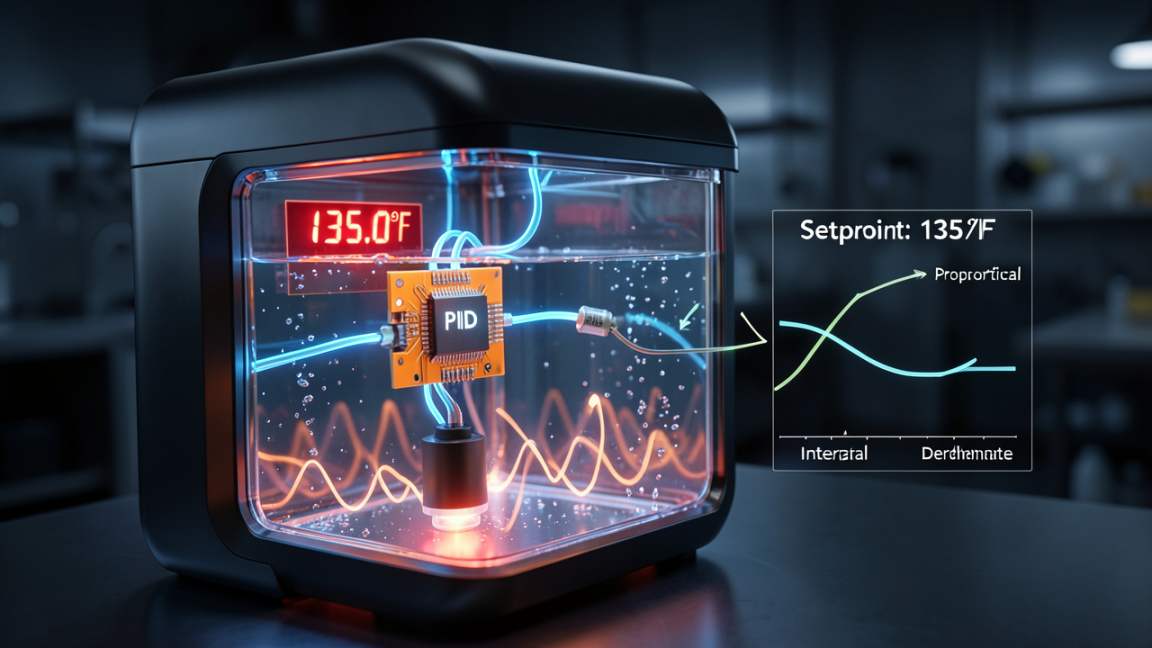
The PID controller is the most important innovation in modern sous vide cooking. PID stands for Proportional-Integral-Derivative. These three calculations work together to keep the water temperature steady.
The Proportional Component
The proportional part reacts to the current error. This is the difference between the target temperature and the actual water temperature. If the water is far from the target, the controller sends full power to the heater. As the water gets closer to the target, the controller reduces the power proportionally.
The Integral Component
The integral part looks at past errors. It accounts for things like heat loss from the container to the room. If the water keeps dropping slightly below the target because the room is cold, the integral function adds more power over time to correct that steady-state error.
The Derivative Component
The derivative part predicts future errors. It watches how fast the temperature is changing. If the temperature is rising quickly toward the target, the derivative function reduces power early to prevent overshooting the set point.
Warning: A simple on-off thermostat would make the water temperature swing wildly. The heater would stay on until the water is too hot, then turn off until it gets too cold. According to a comparison by, a thermostat can cause temperature swings of 5 to 10 degrees Fahrenheit, while a PID controller holds the temp within half a degree.
What Types of Temperature Sensors Do Sous Vide Machines Use?
The accuracy of the entire system starts with the sensor. If the sensor reads the wrong temperature, the controller will make the wrong decisions. There are three common types of sensors used in these machines.
| Sensor Type | Typical Accuracy | Stability | Commonly Found In |
|---|---|---|---|
| RTD (PT100 or PT1000) | +/- 0.1 degrees Celsius | Excellent | High-end models like the Anova Precision Cooker Pro and the ChefSteps Joule |
| Thermocouple | +/- 0.5 degrees Celsius | Good | Many mid-range consumer circulators |
| Thermistor (NTC) | +/- 1.0 degrees Celsius | Fair | Budget-friendly or older models |
An RTD sensor uses a platinum wire that changes resistance in a very predictable way. This makes it the gold standard for precision cooking. According to, the Joule measures the water temperature 100 times per second to maintain its advertised accuracy.
How Does the Heating Element Maintain the Set Point?
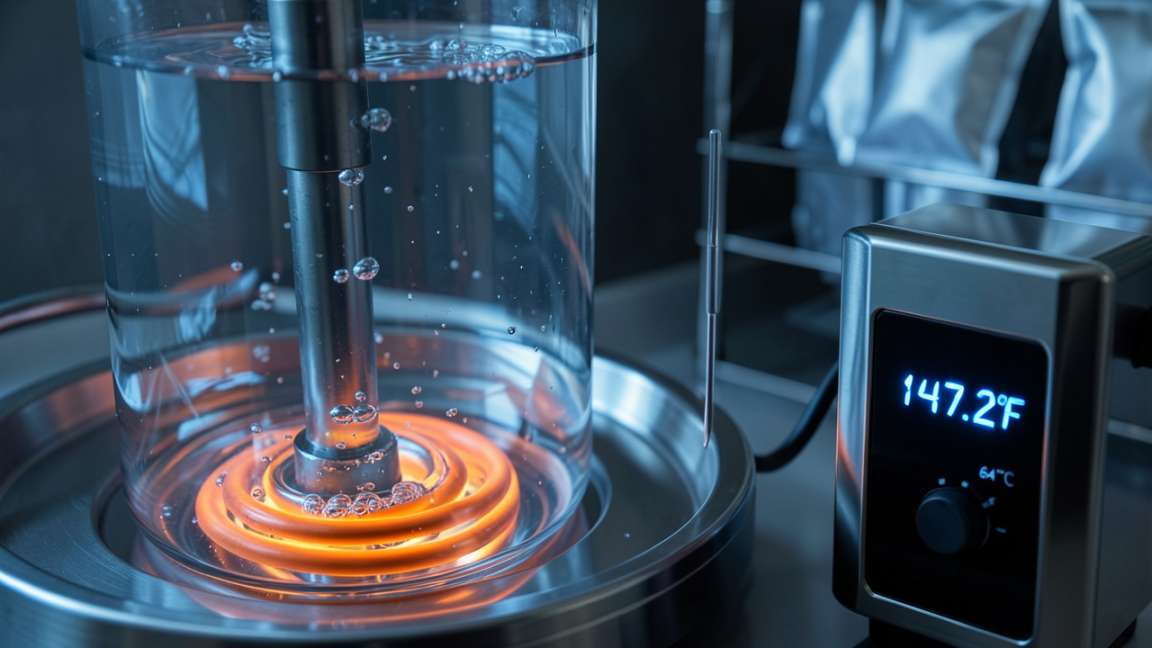
The heating element in a sous vide machine is a tubular heater, similar to the heating element in a water kettle or a water heater. The difference is how it receives power.
The PID controller sends a signal that tells the heating element what percentage of its maximum power to use. This is often done with a method called pulse width modulation. The controller turns the heater on and off very rapidly. The ratio of on time to off time determines the average power output.
If the water is close to the target temperature, the heater might pulse at 10 percent power. If you add a large roast and the temperature drops by two degrees, the controller will command 100 percent power until the sensor reports the temperature is climbing back toward the set point.
Why Is Water Circulation Critical for Precision?
Water is not a great conductor of heat. Without stirring, the water near the heating element becomes much hotter than the water at the surface. This difference can be several degrees.
An immersion circulator pump moves 5 to 15 liters of water per minute through the machine and back into the bath. This forced convection creates thermal equilibrium across the entire container.
Tip: If you want to test your machine’s circulation, drop a few drops of food coloring into one corner of the bath. A good circulator will distribute the color evenly throughout the entire container within 30 seconds.
The pump impeller is typically a propeller or a centrifugal design. The machine draws water in through an intake near the bottom. The water passes over the sensor and the heating element, and then exits through a nozzle, creating a current that stirs the entire bath.
Why Is Precision Important for Safety and Texture?
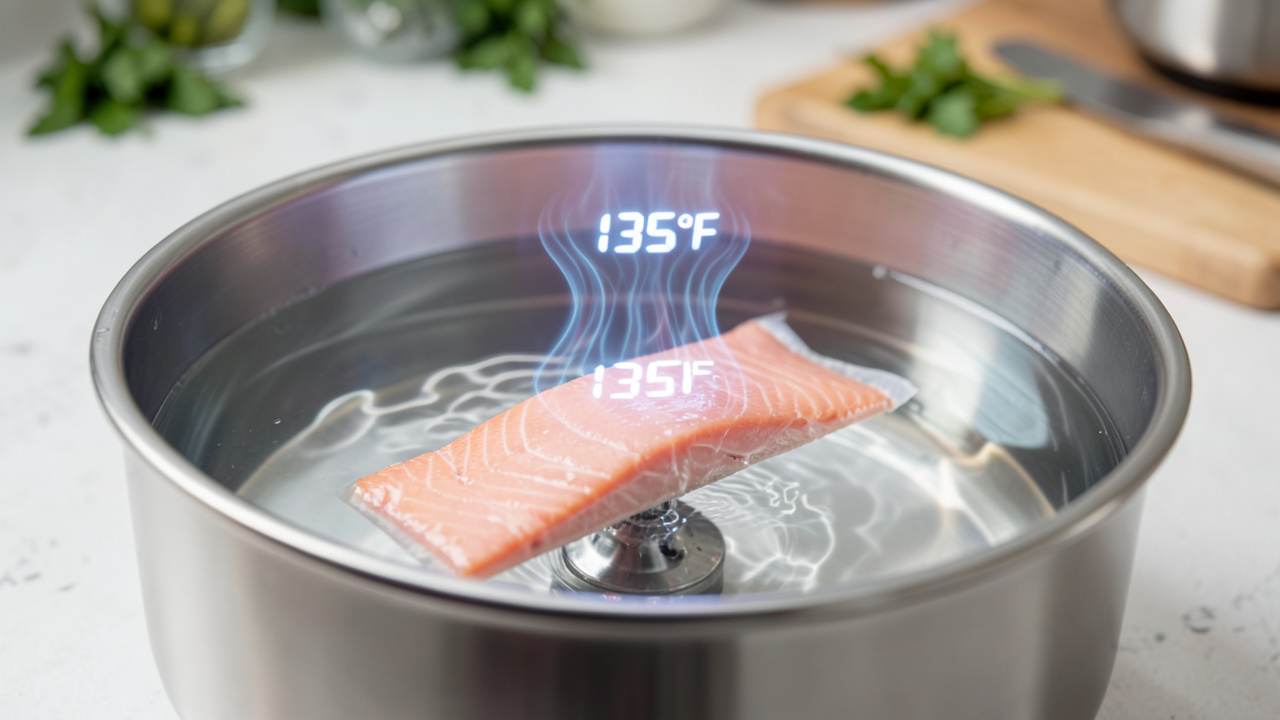
Precision in a sous vide machine serves two purposes: food safety and texture control. Both rely on the ability to hold a specific temperature for a specific amount of time.
Food Safety and Pasteurization
The provides specific time-temperature tables for pasteurizing food. For chicken to be safe, it must reach 165 degrees Fahrenheit instantly. But it can also be safe if held at 145 degrees Fahrenheit for 8.5 minutes. The lower temperature kills the same number of bacteria if held long enough. A precise sous vide machine makes this possible. A stovetop cannot hold 145 degrees for 8 minutes without dropping or spiking.
Texture Through Protein Denaturation
Proteins change structure at specific temperatures. Egg yolks start to thicken at 149 degrees Fahrenheit and become fully set at 158 degrees Fahrenheit. A difference of just one degree changes the texture from jammy and creamy to dry and crumbly.
Meat collagen breaks down into gelatin at around 160 degrees Fahrenheit. Myosin, a protein in meat, denatures at around 120 degrees Fahrenheit. Actin denatures at around 150 degrees Fahrenheit. Cooking a steak to exactly 131 degrees Fahrenheit for two hours gives you a medium-rare texture that is consistent from edge to edge.
Important: According to a study in the International Journal of Gastronomy and Food Science, temperature uniformity in a PID-controlled water bath reduces the risk of undercooked edges by over 90 percent compared to traditional thermal immersion methods.
Common Myths vs Facts About Sous Vide Temperature Control
Myth: The water temperature is exactly the same as the food’s internal temperature.
The water bath temperature is the target you set, but the food only reaches that temperature after a period of thermal equilibrium. A thick roast can take several hours to reach the center temperature that matches the water bath. The food will never exceed the water bath temperature, but it starts much colder.
Myth: You can achieve the same results by using a pot on the stove and a thermometer.
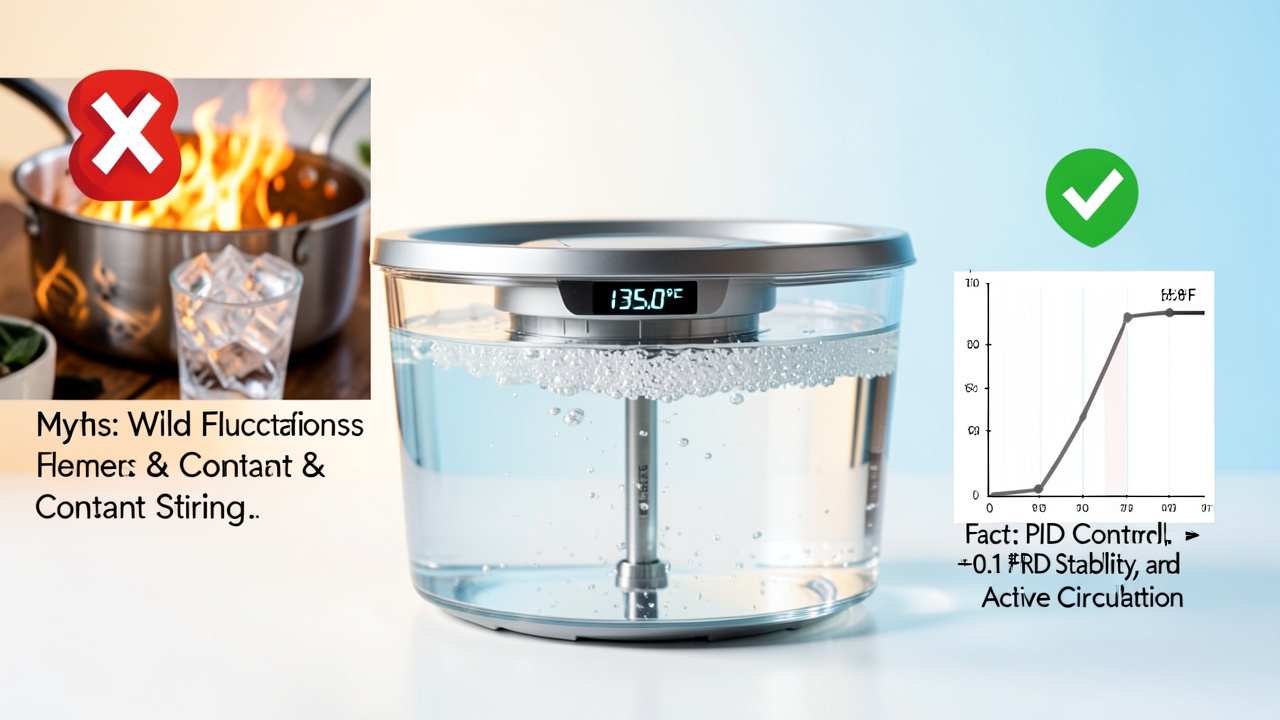
Stovetop cooking relies on conduction from the burner to the pot. The bottom of the pot is always much hotter than the water surface. Even with constant stirring and monitoring, it is nearly impossible to hold a large volume of water within one degree of a target without a PID-controlled immersion circulator.
Myth: More expensive sous vide machines are not actually more accurate.
Higher-end machines use more accurate sensors and more sophisticated PID algorithms. The ChefSteps Joule, for example, calibrates itself during each cook and uses a certified RTD sensor. According to, their Precision Cooker Pro maintains a temperature accuracy of +/- 0.1 degrees Celsius, while budget models may drift by one or two degrees.
Pro Tips for Getting the Most Precise Cook
- Use an insulated container. A plastic food service container or a dedicated sous vide tub loses less heat to the room than a thin metal pot. This reduces the strain on the heater and makes it easier for the PID controller to maintain a steady temperature.
- Cover the water bath. Evaporation cools the water surface and wastes energy. A lid, plastic wrap, or a ping pong ball cover prevents this heat loss and helps the machine maintain its set point.
- Allow time for stabilization. When you add cold food to a preheated bath, the temperature drops. Give the machine 5 to 10 minutes to bring the bath back up to temperature before you start the official cooking timer.
- Do not overcrowd the bath. Adding too much food at once can drop the water temperature by 10 degrees or more. The machine can recover, but it takes time. A large thermal mass stresses the system and can create temporary uneven cooking.
- Verify with a secondary thermometer. Use a certified instant-read thermometer like the to double-check your water bath temperature. This confirms your sensor is reading correctly.
Resources and Tools
Anova Precision Cooker Pro – A high-end immersion circulator with an RTD sensor and a powerful pump.
ChefSteps Joule – A compact circulator that uses a sophisticated PID algorithm and accurate sensor for tight temperature control.
ThermoWorks Thermapen ONE – An instant-read thermometer recommended for verifying your circulator’s accuracy.
USDA Food Safety Guidelines – Official time-temperature tables for safe sous vide cooking.
Serious Eats Sous Vide Guides – Detailed articles on sous vide science and technique from a trusted culinary source.
Frequently Asked Questions
How accurate is a typical sous vide machine?
A high-quality sous vide machine typically maintains temperature within +/- 0.1 degrees Celsius (0.2 degrees Fahrenheit). Budget models may hold within +/- 1 degree Celsius. The accuracy depends on the quality of the sensor and the sophistication of the PID controller.
Do I need a lid for sous vide cooking?
Using a lid is strongly recommended. Water evaporates quickly at cooking temperatures, which causes heat loss and forces the machine to work harder. A lid also prevents heat from escaping from the water surface, making it easier for the PID controller to maintain a stable temperature.
Can I leave a sous vide machine running unattended?
Most modern sous vide machines are designed for safe unattended operation. They have built-in overheat protection and low-water shutoff sensors. Always follow the manufacturer’s safety instructions and use the machine in a safe location away from children and pets.
How do I know if my circulator is reading the correct temperature?
Use a certified and calibrated instant-read thermometer to check the water temperature in the center of the bath. Make sure the probe is not touching the food or the container. Compare this reading to the temperature displayed on your circulator. A difference of 0.5 degrees or less is generally acceptable.
Why does my sous vide machine make a clicking sound?
The clicking sound is usually the relay switching the heating element on and off. This is normal. In machines using pulse width modulation, the relay clicks rapidly as the controller adjusts power levels. Some machines use a solid-state relay that makes less noise.
Final Thoughts
A sous vide machine maintains exact water bath temperature through the continuous interaction of a PID controller, an accurate temperature sensor, a regulated heating element, and a circulation pump. The feedback loop between these components eliminates the temperature swings and hot spots that make traditional cooking imprecise. Understanding how this system works helps you choose the right machine and use it more effectively for consistent results every time.