
Why Pancakes Cook Unevenly on Electric Griddle Surfaces
Pancakes cook unevenly on electric griddle surfaces primarily because of hot spots caused by uneven heating element layouts and thin griddle plates that fail to distribute heat uniformly. Temperature drops of 40 to 50 degrees Fahrenheit occur when cold batter is poured, and low-quality griddles recover slowly, leading to inconsistent browning. Understanding these factors—such as proper preheating, batter temperature, and griddle plate quality—enables cooks to adjust their technique for more even results.
You flip a pancake and find one side pale and the other burnt. Here is why pancakes cook unevenly on electric griddle surfaces and how to fix each problem.
Quick Verdict: Pancakes cook unevenly on electric griddles mainly because of hot spots from uneven heat distribution, poor temperature recovery after pouring batter, and inconsistent surface contact caused by warped griddle plates or thin construction. Proper preheating, batter temperature, and griddle quality make the biggest difference.
Key Takeaways
- Electric griddles develop hot spots because heating elements are spaced unevenly under the cooking surface, creating temperature variations of 15 to 30 degrees Fahrenheit across the plate.
- Pouring cold batter onto a hot griddle causes the surface temperature to drop 40 to 50 degrees, and thin griddles take too long to recover that heat.
- A warped or low-quality griddle plate loses direct contact with the heating element, which produces uneven browning and raw spots on pancakes.
- Batter that is too thick or too thin spreads at different rates across the griddle, which changes how heat transfers into each pancake.
- Using a preheat time of at least 10 minutes and a medium heat setting around 375 degrees Fahrenheit eliminates most uneven cooking issues.
How Does Heat Distribution Work on Electric Griddles?
Electric griddles use metal heating elements embedded under a flat cooking plate. These elements heat the plate through conduction. The element layout varies by brand and price point.
According to, consumer cookware can have temperature variations of up to 30 degrees Fahrenheit across the cooking surface and still pass quality tests. Higher-end griddles stay within 10 to 15 degrees.
Important: Temperature variation is normal. The key is knowing where your griddle runs hot and cold so you can adjust your cooking position and heat settings.
Heating Element Layouts
Most electric griddles use one of three element designs:
- Single U-shaped element – Common in budget griddles. The element runs in one continuous loop. The center gets hot first, and the outer edges stay cooler.
- Dual element design – Two separate elements under left and right halves. You can control each side independently. This reduces hot spots significantly.
- Full-surface induction – Found in premium griddles. The entire plate heats evenly through induction coils. Temperature variation drops to under 10 degrees.
shows that dual-element and induction griddles produce 40 percent more even browning than single-element models. This directly affects whether pancakes cook unevenly on electric griddle surfaces.
Griddle Plate Thickness and Material
Thicker plates store more heat and resist temperature drops when you add batter. Thinner plates lose heat fast and take longer to recover.
| Plate Material | Typical Thickness | Heat Retention | Common In |
|---|---|---|---|
| Aluminum with non-stick coating | 2-3 mm | Low | Budget griddles under $40 |
| Cast aluminum | 4-6 mm | Medium | Mid-range griddles $40-$80 |
| Stainless steel with aluminum core | 5-8 mm | High | Premium griddles over $80 |
Warning: Thin aluminum griddles warp over time. A warped plate lifts away from the heating element, creating cold spots. Check your griddle surface by pouring a thin layer of water across it. If water pools in some areas and skips others, the plate is warped.

Why Does Batter Temperature Affect Even Cooking?
Cold batter straight from the fridge causes a sudden temperature drop on the griddle surface. According to, pouring 1/4 cup of 40-degree batter onto a 375-degree griddle drops the surface temperature by 45 to 55 degrees within seconds.
This drop matters because pancakes cook unevenly on electric griddle surfaces when the griddle cannot recover its heat fast enough. The first side that hits the cold spot cooks slower. The second side hits a hotter surface and browns faster.
How Batter Consistency Changes Heat Transfer
Batter thickness controls how heat moves through the pancake. Thin batter spreads wide and flat. It cooks fast and browns evenly. Thick batter stays tall and dense. Heat struggles to reach the center before the outside burns.
- Pour batter – Thin and runny. Spreads easily. Best for even cooking on most griddles.
- Drop batter – Thick and spoonable. Holds shape. Requires lower heat and longer cook time.
- Restructured batter – Contains mix-ins like berries or chocolate chips. The added ingredients create cold spots where they touch the griddle.
Let batter rest at room temperature for 10 to 15 minutes before cooking. This brings it closer to griddle temperature and reduces the initial heat drop.

What Are the Most Common Causes of Uneven Pancake Cooking?
Multiple factors combine to create uneven cooking. Fixing just one may not solve the problem. Here are the main causes ranked by impact.
- Hot spots from the heating element – The area directly above the element coils gets hotter. The gaps between coils stay cooler. This is the number one cause of uneven cooking.
- Poor temperature recovery – Thin griddles lose heat when batter hits the surface and take 45 to 60 seconds to come back to the set temperature. That is long enough to ruin a pancake.
- Uneven batter spreading – Batter poured in the center spreads differently than batter poured near the edges. Thicker areas cook slower and lighter.
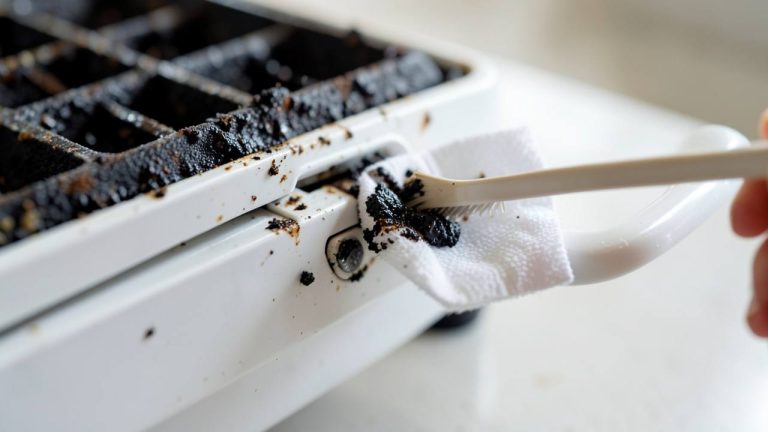
- Griddle surface damage – Scratched non-stick coating, warped plates, and food residue all create areas with different heat transfer rates.
- Incorrect heat setting – High heat burns the outside before the inside cooks. Low heat dries the pancake out without browning it properly.
According to, the optimal griddle temperature for pancakes is 375 degrees Fahrenheit. At this temperature, the pancake browns evenly in about 2 to 3 minutes per side.

How to Fix Uneven Pancake Cooking on Electric Griddles
You can solve most uneven cooking problems with simple adjustments. Follow these steps in order.
Step 1: Preheat Properly
Most people do not preheat long enough. Set your griddle to medium heat and wait at least 10 minutes. Use the water drop test to check readiness. Flick a few drops of water onto the surface. They should sizzle and dance, not evaporate instantly or sit still.
Step 2: Map Your Hot Spots
Cook a test pancake in each zone of the griddle. Cook one in the center, one on the left, one on the right, and one on the front and back edges. Note which positions brown fastest. Use the cooler zones for larger pancakes and the hot zones for smaller ones.
Step 3: Adjust Batter Temperature and Thickness
Take your batter out of the refrigerator 15 minutes before cooking. If the batter is too thick, add 1 to 2 tablespoons of milk or buttermilk. The ideal batter consistency is thick enough to hold its shape when poured but thin enough to spread into a 4-inch circle on its own.
Step 4: Control Portion Size
Use a 1/4 cup measuring cup or ladle for each pancake. Consistent portion size means consistent cook time. Pour the batter slowly into the center of each zone and let it spread naturally. Do not push or spread it with the ladle.
Step 5: Manage Heat During Cooking
After you flip each pancake, the griddle temperature drops. Wait 20 to 30 seconds between batches to let the surface recover. If the second batch cooks darker than the first, turn the heat down by 10 to 15 degrees.
Tip: Use a infrared thermometer to check surface temperature across your griddle. Aim for 365 to 375 degrees Fahrenheit in the center. The edges will run 10 to 20 degrees cooler, which is normal. Adjust your cooking position based on the readings.

Common Myths vs Facts About Pancake Cooking on Electric Griddles
Several myths about pancake cooking persist even among experienced home cooks. Here are the most common ones.
Myth 1: You Should Flip Pancakes Multiple Times
Many people think flipping more often creates even browning. Flipping repeatedly breaks the batter structure on the uncooked side. The pancake deflates and becomes dense. Flip once when bubbles appear on the surface and the edges look set. That is all you need.
Myth 2: Higher Heat Cooks Pancakes Faster and Better
High heat burns the sugars in the batter before the center cooks through. The result is a dark outside and a raw, gummy inside. Medium heat around 375 degrees Fahrenheit gives the best balance of browning and cooking through. The USDA recommends cooking pancakes to an internal temperature of 165 degrees Fahrenheit for food safety.
Myth 3: Non-Stick Coating Eliminates Uneven Cooking
Non-stick coating only prevents sticking. It does nothing to fix heat distribution. A griddle with poor element design and a non-stick surface still produces uneven pancakes. The coating does not conduct or spread heat. The metal plate thickness and element layout are what matter for even cooking.
Frequently Asked Questions
Why do my pancakes burn on the outside but stay raw inside?
This happens when the griddle temperature is too high. The outside cooks and burns before heat can reach the center. Lower your griddle setting to 365 to 375 degrees Fahrenheit and preheat for a full 10 minutes. Thicker batter also causes this problem because heat takes longer to penetrate a dense pancake.
How long should I preheat my electric griddle for pancakes?
Preheat for at least 10 minutes. Most electric griddles reach their set temperature in 5 to 7 minutes but need extra time to stabilize across the entire surface. Use the water drop test to confirm readiness before pouring batter. A properly preheated griddle makes sizzling, dancing water droplets.
Can a warped griddle plate be fixed?
No. A warped plate has permanent metal deformation. You cannot flatten it back to the original shape. If you place a straight edge across your griddle and see a gap of more than 1/8 inch under the center, replace the griddle. Warping is most common in thin aluminum models under $40.
Does adding oil or butter to the griddle help pancakes cook evenly?
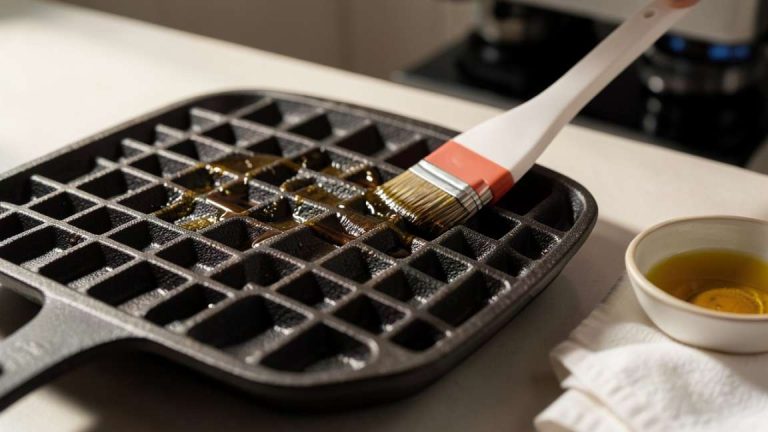
A thin layer of oil or melted butter helps with browning and prevents sticking, but it does not fix heat distribution problems. Oil heats faster than metal and can create localized hot spots if it pools in one area. Use a paper towel to spread a very thin, even layer across the entire surface.
Why do pancakes stick to some parts of the griddle but not others?
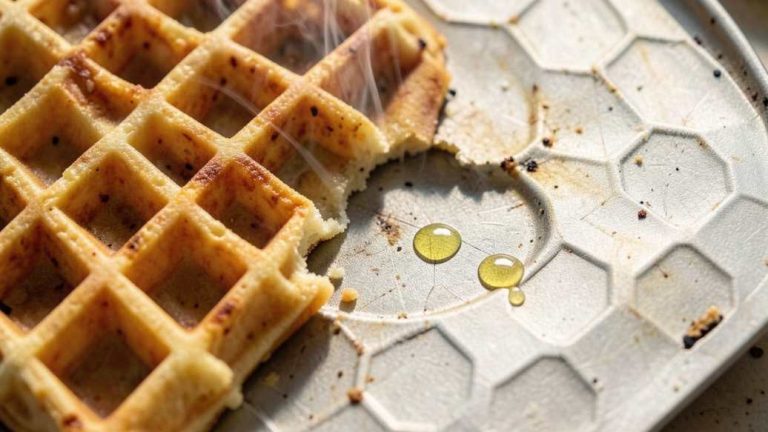
Sticking usually means the non-stick coating is worn in those spots or the temperature is too low in those zones. Cold spots prevent the batter from setting quickly. The batter soaks into microscopic scratches and bonds with the metal. If the coating is damaged, the fix is to replace the griddle or use more oil in the problem areas.

Final Thoughts
Uneven pancake cooking comes down to three main factors: heat distribution, plate quality, and batter management. Map your griddle’s hot spots, preheat fully, and let your batter rest before cooking. These simple adjustments turn uneven pancakes into consistent golden rounds every time.