How Sous Vide Achieves Textures a Stove Top Simply Cannot
Sous vide achieves textures a stovetop cannot by using water bath temperature control within 0.1 degrees Fahrenheit, eliminating temperature gradients and overcooked edges. This precision allows proteins like steak to cook medium-rare edge to edge without a gray band, or chicken breast to remain silky and juicy at 145°F. The method's ability to hold exact low temperatures for extended periods enables enzyme activity that tenderizes connective tissue while preserving delicate textures in fish and vegetables.
Sous vide cooking delivers textures that are impossible to achieve on a stovetop by using precise temperature control within a fraction of a degree. This guide explains the science behind these textures and how you can master them at home.
Quick Verdict: Sous vide uses precise water bath temperature control to cook food evenly edge to edge, achieving textures like tender steak with no gray band, silky custards, and flaky fish that a stovetop cannot replicate. The method eliminates temperature gradients and overcooked edges by surrounding food with water at one exact temperature for the entire cooking time.
Key Takeaways
- Sous vide cooking holds water at a single temperature within 0.1 degrees Fahrenheit, which eliminates the temperature gradients that stovetop cooking always creates.
- Cooking proteins sous vide allows enzymes to break down connective tissue at low temperatures over many hours, producing tenderness that pan searing alone cannot achieve.
- The precision of sous vide enables textures like 130°F steak that is medium-rare edge to edge, or chicken breast at 145°F that stays juicy without drying out.
- Vegetables cooked sous vide retain more structure and vitamins because they cook at lower temperatures than boiling or steaming requires.
- Combining sous vide with a quick sear gives you the best of both worlds – perfect internal texture plus a crisp crust on the outside.
How Does Sous Vide Achieve Different Textures?
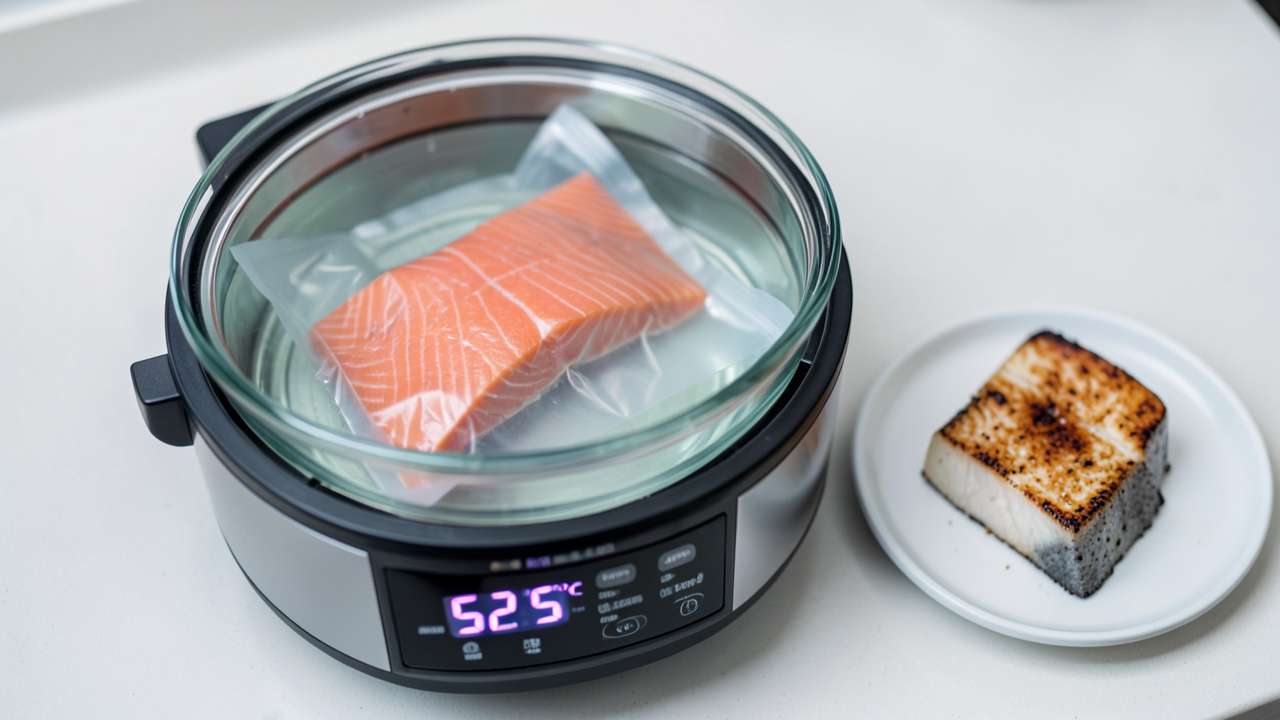
Sous vide relies on a simple principle: water transfers heat more efficiently than air, and a precision circulator keeps the temperature constant. When you place food in a sealed bag and submerge it in the water bath, the food eventually reaches the exact same temperature as the water, no hotter and no cooler.
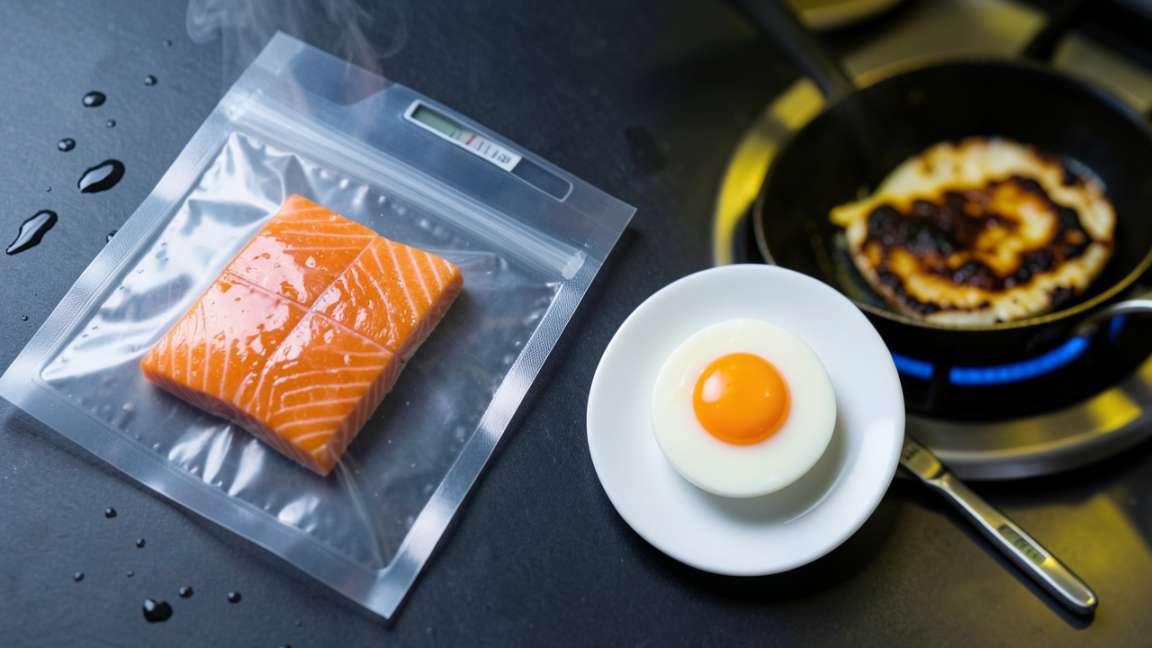
A stovetop pan or oven creates a temperature gradient. The outer layers of food get much hotter than the center, which is why a pan-seared steak has a ring of overcooked meat around the edges. Sous vide removes this gradient entirely.
Tip: The key to sous vide texture is matching the water temperature to your desired doneness. For medium-rare steak, set the bath to 130°F. For tender chicken breast, use 145°F. The food will never surpass this temperature.
The science behind this involves heat transfer, protein denaturation, and enzyme activity. Different proteins in meat denature at different temperatures. Myosin denatures around 122°F, while actin denatures around 150°F. By holding meat at a specific temperature, you can control which proteins denature and which stay intact.
According to, cooking a steak to 130°F for one hour gives you a texture where approximately 94 percent of the meat is fully tenderized and at the same degree of doneness. No stovetop method can match this uniformity.
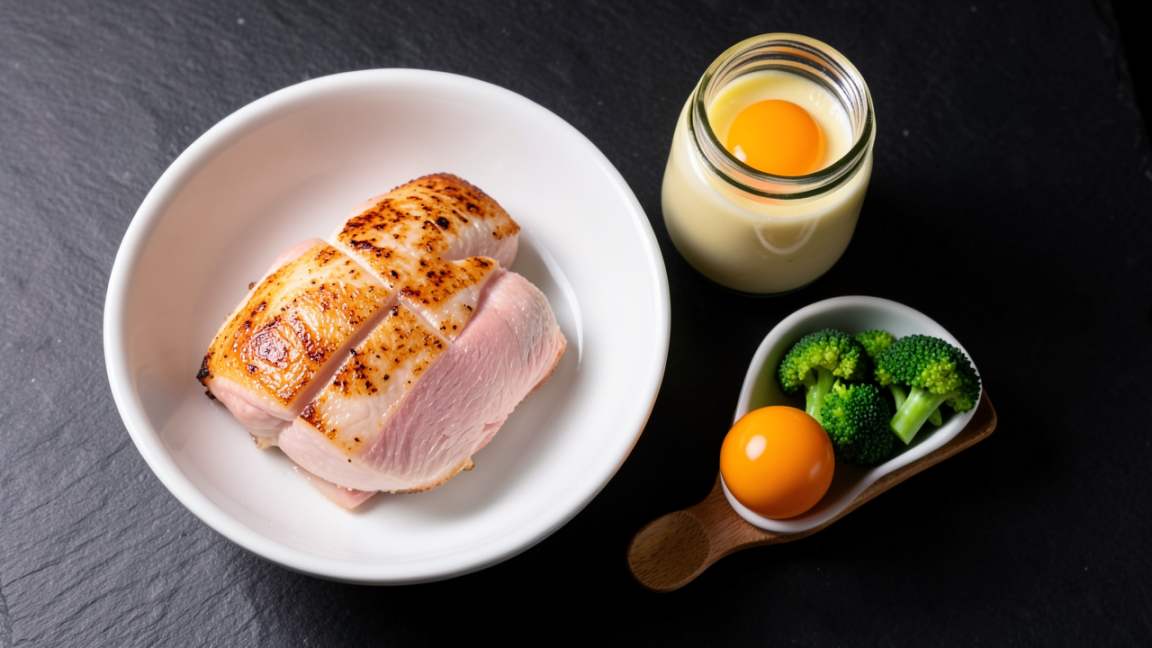
Types of Textures Only Sous Vide Can Deliver
Tender Steak With No Gray Band
Pan-seared steak always has a gradient. The exterior can be well-done while the center is rare, and the middle zone is gray and dry. Sous vide gives you steak that is the same pink color from edge to edge. The entire piece of meat reaches exactly 130°F for medium-rare, and only a 60-second sear on each side creates a thin crust without cooking the interior further.
A study by found that sous vide cooking reduces moisture loss in steak by up to 60 percent compared to pan searing alone. This means less shrinkage and a juicier final product.
Silky Chicken Breast That Stays Juicy
Chicken breast is notoriously easy to overcook on a stovetop. The outside dries out while the center struggles to reach 165°F. Sous vide at 145°F for 60 to 90 minutes produces chicken that is tender, moist, and fully safe to eat. The USDA confirms that holding poultry at 145°F for 8.5 minutes achieves the same pathogen reduction as cooking to 165°F instantly.
Flaky Fish With Delicate Texture
Fish like salmon, halibut, and cod cook at low temperatures to preserve their delicate flakes. Sous vide at 120°F for salmon gives a silky, almost sashimi-like center with a fully cooked exterior after a brief sear. A stovetop pan heats fish unevenly, often making the thinner parts overdone and the center raw.
Perfect Eggs Every Time
Sous vide eggs are legendary. A 62°C egg has a runny yolk with a custard-like white that is fully set but still soft. A 145°F egg holds a shape you can carefully peel with the yolk still liquid inside. No stovetop method can give you this level of control over egg textures.
Vegetables With Crunch and Bright Color
Boiling vegetables at 212°F breaks down cell walls and drains nutrients into the water. Sous vide at 183°F for carrots or green beans preserves their crunch and natural sweetness. The colors stay vibrant because lower temperatures do not damage chlorophyll and carotenoids as much.
Warning: Do not leave garlic or onions in a sous vide bath below 130°F for extended periods. These foods can harbor Clostridium botulinum spores that may produce toxins at low temperatures. Always cook them above 130°F or use safety guidelines from the.
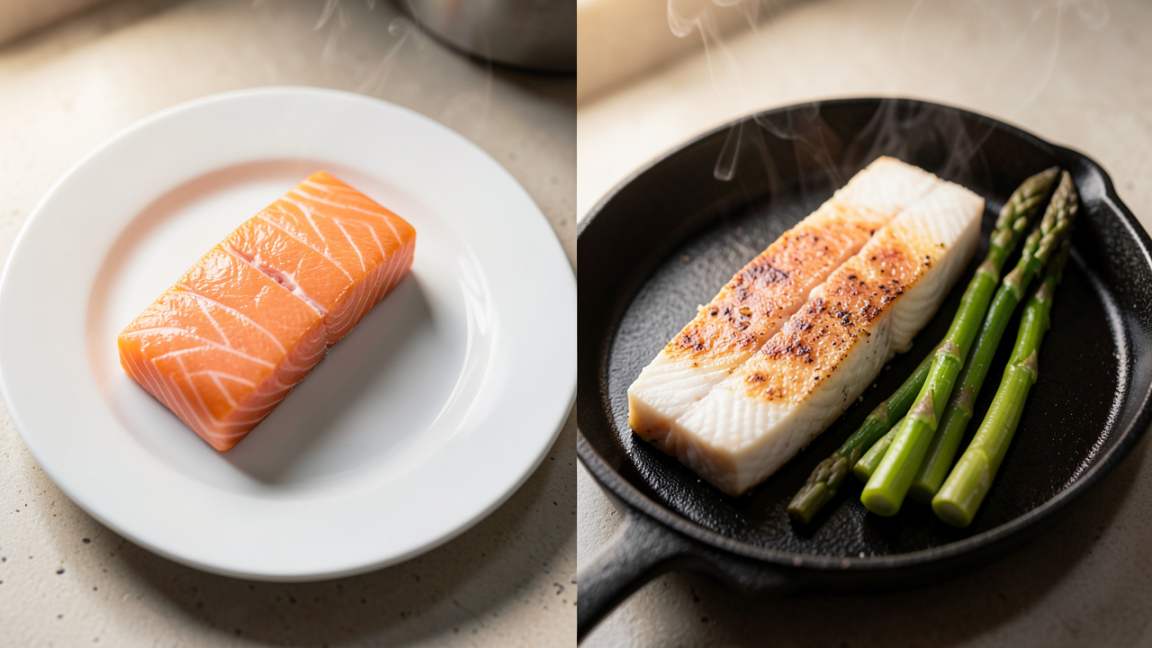
Sous Vide vs Stovetop: Texture Comparison
| Food Item | Sous Vide Texture | Stovetop Texture | Key Difference |
|---|---|---|---|
| Steak (medium-rare) | Pink edge to edge, 100% uniform doneness | Gray band around edges, center variable | Sous vide eliminates the overcooked ring |
| Chicken breast | Juicy, tender, stays moist at 145°F | Dry, stringy surface, risk of overcooking | Sous vide keeps more moisture locked in |
| Salmon | Silky, flaky, 120°F center stays translucent | Dry edge, variable doneness, white albumin | Sous vide prevents albumin from squeezing out |
| Eggs (poached-style) | Custard white, runny yolk, consistent texture | Firm white, yolk can be under or overcooked | Sous vide gives exact control over white set point |
| Carrots | Crunchy, bright color, natural sweetness | Soft, dull color, waterlogged | Sous vide preserves cell structure and flavor |
How to Master Sous Vide Textures at Home
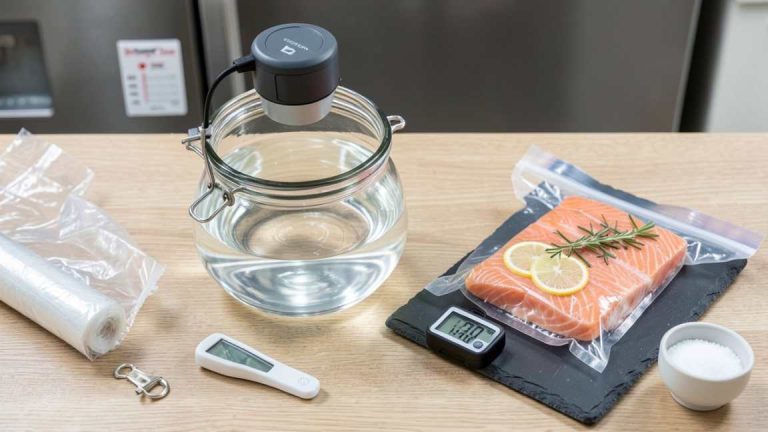
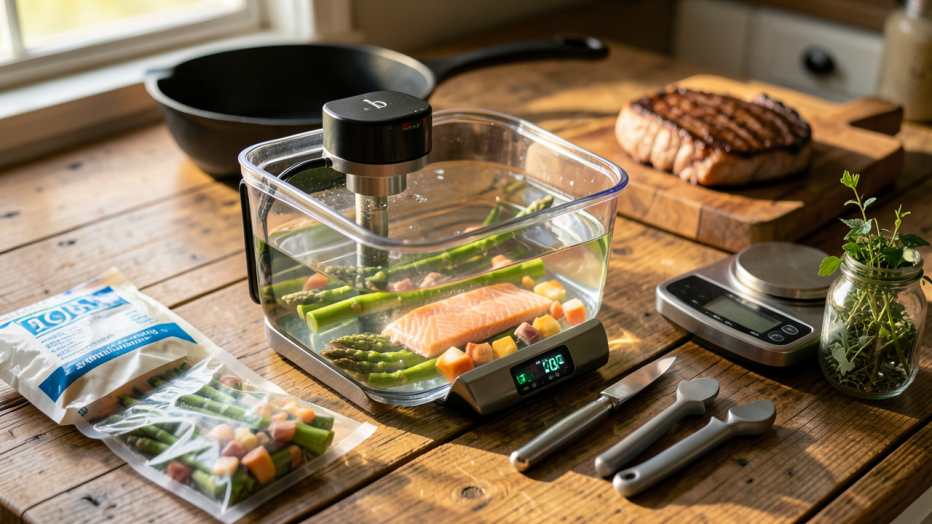
You do not need a professional kitchen to get restaurant-quality textures with sous vide. The basic setup includes an immersion circulator, a container, and a vacuum sealer or ziplock bags.
Step 1: Choose Your Equipment
An immersion circulator is the heart of the system. The and the are two of the most popular options for home cooks. Both hold temperature within 0.1 degrees Fahrenheit.
- Immersion circulator – Heats and circulates the water to maintain exact temperature.
- Container – A large pot or dedicated plastic container works. Some containers have insulated walls for better heat retention.
- Vacuum sealer – Creates an airtight seal that prevents air pockets. A high-quality sealer like a is ideal, but ziplock bags with the water displacement method work too.
- Tongs or rack – Keeps bags submerged and separated during cooking.
Tip: For best results, season your food before sealing. Salt, pepper, garlic powder, and herbs penetrate the meat during the long cook. You can also add butter or olive oil for flavor and fat transfer.
Step 2: Set Your Temperature
Temperature is the most critical variable. A difference of just a few degrees completely changes the texture of food. Use the table below as a starting guide for common foods.
| Food | Target Temperature | Texture Result | Recommended Time |
|---|---|---|---|
| Beef steak (medium-rare) | 130°F (54.5°C) | Pink, tender, moist | 1 to 4 hours |
| Chicken breast | 145°F (62.8°C) | Juicy, tender, fully cooked | 60 to 90 minutes |
| Salmon fillet | 120°F (48.9°C) | Silky, flaky, medium-rare center | 30 to 45 minutes |
| Eggs (soft boiled) | 145°F (62.8°C) | Custard white, runny yolk | 45 to 60 minutes |
| Carrots | 183°F (83.9°C) | Tender-crisp, bright color | 30 to 45 minutes |
Step 3: Seal and Cook
Place your seasoned food in a bag and remove as much air as possible. A vacuum sealer is best. If using ziplock bags, use the water displacement method: seal the bag almost completely, then submerge it slowly to push air out through the gap before sealing fully.
Drop the sealed bag into the preheated water bath. Make sure the bag stays fully submerged. You can use a rack or clip the bag to the side of the container. Set a timer based on the thickness of the food. Thicker cuts need more time to reach the center temperature.
Step 4: Sear for Crust
After the sous vide cook, the food is perfectly cooked but pale on the surface. A quick sear adds color, flavor, and texture. Heat a cast iron pan or a grill to high heat. Pat the meat dry with paper towels to remove surface moisture, then sear for 30 to 60 seconds per side.
Tip: For steak, use a high-smoke-point oil like avocado or grapeseed oil for the sear. Butter can burn at these temperatures. Add butter and aromatics after the initial sear if you want extra flavor.
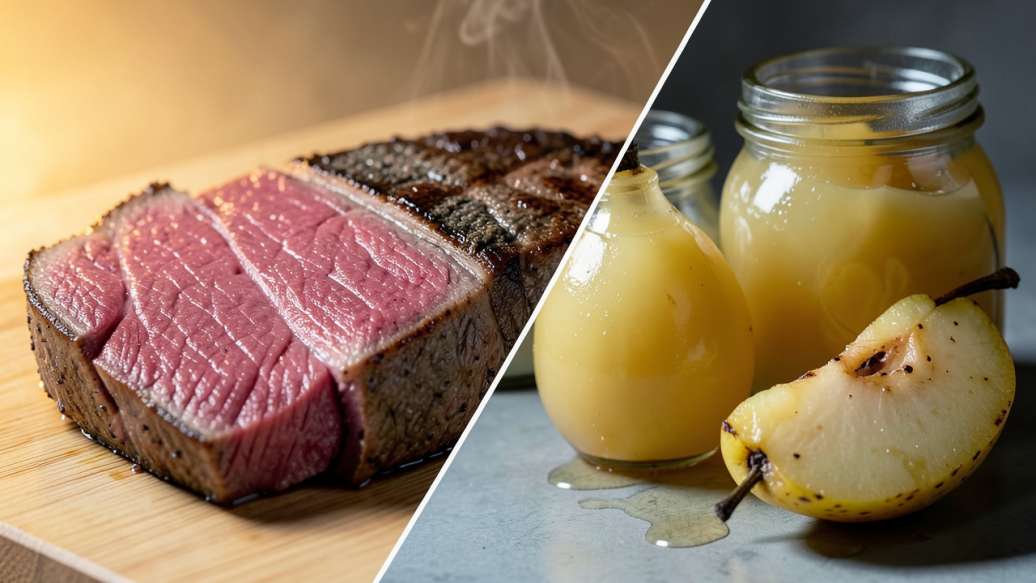
Common Myths vs Facts About Sous Vide Textures
Myth 1: Sous Vide Steak Lacks a Good Crust
Many people think sous vide steak cannot develop a proper crust. The truth is that sous vide gives you the freedom to apply intense heat for a very short time without worrying about the interior. A cast iron pan or a torch at 500°F to 700°F for 30 to 60 seconds creates a deep, flavorful crust while the interior stays at your target temperature.
Myth 2: Sous Vide Makes Food Soggy or Wet
Poor technique causes sogginess, not the method itself. If you leave vegetables in the water bath too long, they can become waterlogged. But with proper time management, sous vide keeps food moist without becoming wet. The bag seals in natural juices, so the food stays flavorful instead of leaching into the cooking liquid.
Myth 3: Sous Vide Is Only for Meat
This is a common misconception. Sous vide works exceptionally well for eggs, fish, vegetables, custards, and even desserts like cheesecake and crème brûlée. The precision heat control applies to any food where texture matters. Many pastry chefs use sous vide for perfectly set puddings and custards.
Pro Tips for Better Sous Vide Textures
- Pre-season your protein. Salt, herbs, and spices penetrate deeper during a long cook. Salt especially changes the protein structure for a firmer, more tender bite.
- Use a weight or rack to keep bags submerged. Floating bags cook unevenly. A heavy spoon, a wire rack, or a specialized sous vide weight keeps everything below the water line.
- Pat food dry before searing. Surface moisture creates steam, which prevents browning. Dry thoroughly with paper towels or a clean kitchen towel for the best crust.
- Do not overcook by time. Sous vide does not overcook in the traditional sense, but leaving food in too long can break down textures. Chicken breast left for 4 hours becomes mushy. Follow recommended time ranges.
- Cool and chill for meal prep. You can sous vide food in advance and finish it later. Cook the meat, chill it in an ice bath, then refrigerate. When ready, reheat briefly in the water bath or sear straight from the fridge.
Resources and Tools for Sous Vide Cooking
Getting started with sous vide is easier than ever. Here are the most trusted tools and sources for learning more.
- Anova Culinary – Manufacturer of popular immersion circulators with a dedicated recipe app.
- Breville Joule – Compact, powerful circulator with Wi-Fi control and a large recipe database.
- ChefSteps – Online resource with tested recipes, science articles, and sous vide technique guides.
- Modernist Cuisine – Comprehensive book series by Nathan Myhrvold covering the science of sous vide and modernist cooking.
- FoodSaver – Leading brand of vacuum sealers for airtight bagging.
- USDA Food Safety – Official guidelines for safe sous vide cooking temperatures and times.
Frequently Asked Questions
Is sous vide safe for cooking food at low temperatures?
Yes, sous vide is safe when you follow proper time and temperature guidelines. The USDA states that holding food at 130°F for 112 minutes, or at 140°F for 12 minutes, achieves the same pathogen reduction as cooking to 160°F. Always use a reliable circulator and follow recommended times.
Can I use regular ziplock bags for sous vide?
You can use high-quality ziplock bags as long as they are BPA-free and rated for hot water. Use the water displacement method to remove most of the air. For longer cooks over 4 hours, a vacuum sealer is more reliable because it prevents bag failure and maintains a better seal.
Why does my sous vide chicken breast have a rubbery texture?
Rubbery chicken breast usually means you cooked it at too high a temperature or for too long. Chicken breast should be cooked at 145°F for 60 to 90 minutes. Higher temperatures like 165°F make the proteins contract too much, squeezing out moisture and creating a dense, rubbery bite.
Do I need a vacuum sealer for good results?
No, a vacuum sealer is not essential. Many home cooks start with ziplock bags and get excellent results. A vacuum sealer gives you a better seal for long cooks and reduces the chance of air pockets, but the water displacement method works well for most recipes that cook in under 4 hours.
Can I sous vide frozen meat directly?
Yes, sous vide is one of the best ways to cook frozen meat. Add 50 percent more time to the recipe. For example, if a fresh steak needs 1 hour, a frozen steak needs about 1.5 hours. The texture outcome is the same because the water bath temperature stays constant from start to finish.
Final Thoughts
Sous vide transforms home cooking by giving you textures that no stovetop method can reproduce. Steak is pink edge to edge, chicken breast stays juicy, and vegetables keep their crunch and color. The precision of temperature control eliminates guesswork and overcooking. Master the basics of time and temperature, and you will unlock a whole new range of textures in your kitchen.