How Slow Cookers Maintain Low Heat for Hours Without Danger
A slow cooker maintains low heat for hours without danger through a combination of a low-wattage heating element, a thick ceramic pot that distributes heat evenly, and a sealed lid that traps steam to keep temperatures just below boiling. The appliance cycles its thermostat between approximately 170°F and 210°F, ensuring food reaches a safe simmering temperature of around 209°F without creating hot spots or causing a fire risk. This indirect‑heat design, buffered by moisture, allows users to safely cook tough cuts of meat for extended periods while eliminating the chance of burning or overheating.
A slow cooker can simmer a stew for eight hours without burning a single ingredient. This guide explains the specific engineering and safety mechanisms that allow these appliances to maintain low heat for hours without danger.
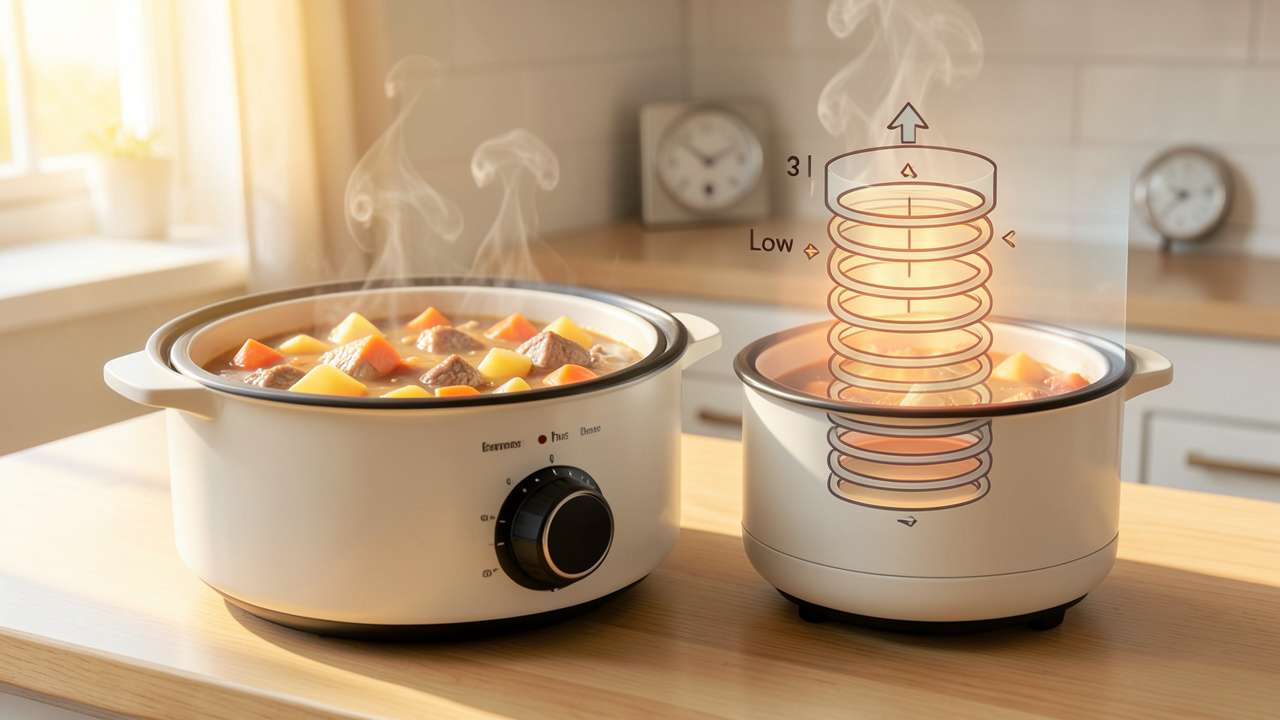
Simply put, a slow cooker uses a sealed environment and a low-wattage heating element wrapped around the sides of a thick ceramic pot. The food heats to a safe simmering temperature of around 209°F (98°C) and stays there, well below the 212°F boiling point, preventing burning while tenderizing tough cuts of meat.
Key Takeaways
- The low-wattage heating element in a slow cooker cannot generate enough heat to cause a kitchen fire under normal operating conditions.
- The thick ceramic or stoneware pot acts as a thermal mass that distributes heat evenly and prevents hot spots that cause burning.
- The sealed lid traps steam and moisture, creating a low-pressure environment that keeps temperatures just below boiling.
- The thermostat in a modern slow cooker cycles power on and off to maintain a consistent temperature between 170°F and 210°F.
- According to, slow cookers are safe for cooking food for extended periods as long as the internal temperature reaches 165°F.
What Are the Main Components That Ensure Safety?
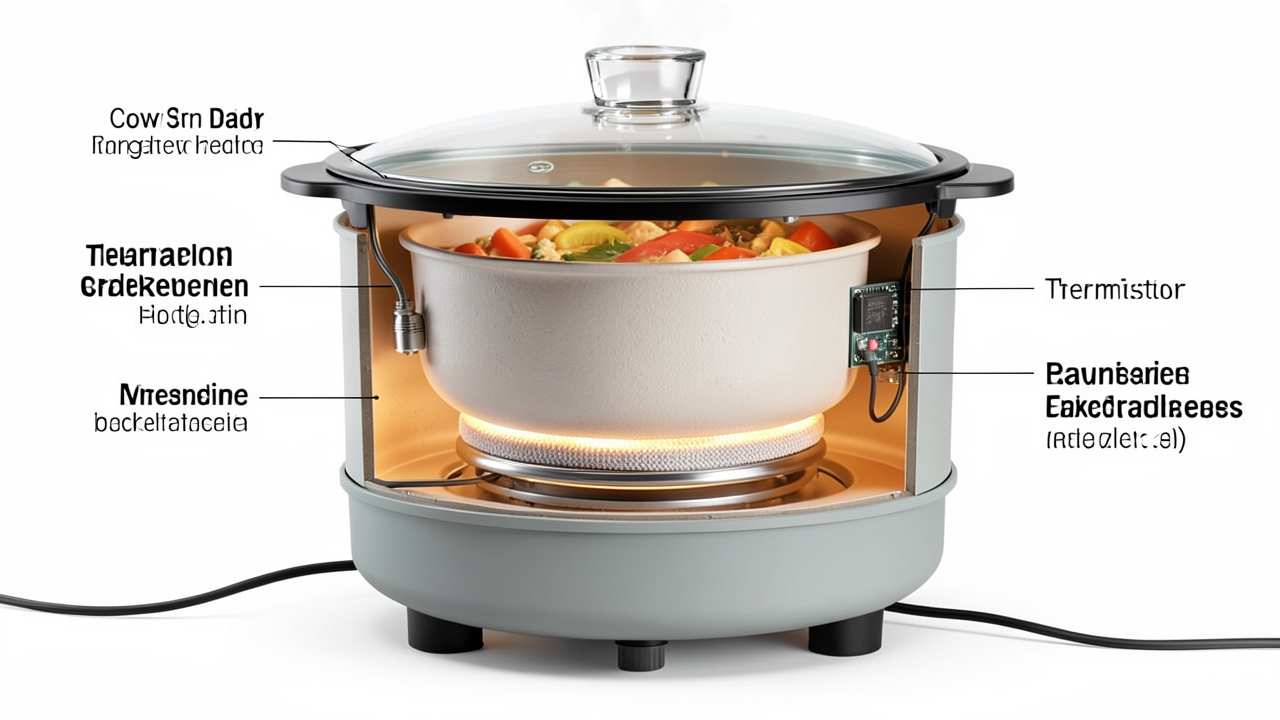
Every part of a slow cooker has a specific job. These four components work together to create a safe cooking environment.
| Component | Primary Function | Safety Role |
|---|---|---|
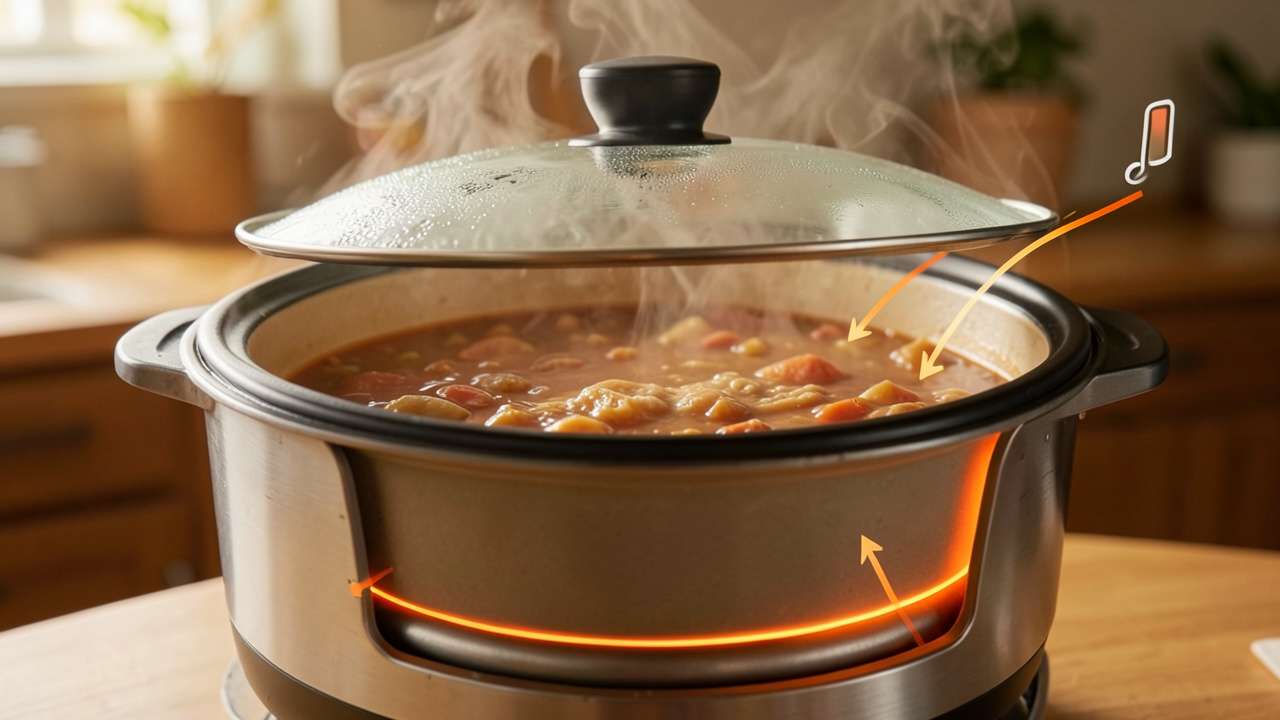
| Heating Element | Wraps around the side walls of the outer shell | Prevents direct contact and scorching on the bottom |
| Ceramic Insert | Acts as a thermal mass that absorbs and radiates heat | Distributes heat evenly across all surfaces |
| Thermostat | Monitors internal temperature | Cycles power to prevent overheating |
| Sealed Lid | Creates an airtight or near-airtight seal | Locks in moisture and regulates steam pressure |
Important: The ceramic insert is the main reason you do not get hot spots. In a regular pot on the stove, the flame touches the bottom directly. In a slow cooker, the ceramic absorbs the heat from the sides and releases it slowly into the food.
How Does a Slow Cooker Heat Food Without Burning It?
The process relies on two core principles of physics: indirect heating and water regulation.
The Role of Indirect Heat
Unlike a stovetop pan where the flame directly scorches the bottom, a slow cooker’s heating element is embedded in the walls. This heats the air between the outer shell and the ceramic pot. The hot air then warms the ceramic, which passes gentle heat to the food. This buffer layer prevents the intense, direct heat that causes burning.
Why Water Is the Safety Buffer
Water is a critical element in the cooking process. It has a specific heat capacity that requires a lot of energy to change its temperature. In a sealed slow cooker, the liquid in the recipe absorbs heat until it reaches a simmer.
Tip: Water cannot get hotter than 212°F (100°C) at sea level. Since a slow cooker on low stays around 209°F, the liquid never reaches a rolling boil. This means the food never reaches the temperature where it would burn against the sides.
The Sealed Environment
The tight-fitting lid traps steam. This steam creates a low-pressure, humid environment. The moisture transfers heat more effectively than dry air without requiring a higher temperature. This is why you can cook a large roast for 10 hours without opening the lid and without burning any part of it.
How to Use Low and High Heat Settings Correctly
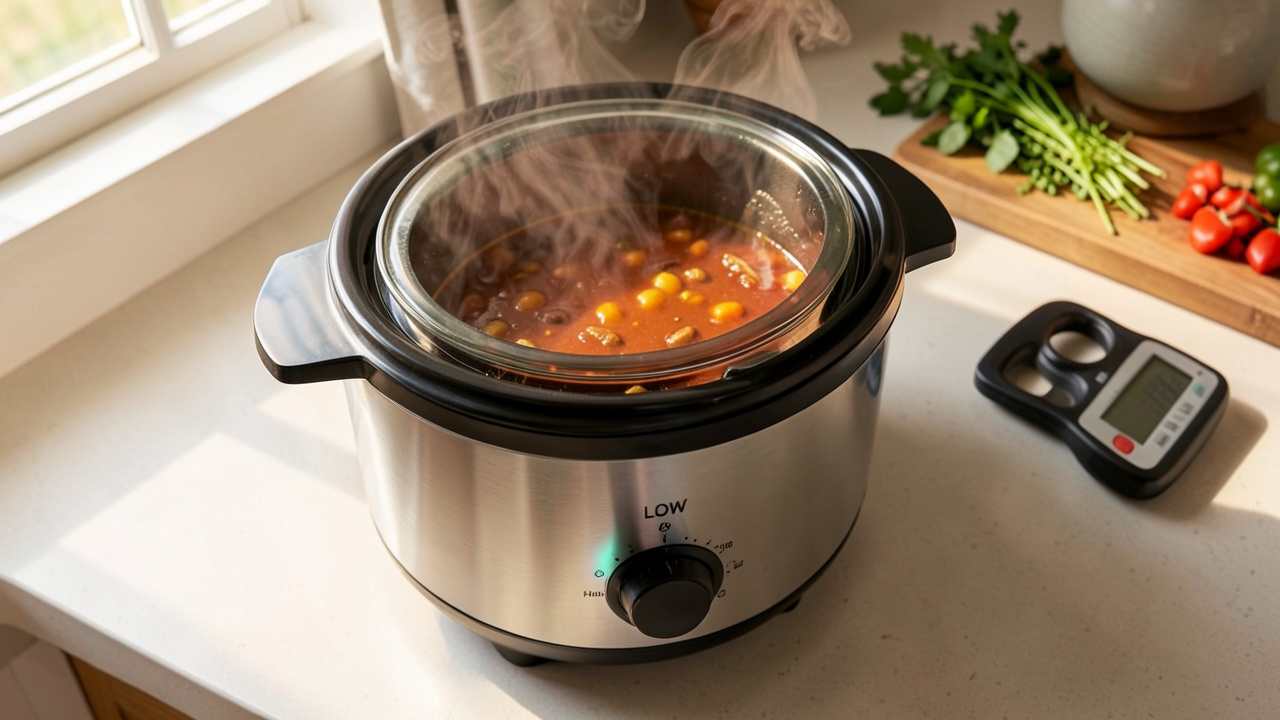
Most slow cookers offer two main heat settings. Choosing the right one depends on your time frame and the type of food you are cooking.
| Setting | Approximate Temp | Typical Cook Time | Best Uses |
|---|---|---|---|
| Low | ~200°F (93°C) | 8 to 10 hours | Tough meats (brisket, pork shoulder), legumes, whole grains |
| High | ~300°F (149°C) | 4 to 6 hours | Chicken breasts, lean meats, soups, softer vegetables |
When You Should Use the Low Setting
Use Low when you plan to be away from home for a full work day. This setting is ideal for breaking down collagen in tougher cuts of meat. The slower temperature rise also allows more flavor to develop from spices and aromatics.
When You Should Use the High Setting
Use High when you are cooking lean proteins like chicken breast or fish. These foods cook faster and become dry if left for 8 hours. High is also better for recipes with a lot of liquid that needs to reduce slightly.
Common Myths vs Facts About Slow Cooker Safety
Warning: A common misconception is that slow cookers are a major fire risk. Here are the facts that debunk this and other myths about slow cookers maintaining low heat without danger.
Myth 1: Slow Cookers Are Fire Hazards When Left Unattended
Fact: tests slow cookers to ensure they can run without supervision. The low wattage draw (usually 100-200 watts) means the heating element cannot reach the combustion point of standard kitchen materials. Modern units also have auto-shutoff features.
Myth 2: Low Heat Does Not Cook Food Safely
Fact: The that a slow cooker on low will bring food to a safe internal temperature of 165°F within 4 hours if it is at least half full. The sealed steam environment helps the food reach the safe zone efficiently.
Myth 3: You Must Brown Meat Before Adding It to the Slow Cooker
Fact: Browning meat adds flavor through the Maillard reaction, but it is not required for safety. The slow cooker will heat the meat to a safe temperature regardless. If you skip browning, you reduce the risk of burning the exterior while the interior cooks.
The Role of the Thermostat in Maintaining Safe Temperatures
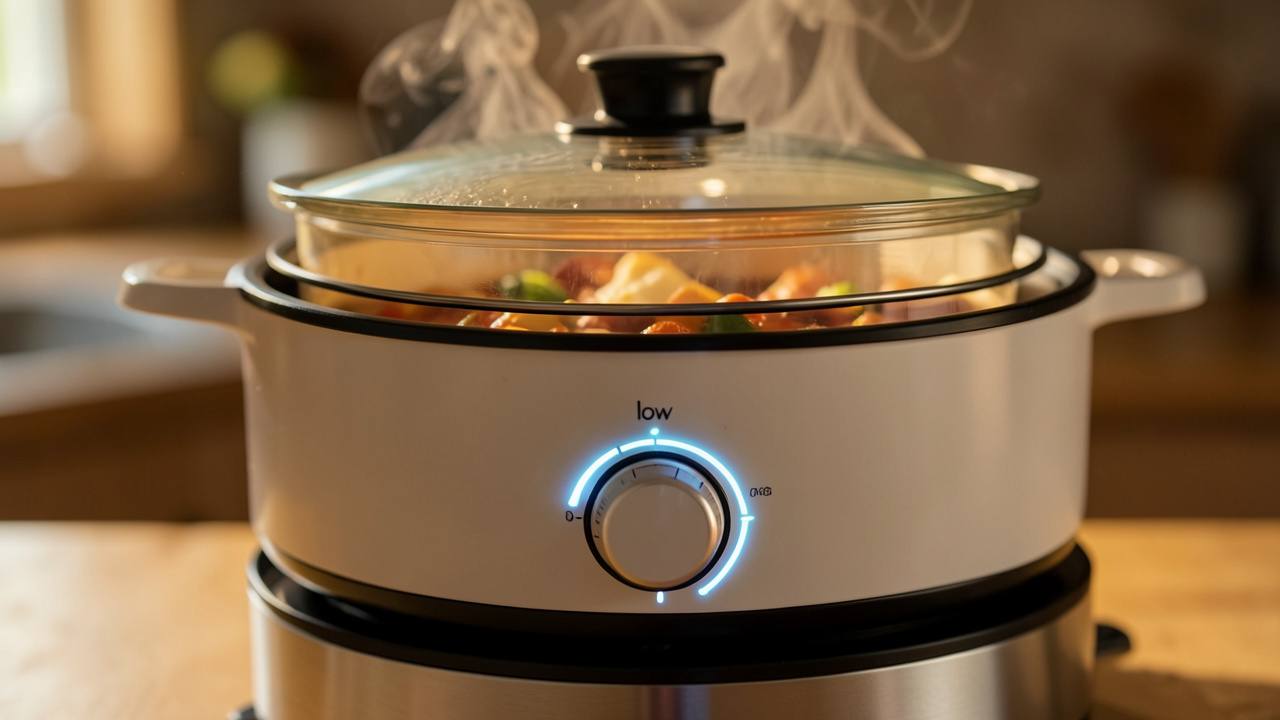
The thermostat is the brain of the slow cooker. It ensures the appliance maintains low heat for hours without danger by following a precise cycle.
- Power On: When you turn the slow cooker on, the thermostat allows electricity to flow to the heating element.
- Heat Ramp: The element heats the air around the ceramic pot. The ceramic slowly absorbs this heat.
- Steady State: The liquid in the food reaches a simmer. The thermostat detects this temperature and cuts power to the element.
- Off Cycle: The thick ceramic pot continues to radiate heat even with the power off. The temperature drops slowly.
- Power Back On: Once the temperature drops a few degrees, the thermostat switches the power back on to keep the cycle going.
Tip: This cycle is why you should never open the lid to stir food unnecessarily. You release the trapped steam and heat, forcing the thermostat to work harder to bring the temperature back up. Each time you open the lid, you add about 20 minutes to the cooking time.
Why Electrical Safety Is Built Into the Design
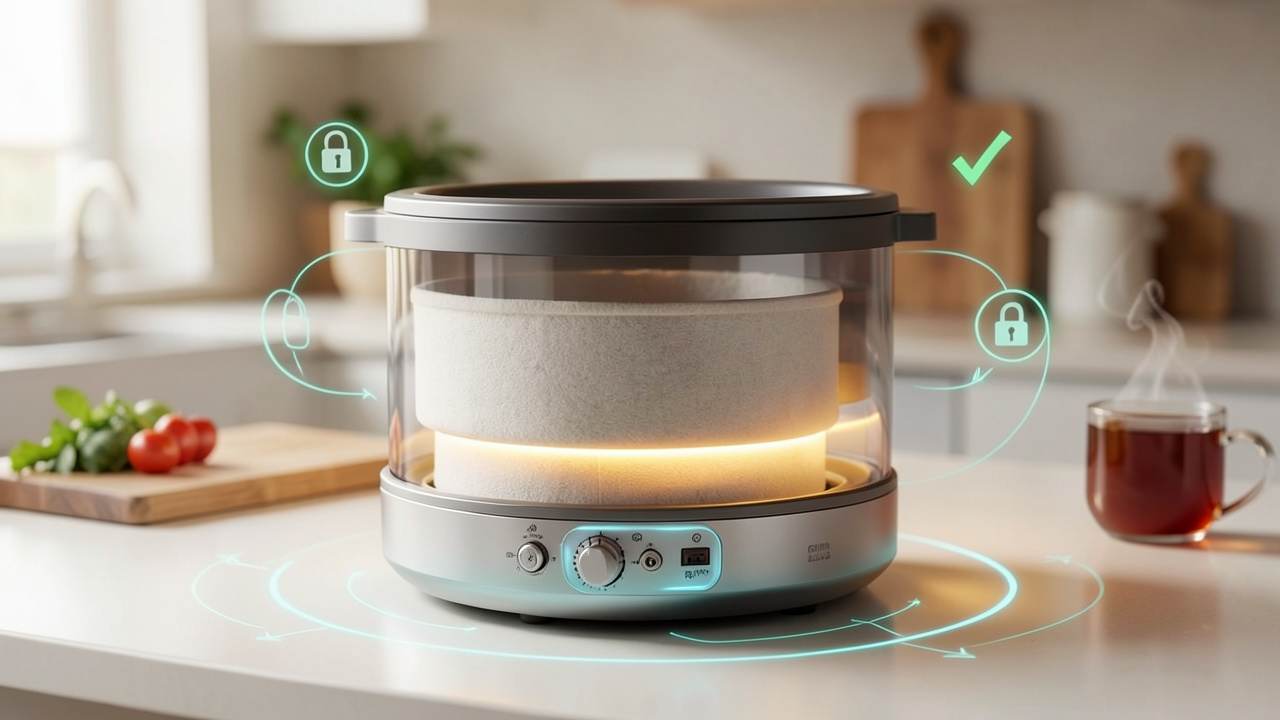
Slow cookers are fundamentally different from ovens or stovetop burners. The key difference is the total power consumption.
Low Wattage Draw
A standard oven uses around 2,000 watts. A stovetop burner uses about 1,500 watts. A slow cooker on Low uses roughly 100 to 150 watts. This means the internal wires and components never carry a heavy electrical load.
Fused and Grounded Plugs
Modern slow cookers include a fuse inside the plug. If the appliance does experience a power surge, the fuse blows before the wiring can melt. This is a simple but effective safety measure.
Short Cord Design
You might notice that slow cooker cords are very short. This is intentional. A short cord reduces the risk of tripping and prevents the cord from being damaged by pet or foot traffic.
Important: According to, the combination of low power and high thermal mass creates a system that is exceptionally safe compared to other cooking appliances.
How to Check That Your Slow Cooker Is Operating Safely
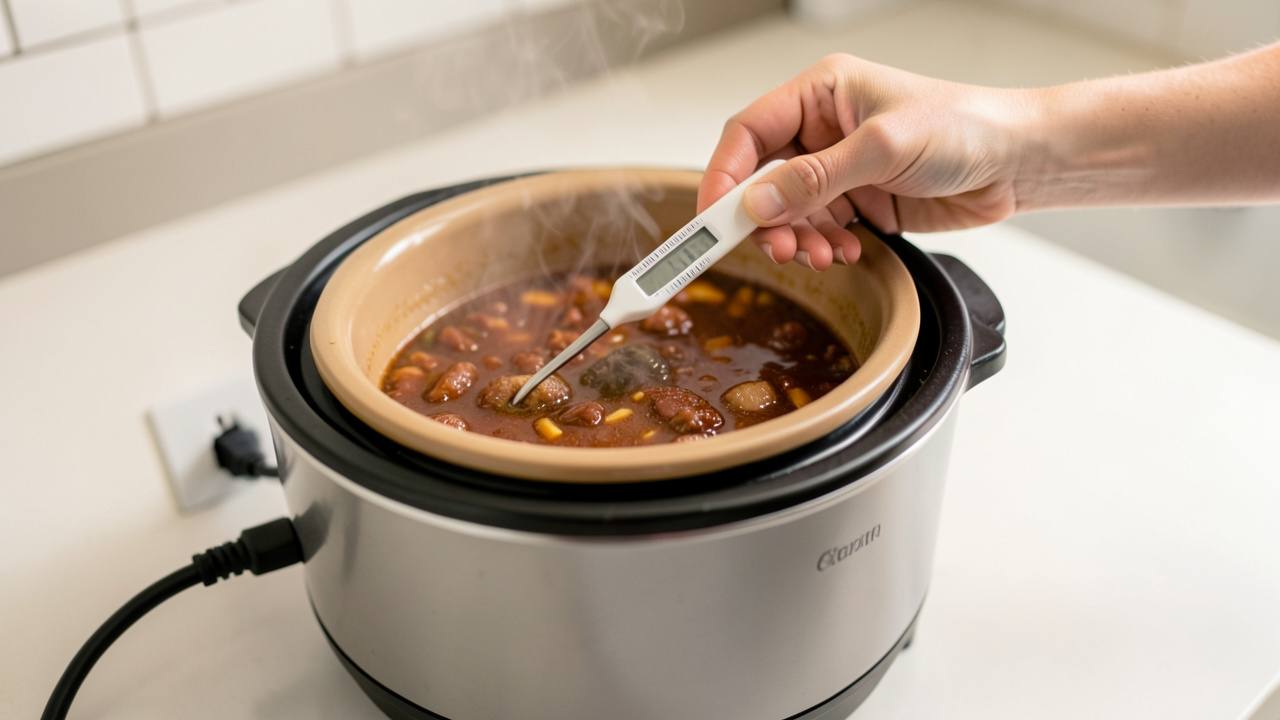
You do not need expensive tools to verify that your appliance is working correctly. Here is a simple test you can perform at home.
- Fill the pot: Fill your slow cooker two-thirds full with room-temperature water.
- Set to Low: Put the lid on and set the cooker to the Low heat setting.
- Wait 4 hours: Do not lift the lid during this time.
- Test the temperature: Use an instant-read thermometer to check the water temperature. It should be at least 185°F.
- Check the outside: Feel the outer casing. It should be warm but not hot enough to burn your hand.
If the water temperature stays below 175°F after 4 hours, the thermostat may be failing. If the outer casing feels very hot, the insulation may be compromised. In both cases, replace the slow cooker.
Frequently Asked Questions
Is it safe to leave a slow cooker on while I am at work?
Yes. Slow cookers are designed for unattended use. They draw very little power and have thermostats that prevent overheating. Verify your model has a UL or ETL safety certification before leaving it on.
Why does my food burn in a slow cooker if it uses low heat?
Food burns in a slow cooker usually because of a lack of liquid or overcooking. You need at least one cup of liquid to create the steam environment. Using the High setting for too long can also cause the food to overcook and stick to the edges.
What is the lowest safe temperature for a slow cooker?
The slow cooker must keep food above 140°F to prevent bacterial growth. Most models on Low maintain a temperature between 185°F and 200°F. If your model runs cooler, use the Warm setting only after cooking, not for the main cook cycle.
Can a slow cooker cause a fire?
It is very rare. Most slow cooker fires are caused by an old or frayed power cord, not the heating element itself. Always inspect the cord before each use and replace the unit if the cord is damaged. Never operate a slow cooker on a flammable surface.
How does the thermostat work in a slow cooker?
A slow cooker uses a bi-metallic strip thermostat. Two different metals expand at different rates when heated. When the temperature reaches the set point, the strip bends and breaks the electrical circuit. As it cools, the strip straightens and completes the circuit again.
Final Thoughts
The simple combination of a ceramic pot, low-wattage heating, and a sealed lid creates a remarkably safe cooking appliance. The thermostat ensures the temperature stays within a range that cooks food thoroughly without reaching dangerous levels. By understanding the science behind how slow cookers maintain low heat for hours without danger, you can use your appliance with total confidence.