How Air Fryers Use Convection Instead of Oil to Cook Food
An air fryer uses a heating element and a high-speed fan to circulate hot air at speeds up to 200 miles per hour, creating convection that cooks food without submerging it in oil. This rapid air movement triggers the Maillard reaction on the food's surface, producing a crispy, browned exterior using up to 80 percent less fat than deep frying. The appliance is essentially a compact convection oven, so it also performs well for roasting, baking, and reheating when you understand this underlying mechanism.
An air fryer uses rapid air circulation to cook food without submerging it in oil. This guide breaks down exactly how the technology works and what it means for your cooking.
Quick Verdict: An air fryer uses a heating element and a high-speed fan to circulate hot air at up to 200 mph around food. This rapid convection creates a crispy outer layer through the Maillard reaction while using up to 80% less fat than deep frying. The process mimics the results of frying without the need for large amounts of oil.
Tip: The term “air fryer” is a marketing name. The appliance is actually a compact convection oven. Understanding this helps you use it more effectively for roasting, baking, and reheating too.
Key Takeaways
- Air fryers use a heating element and a powerful fan to move hot air at high speed, creating a convection current that cooks food evenly.
- The convection effect produces a crispy, browned exterior through the Maillard reaction using just 1 to 2 tablespoons of oil, compared to several cups for deep frying.
- According to the USDA, air frying can reduce the fat content of fried foods by up to 75% compared to traditional deep frying.
- Most air fryers reach temperatures between 175°F and 400°F, with the fan circulating air at speeds over 200 miles per hour.
- You can cook anything from vegetables and proteins to frozen snacks and baked goods using the convection method.
How Does Convection Heating Work in an Air Fryer?
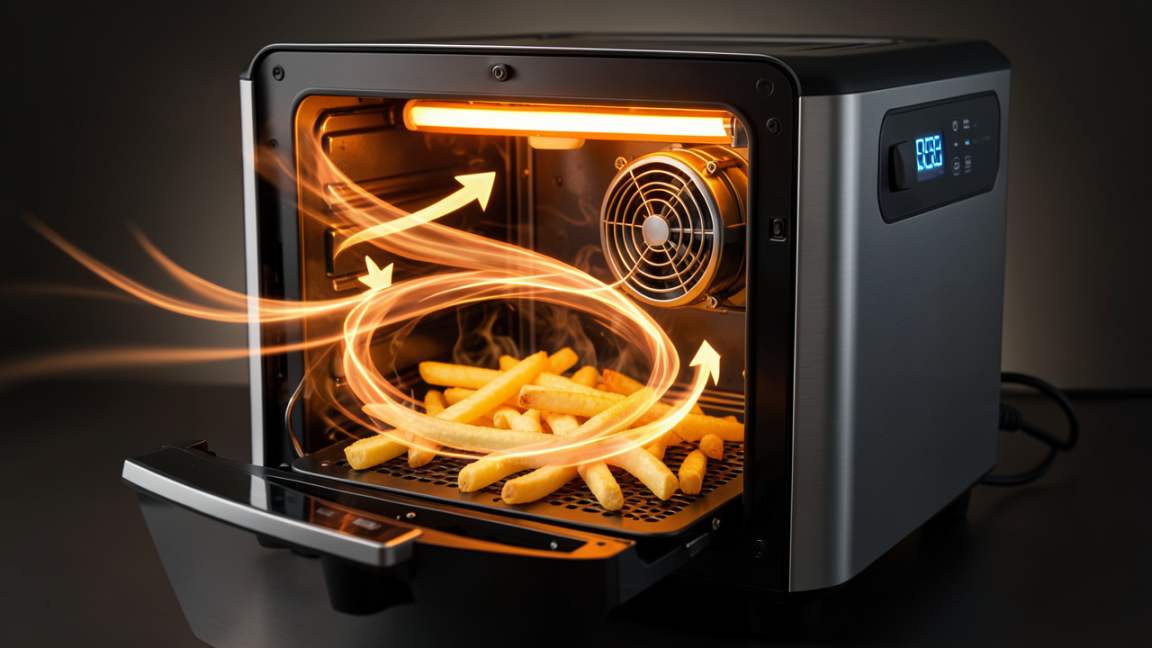
Convection cooking relies on moving hot air to transfer heat to food. In a standard oven, hot air rises naturally and creates uneven cooking spots. An air fryer solves this by adding a mechanical fan.
The fan sits directly above or behind the heating element. It pulls in cool air from the chamber, passes it over the heating coils, and forces the hot air back into the cooking compartment at high speed. This constant motion strips away the cool boundary layer of air around the food.
How air fryers use convection instead of oil becomes clear when you look at the basket design. Most air fryers have a perforated basket that allows air to reach all surfaces. The hot air contacts the food from every angle, creating even browning and crispiness without needing to turn the food manually.
Important: The Maillard reaction is a chemical process between amino acids and reducing sugars that creates the brown, savory crust on fried food. Convection heating at temperatures above 300°F triggers this reaction quickly.
What Are the Key Components That Make Air Frying Possible?
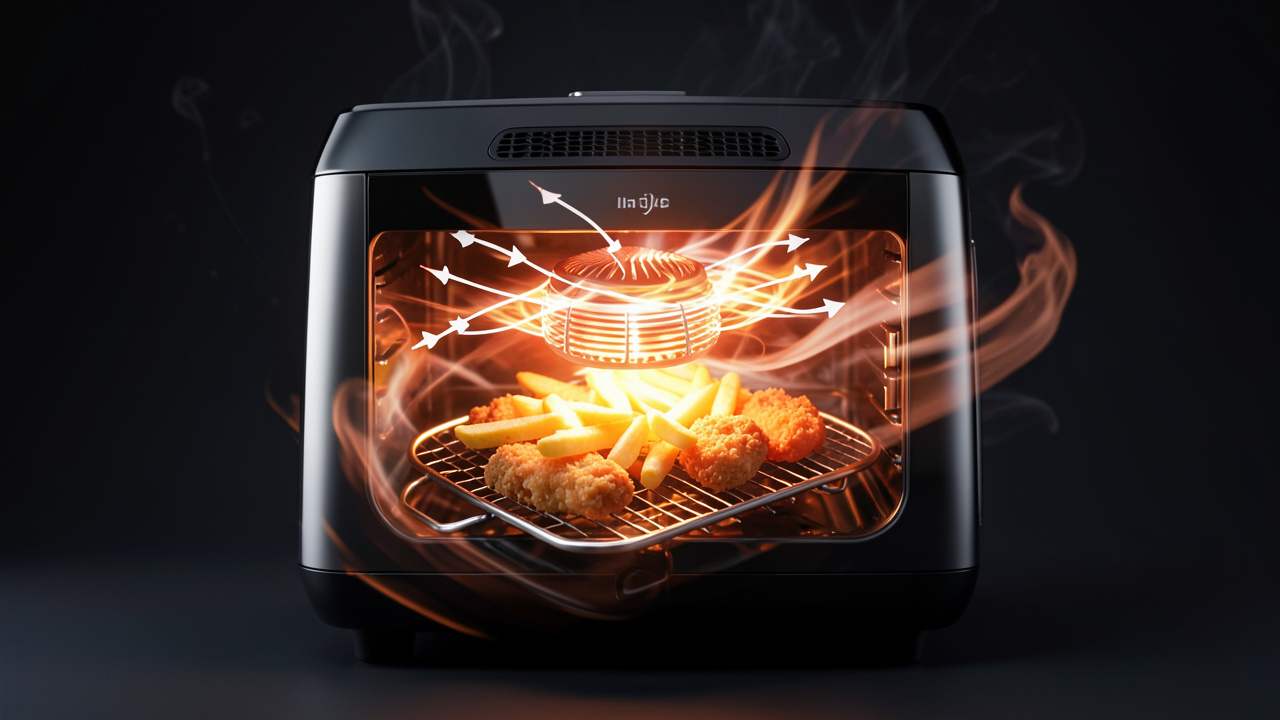
Understanding the parts helps you get the most from your appliance. Every air fryer contains three core elements working together.
- Heating element – A resistance coil or quartz tube that generates intense heat, typically located near the top or back of the unit.
- High-speed fan – A powerful axial or centrifugal fan that can move air at 5 to 10 cubic feet per minute, creating the convection effect.
- Perforated basket or tray – A wire or mesh container that holds food while allowing hot air to flow through all sides.
Additional features in modern models include digital temperature controls, preheat settings, and shake reminders. But the core technology remains the same across price points.
| Component | Function | Why It Matters |
|---|---|---|
| Heating element | Generates heat up to 400°F | Determines maximum cooking temperature |
| Fan | Circulates hot air at 200+ mph | Creates convection current; no hot spots |
| Basket | Holds food; allows airflow | Enables 360-degree heat contact |
How Does an Air Fryer Compare to Deep Frying?
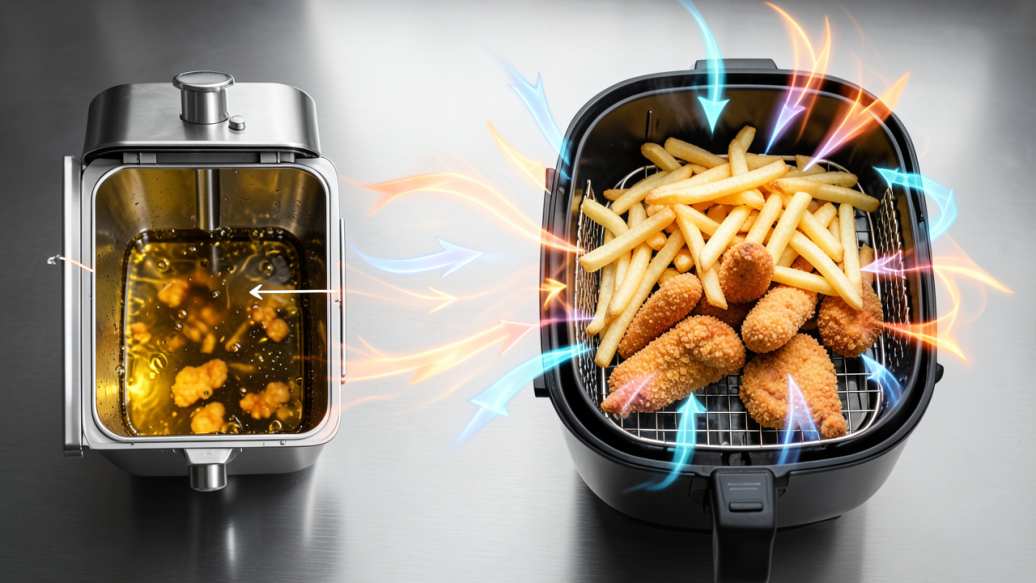
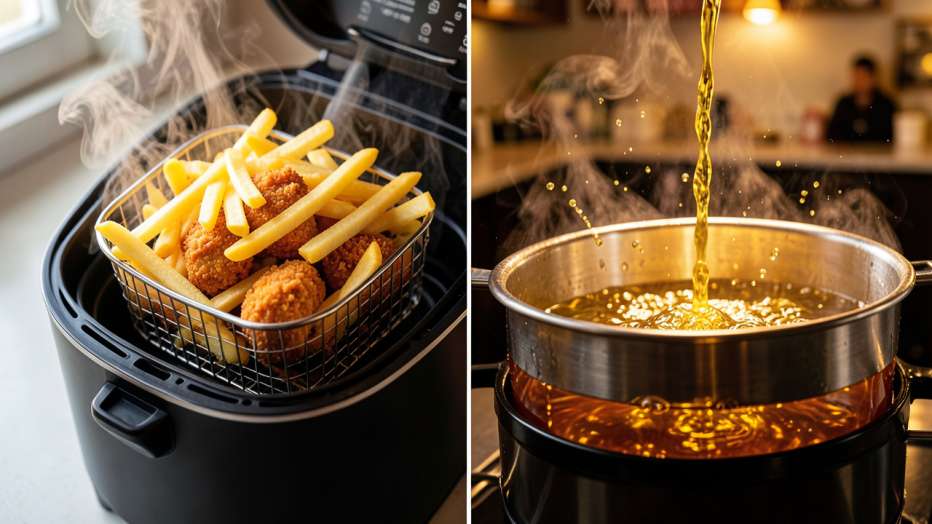
Deep frying works by completely submerging food in hot oil at 350°F to 375°F. The oil transfers heat rapidly and creates a crisp crust through dehydration and browning. An air fryer achieves similar results with a tiny fraction of the oil.
The key difference is the heat transfer medium. Deep frying uses liquid oil, which has a high thermal conductivity. Air frying uses air, which is a less efficient conductor. The fan compensates by moving the air very fast, increasing the heat transfer coefficient.
How air fryers use convection instead of oil means you get a crispy texture without the extra fat. According to the American Heart Association, reducing dietary fat from fried foods can lower your risk of heart disease. Air frying lets you enjoy fried-style foods with less guilt.
Warning: Air fryers do not produce the exact same results as deep frying for all foods. Battered items like fish and chips may come out less crisp because the batter needs direct oil contact for proper texture.
What Types of Food Work Best With Convection Air Frying?
Not every food reacts the same way to convection heat. The best results come from foods that already have some surface moisture or fat. The hot air quickly evaporates moisture, creating steam that helps cook the interior while the exterior crisps.
- Vegetables – Broccoli, Brussels sprouts, potatoes, and zucchini become crispy on the outside and tender inside.
- Frozen foods – Frozen fries, chicken nuggets, and mozzarella sticks come out hot and crisp without extra oil.
- Proteins – Chicken wings, fish fillets, and steak sear well due to the high heat and air movement.
- Baked goods – Muffins, cookies, and small cakes bake evenly because the convection reduces hot spots.
- Leftovers – Reheated pizza and fried chicken regain their crispiness, which microwaves cannot do.
Why Does Convection Crisp Food Better Than a Regular Oven?
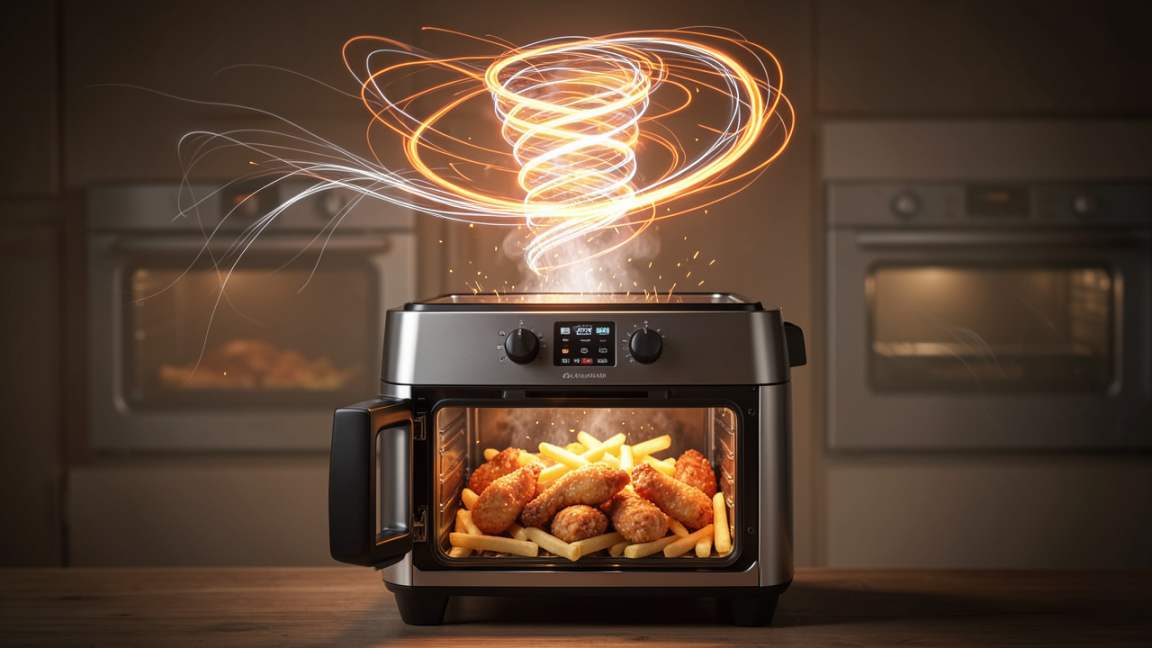
A standard oven relies on natural convection, where hot air rises and cooler air sinks. This creates temperature differences throughout the oven. Food can brown unevenly, and you often need to rotate pans.
An air fryer uses forced convection. The fan actively pushes hot air around, so every part of the chamber stays at nearly the same temperature. The high-speed air also strips away moisture from the food surface more efficiently than still air.
The result is faster cooking times and a more even crust. According to, air fryers cook frozen french fries about 20% faster than a convection oven set to the same temperature.
What Are the Common Myths About Air Fryers?
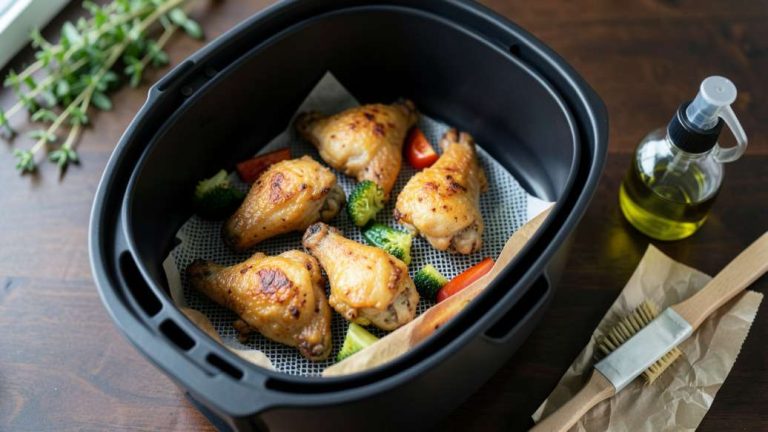
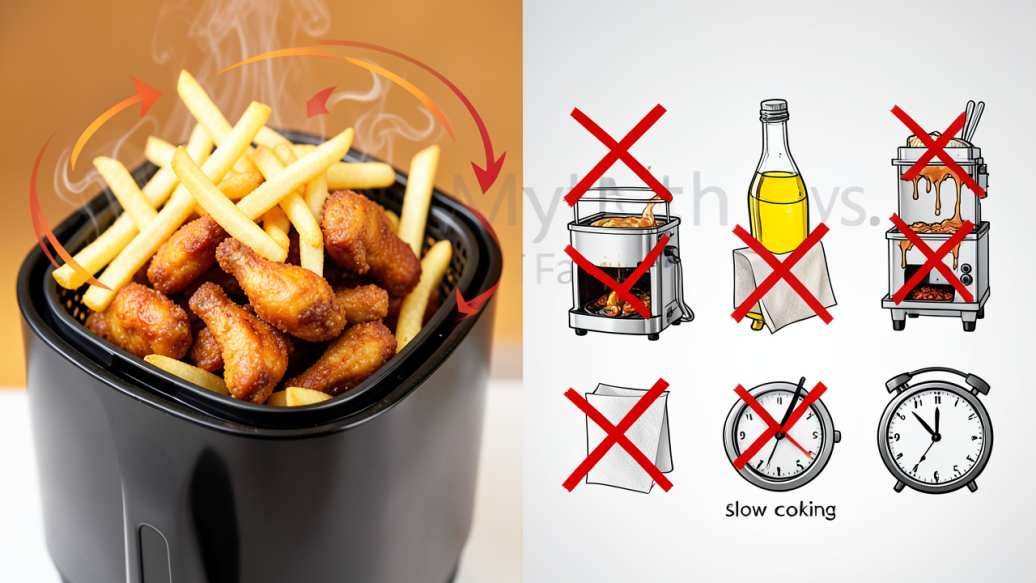
Many people believe air fryers are completely oil-free. They are not. You still need a small amount of oil to achieve browning and prevent sticking. The difference is quantity: 1-2 tablespoons rather than several cups.
Another myth is that air fryers are unsafe. Modern models have automatic shutoff features, cool-touch handles, and overheat protection. According to the, air fryers have a lower fire risk than deep fryers because they use no large quantity of hot oil.
- Myth: Air fryers use no oil at all. Fact: They require a light coating of oil (often just a spray) for best results.
- Myth: Air fryers are miniature ovens. Fact: They are small forced-convection ovens, but the cooking mechanism is different from a standard oven.
- Myth: You cannot cook moist dishes in an air fryer. Fact: You can cook braised meats and stews by covering the basket with foil or using a liner.
Tip: For the crispiest results, pat your food dry before adding oil. Excess moisture creates steam that prevents browning.
How to Use an Air Fryer for Maximum Crispiness
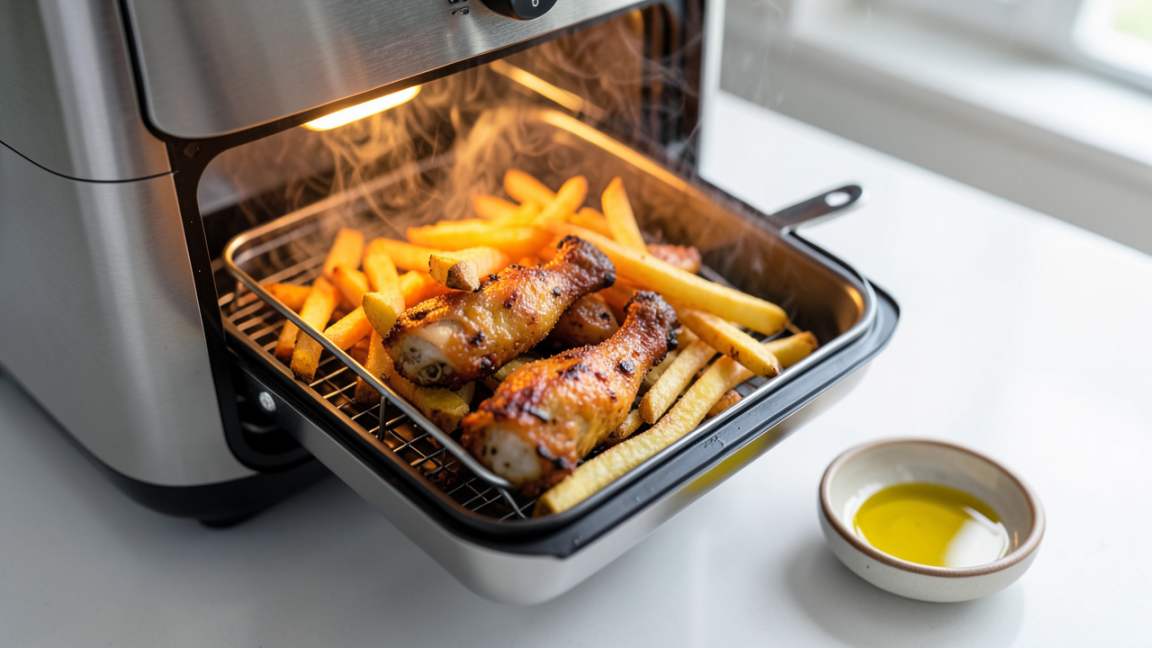
Getting the best texture requires a few simple techniques. First, preheat your air fryer for 3 to 5 minutes. This ensures the cooking chamber reaches the target temperature before food enters.
Second, do not overcrowd the basket. Air needs space to circulate around each piece. If you pack too much food, the convection effect diminishes and you end up with steamed rather than crispy results.
Third, shake the basket halfway through cooking. This repositions the food so all surfaces get direct exposure to the hot air. A quick shake at the six-minute mark can dramatically improve evenness.
Fourth, use a light spray of oil with a high smoke point, such as avocado or canola oil. Olive oil is fine for lower temperatures but can burn at 400°F.
| Food | Temp (°F) | Time (min) | Tip |
|---|---|---|---|
| Frozen fries | 400 | 12-15 | Shake at 8 minutes |
| Chicken wings | 380 | 20-25 | Flip halfway |
| Brussels sprouts | 375 | 10-12 | Toss with oil and salt first |
Frequently Asked Questions
Does an air fryer really use convection instead of oil?
Yes. The heating element creates hot air, and the fan circulates it rapidly around the food. A very small amount of oil (usually 1-2 teaspoons) is sprayed on the food to aid browning, but the primary cooking method is forced convection.
Can I use an air fryer without any oil?
You can cook some foods like vegetables and frozen items without oil, but they will be less crisp. A light mist of oil helps trigger the Maillard reaction and prevents sticking. According to the, using oil sprays is safe and effective.
Is air frying healthier than deep frying?
Air frying reduces fat and calorie content by up to 75% compared to deep frying, according to the USDA. It also eliminates the production of acrylamide, a potentially harmful compound that forms when starchy foods are cooked in hot oil at high temperatures.
Why does my air fryer food come out dry?
Overcooking is the most common cause. Air fryers cook faster than ovens, so check food a few minutes before the recommended time. Also, patting food dry before cooking removes moisture that would otherwise keep the interior tender.
How does the fan speed affect cooking?
Higher fan speeds increase heat transfer and browning. Most air fryers have a fixed fan speed, but some premium models let you adjust it. Slower speeds are better for delicate foods like fish or cakes that could dry out.
Final Thoughts
An air fryer cooks food through rapid convection rather than submerging it in oil. The fan-driven hot air creates a crispy exterior using a tenth of the fat of traditional frying. With proper technique, you can enjoy healthy fried-style meals at home. The technology is simple, versatile, and safe for everyday use.