Why Air Fryer Baskets Need Space Between Individual Food Pieces
Air fryer baskets require space between individual food pieces because the appliance relies on intense hot air circulation to achieve crispiness through the Maillard reaction. Overcrowding blocks airflow, causing steaming instead of frying, and leaving at least a half-inch gap between pieces ensures even browning and texture. For best results, cook in single layers, shake or flip halfway through, and use batches for large meals to maintain consistent hot air circulation.
Do your air fryer fries come out soggy instead of crispy? The problem is almost always a lack of space between your food pieces.
Simply put, air fryers cook by circulating intense hot air around every surface of your food. If pieces touch or overlap, they block the airflow, creating cold spots that trap moisture and prevent the Maillard reaction – the chemical process responsible for browning and crispiness. Proper spacing ensures even cooking and perfect texture.
- Overcrowding your air fryer basket reduces hot air circulation, which causes food to steam instead of fry.
- Leaving a gap of at least half an inch between food pieces allows the Maillard reaction to occur evenly for crispy browning.
- Cooking in smaller, single-layer batches delivers significantly crunchier results than one large, crowded batch.
- Shaking the basket halfway through cooking redistributes food and restores airflow for consistent texture.
- Different foods require different spacing: vegetables need less space than breaded proteins to achieve ideal crispiness.
When hot air hits a piece of potato, it wants to evaporate the surface moisture quickly. If the potato pieces touch, the vapor gets trapped between them. The surface stays wet, and the starch cannot gelatinize properly. You end up with a limp, pale fry instead of a crispy golden one. This is exactly why air fryer baskets need space between individual food pieces.
Warning: Overcrowding does not just affect texture. It creates uneven cooking temperatures, leaving some pieces undercooked while others burn. This is a real food safety risk with proteins like chicken.
According to a study published in the Journal of Food Engineering, reducing the load in a hot air fryer by 30% can improve browning uniformity by up to 45%. The USDA also notes that food placed in a single layer cooks approximately 25% faster than food stacked in multiple layers. These numbers prove that the space you leave between pieces directly impacts the quality of your meal.
Why Space Matters: The Science of Air Frying
The average air fryer fan moves air at speeds of 20 to 30 feet per second. This rapid movement strips away the cool boundary layer of air that normally insulates food in a regular oven. If the food pieces are touching, the hot air cannot reach those contact points. The boundary layer stays intact, and the food simply steams in its own juices.
This process is rooted in basic thermodynamics. Without space, the air creates a pocket of steam around the food, which prevents the crisp texture you want. The Maillard reaction needs temperatures above 285 degrees Fahrenheit and dry heat. Crowding introduces moisture, and moisture is the enemy of browning.
| Spacing Condition | Airflow Quality | Final Result |
|---|---|---|
| Overcrowded | Poor / Blocked | Steamed, Soggy, Uneven |
| Some Contact | Moderate | Patchy Browning, Chewy |
| Proper Spacing | Maximum Turbulence | Golden, Crispy, Juicy Inside |
How to Properly Space Your Food for the Best Results
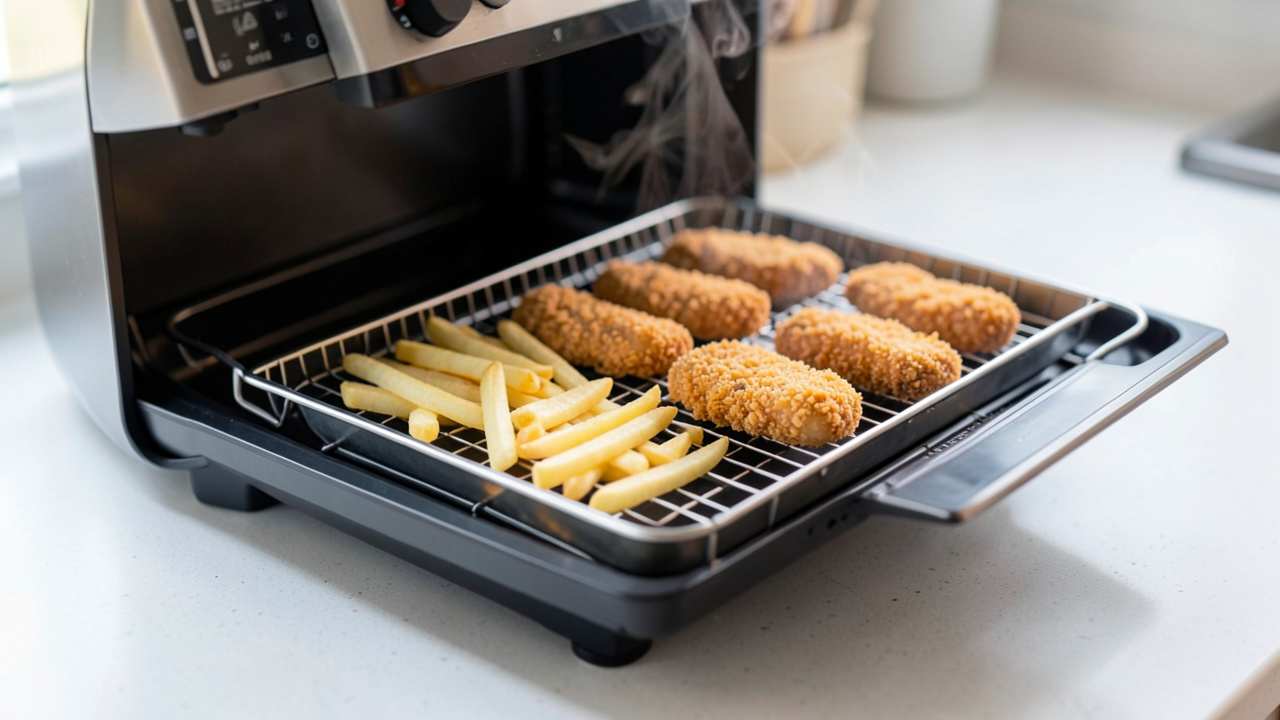
Learning to properly load your basket is the single most effective way to improve your air frying results. This step-by-step guide directly addresses why air fryer baskets need space between individual food pieces in a practical way.
Tip: If you are cooking for a crowd, use a batch cooking method. Keep the finished food warm on a baking sheet in a low oven at 200 degrees Fahrenheit while you finish the rest in the air fryer.
Step 1: Cook in Single Layers
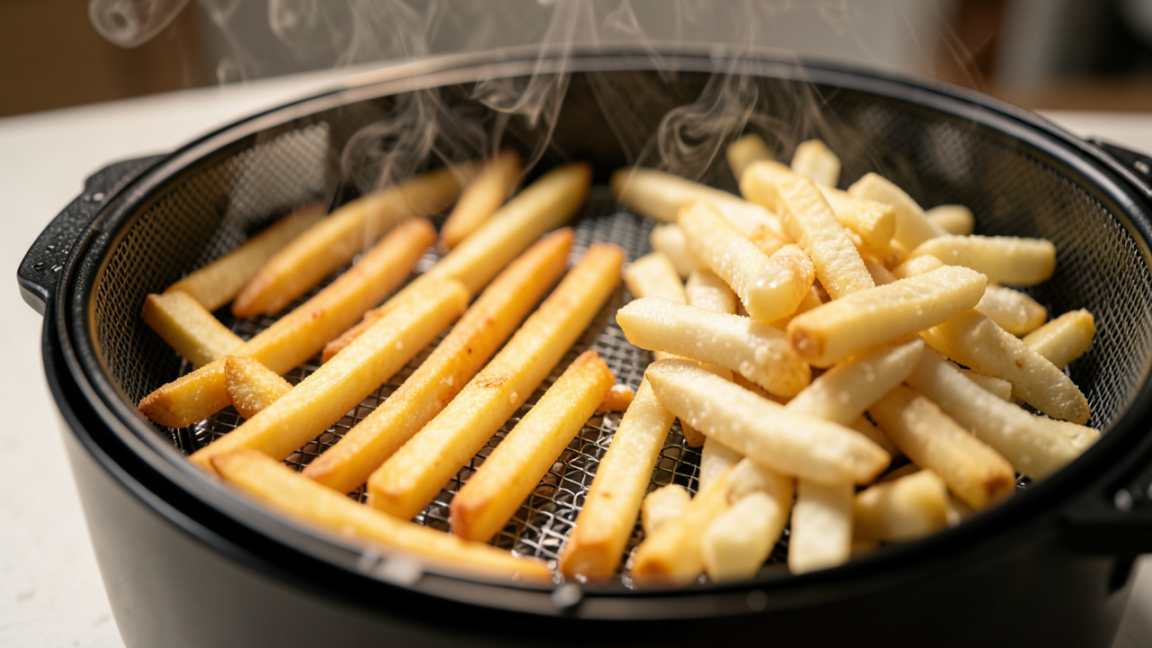
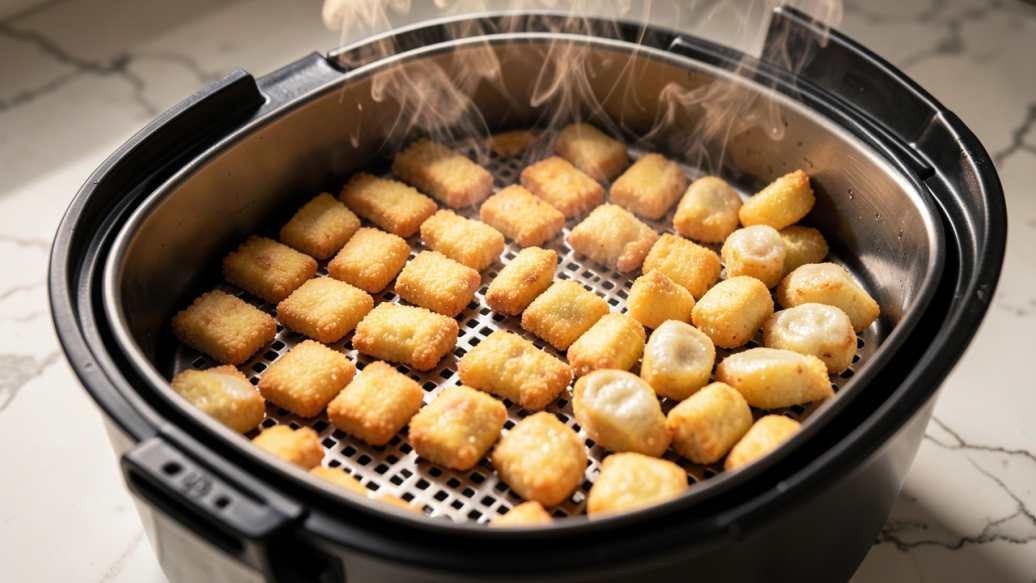
Place all food in a single layer across the bottom of the basket. Do not stack wings on top of each other or pile fries into a mound. A single layer guarantees that every piece gets direct exposure to the hot air fan.
Step 2: Leave a Half-Inch Gap
Visually check that each piece is separated by at least half an inch. For larger items like chicken breasts or salmon fillets, leave a full inch. You should be able to see the grate of the basket between most pieces.
Step 3: Shake or Flip Halfway
Shaking is not optional. It resets the position of the food and exposes new surfaces to the blast of hot air. Consumer Reports found that cooking in two separate batches produces noticeably superior texture compared to cooking everything at once. Set a timer for the halfway point and give the basket a good shake.
Step 4: Cook in Batches for Large Meals
If you have more food than fits in a single layer, do not force it. Cook in batches. Keep the first batch warm in the oven while the second batch cooks. This extra step is the secret to restaurant-quality results.
What Does Perfectly Spaced Food Look Like?
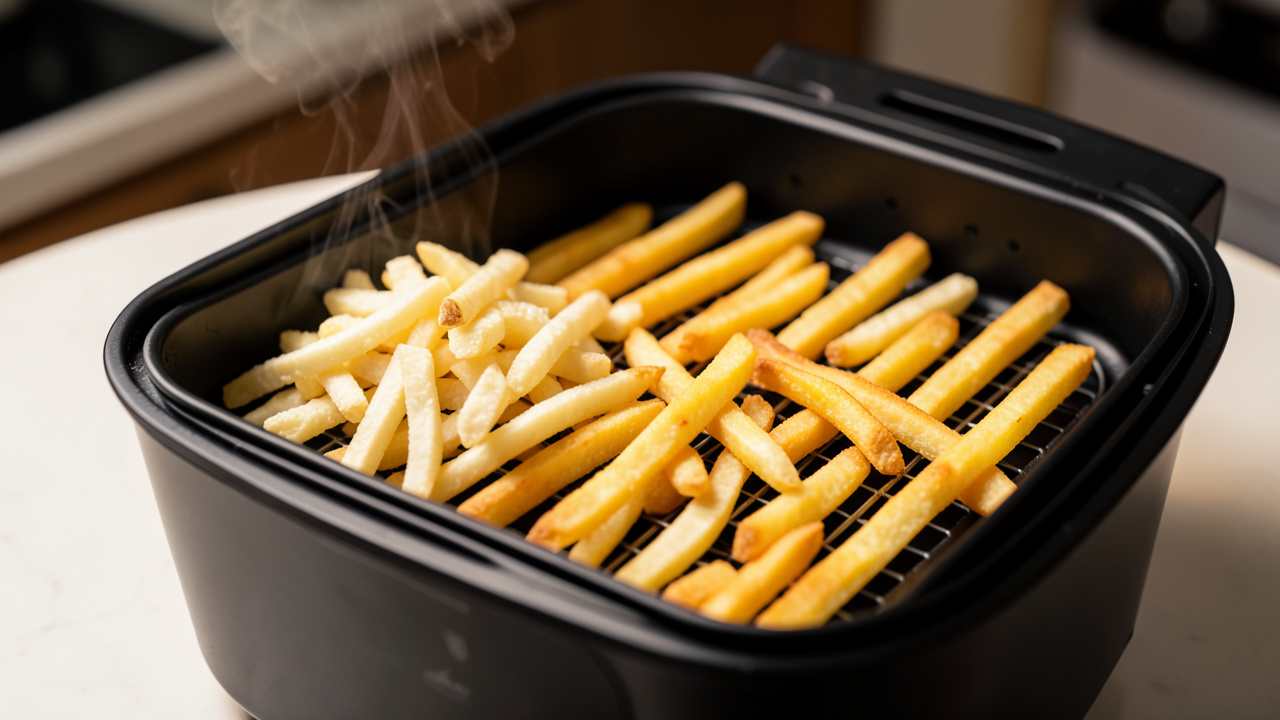
You should see a thin layer of the basket grill pattern exposed between each piece of food. If you cannot see the metal, you have too much food in the basket. Perfectly cooked air fryer food has an even golden-brown crust on all sides, not just on the top.
For breaded items like mozzarella sticks or chicken tenders, the coating should look dry and crisp, not greasy or dark in spots. For vegetables like broccoli or Brussels sprouts, the edges should be charred evenly across the entire batch. Uneven color is the first sign that airflow was blocked.
| Food Type | Max Single-Layer Batch | Spacing Required |
|---|---|---|
| Frozen French Fries | 1 pound | 1/2 inch |
| Chicken Wings | 1.5 pounds | 1/2 to 3/4 inch |
| Salmon Fillets | 2 to 4 fillets | 1 inch apart |
| Roasted Broccoli | 2 cups | 1/4 to 1/2 inch |
| Mozzarella Sticks | 6 to 8 sticks | 3/4 inch |
Common Myths vs Facts About Air Fryer Spacing
Myth 1: You can fill the basket to the top and just cook it longer.
Cooking longer does not fix the lack of airflow. It just burns the outside of the exposed pieces while the inner pieces remain undercooked. The steam trapped between the touching pieces prevents the interior from ever reaching the right texture.
Myth 2: Spraying oil on crowded food makes it crispy.
Oil helps transfer heat, but only if the heat can reach the food. Crowding blocks the air path. Adding oil to a crowded basket just makes the food greasy and soft. The oil needs the hot air to sizzle and crisp, which requires space.
Myth 3: Shaking the basket is just for convenience.
Shaking resets the position of the food, exposing new surfaces to the direct blast of hot air. It is essential for even cooking. If you skip the shake, the bottom of the food sits in a pool of rendered fat and moisture, which creates a soggy texture.
Myth 4: Preheating the basket fixes overcrowding.
Preheating helps create an initial sear on the outside of the food. However, it cannot overcome the steam barrier created by touching pieces. The moment moisture builds up from the crowded food, the convection effect stops, and steaming begins.
Myth 5: A larger air fryer means you never have to cook in batches.
Even the largest air fryer baskets have a limit. If you fill a 10-quart basket to the brim with fries, you will still get uneven results. The basket size affects the total volume you can cook, but the rule of single-layer spacing applies to every air fryer on the market, from a compact Cosori to a large Philips model.
The Role of Cooking Spray and Oil Application
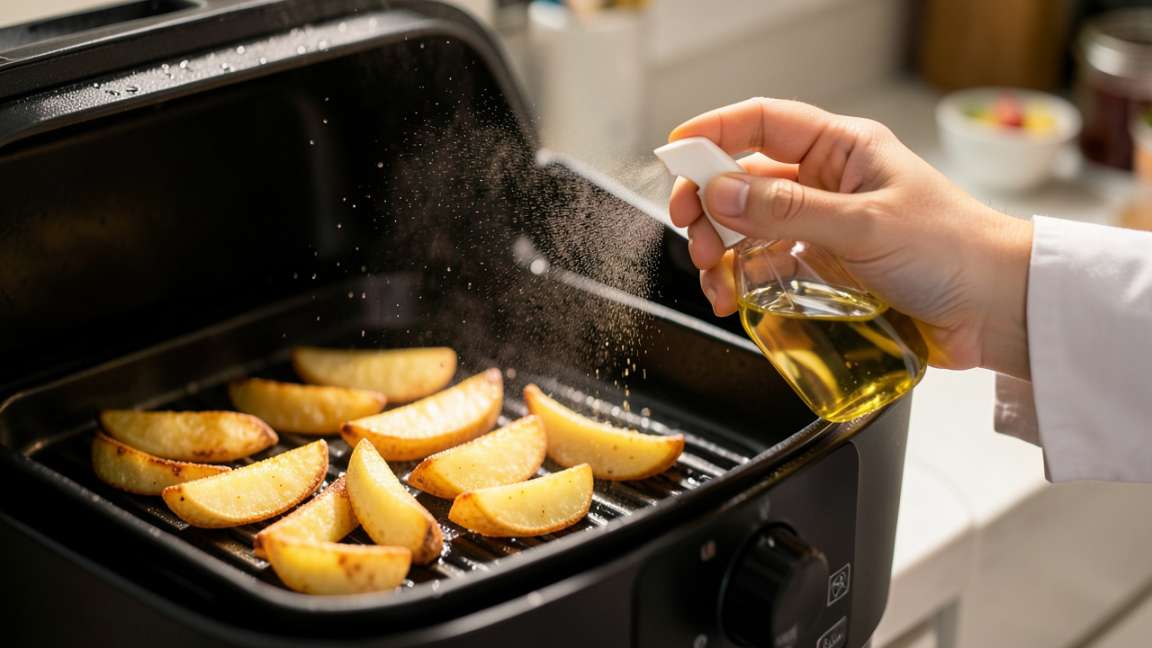
Using oil correctly is one of the best ways to enhance the why air fryer baskets need space between individual food pieces principle. Oil helps conduct heat rapidly across the surface of the food, but only if that surface is exposed to the fan.
Apply oil in a thin, even layer using a spray bottle. Do not pour oil directly onto the food in the basket. Pouring creates puddles that block airflow and prevent browning. Toss the food in a bowl with the oil before placing it into the basket. This ensures uniform coating without interfering with the space between pieces.
Important: Aerosol cooking sprays can damage the non-stick coating on your air fryer basket over time. Use a pump-style oil sprayer or a brush for best results.
How Different Foods React to Crowding
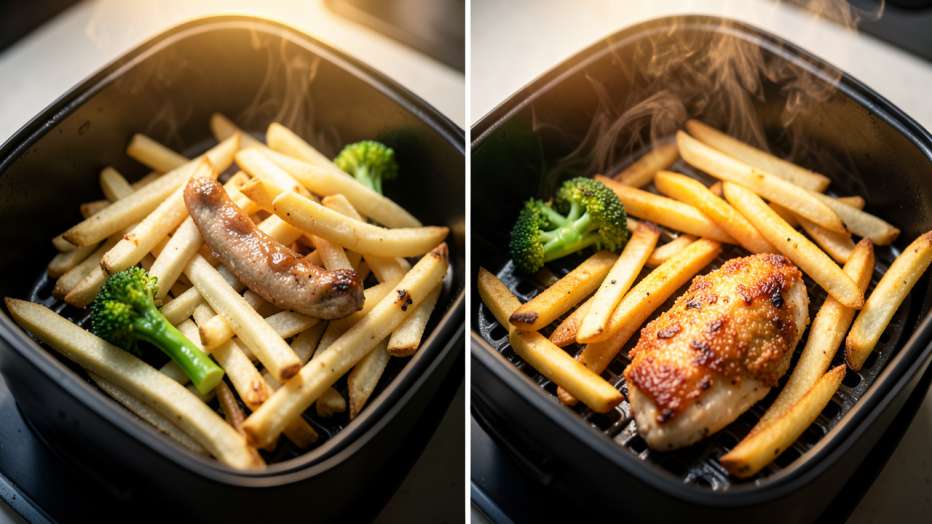
Not all foods respond the same way to overcrowding. Understanding these differences helps you make better decisions about batch sizes and spacing.
Starchy Foods
Potatoes, sweet potatoes, and frozen fries are the most sensitive to crowding. They release significant moisture as they cook. If they touch, they steam and become limp. They need the most aggressive spacing of any food type.
Breaded and Coated Foods
Chicken tenders, fish fillets, and onion rings rely on a dry coating for crunch. Wet batters release more steam and need extra space. Dry coatings like panko create a barrier that can withstand light contact, but they still need breathing room to crisp up evenly.
Vegetables
Vegetables like broccoli, zucchini, and bell peppers shrink significantly during cooking. They can be placed slightly closer together, but they still benefit from 1/4 to 1/2 inch of space. Crowding them traps moisture and produces a steamed, mushy texture instead of charred edges.
Frozen Foods
Frozen foods often need more space, not less. They release a large amount of moisture as they thaw. Giving them extra room allows the hot air to evaporate that moisture quickly instead of trapping it against the food surface.
Frequently Asked Questions
Can I use aluminum foil in my air fryer?
Yes, but never cover the holes in the basket. The holes are critical for airflow. Blocking them prevents the fan from circulating air, which defeats the entire purpose of spacing your food correctly. Always leave the holes uncovered.
How much space should I leave between pieces of chicken?
Leave at least half an inch between each piece of chicken. For bone-in cuts like thighs or drumsticks, a full inch is better. This ensures the hot air can circulate around the entire piece and render the fat evenly.
Do all air fryers require the same spacing?
The principle of airflow is universal, but basket shapes differ. A wide, low-profile basket allows more surface area for proper spacing. Small, deep baskets require smaller batches to achieve the same single-layer effect. Always check your specific basket size before loading.
What happens if I overcrowd the basket on purpose for speed?
You will get steamed, unevenly cooked food. The outer pieces might brown slightly, but the inner pieces will trap steam and stay pale and soggy. It takes longer in the long run because you will have to recook or reheat the food to fix the texture.
Does the type of breading affect spacing needs?
Yes. Wet batters like tempura or beer batter need more space than dry coatings like flour or panko. The wet batter releases steam as it sets, and crowding prevents this steam from escaping, which leads to a gummy exterior that does not crisp.
Should I line my air fryer basket with parchment paper?
You can use parchment paper, but it can block airflow if it is too large. Use perforated parchment liners specifically designed for air fryers. Never let the paper hang over the edges of the basket, as it can blow into the heating element.
How Air Fryer Design Affects Cooking Space
Different brands design their baskets differently. A Philips basket is typically wider and flatter, which naturally encourages better spacing. A Ninja basket might be deeper, which makes it tempting to fill higher. A Cosori basket often has a rectangular shape that is excellent for fries but tricky for larger items. Understanding your basket shape helps you adapt the spacing rules to your specific model.
The best way to test your specific air fryer is to run a test batch. Cook a single layer of fries and note the result. Then cook the same amount of fries in a slightly less spaced arrangement. Compare the texture. This hands-on experiment makes the science of airflow immediately clear.
Final Thoughts
Air frying is fundamentally different from deep frying. It relies on a delicate balance of heat, speed, and airflow. You now know that giving your food room to breathe is the single most important variable for success. Trust the process, cook in batches, and you will get consistently crispy results from your air fryer every time.