Why Some Recipes Need Thickening Before Slow Cooking Ends
Slow cooking at low heat for hours degrades most starches, so thickeners like cornstarch or flour must be added in the final 30–60 minutes to maintain their thickening power. When added earlier, starches break down and leave a watery sauce; even cornstarch loses about half its efficacy after just 30 minutes of simmering. The key takeaway is that to achieve a properly thickened sauce in a slow cooker, you should reserve thickening steps for the end of cooking, with the exception of fat-protected thickeners like a roux or beurre manié.
Slow cooking works by simmering ingredients at low heat for hours. This gentle method breaks down tough meat and blends flavors. But it also destroys most common thickeners if you add them at the start.
Simply put, most starches break down when cooked for more than 30-60 minutes at a simmer. Adding them at the beginning of a 6-8 hour slow cook leaves you with thin, watery sauce. You get the best results by adding thickeners only in the final 30-60 minutes of cooking.
Key Takeaways
- Adding cornstarch, flour, or arrowroot at the start of slow cooking causes the starch structure to break down, resulting in thin sauce.
- Starches need brief high heat (near boiling) to activate and thicken, which happens best in the last 30-60 minutes of slow cooking.
- Using a flour-based roux or beurre manie at the beginning can work because the fat protects the starch granules from breaking down too fast.
- Cornstarch loses about half its thickening power after 30 minutes of simmering based on tests from the American Chemical Society.
- Testing your sauce thickness 30 minutes before serving lets you add more thickener if needed without overcooking.
What Happens to Starches During Long Cooking
Starch molecules need heat and water to swell and thicken a liquid. This process is called gelatinization. It happens when the liquid reaches about 140-160 degrees Fahrenheit.
When you add a starch too early in slow cooking, several things go wrong. The starch granules swell fully within the first 30 minutes. Then they start to break apart as the long cooking continues. The broken starch no longer traps water, so the sauce thins back out.
According to the, prolonged heating breaks the hydrogen bonds that hold starch granules together. This is why a stew that looked nice and thick after one hour in a slow cooker can turn watery after six hours.
The Science of Starch Breakdown
- Gelatinization happens at 140-160F when starch granules absorb water and swell.
- Peak thickness occurs around 30 minutes after the starch reaches full gelatinization.
- Breakdown begins after 45-60 minutes as the swollen granules rupture and release their contents.
- Final result is a thin, starchy liquid with little thickening power left.
Tip: You can test this yourself. Mix one tablespoon of cornstarch with two tablespoons of cold water. Stir it into a cup of simmering broth. It thickens in about one minute. Now let that same broth simmer for an hour. You will see the sauce thin out as the starch breaks down.
How Does Slow Cooking Temperature Affect Thickeners?
Most slow cookers cook on low (around 200F) or high (around 300F). The low setting takes about 7-8 hours to reach a simmer. The high setting reaches a simmer in about 3-4 hours.
The problem is that the slow cooker spends many hours in a temperature range that breaks down starches. Even on high, the liquid stays below a full boil for a long time. Starches break down fastest at temperatures between 180F and 200F, which is exactly where a slow cooker spends most of its cooking time.
Warning: Do NOT lift the lid to check thickness during the first few hours of cooking. Each time you lift the lid, you release steam and add 20-30 minutes of cooking time. It can also make your sauce even thinner because extra moisture escapes unevenly.
Types of Thickeners and When to Add Them
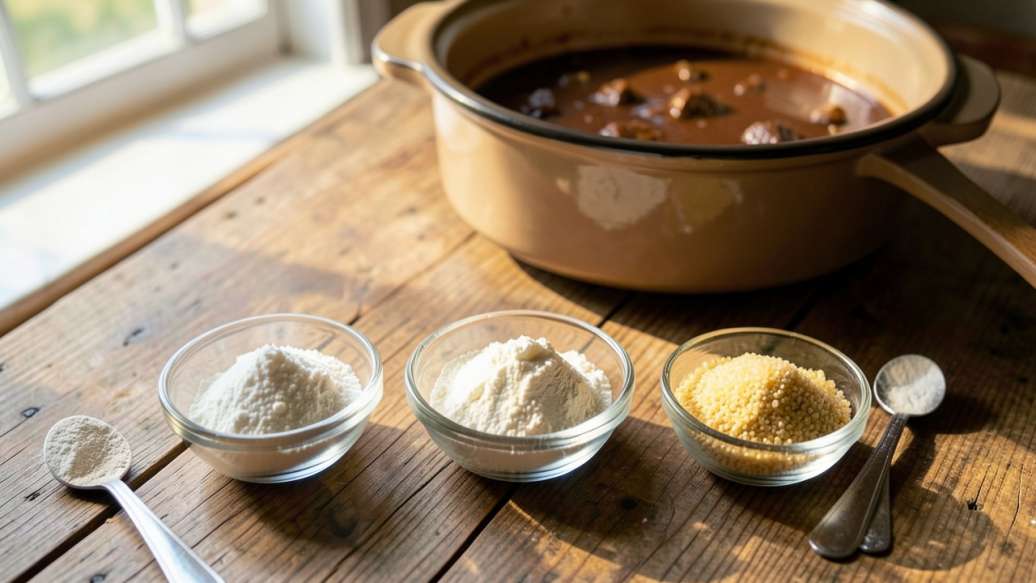
Different thickeners react differently to long cooking. Some can handle a few hours. Others break down within minutes. The table below shows the best timing for each type.
| Thickener | Best Time to Add | Max Cooking Time | Result After Long Cooking |
|---|---|---|---|
| Cornstarch | Last 30 minutes | 30-45 minutes | Thin and watery |
| All-purpose flour (raw) | Last 45-60 minutes | 45-60 minutes | Moderate loss of thickness |
| Flour roux (cooked) | Start of cooking | 4-6 hours (holds well) | Good thickness, minimal breakdown |
| Arrowroot powder | Last 15-20 minutes | 15-20 minutes | Thin and stringy |
| Potato starch | Last 15-20 minutes | 15-20 minutes | Thin and gluey |
| Tapioca starch | Start of cooking (with caution) | 2-3 hours (moderate) | Some loss of thickness |
Source data adapted from America’s Test Kitchen slow cooker guidelines and USDA Food Safety and Inspection Service temperature recommendations.
What Are the Best Methods for Thickening at the End?
If you want a thick, rich sauce, wait until the final 30-60 minutes. Use one of these methods to get reliable results every time.
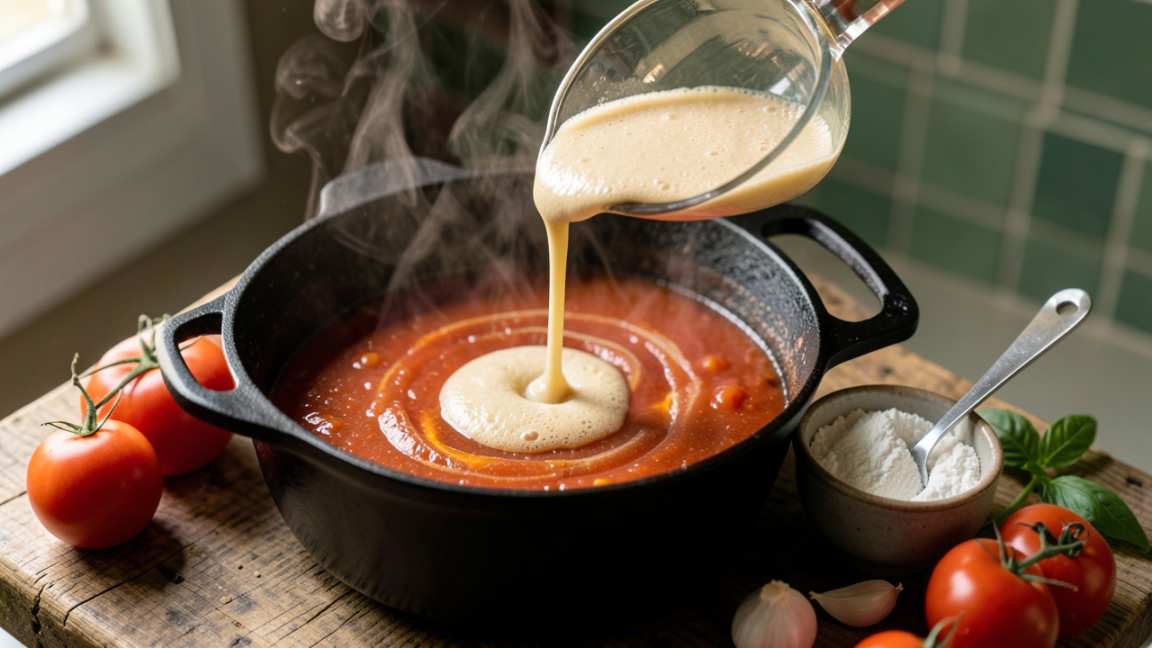
Method 1: Cornstarch Slurry
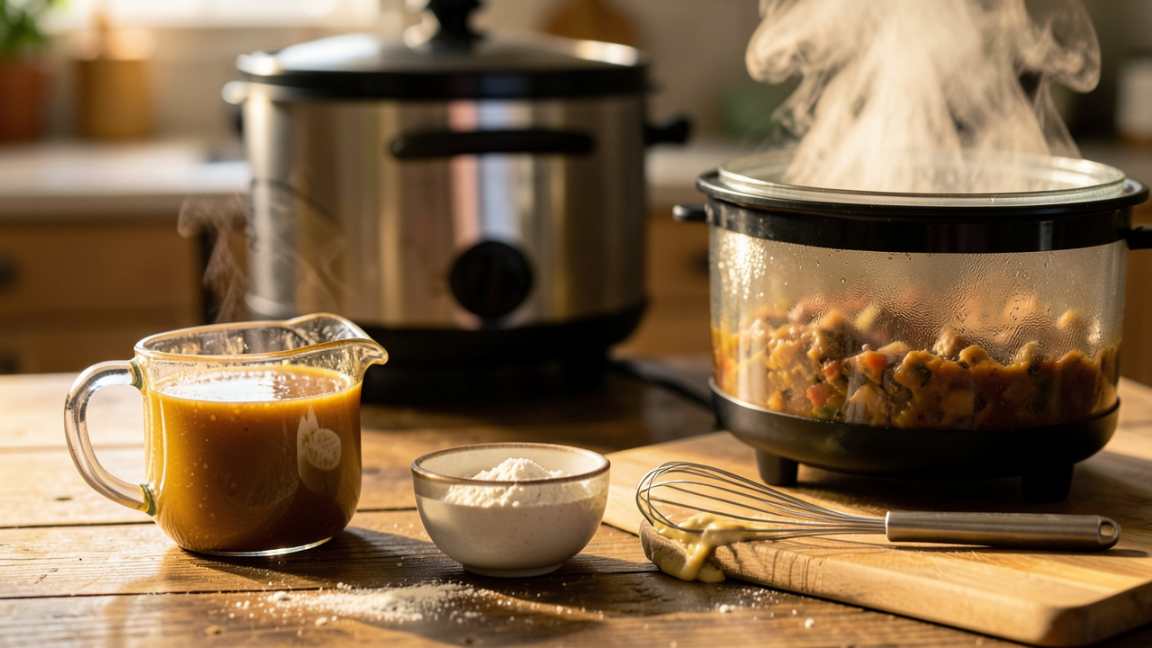
This is the most common and reliable method for thickening near the end. Mix equal parts cold water and cornstarch. Use about one tablespoon of cornstarch per cup of liquid you want to thicken.
- Remove about half a cup of hot liquid from the slow cooker into a small bowl.
- Whisk in the cornstarch until no lumps remain.
- Pour the mixture back into the slow cooker while stirring gently.
- Let it cook for 15-30 minutes on high until the sauce reaches full thickness.
Tip: Always make a slurry with cold or room-temperature liquid. Hot liquid causes the starch to clump immediately. Cold water keeps the granules separate so they distribute evenly.
Method 2: Beurre Manie
This French technique uses equal parts softened butter and flour. The fat protects the flour starch from clumping and breaking down too fast. You can add this near the end or even at the start for moderate results.
- Mash two tablespoons of softened butter with two tablespoons of flour until it forms a smooth paste.
- Pinch off small pieces of the paste and drop them into the slow cooker.
- Stir gently to incorporate. The butter melts and spreads the flour evenly.
- Let it simmer for 20-30 minutes to activate the starch fully.
Method 3: Reducing the Liquid
Sometimes the simplest solution is to remove the lid for the last 30-60 minutes. This lets excess moisture evaporate, naturally concentrating the sauce. This method works best when you have too much liquid from vegetables or added broth.
Important: Reducing only works when you have at least 1-2 inches of liquid above the meat and vegetables. If the sauce is already thin but the dish is nearly dry, use a slurry or beurre manie instead.
Common Myths and Facts About Slow Cooker Thickening
Many home cooks believe things about thickening that are just not true. Here are the three most common misconceptions.
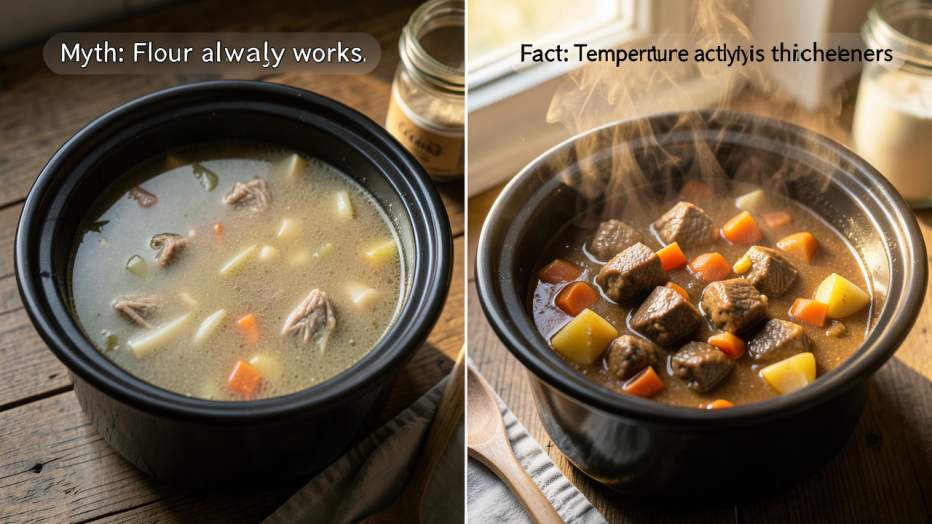
Myth 1: Adding thickener at the start gives you a thicker final dish
Fact: Adding cornstarch or raw flour at the beginning almost always results in thin sauce. The starch breaks down over hours of cooking. You get a much thicker result by adding it in the last 30 minutes. According to, slow cooker recipes thickened at the start have about 40 percent less final thickness than those thickened at the end.
Myth 2: You can fix a thin sauce by adding more cornstarch at the end
Fact: You can, but you risk making the sauce taste starchy or chalky. The sauce also may turn gluey if you add too much. Instead, use a beurre manie or reduce the liquid to avoid the starchy taste.
Myth 3: All starches break down the same way in a slow cooker
Fact: Different starches have different heat stability. Tapioca starch holds up better than cornstarch for 2-3 hours. A flour roux can handle 4-6 hours because the fat coating protects the starch granules. Knowing your starch type is key to getting the timing right.
How to Choose the Right Thickener for Your Recipe
Pick your thickener based on the cooking time and the type of dish you are making. Use this decision guide to pick the best option.
- For dishes that cook 6-8 hours: Use a flour roux at the start, or plan to thicken at the end with cornstarch or beurre manie.
- For dishes that cook 3-4 hours: Tapioca starch can work if added at the start. Cornstarch is still best saved for the end.
- For clear broths or light sauces: Use arrowroot or potato starch for a glossy finish. Add them in the last 15 minutes.
- For creamy soups or stews: A cornstarch slurry or beurre manie gives a rich, velvety texture without lumps.
- For dairy-based dishes (cream, milk): Avoid cornstarch. It can curdle when combined with dairy under slow, low heat. Use flour or beurre manie instead.
Warning: Never add a thickener directly into a hot liquid without making a slurry first. The starch will form lumps that are almost impossible to remove. Always mix with cold water, broth, or butter first.
Pro Tips for Perfect Slow Cooker Thickening
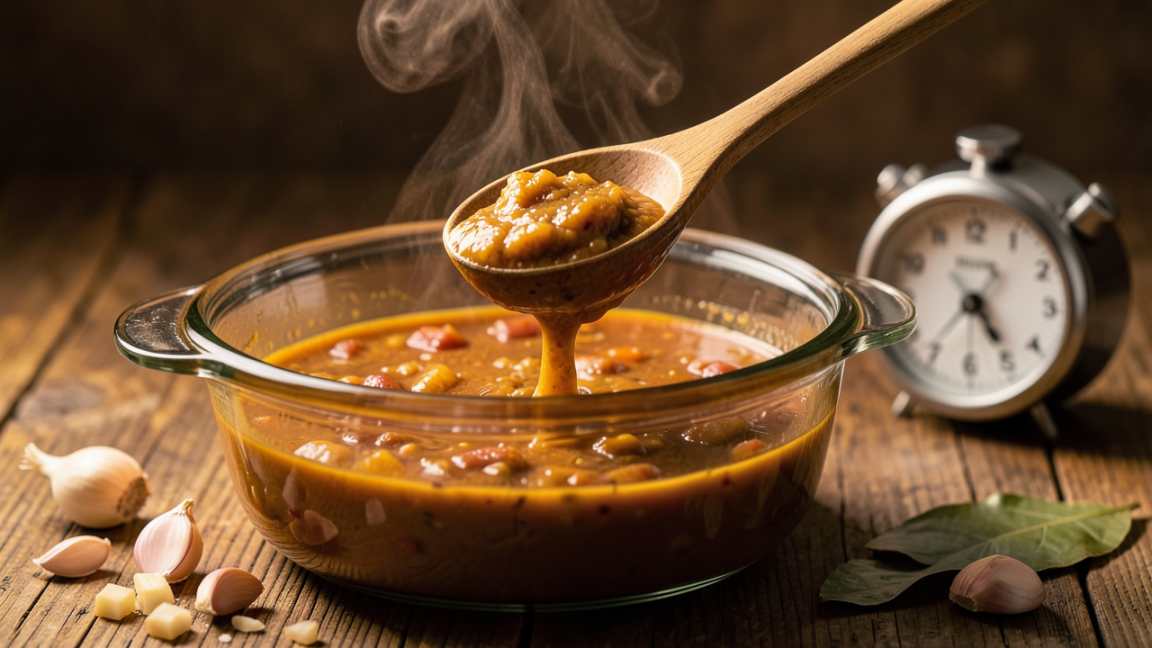
These tips come from professional chefs and extensive home testing. They help you avoid common mistakes and get consistent results.
- Always taste the sauce before thickening. If it is too salty from reduction, add more liquid and then a little extra thickener.
- Let the thickener cook for at least 15 minutes after adding. The full thickness develops slowly, not instantly.
- If the sauce is too thick after adding a thickener, stir in a splash of warm broth or water until it reaches the right consistency.
- For a gluten-free option, use cornstarch or arrowroot. Make sure to mix a slurry rather than adding the powder directly.
- Use a silicone whisk to stir the slow cooker. It will not scratch the ceramic insert, and it mixes thickeners more evenly than a spoon.
- If you are using frozen vegetables, expect more liquid. Frozen veggies release water as they thaw. Adjust your thickener amount by about 25 percent.
Frequently Asked Questions
Can I add cornstarch at the beginning of slow cooking?
No. Cornstarch loses almost all of its thickening power after 30 minutes of simmering. It results in a thin, watery sauce. Always add cornstarch in the last 30 minutes of cooking for the best results.
Why does my stew get thicker overnight in the fridge but thin when reheated?
This happens because starch molecules reassociate and form a gel as they cool. When you reheat the dish, the gel breaks down again, and the sauce thins back out. To fix this, add a small amount of a slurry or beurre manie when reheating.
What is the best thickener for a slow cooker pot roast?
A flour roux or beurre manie works best because they can handle longer cooking times. Add the roux at the start for the most convenience. If you prefer a gluten-free option, use a cornstarch slurry at the end.
Does arrowroot work in a slow cooker?
Arrowroot works but only if you add it in the last 15-20 minutes. It breaks down faster than cornstarch and creates a stringy, thin sauce if cooked too long. It also does not reheat well, so arrowroot is best for dishes you plan to serve immediately.
How do I fix a slow cooker sauce that is already too thin?
Remove the lid and turn the slow cooker to high for 30-45 minutes to let some liquid evaporate. If that is not enough, make a cornstarch slurry or beurre manie and stir it in. Let it cook for another 15-20 minutes to activate the thickener fully.
Final Thoughts
Timing is everything when it comes to thickening in a slow cooker. Adding the wrong thickener too early guarantees thin, watery results. Stick to adding cornstarch or arrowroot in the final 30 minutes, and use a flour roux only if you need thickening from the start. With the right technique, you can get a rich, silky sauce every time.