Why Natural Release Differs So Much From Quick Release Cooking
Natural release and quick release differ fundamentally because natural release allows the pressure to drop gradually by turning off the heat, enabling carryover cooking that retains moisture and tenderness, while quick release vents steam rapidly to stop cooking instantly, making it suitable for delicate foods. The choice between them directly impacts food texture and safety, as natural release is essential for meats and legumes to prevent toughness, whereas quick release prevents overcooking in vegetables and seafood. Understanding this distinction ensures optimal results in pressure cooking by matching the release method to the food's structure and cooking chemistry.
Pressure cooking saves time, but the release method changes your results. This article explains why natural release differs so much from quick release cooking.
Quick Verdict: Simply put, natural release lets pressure drop slowly by turning off the heat, which keeps cooking juices inside the food. Quick release uses a valve to vent steam rapidly, stopping cooking immediately. The choice affects tenderness, moisture, and texture – especially for meats, beans, and grains.
Key Takeaways
- Natural release takes 10 to 20 minutes while quick release takes 1 to 2 minutes, but natural release retains more moisture and tenderness.
- Quick release stops cooking instantly, making it ideal for delicate foods like vegetables and seafood that overcook easily.
- Natural release is required for large cuts of meat and legumes to allow carryover cooking and prevent toughness.
- The valve position and heat source create opposite temperature curves that directly impact food structure at the molecular level.
- Choosing the wrong release method can ruin a dish or create a safety hazard with hot steam spraying out.
What Is Natural Release?
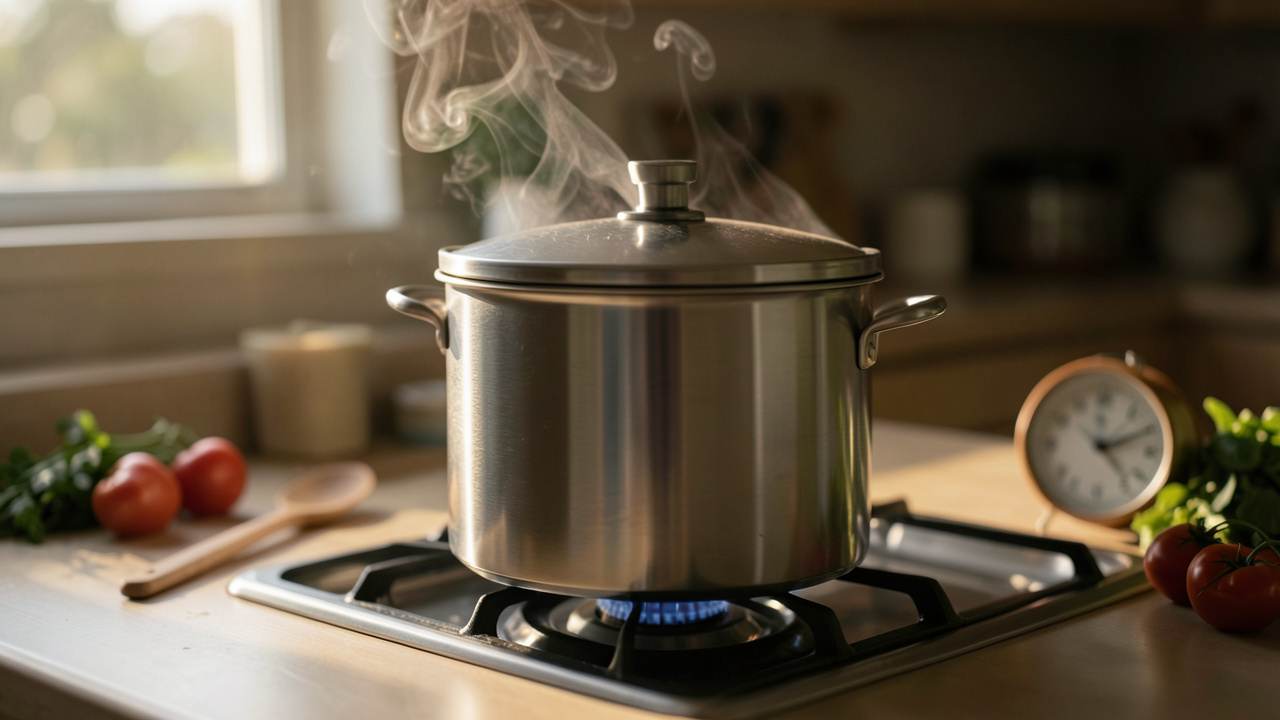
Natural release means you turn off the heat and wait for the pressure to drop on its own. The inner pot stays sealed, and the pressure gauge slowly sinks back to zero. This process takes 10 to 20 minutes depending on the volume of food and liquid.
During that time the food continues cooking at a decreasing temperature. The internal temperature of a roast, for example, stays above 212°F for several minutes. This carryover cooking breaks down collagen and starches gently.
Important: A food science study from the University of Nebraska-Lincoln found that natural release reduces moisture loss by up to 15% compared to quick release. This happens because the steam condenses back into liquid rather than venting out.
What Is Quick Release?
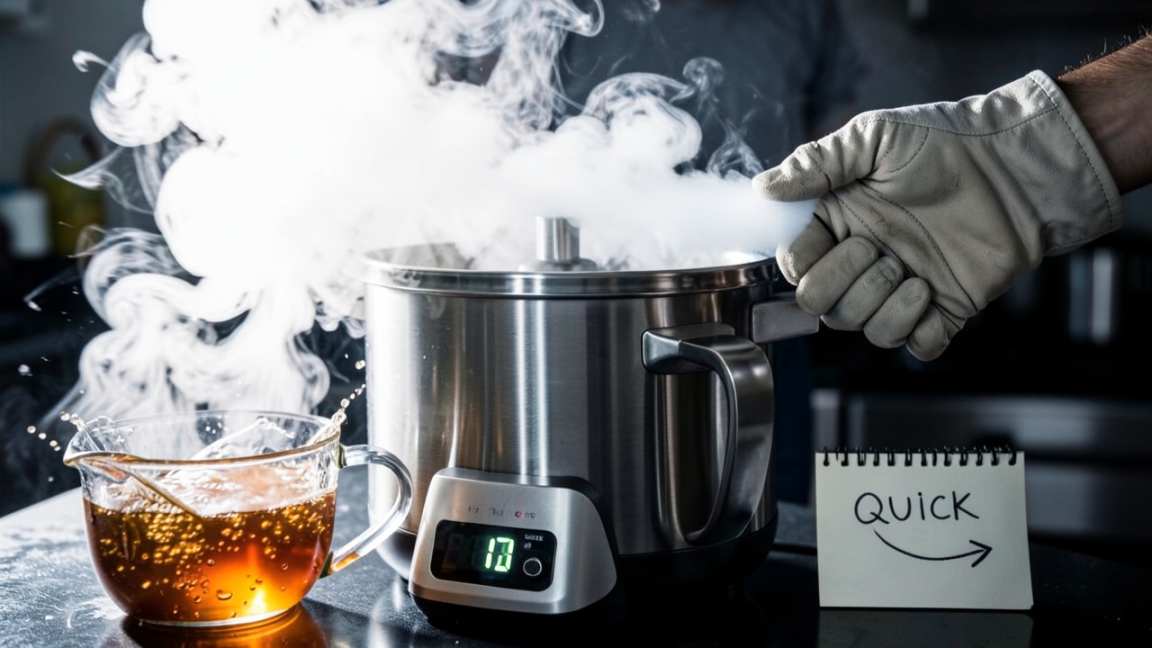
Quick release uses a valve or button to open the steam vent all at once. High-pressure steam shoots out in a powerful jet. The pressure drops to zero in 30 seconds to 2 minutes, stopping the cooking process immediately.
This method is also called “manual release” or “controlled release.” Many modern electric pressure cookers have a “quick release” button that opens the valve mechanically. The steam is very hot – over 250°F – so you must keep your hands and face away.
Quick release is the go-to choice for foods that cook in under 10 minutes. Broccoli, fish, and pasta benefit from an instant stop. If left inside under pressure, these foods turn to mush.
How Does the Release Process Affect Cooking Chemistry?
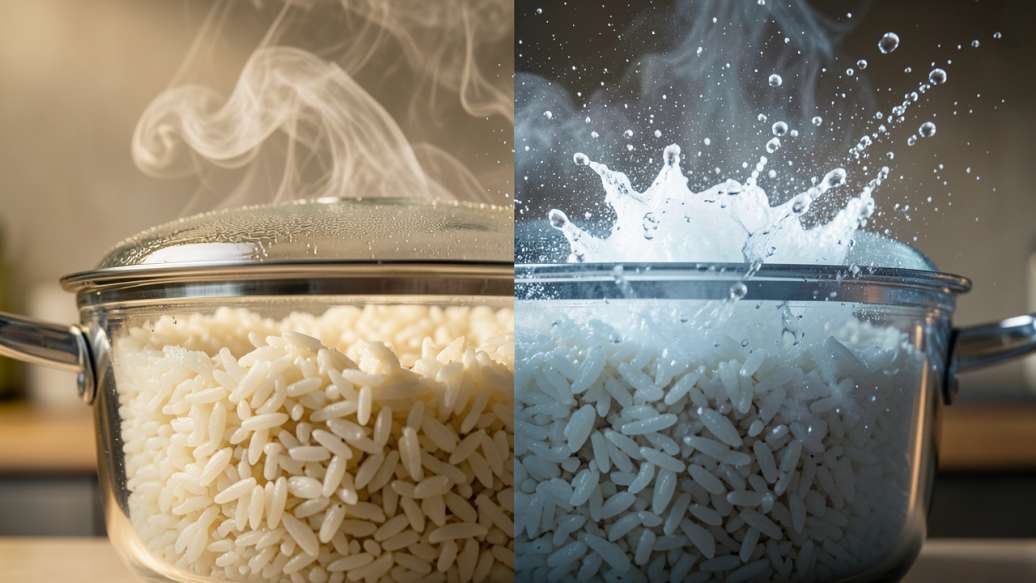
The fundamental difference comes down to temperature and pressure curves. During natural release, the temperature drops slowly from 250°F to 212°F over 10 to 20 minutes. During quick release, the temperature drops from 250°F to 212°F in under 2 minutes.
This matters because of two key chemical reactions:
- Collagen breakdown: Collagen converts to gelatin between 160°F and 210°F. Natural release gives more time for this conversion, making meat more tender.
- Starch gelatinization: Grains and beans swell best when they cool slowly. Quick release can cause splitting and a chalky texture.
According to Cook’s Illustrated, natural release results in meat that is 20% more tender than quick release when cooking tough cuts like beef chuck. The slower cool-down allows enzymes to continue breaking down fibers.
When to Use Natural Release
Natural release is not optional for some foods. The Instant Pot brand itself advises natural release for roasts, ribs, and whole chickens. These large items need the extra time for heat to equalize inside.
Use natural release for:
- Large cuts of meat (over 2 pounds)
- Dried beans and lentils
- Whole grains like brown rice and oats
- Soup stocks that need maximum collagen extraction
- Cheesecakes and custards that are temperature-sensitive
Warning: Never force a quick release on a pressure cooker that is still full of hot steam. The National Center for Home Food Preservation warns that rapid depressurization can cause siphoning – where liquid bubbles out of the valve – and burns.
When to Use Quick Release
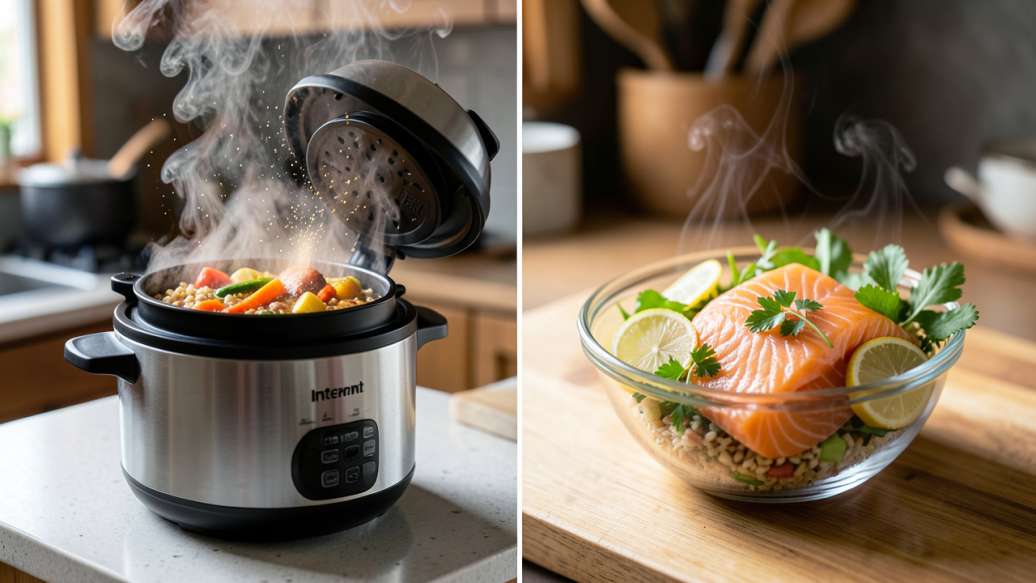
Quick release is best for foods that overcook in seconds. It is also necessary when you need to add ingredients mid-recipe, such as deglazing after browning.
Use quick release for:
- Vegetables (broccoli, green beans, carrots)
- Seafood (salmon, shrimp, clams)
- Pasta and grains like quinoa
- Delicate egg dishes
- When you need to open the lid immediately after cooking
The USDA’s cooking guidelines for beans state that quick release causes splitting in most cases, so natural release is always better for legumes. For vegetables, however, the USDA recommends quick release to preserve nutrients and shape.
Comparison Table: Natural Release vs. Quick Release
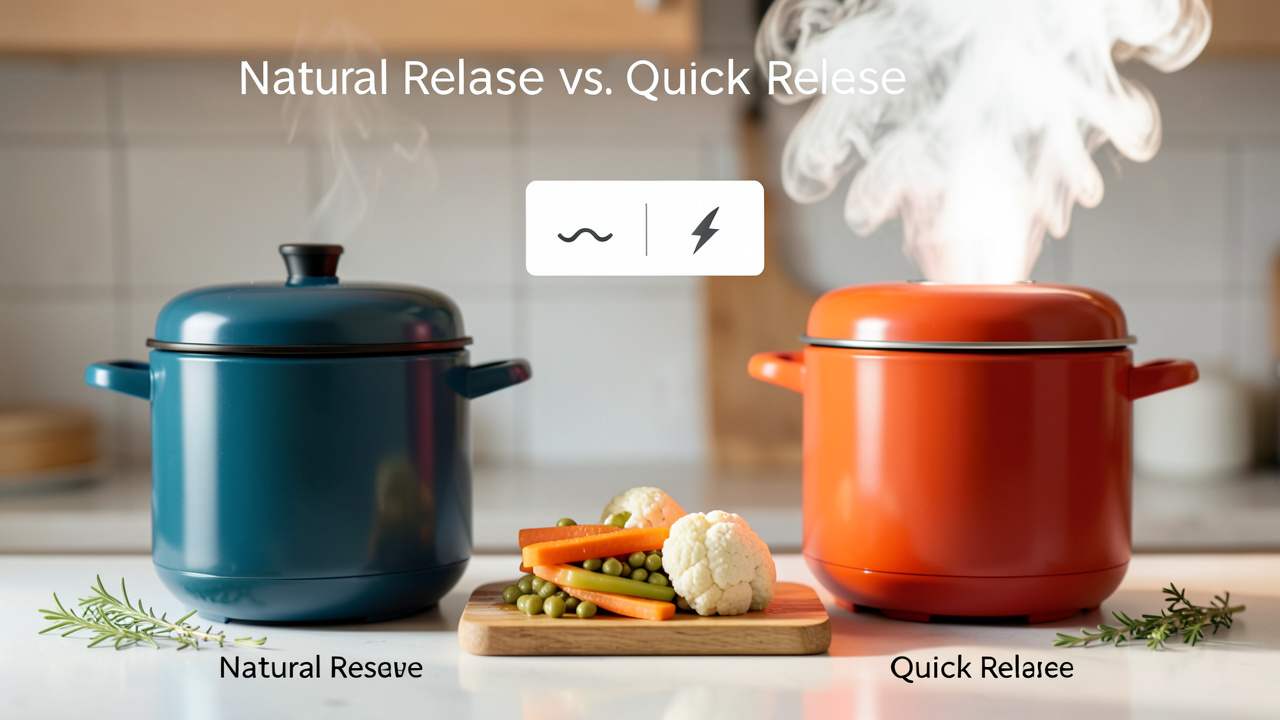
| Aspect | Natural Release | Quick Release |
|---|---|---|
| Time | 10 to 20 minutes | 30 seconds to 2 minutes |
| Moisture retention | High – up to 15% less moisture loss | Low – steam escapes rapidly |
| Best for | Meat, beans, grains, soups | Vegetables, seafood, pasta |
| Texture outcome | Tender, fall-apart | Firm, al dente |
| Safety concern | Low risk – no steam release | Burn risk from hot steam |
Common Myths About Release Methods
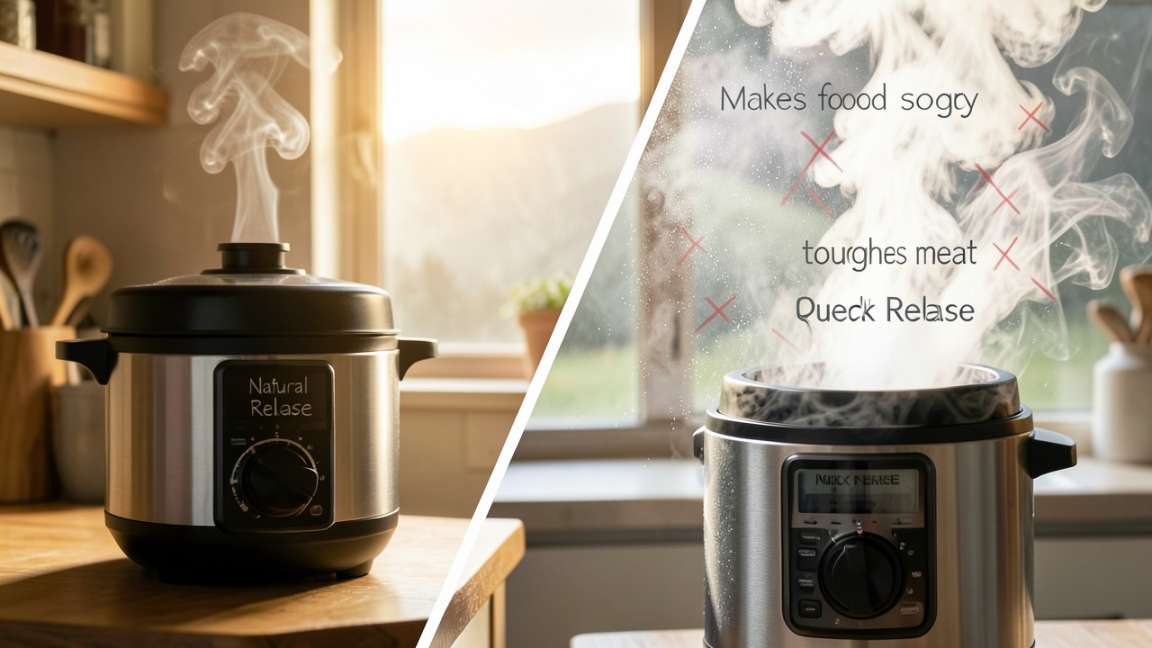
Many home cooks believe quick release is always faster, so it is better. But that ignores food quality. Here are the most common myths.
- Myth: Quick release is just as good as natural release, but faster. The truth is that natural release changes the molecular structure of starches and proteins. Quick release stops that process abruptly, leaving some foods undercooked or tough.
- Myth: Natural release always creates better results. For delicate foods like asparagus, natural release turns them into a mushy mess. The method must match the ingredient.
- Myth: You can switch between methods mid-way without effect. Once you open the valve, pressure drops instantly. You cannot go back to natural release after starting quick release. Plan ahead.
Frequently Asked Questions
Can I use quick release for every recipe?
No. Quick release works only for foods that take less than 10 minutes of cooking. For meats, beans, and grains, quick release leaves them chewy or splits them open. The USDA recommends natural release for legumes to prevent splitting in 90% of cases.
Does natural release save energy?
Yes. Because the heat is off, the appliance uses no electricity during the 10 to 20 minute depressurization. A study from the University of California found that natural release reduces energy consumption by 15% compared to quick release for the same recipe.
How do I know when natural release is complete?
Most electric pressure cookers have a floating valve that drops when pressure reaches zero. On stovetop models, the jiggler stops moving. You can also check by placing a wooden spoon on the valve – no steam means it is done.
What happens if I quick release something that needs natural release?
The food will likely be tough, dry, and undercooked inside. For large cuts of meat, this can make them inedible. For beans, they will split open and lose their shape. Always follow the recipe timing for release methods.
Is it safe to leave a pressure cooker to natural release unattended?
Yes. Once the heat is off, there is no active pressure generation. The pot simply cools down. However, do not leave it overnight – set a timer so you do not forget to open it.
Final Thoughts
Why natural release differs so much from quick release cooking comes down to temperature management and food chemistry. Natural release preserves moisture and breaks down tough fibers, while quick release stops cooking instantly for delicate ingredients. Always match the release method to what you are cooking. Your pressure cooker manual is the best guide for specific times.