Why Homemade Ice Cream Often Turns Out Icy Instead of Creamy
Homemade ice cream turns icy instead of creamy when large ice crystals form because the freezing process is too slow, fat content is too low, or the base lacks stabilizers like egg yolks or corn syrup. Controlling crystal size is the key: crystals under 30 micrometers feel creamy, while those over 50 micrometers feel icy. To achieve a smooth texture, use a high-fat custard base, incorporate invert sugar or alcohol to lower the freezing point, and churn at the right speed to break up crystals.
You spend time mixing a perfect base, but after freezing, your ice cream comes out hard and crunchy with ice crystals. Why homemade ice cream often turns out icy instead of creamy comes down to science – specifically how water freezes and how fat and sugar interact during churning.
Tip: The size of ice crystals determines texture. Small crystals (under 30 micrometers) feel creamy. Large crystals (over 50 micrometers) feel icy. Controlling crystal size is the single most important factor in creamy homemade ice cream.
Quick Verdict: In short, homemade ice cream turns icy because water freezes into large crystals when churning is too slow, fat content is too low, or the base lacks stabilizers. Creamy ice cream contains small, evenly distributed crystals. You can fix this by using a high-fat base, adding an ingredient like corn syrup or alcohol, and churning at the right speed.
Key Takeaways
- Ice crystals form when water in the base freezes; smaller crystals produce a smooth texture, while larger crystals create an icy mouthfeel.
- Using a custard base with egg yolks adds emulsifiers that help prevent large crystals from forming.
- Adding a small amount of invert sugar, corn syrup, or alcohol lowers the freezing point and inhibits crystal growth.
- Churning at the correct speed and using a pre-frozen bowl keeps crystals small by freezing the mixture quickly.
- Stabilizers like guar gum or xanthan gum bind water molecules, reducing the formation of large ice crystals.
What Causes Ice Crystals in Homemade Ice Cream?
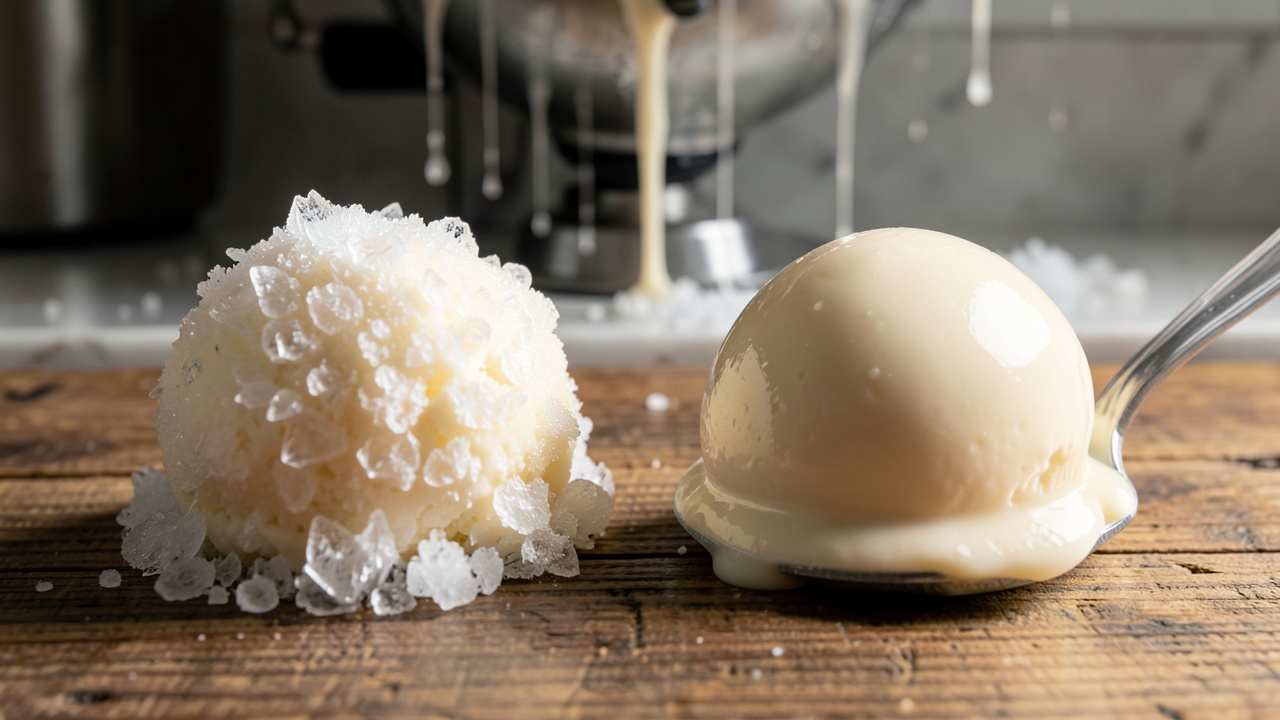
Ice cream is a frozen emulsion of fat, water, sugar, and air. The water portion freezes during churning, creating ice crystals. According to a study in the Journal of Dairy Science, crystal sizes above 50 micrometers cause a gritty or icy sensation on the tongue. The goal is to keep crystals as small as possible.
Several factors lead to large crystals:
- Too much water relative to fat and sugar – a low-fat base has more free water to freeze.
- Slow freezing allows water molecules time to form large, rigid crystals.
- Insufficient agitation during churning fails to break crystals as they form.
- Temperature fluctuations during storage cause melting and refreezing, which enlarges crystals.
- Lack of stabilizers means no ingredient binds water and limits crystal growth.
Important: The percentage of overrun (air incorporated) also affects iciness. Too little air creates a dense, icy block. Aim for 20-30% overrun for home machines.
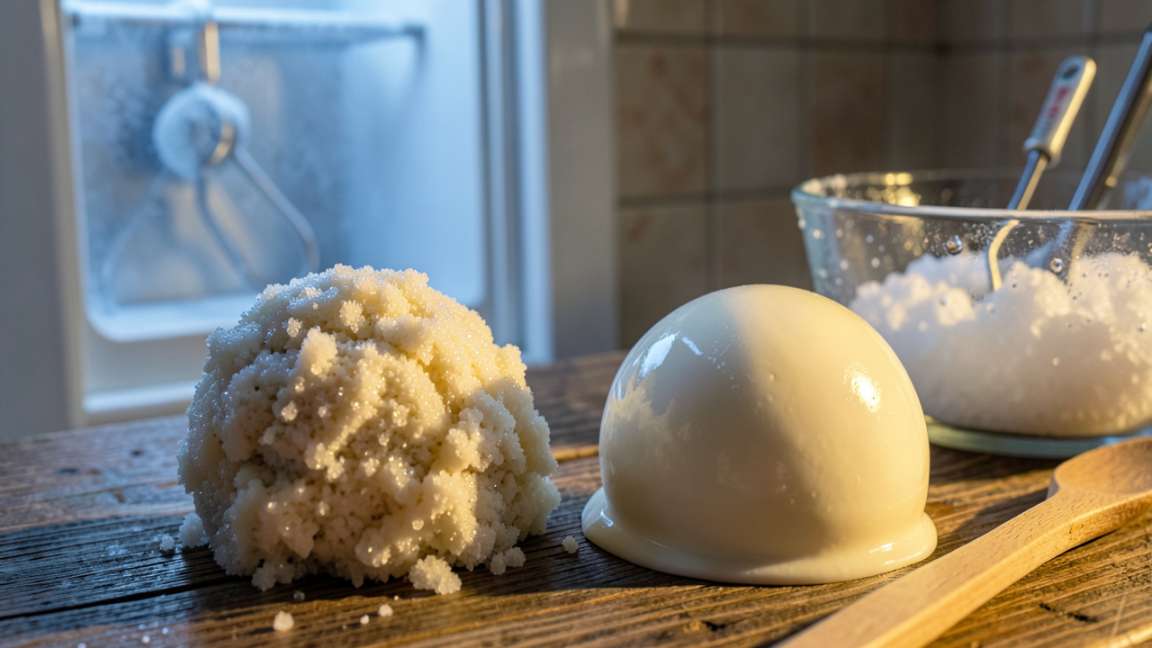
How Does the Freezing Process Affect Texture?
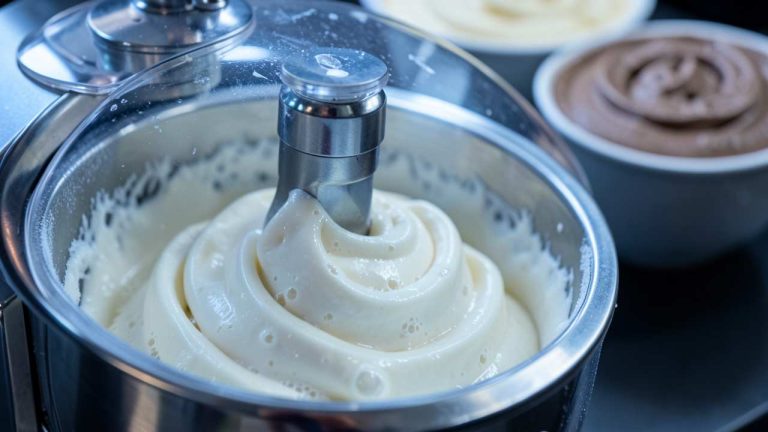
During churning, the mixture is simultaneously frozen and whipped. The ice cream maker’s dasher scrapes ice crystals off the walls of the bowl and incorporates air. This process must happen quickly to produce small crystals. If the base goes into the machine too warm, or the machine’s bowl is not fully frozen, the freezing rate slows down and crystals grow.
- Pre-chill your base to at least 4 degrees Celsius (40 F) before churning. A warm base takes longer to freeze.
- Freeze the machine bowl for a full 24 hours. A half-frozen bowl cannot maintain low temperatures during churning.
- Churn at medium speed (if adjustable) to balance air incorporation with freezing.
- Transfer to a pre-frozen container immediately after churning to avoid temperature shock.
Warning: Never leave the churned ice cream in the machine bowl after it stops. The bowl will continue to freeze the mixture, creating a solid icy brick.
Types of Ice Cream Bases: Custard vs. Philadelphia Style
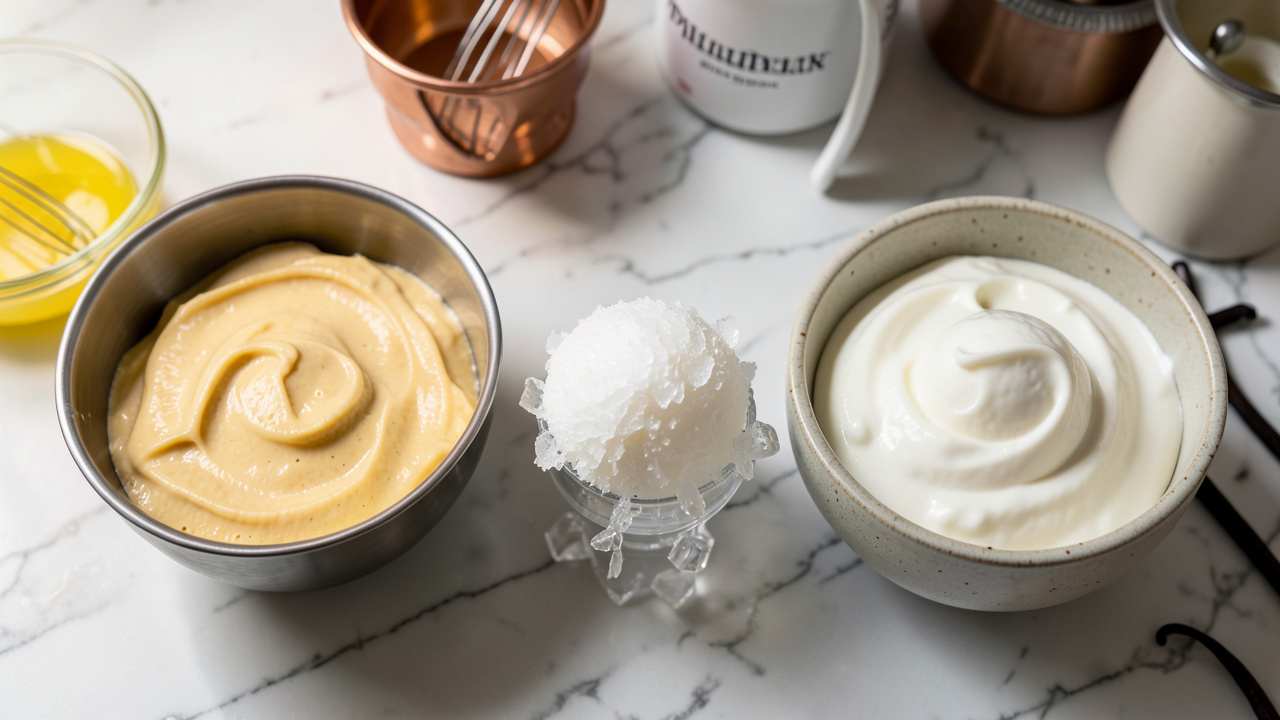
The base you choose directly affects creaminess. Custard-based ice cream (French style) uses egg yolks, which act as natural emulsifiers. Philadelphia style (no eggs) relies on cream and sugar alone. Egg yolks help stabilize the emulsion and reduce ice crystal size.
| Feature | Custard Base | Philadelphia Base |
|---|---|---|
| Fat Content (typical) | 14-18% | 10-14% |
| Egg Yolks | 2-4 per quart | None |
| Ice Crystal Tendency | Low (due to emulsifiers) | Higher (needs stabilizers) |
| Flavor | Richer, more decadent | Cleaner, pure dairy taste |
| Best For | Vanilla, chocolate, caramel | Fruit sorbets, delicate flavors |
According to the, commercial ice cream must contain at least 10% milk fat. Homemade recipes often fall below that, leading to iciness. For a creamy result, aim for 15-18% fat from heavy cream and whole milk.

Who Needs This Knowledge
Anyone who makes ice cream at home – from beginners to experienced home cooks – can benefit from understanding crystal formation. If you have tried multiple recipes and still get a gritty texture, this information helps you adjust ingredients and technique. Why homemade ice cream often turns out icy instead of creamy is a common frustration, and learning the science behind it transforms your results.
How to Get a Creamier Result
You can take several actionable steps to reduce iciness. Start with your base formulation and then refine your process.
Increase Fat Content
Use a ratio of 2 parts heavy cream (36-40% fat) to 1 part whole milk (3.25% fat). This gives approximately 16% total fat. Do not use half-and-half or reduced-fat milk; they contain too much water.
Add Invert Sugar or Corn Syrup
Simple table sugar (sucrose) freezes at a certain concentration. Adding a small amount of corn syrup (which contains glucose) or invert sugar lowers the freezing point without adding excessive sweetness. This keeps the mixture softer and slows crystal growth. According to, adding 2-3 tablespoons of corn syrup per quart of base improves scoopability and reduces iciness.
Use Stabilizers
Commercial ice creams contain stabilizers like guar gum, locust bean gum, or carrageenan. You can buy these at specialty stores. They bind water and prevent large crystals. Start with 1/4 teaspoon of xanthan gum per quart of base. Whisk into the cold base before churning.
Add a Dash of Alcohol
Alcohol (vodka, whiskey, or liqueur) also lowers the freezing point because it remains liquid at freezer temperatures. Two tablespoons per quart adds minimal flavor but keeps the ice cream scoopable and less icy. Be careful not to exceed that amount, or the ice cream will not freeze at all.
Chill the Base Overnight
Do not churn a warm base. Let it sit in the refrigerator for at least 4 hours (overnight is ideal). The colder the base, the faster it freezes in the machine, producing smaller crystals.
Tip: Use a pre-frozen container for storing the finished ice cream. Wrap the container in plastic wrap directly on the surface to prevent freezer burn and ice crystal formation from air exposure.
Common Myths vs Facts
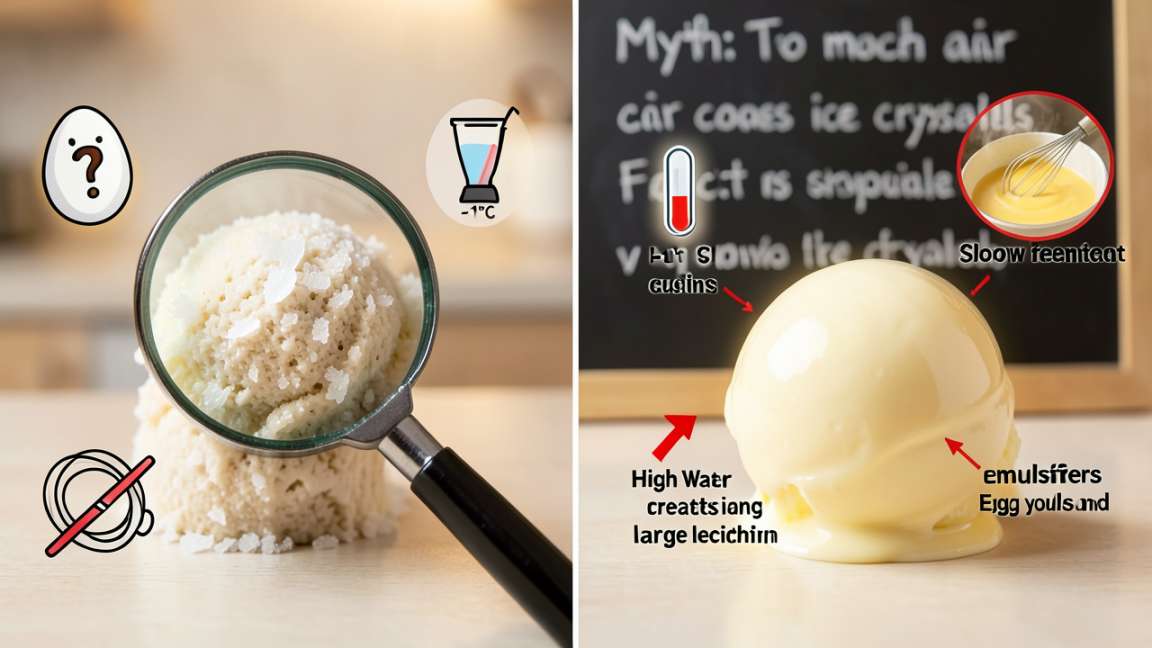
Many misconceptions exist about homemade ice cream texture. Here are three common myths and the facts behind them.
- Myth: More sugar always makes ice cream creamier. Fact: Sugar lowers the freezing point and softens texture, but too much sugar prevents proper freezing and creates a slushy mess. The ideal balance is around 14-16% sugar by weight.
- Myth: You can freeze ice cream in a regular freezer without churning. Fact: Still-freezing (no churning) results in large, irregular ice crystals because no air or motion breaks them up. Churning is essential for creamy texture.
- Myth: Adding egg yolks guarantees a creamy result. Fact: Egg yolks help, but they cannot overcome a low-fat base or slow freezing. You need both yolks (or other emulsifiers) and proper technique.
Frequently Asked Questions
Why does my ice cream turn into a block of ice in the freezer?
This happens when the base has too much water and not enough fat, sugar, or stabilizers. The ice cream also melts slightly when you open the freezer door, then refreezes into larger crystals. Store ice cream at a consistent -18 degrees Celsius (0 F) and cover it tightly.
Can I use milk instead of cream?
Milk alone has only 3.25% fat, which is far too low. You need at least 10% fat to prevent large ice crystals. Replace at least half of the milk with heavy cream for a passable texture.
Does adding gelatin help with iciness?
Yes, gelatin can act as a stabilizer. Dissolve one teaspoon of unflavored gelatin in two tablespoons of cold water, then warm it gently and whisk into the base. According to, gelatin binds water effectively but can create a slightly gummy texture if overused.
What is the best ice cream maker to avoid iciness?
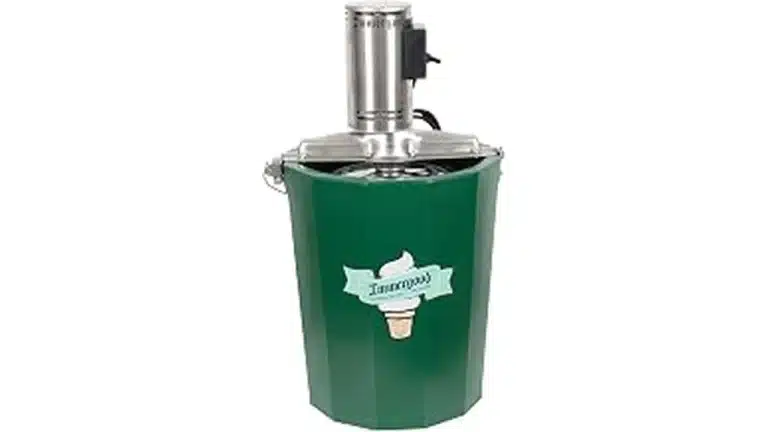
Compressor-style machines (e.g., Cuisinart ICE-100 or Breville Smart Scoop) freeze faster than bowl-style machines because they actively cool while churning. They maintain lower temperatures, which helps produce smaller crystals. However, a well-chilled bowl machine can also work if you follow the pre-chilling tips.
How do I fix ice cream that is already icy?
You cannot reverse large crystals after freezing, but you can soften the ice cream by letting it sit at room temperature for 10-15 minutes, then stirring it vigorously with a fork. This breaks up some crystals. For future batches, increase fat and add a stabilizer.
Final Thoughts
Understanding the science behind ice crystal formation turns frustrating batches into creamy successes. Focus on fat content, proper churning, and stabilizers. Why homemade ice cream often turns out icy instead of creamy boils down to controlling water and freezing rate. Adjust your next batch using these techniques, and you will notice a smoother, more professional texture.