Regrow 7 Kitchen Scraps On A Windowsill, Zero Gardening Skill
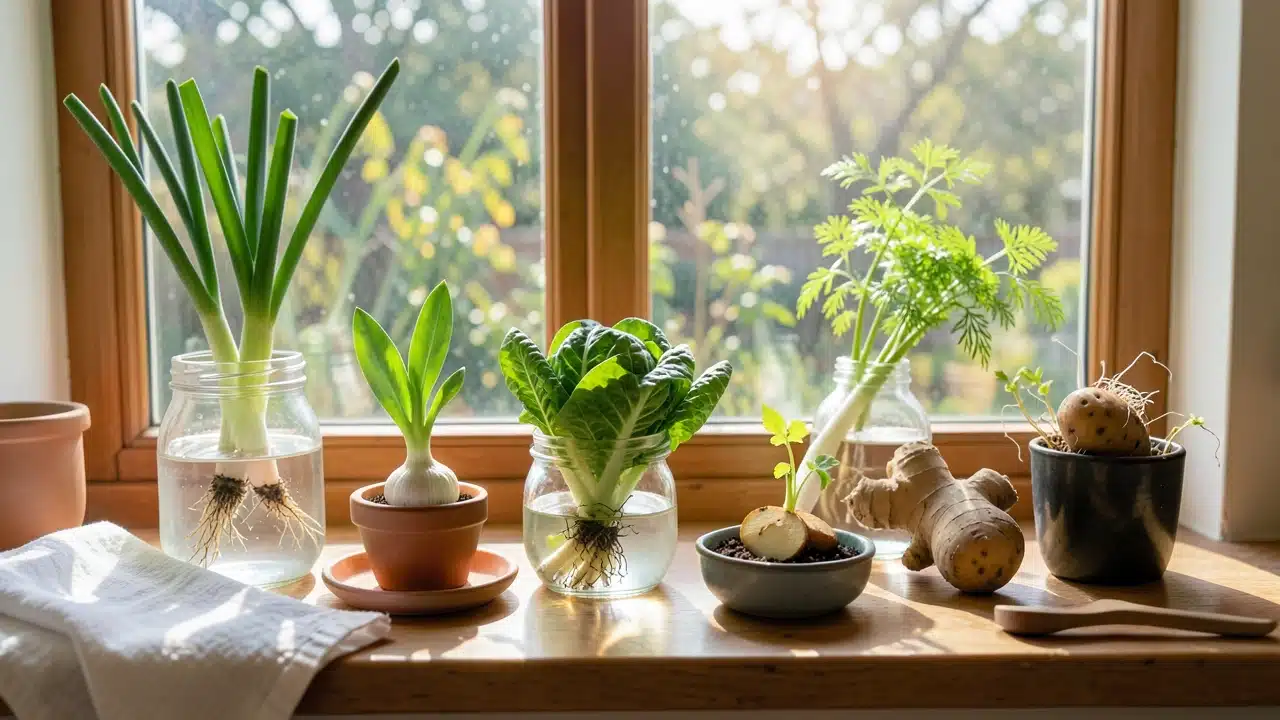
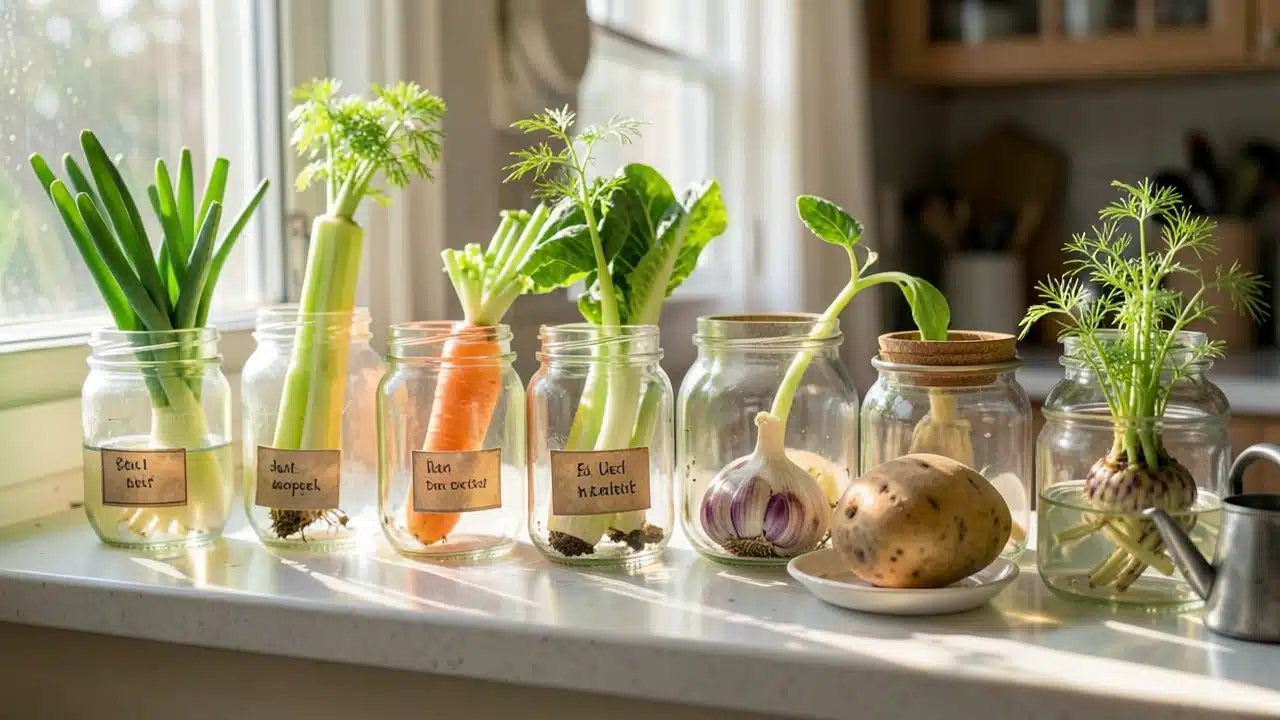
Regrow 7 kitchen scraps on a windowsill by starting with green onions, lettuce bases, celery ends, basil cuttings, mint stems, carrot tops, and garlic cloves.
Most need shallow water, bright indirect light, and regular water changes. They may not replace full groceries, but they teach low-waste growing and provide small fresh harvests indoors.
Want to add some green to your home without a big fuss? You can easily regrow fresh food right on your kitchen windowsill! It’s a fantastic way to reduce waste and have tasty ingredients handy.
No need for a garden or any special green thumb. We’ll show you how to Regrow 7 Kitchen Scraps on a Windowsill, Zero Gardening Skill. This means you’ll get delicious herbs and veggies with minimal effort, saving money and enjoying the satisfaction of growing your own food.
Get ready to transform your leftovers into living plants!
Key Takeaways
- You can easily grow fresh food from kitchen scraps on a windowsill.
- This method requires no special gardening skills or equipment.
- Growing your own food reduces waste and saves money.
- Several common kitchen scraps can be regrown successfully.
- Enjoy fresh herbs and vegetables year-round with minimal effort.
- It’s a simple way to add greenery and life to your home.
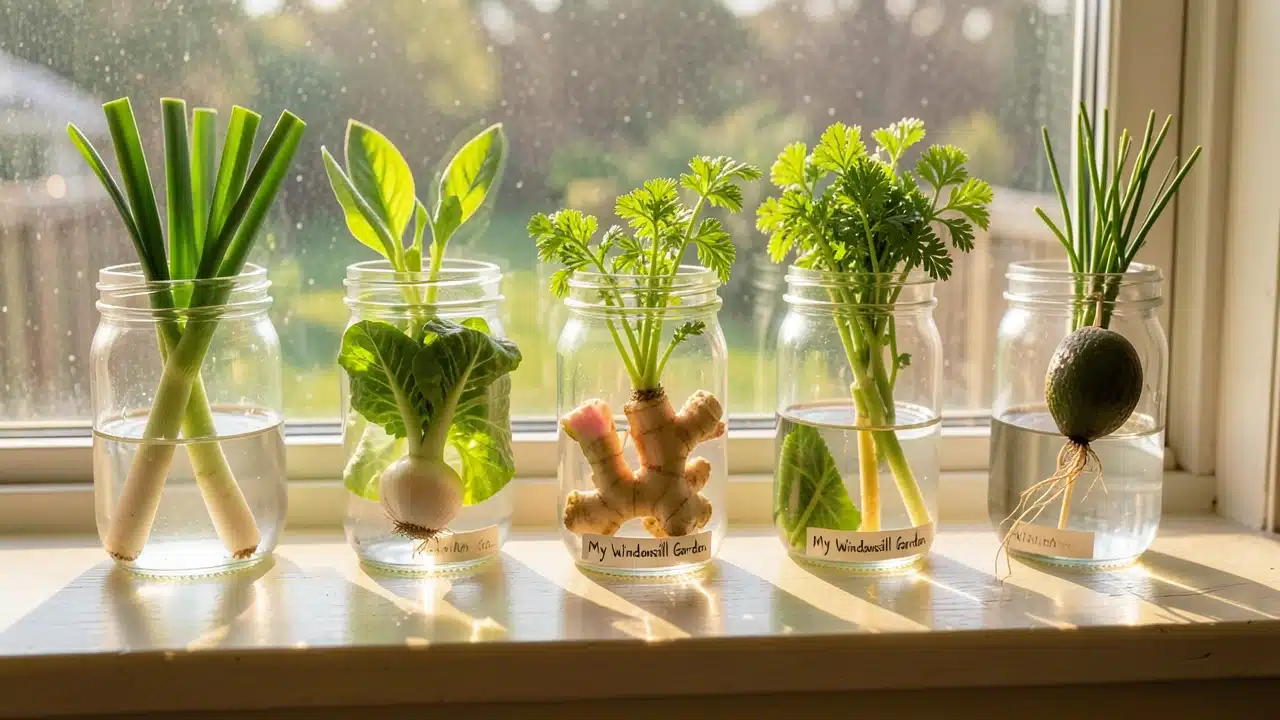
Start Growing: Your Windowsill Garden Awaits
Imagine having fresh herbs for your cooking or a crisp lettuce leaf ready for a salad, all grown from things you might have thrown away.
This is totally possible, even if you think you can’t grow a thing. The idea of regrowing food is simple: take a piece of a plant that you’ve eaten, like the base of a leek or the top of a carrot, and give it a chance to grow again.
Your kitchen windowsill can become a mini farm. This guide will help you learn how to Regrow 7 Kitchen Scraps on a Windowsill, Zero Gardening Skill.
Many vegetables and herbs have roots or bases that can sprout new life when given water and light. It’s a sustainable practice that benefits your kitchen and the environment. Plus, it’s incredibly rewarding to watch something grow from what was once waste.
We will cover the easiest plants to start with, what you need, and how to care for them.
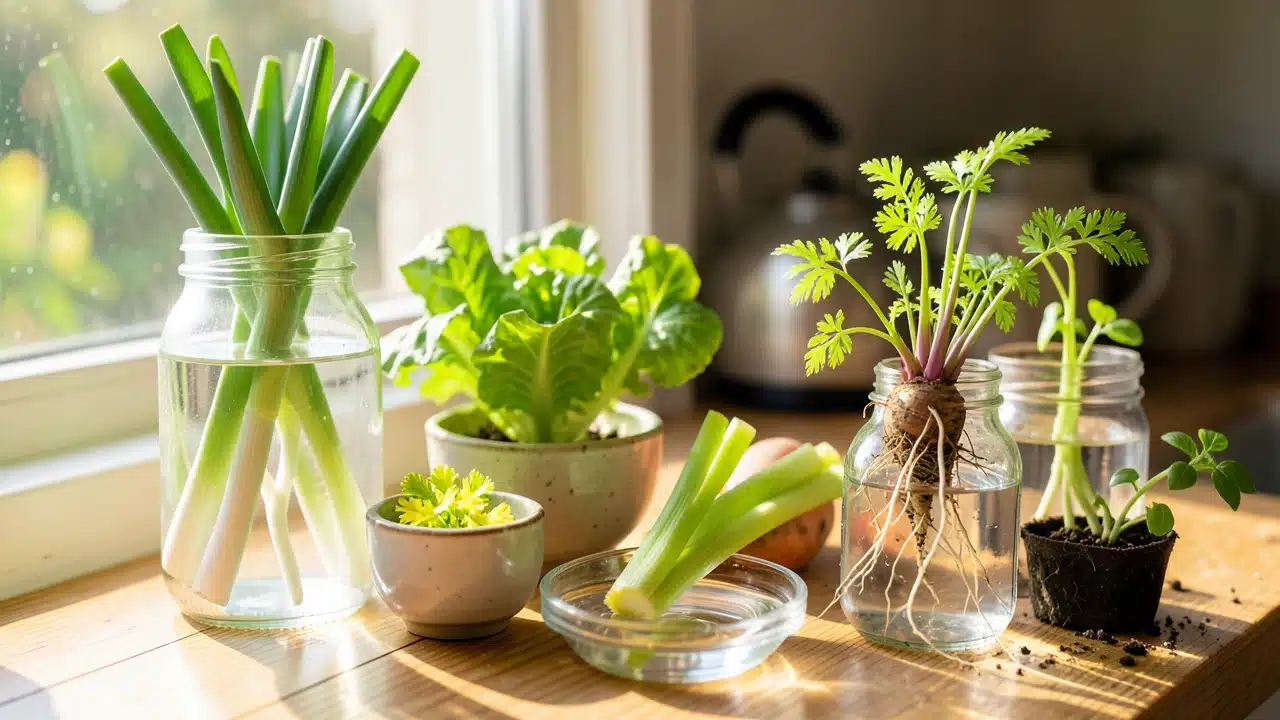
The Magic of Regrowing: Why It Works
Plants are amazing at regenerating. Many vegetables, like carrots and celery, are actually roots or stems that have stored energy. When you put these parts in water or soil, they can tap into that energy to grow new leaves or roots.
Herbs like basil and mint are stem cuttings that can easily root in water.
The basic principle is providing the right conditions: a bit of water, sunlight, and a suitable medium. For windowsill gardening, this usually means a glass of water or a small pot with soil.
The key is that you are not starting from a seed; you are giving an existing part of the plant a second chance to live and grow.
This method of growing is often called “regrowing” or “rooting.” It’s a fantastic way to practice zero-waste living.
You get to enjoy fresh produce and reduce your grocery bill. The simplicity of it makes it perfect for anyone wanting to try gardening for the first time.
You are essentially giving a plant cutting or base a new lease on life right in your home.
Top 7 Kitchen Scraps to Regrow on Your Windowsill
Let’s get to the fun part! Here are seven common kitchen scraps that are surprisingly easy to regrow on your windowsill. You’ll be amazed at how quickly they start to sprout and grow.
This list is perfect for anyone looking to Regrow 7 Kitchen Scraps on a Windowsill, Zero Gardening Skill.
1. Green Onions (Scallions)
Green onions are one of the easiest things to regrow. When you buy a bunch, you usually cut off the green tops and discard the white root ends. Don’t throw those ends away!
When you buy a bunch, you usually cut off the green tops and discard the white root ends.
How to regrow:
- Take the white root ends of the green onions.
- Place them in a small glass or jar filled with about an inch of water. Make sure the roots are submerged.
- Put the jar on a sunny windowsill.
- Change the water every few days to keep it fresh.
You will see new green shoots start to grow from the top within a few days. Once they are a few inches tall, you can either keep them in water or plant them in a pot with soil. You can snip off the green parts as needed for cooking.
They will continue to grow more greens.
2. Lettuce and Romaine Lettuce
The base of a head of lettuce can also regrow. This is a great way to get more salad greens from something you would normally toss.
How to regrow:
- Take the bottom core of the lettuce head.
- Place it cut-side down in a shallow bowl or plate with about half an inch of water.
- Put it on a sunny windowsill.
- Keep the water level consistent.
Small new leaves will start to sprout from the center. After a week or two, when the new leaves are a few inches long, you can carefully plant the entire base into a pot with soil. Water it well.
You can harvest the outer leaves as they grow.
3. Celery
The base of a celery stalk is full of life! It might take a little longer, but you can regrow celery leaves that are perfect for flavoring stocks or soups.
How to regrow:
- Cut off the bottom of the celery stalk, leaving about an inch of the white base.
- Place this base in a shallow bowl with a little water, cut-side down.
- Put it on a sunny windowsill.
- Keep the water fresh.
You will see small leaves begin to emerge from the center. Once roots start to form and the leaves are growing, you can transfer it to a pot with soil. While you won’t get a full, crunchy stalk, you will get plenty of leafy greens to use.
4. Carrots
You can’t regrow the main carrot root, but you can grow beautiful, feathery green tops! These tops are edible and can be used in salads or as a garnish.
How to regrow:
- Cut off the top inch or so of a carrot.
- Place the carrot top, cut-side down, in a shallow dish with a little water.
- Put it on a sunny windowsill.
- Change the water regularly.
Tiny green shoots will sprout from the center. These greens can be harvested and used once they are a few inches tall. This is a simple way to Regrow 7 Kitchen Scraps on a Windowsill, Zero Gardening Skill and get edible greens from your scraps.
5. Garlic
Garlic cloves can sprout new green shoots that are milder than garlic but still add a lovely flavor to dishes. It’s a great way to use up an old clove.
How to regrow:
- Take a garlic clove that has already started to sprout.
- You can place it in a small pot with soil, or even just in a shallow glass of water with the root end submerged.
- Put it on a sunny windowsill.
The green shoots will grow quite tall. You can snip these greens to add to stir-fries, salads, or pasta dishes. They offer a delicate garlic flavor.
6. Ginger
Ginger root can be regrown, though it takes some patience. You’ll need a piece of ginger that has a visible ‘eye’ or bud on it.
How to regrow:
- Get a piece of fresh ginger with an eye.
- You can place it cut-side down in a shallow pot of soil or even just in a jar of water, making sure the eye is exposed to air.
- Keep it in a warm spot with indirect sunlight.
- Mist it with water occasionally if you are not using soil.
It can take several weeks to see new growth. If successful, you can eventually plant it in a larger pot and grow your own ginger plant. This is a more advanced regrowing project, but still achievable for beginners.
7. Herbs (Basil, Mint, Cilantro)
Many common herbs can be easily propagated from cuttings. This is a fantastic way to get more plants from a single bunch of herbs.
How to regrow:
- Take cuttings from the stems of your herbs, about 4-6 inches long.
- Remove the lower leaves, leaving only a few at the top.
- Place the cuttings in a glass of water.
- Put the glass on a sunny windowsill.
Change the water every few days. After a few weeks, you should see roots forming. Once the roots are about an inch long, you can plant the cuttings in small pots with soil.
This is a wonderful way to Regrow 7 Kitchen Scraps on a Windowsill, Zero Gardening Skill and have a constant supply of fresh herbs.
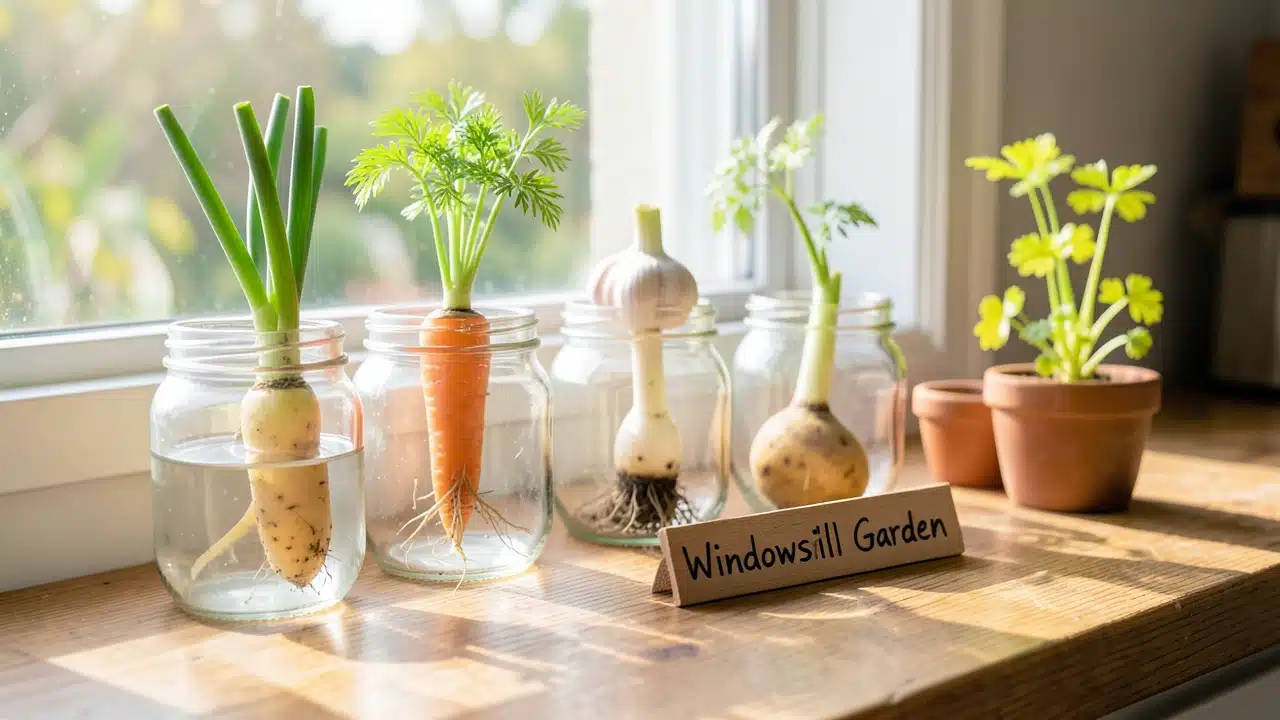
Setting Up Your Windowsill Garden
You don’t need much to get started. Most of these projects can be done with items you already have around the house. The goal is to create a supportive environment for your scraps to regrow.
Essential Supplies
For successful windowsill gardening, consider these simple items:
- Glass jars or small containers: For rooting cuttings and regrowing bases in water.
- Small pots or containers with drainage holes: For when your regrown plants are ready for soil.
- Potting soil: A good quality potting mix will give your plants the nutrients they need.
- Water: Fresh, clean water is essential.
- Sunlight: A sunny windowsill is key. Most plants need at least 4-6 hours of sunlight daily.
Choosing the Right Spot
The best place for your regrowing plants is a windowsill that gets plenty of light. South-facing windows are usually the brightest.
If you don’t have a very sunny spot, you might need to supplement with a grow light, especially during darker months.
Rotate your plants every few days so they grow evenly.
Watering and Care
Watering is crucial, but overwatering can be a problem. For plants in water, change the water every 2-3 days to prevent mold and bacteria. For plants in soil, water when the top inch of soil feels dry.
Don’t let them sit in soggy soil, as this can lead to root rot.
Common Challenges and Solutions
Even with the simplest methods, you might run into a few issues. Knowing how to handle them can save your plants.
Plants Not Growing
If your scraps aren’t showing signs of life, check a few things. Ensure they are getting enough light and that the water is fresh. For cuttings, make sure you have a healthy piece of stem or root.
Sometimes, a piece just won’t take, and that’s okay. Try again with a different scrap.
Mold or Rot
This usually happens from too much moisture or stagnant water. If you see mold, remove the affected part immediately. For plants in water, change the water more frequently.
For plants in soil, ensure good drainage and avoid overwatering. Sometimes, a plant just gets sick and needs to be discarded to prevent spreading issues.
Pests
While less common with indoor regrowing, pests can sometimes appear. Small insects like aphids can be wiped off with a damp cloth or treated with a mild soap and water solution. Keeping your plants healthy and well-lit can help prevent pest issues.
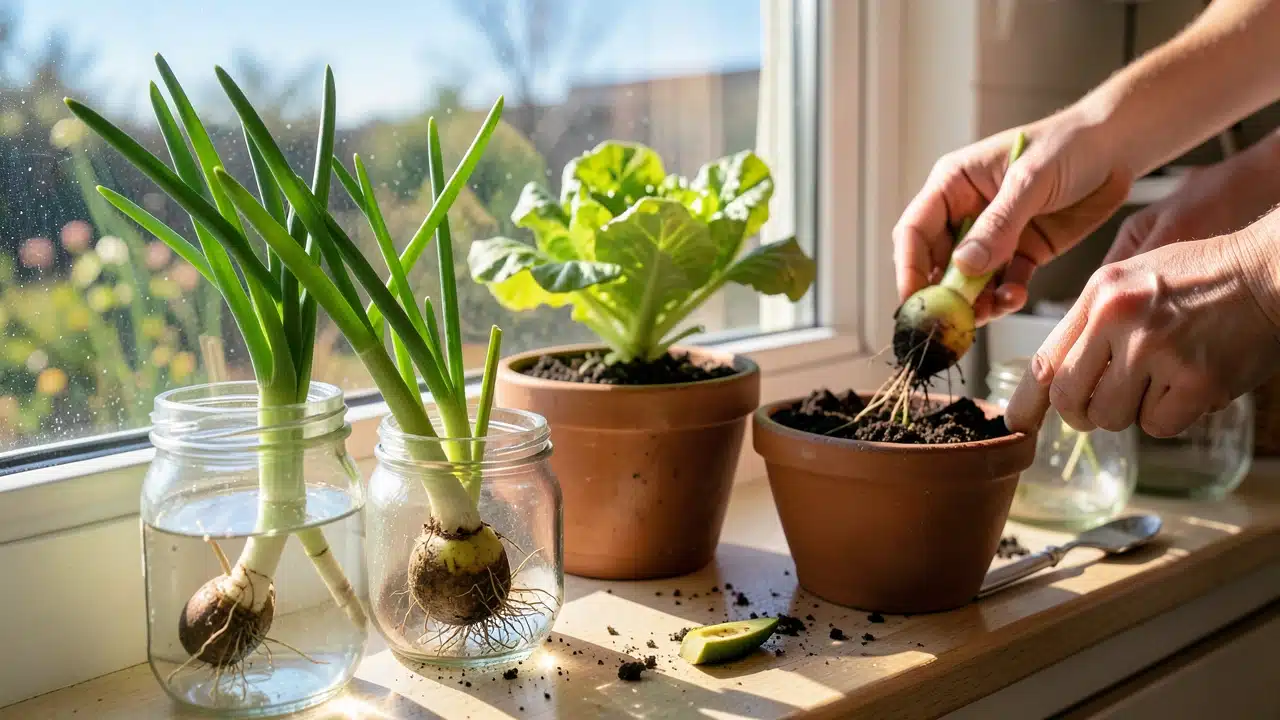
When to Move Plants to Soil
For items like green onions, lettuce, and herbs that start in water, you’ll want to move them to soil once they develop a good root system.
Roots that are at least an inch long are usually a good sign. Gently transplant them into a pot with fresh potting soil.
Water them thoroughly after planting.
For items like carrots or celery that are regrowing leaves from the base, you can plant the whole base into soil once new leaves are established.
The goal is to give the plant a stable medium to continue growing. This transition is a key step in the Regrow 7 Kitchen Scraps on a Windowsill, Zero Gardening Skill process.
Comparing Regrowing Methods: Water vs. Soil
You can regrow many items in just water, which is great for starting out. However, for long-term growth and to get a more robust plant, moving to soil is usually best.
| Ease of Starting | Very easy; perfect for beginners. | Slightly more involved; requires potting mix. |
| Root Development | Visible roots grow quickly. | Roots develop unseen but are usually stronger. |
| Long-Term Growth | Limited; plants may not thrive indefinitely. | Supports fuller, healthier growth. |
| Nutrients | Relies on stored energy in the scrap. | Can access nutrients from the potting soil. |
| Best For | Starting cuttings, green onions, lettuce bases. | Long-term growth of herbs, celery leaves, ginger. |
For the most successful windowsill gardening, especially when aiming to Regrow 7 Kitchen Scraps on a Windowsill, Zero Gardening Skill, you’ll often start in water and then transition to soil. This gives you the best of both worlds: easy initial growth and sustained development. The USDA promotes food waste reduction through practices like regrowing kitchen scraps.
Beyond the Basics: More Scraps to Try
Once you’ve mastered the basics, you might want to experiment with other kitchen scraps. Some other items that can be regrown include: For a broader overview of regrowing from scraps, the kitchen garden article on Wikipedia is a great resource.
- Onion bottoms: Similar to green onions, the root ends can sprout new greens.
- Potato eyes: If you have a potato with sprouts, you can plant it in soil and grow a potato plant (though it might take a while to produce potatoes).
- Bell pepper seeds: If you have seeds from a bell pepper, you can dry them and plant them in soil. This will take the longest but can yield a new pepper plant.
Remember that not all scraps will regrow successfully, but it’s worth the fun of trying. Each attempt adds to your experience with windowsill gardening.
Frequently Asked Questions Of Regrow 7 Kitchen Scraps On A Windowsill, Zero Gardening Skill
What is the easiest kitchen scrap to regrow?
Green onions are widely considered the easiest kitchen scrap to regrow. They sprout quickly in water and are very forgiving, making them ideal for absolute beginners.
Do I need special soil to regrow kitchen scraps?
No, you don’t need special soil. A standard potting mix from a garden center or grocery store is perfectly fine for most regrown plants. For starting in water, no soil is needed at all.
How long does it take for kitchen scraps to regrow?
The time varies greatly. Green onions can show new growth in just a few days. Herbs like basil and mint might take a couple of weeks to root.
Celery and carrots will start showing leaves within a week or two. Ginger can take several weeks to sprout.
Can I regrow 7 kitchen scraps on a windowsill with zero gardening skill?
Absolutely! The methods described in this guide are designed for individuals with no prior gardening experience. Using simple techniques like rooting in water and basic planting, you can successfully Regrow 7 Kitchen Scraps on a Windowsill, Zero Gardening Skill.
What are the benefits of regrowing kitchen scraps?
The main benefits include reducing food waste, saving money on groceries, having fresh produce readily available, and adding a touch of green to your home. It’s also a fun and educational activity for all ages.
When should I move regrown plants from water to soil?
You should move plants from water to soil when they have developed a good root system, typically about an inch or more in length. For cuttings, this usually takes a few weeks.
Can I eat the parts of the plant that regrow?
Yes, for most of the plants discussed, the regrown parts are edible. Green onions, lettuce, celery leaves, carrot tops, and herb leaves can all be harvested and used in cooking.
Final Thoughts
Transforming kitchen scraps into living plants on your windowsill is simple and rewarding. You can easily Regrow 7 Kitchen Scraps on a Windowsill, Zero Gardening Skill, enjoying fresh greens and herbs without any special tools. This practice saves waste and adds life to your home. Wikipedia's page on kitchen gardens includes tips for regrow kitchen scraps on a windowsill.