
Kitchen Lighting For Dark Countertops: What Color Temperature Works Best?
Picking the right lights for your kitchen can feel a bit tricky, especially when you have dark countertops.
Many people wonder about Kitchen Lighting for Dark Countertops: What Color Temperature Works Best?
It’s a common question because the wrong light can make your kitchen feel dim or even change the color of your counters in a way you don’t like. But don’t worry, it’s easier than you think!
We’ll walk through it step-by-step, and you’ll be picking perfect lights in no time. We’ll cover what color temperature means and how it affects your kitchen.
Key Takeaways
- Understanding color temperature helps you pick the best lights for dark countertops.
- Warmer light colors can make dark countertops feel cozy and inviting.
- Cooler light colors can make dark countertops look sleek and modern.
- Task lighting is important for seeing clearly while you work.
- Ambient lighting sets the overall mood of your kitchen.
- Choosing the right bulbs can improve both function and style in your kitchen.
![Kitchen Lighting For Dark Countertops What Color Temperature Works Best[1]](https://kitchentoolslab.com/wp-content/uploads/2026/05/Kitchen_Lighting_For_Dark_Countertops__What_Color_Temperature_Works_Best1.jpg)
Why Color Temperature Matters for Kitchen Lighting for Dark Countertops: What Color Temperature Works Best?
Color temperature is how we describe the look of light from a bulb. It’s measured in Kelvin (K). Think of it like colors on a spectrum.
Lower Kelvin numbers mean warmer light, like a cozy sunset. Higher Kelvin numbers mean cooler light, like a bright, clear day. For Kitchen Lighting for Dark Countertops: What Color Temperature Works Best? this choice is really important.
Dark countertops can absorb light. This means they might look dull or even muddy if the lighting isn’t right. The color of the light bulb you use can make a big difference in how your dark countertops appear.
It can either highlight their beauty or make them seem like they’re not there at all.
Choosing the right color temperature helps bring out the best in your kitchen. It affects the mood, the appearance of your surfaces, and how well you can see to do your cooking and cleaning tasks. We’ll explore how different Kelvin levels can transform your kitchen.
Understanding Kelvin: The Language of Light Color
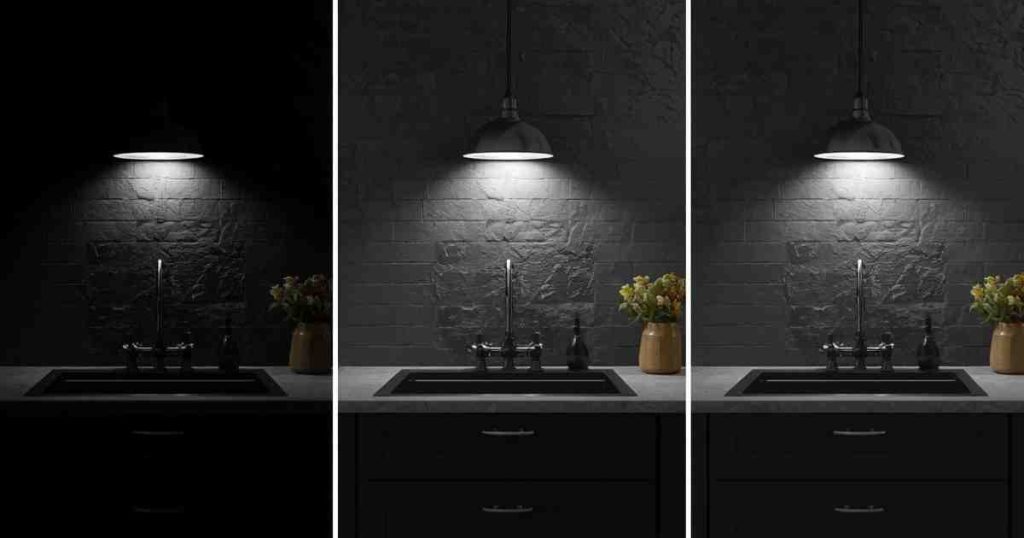
Kelvin (K) is the unit used to measure color temperature. It’s not about how hot the bulb gets, but about the color of the light it gives off. Imagine a spectrum of light.
At the low end, you have warm, yellowish light. At the high end, you have cool, bluish light. This range is what we’re talking about when we discuss color temperature.
Different Kelvin levels create different feelings and looks in a room. For example, a very low Kelvin number, like 2000K, is very warm. It’s similar to candlelight or an old-fashioned incandescent bulb.
It creates a very cozy and relaxing atmosphere.
As the Kelvin number goes up, the light gets whiter and then bluer. Around 2700K to 3000K, you get warm white light. This is a popular choice for homes because it’s still cozy but brighter than candlelight.
It’s good for living areas where you want a relaxed vibe.
Moving higher, to 3500K to 4000K, you get neutral white light. This is a good balance. It’s bright enough for tasks but not so cool that it feels sterile.
Many kitchens use this range for a clean, functional feel.
At 4500K and above, the light becomes cool white or even daylight. This is a very bright, crisp light that can make colors appear very vivid. It’s often used in offices or workspaces where you need maximum visibility.
For kitchens with dark countertops, this can sometimes make them look stark or too dark.
The key is to match the Kelvin to the desired mood and function of your kitchen. You want a light that makes your dark countertops look their best and also helps you see clearly.
Warm vs. Cool Light: How It Affects Dark Countertops
When you’re thinking about Kitchen Lighting for Dark Countertops: What Color Temperature Works Best?, the biggest decision is between warm and cool light.
Dark countertops can be beautiful, but they can also be tricky with lighting. They tend to absorb light, making them look flatter or less detailed under the wrong kind of bulb.
Warm light, with lower Kelvin numbers (around 2700K to 3000K), has a yellowish hue. This type of light can make dark countertops look rich and inviting. It can bring out subtle tones in the material, like hints of brown in black granite or deep reds in dark marble.
It can bring out subtle tones in the material, like hints of brown in black granite or deep reds in dark marble.
It creates a cozy, homey feel, which is great for kitchens where you gather with family and friends.
However, too much warm light might make very dark countertops look a bit muddy or less defined. The contrast might be reduced, and you might lose some of the sharp details of the countertop’s pattern. If your dark countertops have intricate veining or speckles, warm light can sometimes soften these details.
Cool light, with higher Kelvin numbers (around 4000K to 5000K), has a bluish hue. This light makes things look crisp and clean. For dark countertops, cool light can make them look very sleek and modern.
It can create a strong contrast, making the dark color pop. It’s excellent for highlighting the smooth, polished surface of materials like black quartz or polished granite.
The challenge with cool light is that it can sometimes make a kitchen feel a bit sterile or like an operating room.
If your dark countertops have warm undertones, cool light might make them look a bit unnatural or off-color. Also, very cool light can sometimes make dark surfaces appear even darker, potentially hiding their beauty.
So, the “best” color temperature often depends on the specific material of your dark countertops and the overall style you want for your kitchen.
You’re looking for a balance that enhances both the appearance of your countertops and the functionality of your kitchen space.
Choosing the Right Color Temperature for Your Kitchen Style
The style of your kitchen plays a big role in deciding the best light color. If your kitchen has a more traditional or rustic feel, warm white light is usually a fantastic choice. Think about cabinets made of natural wood or a farmhouse sink.
Warm light, around 2700K to 3000K, will complement these elements. It will make your dark countertops feel warm and welcoming, fitting perfectly with a cozy atmosphere.
For kitchens with a modern or contemporary design, cooler light temperatures often work better. If you have sleek, minimalist cabinets, stainless steel appliances, and clean lines, a neutral white light (around 3500K to 4000K) can really enhance that look.
This light color makes surfaces appear sharp and can highlight the modern aesthetic of your dark countertops.
If you’re aiming for a very high-tech or minimalist look, you might even consider cooler, bluer light (4500K and up).
This can make dark countertops appear very sophisticated and give your kitchen a sharp, defined edge. It’s like a gallery lighting effect for your home.
It’s also worth considering the undertones in your dark countertops. If your black granite has flecks of white and grey, a cooler light might make those stand out. If your dark wood cabinets have a reddish tone, a warmer light will bring out that richness.
Observing how different light colors interact with your specific materials is key.
Many people find that a neutral white light is a great all-around option. It’s bright enough for cooking and tasks but still feels comfortable and inviting.
This temperature range can often bridge the gap between very warm and very cool, offering a balanced look that works well with most kitchen styles and dark countertops.
Types of Kitchen Lighting and Their Role
Good kitchen lighting isn’t just about one type of light. It’s a combination of different layers that work together. For any kitchen, and especially one with dark countertops, having these different layers is crucial for both looks and function.
The goal is to provide enough light for every task while also creating a pleasant atmosphere.
We’ll explore the main types of lighting: ambient, task, and accent lighting. Each type serves a different purpose and contributes to the overall lighting plan of your kitchen.
Understanding these categories will help you make informed decisions about your fixtures and bulbs.
Ambient Lighting: Setting the Mood
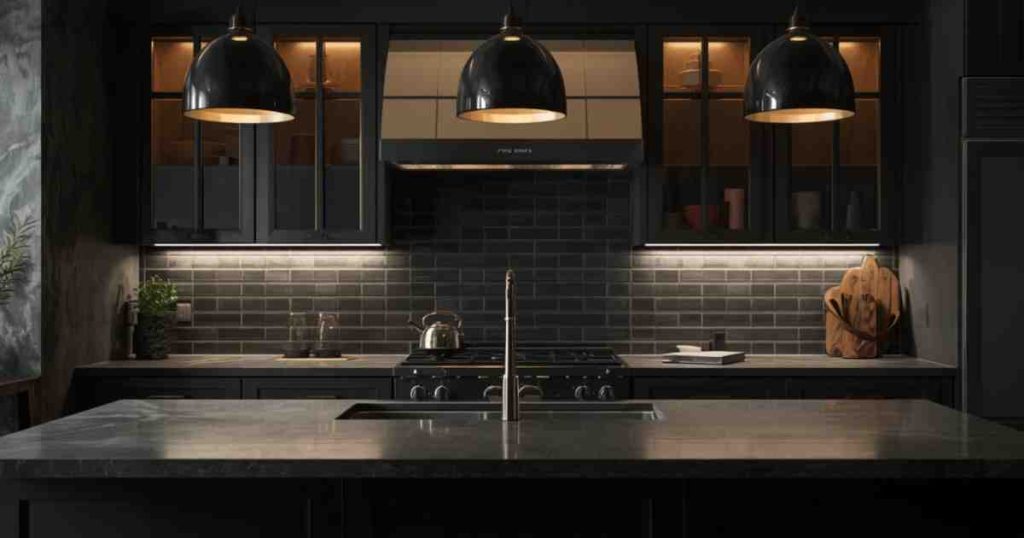
Ambient lighting is the general illumination in a room. It’s the foundation of your lighting design, providing overall brightness so you can see where you’re going. Think of it as the main light source that fills the space.
For kitchens, ambient lighting is essential for making the entire room feel welcoming and safe.
Common sources of ambient lighting include ceiling lights, recessed lights (can lights), and chandeliers or pendant lights hung from the ceiling.
These lights are typically positioned to distribute light evenly throughout the kitchen. They ensure that there are no dark corners, making the space feel more open and usable.
When it comes to dark countertops, ambient lighting plays a role in how the entire kitchen feels. If your ambient lights are too dim, the dark countertops will absorb the little light there is, making the kitchen feel gloomy.
If the ambient light is too harsh or has the wrong color temperature, it can cast unflattering shadows or make the countertops look dull.
The color temperature of your ambient lighting sets the overall tone. A warmer ambient light (around 2700K-3000K) will make the kitchen feel cozy and inviting, which is great for families. A cooler ambient light (around 3500K-4000K) will give the kitchen a more crisp, clean look.
Dimmer switches are a great addition to ambient lighting. They allow you to adjust the brightness based on the time of day or the activity. For example, you might want brighter light when cooking but a softer glow when entertaining.
Task Lighting: For Practicality and Precision
Task lighting is focused light that illuminates specific work areas. In a kitchen, this means your countertops, stove, and sink. This type of lighting is critical for safety and efficiency.
You need to be able to see clearly when chopping vegetables, measuring ingredients, or washing dishes. For kitchens with dark countertops, good task lighting is absolutely essential.
Dark countertops can make it harder to see detail. They can hide spills, crumbs, and even the edges of cutting boards if the lighting isn’t sufficient. Task lighting directly addresses this by providing bright, focused illumination right where you need it.
Common sources of task lighting include under-cabinet lights, pendant lights hung directly over work surfaces, and track lighting that can be aimed at specific spots.
Under-cabinet lights are particularly effective because they shine light down onto the countertop, reducing shadows cast by upper cabinets.
The color temperature for task lighting is often a bit cooler or more neutral than ambient lighting. Many people prefer a neutral white light (around 3500K-4000K) for task areas.
This color temperature provides good color rendering, meaning that the colors of your food and ingredients will look true to life.
It also offers excellent visibility.
Some people might even opt for slightly cooler task lighting, closer to 4000K or 4500K, if they want maximum brightness and clarity.
The key is that the light should be bright enough and directed effectively to eliminate shadows and make your dark countertops a safe and functional workspace.
When choosing bulbs for task lighting, look for high Color Rendering Index (CRI) values. CRI measures how accurately a light source reveals the true colors of objects. A CRI of 90 or above is excellent for kitchens, ensuring that colors look natural under the light.
Accent Lighting: Highlighting Features
Accent lighting is used to draw attention to specific features in your kitchen. This could be artwork, a decorative backsplash, a unique cabinet door, or even the texture of your dark countertops. It adds depth, dimension, and visual interest to the space.
While not as critical for function as ambient or task lighting, accent lighting can significantly enhance the aesthetic appeal of your kitchen. It creates focal points and makes the room feel more dynamic and sophisticated.
For dark countertops, accent lighting can be used to highlight their natural beauty and any unique patterns or finishes they possess.
Examples of accent lighting include small spotlights directed at a particular area, LED strips placed inside glass-front cabinets, or small directional lights mounted in the ceiling. These lights are typically brighter than ambient lighting and are aimed precisely at the feature you want to highlight.
When using accent lighting on dark countertops, consider how the light will interact with the surface. A well-placed spotlight can make the polished surface gleam, emphasizing its texture and depth. However, if the light is too direct or harsh, it can create glare.
It’s often better to use diffuse accent lighting or aim the light from an angle to avoid direct reflection.
The color temperature for accent lighting can be flexible. It often matches the ambient lighting to maintain a cohesive look.
However, in some cases, a slightly warmer accent light might be used to make a feature feel more inviting, or a cooler light to make it stand out dramatically.
The goal of accent lighting is to add personality and style. It’s about creating visual interest and making your kitchen more engaging. For dark countertops, it can be the perfect way to showcase their elegance and unique character.
Practical Solutions for Dark Countertops and Lighting
Now that we understand the different types of lighting and why color temperature matters, let’s look at practical ways to light up kitchens with dark countertops.
The goal is to make sure your kitchen is both beautiful and functional. We’ll focus on specific fixture choices and how to best use them.
It’s not just about picking a bulb; it’s about how the light is delivered. The right placement, the right fixture, and the right bulb all work together. For dark countertops, this combination can make all the difference in transforming your kitchen from dull to dazzling.
Under-Cabinet Lighting: A Game Changer
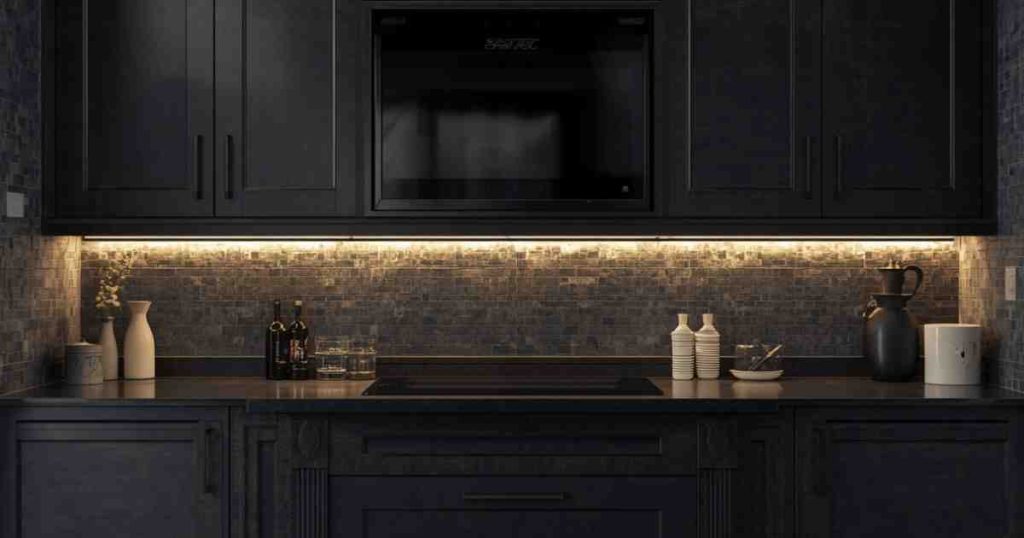
Under-cabinet lighting is one of the most effective ways to illuminate dark countertops. These lights are mounted underneath your upper cabinets, shining directly down onto the work surfaces below. This is incredibly useful because it directly combats the shadows that upper cabinets often cast.
When you have dark countertops, these shadows can make the area feel very dim. Under-cabinet lighting provides focused, bright light exactly where you need it for food preparation, reading recipes, or cleaning.
It ensures that the surface of your dark countertops is well-lit, making them easier to work on and also making them look their best.
There are several types of under-cabinet lights available. You can find LED strips, puck lights, and slim fluorescent fixtures.
LED strips are very popular because they are energy-efficient, long-lasting, and can be cut to size to fit perfectly under your cabinets.
They also offer a very clean, continuous line of light.
For dark countertops, consider using LED strips with a neutral white color temperature, around 3500K to 4000K. This provides bright, clear light that enhances visibility without making the kitchen feel too cold.
The light will help bring out the details and textures in your dark countertops, making them look rich and appealing.
If your dark countertops have a lot of subtle color variations, you might want to choose under-cabinet lights with a high Color Rendering Index (CRI).
This will ensure that the colors in your countertops are accurately represented. A CRI of 90 or higher is ideal.
This makes the whole space look more vibrant and natural.
Installing under-cabinet lighting is often a DIY project, or you can hire an electrician. The impact it has on the functionality and appearance of your kitchen, especially with dark countertops, is significant. It’s a highly recommended lighting solution.
Pendant Lights Over Islands and Peninsulas
Pendant lights are a popular choice for adding style and focused illumination over kitchen islands and peninsulas.
They hang down from the ceiling and are often used as both a decorative element and a source of task lighting. For kitchens with dark countertops, pendant lights can be used strategically to enhance both the work area and the overall design.
When selecting pendant lights for a kitchen with dark countertops, consider their size, style, and the type of light they emit.
If your island is large, you might opt for two or three larger pendants to provide ample light and make a statement. For smaller islands, one or two smaller pendants might be more appropriate.
The style of the pendant light should complement your kitchen’s overall design. For modern kitchens, sleek, minimalist pendants might be ideal.
For more traditional kitchens, you might choose something with a glass shade or a more decorative metal finish.
The material and color of the pendant itself can also add visual interest.
Crucially, the light emitted by pendant lights should be suitable for task lighting. Many pendants come with options for different bulb types and color temperatures. For dark countertops, a neutral white light (around 3500K-4000K) is often a good choice.
This provides enough brightness for food preparation and also makes the dark countertop surface look clean and well-defined.
Some pendant lights have shades that direct light downwards, which is excellent for task lighting. Others have shades that allow light to spread out, providing a bit of ambient light as well.
If the pendant has a clear or frosted glass shade, the bulb itself will be visible, so choose a bulb that looks appealing.
Using pendant lights with a high CRI is also beneficial. This ensures that the colors of your countertops and anything placed on them appear natural and vibrant.
The combination of functional lighting and attractive design makes pendant lights a key element in kitchens with dark countertops.
Recessed Lighting: For Even Illumination
Recessed lighting, also known as can lighting, is a popular choice for providing general, ambient illumination in kitchens.
These fixtures are installed directly into the ceiling, so only the trim and the light source are visible. This creates a clean, uncluttered look that works well in many kitchen designs, including those with dark countertops.
Recessed lights are great for providing a broad spread of light across the entire kitchen. When planning your layout, it’s important to space them correctly so that they provide even illumination without creating hot spots or dark areas. The number and spacing of recessed lights will depend on the size and layout of your kitchen.
For kitchens with dark countertops, the color temperature of your recessed lighting is important. While they are primarily for ambient light, they do contribute to the overall brightness and mood.
Many people opt for a warm white (2700K-3000K) or neutral white (3500K-4000K) for their recessed lights.
A warmer temperature can make the kitchen feel more cozy, while a neutral white will provide a brighter, more functional feel.
The key is to ensure that the ambient light from the recessed fixtures is sufficient to prevent the dark countertops from appearing too dim or absorbing too much light.
It’s also worth considering using LED recessed lighting. LEDs are energy-efficient, last a long time, and come in a wide range of color temperatures and brightness levels.
Many LED recessed lights are also dimmable, allowing you to adjust the overall brightness of the kitchen as needed.
When using recessed lighting with dark countertops, ensure that the bulbs have a good CRI. This will help to ensure that the colors of your countertops and other kitchen elements are rendered accurately.
While recessed lights are primarily for ambient lighting, they lay the groundwork for how well your task and accent lighting will perform.
Choosing the Right Bulb: LED, Halogen, and More
The type of bulb you choose for your kitchen lights significantly impacts the quality and efficiency of the illumination.
With dark countertops, the color temperature and brightness of the bulb are especially important. Let’s look at the most common bulb types and what to consider.
LED (Light Emitting Diode) bulbs are currently the most popular choice for home lighting, and for good reason.
They are incredibly energy-efficient, meaning they use much less electricity than older bulb types, which can save you money on your energy bills.
LEDs also last a very long time, often 25,000 hours or more, meaning you won’t have to replace them frequently.
Crucially for your question about Kitchen Lighting for Dark Countertops: What Color Temperature Works Best?, LEDs come in a vast range of color temperatures.
You can find warm white, neutral white, and cool white LEDs, often with very precise Kelvin ratings. This allows you to fine-tune the look and feel of your kitchen.
LEDs also offer excellent brightness and can be very dimmable, though it's important to ensure your dimmer switch is compatible with LED bulbs. Many LEDs also have a high CRI, which is important for making colors look natural under the light.Halogen bulbs are a type of incandescent bulb that is more energy-efficient than traditional incandescent bulbs. They produce a bright, white light that can have good color rendering. Halogen bulbs are often available in warmer color temperatures (around 2700K-3000K) and some cooler ones (around 4000K).
However, they use more energy than LEDs and do not last as long.
Traditional incandescent bulbs are being phased out in many places due to their inefficiency. They produce a very warm, yellowish light and have a low CRI. While they create a cozy atmosphere, they are not ideal for task lighting and use a lot of energy.
It’s best to avoid them for kitchen lighting, especially with dark countertops.
CFL (Compact Fluorescent Lamp) bulbs were a popular energy-efficient option for a while, but they have largely been replaced by LEDs.
They are more efficient than incandescents but can take a moment to reach full brightness and may not offer the same range of color temperatures or dimming capabilities as LEDs.
For kitchens with dark countertops, opting for high-quality LED bulbs is usually the best choice. You get energy efficiency, long life, and the flexibility to select the perfect color temperature and brightness to make your countertops look their best.
Bringing It All Together: A Step-by-Step Approach
So, you’ve learned about color temperature, the different types of kitchen lighting, and how they all affect your dark countertops.
Now, let’s put it all together in a practical way. Follow these steps to choose the best lighting for your kitchen.
The process isn’t as complicated as it might seem. We’ll break it down into simple actions. By the end, you’ll feel confident about your lighting choices.
This approach ensures you create a kitchen that’s both functional and beautiful, with your dark countertops shining.
Step 1: Assess Your Kitchen and Countertop Material
Before you buy any lights, take a good look at your kitchen. What is the overall style? Is it modern, traditional, or somewhere in between?
What is the specific material of your dark countertops? Is it black granite, dark gray quartz, or a different material? What are the undertones of the material?
For example, black granite can have flecks of white, gray, gold, or even hints of green. Dark gray quartz might have a more uniform look.
Understanding these details will help you choose a color temperature that complements, rather than clashes with, your countertops.
If your dark countertops have warm undertones (like reddish or brown hues), warmer light might enhance them. If they have cool undertones (like blue or gray), cooler light might look better.
Also, consider the natural light your kitchen gets. Does it have large windows that let in a lot of daylight? Or is it a darker space with limited natural light?
This will influence how much artificial light you need and what color temperature will work best to balance things out.
Take photos of your kitchen at different times of day. Observe how the existing light affects your countertops. This visual record will be a great reference point when you start selecting new fixtures and bulbs.
Step 2: Plan Your Lighting Layers
Think about the three main types of lighting: ambient, task, and accent. You’ll likely need a combination of these for a well-lit kitchen. For your dark countertops, task lighting is particularly important.
Ambient lighting is your general, overall light. This could be ceiling fixtures like recessed lights or a central pendant. It sets the mood for the whole room.
Task lighting is focused on work areas. This includes under-cabinet lights, lights over your sink, and lights above your stove. For dark countertops, this is where you’ll want the brightest, clearest light.
Make sure these lights are positioned to shine directly on the countertop surface.
Accent lighting is for highlighting features. This might be spotlights on a decorative backsplash or lights inside glass cabinets. It adds visual appeal.
Consider where you do most of your work in the kitchen. Where do you chop, prep, and cook? Ensure these areas have dedicated task lighting.
This will make working with dark countertops much easier and safer.
A common layout might involve recessed lights for ambient lighting, under-cabinet lights for task lighting, and a stylish pendant over an island for both task and decorative purposes. The layering ensures that the kitchen is functional at all times.
Step 3: Select Color Temperatures for Each Layer
Now, choose the color temperature (Kelvin) for your bulbs. Remember, lower Kelvin is warmer (yellowish), and higher Kelvin is cooler (bluish).
For ambient lighting, a warm white (2700K-3000K) can create a cozy atmosphere, especially if your kitchen is used for family gatherings.
A neutral white (3500K-4000K) offers a good balance of brightness and warmth, suitable for most kitchens.
For task lighting, especially over dark countertops, a neutral white (3500K-4000K) is usually best. This provides bright, clear light that makes it easy to see details and ensures that colors look natural. It helps dark countertops appear sharp and defined, rather than muddy.
If you have a very modern kitchen and want a crisp, clean look, you could even consider slightly cooler task lighting (4000K-4500K). However, be careful not to go too blue, as it can make the space feel sterile.
For accent lighting, you can often match the ambient lighting to keep a consistent feel. Or, you might choose a slightly warmer accent light to make a specific feature pop in a cozy way.
If you’re unsure, start with neutral white (around 3500K-4000K) for your task lighting. This is a safe and versatile choice for most kitchens with dark countertops. You can always adjust with dimmers or by trying different bulbs if needed.
Step 4: Consider Bulb Quality (CRI and Dimmability)
Beyond color temperature, two other factors are important for bulb selection: Color Rendering Index (CRI) and dimmability.
CRI measures how accurately a light source shows the true colors of objects compared to natural daylight.
For kitchens, especially with dark countertops where subtle variations in color and texture are important, a high CRI is crucial. Look for bulbs with a CRI of 90 or higher.
This ensures that your countertops, food, and decor look their natural, vibrant best under the lights.
Dimmability is also a key feature for flexibility. Installing dimmer switches on your lights allows you to adjust the brightness for different moods and activities. You might want bright light for cooking but a softer glow for relaxing or entertaining.
Make sure that if you choose dimmable bulbs, your dimmer switches are compatible with them, especially if you’re using LEDs.
For task lighting over dark countertops, you’ll want them to be at their brightest for optimal visibility. However, having the option to dim them when not actively cooking can be very useful.
When choosing bulbs, read the packaging carefully. It should specify the color temperature (Kelvin), CRI, and whether the bulb is dimmable.
Investing in good quality bulbs with high CRI will make a noticeable difference in how your kitchen looks and feels, especially with challenging dark countertops.
Step 5: Install and Evaluate
Once you have your fixtures and bulbs, it’s time to install them. If you’re not comfortable with electrical work, hire a qualified electrician. Proper installation ensures safety and optimal performance.
After everything is installed, take some time to evaluate the lighting. Turn on different layers of lighting and see how they look. Pay close attention to your dark countertops.
Do they look rich and inviting, or dull and shadowy? Can you see clearly when you’re standing at the counter?
Test the dimmers to see how the light changes. If you notice any areas that are still too dark, or if the color of the light isn’t quite right, don’t be afraid to make adjustments. You might need to swap out some bulbs for a different color temperature or add more task lighting.
For instance, if your under-cabinet lights make your dark countertops look too gray, you might try bulbs with a slightly warmer color temperature or a higher CRI.
If the pendant lights over your island feel too dim for cooking, ensure they have the correct wattage or consider a brighter bulb.
The goal is to create a lighting scheme that works perfectly for your needs. It’s an iterative process, and it’s okay to tweak things until you achieve the desired result. Your satisfaction with how your kitchen looks and functions is the ultimate measure of success.
Common Mistakes to Avoid
Even with the best intentions, it’s easy to make lighting mistakes. For kitchens with dark countertops, some common errors can really detract from the overall look and functionality. Let’s explore these pitfalls and how to steer clear of them.
Avoiding these mistakes will save you time, money, and frustration. It’s all about making informed choices from the start. We want your kitchen to be a place you love, and good lighting is a huge part of that.
Relying on a Single Light Source
One of the biggest mistakes is thinking one overhead light fixture is enough. A single light source, like a lone ceiling light, often creates uneven lighting and deep shadows. This is especially problematic for dark countertops, which can absorb the limited light and appear dull.
A well-lit kitchen needs layers of light. Relying on just one source means you won’t have adequate task lighting for your workspaces. Your countertops will look dark, and you might struggle to see what you’re doing when preparing food.
This can lead to accidents or frustration.
Always plan for ambient, task, and accent lighting. This approach ensures that light is distributed evenly, shadows are minimized, and specific areas are well-illuminated.
For dark countertops, investing in good under-cabinet lighting and focused overhead lights for work areas is essential.
The right combination of light layers will make your kitchen feel more spacious, functional, and inviting. It will also highlight the beauty of your dark countertops instead of hiding them in shadow.
Ignoring Color Temperature and CRI
Another common mistake is not paying attention to the color temperature (Kelvin) and Color Rendering Index (CRI) of light bulbs.
People often just grab the first bulb they see without considering what it will do to the appearance of their kitchen and countertops.
Using a bulb with the wrong color temperature can make your dark countertops look off-color. For example, a very cool, bluish light might make them appear unnaturally gray or stark. A light that is too warm might make them look muddy or dull.
Similarly, a low CRI bulb will distort the true colors of your countertops. This means their natural beauty, veining, and subtle hues won’t be accurately represented. It can make your whole kitchen look less vibrant. A high Color Rendering Index (CRI) ensures that the veining and hues of dark countertops are accurately represented.
Always aim for a neutral white light (3500K-4000K) for task lighting over dark countertops, as this provides good clarity and color accuracy.
And always look for bulbs with a CRI of 90 or higher. This attention to detail will make a significant difference in how appealing and functional your kitchen appears.
Overlooking Dimmers and Control Options
Not including dimmers or other control options for your lighting is another mistake many people make. They assume the lights will always be on at full brightness.
However, a kitchen often serves multiple purposes throughout the day, and different lighting levels are needed.
Without dimmers, you can’t adjust the mood of your kitchen. You might have very bright, functional lighting that’s great for cooking, but it might be too harsh for a casual dinner or when you’re just relaxing in the evening. This lack of flexibility can make your kitchen feel less inviting.
Dimmers allow you to change the intensity of the light, creating different atmospheres. You can have bright, clear task lighting when you’re prepping food, and then dim the lights to a softer glow for dining or entertaining. This adaptability is key to a truly functional and pleasant kitchen space.
Consider installing dimmers on your ambient and even some task lighting. It’s a simple addition that offers a huge improvement in usability and ambiance.
It allows you to tailor the lighting to whatever you’re doing, making your kitchen more versatile and enjoyable.
Frequently Asked Questions Of Kitchen Lighting For Dark Countertops: What Color Temperature Works Best?
What is the best color temperature for kitchen lighting with dark countertops?
For dark countertops, a neutral white light, typically between 3500K and 4000K, is often best for task lighting. This provides good visibility and makes colors look natural. Warmer light (2700K-3000K) can create a cozy feel for ambient lighting, while cooler light (4000K+) can offer a sleek, modern look.
Should I use warm or cool light on dark granite countertops?
It depends on the specific granite. Warmer light (2700K-3000K) can enhance rich, warm tones in granite, making it look cozy. Cooler light (3500K-4000K) can make dark, cool-toned granite look sleek and modern.
Neutral white is often a good compromise.
How can I make my dark countertops look brighter?
Use sufficient task lighting directly on the countertops, especially under-cabinet lights. Choose bulbs with a neutral white color temperature (3500K-4000K) and a high Color Rendering Index (CRI) of 90+. Ensure your ambient lighting is also bright enough to prevent shadows.
Do LED lights work well for kitchens with dark countertops?
Yes, LED lights are excellent for kitchens. They are energy-efficient, long-lasting, and come in a wide range of color temperatures and high CRI options, allowing you to achieve the perfect look for your dark countertops.
What is the difference between Kelvin and Lumen?
Kelvin (K) measures the color temperature of the light (how warm or cool it looks). Lumens (lm) measure the brightness or amount of light output. For dark countertops, you’ll want to consider both the color temperature (K) for appearance and the lumens (lm) for brightness.
Final Thoughts
Choosing the right lighting for kitchens with dark countertops is about balancing function and style. By selecting neutral or slightly warm white light (3500K-4000K) for task areas and ensuring good brightness with a high CRI, you make dark surfaces look their best.
Layering your lights with ambient, task, and accent options ensures a beautiful and practical space.

![Kitchen Lighting Over Sink Best Fixture Types And Placement Rules[1]](https://kitchentoolslab.com/wp-content/uploads/2026/05/Kitchen_Lighting_Over_Sink__Best_Fixture_Types_And_Placement_Rules1-768x403.jpg)
![How To Retrofit Led Lighting In An Old Kitchen Without Full Rewiring[1]](https://kitchentoolslab.com/wp-content/uploads/2026/05/How_To_Retrofit_Led_Lighting_In_An_Old_Kitchen_Without_Full_Rewiring1-768x403.jpg)
![How To Plan Kitchen Lighting A Step By Step Guide For Homeowners[1]](https://kitchentoolslab.com/wp-content/uploads/2026/05/How_To_Plan_Kitchen_Lighting__A_Step-By-Step_Guide_For_Homeowners1-768x403.jpg)
![Kitchen Lighting Mistakes That Make Your Space Look Cheap (And How To Fix Them)[1]](https://kitchentoolslab.com/wp-content/uploads/2026/05/Kitchen_Lighting_Mistakes_That_Make_Your_Space_Look_Cheap_And_How_To_Fix_Them1-768x403.jpg)
![Smart Kitchen Lighting Dimmer Switches, Motion Sensors, And App Controlled Systems[1]](https://kitchentoolslab.com/wp-content/uploads/2026/05/Smart_Kitchen_Lighting__Dimmer_Switches_Motion_Sensors_And_App-Controlled_Systems1-768x403.jpg)
![Warm Vs Cool Light In The Kitchen Which Color Temperature Should You Use[1]](https://kitchentoolslab.com/wp-content/uploads/2026/05/Warm_Vs_Cool_Light_In_The_Kitchen__Which_Color_Temperature_Should_You_Use1-768x403.jpg)