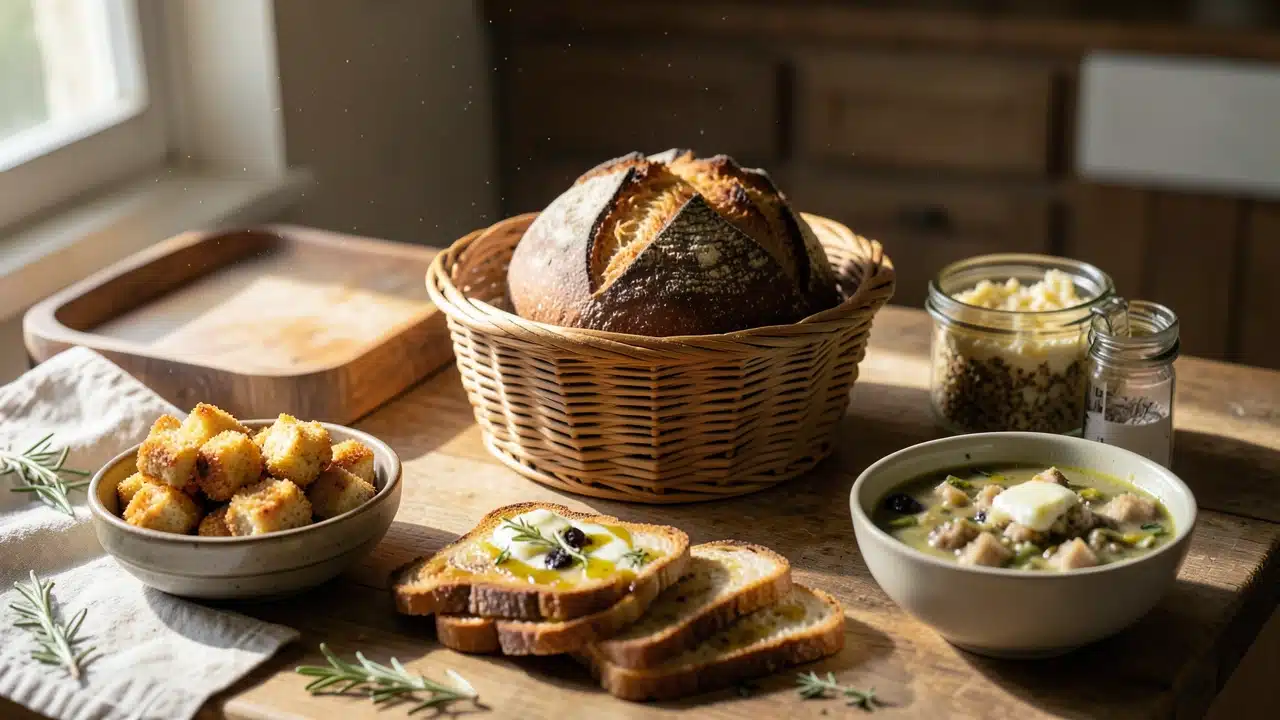
8 Smart Ways To Use Stale Bread Beyond Basic Homemade Croutons
Stale bread can be used beyond basic homemade croutons by turning it into breadcrumbs, bread pudding, panzanella, French toast, stuffing, thickened soups, strata, and savoury bread casseroles.
Its drier texture absorbs eggs, broth, sauces, and dressings better than fresh bread, reducing waste while adding structure, crunch, or softness to everyday meals.
Got some bread that’s gone a bit hard? Don’t toss it! That leftover loaf is surprisingly useful for more than just crunchy croutons.
Wasting food is a big no-no, and learning how to repurpose stale bread saves you money and helps the planet. You’ll be amazed at the delicious and practical things you can make.
Get ready to discover 8 Smart Ways to Use Stale Bread Beyond Basic Homemade Croutons that will change how you see your pantry.
Key Takeaways
- Transform stale bread into flavorful breadcrumbs for various recipes.
- Create delicious French toast or bread pudding with hardened bread.
- Make savory dishes like stuffing or panzanella salad.
- Use bread to thicken soups and stews.
- Repurpose bread as a binder for meatballs and burgers.
- Discover how to make sweet treats from old bread.
Transform Stale Bread into Flavorful Breadcrumbs
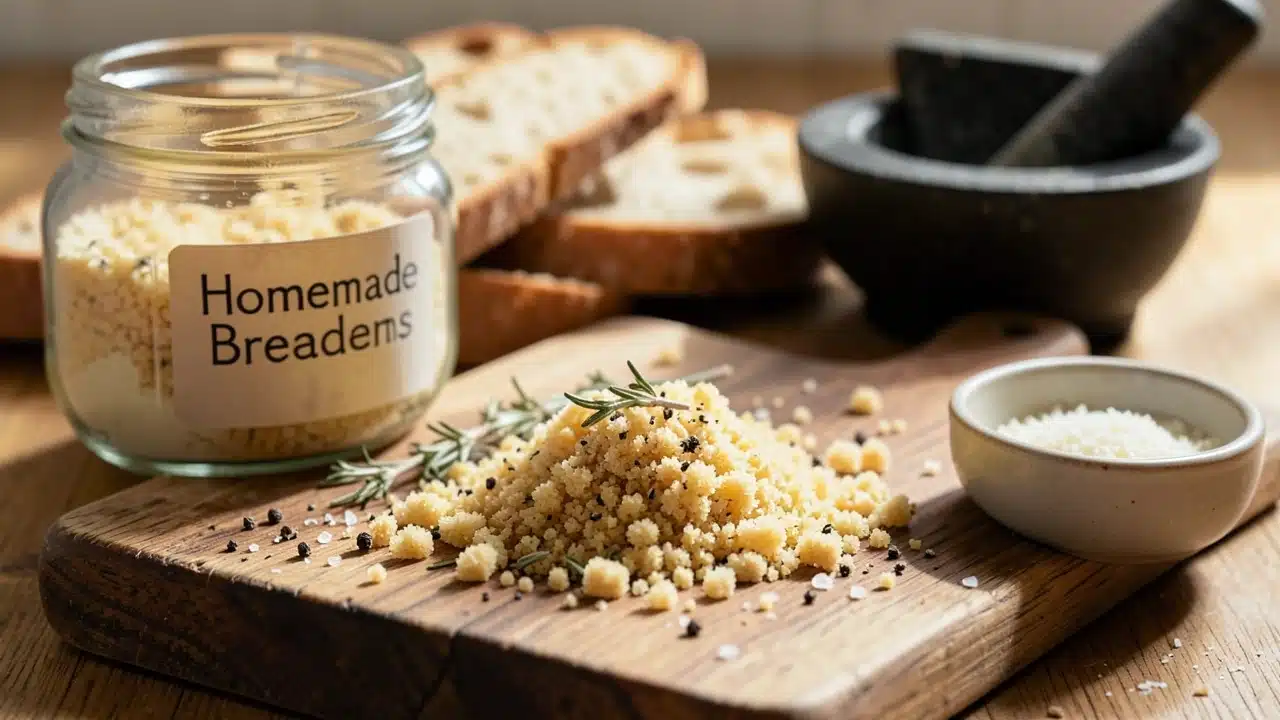
Breadcrumbs are incredibly versatile. They add texture and flavor to countless dishes. Stale bread is actually perfect for making them because it dries out evenly.
You’ll get a finer, crispier crumb than you would with fresh bread. This is one of the most popular 8 Smart Ways to Use Stale Bread Beyond Basic Homemade Croutons for good reason. It’s simple and incredibly useful.
Making your own breadcrumbs is easy. You can do it by hand or with a food processor. The key is to ensure the bread is completely dry but not burnt.
This dryness allows it to crumble easily. Once made, homemade breadcrumbs store well in an airtight container.
How to Make Perfect Breadcrumbs
First, cut your stale bread into rough cubes. The size doesn’t need to be exact. Next, spread these cubes on a baking sheet.
Let them air dry for a day or two. If you’re in a hurry, you can toast them in a low oven (around 250°F or 120°C) until they are completely dry and hard. Watch them closely to avoid burning.
Once dry, place the bread cubes into a food processor. Pulse until you achieve the desired crumb consistency. For fine breadcrumbs, process longer.
For coarser crumbs, pulse fewer times. You can also do this by hand using a grater or by crushing the dried bread in a sturdy bag with a rolling pin.
Uses for Homemade Breadcrumbs
- Coating for fried or baked chicken, fish, and vegetables.
- Topping for casseroles, mac and cheese, and gratins.
- Binder in meatballs, meatloaf, and veggie burgers.
- Thickener for soups and sauces.
- Base for delicious stuffing.
These are just a few ways to use your homemade crumbs. They are a staple in many kitchens for good reason.
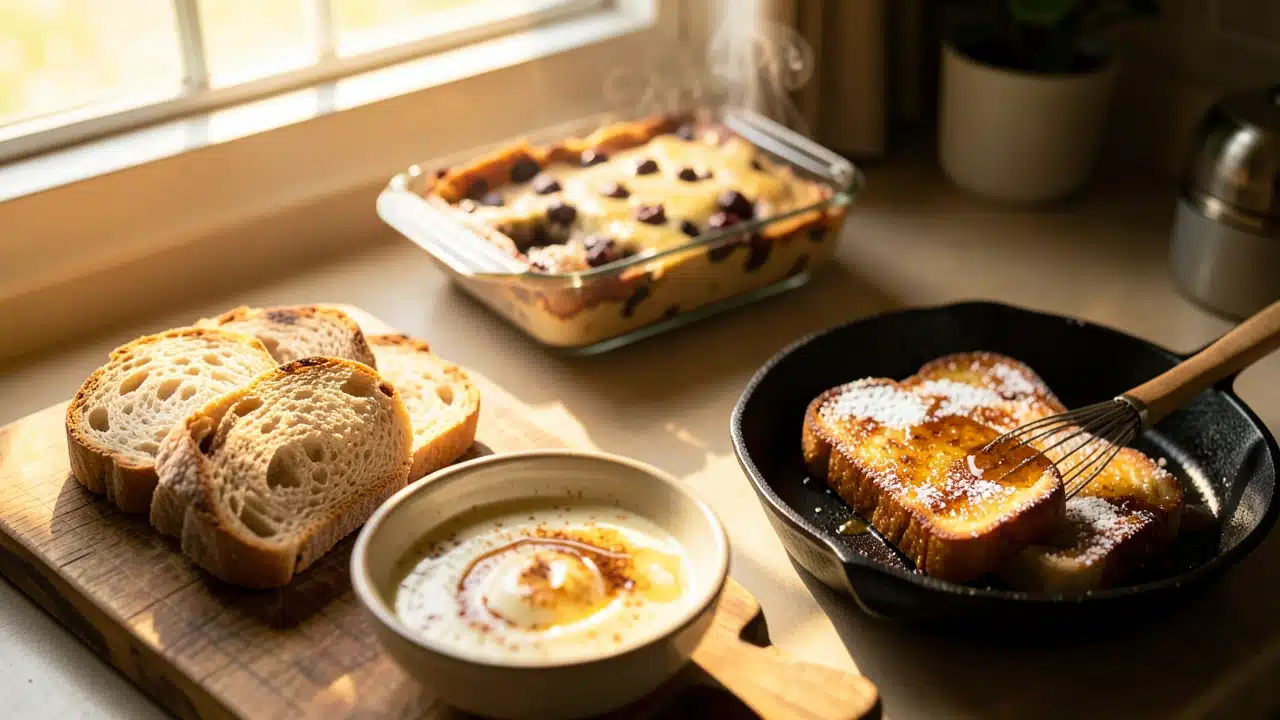
Create Delicious French Toast and Bread Pudding
Stale bread is a star ingredient for breakfast and dessert. Its slightly dry texture means it soaks up the custard mixture beautifully. This leads to a wonderfully moist and flavorful final product.
French toast and bread pudding are classic examples of these 8 Smart Ways to Use Stale Bread Beyond Basic Homemade Croutons.
When bread is too soft, it can become mushy when soaked. Harder, stale bread holds its shape better. This allows it to absorb the liquid without falling apart.
It creates a delightful contrast between the soft interior and the slightly crisp edges.
Classic French Toast
For French toast, slice your stale bread about 1/2 to 3/4 inch thick. Whisk together eggs, milk, a little sugar, and a dash of cinnamon or vanilla. Dip each slice of bread into the mixture, letting it soak for a minute or two.
Then, cook them on a lightly greased griddle or frying pan until golden brown on both sides.
Rich Bread Pudding
Bread pudding uses larger chunks of stale bread. Tear or cube the bread and place it in a baking dish. Pour a rich custard over it, made from eggs, milk or cream, sugar, and flavorings like vanilla, cinnamon, or nutmeg.
You can add fruits like raisins or berries. Bake until the pudding is set and golden brown on top.
Both French toast and bread pudding are comforting and satisfying. They are wonderful ways to use up that leftover baguette or challah. These dishes prove that stale bread can be the start of something truly special.
Make Savory Dishes Like Stuffing and Panzanella
Beyond sweet treats, stale bread shines in savory meals. It forms the foundation for hearty stuffings and vibrant salads. These applications highlight its ability to absorb flavors and add satisfying texture.
Exploring these 8 Smart Ways to Use Stale Bread Beyond Basic Homemade Croutons will elevate your cooking.
Stuffing, also known as dressing, relies heavily on dried bread cubes. The bread soaks up broth and aromatics, becoming tender yet holding its structure. Panzanella, an Italian bread salad, uses toasted stale bread to soak up tomato juices and vinaigrette.
Hearty Bread Stuffing
To make stuffing, cube stale bread and let it dry out further if needed. Sauté onions, celery, and herbs like sage and thyme. Mix the dried bread cubes with the sautéed vegetables.
Moisten everything with chicken or vegetable broth. Bake until the top is nicely browned and the stuffing is heated through. You can add sausage, apples, or nuts for extra flavor.
Refreshing Panzanella Salad
Panzanella is a rustic Tuscan salad. It traditionally uses stale bread to soak up juices. Tear stale bread into bite-sized pieces.
Toast them lightly in the oven or a pan until crisp. Combine with ripe tomatoes, cucumbers, red onion, basil, and a simple vinaigrette. The bread will soften slightly as it absorbs the tomato juices and dressing, creating a delightful texture.
These dishes are perfect for holidays or a simple weeknight meal. They show how versatile stale bread can be in creating satisfying and flavorful meals.
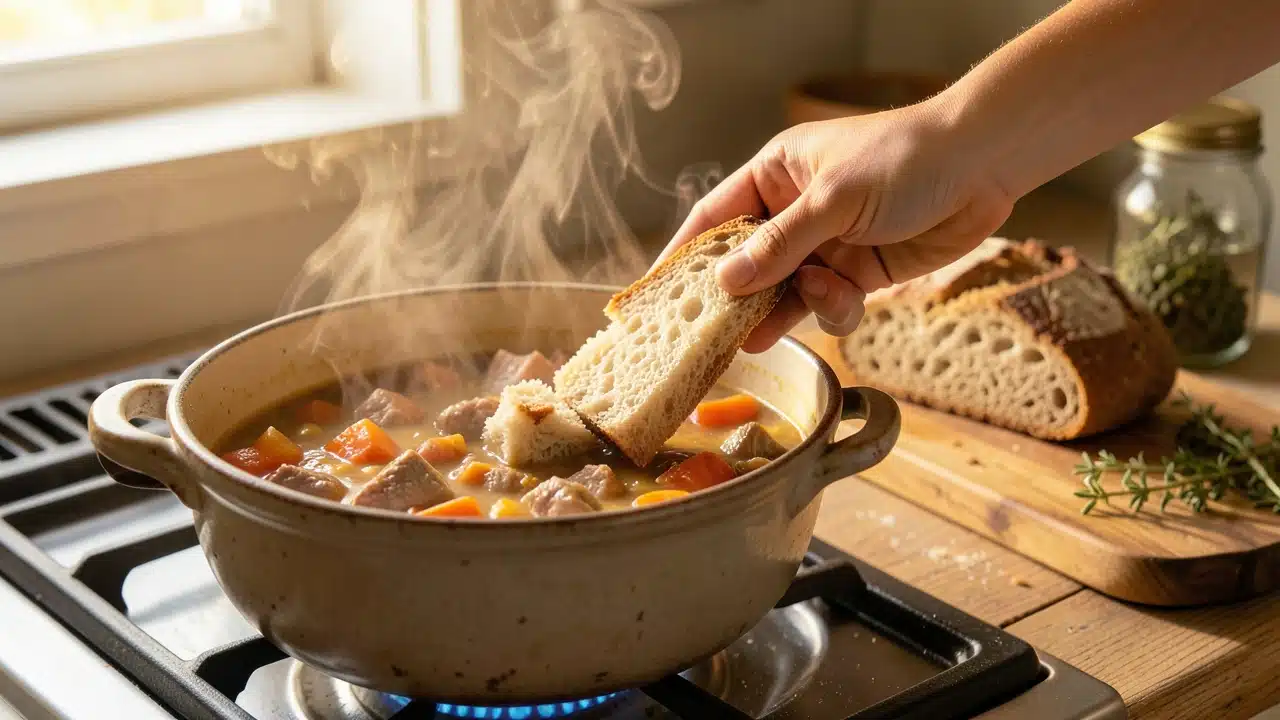
Use Bread to Thicken Soups and Stews
Stale bread is a secret weapon for achieving the perfect soup or stew consistency. Instead of relying on flour or cornstarch, a piece of bread can naturally thicken your dish.
This is a simple yet effective technique among the 8 Smart Ways to Use Stale Bread Beyond Basic Homemade Croutons.
When bread is simmered in liquid, it breaks down and releases its starches. These starches then help to bind the liquid, making your soup or stew richer and thicker. It also adds a subtle, pleasant flavor without altering the main taste profile of your dish.
How to Thicken with Bread
First, remove the crusts from your stale bread if you prefer a smoother texture. Tear the bread into small pieces. Next, add the bread pieces directly to your simmering soup or stew.
Let it cook for about 10-15 minutes, stirring occasionally. The bread will soften and disintegrate into the liquid.
For an even smoother finish, you can blend the soup or stew after the bread has broken down. Use an immersion blender or carefully transfer it to a regular blender. This method is particularly useful for vegetable soups or hearty bean stews.
It adds body and creaminess without any dairy.
Best Soups and Stews to Thicken
- Minestrone: Adds body to the vegetable and pasta broth.
- Gazpacho: A classic use, creating a smoother, richer cold soup.
- Ribollita: A Tuscan vegetable and bread soup where bread is a key ingredient.
- Hearty Bean Stews: Helps create a satisfying, thick consistency.
- Creamy Vegetable Soups: Enhances the texture without adding cream.
This technique is a fantastic way to reduce food waste and improve your cooking.
Repurpose Bread as a Binder for Meatballs and Burgers
When you’re making meatballs, meatloaf, or even burgers, a binder is essential. It helps hold all the ingredients together. Stale bread, especially in the form of breadcrumbs, is an excellent binder.
This is a practical application among the 8 Smart Ways to Use Stale Bread Beyond Basic Homemade Croutons that improves texture and flavor.
Using breadcrumbs as a binder prevents your meat mixtures from becoming too dense. It also absorbs some of the excess moisture. This leads to a more tender and flavorful result.
It’s a traditional ingredient for a reason.
The Binder Process
First, make breadcrumbs from your stale bread. You can use them dry or soak them briefly in milk or water. Soaking the breadcrumbs makes them softer and helps them bind more effectively.
This creates a more tender texture in your finished product.
Next, mix the prepared breadcrumbs into your ground meat along with other seasonings, eggs, and any other ingredients. Be careful not to overmix, as this can make your meatballs or burgers tough. Gentle mixing is key to achieving a tender outcome.
Comparison of Binders
| Stale Breadcrumbs (Dry) | Adds texture, easy to use, absorbs moisture. | Can sometimes result in a slightly drier texture if too much is used. | Meatballs, meatloaf, burgers where a bit of chew is desired. |
| Soaked Breadcrumbs | Creates a very tender, moist texture, binds well. | Can make the mixture too wet if not drained properly, may require careful handling. | Delicate meatballs, meatloaf, dishes where extreme tenderness is the goal. |
| Flour | Good binder, readily available. | Can make the mixture dense, less flavor than breadcrumbs. | Quick burgers, some meatloaf recipes. |
| Eggs Only | Simple, no added carbs. | Can result in a denser, sometimes tougher texture. | When a lighter bind is acceptable or other ingredients provide moisture. |
As you can see, stale breadcrumbs offer a great balance of binding power and texture enhancement.
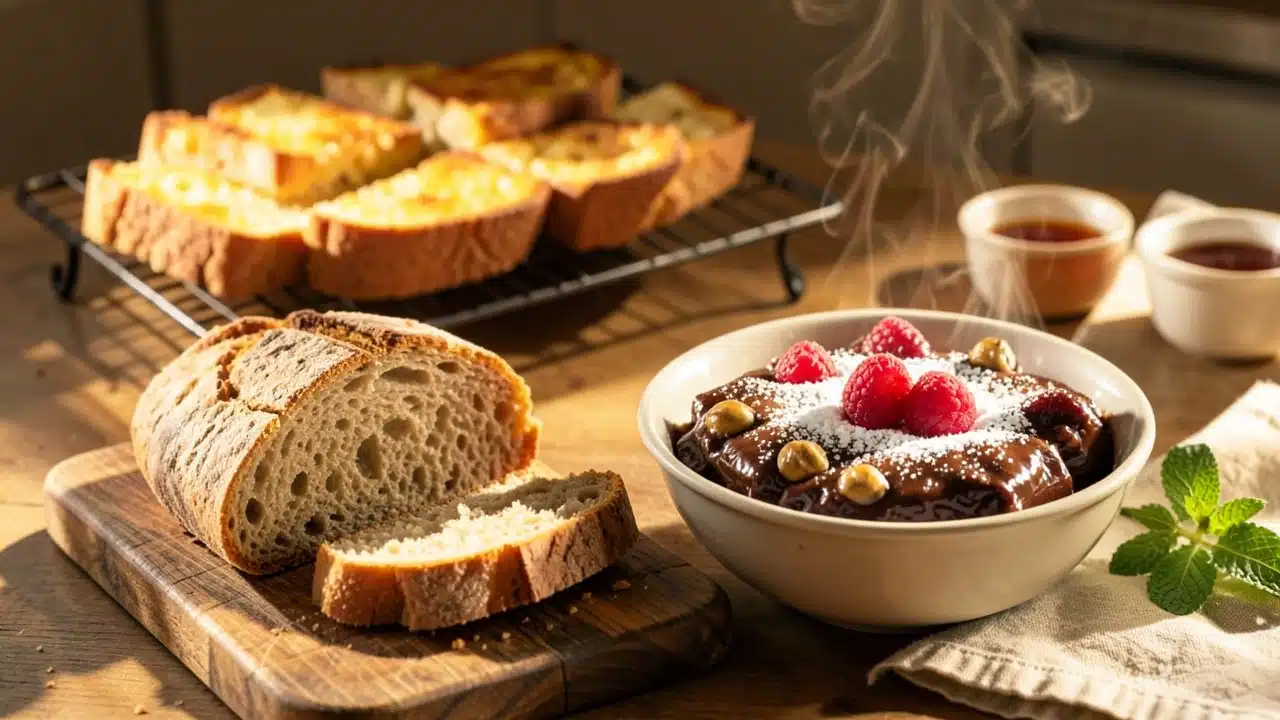
Make Sweet Treats from Old Bread
Who knew stale bread could be the base for delicious desserts? Beyond bread pudding, there are other sweet ways to give old bread new life. These desserts are often simple, comforting, and surprisingly decadent.
They are delightful examples of the 8 Smart Ways to Use Stale Bread Beyond Basic Homemade Croutons.
Think about puddings, cakes, and even fried desserts. The slightly dried-out nature of stale bread makes it ideal for absorbing sweet, rich mixtures. It’s a fantastic way to satisfy a sweet craving while being resourceful.
Sweet Bread Dishes
First, consider sweet fried bread. You can dip slices of stale bread in a sweet batter (eggs, milk, sugar, cinnamon) and then fry them until golden. They are like a quicker, simpler version of French toast.
Serve with powdered sugar or syrup.
Next, you can make sweet bread cakes. Similar to bread pudding, you can bake stale bread with milk, sugar, eggs, and flavorings like vanilla or citrus zest. You can add dried fruits, nuts, or chocolate chips.
This creates a dense, cake-like dessert that is incredibly satisfying.
Another option is to create sweet breadcrumbs. Toast stale bread until very dry, then process into crumbs. Mix these crumbs with sugar, cinnamon, and a little melted butter.
You can use this as a topping for baked fruits like apples or pears, or even as a base for no-bake cheesecakes.
Revitalize Stale Bread for Savory Snacks
Sometimes, you just need a quick, satisfying snack. Stale bread can be transformed into delicious savory bites. These are perfect for when you want something crunchy or cheesy.
This is a fun category within the 8 Smart Ways to Use Stale Bread Beyond Basic Homemade Croutons.
Think beyond basic toast. With a few simple additions, you can turn a hard slice of bread into a flavorful treat. These snacks are easy to prepare and can be customized to your taste.
Savory Snack Ideas
First, consider cheesy garlic bread. Slice your stale bread and spread it with a mixture of softened butter, minced garlic, and grated cheese (like Parmesan or mozzarella). Broil for a few minutes until the cheese is melted and bubbly.
It’s a quick and tasty snack.
Next, try making savory croutons with a twist. Instead of just oil and herbs, toss your bread cubes with olive oil, paprika, onion powder, and a pinch of cayenne pepper before baking. They make a zesty topping for salads or a standalone snack.
Another idea is to make simple bread crisps. Cut stale bread into thin slices. Brush both sides with olive oil and sprinkle with salt and your favorite herbs like rosemary or thyme.
Bake until golden and crisp. These are great for dipping into hummus or other spreads.
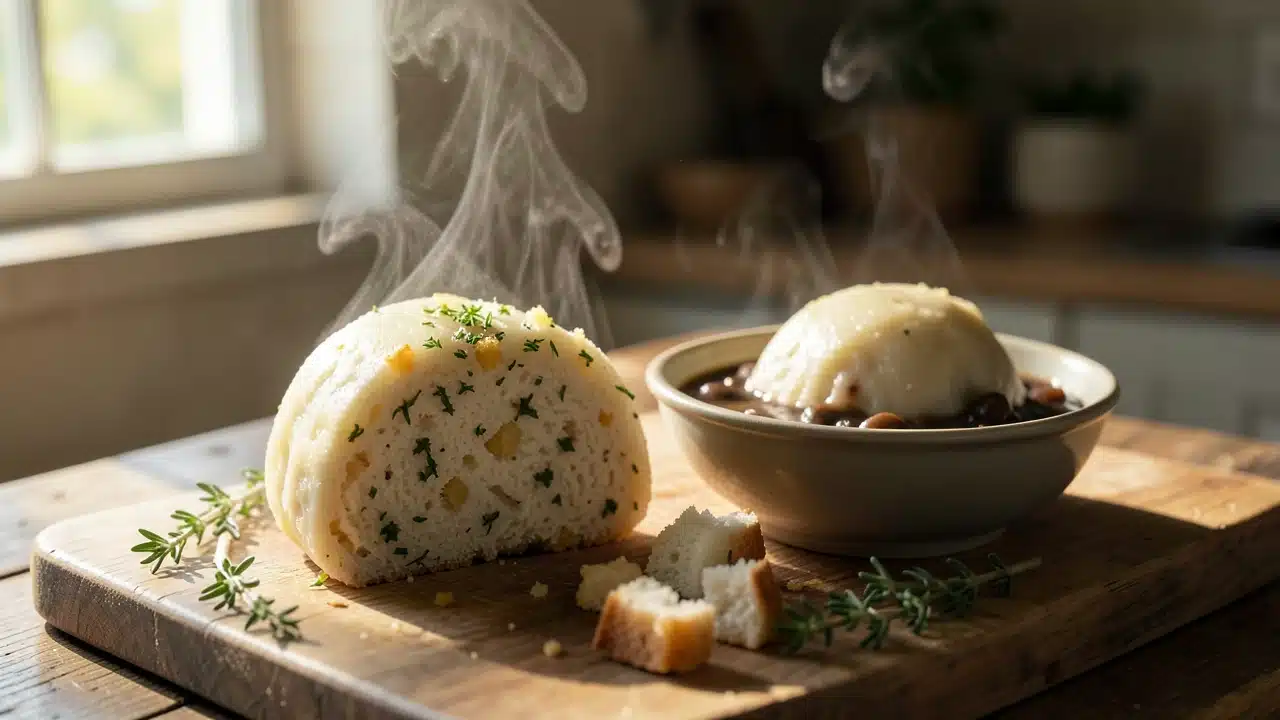
Create Delicious Bread Dumplings or Knödel
In many European cuisines, stale bread is a key ingredient for dumplings. These dumplings, often called Knödel or Klöße, are hearty and satisfying. They are perfect served with rich gravies or stews.
This is a wonderful example of the 8 Smart Ways to Use Stale Bread Beyond Basic Homemade Croutons that brings international flair.
Bread dumplings are made from bread cubes or crumbs mixed with eggs, milk, and seasonings. They are then simmered in water or broth until they are cooked through. They absorb the flavors of whatever they are served with.
Making Bread Dumplings
First, cube stale bread and let it dry out a bit more if needed. You want it firm enough to hold its shape. Next, soak the bread cubes in warm milk for about 15-20 minutes.
This softens the bread and helps it absorb liquid.
Drain any excess milk. Then, mix in beaten eggs, finely chopped parsley or chives, salt, and pepper. You can also add a pinch of nutmeg.
Form the mixture into balls or small loaves. Finally, gently simmer the dumplings in lightly salted boiling water or broth for about 10-15 minutes, or until they float and are cooked through. Readers looking for reliable background can compare this guidance with authoritative information about reduce food waste tips.
Serving Bread Dumplings
- With Gravy: A classic pairing, especially with roast meats.
- In Soups: Add them to hearty broths for a filling meal.
- With Stews: They soak up the rich sauces from beef or vegetable stews.
- As a Side Dish: Serve alongside roasted vegetables or meats.
These dumplings are a testament to how humble stale bread can become a culinary delight. Central European dumplings like knödel are commonly served with gravy or in soups.
Frequently Asked Questions Of 8 Smart Ways To Use Stale Bread Beyond Basic Homemade Croutons
Question: Can I use any type of stale bread for these recipes?
Answer: Yes, most types of stale bread work well. This includes baguettes, sourdough, white bread, whole wheat, and challah. Denser breads might require a bit more soaking time for certain recipes.
Question: How should I store stale bread before using it?
Answer: Store stale bread in a paper bag at room temperature. This allows it to air out and dry further without becoming moldy. Avoid plastic bags, which trap moisture.
Question: Can I make 8 Smart Ways to Use Stale Bread Beyond Basic Homemade Croutons if my bread is moldy?
Answer: No, absolutely not. If bread shows any signs of mold, it should be discarded entirely. Mold can spread unseen throughout the loaf.
Question: How long does homemade breadcrumb last?
Answer: Homemade breadcrumbs can last for several months when stored in an airtight container at room temperature. For longer storage, you can freeze them.
Question: Are there any recipes that use very stale, almost hard bread?
Answer: Yes, very hard bread is excellent for making breadcrumbs, stuffing, or panzanella. For things like French toast or bread pudding, you might want to soak it a little longer to soften it up.
Question: Can I use stale bread for gluten-free recipes?
Answer: If you are following a gluten-free diet, you would need to use stale gluten-free bread. Standard stale bread contains gluten.
Final Thoughts
Don’t let stale bread go to waste. You’ve learned about 8 Smart Ways to Use Stale Bread Beyond Basic Homemade Croutons, from making versatile breadcrumbs and comforting desserts to thickening soups and creating international dumplings. These simple methods save food, save money, and add delicious variety to your meals. Many European cuisines feature traditional bread dumplings made from stale bread.