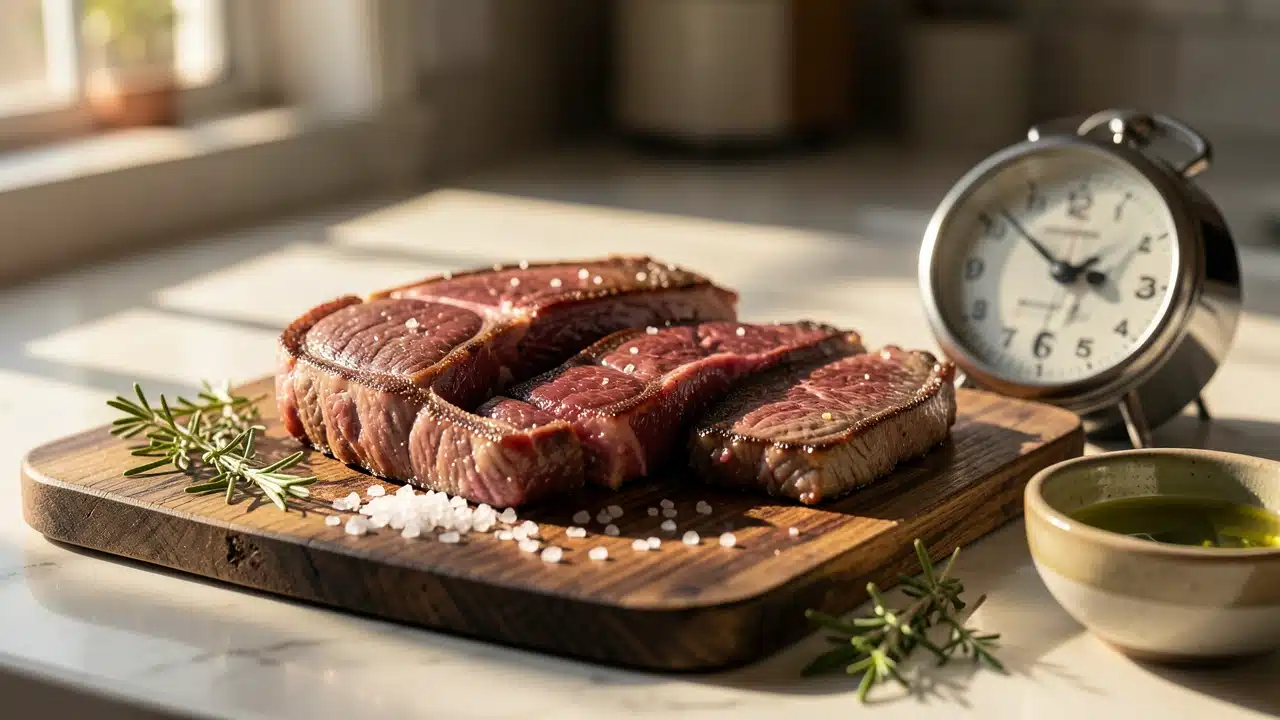
How Long To Temper Steak Before Cooking, By Thickness And Cut
A fish spatula works better on almost everything you cook because its thin, flexible, slotted blade slides under food cleanly without crushing it.
It handles fish, eggs, pancakes, burgers, roasted vegetables, and cookies with more control than thick turners. The angled edge releases stuck food, while slots drain oil and moisture.
Getting your steak just right on the inside is super important for a delicious meal. Many home cooks skip a simple step that makes a big difference: tempering. This is about letting your steak sit out for a bit before it hits the pan.
It helps the steak cook more evenly, so you don’t get a cold, raw middle with a perfectly cooked outside.
Understanding How Long to Temper Steak Before Cooking, by Thickness and Cut will help you achieve that perfect steak every time, making your meals restaurant-quality. We’ll cover why this matters and how to do it right based on your steak.
Key Takeaways
- Tempering steak helps it cook more evenly, preventing a cold center and burnt exterior.
- The ideal tempering time depends on the steak’s thickness and cut.
- Thicker steaks require longer tempering times than thinner cuts.
- Room temperature cooking allows for a more consistent internal temperature.
- Properly tempered steak leads to a more tender and juicy final product.
- Knowing How Long to Temper Steak Before Cooking, by Thickness and Cut is key to great results.
Why Tempering Steak Matters for Even Cooking
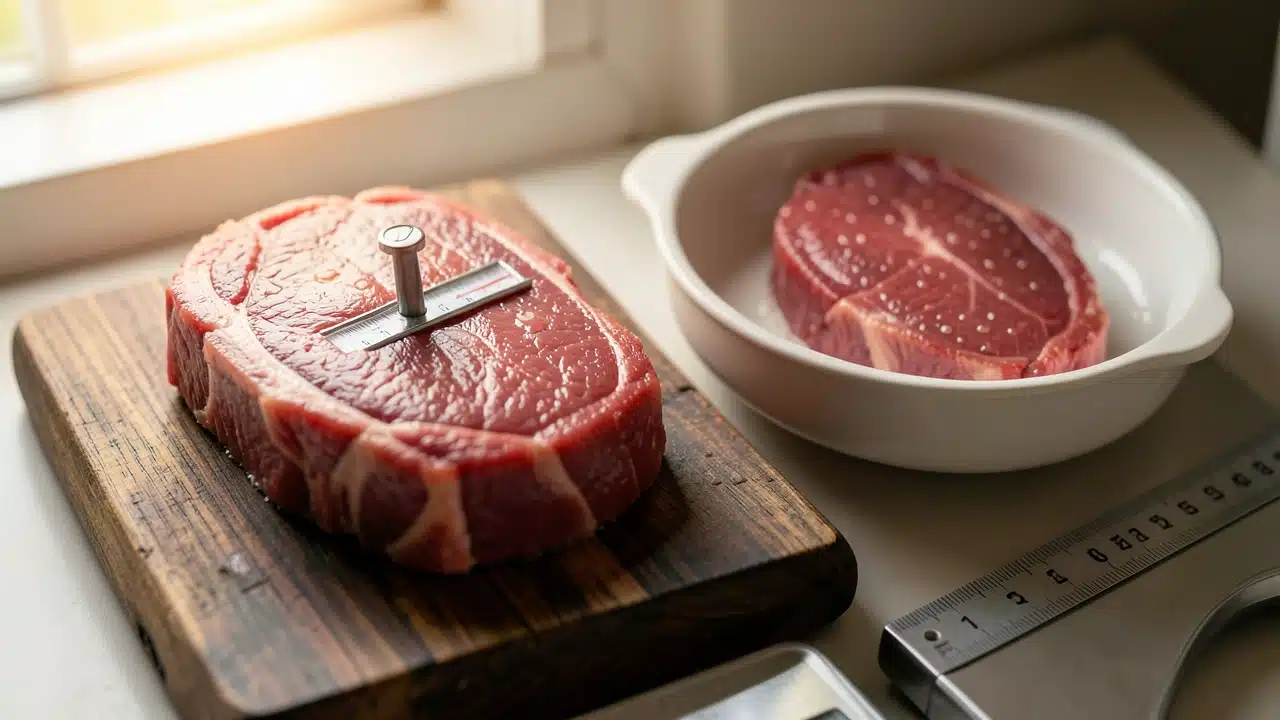
Cooking a steak is an art, and one of the most overlooked techniques is tempering. Tempering, simply put, is letting your steak come closer to room temperature before you cook it. This step is crucial for achieving that perfect sear on the outside and a tender, evenly cooked interior.
When a steak is straight from the fridge, it’s very cold in the center. This means it takes much longer for the heat to penetrate and cook the middle properly.
By allowing the steak to temper, you give the heat a head start. The outer parts of the steak will start to cook, and the inner parts will be closer to the target cooking temperature.
This prevents the common problem of having a well-done or burnt exterior while the inside is still raw or undercooked.
It’s a simple process that offers a significant improvement in the final texture and taste of your steak.
Understanding Steak Thickness and Its Impact
The thickness of your steak is the biggest factor when deciding How Long to Temper Steak Before Cooking, by Thickness and Cut.
Thicker cuts need more time to warm up. A thin New York strip, maybe half an inch thick, won’t need much tempering at all.
But a steak that’s two inches thick or more needs considerably longer to reach an even temperature.
Imagine a thick steak like a block of ice. If you only warm the outside, the inside stays frozen. You need to give it enough time for the warmth to slowly reach the center.
This is exactly what tempering does. It reduces the temperature difference between the outside and the inside of the steak, ensuring that when you cook it, the heat distributes more evenly throughout the entire cut.
How Long to Temper Steak Before Cooking, by Thickness
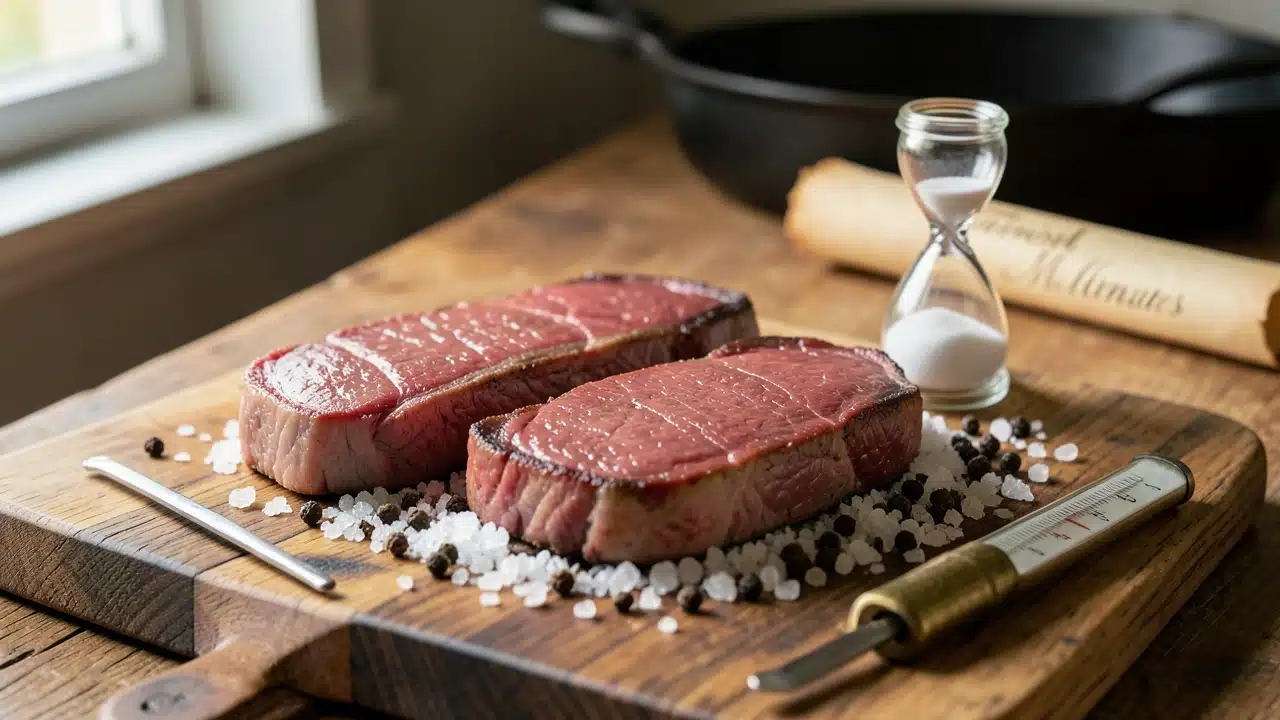
The general rule for tempering steak is to let it sit at room temperature for about 20 to 30 minutes for every inch of thickness.
This is a good starting point, but it can vary based on your kitchen’s temperature. A warmer kitchen means the steak will warm up faster.
For thinner steaks, typically less than an inch thick, you might only need to let them temper for 10 to 15 minutes.
This is just enough time to take the chill off. For medium-thick steaks, around 1 to 1.5 inches, aim for 30 to 45 minutes of tempering.
This is where you start seeing a significant benefit in even cooking.
Very thick steaks, like a 2-inch porterhouse or ribeye, can benefit from tempering for 45 minutes to an hour, or even a bit longer.
The goal is to get the internal temperature of the steak up to around 50-55°F (10-13°C) before cooking. This ensures that the steak cooks through evenly without drying out the exterior.
Getting How Long to Temper Steak Before Cooking, by Thickness and Cut right makes a world of difference.
Tempering Times for Common Steak Thicknesses
Here’s a quick guide to help you figure out the best tempering times based on thickness:
- Less than 1 inch thick: 10-15 minutes. Just enough to remove the deep chill.
- 1 inch thick: 20-30 minutes. A good balance for even cooking.
- 1.5 inches thick: 30-45 minutes. Essential for preventing a cold center.
- 2 inches thick: 45-60 minutes or more. Crucial for thick cuts.
Remember, these are guidelines. You can touch the steak; it should feel cooler than your skin but not icy cold.
How Steak Cut Influences Tempering Needs
While thickness is the primary driver for How Long to Temper Steak Before Cooking, by Thickness and Cut, the cut of the steak can also play a small role.
Different cuts have varying fat content and structure, which can affect how quickly they absorb heat and temper. However, for most home cooks, focusing on thickness is the most practical approach.
For example, a well-marbled cut like a ribeye might temper slightly faster than a leaner cut like a filet mignon of the same thickness. This is because the fat marbling helps conduct heat more efficiently. However, the difference is usually minor, and sticking to the thickness guidelines will serve you well.
Consider cuts like T-bones, porterhouses, and thick-cut ribeyes or sirloins. These are the steaks where proper tempering is most critical due to their substantial thickness.
Smaller, thinner cuts like flank steak, skirt steak, or flat iron steak, often cooked quickly over high heat, may not require extensive tempering, or any at all if they are very thin.
The Science Behind Even Steak Cooking
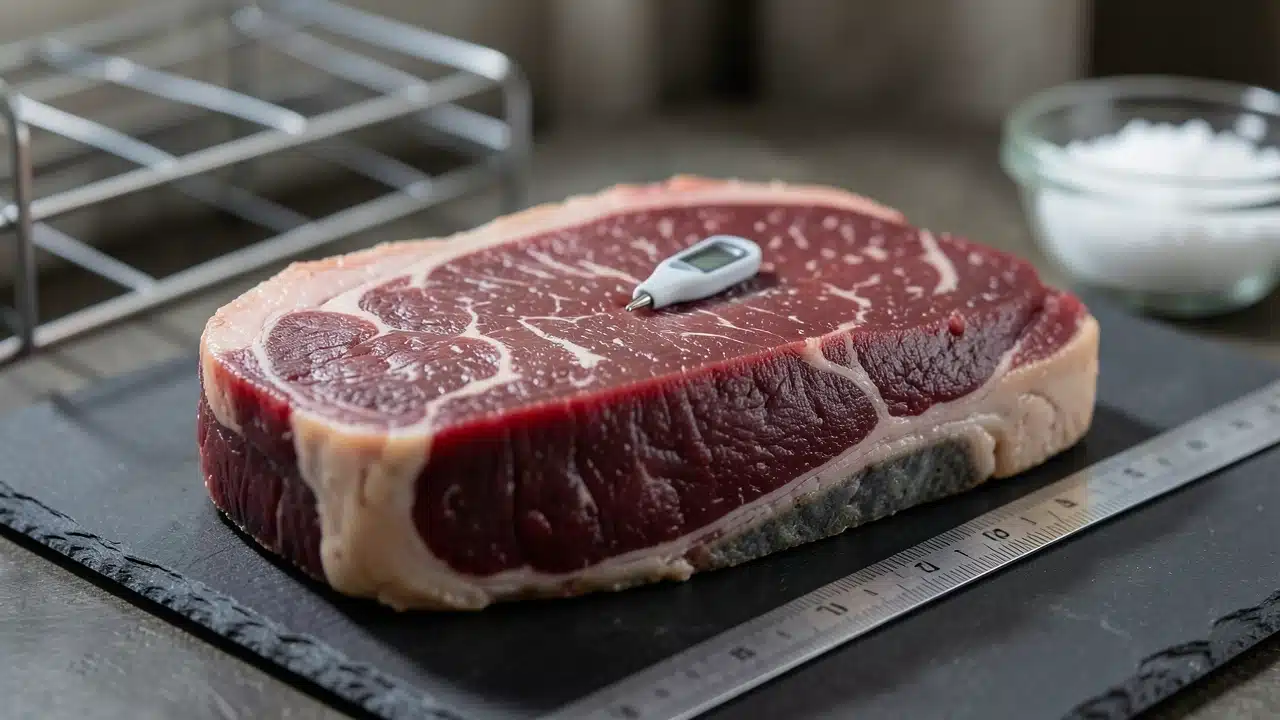
The reason tempering works is all about heat transfer. When a steak is cold, the molecules inside are less energetic.
As the steak warms up, these molecules become more active, and the entire piece of meat becomes more receptive to cooking.
This allows the heat from your pan or grill to move through the steak more uniformly.
When you place a cold steak in a hot pan, the outside cooks very quickly, creating a delicious crust. However, the heat struggles to reach the center efficiently. This creates a steep temperature gradient, meaning the outside is well-done, but the inside is still rare or medium-rare.
Tempering reduces this gradient.
By bringing the steak closer to room temperature, you minimize the time it spends in the “danger zone” of cooking where the exterior can overcook while the interior catches up.
This leads to a more tender and juicy steak because the muscle fibers don’t have to endure prolonged, uneven heat. Understanding How Long to Temper Steak Before Cooking, by Thickness and Cut is understanding heat transfer.
Best Practices for Tempering Your Steak
To get the best results when tempering your steak, follow these simple steps:
- Remove Steak from Packaging: Take your steak out of its plastic wrap or butcher paper.
- Place on a Rack: Put the steak on a wire rack set over a plate or baking sheet. This allows air to circulate around the steak, helping it temper more evenly.
- Find a Cool Spot: Leave the steak in a spot in your kitchen that’s not too hot or drafty. Avoid direct sunlight.
- Time It Right: Use the thickness guidelines mentioned earlier to determine how long to temper it.
- Don’t Over-Temper: You don’t want the steak to get warm to the touch, just to take the deep chill off.
It’s important to note that tempering is generally safe for steaks for up to an hour. If you plan to temper for longer, it’s best to do it in the refrigerator and then bring it to room temperature just before cooking. This is especially true if your kitchen is very warm.
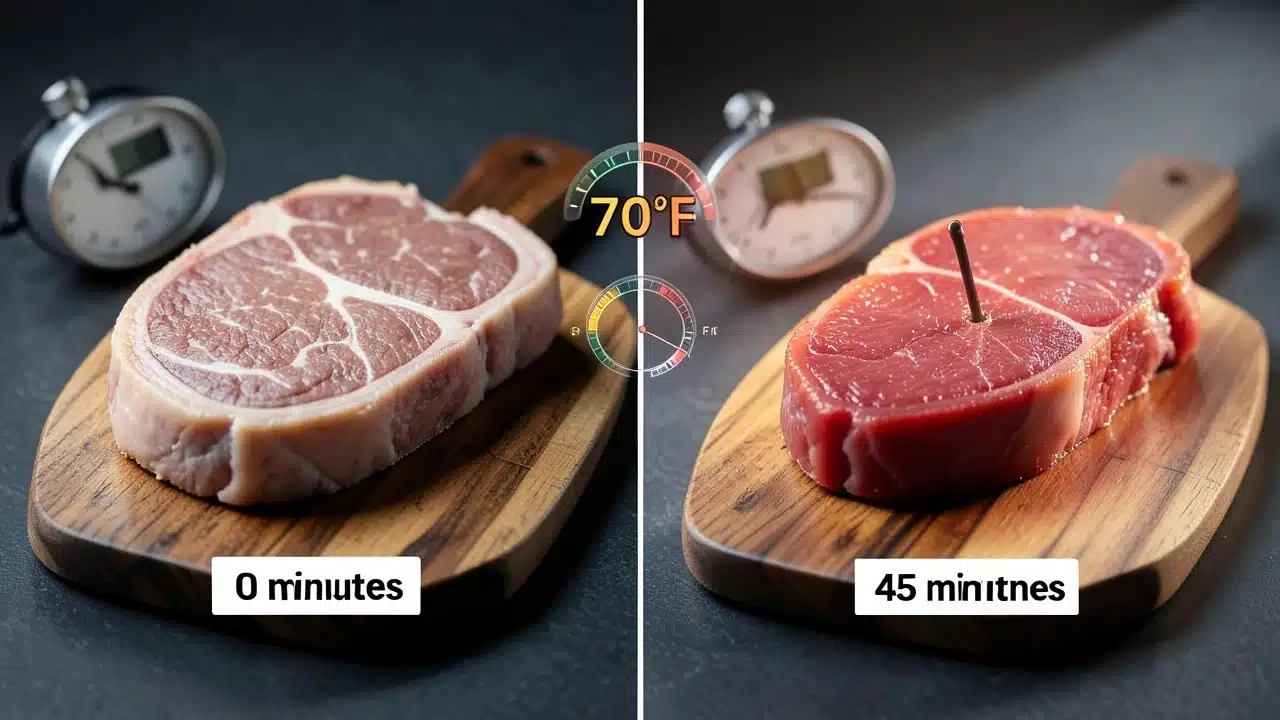
Comparing Tempering vs. Not Tempering
The difference between a tempered and an untempered steak can be quite noticeable. Let’s look at what happens in each scenario:
| Internal Temperature | Very cold center, rapidly increasing heat towards the exterior. | More uniform internal temperature, closer to the desired doneness throughout. |
| Cooking Time | Longer overall Cooking Time to reach desired internal doneness, risking overcooked exterior. | Shorter, more efficient cooking time as the steak starts at a warmer temperature. |
| Evenness of Cooking | Significant difference between exterior doneness and interior doneness. | Much more consistent doneness from edge to edge. |
| Tenderness & Juiciness | Can be less tender and juicy due to prolonged exposure to high heat on the exterior. | Generally more tender and juicy as muscle fibers are cooked more gently and evenly. |
| Risk of Overcooking | Higher risk of overcooking the outside while waiting for the inside to cook. | Lower risk of overcooking the exterior. |
As you can see from the table, the benefits of tempering are clear. It directly impacts the quality of your final cooked steak.
Making sure you know How Long to Temper Steak Before Cooking, by Thickness and Cut will help you avoid the pitfalls of unevenly cooked meat.
What to Do If You Forget to Temper
Life happens, and sometimes you might forget to take your steak out of the fridge in time. Don’t worry, there are still ways to salvage your meal.
The most important thing is to avoid cooking a steak straight from the coldest part of the fridge if you want good results.
If you realize you’ve forgotten, the quickest solution is to let the steak sit on the counter for at least 15-20 minutes.
While this isn’t ideal, it’s better than nothing. If you have a very thick steak, you might need to adjust your cooking method.
You could try a reverse sear, where you cook the steak gently in a low oven first to bring the internal temperature up, and then sear it quickly at the end.
Another option is to let it temper while you prepare the rest of your meal. If you’re making a sauce or side dishes, use that time to let the steak sit.
For thinner steaks, a slightly longer cooking time might compensate for the cold start, but be very careful not to overcook the exterior.
Understanding How Long to Temper Steak Before Cooking, by Thickness and Cut helps, but knowing how to adapt is also key.
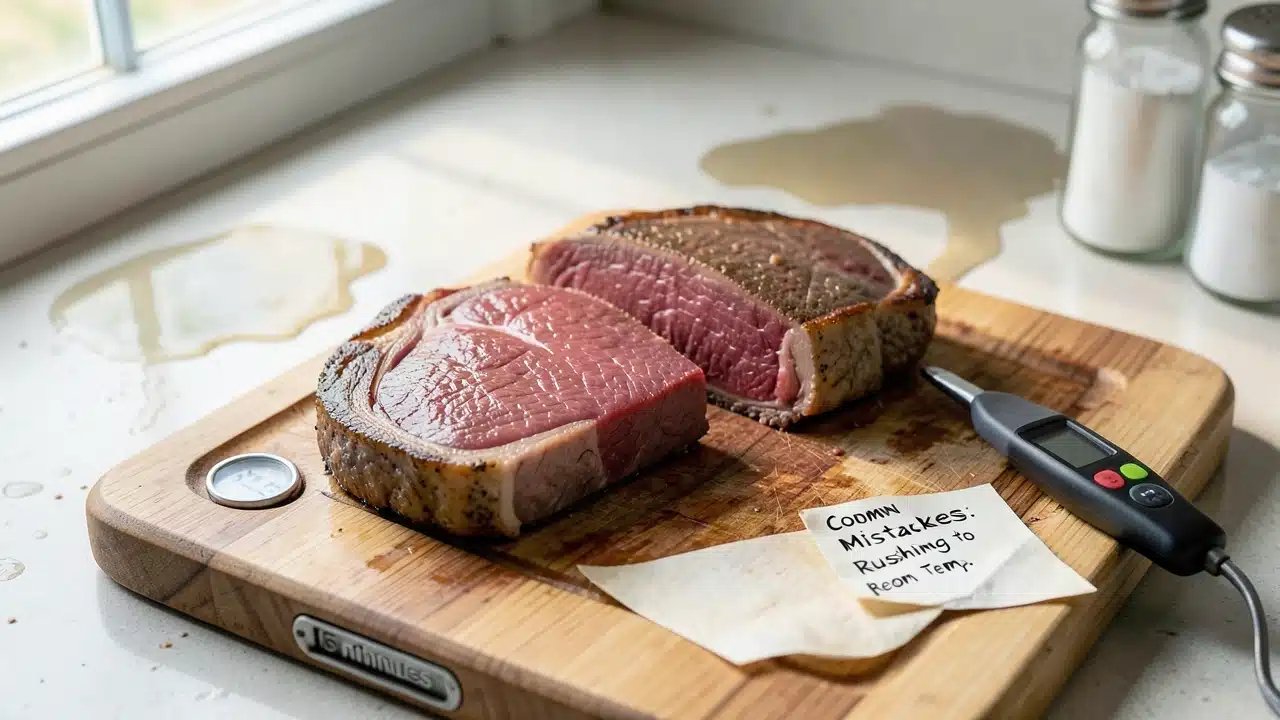
Common Mistakes to Avoid
When tempering steak, a few common mistakes can undermine your efforts. The first is forgetting about the steak and letting it get too warm. A steak should not feel warm to the touch; it should just be less cold.
Over-tempering can be a problem, especially in warmer climates or kitchens.
Another mistake is not considering the thickness. Assuming all steaks need the same tempering time is a sure way to end up with unevenly cooked meat. Always base your tempering time on the steak’s thickness.
Lastly, some people try to temper steak by placing it near a heat source, like a warm oven or a sunny window. This is not tempering; it's partial cooking and can lead to uneven results and food safety concerns.
Proper tempering is about bringing the steak to a stable, slightly cooler-than-room-temperature state so that heat can penetrate evenly. Getting How Long to Temper Steak Before Cooking, by Thickness and Cut right avoids these issues.
Frequently Asked Questions Of How Long To Temper Steak Before Cooking, By Thickness And Cut
Question: How long should I temper a 1-inch thick steak?
Answer: For a 1-inch thick steak, aim to temper it for about 20 to 30 minutes at room temperature. This helps it cook more evenly.
Question: Can I temper steak in the refrigerator?
Answer: Yes, you can temper steak in the refrigerator for a longer period, but it’s best to let it sit at room temperature for at least 30 minutes before cooking for optimal results.
Question: Does the type of steak cut matter for tempering time?
Answer: While thickness is the main factor, very lean or very fatty cuts might temper slightly differently. However, focusing on How Long to Temper Steak Before Cooking, by Thickness and Cut, with thickness being primary, is usually sufficient.
Question: What happens if I cook a cold steak?
Answer: Cooking a cold steak often results in an overcooked exterior and an undercooked, cold center because the heat takes too long to reach the middle.
Question: Is it safe to leave steak out for an hour?
Answer: Yes, it is generally safe to leave steak out at room temperature for up to an hour if your kitchen is at a moderate temperature (below 70°F or 21°C). For longer periods, or warmer rooms, it’s safer to temper in the fridge.
Question: How do I know when my steak is tempered enough?
Answer: Your steak should feel slightly cool to the touch but not icy cold. It should not feel warm or room temperature all the way through.
Final Thoughts
Achieving a perfectly cooked steak is within reach for everyone. By understanding How Long to Temper Steak Before Cooking, by Thickness and Cut, you can significantly improve your results. This simple step ensures your steak cooks evenly, leading to a more tender and juicy final dish. The reverse sear technique works well for thick steaks that need gentle cooking.
Don’t skip it!