Prep Order That Cools Ingredients Within Food-Safe Time Fast
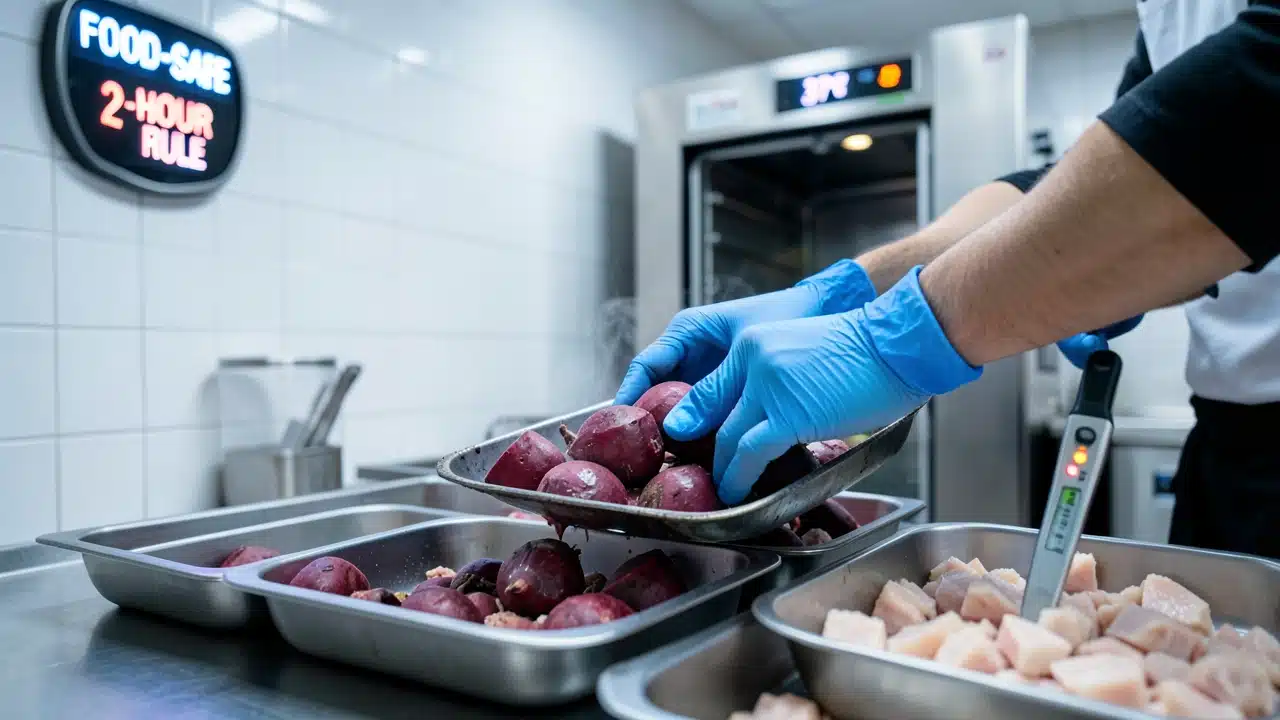
A prep order that cools ingredients within food-safe time starts with hot, dense foods first: rice, beans, sauces, stews, meats, and roasted vegetables. Spread them in shallow containers, vent briefly, then refrigerate within 2 hours.
Prep cold items last so the fridge stays efficient and cooked foods pass through the danger zone faster.
Keeping food safe is super important for everyone. When you’re prepping ingredients, especially for large meals or busy services, how you organize them to cool down quickly matters a lot. Getting this right means your food stays out of the danger zone where bacteria love to grow.
You’ll gain peace of mind knowing you’re serving safe food and avoid costly mistakes or unhappy customers.
Let’s look at how to create a smart Prep Order That Cools Ingredients Within Food-Safe Time Fast so your kitchen runs smoothly and safely.
Key Takeaways
- Understanding the food safety danger zone is crucial for cooling ingredients properly.
- A well-planned prep order helps ingredients cool down faster.
- Prioritize cooling larger batches or denser items first.
- Use appropriate cooling methods to speed up the process.
- Proper storage after cooling is key to maintaining safety.
- Regularly check temperatures to ensure food stays safe.
Why Fast Cooling Matters for Food Safety
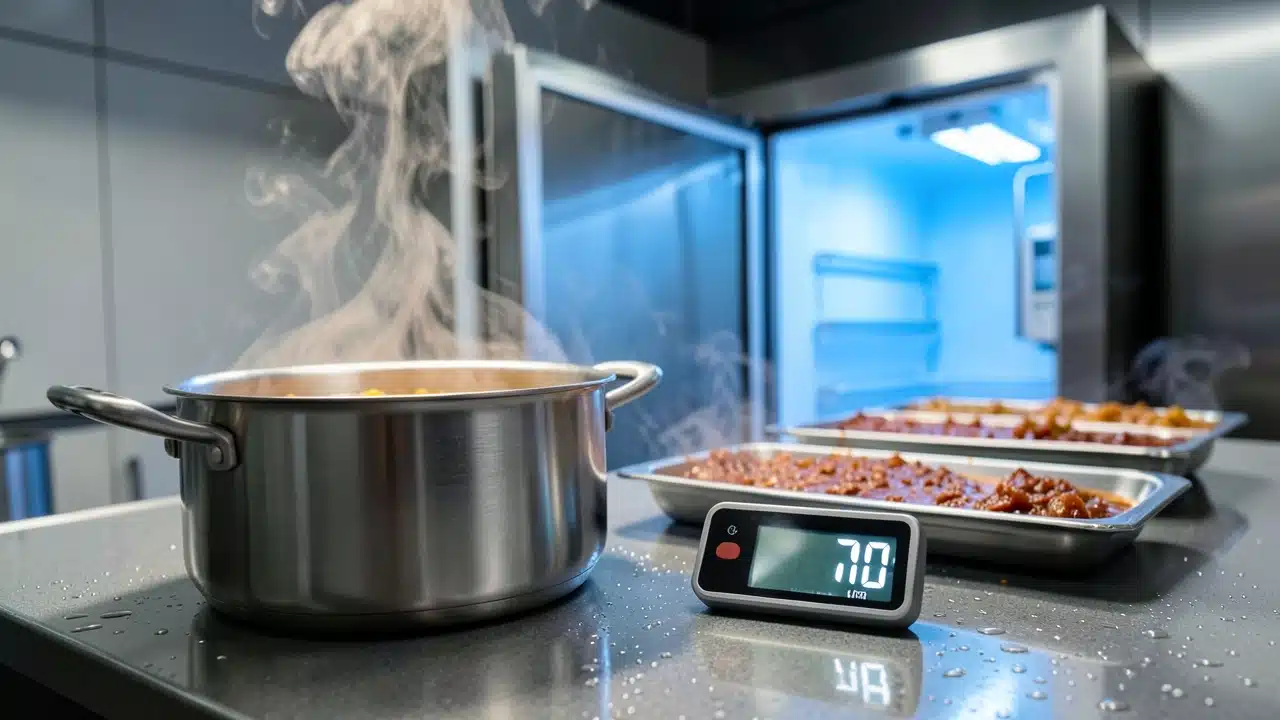
Food safety is more than just a rule; it’s about protecting people. Bacteria can multiply very quickly in certain temperature ranges. This range is often called the “danger zone,” typically between 40°F (4°C) and 140°F (60°C).
When cooked food or ingredients are left in this zone for too long, those harmful bacteria can grow to dangerous levels.
This is why a good Prep Order That Cools Ingredients Within Food-Safe Time Fast is so vital. It helps move food through the danger zone as quickly as possible. Faster cooling means less time for bacteria to grow.
This directly impacts the health of anyone who eats the food. It also helps maintain the quality and freshness of your ingredients.
Understanding the Temperature Danger Zone
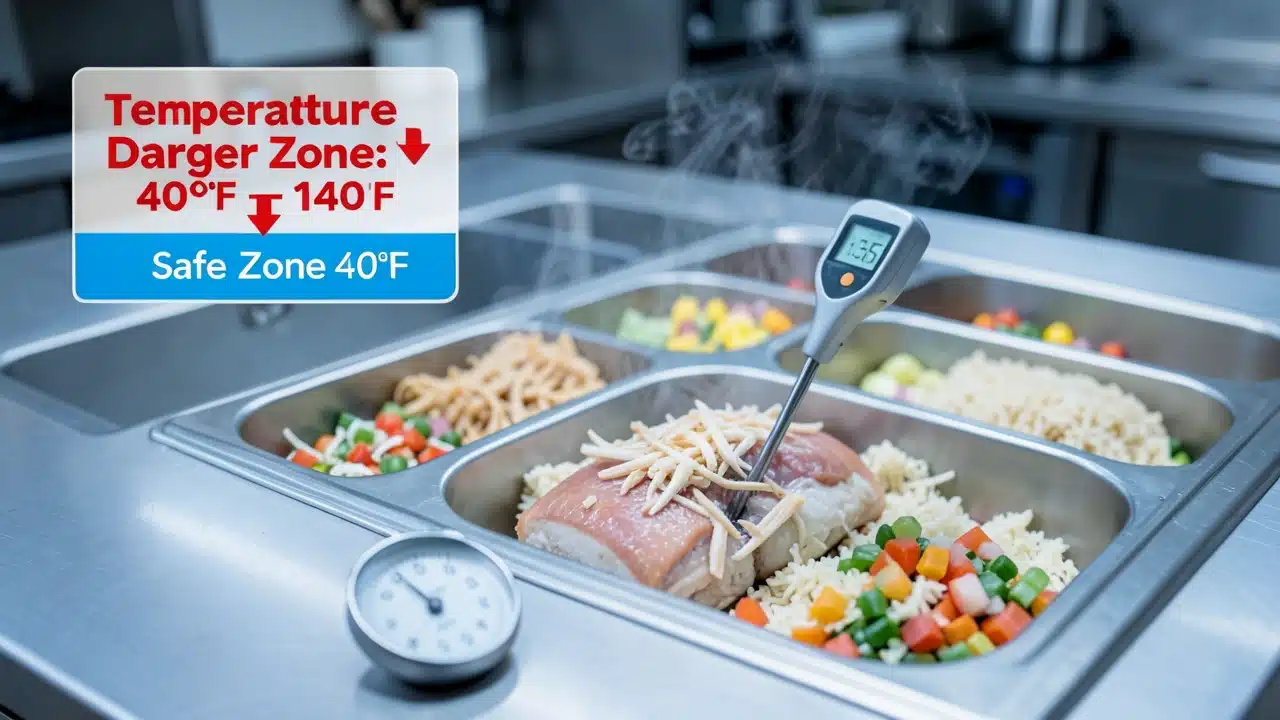
The temperature danger zone is the critical area where bacteria thrive. Most foodborne illnesses are caused by bacteria that grow rapidly between 40°F and 140°F. The goal in food preparation is to minimize the time food spends in this range.
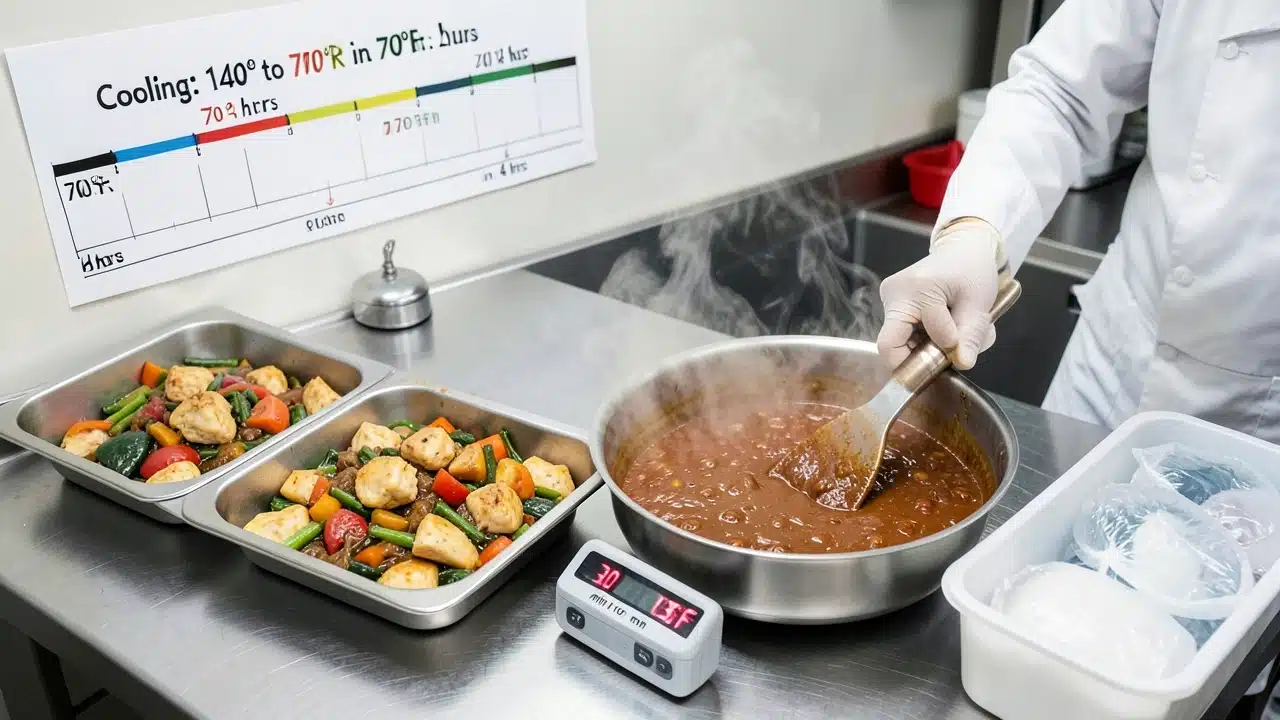
When cooling cooked food, the target is to get it from 140°F down to 70°F (21°C) within two hours. Then, it needs to cool from 70°F to below 40°F within another four hours. This six-hour window is a standard guideline for safe cooling.
Failing to meet these times puts your food at risk.
How to Create an Effective Prep Order
An effective prep order is like a roadmap for your kitchen. It tells you what to prepare and, just as importantly, in what order to cool it. The main idea is to arrange your tasks so that items needing the longest cooling time start first.
This ensures everything finishes cooling within the safe timeframes.
Think about the size and density of your ingredients. Larger or denser items take longer to cool than smaller or thinner ones. A good Prep Order That Cools Ingredients Within Food-Safe Time Fast will account for these differences.
It prioritizes items that will hold heat longer.
Prioritizing Items for Cooling
When planning your prep, consider which items will take the longest to cool. This usually includes larger pots of soup, stews, roasts, or deep pans of cooked rice. These items have more mass and will retain heat for a longer period.
First, identify all the cooked items that need to be cooled. Then, group them by size and density. The largest and densest items should be at the top of your cooling list.
This allows them to begin their cooling journey as early as possible. This proactive approach is key to a successful Prep Order That Cools Ingredients Within Food-Safe Time Fast.
Batch Size and Cooling Time
The amount of food you are cooling also plays a big role. A large batch of chili will take much longer to cool than a small portion.
When planning, consider how you can divide large batches into smaller, more manageable portions for faster cooling.
Breaking down large quantities into shallower pans or smaller containers is a very effective strategy. This increases the surface area exposed to the air or cooling medium. It allows heat to dissipate more quickly.
This is a fundamental principle behind a Prep Order That Cools Ingredients Within Food-Safe Time Fast.
Effective Cooling Methods
Simply putting hot food in the refrigerator is not always the fastest or safest method. There are several techniques you can use to speed up the cooling process significantly. Using the right method is as important as the order you cool things in.
These methods work by increasing the rate of heat transfer away from the food. This ensures food spends less time in the danger zone, contributing to a safe kitchen environment. Choosing the right method depends on the type of food and the equipment you have available.
Using Ice Baths
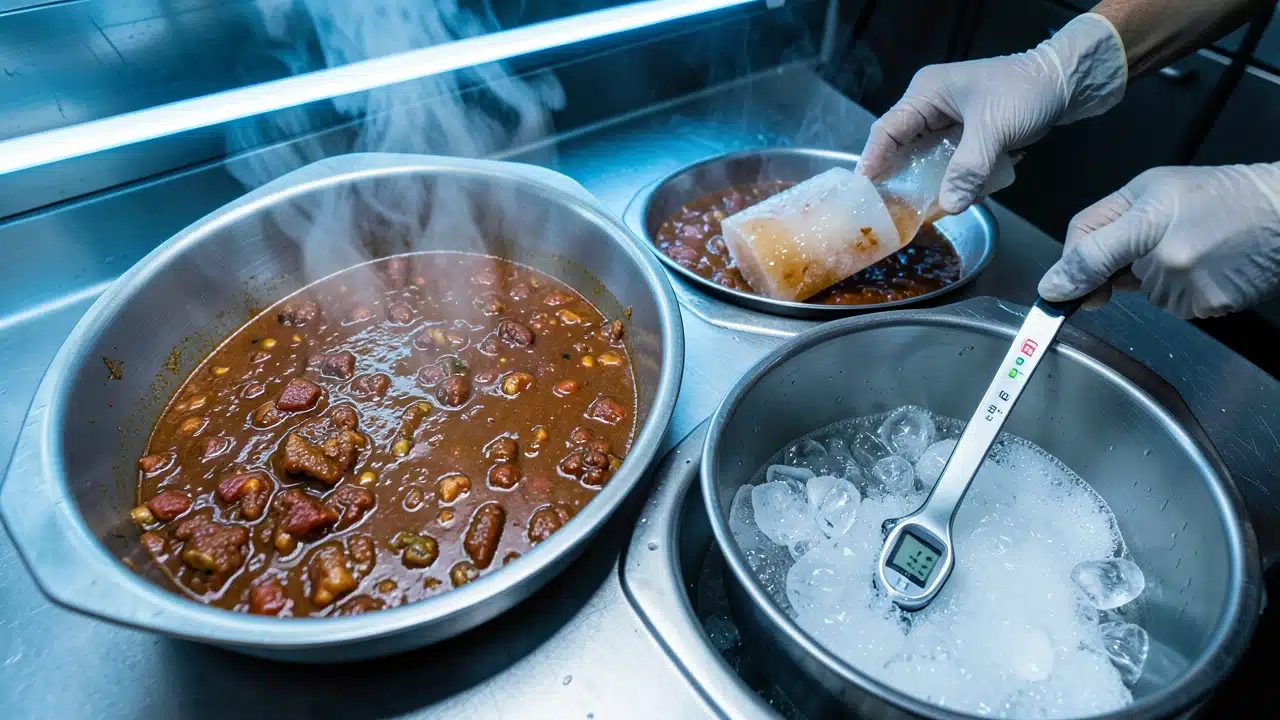
An ice bath is a very effective and simple way to cool hot foods quickly. You fill a large sink or container with ice and water. Then, you place the container of hot food into this icy mixture.
Stirring the food in the container helps to expose more of it to the cold water. This method is great for cooling soups, sauces, stocks, and even smaller portions of cooked meats. It dramatically reduces the cooling time compared to air cooling alone.
This is a cornerstone of a good Prep Order That Cools Ingredients Within Food-Safe Time Fast.
Refrigeration Strategies
While the refrigerator is the final destination for cooling, how you use it matters. Don’t overload your refrigerator, as this can prevent cold air from circulating properly. This makes cooling less efficient for all items inside.
Ensure there is space between containers for air to flow. For very hot items, it’s often best to cool them down partially using another method, like an ice bath, before placing them in the refrigerator. This prevents the hot food from raising the internal temperature of the fridge too much.
Proper refrigeration is the final step in ensuring a Prep Order That Cools Ingredients Within Food-Safe Time Fast.
Cooling Wands and Chillers
For larger operations or when speed is paramount, specialized equipment can be a lifesaver. Blast chillers are designed to rapidly lower the temperature of large batches of food. They force cold air over the food at high speed.
Cooling wands are another option. These are probes that you insert into the food. They circulate cold water or a refrigerant to draw heat out quickly.
While these are more advanced, they represent the pinnacle of achieving a Prep Order That Cools Ingredients Within Food-Safe Time Fast in commercial settings.
Proper Storage After Cooling
Once your ingredients have cooled to below 40°F (4°C), they need to be stored correctly. This is the final step in maintaining food safety. Proper storage prevents re-contamination and keeps food fresh until it’s needed.
Always use clean, airtight containers for storing cooled food. Label each container with the date it was prepared. This helps with inventory management and ensures you use older items first.
This practice complements your Prep Order That Cools Ingredients Within Food-Safe Time Fast by preserving the safety you’ve achieved.
Labeling and Dating
Accurate labeling is a critical part of food safety. It tells you exactly what the food is and when it was cooled. This is essential for the “first-in, first-out” (FIFO) system.
Using a permanent marker to write the contents and the date of cooling on the container is a simple but effective practice.
This makes it easy to track how long food has been stored and helps prevent spoilage. This step ensures the integrity of your Prep Order That Cools Ingredients Within Food-Safe Time Fast.
Reheating Considerations
When it’s time to use your cooled ingredients, remember proper reheating. Food should be reheated rapidly to an internal temperature of 165°F (74°C) before serving. This kills any bacteria that may have started to grow during storage.
Avoid reheating food slowly or leaving it at room temperature for extended periods. Quick and thorough reheating is the final safeguard. It ensures that the efforts in creating a Prep Order That Cools Ingredients Within Food-Safe Time Fast are not undone.
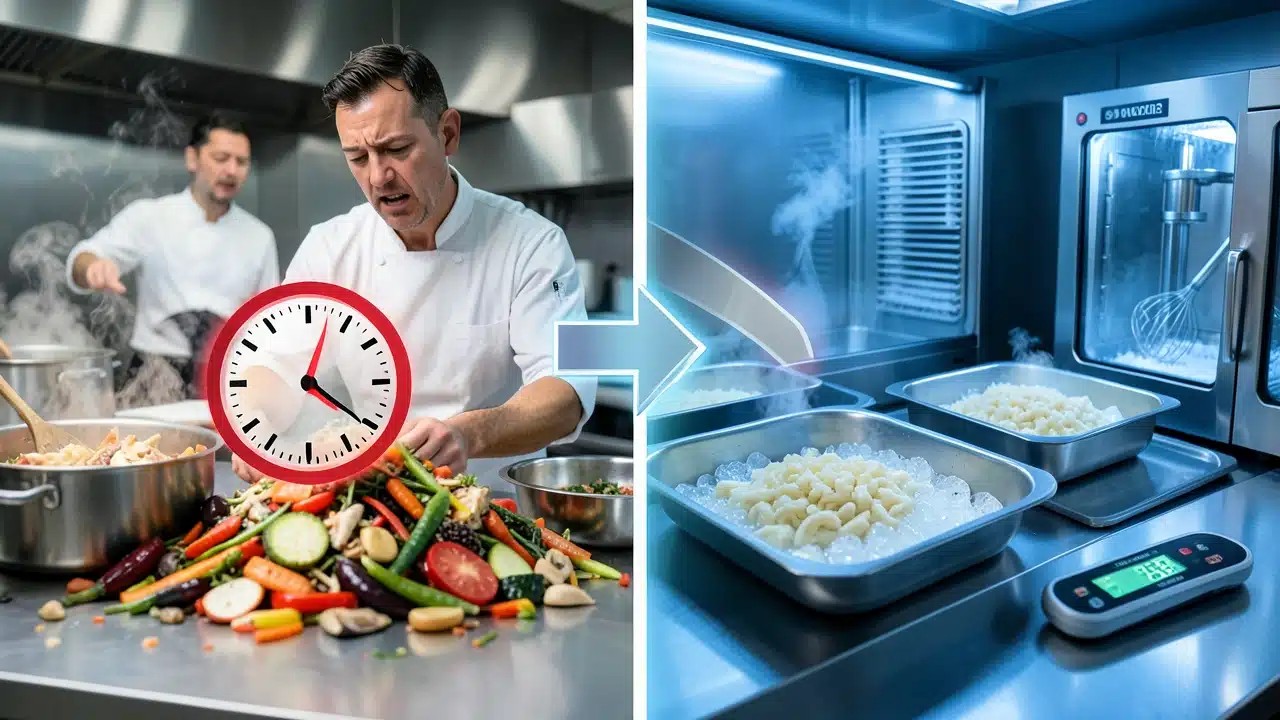
Comparing Cooling Methods
Different cooling methods have varying speeds and effectiveness. Understanding these differences can help you choose the best approach for your situation. The goal is always to reach safe temperatures as quickly as possible.
| Air Cooling (in fridge) | Slow | Moderate (if spaced properly) | Small portions, already partially cooled items |
| Ice Bath | Fast | High | Soups, sauces, stocks, smaller batches |
| Blast Chiller | Very Fast | Very High | Large batches, commercial kitchens |
| Cooling Wand | Fast | High | Dense items, large roasts |
As you can see from the table, methods like ice baths and blast chillers are far superior for rapid cooling. They are essential for anyone needing a true Prep Order That Cools Ingredients Within Food-Safe Time Fast.
Common Mistakes to Avoid
Even with the best intentions, food safety mistakes can happen. Being aware of common pitfalls can help you prevent them.
These errors often relate to not understanding how quickly bacteria grow or how to cool food effectively.
Avoiding these mistakes ensures that your food preparation and cooling processes are consistently safe. This protects your customers and your reputation. It’s about being vigilant at every step.
Not Cooling Fast Enough
The most common mistake is simply not cooling food quickly enough. This often happens when large, hot batches are placed directly into the refrigerator without any pre-cooling. The food sits in the danger zone for too long.
Always remember the two-stage cooling process: 140°F to 70°F in 2 hours, then 70°F to 40°F in 4 hours.
If you don’t meet these times, the food is considered unsafe. A proper Prep Order That Cools Ingredients Within Food-Safe Time Fast addresses this directly.
Improper Container Use
Using deep, large containers for cooling can be problematic. They trap heat in the center, making it very difficult for the food to cool down evenly and quickly. This is especially true for dense foods.
As mentioned earlier, shallow containers allow for faster heat dissipation. They increase the surface area exposed to the cooling environment. This is a simple change that makes a big difference in cooling efficiency.
Overloading Refrigerators
Stuffing a refrigerator full of hot or warm food can overwhelm its cooling capacity. The appliance may struggle to bring the internal temperature down. This can lead to a rise in the temperature of already safely cooled items.
Always leave space for air to circulate. If you have a very large quantity to cool, consider using multiple refrigerators or cooling units if available. This ensures that the cooling process remains effective for all items.
Tips for Maintaining Food Safety Culture
Creating a culture of food safety in your kitchen is an ongoing effort. It requires training, clear procedures, and consistent reinforcement. Everyone in the kitchen needs to understand why these practices are important.
When food safety is a priority for everyone, it becomes second nature. This leads to fewer errors and a safer environment for both staff and customers. It’s about building good habits.
Regular Training and Education
Ensure all staff members receive regular training on food safety principles. This includes understanding the danger zone, proper cooling techniques, and safe storage practices. Training should be updated as needed and reinforced through team meetings.
Hands-on practice can be very beneficial. Showing staff how to properly set up an ice bath or how to divide food into shallow pans makes the concepts clearer. This practical approach is key to implementing a successful Prep Order That Cools Ingredients Within Food-Safe Time Fast.
Temperature Monitoring
Regularly monitoring food temperatures is non-negotiable. Use calibrated thermometers to check the internal temperature of food during cooling and storage. Keep logs of these temperatures to track compliance.
This vigilance ensures that your cooling processes are working as intended. It also provides documentation in case of any questions or audits. Temperature checks are the final confirmation that your Prep Order That Cools Ingredients Within Food-Safe Time Fast is effective. Staff should be trained on proper cooling techniques as recommended by the USDA.
Frequently Asked Questions Of Prep Order That Cools Ingredients Within Food-Safe Time Fast
Question: What is the most critical factor in a Prep Order That Cools Ingredients Within Food-Safe Time Fast?
Answer: The most critical factor is prioritizing items based on their size and density to ensure larger or denser items begin cooling first, allowing for even and rapid temperature reduction.
Question: Can I cool hot food by leaving it on the counter?
Answer: No, never leave hot food on the counter to cool. This allows it to remain in the temperature danger zone for too long, enabling bacteria to multiply rapidly.
Question: How quickly does food need to cool from 140°F to 70°F?
Answer: Food must cool from 140°F to 70°F within two hours to be considered safe. This is the first critical stage of rapid cooling.
Question: What is the role of shallow containers in fast cooling?
Answer: Shallow containers increase the surface area of the food exposed to the cooling environment, allowing heat to escape much faster than in deep containers.
Question: Is it okay to put hot food directly into the refrigerator?
Answer: It is best to cool hot food down significantly before refrigerating. Placing very hot food directly into the fridge can raise its internal temperature, slowing down the cooling process for all items inside.
Question: How does an ice bath help achieve a Prep Order That Cools Ingredients Within Food-Safe Time Fast?
Answer: An ice bath uses a mixture of ice and water to rapidly draw heat out of food containers, significantly speeding up the cooling process compared to air cooling alone.
Final Thoughts
Creating a smart Prep Order That Cools Ingredients Within Food-Safe Time Fast is essential for food safety.
By planning your cooling based on item size and density, and using quick methods like ice baths, you keep food out of the danger zone. This protects everyone and ensures your kitchen operates safely and efficiently.