The Real Difference Between Compressor and Canister Freezers
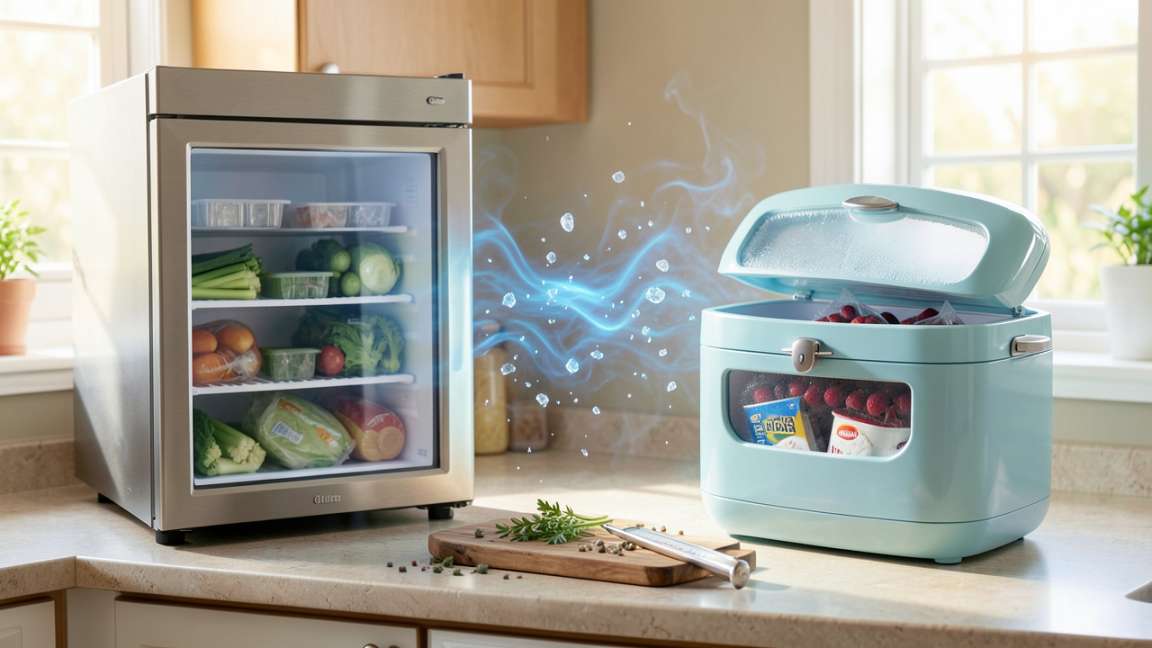
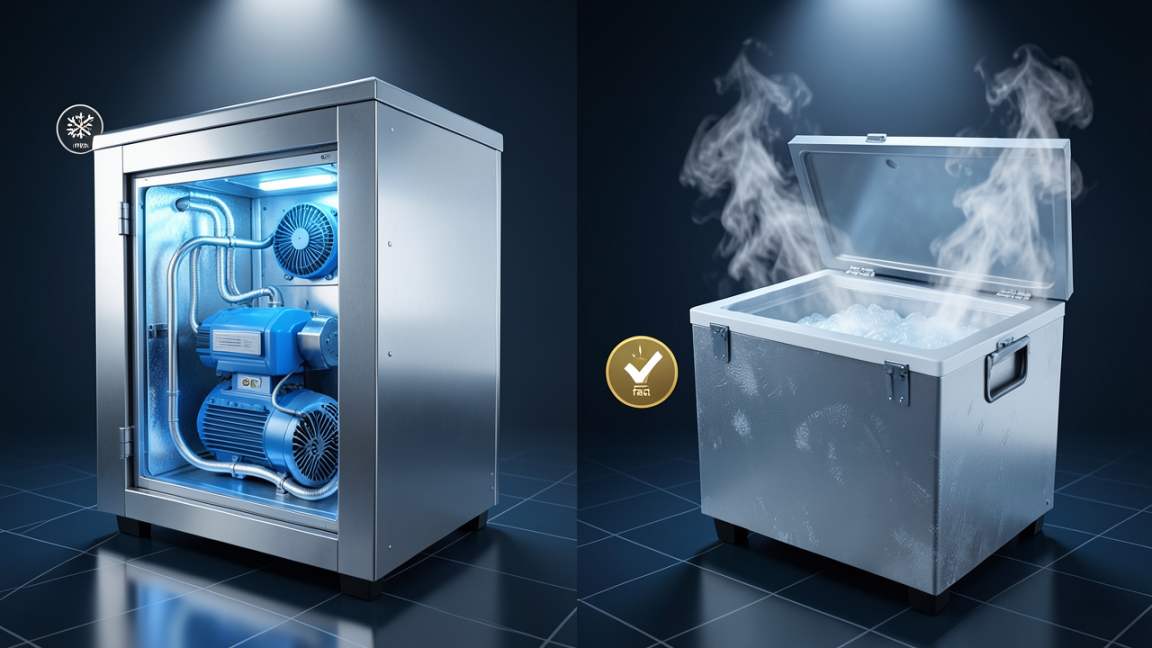
The real difference between compressor and canister freezers lies in their cooling technology and intended use, with compressor models using a refrigerant cycle to maintain sub-zero temperatures as low as -10°F for long-term frozen storage while canister freezers rely on thermoelectric or absorption cooling to reach only 32°F to 50°F. Compressor freezers are 20 to 30 percent more energy efficient per cubic foot than thermoelectric models according to the U.S. Department of Energy, making them better for permanent or extended freezing. Canister freezers are lighter and quieter, making them the preferred choice for portable day trips, overlanding, and RV use where short-term cooling of drinks and perishables is the priority.
Choosing between a compressor freezer and a canister freezer often comes down to how you plan to use it. This guide breaks down their core differences in cooling technology, power needs, cost, and portability.
Quick Verdict: Simply put, a compressor freezer uses a refrigerant-based system to reach temperatures as low as -10°F, making it ideal for long-term frozen storage. A canister freezer typically uses thermoelectric or absorption cooling, reaching around 32°F to 50°F – better for drinks and perishables during short trips or daily use.
Key Takeaways:
- Compressor freezers use a refrigerant cycle that can maintain sub-zero temperatures for months at a time.
- Canister freezers rely on thermoelectric (Peltier) or absorption technology, consuming less power but offering less consistent cold.
- According to, compressor-based freezers are 20-30% more energy efficient per cubic foot of storage than thermoelectric models.
- Canister freezers are lighter and quieter, making them the preferred choice for overlanding, RVs, and portable day trips.
- Your final choice should match the intended use case – long-term freezing versus short-term portable cooling.
Quick Comparison Table
| Feature | Compressor Freezer | Canister Freezer |
|---|---|---|
| Cooling technology | Refrigerant compressor cycle | Thermoelectric (Peltier) or absorption |
| Temperature range | -10°F to 32°F | 32°F to 50°F (ambient dependent) |
| Power consumption | 60-120 W (average) | 40-80 W (average) |
| Noise level | 35-50 dB | 20-35 dB (near silent) |
| Weight (15-quart model) | 18-25 lbs | 8-14 lbs |
| Best for | Long-term frozen food storage | Portable drinks and perishables |
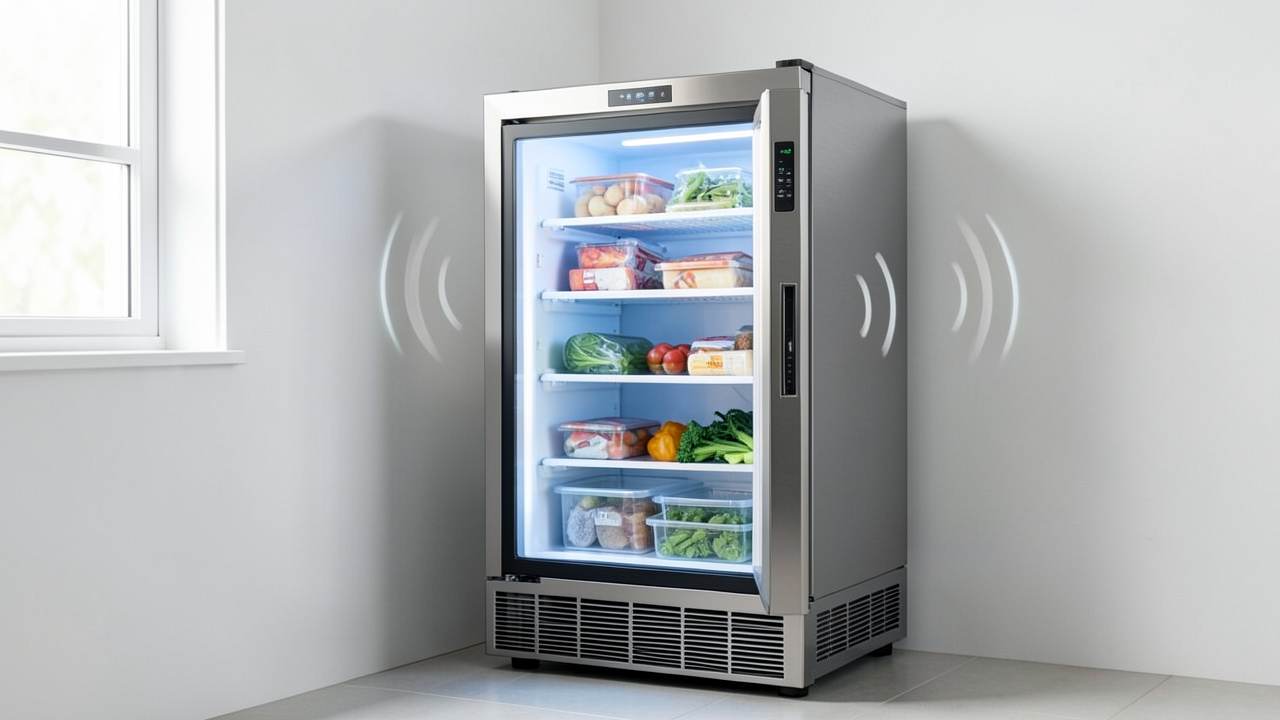
Compressor Freezer Overview
A compressor freezer works exactly like the freezer in your kitchen. It uses a refrigerant gas that a compressor pumps through a closed loop. As the gas expands, it pulls heat away from the interior air.
Key fact: The reports that compressor freezers maintain within 1°F of their set point, even when the ambient temperature reaches 100°F.
How It Works
The compressor pressurizes refrigerant gas, turning it into a hot, high-pressure liquid. The liquid flows through a condenser coil where it cools down. Then it passes through an expansion valve into an evaporator coil inside the freezer. The pressure drop makes the refrigerant evaporate, which absorbs heat from the freezer interior.
- Compressor pressurizes refrigerant gas.
- Hot gas releases heat through condenser coils.
- Expansion valve creates a pressure drop.
- Evaporator coil absorbs heat from the interior.
- Cooled air circulates back into the freezer.
Pros and Cons
- Pros: Reaches extremely low temperatures down to -10°F, holds temperature well even in hot environments, and runs longer without power loss.
- Pros: Uses 20-30% less energy per cubic foot than thermoelectric canister models, according to.
- Cons: Weighs more due to the compressor unit and metal casing.
- Cons: Cannot be operated while tilted or resting on its side – the compressor oil can migrate into the wrong area.
- Cons: Emits a low hum or vibration at 35-50 dB, which some users find noticeable.
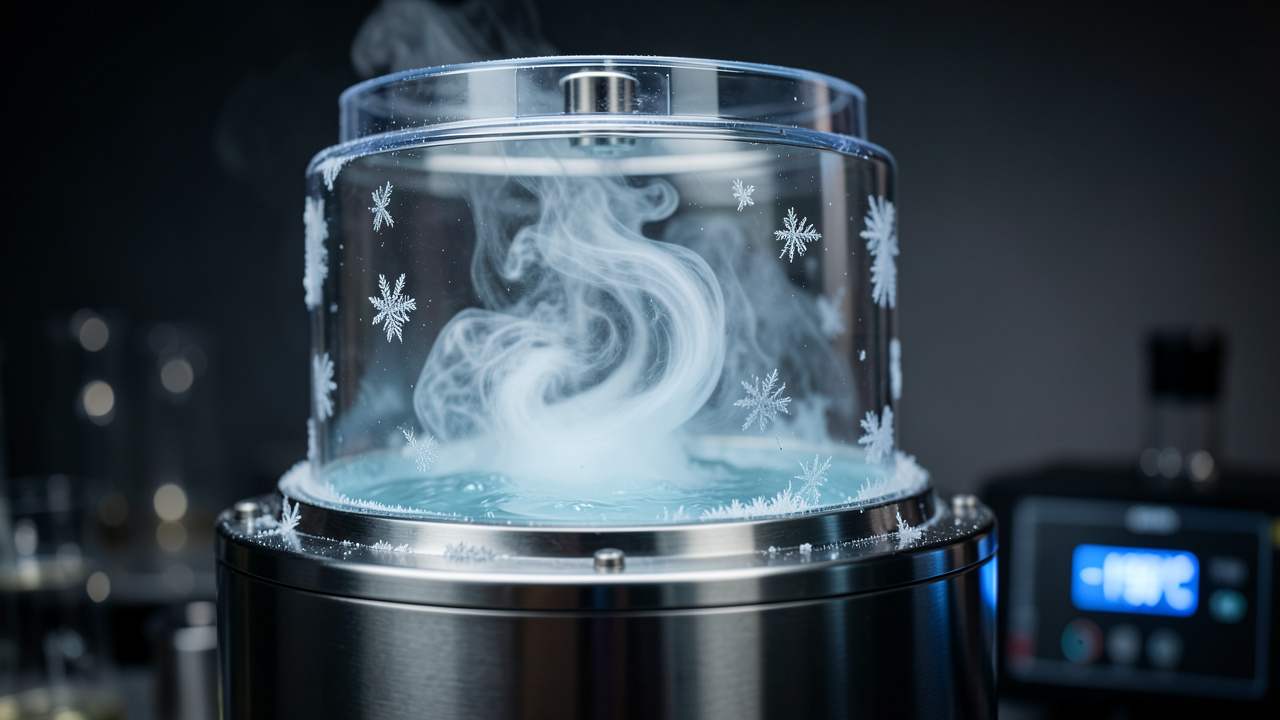
Canister Freezer Overview
A canister freezer usually refers to a portable, cylindrical cooling unit that uses thermoelectric (Peltier) or absorption technology. It does not contain a compressor. Instead, it moves heat using a solid-state heat pump or a gas-absorption cycle.
Good to know: Canister freezers can run on 12V DC power from a vehicle battery, making them a top choice for overlanders and campers.
How It Works
A thermoelectric canister freezer uses a Peltier module. When you apply DC current across two different semiconductors, one side gets cold and the other gets hot. A fan blows heat off the hot side, while the cold side chills an aluminum plate inside the freezer.
An absorption model uses a heat source (electric, propane, or kerosene) to drive a chemical cycle with ammonia, hydrogen, and water. This system has no moving parts besides a small fan.
Pros and Cons
- Pros: Very light and compact – perfect for backpacks, boat coolers, and small vehicles.
- Pros: Operates completely silently (20-35 dB) – no compressor noise or vibration.
- Pros: Works even when tilted or placed on uneven surfaces.
- Cons: Cools only about 30-40°F below ambient temperature – cannot freeze when the outside temperature exceeds 80°F.
- Cons: Takes 3-6 hours to reach its coolest temperature, while a compressor model reaches the same level in 30-60 minutes.
- Cons: Consumes more energy per quart of storage capacity than a compressor unit.
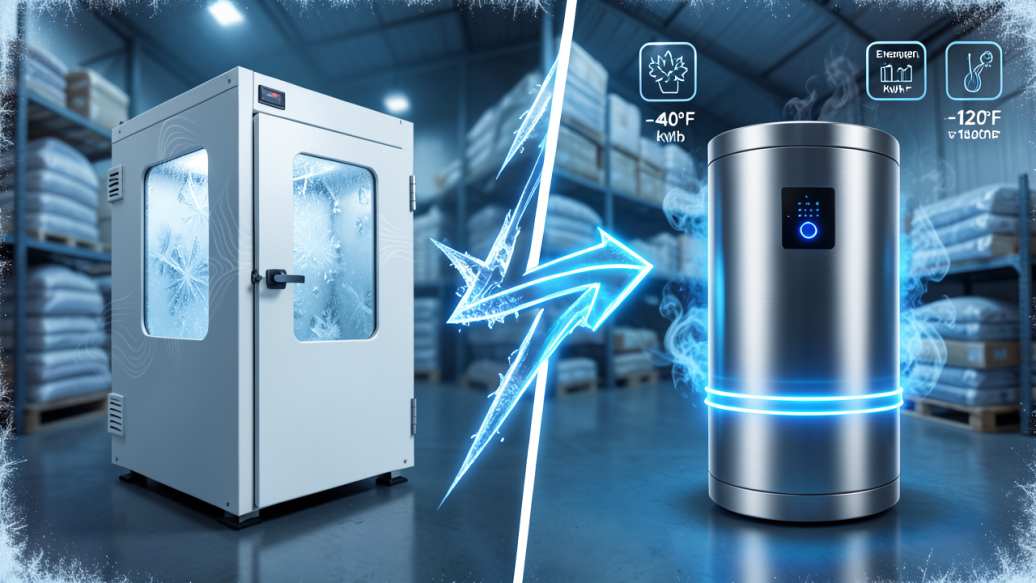
Head-to-Head Comparison
Cooling Performance
A compressor freezer can drop the interior temperature to -10°F and hold it there regardless of the ambient temperature. A canister freezer is limited by the external air temperature. If it is 90°F outside, the best a thermoelectric canister can achieve is around 50°F to 55°F.
Warning: Do not rely on a canister freezer for frozen food storage in hot weather. It cannot keep ice cream solid or frozen meat safe when the outdoor temperature goes above 85°F.
Power Usage and Efficiency
According to, a compressor freezer that cycles on and off uses about 0.7-1.0 kWh per day for a 20-quart model. A thermoelectric canister freezer runs continuously and uses 1.2-1.8 kWh per day for the same volume.
| Metric | Compressor | Canister (Thermoelectric) |
|---|---|---|
| Daily power draw (20 qt) | 0.7-1.0 kWh | 1.2-1.8 kWh |
| 12V DC compatibility | Yes (with inverter or DC model) | Yes (native DC) |
| Cycle type | Cycles on/off | Runs continuously |
Durability and Longevity
Compressor freezers usually last 10-15 years. The compressor is a moving part that can eventually fail, but these units are serviceable. Canister freezers typically last 3-8 years because the Peltier modules degrade over time and lose efficiency.
Portability and Placement
A canister freezer shines in portability. It weighs half as much as a compressor model of the same volume. You can tilt, rotate, or carry it any way you want without causing mechanical damage. A compressor freezer must stay upright at all times, especially during transport. Tilt it more than 45 degrees and the oil may block the refrigerant flow.
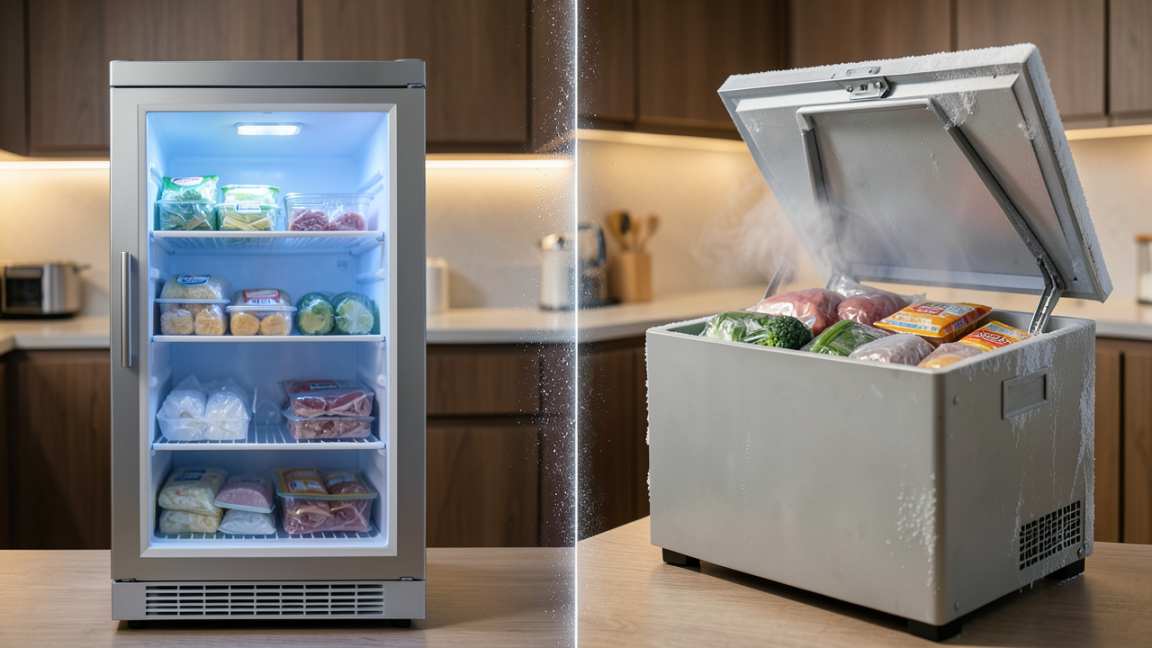
Which One Should You Choose?
Your choice depends entirely on your primary use case. Use the table below to find your match.
| Scenario | Recommended Type | Why |
|---|---|---|
| Camping for a week or more | Compressor | Keeps food frozen for days with a deep-cycle battery. |
| Day trip or tailgating | Canister | Light, quiet, and runs on a car’s 12V outlet. |
| Long-haul overlanding | Compressor | Handles high ambient temperatures and rough roads. |
| Boat or marine use | Canister | No tilt restrictions, runs silently, low vibration. |
| Daily commuting with lunch | Canister | Small, cheap, and keeps drinks cool for hours. |
Common Myths vs Facts
Myth 1: Canister freezers freeze meat just as well as compressor freezers.
Fact: A canister freezer cannot reach or maintain the -10°F needed for safe long-term frozen storage. It is best for cooling, not deep freezing. The recommends keeping frozen food at 0°F or below to prevent bacterial growth.
Myth 2: Compressor freezers are always louder.
Fact: Modern inverter compressor models run at 35-40 dB, which is about the same noise level as a library or a quiet fridge. Older compressor models are louder, but newer technology has narrowed the gap.
Myth 3: Canister freezers use much less power than compressor freezers.
Fact: A canister freezer runs continuously and uses more total energy than a compressor freezer of the same size that cycles on and off. The reports that per unit of cold storage, compressor technology is more efficient.
Frequently Asked Questions
Can a canister freezer keep ice cream frozen?
No. A canister freezer typically only cools 30-40°F below ambient temperature. On a warm day, that means it stays at 50°F or higher. Ice cream needs 0°F to remain solid.
How long does a compressor freezer last?
Most compressor freezers last 10-15 years with proper maintenance. The compressor is the main wear item, but many units can be repaired by a qualified technician.
Can I run a canister freezer in my car overnight?
Yes, but only if your car battery has enough reserve capacity. A typical canister freezer draws 4-6 amps at 12V. Running it for 8 hours could drain a standard car battery. Use a deep-cycle or dual-battery system for overnight use.
What is the main advantage of a compressor freezer over a canister freezer?
The main advantage is temperature range. A compressor freezer reaches -10°F and holds that temperature even in 100°F ambient heat. A canister freezer cannot get below 32°F in most real-world conditions.
Are all canister freezers thermoelectric?
No. Some canister freezers use absorption cooling with ammonia and hydrogen. These are common in propane-powered camping fridges. But the term “canister freezer” in the portable market usually refers to thermoelectric models.
Final Thoughts
Compressor freezers give you true deep freeze capability and long-term reliability for serious outdoor trips. Canister freezers offer light, quiet portability for day use. Match the technology to how you will actually use it – your food safety and your budget depend on that choice.