How Ice Cream Makers Churn Air Into Frozen Dessert Base
Ice cream makers churn air into a frozen dessert base by spinning a dasher inside a freezing chamber, which scrapes ice crystals from the walls while folding in air to create a stable foam called overrun. The percentage of air incorporated, known as overrun, ranges from 20 to 50 percent in premium ice cream to 80 to 100 percent in commercial varieties, directly affecting the final texture and scoopability. Key factors such as dasher speed, freezing temperature, fat content, sugar level, and stabilizers determine how effectively the base holds these air bubbles during churning.
Every spoonful of ice cream contains millions of microscopic air bubbles that give it a soft, scoopable texture. This guide explains how ice cream makers turn a liquid base into a light frozen dessert.
Simply put, ice cream makers churn air into the dessert base by spinning a dasher inside a freezing chamber. The dasher scrapes ice crystals off the wall while folding in air, creating a stable foam called overrun. This process gives ice cream its creamy, scoopable texture. Without air, the base would freeze into a hard, dense block.
Key Takeaways
- Ice cream makers use a rotating dasher to scrape frozen mixture from the chamber walls and fold air into the base at the same time.
- Overrun measures the percentage of air in ice cream, with premium ice cream containing 20 to 50 percent air and commercial ice cream containing 80 to 100 percent air.
- Freezing temperature and dasher speed directly control how much air the machine incorporates into the dessert base during churning.
- Fat content, sugar level, and stabilizers all affect how well the ice cream base holds air bubbles during the freezing process.
- Batch freezers and continuous freezers use different mechanical approaches to churn air into the frozen dessert base.
What Is Overrun in Ice Cream Making?
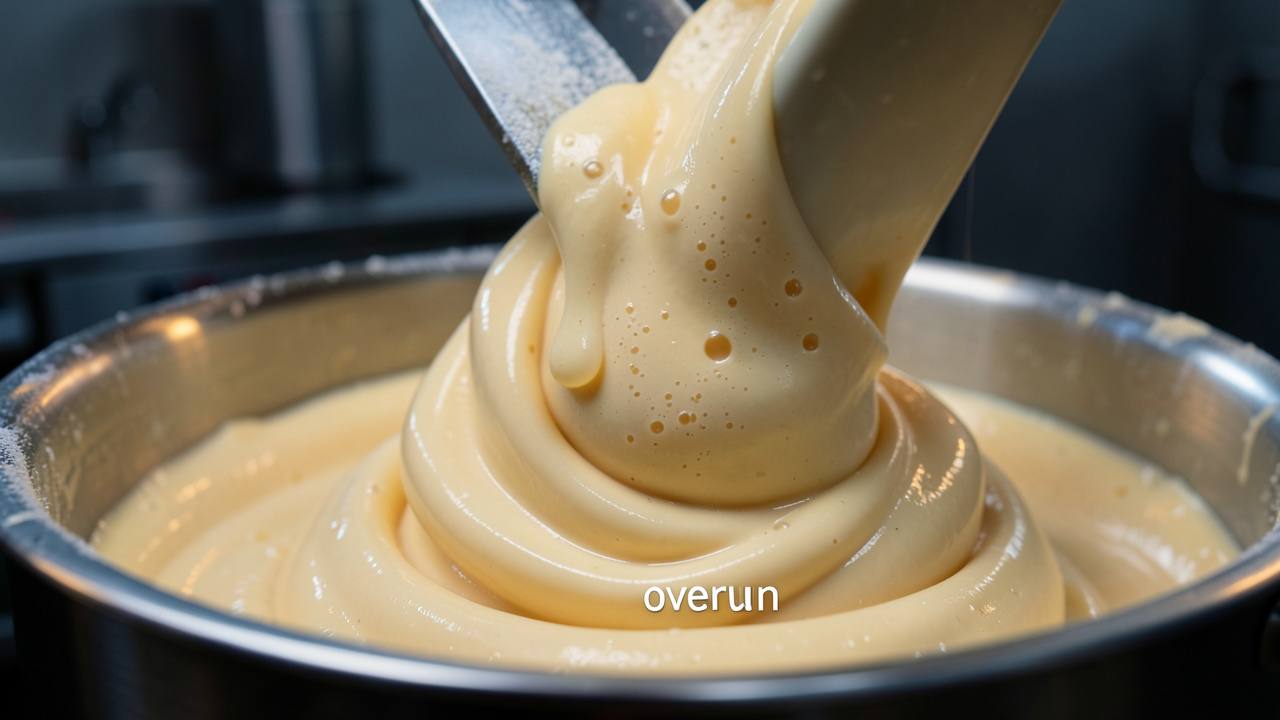
Overrun is the technical term for the amount of air whipped into ice cream during the churning process. It is measured as a percentage of the volume increase from the original liquid base. If you start with one quart of liquid base and end with two quarts of ice cream, the overrun is 100 percent.
According to the International Dairy Foods Association, over 1.5 billion gallons of ice cream are produced in the United States each year. The amount of air in each gallon varies widely by product type and quality grade. The USDA defines ice cream as having at least 10 percent milk fat by weight, but it does not set a minimum or maximum for overrun.
Different ice cream styles use different overrun levels to achieve their signature textures. The table below shows how overrun varies across common types.
| Ice Cream Type | Typical Overrun | Texture | Common Brands |
|---|---|---|---|
| Premium Ice Cream | 20-50% | Dense, rich, creamy | Haagen-Dazs, Ben & Jerry’s |
| Standard Ice Cream | 80-100% | Light, airy, soft | Breyers, Blue Bell |
| Soft Serve | 100-140% | Very light, fluffy | McDonald’s, Dairy Queen |
| Gelato | 20-30% | Dense, silky, slow-melt | Talenti, local gelaterias |
| Sorbet | 25-40% | Firm, icy, refreshing | Ciao Bella, Haagen-Dazs |
The science behind how ice cream makers churn air into frozen dessert base relies on a delicate balance of temperature, speed, and ingredient chemistry. Each factor determines whether the final product is light and scoopable or dense and icy.
How Does an Ice Cream Machine Incorporate Air?
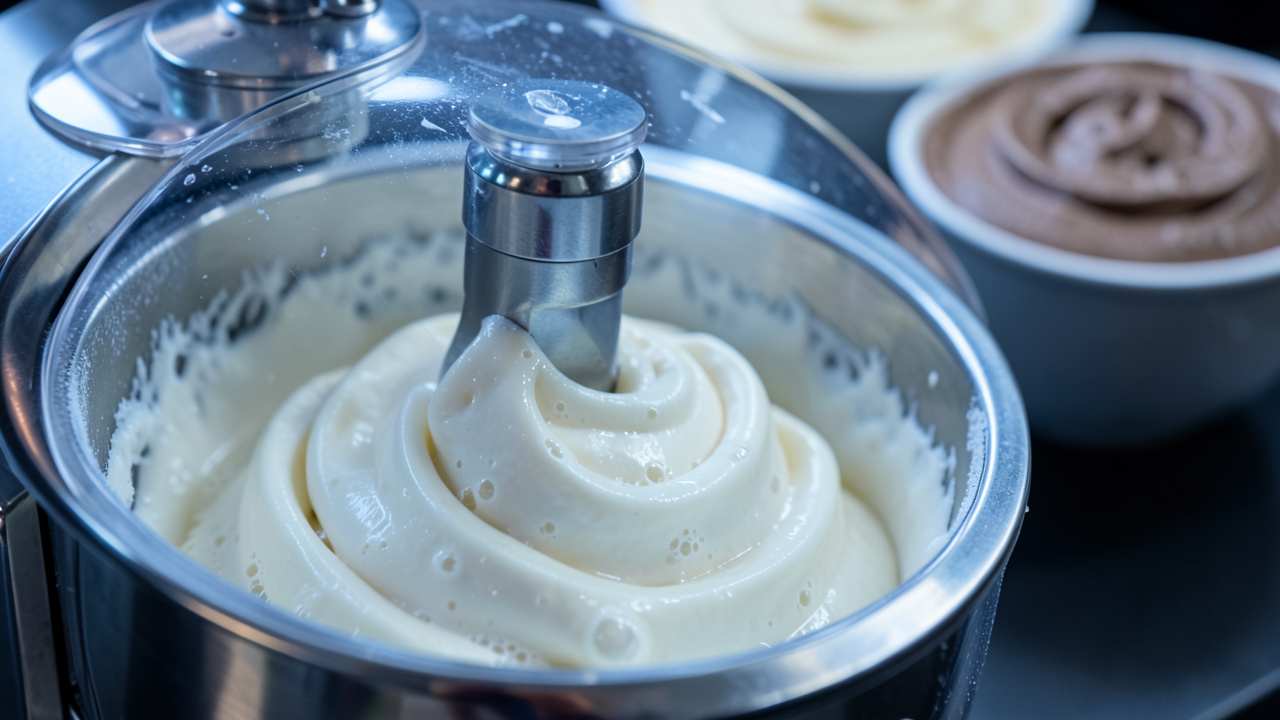
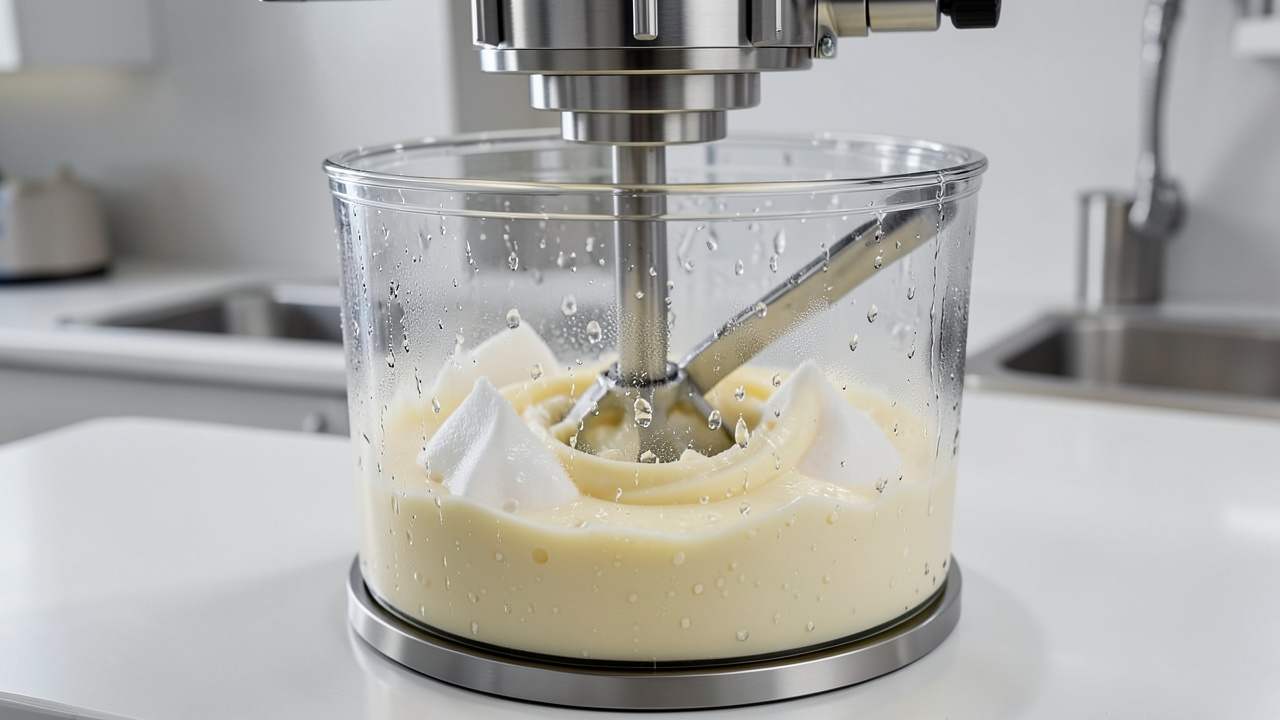
An ice cream maker does two things at the same time: it freezes the liquid base and it whips air into that base. The key component is the dasher, a rotating blade assembly inside the freezing canister.
The dasher spins at a controlled speed, typically between 40 and 80 revolutions per minute for batch freezers. As it turns, it performs three critical jobs:
- It scrapes frozen mixture off the inside wall of the freezing chamber, preventing ice from building up into a solid block.
- It folds air from the headspace of the canister down into the liquid base, creating tiny bubbles throughout the mixture.
- It breaks up ice crystals as they form, keeping them small enough that the tongue cannot detect them.
Tip: The dasher design matters more than most home cooks realize. Commercial machines from and use specific blade angles that maximize air incorporation while keeping crystals small.
The freezing chamber is surrounded by a refrigerant that keeps the wall temperature between -10°F and -30°F. When the liquid base touches this cold surface, it starts to freeze instantly. The dasher scrapes off this frozen layer before it thickens too much, mixing it back into the still-liquid center.
According to researchers at the University of Guelph, optimal freezing temperature for air incorporation is between -4°F and -6°F at the point of dasher contact. If the chamber is too cold, the base freezes too fast and the dasher cannot fold in enough air. If it is too warm, the base stays liquid and air escapes.
Types of Ice Cream Makers and Their Air Churning Methods
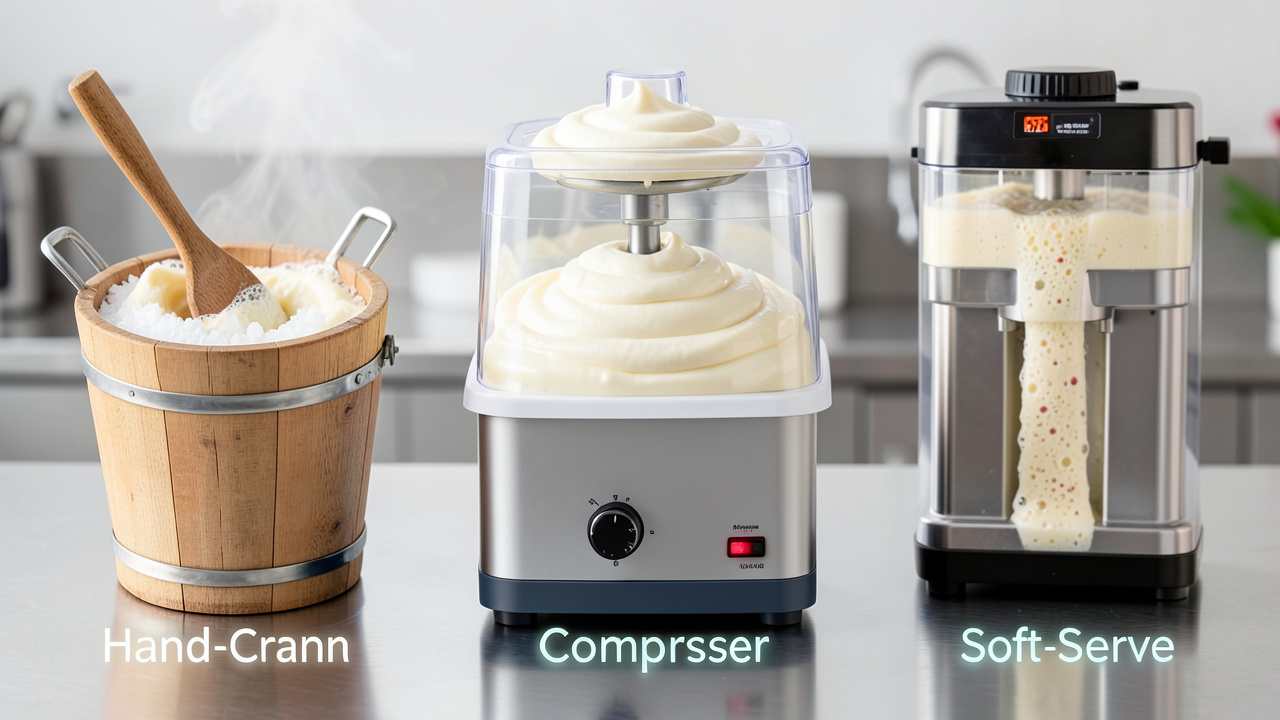
Not all ice cream machines churn air the same way. The type of machine you use directly affects the overrun and texture of the final product. Three main categories exist: batch freezers, continuous freezers, and home-style canister machines.
Batch Freezers
Batch freezers are the most common type used in small shops and premium ice cream production. You pour a fixed amount of base into the machine, and the dasher churns it until it reaches the right consistency. The process takes 15 to 30 minutes per batch.
- Air is incorporated from the open headspace above the liquid base.
- The dasher speed is adjustable, giving the operator control over overrun.
- Most batch freezers produce ice cream with 30 to 60 percent overrun at the draw, which increases to 40 to 70 percent after hardening.
Continuous Freezers
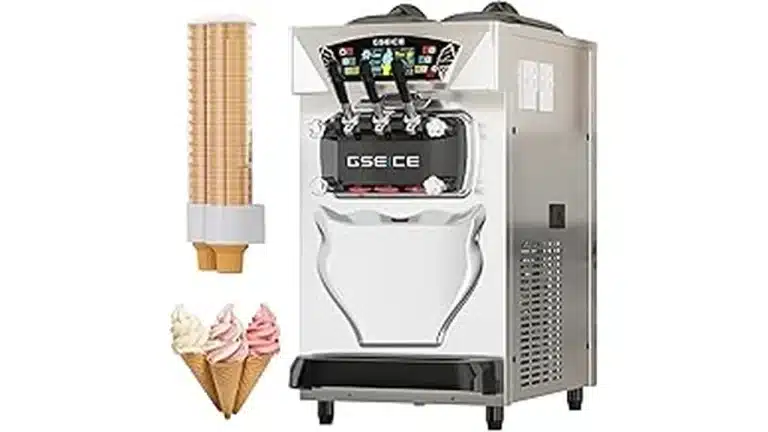
Continuous freezers are used in large-scale industrial production. The liquid base and air are pumped into the machine at the same time, and the mixture exits as finished ice cream. These machines can produce hundreds of gallons per hour.
- Air is injected under pressure through a separate metering system, not folded in from a headspace.
- The operator dials in the exact overrun percentage, typically 80 to 120 percent.
- Continuous freezers produce a more uniform texture than batch freezers because air distribution is precisely controlled.
Home-Style Canister Machines
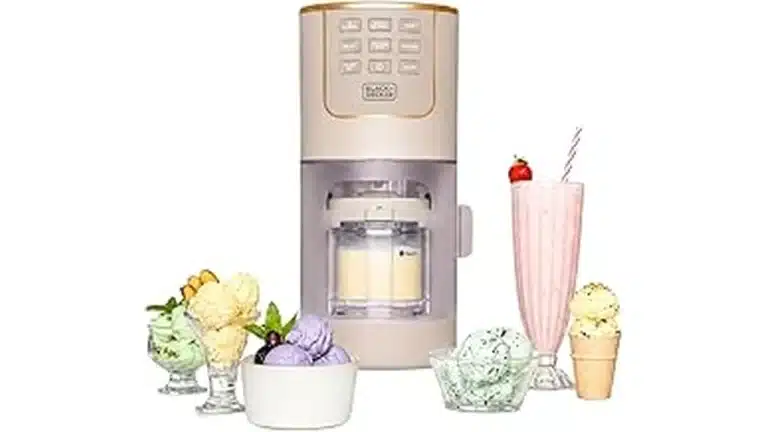
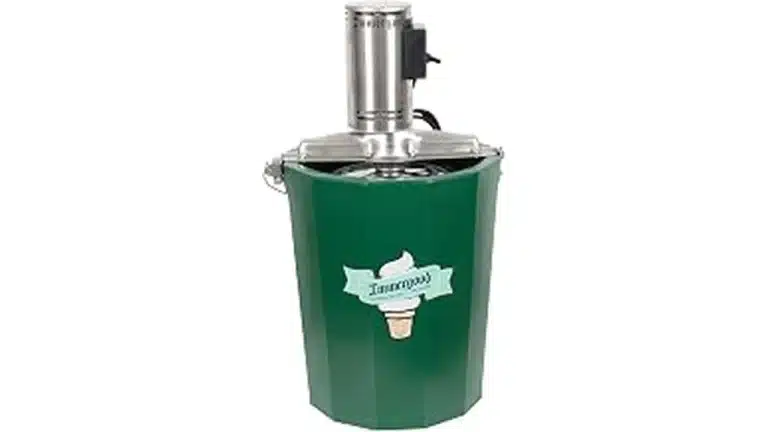
Home ice cream makers, like those from or the classic Donvier models, use a pre-frozen canister. The canister is frozen solid before use, and the dasher is turned by hand or a small motor.
- Air incorporation depends on how fast you crank the handle or how powerful the motor is.
- Home machines typically achieve 15 to 30 percent overrun, resulting in a denser, often icier texture.
- No refrigeration system exists in the machine itself, so the temperature rises during churning and air incorporation is less effective.
| Feature | Batch Freezer | Continuous Freezer | Home Canister |
|---|---|---|---|
| Air Incorporation Method | Folding from headspace | Pressurized injection | Manual folding |
| Typical Overrun | 40-70% | 80-120% | 15-30% |
| Batch Size | 1-6 gallons | Continuous | 1-2 quarts |
| Cost Range | $3,000-$20,000 | $50,000-$500,000 | $50-$300 |
| Best For | Small shops, premium product | Industrial production | Home use |
What Happens During the Churning Process Step by Step
The process of how ice cream makers churn air into frozen dessert base follows a specific sequence. Each step builds on the previous one to create the final structure.
- Base chilling. The liquid base enters the freezing chamber at around 40°F. The refrigerant immediately starts drawing heat out of the mixture through the metal wall.
- Ice nucleation. As the base contacts the cold wall, tiny ice crystals begin to form. These crystals are about 1-5 micrometers in size at this stage.
- Dasher scraping. The rotating dasher scrapes the frozen layer off the wall and pushes it into the center of the chamber. This exposes fresh liquid to the cold surface.
- Air incorporation. The scraping action creates turbulence that folds air from the top of the chamber down into the liquid. The fat globules in the base trap these air bubbles.
- Crystal size reduction. The dasher continues to break down ice crystals as they grow, keeping most crystals under 30 micrometers. Larger crystals create a gritty texture.
- Freeze concentration. As water freezes out of the base, the remaining liquid becomes more concentrated with sugar and fat, which lowers the freezing point further.
- Draw and hardening. The ice cream exits the machine at about 20°F to 24°F. It then goes into a hardening freezer at -20°F to -30°F, where the remaining water freezes.
Important: The dasher is not just a mixer. It is the primary tool that controls both crystal size and air incorporation. A well-designed dasher can double the overrun of a poorly designed one using the same base and freezer.
Factors That Affect Air Incorporation
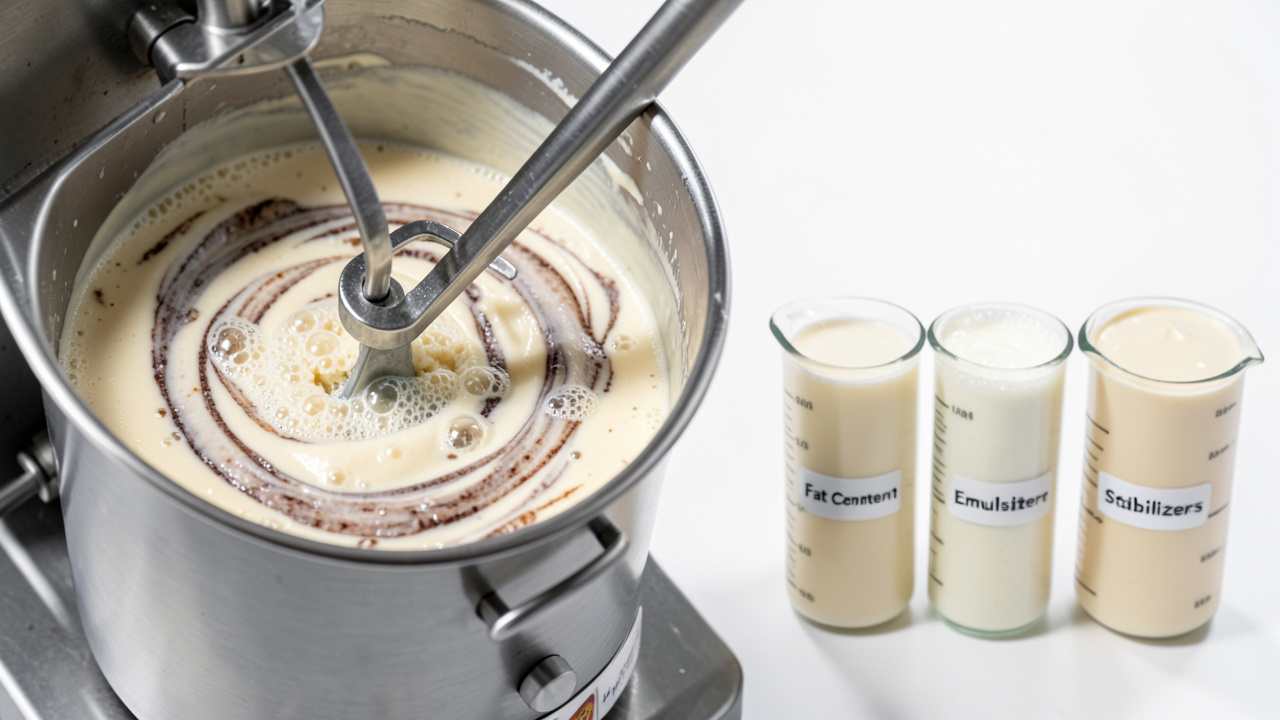
Multiple variables determine how effectively ice cream makers churn air into frozen dessert base. Changing any one factor shifts the final texture and overrun.
Fat Content
Fat is the main air-holding agent in ice cream. The USDA requires at least 10 percent milk fat for a product to be called ice cream. Higher fat levels, around 14 to 16 percent, create more stable air bubbles. According to the Journal of Dairy Science, ice cream with 14 percent fat holds 30 percent more air than ice cream with 10 percent fat under the same churning conditions.
Sugar and Sweeteners
Sugar lowers the freezing point of the base, which changes how much water freezes during churning. More sugar means less ice and more liquid available to trap air. However, too much sugar can make the base too thick for the dasher to fold air effectively.
Stabilizers and Emulsifiers
Ingredients like guar gum, carrageenan, and mono- and diglycerides help stabilize the air bubbles once they form. These compounds thicken the liquid phase and prevent air from escaping during the hardening process.
Warning: Skimping on stabilizers is a common mistake in home ice cream making. Without them, the air you churn in will escape during freezing, leaving you with a dense, icy block. A small amount of cornstarch or gelatin can help.
Dasher Speed and Design
Faster dasher speeds fold in more air but also generate more friction heat. This heat can partially melt the ice cream, reducing overrun. The ideal speed depends on the machine and the base formula. Most commercial batch freezers run at 40 to 60 RPM for premium bases and 60 to 80 RPM for lighter products.
Freezing Temperature
The temperature of the freezing chamber wall controls how fast ice forms. According to research from ASHRAE, the optimal wall temperature for air incorporation is between -15°F and -25°F. Warmer walls produce larger ice crystals and less stable air bubbles. Colder walls freeze the base too fast, preventing the dasher from folding in enough air.
Common Myths vs Facts About Ice Cream Air Content
Myth 1: More Air Means Lower Quality Ice Cream
Some air is essential for proper texture. The issue is not the presence of air but the size and distribution of the air bubbles. Premium ice cream has small, evenly distributed bubbles. Cheap ice cream has large, uneven bubbles that give a foamy, low-quality feel. According to the International Dairy Foods Association, overrun alone does not determine quality.
Myth 2: Ice Cream with No Air Is Better for You
Dense ice cream with very low overrun is rock-hard at freezer temperature and nearly impossible to scoop. It also tends to have a higher calorie density per spoonful because there is more solid material in the same volume. A moderate amount of air makes the product more enjoyable and easier to portion.
Myth 3: Commercial Ice Cream Makers Just Pump Air Into the Base
Industrial continuous freezers do inject air under pressure, but that is only part of the process. The dasher still must distribute that air evenly throughout the base and maintain small bubble size. Simply pumping in air without proper dasher action would create large, unstable bubbles that collapse during hardening.
Pro Tips for Better Air Incorporation at Home
- Pre-chill your base to 38-40°F before putting it in the machine. A warm base takes longer to freeze, giving the dasher more time to work air in before the mixture stiffens.
- Use a base with at least 14% butterfat if you want a creamy, scoopable texture. Heavy cream and whole milk in the right ratio give your dasher more fat to stabilize air bubbles.
- Add a small amount of stabilizer like guar gum or cornstarch to your base. Even one-quarter teaspoon per quart helps hold the air you churn in during the hardening phase.
- Fill your machine canister no more than half full when using a home machine. This leaves enough headspace for the dasher to fold air down into the base effectively.
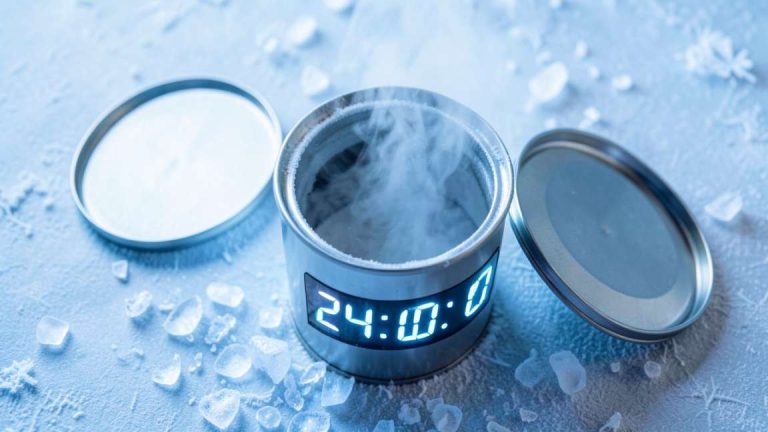
- Use the coldest possible freezer bowl for your home machine. Freeze the canister for at least 24 hours at the coldest setting. A warmer bowl cannot freeze the base fast enough to trap air properly.
Frequently Asked Questions
What is the ideal overrun percentage for homemade ice cream?
Home ice cream makers typically achieve 15 to 30 percent overrun due to their limited freezing power and slower dasher speeds. This is lower than commercial machines but still produces a scoopable texture. To increase overrun, use a higher fat base and pre-chill it thoroughly.
Can you add too much air to ice cream?
Yes. If overrun exceeds 140 percent, the ice cream becomes foamy and loses its creamy mouthfeel. The air bubbles grow too large and the structure collapses, leaving a watery, icy mess. Commercial manufacturers set overrun limits to avoid this problem.
How does the dasher design affect air incorporation?
The dasher blade angle, number of blades, and clearance from the chamber wall all determine how efficiently the machine folds in air. A two-blade dasher with a 15-degree angle is standard for premium batch freezers. Blades with steeper angles or more blades tend to work in more air but also generate more friction heat.
Why does my homemade ice cream come out icy instead of creamy?
Icy homemade ice cream usually results from low fat content, insufficient overrun, or slow freezing. The ice crystals grow too large because the dasher is not churning fast enough or the base is not cold enough. Adding an egg yolk or stabilizer and using a pre-frozen canister at maximum cold helps.
Does the type of sugar affect air incorporation?
Yes. Different sweeteners have different freezing point depression effects. Sucrose (table sugar) lowers the freezing point by about 2°F per 100 grams per liter. Using corn syrup or invert sugar in combination with sucrose creates a smoother texture because these sugars interfere with crystal formation and help stabilize air bubbles.
Tip: If your ice cream tastes too sweet but still feels icy, try replacing one-quarter of the sugar with corn syrup. Corn syrup adds body and helps stabilize air without increasing sweetness as much as sugar does.
Final Thoughts
The process of how ice cream makers churn air into frozen dessert base is a blend of mechanical action and ingredient chemistry. The dasher, freezing temperature, and base formula all work together to create the light, scoopable texture people expect from quality ice cream. Understanding overrun and the factors that control it helps both home cooks and professional makers produce better results every batch.