How Dough Hydration Levels Affect Cooking in High-Heat Ovens
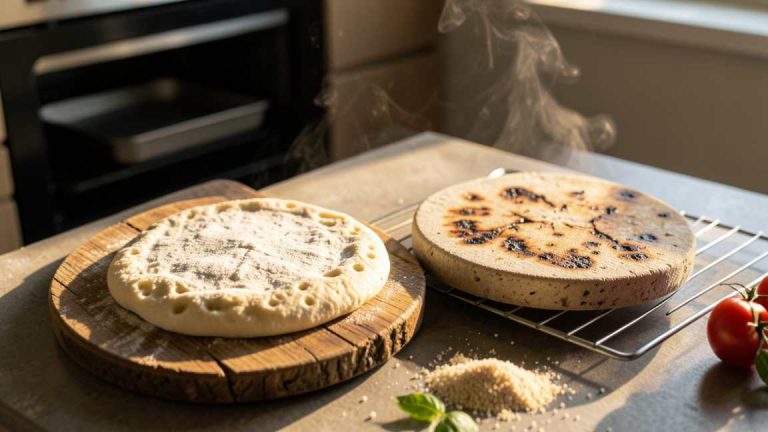
Dough hydration level directly controls steam generation and crust formation in high-heat ovens, with higher percentages (70-80%) producing an open crumb and crisp crust while lower hydration (50-60%) yields denser results. Ovens exceeding 500°F require careful hydration adjustment to balance browning and interior doneness, exemplified by Neapolitan pizza dough at 60-65% hydration for 900°F wood-fired ovens. Home ovens with baking steel at 500-550°F often perform best with hydration near 70%, but require longer preheating and moisture management to prevent over-browning.
Hydration level is the amount of water relative to flour in your dough. Bakers measure it as a percentage of the flour weight.
Quick Verdict: In short, dough hydration level is the water-to-flour ratio by weight. A 70% hydration dough uses 70 grams of water per 100 grams of flour. Higher hydration (70-80% or more) produces an open crumb and crisp crust in high-heat ovens. Lower hydration (50-60%) gives a denser, chewier result. High heat above 450F (230C) amplifies these effects.
Key Takeaways
- Dough hydration directly controls steam generation inside the oven, which affects crust formation and crumb structure.
- High-heat ovens (500F and above) require careful hydration adjustment to avoid over-browning or undercooked interiors.
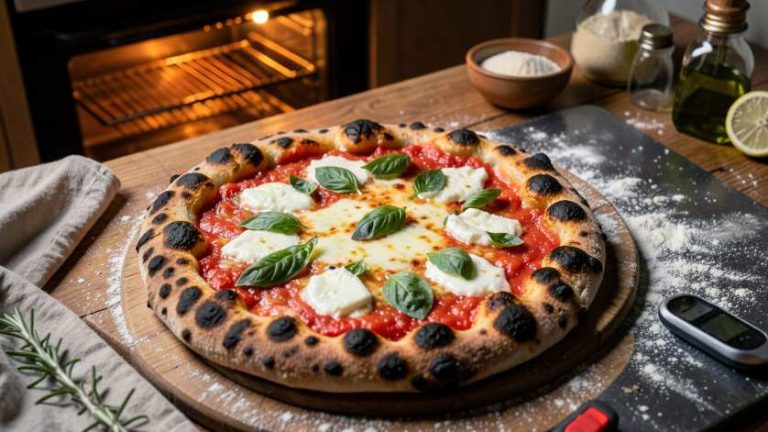
- Professional Neapolitan pizza dough uses 60-65% hydration to achieve a tender, charred crust at 900F (480C).
- Using a high-hydration dough in a home oven demands longer preheating times and moisture management techniques.
- The ideal hydration for your oven depends on its maximum temperature, heat retention, and steam injection capability.
What Is Dough Hydration Level?
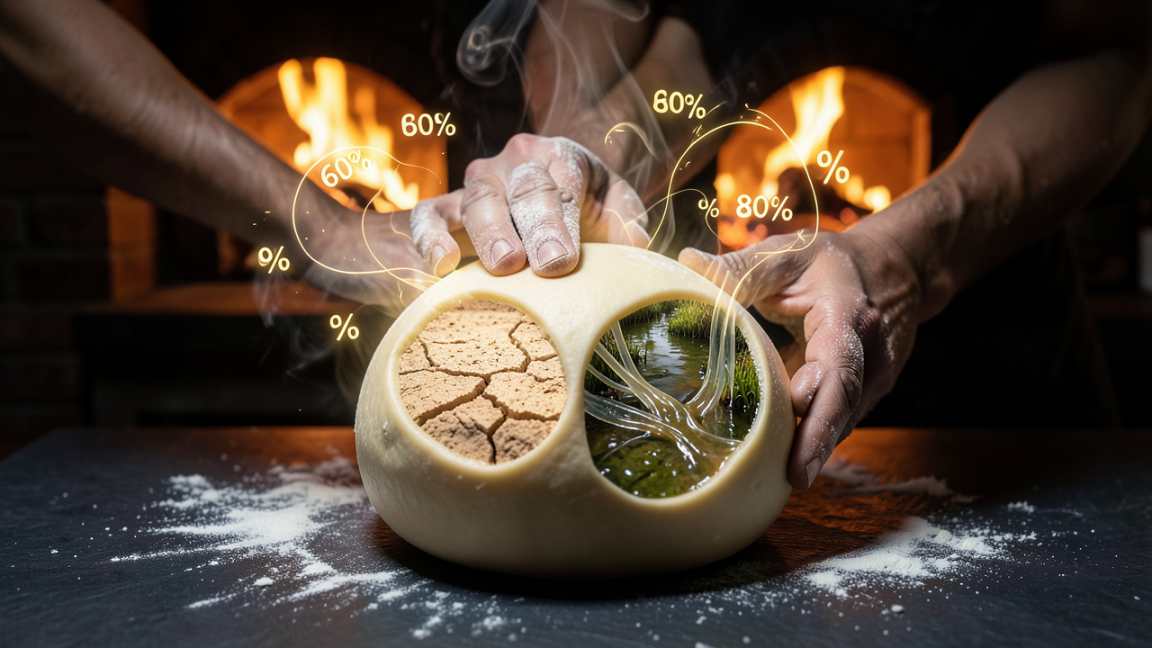
How dough hydration levels affect cooking in high-heat ovens starts with a simple definition. Hydration is the ratio of water weight to flour weight in your dough. For example, 1000 grams of flour with 700 grams of water equals 70% hydration. This includes water from all sources, including preferments and ice.
Baker’s percentages make it easy to compare recipes. A standard white bread dough sits around 60-65% hydration. High-hydration ciabatta or focaccia can reach 80-85%. Sourdough starters often hit 100% hydration. The water content changes how the dough handles, rises, and eventually bakes.
According to the, professional bakers consider 65% hydration the baseline for most lean doughs. Go above 75%, and you enter a zone where dough becomes extremely sticky and requires special handling. But in high heat, that extra water can create an explosive oven spring.
How Does Hydration Affect Dough Behavior in High Heat?
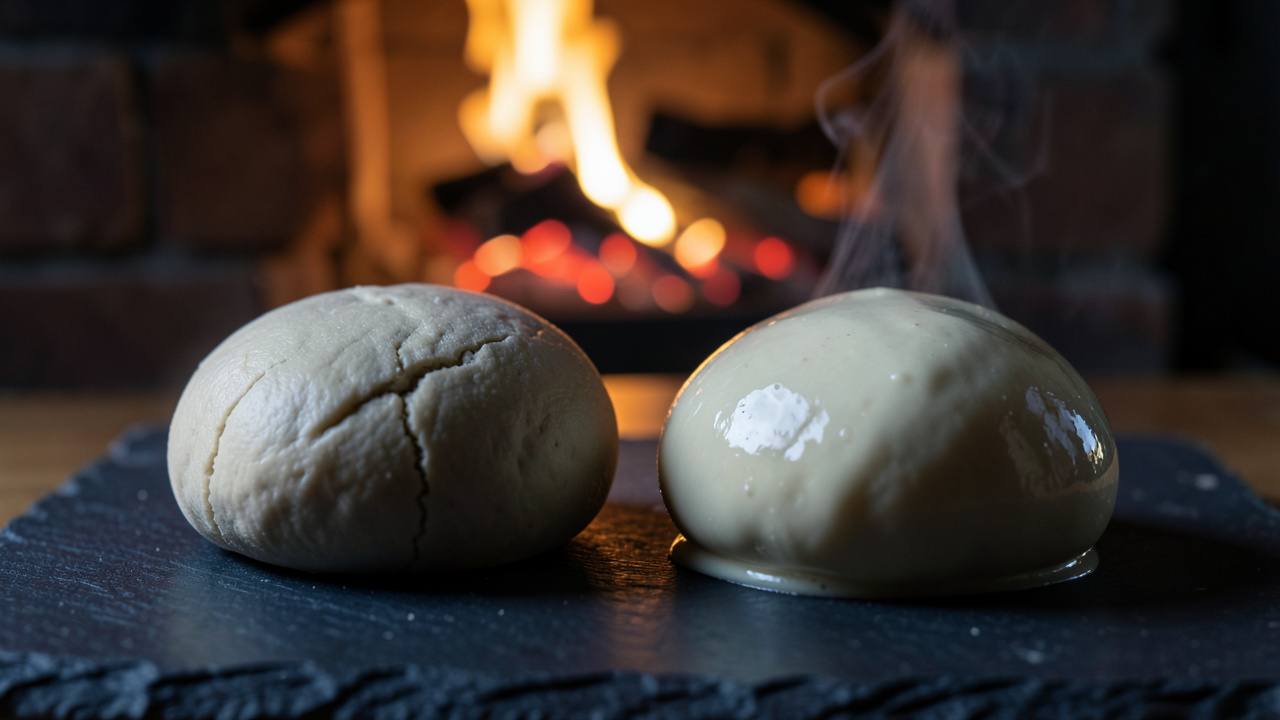
High heat transforms dough chemistry. Water turns to steam rapidly, creating internal pressure that pushes the dough upward. A higher hydration dough produces more steam, leading to greater oven spring and a lighter crumb. However, too much steam can collapse the structure if the dough lacks enough protein (gluten) to hold the bubbles.
When the oven exceeds 500F (260C), the Maillard reaction and caramelization accelerate. Sugar and proteins react to form a dark, flavorful crust. High-hydration doughs have more free water on the surface, which evaporates slowly, delaying crust setting and allowing more expansion. That is why many artisan bread recipes call for 75% hydration plus steam in the oven.
Low hydration doughs (50-55%) set their crust faster. They expand less and produce a denser, crispier texture. Think bagels or pretzels. These doughs benefit from very high heat because they need quick surface cooking to avoid drying out the interior.
The Role of Gluten Structure
Gluten forms a stretchy network that traps gas. Higher hydration weakens gluten bonds, making the dough extensible. In a hot oven, that extensibility allows big air pockets to form. But if the gluten is too weak, the pockets collapse. That is why high-hydration doughs often demand strong flours with around 13-14% protein. According to, using a flour with 12% or higher protein ensures the dough can handle the steam pressure.
Temperature also affects gelatinization. Starch granules absorb water and swell at about 150F (65C). In high heat, this happens fast. High hydration means more water available for gelatinization, leading to a softer, moister crumb. Low hydration limits starch swelling, giving a firmer bite.
The Science Behind High-Heat Ovens
High-heat ovens include wood-fired pizza ovens, deck ovens, and home ovens equipped with baking steel. Each type transfers heat differently: conductive, convective, and radiant. For how dough hydration levels affect cooking in high-heat ovens, you need to know your oven’s heat profile.
Wood-Fired and Brick Ovens (700-900F)
These ovens deliver intense radiant heat from the dome and conductive heat from the floor. Dough bakes in 60-90 seconds. High hydration (65-70%) works best because the rapid heat sets the crust before the interior dries out. Too low hydration results in a hard, cracker-like crust. Too high (above 75%) risks burning the outside while leaving the center undercooked. According to the, true Neapolitan pizza uses 60-65% hydration with type 00 flour.
Home Ovens with Baking Steel (500-550F)
Home ovens max out around 500-550F. They cannot deliver the same radiant flux as a brick oven. To compensate, bakers often use higher hydration dough (70-75%) and steam injection (ice cubes or a spray bottle). The extra moisture ensures enough steam for good oven spring. A low hydration dough in a home oven will often come out pale and dense. According to, using 70% hydration with a preheated baking steel can produce crust comparable to a professional pizza oven.
Convection Ovens (400-450F)
Convection ovens circulate hot air, which speeds up browning but can dry out the surface. Dough with 60-65% hydration is typical. Higher hydration may lead to excessive steam loss and a thick, tough crust. Covering the dough with a lid or using a Dutch oven can trap moisture and improve results.
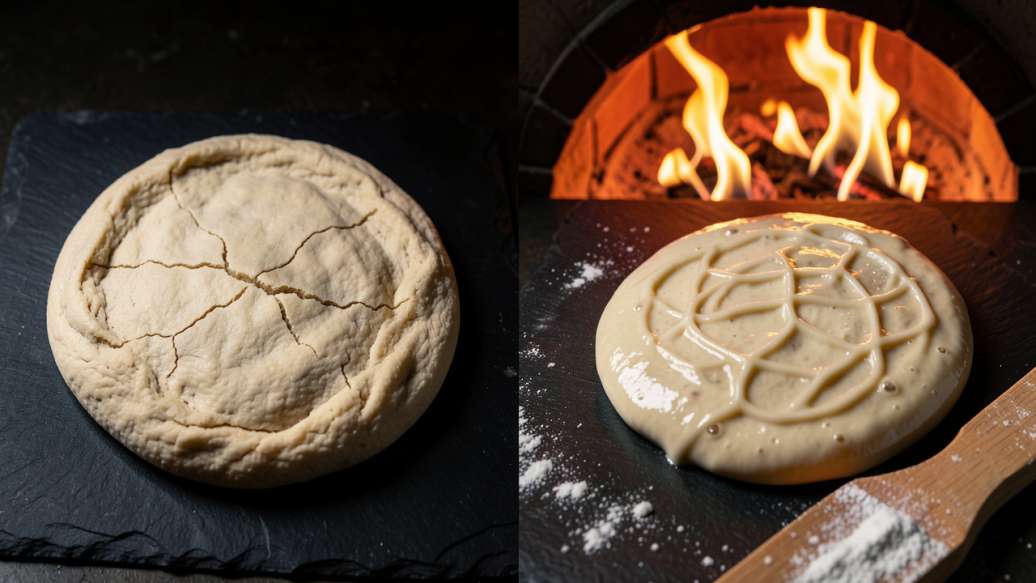
Comparison Table: Low Hydration vs High Hydration at High Heat
| Hydration Level | Crust | Crumb | Oven Spring | Best For |
|---|---|---|---|---|
| Low (50-55%) | Thick, crunchy, pale | Dense, tight | Minimal | Bagels, pretzels, crackers |
| Medium (60-65%) | Thin, crisp, well-browned | Open, airy | Good | Neapolitan pizza, focaccia, artisan bread |
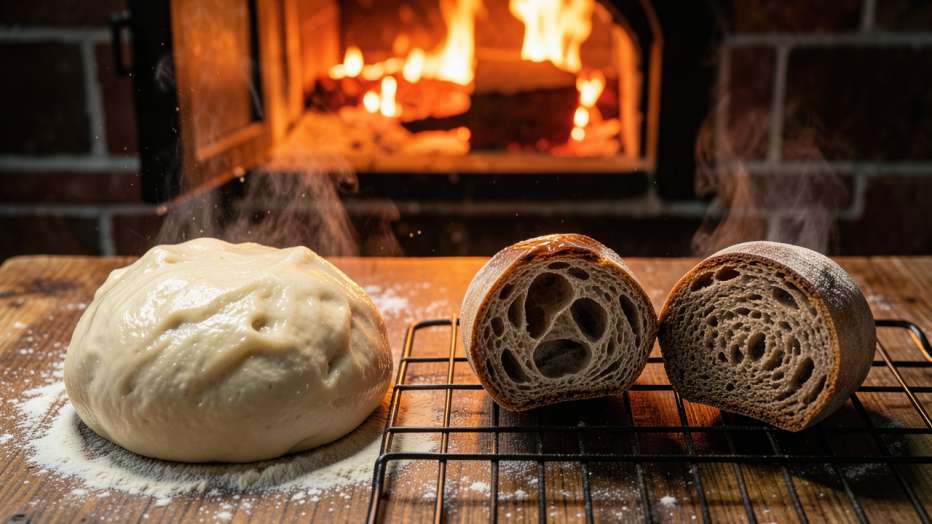
| High (70-80%) | Thin, blistered, deeply caramelized | Very open, irregular | Excellent | Ciabatta, sourdough boules, dimpled flatbreads |
How to Adjust Hydration for Your Oven
Follow these steps to find the perfect hydration percentage for your setup.
- Measure your oven’s true maximum temperature with an independent thermometer. Many home ovens run 25-50F cooler than the dial shows. A consistent 500F or higher opens up options for higher hydration.
- Start with a baseline recipe at 65% hydration. Bake a test batch and note the crust color, oven spring, and interior doneness. If the crust is pale and the crumb is dense, increase hydration by 2-3% on your next try.
- Control the oven environment. For high heat, adding steam in the first 10 minutes improves results. Use a spray bottle or place a skillet of boiling water on the bottom rack. Moisture delays crust setting, letting the dough expand more.
- Watch the bake time. High-hydration doughs require shorter bake times because they brown faster. Check at 80% of the suggested time. Use a digital instant-read thermometer – the internal temperature for most breads should reach 205-210F (96-99C).
- Experiment with flour. Strong bread flour supports higher hydration. If you use all-purpose flour, reduce hydration by 5-10% to avoid a slack dough that flattens in high heat.
Important: Always use a scale to measure ingredients. Volume measures are too inconsistent, especially for high-hydration doughs. A 1% difference in water can change the entire baking outcome.
Common Myths About High Hydration and Heat
Myth: Wet dough is impossible to shape
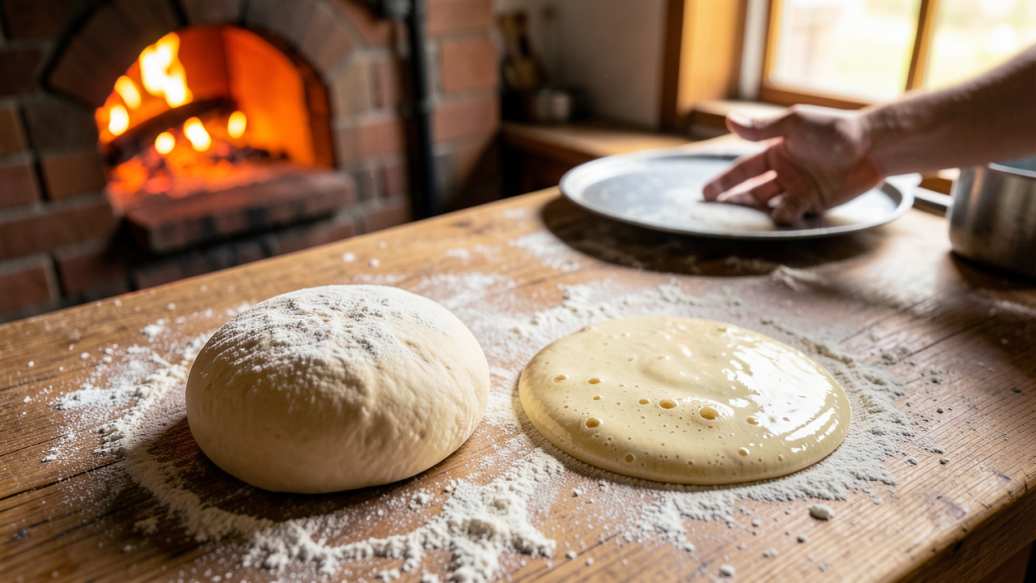
Many bakers avoid high hydration because the dough feels sticky. In reality, with proper technique (wet hands, minimal kneading, and coil folds), you can handle 80% hydration dough. The stickiness comes from free water, not weak gluten. Use a bench scraper and flour sparingly.
Myth: High heat burns high-hydration dough
It is true that a 75% hydration dough will brown faster than a 55% one. But high heat does not automatically burn it. The key is oven positioning and moisture. If the dough is too close to the heating element, reduce heat slightly or add steam to slow browning. Many professional pizza bakers bake at 900F with 65% hydration and achieve beautiful char without burning.
Myth: You need a special oven for high-hydration bread
Home ovens can produce excellent crust with 70-75% hydration. The trick is to preheat a baking steel or stone for 45-60 minutes and use steam. According to, a home oven set to 500F with a preheated steel can match the performance of a professional deck oven for many artisan breads.
Tip: If your high-hydration dough sticks to the peel, use semolina or cornmeal instead of flour. They act like ball bearings and prevent sticking without changing hydration.
Pro Tips for High-Heat Baking with Different Hydrations
- For low hydration (50-55%): Use a shaping method with tension (tight rounds or cylinders) to encourage a smooth crust. Bake at the highest temperature your oven can sustain for 12-15 minutes. Example: Montreal-style bagels boil first then bake at 500F for a chewy exterior.
- For medium hydration (60-65%): This is the sweet spot for most home bakers. The dough is manageable, the oven spring is predictable, and the crust develops nicely. Prefer the autolyse technique (resting flour and water for 20-30 minutes before adding yeast and salt) to maximize extensibility without extra water.
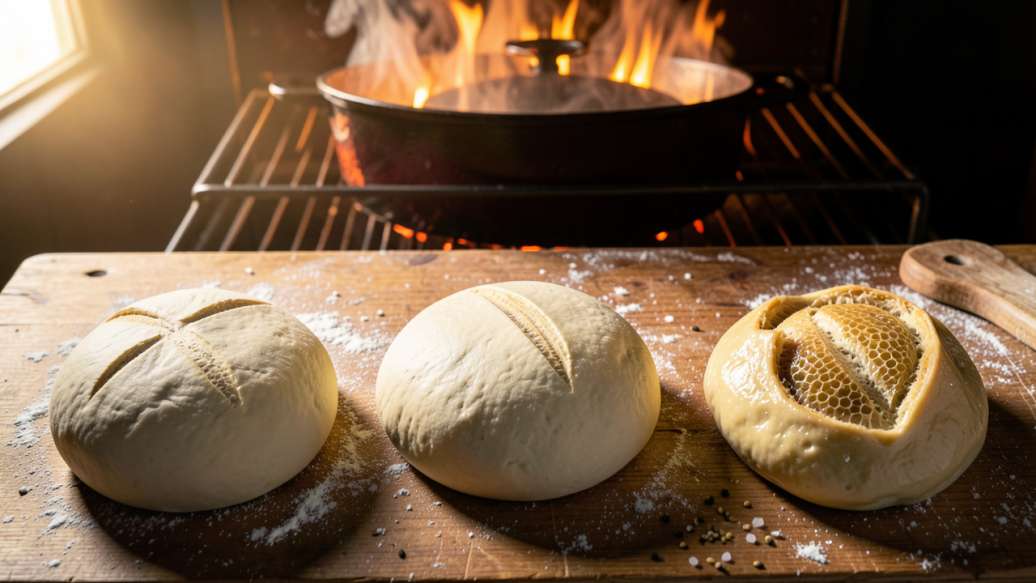
- For high hydration (70-80%): Use a proofing basket (banneton) and a Dutch oven for the first 30 minutes of baking. The lid traps steam, mimicking a professional steam-injected oven. Remove the lid to finish browning. This method works perfectly for sourdough at 75% hydration.
- Manage your oven spring by scoring the dough deeply. A diagonal slash about 1/2 inch deep allows the dough to expand in a controlled direction. Without scoring, the steam may escape randomly, creating ugly fissures.
- Cool completely before slicing. High-hydration loaves have more residual moisture, so the crumb needs 1-2 hours to set. Cutting too early compresses the air pockets and ruins the texture.
Frequently Asked Questions
What is the best hydration for Neapolitan pizza dough?
Neapolitan pizza, certified by the AVPN, uses 60-65% hydration. The dough bakes at 800-900F for 60-90 seconds. Lower hydration creates a hard crust, higher hydration makes the pizza too soft to hold the toppings.
Does higher hydration always mean a better crumb?
Not always. A better crumb depends on both hydration and fermentation. Overproofed high-hydration dough can collapse into a dense, gummy texture. Proper bulk fermentation at 70-75F (21-24C) for 3-4 hours is essential. According to, underfermentation in a high-hydration dough leads to a tight crumb despite the high water content.
Can I use all-purpose flour for high-hydration dough in a hot oven?
You can, but the results will be flatter and less open. All-purpose flour has 10-11% protein, too low to trap steam from 75% hydration. For high heat, use bread flour (12-13% protein) or type 00 flour for pizza.
How do I prevent the bottom of my bread from burning in a hot oven?
If the bottom burns before the top browns, place a baking sheet on the rack below to deflect direct heat. Alternatively, use a double-layer stone (two stones thin layers thick) to buffer the bottom. High hydration doughs also benefit from a slightly lower bottom rack position.
What happens if I use too much water in a high-heat oven?
Excessive water (above 80% with low-gluten flour) can cause the dough to spread flat instead of rising. The steam pressure may blow out the sides or create a large hole in the middle (called a “flying top”). Reduce hydration by 5% if you see these signs.
Resources and Tools
- ThermoWorks Thermapen ONE – Instant-read thermometer to check internal dough temperature.
- Bread Bakers Guild of America – Professional resources on hydration and high-heat baking.
- King Arthur Baking Company – Free hydration calculator and baking guides.
- Serious Eats Pizza Lab – Science-based articles on dough hydration and oven temperature.
Final Thoughts
Hydration is not just a number – it is the main dial controlling how dough behaves in a hot oven. Low hydration gives crunch; high hydration gives an open, airy crumb. Match your hydration to your oven’s heat output and your flour’s protein strength. Start at 65%, experiment by small increments, and you will unlock the full potential of high-heat baking.