Why Indoor Pizza Ovens Need Proper Kitchen Ventilation Setup
Indoor pizza ovens require proper kitchen ventilation because they generate extreme heat up to 900°F and produce carbon monoxide, smoke, and grease vapors that standard hoods cannot handle. A dedicated high-CFM exhaust system with stainless steel ductwork and makeup air is essential to remove these hazards, prevent fire risks, and comply with building codes that mandate minimum ventilation rates for high-heat cooking appliances. Without this setup, homeowners face serious dangers including carbon monoxide poisoning, fire, and failed safety inspections.
An indoor pizza oven produces extreme heat, smoke, and invisible gases that can endanger your home without a proper exhaust system. This guide explains why ventilation is critical for safety, code compliance, and oven performance.
Quick Verdict: Simply put, indoor pizza ovens reach 700-900°F and release carbon monoxide, smoke, and grease vapors that standard kitchen hoods cannot handle. A dedicated ventilation system removes these hazards, prevents fire risks, and meets building codes. Without it, you risk carbon monoxide poisoning, fire, and failed inspections.
Key Takeaways
- Indoor pizza ovens require mechanical exhaust ventilation rated for high heat to remove carbon monoxide, smoke, and grease-laden air safely.
- Without proper ventilation, indoor pizza ovens create fire hazards, degrade indoor air quality, and violate most residential building codes.
- A compliant ventilation system includes a high-CFM range hood, stainless steel ductwork, and makeup air to maintain balanced air pressure in the home.
- Building codes typically mandate minimum ventilation rates of 100 CFM per linear foot of cooktop for high-heat cooking appliances like pizza ovens.
- Professional installation of a ventilation system for an indoor pizza oven costs between $1,500 and $5,000 depending on ductwork complexity and local code requirements.
The Science Behind Pizza Oven Heat and Smoke
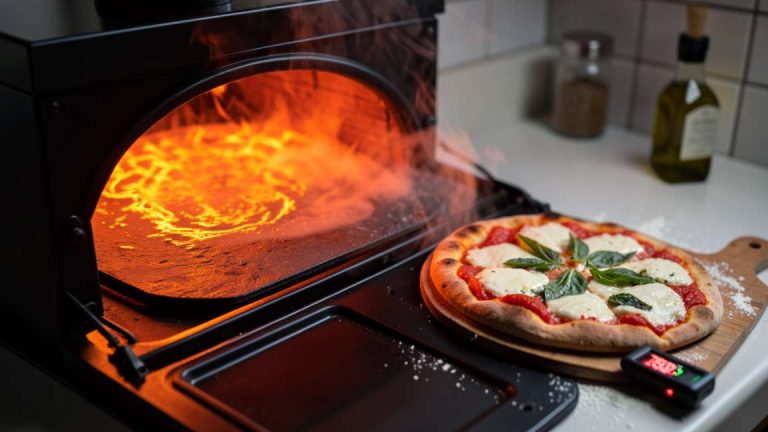
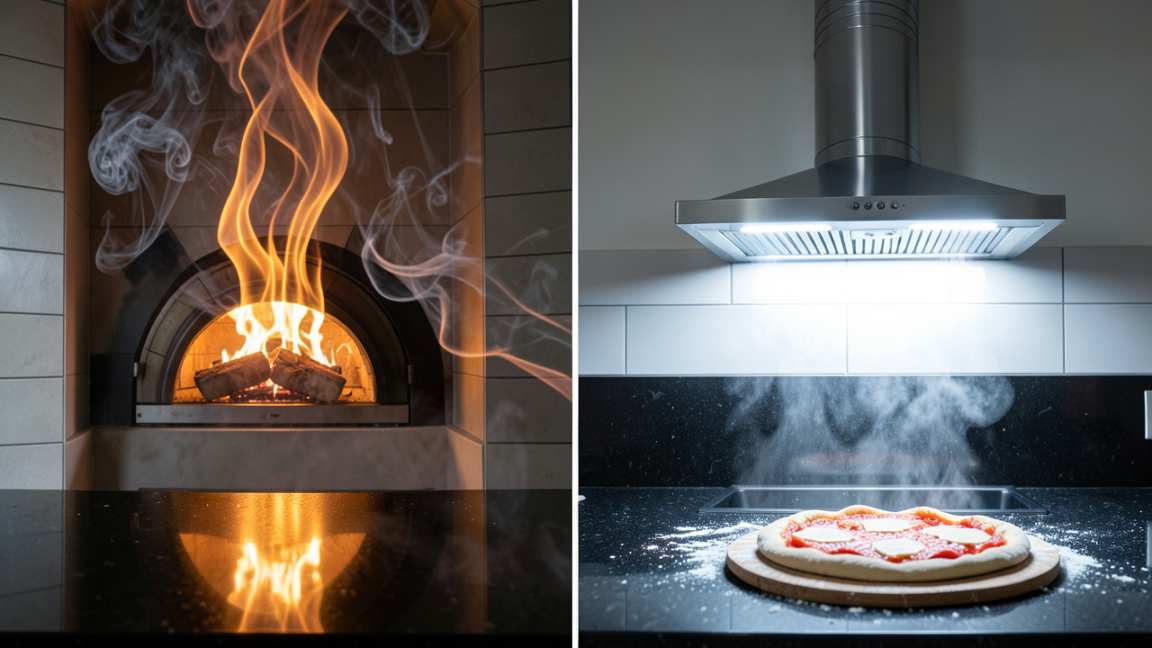
Indoor pizza ovens operate at temperatures between 700°F and 900°F. That heat is far beyond what standard cooktops produce. The extreme temperature creates unique challenges for your kitchen.
Wood-fired and gas pizza ovens burn fuel inside the cooking chamber. This combustion produces carbon monoxide (CO), nitrogen dioxide, and fine particulate matter. These substances are dangerous in enclosed spaces.
According to the, carbon monoxide poisoning sends over 100,000 people to emergency rooms each year in the United States. Indoor pizza ovens without proper exhaust can produce CO levels that exceed safe limits within minutes.
Warning: Carbon monoxide is odorless and colorless. You cannot detect it without a CO alarm. Even moderate exposure causes headaches, dizziness, and nausea. At high levels, it can be fatal. Always install CO detectors near any indoor pizza oven.
The heat itself also poses problems. High temperatures can damage cabinets, melt electrical wiring, and degrade standard range hood components. Most residential hoods use plastic or aluminum parts that fail above 300°F.
Grease is another concern. Pizza ovens produce grease vapors from cheese and oil. These vapors condense inside ductwork and create a flammable residue. According to the, cooking equipment causes 49% of all home fires in the United States. Unvented grease buildup is a major contributor.
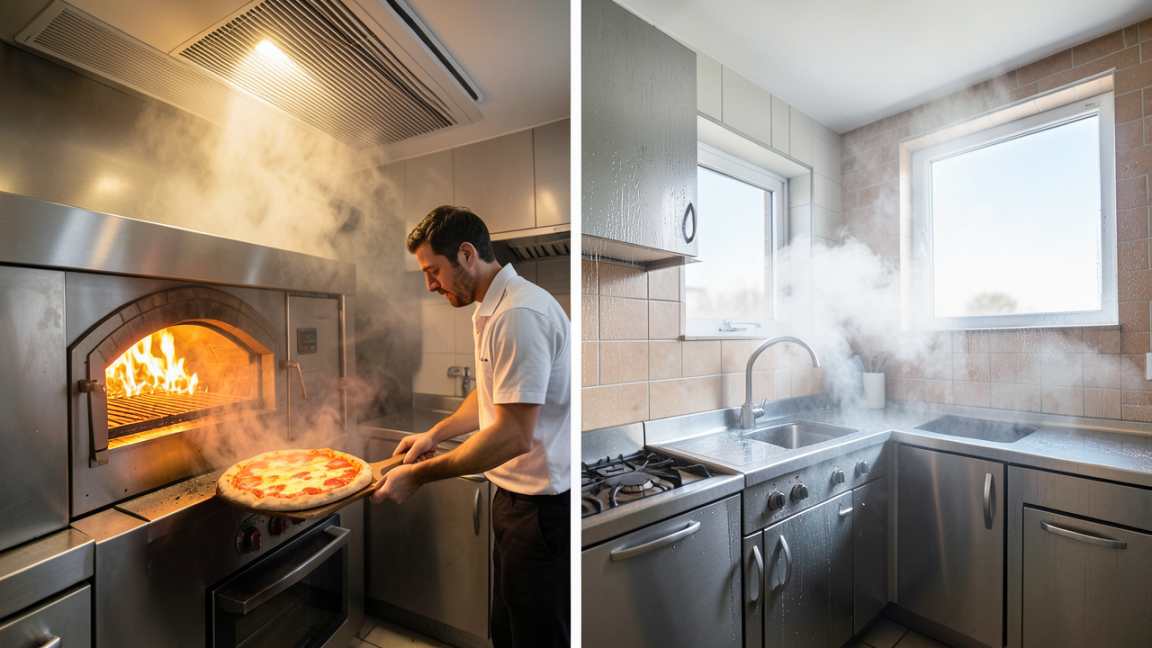
What Proper Ventilation Does for Your Kitchen
A well-designed ventilation system does three critical things for an indoor pizza oven. It removes combustion gases, captures heat, and controls grease.
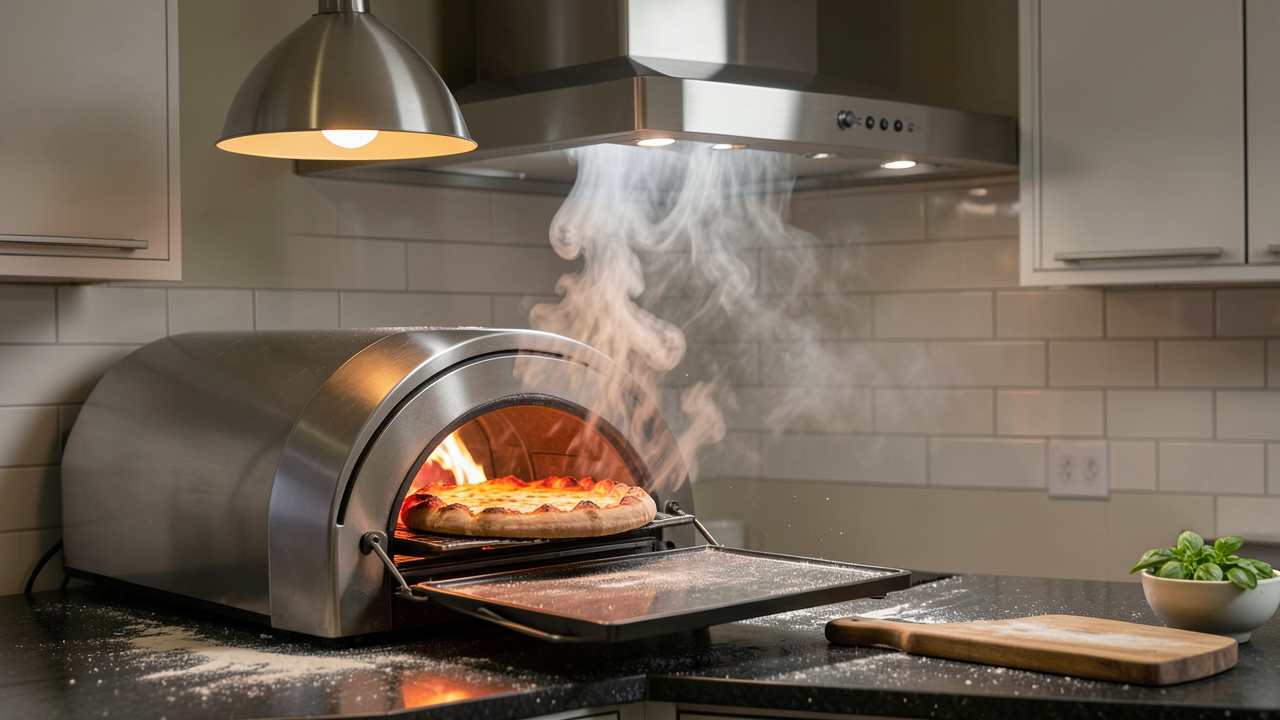
The primary job of the exhaust hood is to capture airborne contaminants at the source. The hood pulls smoke, steam, and gases into the ductwork and expels them outside. This keeps the air in your kitchen safe to breathe.
Heat removal is equally important. The ventilation system pulls hot air away from the oven surface. This protects nearby cabinets, countertops, and people standing near the oven. It also helps your air conditioner run less, saving energy.
Grease filtration is the third function. High-quality hoods include mesh or baffle filters that trap grease before it enters the ductwork. This prevents dangerous grease buildup inside the ducts.
Important: Standard microwave vent hoods and downdraft vents are not designed for pizza ovens. They lack the CFM rating, heat tolerance, and grease filtration needed. Always use a dedicated range hood or commercial-grade exhaust system.
A balanced ventilation system also includes makeup air. When the exhaust fan pulls air out of the kitchen, it creates negative pressure. Makeup air ducts bring fresh air back in. This prevents backdrafting from gas water heaters, furnaces, and fireplaces.
The requires makeup air for exhaust systems rated above 400 CFM. Pizza oven hoods often exceed this threshold, so makeup air is mandatory in most jurisdictions.
Building Codes and Safety Standards
Indoor pizza oven installation is subject to multiple building codes and safety standards. Understanding these requirements is essential before you buy or install an oven.
The publishes NFPA 96, which covers ventilation for commercial cooking operations. Many residential jurisdictions now adopt similar standards for high-heat residential appliances.
Key code requirements include:
- Minimum clearance of 18 inches between the cooktop surface and the bottom of the hood for gas ovens.
- All ductwork must be constructed of galvanized or stainless steel with a minimum thickness of 16 gauge.
- Ducts must be smooth-walled with no sharp turns to prevent grease accumulation and maintain airflow.
- The exhaust system must terminate outside the building, not into an attic, crawlspace, or garage.
- Fire-rated construction may be required for walls and ceilings near the oven and ductwork.
The recommends that ventilation systems for high-heat cooking move at least 100 CFM per linear foot of cooktop. For a standard 36-inch pizza oven, that means a minimum of 300 CFM. Many professional installers recommend 600 CFM or higher for adequate performance.
Local building departments often have additional requirements. Some cities require a permit for pizza oven installation, including a ventilation system review. Always check with your local building official before starting any work.
Underwriters Laboratories (UL) also tests and certifies ventilation hoods for safety. Look for UL 710 or UL 762 certification on any hood you purchase. These ratings confirm the hood can handle the heat and airflow demands of a pizza oven.
| Component | Code Requirement | Why It Matters |
|---|---|---|
| Exhaust hood | Minimum 300 CFM for 36-inch oven | Removes heat, smoke, and CO before they spread |
| Ductwork | 16-gauge stainless steel | Prevents heat damage and grease fires |
| Makeup air | Required above 400 CFM | Prevents backdrafting of other appliances |
| CO detector | Required within 15 feet of oven | Alerts you to dangerous CO levels |
| Fire-rated enclosure | 1-hour fire rating for nearby walls | Contains potential fires and protects structure |
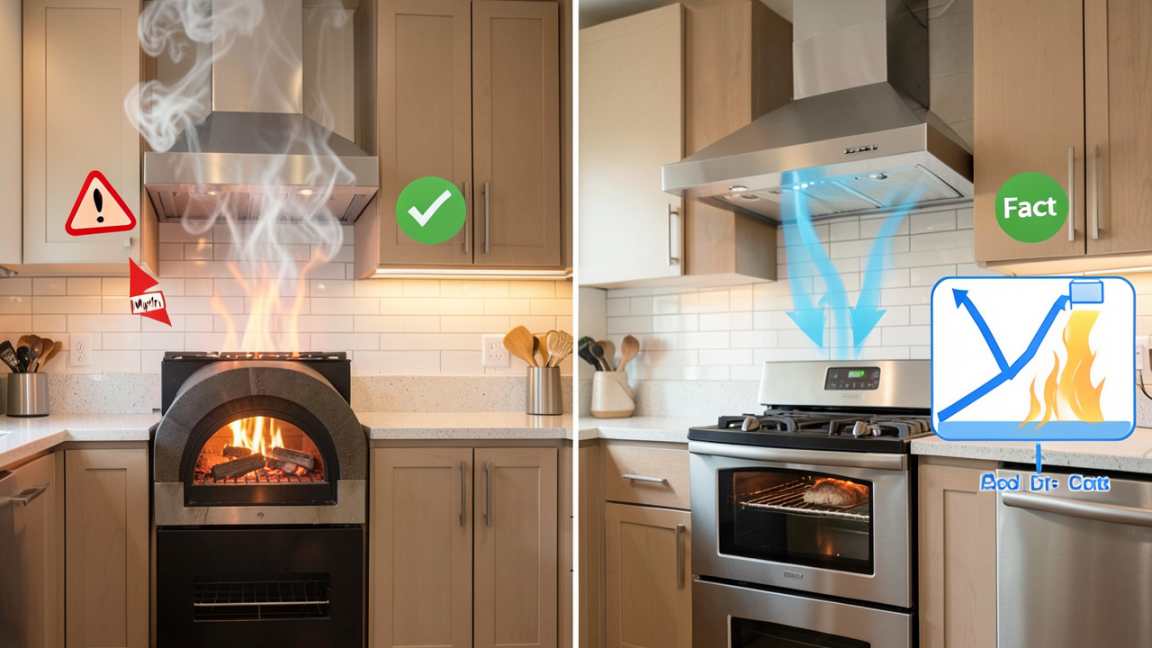
Common Myths vs Facts
Several misconceptions exist about indoor pizza oven ventilation. Knowing the facts can save you money and keep your family safe.
Myth 1: A standard kitchen range hood works fine for a pizza oven.
Fact: Standard range hoods are rated for cooktops that reach 350-450°F, not the 700-900°F of a pizza oven. They use plastic or aluminum components that can melt or warp. They also lack the CFM capacity to remove the volume of smoke and gases a pizza oven produces.
Myth 2: Opening a window provides enough ventilation for a pizza oven.
Fact: Natural ventilation through a window cannot remove combustion gases or grease vapors effectively. The states that mechanical ventilation is required when combustion appliances produce pollutants in enclosed spaces. A window cannot create the negative pressure needed to capture contaminants at the source.
Myth 3: Downdraft vents work well for pizza ovens.
Fact: Downdraft vents pull air down and away from the cooktop. They are effective for low-heat cooking but cannot capture the rising heat and smoke from a pizza oven. The heat plume from a pizza oven rises rapidly, and downdraft systems lack the capture velocity to pull it down. They also do not remove heat from the room, which can make your kitchen dangerously hot.
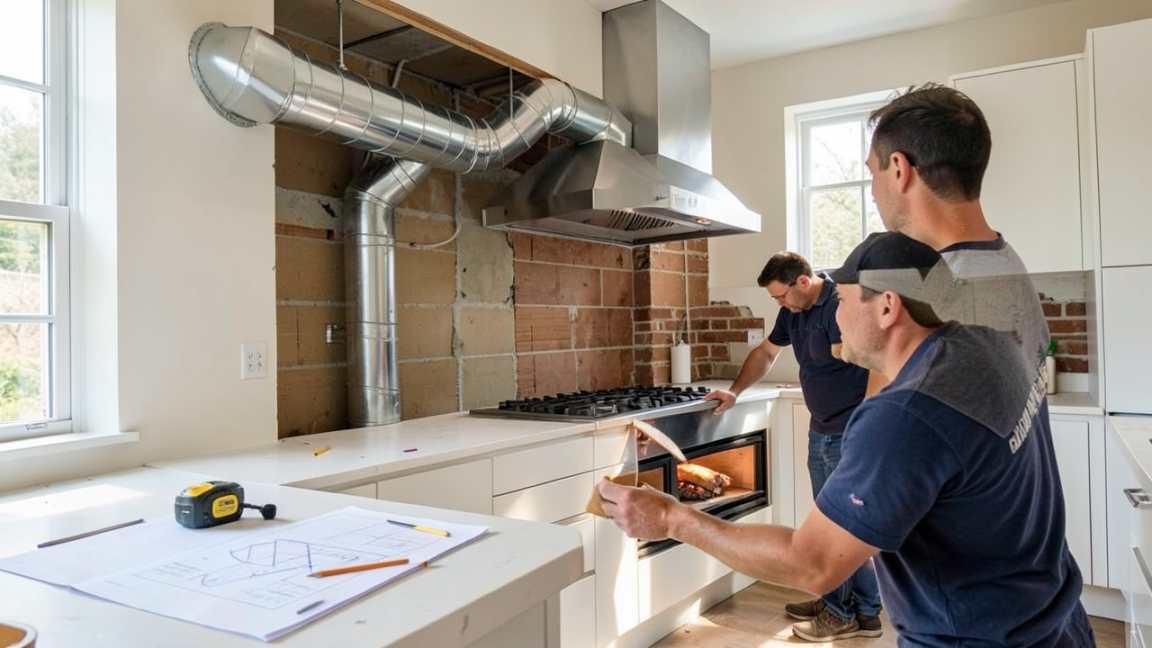
How to Plan Your Ventilation Setup
Planning the ventilation system for your indoor pizza oven requires careful thought. Follow these steps to ensure a safe and effective installation.
- Measure your oven dimensions. Know the width, depth, and height of the oven. This determines the minimum hood size. The hood should be at least as wide as the oven, and ideally 6 inches wider on each side.
- Determine the CFM requirement. Multiply the width of the cooktop in feet by 100 CFM. For a 36-inch (3-foot) oven, you need at least 300 CFM. For better performance, choose a hood rated at 600 CFM or higher.
- Plan the duct route. Measure the distance from the hood to the exterior wall or roof. Keep the duct run as short as possible. Use smooth, round stainless steel ductwork. Avoid sharp bends and long horizontal runs.
- Check local building codes. Contact your local building department. Ask about permit requirements, fire-rated enclosures, and makeup air requirements. Get all necessary approvals before purchasing equipment.
- Install carbon monoxide detectors. Place at least one CO detector in the same room as the oven. Install additional detectors on each floor of the home. Test them monthly.
- Hire a licensed professional. Ventilation installation involves electrical work, duct fabrication, and potential structural modifications. Use a contractor with experience in high-heat kitchen ventilation.
Tip: Before you buy the pizza oven, confirm the ventilation requirements with the manufacturer. Some ovens specify minimum CFM ratings or duct sizes. Following these specifications keeps your warranty valid and ensures safe operation.
Costs and Timeline
The cost of a proper ventilation system depends on several factors. These include the hood quality, ductwork length, installation complexity, and local labor rates.
Here is a breakdown of typical costs for an indoor pizza oven ventilation system:
| Component | Estimated Cost | Installation Time |
|---|---|---|
| High-CFM range hood (600 CFM+) | $400 – $1,200 | 2-4 hours |
| Stainless steel ductwork (per foot) | $15 – $30 | 4-8 hours |
| Makeup air system | $500 – $1,500 | 4-6 hours |
| Electrical work and permits | $200 – $800 | 2-4 hours |
| Fire-rated enclosure modifications | $500 – $2,000 | 1-3 days |
Total costs typically range from $1,500 for a simple installation with short ductwork to $5,000 or more for complex setups requiring makeup air and fire-rated construction.
The timeline for installation depends on the scope of work. A straightforward hood and duct installation takes one to two days. Projects that require structural modifications, fire-rated enclosures, or makeup air systems can take three to five days.
Important: Factor permit fees into your budget. Building permits typically cost $200 to $500 depending on your location. Some jurisdictions also require separate mechanical, electrical, and building permits. Skipping permits can result in fines and forced removal of the oven.
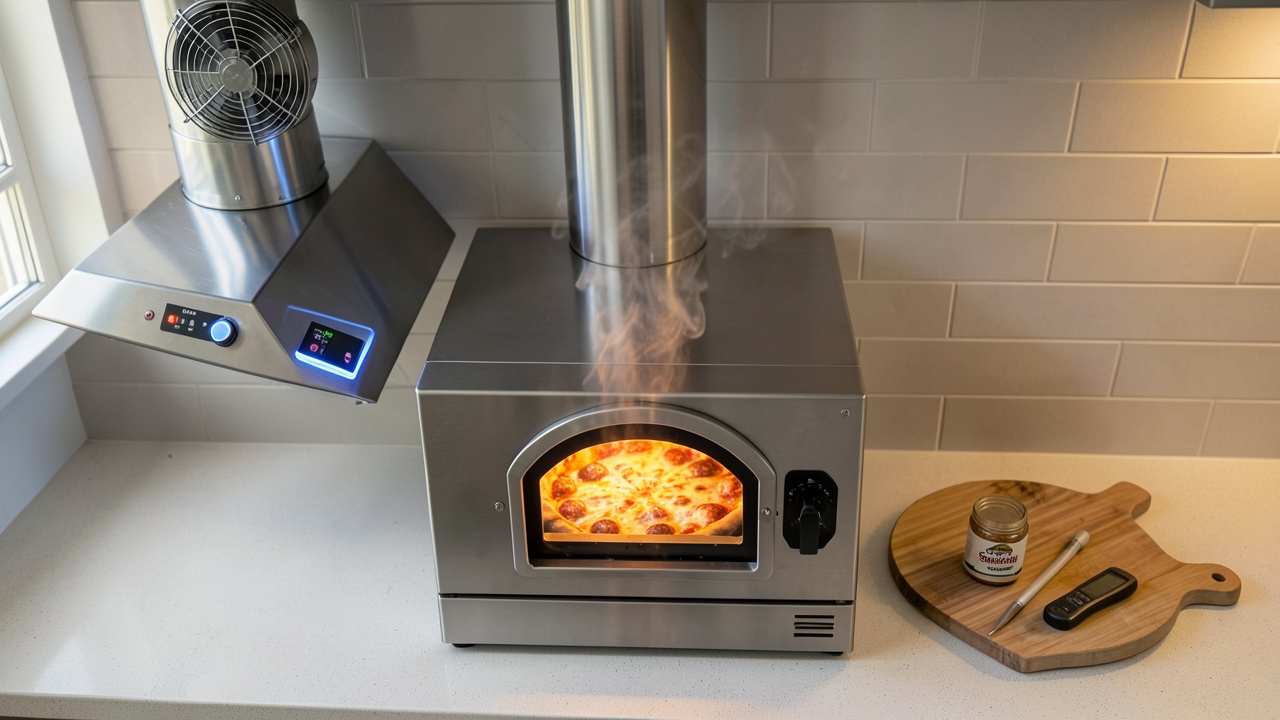
Pro Tips
These tips come from experienced installers and pizza oven owners. They can save you time, money, and frustration.
- Size up your hood. Choose a hood that is 6 to 12 inches wider than the oven on each side. This ensures the hood captures the heat plume even with cross-breezes in the kitchen.
- Use baffle filters instead of mesh filters. Baffle filters are more effective at trapping grease. They are also easier to clean and less likely to clog over time.
- Install the hood at the correct height. The bottom of the hood should be 24 to 30 inches above the oven floor for gas ovens. For wood-fired ovens, 30 to 36 inches is typical. Check the manufacturer specifications.
- Run the fan before and after cooking. Turn the exhaust fan on 5 minutes before lighting the oven. Leave it running for 15 minutes after you extinguish the fire. This clears residual combustion gases and lingering smoke.
- Clean the filters monthly. Grease buildup reduces airflow and creates a fire hazard. Remove and wash baffle filters in hot, soapy water or run them through the dishwasher. Replace mesh filters when they become coated with baked-on grease.
Warning: Never use flexible aluminum ductwork for a pizza oven exhaust. Flexible ducts are not rated for high heat and can catch fire. Use only rigid stainless steel ductwork with smooth interior walls. This is a non-negotiable safety requirement.
Resources and Tools
Use these resources to research, plan, and install your ventilation system properly.
NFPA 96 Code Overview – The standard for ventilation control and fire protection for commercial cooking operations. Many residential codes reference these requirements.
HVI CFM Calculator – The Home Ventilating Institute offers a tool to calculate the CFM requirement based on cooktop size and cooking type.
International Residential Code (IRC) – The IRC contains the building code requirements for residential kitchen ventilation, including makeup air provisions.
UL Certified Hoods Database – Search for ventilation hoods that carry UL certification for high-heat applications. Look for UL 710 or UL 762 listings.
Local Building Department Directory – Find your local building department to check permit requirements and schedule inspections.
Frequently Asked Questions
Can I install an indoor pizza oven without any ventilation at all?
No. Indoor pizza ovens produce carbon monoxide, smoke, and grease vapors that require mechanical exhaust ventilation. Operating without ventilation violates building codes and creates serious health and fire risks. The warns that unvented combustion appliances can cause carbon monoxide poisoning.
What CFM rating do I need for my pizza oven?
Most 36-inch pizza ovens require at least 300 CFM. For better performance, choose a hood rated at 600 CFM or higher. The recommends 100 CFM per linear foot of cooktop for high-heat cooking. Larger ovens and wood-fired models may need 800 CFM or more.
Do I need makeup air for my pizza oven ventilation?
Yes, if your exhaust system is rated above 400 CFM. The International Residential Code requires makeup air for exhaust systems at this level. Makeup air prevents negative pressure that can cause backdrafting of gas water heaters, furnaces, and fireplaces. This is a safety requirement, not an optional upgrade.
Can I vent my pizza oven through the wall or do I need to go through the roof?
You can vent through an exterior wall if the duct run is short and meets code requirements. Wall venting is often simpler and less expensive than roof venting. However, the duct must terminate at least 3 feet from any windows, doors, or air intakes. Roof venting is preferred for long duct runs and may be required by local codes.
How often should I clean my pizza oven ventilation system?
Clean the hood filters at least once per month. Have the ductwork professionally inspected and cleaned every 6 to 12 months. The recommends annual duct cleaning for high-heat cooking appliances. Grease buildup inside ducts is a leading cause of kitchen fires.
Final Thoughts
Indoor pizza ovens are a fantastic addition to any home kitchen, but they demand serious respect for ventilation. The heat, smoke, and carbon monoxide they produce require a properly engineered exhaust system that meets building codes. Invest in a high-CFM hood, stainless steel ductwork, and makeup air to keep your kitchen safe. Plan ahead, hire a licensed professional, and never cut corners on ventilation – your health and your home depend on it.