Why Waffles Stick Even on a Supposedly Non-Stick Waffle Plate
Waffles stick to a supposedly non-stick waffle plate because the coating requires a molecular layer of oil to create a true release surface; without it, the Maillard reaction chemically bonds the batter to the hot metal. Using a fat with both a high smoke point and high saturated fat content, ensuring the iron is fully preheated, and maintaining correct batter consistency are the critical factors for preventing adhesion. Properly seasoning a new waffle iron before first use and reapplying oil between batches are essential practices, as a scratched or worn coating cannot be repaired and will always cause sticking.
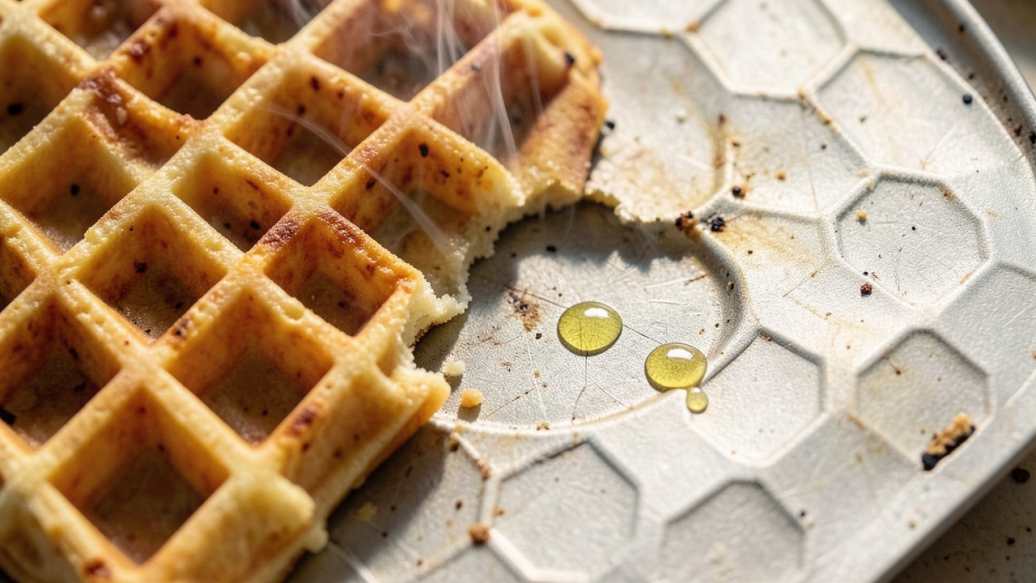
You preheat the iron. You think you greased it. But the waffle still tears apart. This is a standard problem that has a scientific explanation.
Simply put, non-stick coatings are not magic. They reduce friction but cannot overcome poor seasoning, incorrect fat selection, or batter that chemically bonds to the surface. Sticking usually means the coating, the fat, or the batter chemistry is working against you. Fixing these factors solves the problem.
Key Takeaways
- Non-stick coatings require a molecular layer of oil to create a true release surface. Without it, sticking is chemically inevitable.
- The Maillard reaction creates the perfect golden crust but also bonds food to the hot plate if the conditions are wrong.
- Using a fat with a high smoke point and high saturated fat content is critical for preventing waffles from sticking.
- Seasoning a new waffle iron before first use is essential and most manufacturers assume you know how to do it.
- A scratched or worn non-stick coating cannot be repaired and will always cause sticking issues going forward.
What Does a Non-Stick Coating Actually Do
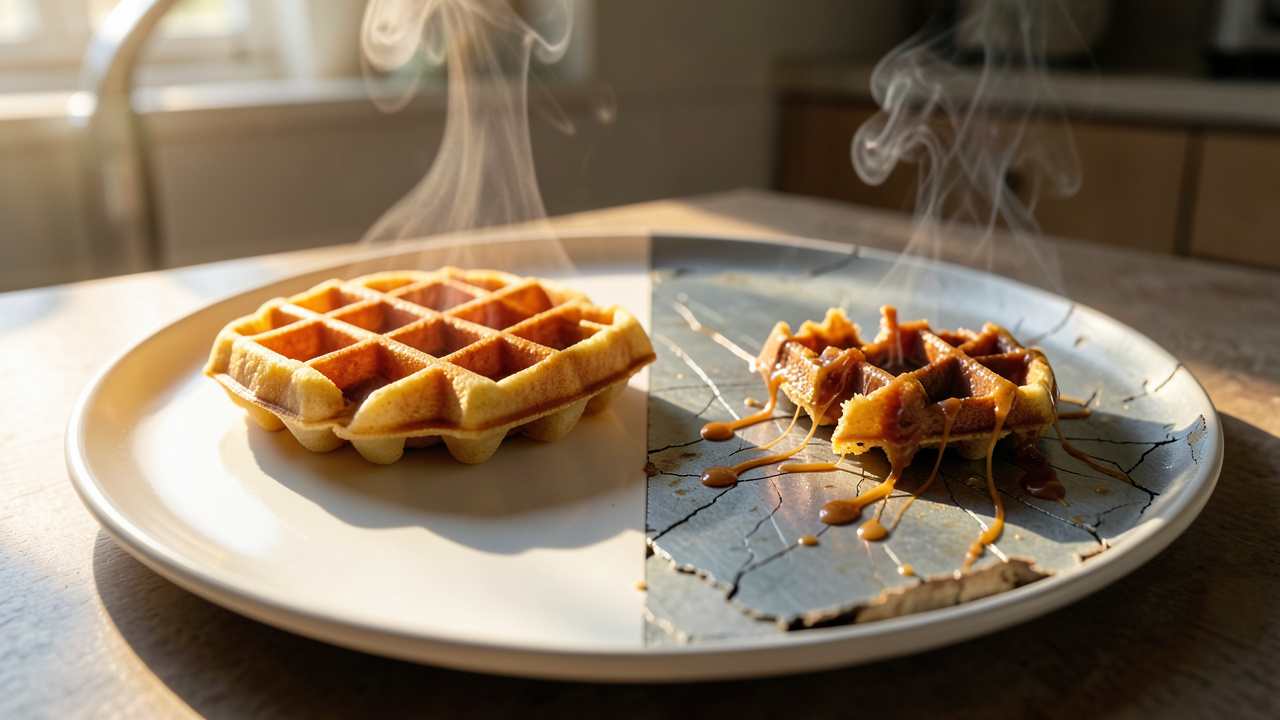
The phrase “non-stick” creates a false expectation. People assume it means food will never stick. In reality, it means the surface has a very low coefficient of friction.
Most modern waffle irons use a coating called PTFE or a ceramic sol-gel coating. These materials are slick when new. But they are not chemically inert to sticky food. According to, PTFE has micro-porosity at the molecular level.
These tiny pores are gaps in the coating. If you do not fill them with oil, the batter seeps in and locks itself into place. The coating alone cannot stop this from happening. The oil creates the actual release layer.
Important: Non-stick coatings reduce friction but they are not a barrier to chemical bonding. They need a layer of fat to complete the job. Oil fills the microscopic pores and creates a smooth, release-friendly surface.
The Main Reasons Waffles Stick to the Plate
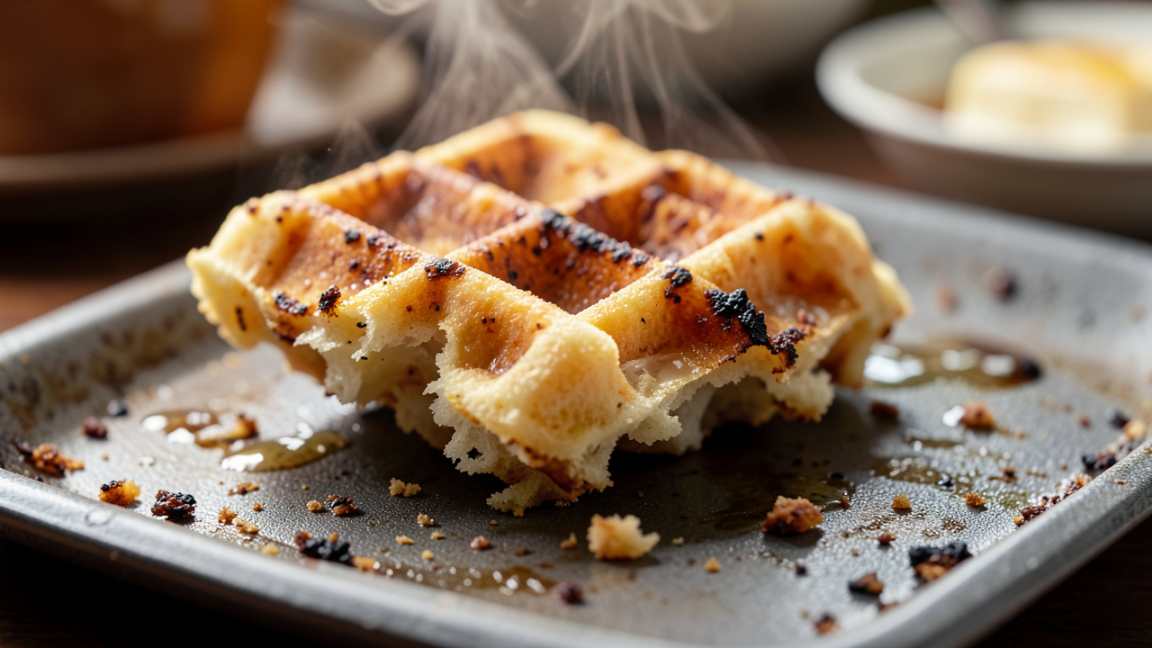
There are five primary reasons waffles stick even on a supposedly non-stick waffle plate. Most of them are easy to fix with the right technique.
Reason 1: The Coating Needs an Oil Layer
This is the most common mistake. You assume the surface is self-sufficient. It is not. Waffles sticking to a non-stick waffle plate usually happens because the oil layer is too thin or missing entirely.
Without oil, the batter proteins bond directly to the hot metal through the coating. This creates a strong adhesive effect. You must brush or spray a generous layer of oil onto the plates before adding batter.
Reason 2: You Used the Wrong Type of Fat
All fats are not created equal. Butter burns. Cooking sprays leave a gummy residue. Low-quality oils vaporize before they can do their job. The wrong fat actively causes sticking.
A fat with a low smoke point will burn onto the plate. This creates a carbonized layer that acts like glue for the next batch of waffles. According to, fats high in polyunsaturated fats are less stable at high heat and form sticky polymers.
| Fat Type | Smoke Point (F) | High Heat Stable | Stickiness Risk |
|---|---|---|---|
| Canola Oil | 400 F | Yes | Low |
| Avocado Oil | 520 F | Yes | Very Low |
| Butter | 350 F | No | High |
| Coconut Oil | 350 F | No (low smoke) | Low (good release) |
| Cooking Spray | 400 F | No (lecithin residue) | Medium (gummy buildup) |
Reason 3: The Batter Consistency Is Wrong
Batter thickness matters more than you think. Runny batter spreads too thin. It seeps into the microscopic texture of the plate and bakes into a hard film.
Thick batter with a high fat content releases much easier. Adding an extra tablespoon of oil or melted butter to your batter recipe creates internal lubrication. According to, this internal fat creates steam channels that help the waffle push away from the plate.
Reason 4: The Iron Is Not Hot Enough
The Maillard reaction needs heat. This reaction is what gives waffles their brown color and nutty flavor. But it also causes sticking if it starts too slowly.
If the iron is cold when you add batter, the batter sits and soaks into the micro-pores of the coating. It starts cooking from a wet, intimate contact state. This creates a strong bond. You must wait for the light to indicate readiness, then wait an extra 30 seconds. A hot iron sears the outer layer of the waffle instantly, reducing the window for bonding.
Reason 5: The Coating Is Worn Out
Non-stick coatings have a limited lifespan. The typical consumer waffle iron starts to lose its non-stick properties after 12 to 18 months of regular use. Ceramic coatings tend to degrade even faster than PTFE.
Once the coating is scratched or worn thin, there is no fix. The metal underneath exposes reactive sites that batter loves to stick to. If your iron is old and scratched, no amount of oil will help. It is time for a replacement.
Warning: If you see dark, bare patches on your waffle plate where the coating has worn off, stop using it. The exposed metal is highly reactive and will cause severe sticking. It can also flake into your food.
How to Season a Waffle Iron for a Perfect Release
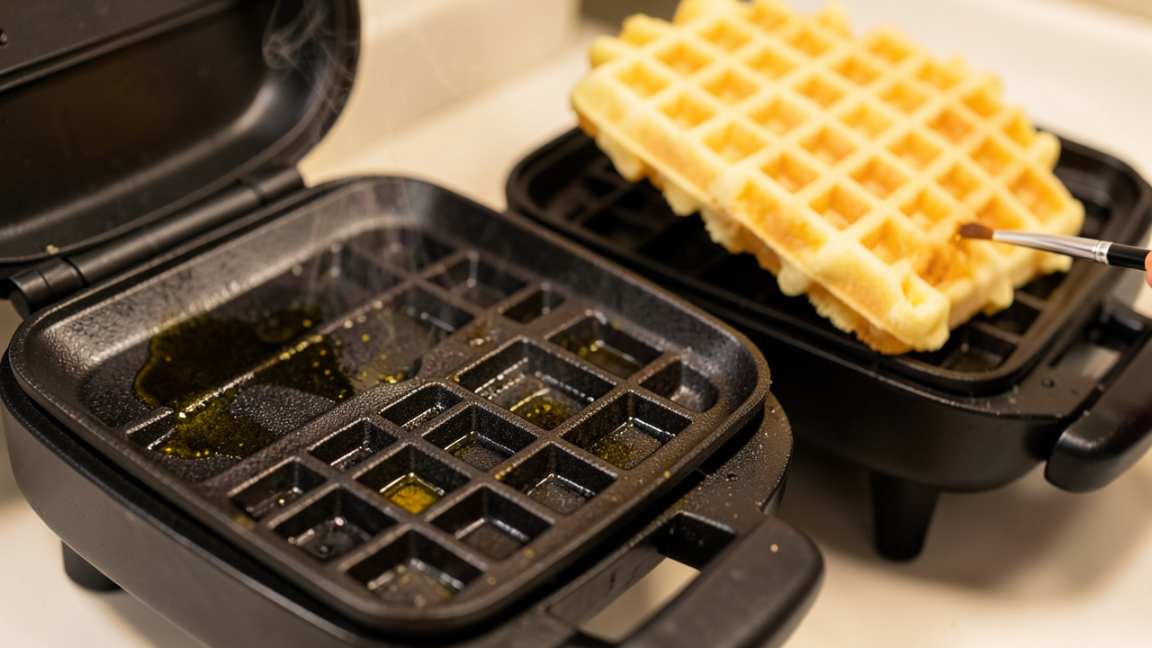
Seasoning is the process of building a polymerized oil layer on the cooking surface. This is standard practice for cast iron, and it works exactly the same way for waffle irons. A seasoned layer fills the micro-pores and creates the true non-stick surface you want.
Follow these steps to season your waffle iron correctly:
- Heat your waffle iron to its highest setting. Do not add any batter yet.
- Brush a thin layer of high-smoke-point oil onto both plates. Canola or avocado oil works best. Do not use butter or cooking spray.
- Close the lid and let it cook the oil for 10 to 15 minutes. You will see some smoke. This is normal.
- Open the lid and wipe away the excess oil with a paper towel. Be careful of the heat.
- Repeat the brushing and heating process two more times. This builds up the polymerized layer.
- Let the iron cool down completely. Your new seasoning layer is now set.
Tip: You should season a brand new waffle iron before its first use. You should also reseason your iron every 3 to 4 cooking sessions, or any time you notice the waffles starting to stick more than usual.
How to Properly Oil the Plates Between Batches
Even after a perfect initial seasoning, you need to add fresh oil for every batch. The seasoning layer helps, but it is not a substitute for liquid oil.
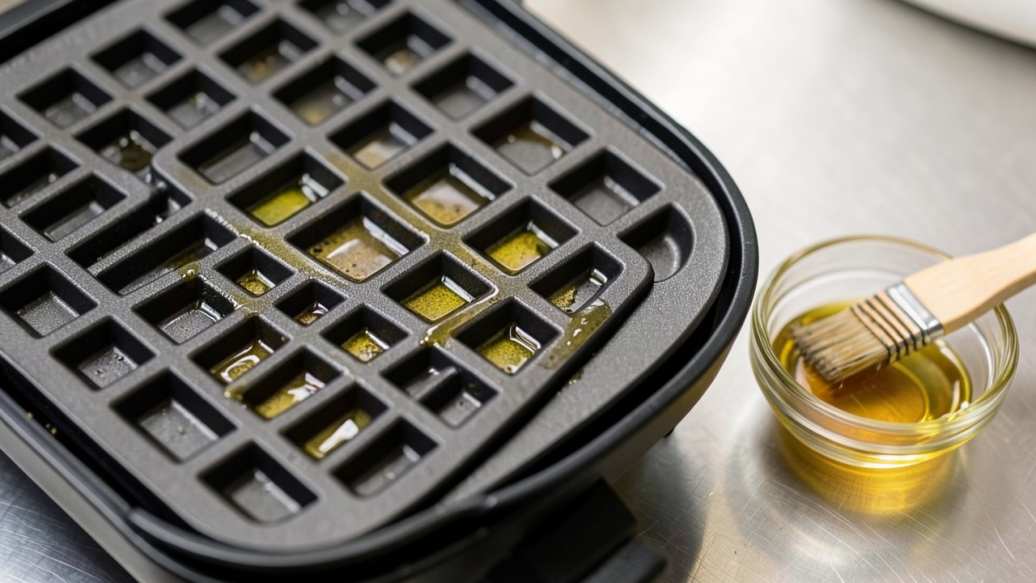
Use a silicone pastry brush for the best results. Do not use cooking spray. Cooking sprays contain lecithin and other emulsifiers. According to, these additives burn onto the plate over time and form a sticky residue that is very difficult to remove.
Instead, pour a small amount of oil into a bowl. Dip your brush into the oil and apply a generous coat to the top and bottom plates. Close the lid and let it heat for 30 seconds before adding your batter. This simple step guarantees that waffles sticking on a non-stick plate becomes a problem of the past.
Common Myths About Waffle Irons and Stickiness
There is a lot of bad advice about non-stick cooking surfaces. Let us clear up the most common misconceptions right now.
Myth 1: You Never Need Oil on a Non-Stick Surface
Fact: This is the most dangerous myth. It sets you up for failure. As we explained, non-stick coatings have micro-pores that must be filled with oil. Using a non-stick waffle iron without oil is like driving a car without engine oil. It might work for a short time, but it will eventually seize up.
Myth 2: Cooking Spray Is the Best Option for Waffle Irons
Fact: Cooking spray is one of the worst options for waffle irons. The lecithin and propellants in the spray create a gummy, tacky residue on the hot plate. This residue builds up over time and becomes a magnet for batter. Use a liquid oil and a brush instead.
Myth 3: If It Sticks, the Coating Is Completely Ruined
Fact: Sticking is often a technique problem, not a hardware problem. Up to 80 percent of sticking issues are resolved by properly seasoning the iron, using the correct oil, and waiting for the right temperature. Do not throw away your waffle iron until you have tried the seasoning process outlined above.
Step-by-Step Perfect Waffle Process
Here is the complete routine to ensure zero sticking every time you make waffles.
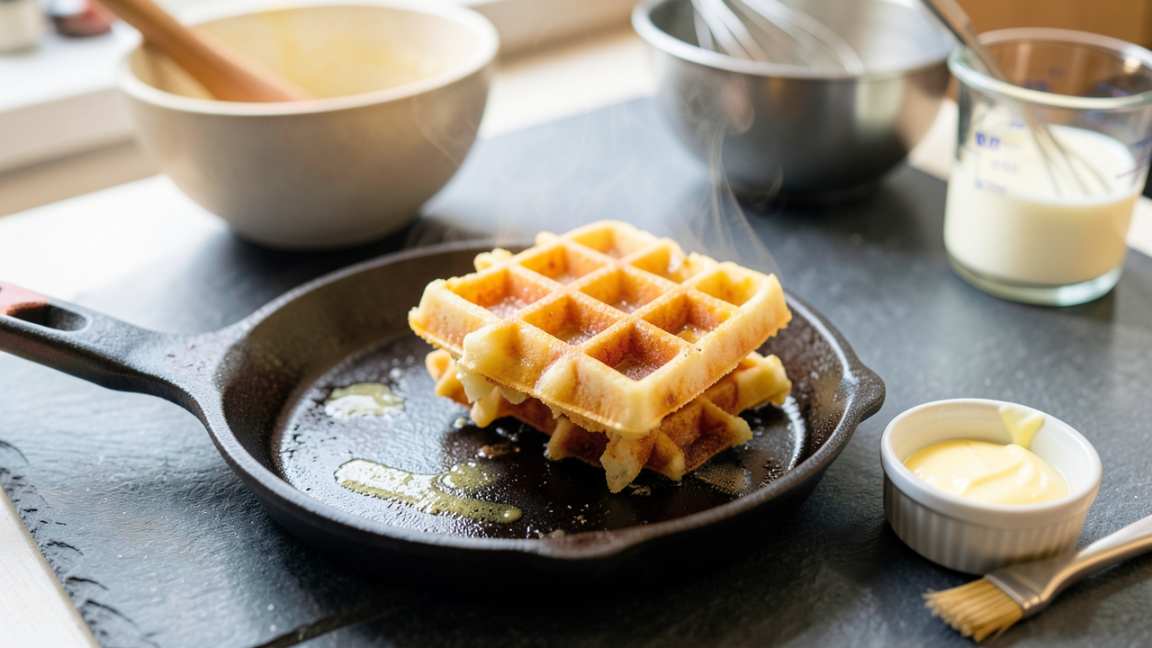
- Preheat thoroughly: Turn your waffle iron on and wait for the ready light. Then wait another 1 to 2 minutes. A fully heated iron is critical.
- Oil the plates: Use a silicone brush to apply a generous layer of canola or avocado oil to both plates.
- Prepare your batter: Make sure your batter is on the thicker side. Add an extra tablespoon of oil or melted butter to the batter itself for internal lubrication.
- Pour and spread: Pour the batter into the center and close the lid. Do not open the lid during cooking.
- Wait for steam to stop: Most waffle irons have a steam indicator. Wait until the steam significantly reduces or stops before opening. This usually means the waffle is set and ready to release.
- Gentle release: Use a non-metallic utensil to gently lift the edge of the waffle. If it resists, close the lid and cook for another 30-60 seconds. Do not force it.
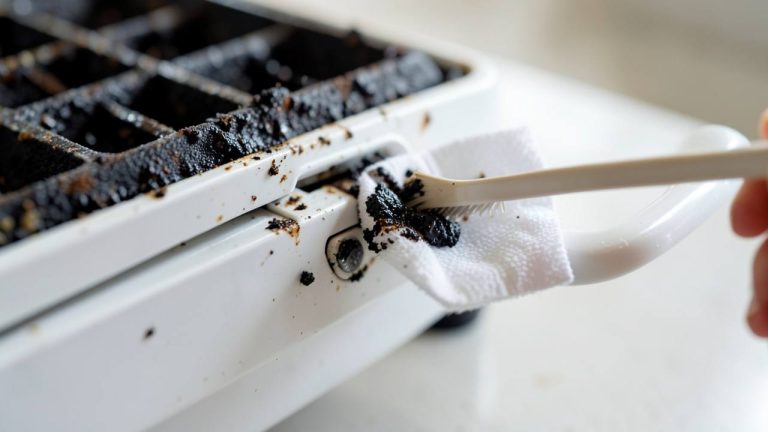
- Clean between batches: Wipe the plates with a dry paper towel to remove any crumbs before adding oil for the next batch.
Frequently Asked Questions
Can I use butter to stop waffles from sticking?
Butter adds great flavor but has a low smoke point of 350 F. The milk solids in butter burn quickly on a hot waffle iron. This burning creates a sticky, carbonized residue. Use a high-smoke-point oil on the plates and add melted butter to your batter for flavor.
How often should I season my waffle iron?
Season your waffle iron when you first buy it. After that, reseason it every 3 to 4 uses or whenever you notice the waffles starting to stick more than usual. A quick seasoning routine keeps the release layer strong and reliable.
Does adding more oil to the batter prevent sticking?
Yes, this is a very effective technique. Adding an extra tablespoon of oil or melted butter to your waffle batter increases the overall fat content. This reduces the batter’s ability to bond aggressively with the hot plate and creates steam channels that help release the waffle.
What is the best oil for a non-stick waffle iron?
Canola oil and avocado oil are the best choices for waffle irons. They have high smoke points and neutral flavors that do not affect the taste of your waffles. Coconut oil works well for release but can add a slight coconut flavor and solidifies at room temperature.
Why do my waffles stick to a brand new waffle iron?
Brand new waffle irons often have manufacturing residues on the plates. More importantly, they have not been seasoned at all. Washing the plates with warm soapy water and then performing the initial seasoning cycle is essential for first-time use. This removes residue and builds the first protective oil layer.
Final Thoughts
Waffle sticking is usually a simple fix that comes down to proper seasoning, the right fat, and correct batter temperature. Treat your non-stick plates with care and they will reward you with a perfect release every time. Master these basics and you will never tear a waffle again.