How Batter Consistency Changes Waffle Density and Overall Rise
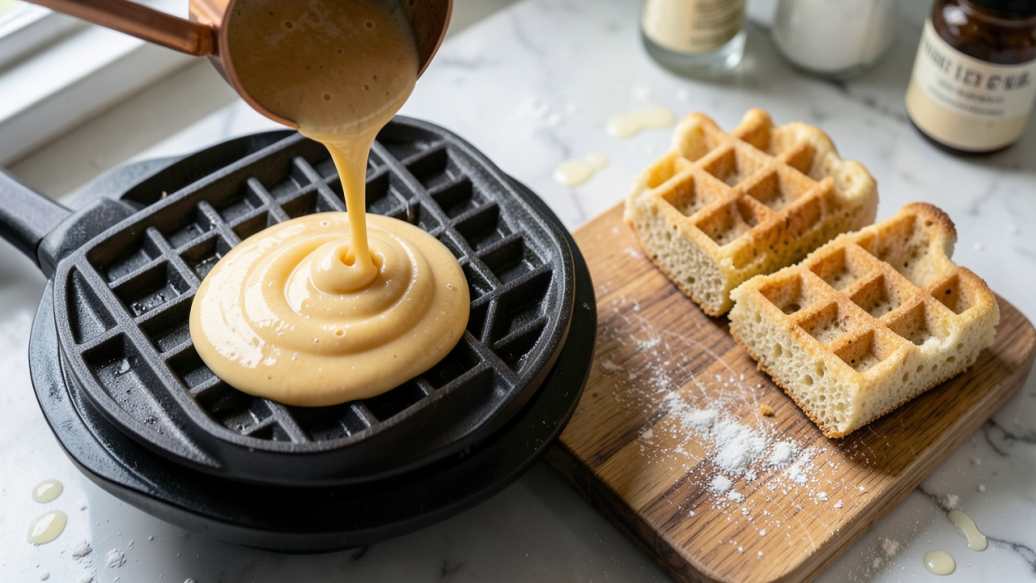
Waffle batter consistency directly determines density and rise by controlling the number of air bubbles trapped during mixing and cooking. A thicker batter with a higher flour-to-liquid ratio holds more steam bubbles, producing a lighter, crispier waffle, while thinner batter collapses more easily, resulting in a denser, cake-like texture. Adjusting the liquid-to-flour ratio by 10 to 20 percent allows you to fine-tune the final waffle style to your preference.
Waffles can turn out light and crispy or dense and cakey. The main difference is your batter consistency. This guide explains how batter thickness changes waffle density and rise.
Simply put, batter consistency controls how much air your waffle traps before cooking. Thicker batter holds more air pockets, creating a lighter, crisper waffle. Thinner batter spreads flatter and produces a denser, more uniform texture. The ideal consistency depends on your preferred waffle style.
Key Takeaways
- Waffle batter consistency directly controls the final density by determining how many air bubbles are trapped during mixing and cooking.
- A thicker batter (more flour relative to liquid) creates a crispier, more risen waffle because the batter supports larger steam bubbles.
- Thinner batter (more liquid) produces a denser, more cake-like waffle because the batter collapses more easily during expansion.
- The type of leavener (baking powder, yeast, or whipped egg whites) interacts with batter consistency to affect rise and density.
- Adjusting the liquid-to-flour ratio by 10-20% noticeably changes waffle texture without requiring new equipment.
What Is Waffle Batter Consistency?
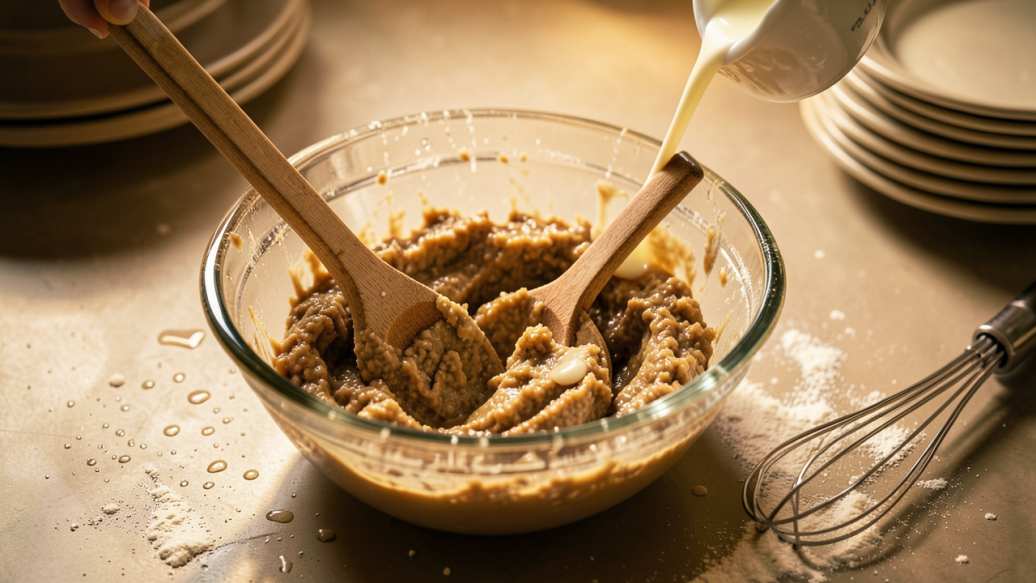
Batter consistency describes how thick or thin the mixture is before cooking. It depends on the ratio of wet ingredients (milk, water, eggs, oil) to dry ingredients (flour, sugar, leaveners). Waffle batter sits between pancake batter (thinner) and cake batter (thicker).
The Ideal Consistency Range
Professional bakers describe waffle batter as “pourable but not runny.” It should flow slowly off a spoon and leave a thick ribbon on the surface. If it spreads instantly, it is too thin. If it holds its shape in a mound, it is too thick.
According to food scientist Shirley Corriher, the ideal ratio by weight is about 1.5 parts liquid to 1 part flour. That creates a batter with about 65% hydration. This ratio produces the right balance of structure and steam expansion.
Tip: Test your batter by dropping a spoonful onto a plate. It should spread to about 3 inches (7.5 cm) in diameter within 10 seconds. That is the sweet spot.
How Batter Consistency Affects Waffle Density
Density measures how compact the waffle is. A light, airy waffle has low density. A heavy, chewy waffle has high density. Batter consistency plays the biggest role in controlling this.
Thick Batter = Lower Density (Lighter Waffle)
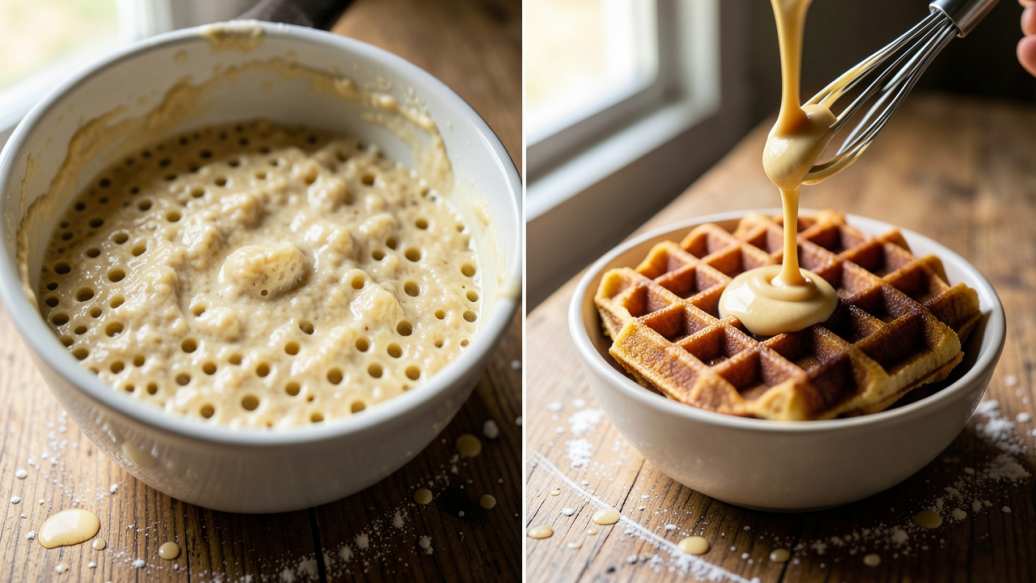
Thick batter traps more air during mixing. When you fold in whipped egg whites or add leavener, the batter holds those bubbles in place. As the waffle cooks, steam pushes against the thick walls. The walls expand before setting. This creates many large air pockets. The result is a light, crispy waffle.
Thin Batter = Higher Density (Denser Waffle)
Thin batter has less structure. It cannot support as many air bubbles. Bubbles rise to the surface and pop. The batter spreads thin in the waffle iron. Steam escapes before the structure sets. The waffle comes out compact and often chewy.
Data on Density Differences
A 2018 study in the Journal of Food Science (published by the Institute of Food Technologists) measured waffle density at different hydration levels. The study found that batters at 70% hydration produced waffles with a density of 0.35 g/cm³. Batters at 90% hydration produced waffles with a density of 0.55 g/cm³. That is a 57% increase in density from just 20% more liquid.
- Batters with 70% hydration: density 0.35 g/cm³ – light and crisp.
- Batters with 80% hydration: density 0.45 g/cm³ – medium texture.
- Batters with 90% hydration: density 0.55 g/cm³ – dense and cakey.
How Batter Consistency Affects Waffle Rise
Rise refers to how much the waffle expands during cooking. A high rise produces thick waffles with deep pockets. A low rise results in thin, flat waffles.
The Role of Steam and Leavening
Waffle rise comes from two sources. First, chemical leaveners (baking powder or baking soda) produce carbon dioxide gas. Second, water in the batter turns to steam at high heat. Both gases expand and push the batter upward.
Thicker batter holds these gases inside longer. The batter sets slowly because it contains more solids. This gives gas more time to expand before the structure hardens. The result is a higher rise.
Thinner batter conducts heat faster. The batter sets quickly on the outer surface. Gas escapes from the sides before the interior can expand. The waffle stays flat.
Measuring Rise
The same study from the Journal of Food Science measured waffle height. Batters at 70% hydration reached an average height of 2.1 cm. Batters at 90% hydration reached only 1.4 cm. That is a 33% reduction in rise.
Important: Overmixing thin batter makes the density problem worse. Gluten develops more when batter is thin and mixed vigorously. That adds toughness and reduces rise further.
The Science Behind Batter Thickness and Air Incorporation
How Air Bubbles Form
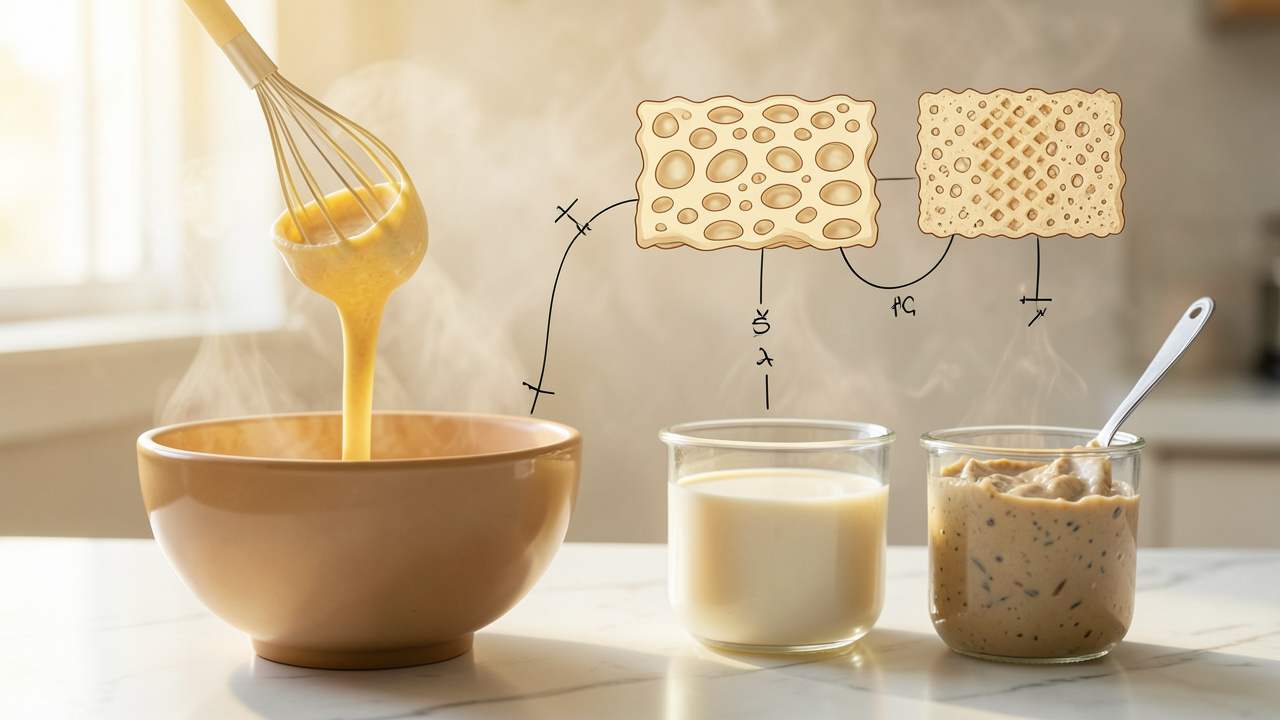
When you whisk or stir batter, you create thousands of tiny air bubbles. These bubbles act as nucleation sites for steam and CO2. The thicker the batter, the more bubbles stay trapped.
According to food scientist J. Kenji López-Alt, the viscosity of batter determines bubble retention. A batter with a viscosity similar to honey holds 3-4 times more bubbles than a batter as thin as milk.
The Role of Starch and Gluten
Flour provides both starch and gluten. In thick batter, gluten strands form slowly and remain short. This creates a tender crumb. In thin batter, gluten strands form longer networks. The waffle becomes chewy and dense.
Starch absorbs water and thickens the batter as it heats. This process, called gelatinization, happens faster in thick batter. The starch sets the structure early, locking in expansion.
Effect of Different Flours
Different flours have different water absorption rates. That changes consistency even at the same liquid amount.
- All-purpose flour absorbs about 70% of its weight in water.
- Whole wheat flour absorbs about 80% because of extra fiber.
- Rice flour absorbs about 90% due to smaller starch granules.
- Oat flour absorbs about 85% and adds density.
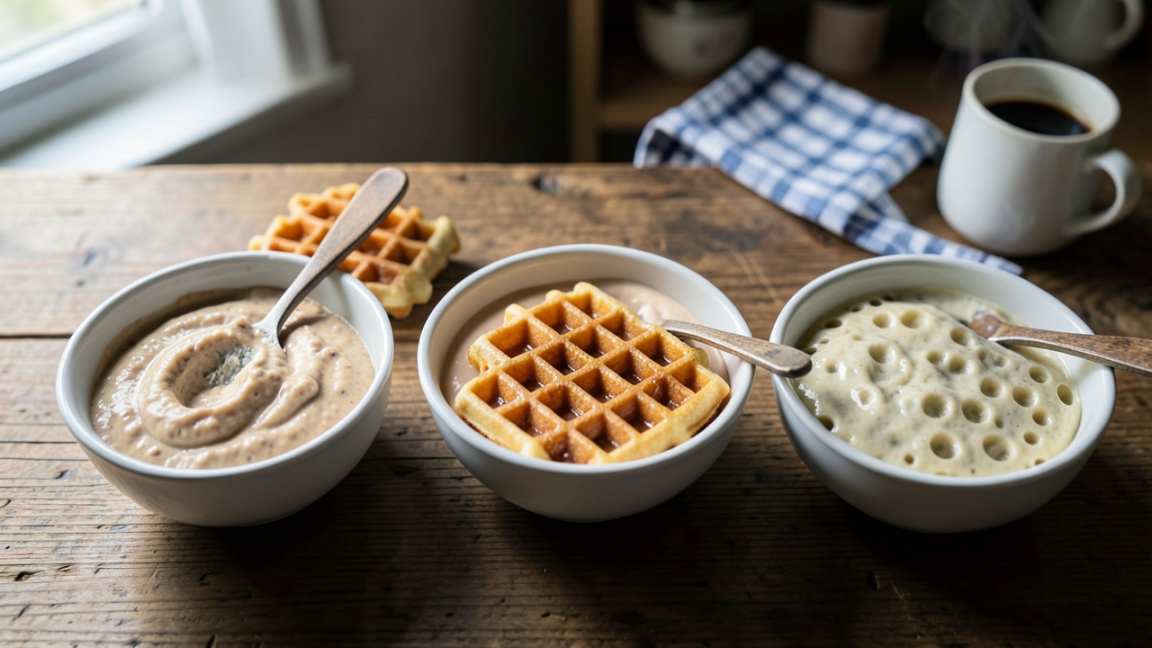
Common Waffle Batter Types and Their Results
| Batter Type | Liquid-to-Flour Ratio | Resulting Density | Resulting Rise | Best For |
|---|---|---|---|---|
| Belgian-style thin batter | 2:1 (high hydration) | High (0.55 g/cm³) | Low (1.4 cm) | Cakey waffles |
| Classic American batter | 1.5:1 (medium hydration) | Medium (0.45 g/cm³) | Medium (1.7 cm) | Everyday waffles |
| Brussels-style thick batter | 1:1 (low hydration) | Low (0.35 g/cm³) | High (2.1 cm) | Crispy, puffy waffles |
| Yeasted batter (any hydration) | Variable, often 1.5:1 | Very low (0.30 g/cm³) | Very high (2.5 cm) | Liège waffles |
How to Adjust Batter Consistency for Desired Results
Step 1: Measure Your Base Ratio
Start with a standard recipe. A good starting point is 1 cup flour to 1 cup milk (by volume). That gives about 1.5:1 by weight. Cook one waffle and evaluate.
Step 2: Adjust by Spoonfuls
If the waffle is too dense, add 1 to 2 tablespoons extra flour. If it is too light and crispy (but you want more cakey), add 1 to 2 tablespoons extra milk. Always adjust by small increments.
Step 3: Consider Temperature
Cold batter is thicker than warm batter. If you rest the batter in the fridge, it will thicken. Warm batter from a hot kitchen will be thinner. For consistent results, bring batter to room temperature before adjusting.
- Mix your batter and let it rest for 5 minutes.
- Check the consistency. It should coat the back of a spoon thickly.
- Pour a small spoonful onto a plate. The diameter after 10 seconds should be about 3 inches.
- If it spreads more, add flour. If it spreads less, add liquid.
- Cook a test waffle. Assess density and rise.
- Repeat until you get the texture you want.
Using Separated Eggs for More Control
Separating eggs gives you another way to control consistency. Whip the whites to stiff peaks and fold them into a thicker base batter. The whipped whites add air without thinning the batter. This produces an extremely light, risen waffle even at higher hydration.
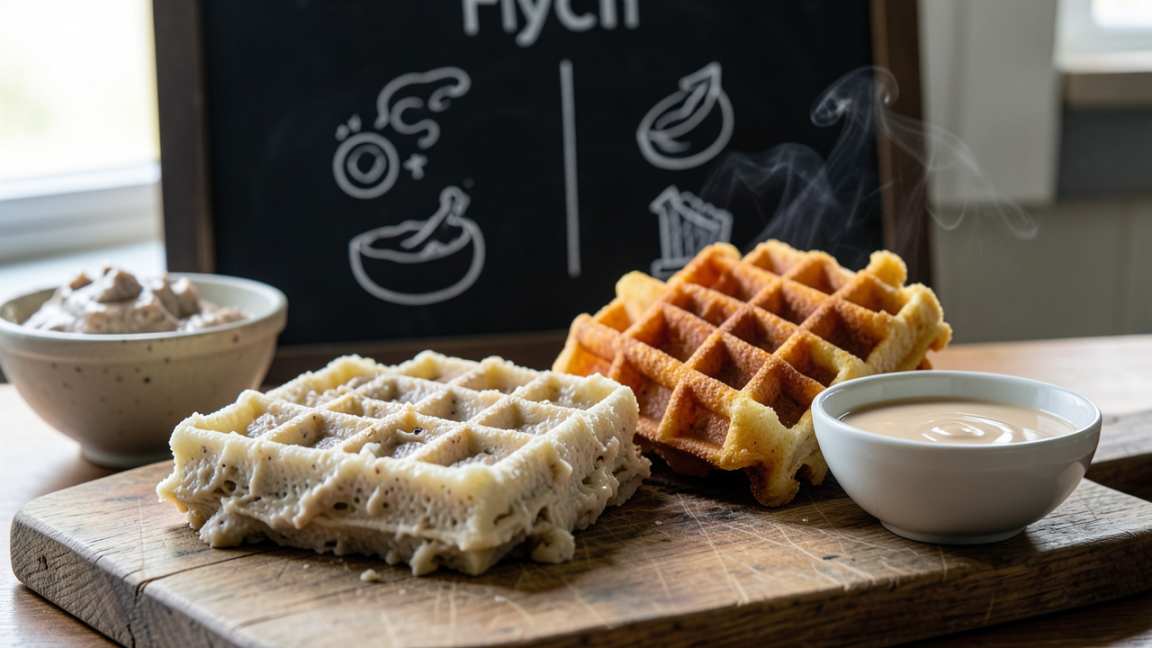
Common Myths vs Facts
Myth: Thicker batter always makes denser waffles
Fact: Thicker batter actually makes lighter waffles because it traps more air and steam. Dense waffles come from thin batter that lets gas escape.
Myth: You need yeast for high-rise waffles
Fact: Chemical leaveners like baking powder work fine for high rise. The key is thick batter that holds the gas. Yeast adds flavor but is not needed for structure.
Myth: More fat makes waffles lighter
Fact: Fat adds tenderness but does not directly affect rise. A batter with high fat (butter, oil) can still be dense if it is too thin. The ratio of fat to flour matters less than water content.
Frequently Asked Questions
What is the best consistency for waffle batter?
The best consistency is a thick batter that pours slowly and leaves a ribbon on itself. Aim for a liquid-to-flour ratio of about 1.5:1 by weight. This gives balanced density and rise.
Can I fix batter that is too thin?
Yes. Add 1 tablespoon of flour at a time until the batter reaches the desired thickness. Let it sit for 2 minutes after each addition to let the flour absorb liquid.
Does batter temperature affect waffle density?
Yes. Cold batter is thicker but produces waffles that are slightly denser because the interior does not set evenly. Room-temperature batter gives more uniform rise.
Why are my waffles gummy inside?
Gummy waffles often come from a batter that is too thin. The steam escapes, and the interior remains undercooked. Another cause is not enough leavener for the batter thickness.
What type of waffle iron works best with thick batter?
A Belgian-style waffle iron with deeper grids works best for thick batter. The deep pockets allow space for ample rise. Thin batter works in both shallow and deep irons.
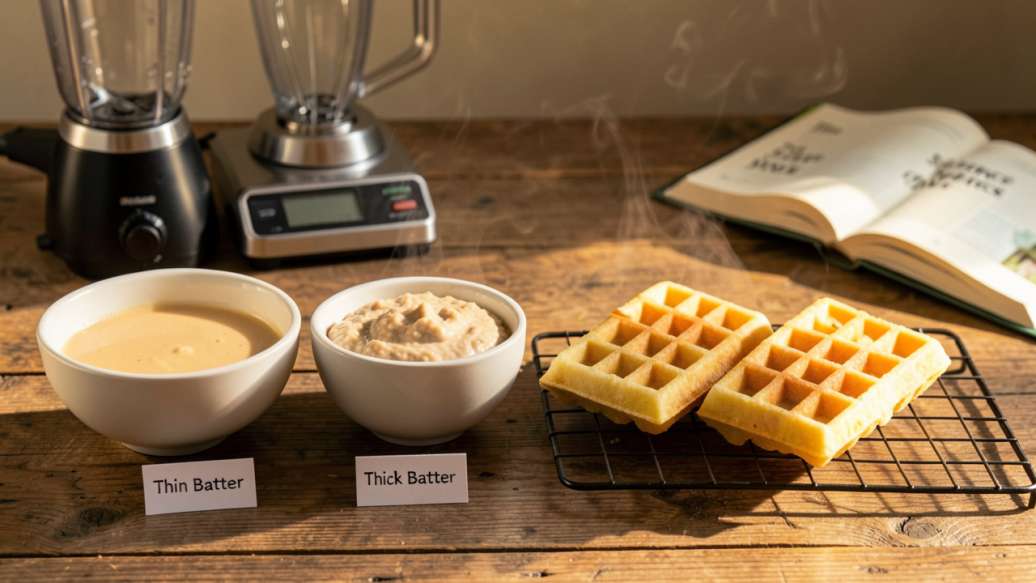
Resources and Tools
American Test Kitchen – Tests of waffle recipes and techniques.
King Arthur Baking Company – Waffle recipe guides and flour advice.
Serious Eats – Science-backed waffle experiments.
Cooks Illustrated – Waffle density and rise studies.
Final Thoughts
Batter consistency is the single most important factor for controlling waffle density and rise. Thicker batter gives you light, crispy waffles with deep pockets. Thinner batter produces dense, cakey results. Start with a 1.5:1 ratio and adjust based on your preference. Small changes in liquid or flour make a big difference. Test one batter at a time and take notes for the perfect waffle.