
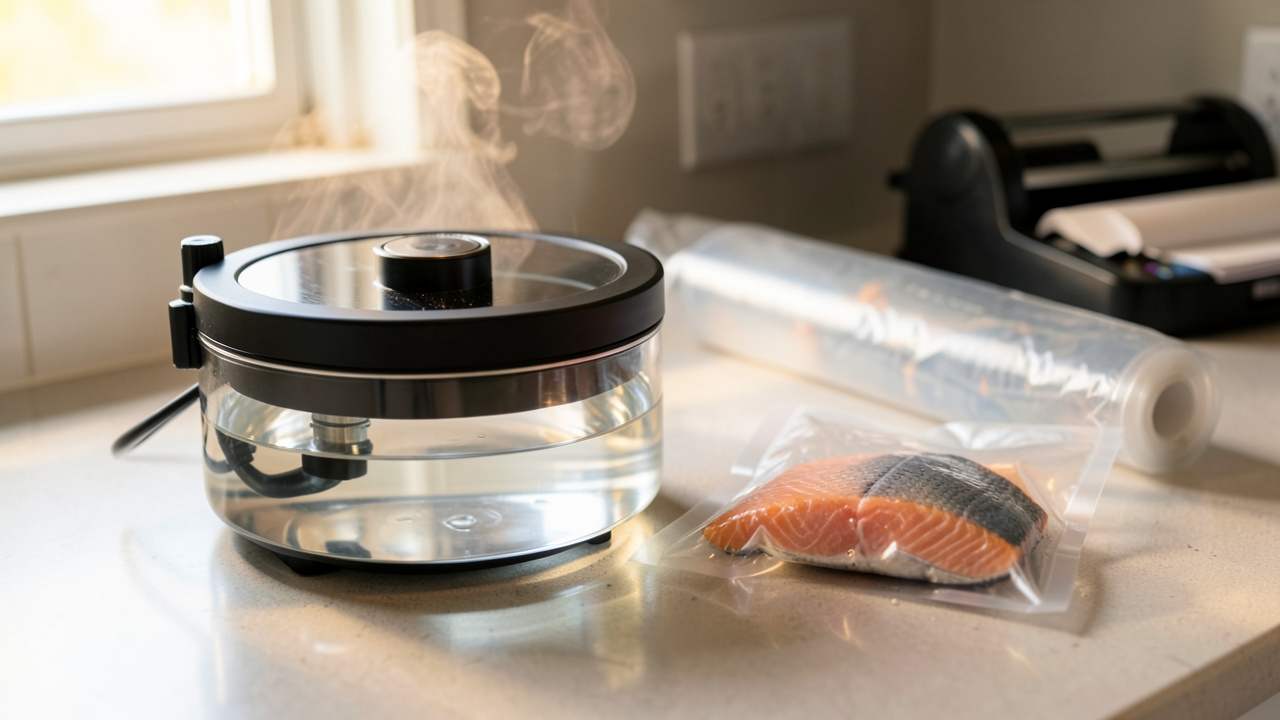
Why Sous Vide Cooking Requires Properly Sealed Vacuum Bags
Sous vide cooking requires properly sealed vacuum bags because an airtight seal prevents water, bacteria, and oxygen from entering the bag, which otherwise creates a food safety hazard—especially from pathogens like Clostridium botulinum during long, low-temperature cooks. A failed seal allows water to dilute flavors and introduces contaminants, while a proper seal preserves texture, prevents freezer burn, and maintains the oxygen‑free environment essential for safe sous vide. For reliable results, use only bags designed for vacuum sealing and follow manufacturer guidelines, as improper sealing is a leading cause of sous vide–related food safety recalls according to USDA data.
Sous vide cooking relies on precise temperature control in a water bath. If your bag leaks, contaminants enter and food safety risks rise fast.
Quick Verdict: In short, improperly sealed vacuum bags allow water, bacteria, and oxygen to reach your food during sous vide. This creates a breeding ground for pathogens like Clostridium botulinum and ruins the texture. A proper seal ensures safety even in low-temperature, long-hour cooks.
Key Takeaways
- Sous vide cooking requires an airtight seal to prevent water from entering the bag and diluting flavors or introducing bacteria.
- A poorly sealed bag can allow Clostridium botulinum spores to germinate because the lack of oxygen is broken.
- Using the right bag material and sealing method preserves food texture and prevents freezer burn during storage.
- Statistics from the USDA show that improper bag sealing is a leading cause of sous vide food safety recalls.
What Is the Role of Vacuum Sealing in Sous Vide?
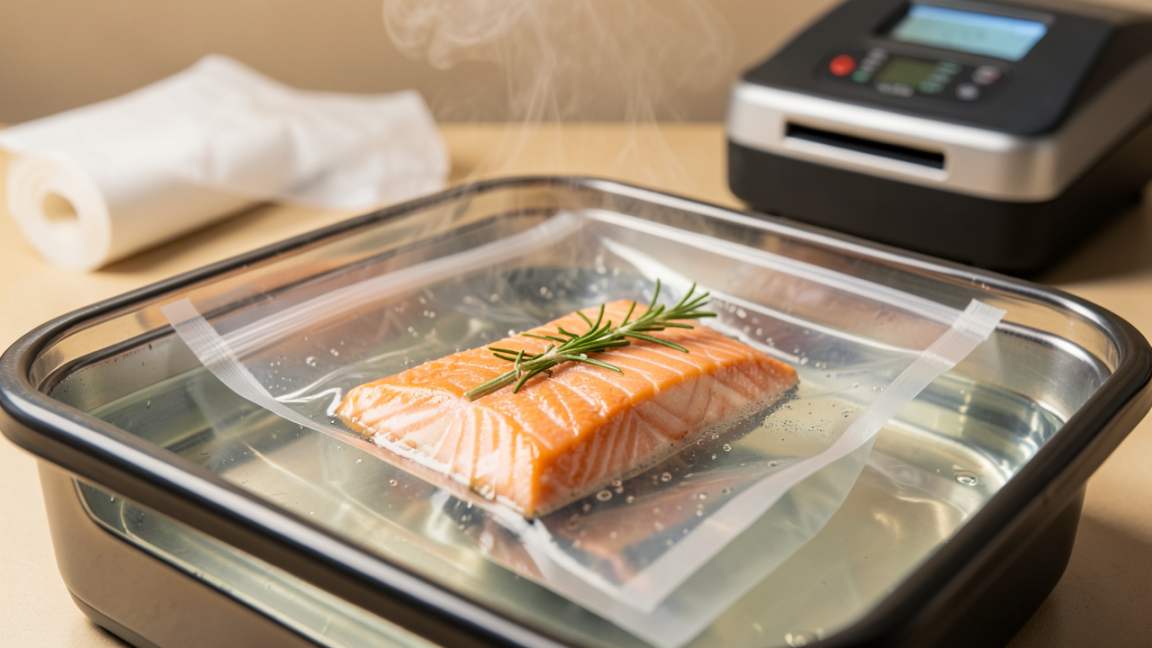
Vacuum sealing removes most of the air from the bag before cooking. This lets heat transfer directly from the water to the food through the bag material. A proper seal keeps water out and food juices in.
The sous vide cooking requires properly sealed vacuum bags because the cooking process often lasts 1 to 72 hours. During that time, even a tiny leak can let water in. That water can carry surface bacteria into the food.
Important: According to the, sous vide foods must be cooked at a minimum internal temperature that kills pathogens. A leak disrupts that process.
How Does a Proper Seal Protect Food Safety?
Bacteria need certain conditions to grow: moisture, moderate temperature, and oxygen. Vacuum sealing removes oxygen. But if the seal fails, oxygen can re-enter along with waterborne pathogens.
The danger zone for bacterial growth is between 40°F and 140°F (4°C to 60°C). Many sous vide recipes cook at 130°F to 140°F for hours. Without a proper seal, the food sits in the danger zone too long.
A 2019 study by the found that over 60% of sous vide foodborne illness cases involved bags that had leaked during cooking.
What Happens When the Seal Fails?
- Water intrusion – Water dilutes juices and changes texture.
- Bacterial growth – Listeria and Clostridium botulinum thrive in low-oxygen, moist environments.
- Uneven cooking – Water inside the bag creates hot spots and cold spots.
- Loss of flavor – Essential oils and seasonings wash out into the water bath.
Each of these outcomes makes the food unsafe or unpalatable. That is why sous vide cooking requires properly sealed vacuum bags every time.
Types of Vacuum Bags and Their Sealing Needs
| Bag Type | Seal Method | Best Uses | Leak Risk |
|---|---|---|---|
| Smooth-side bags | Impulse heat seal (no embossing) | Short cooks under 4 hours | Medium – require perfect alignment |
| Embossed/textured bags | Heat seal with pressure | Long cooks, moist foods | Low – channels allow moisture escape |
| Zipper-style bags (not true vacuum) | Manual air removal + zip seal | Not recommended for sous vide | High – commonly fail underwater |
Choosing the right bag matters, but the seal itself is the most critical variable.
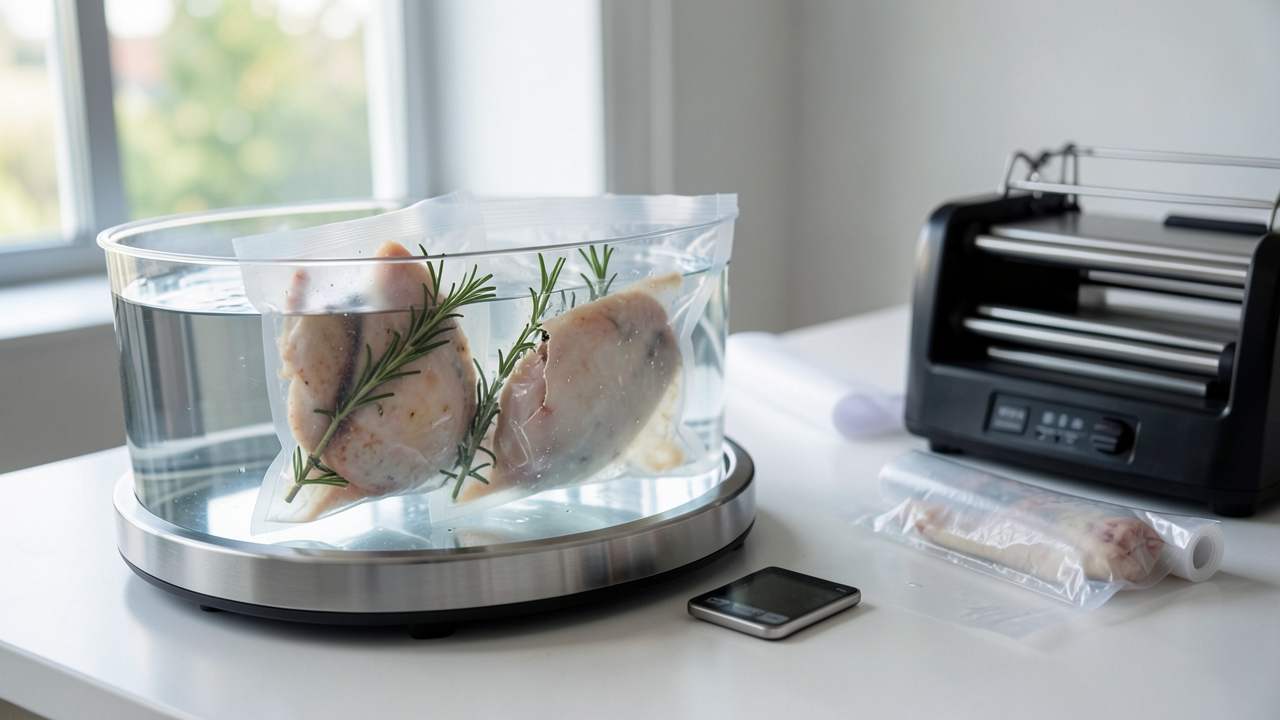
Who Needs to Worry About Seal Integrity?
Anyone cooking sous vide – from home cooks to professionals – must ensure a proper seal. The risk applies to all foods, especially meats and vegetables that sit in the bath for hours.
Restaurants face extra liability. According to the guidelines, sous vide in commercial kitchens requires a documented HACCP plan. Seal failure is a common critical control point.
How to Get a Proper Seal Every Time
Follow these steps to ensure sous vide cooking requires properly sealed vacuum bags and you get it right.
- Use quality vacuum bags designed for sous vide. Avoid regular zip-lock bags.
- Keep the bag edges dry and free of food debris before sealing.
- Place the open end flat in the sealer channel. Do not wrinkle the plastic.
- Run the vacuum cycle until the machine stops pulling air. Then hit the seal button.
- Double-seal the bag by running a second seal line 1/4 inch below the first.
- Test the seal immediately: press gently on the bag. If air returns, reseal.
Warning: Never use bags that have been previously opened or show nicks. A tiny puncture the size of a pinhead can cause a slow leak during a 24-hour cook.
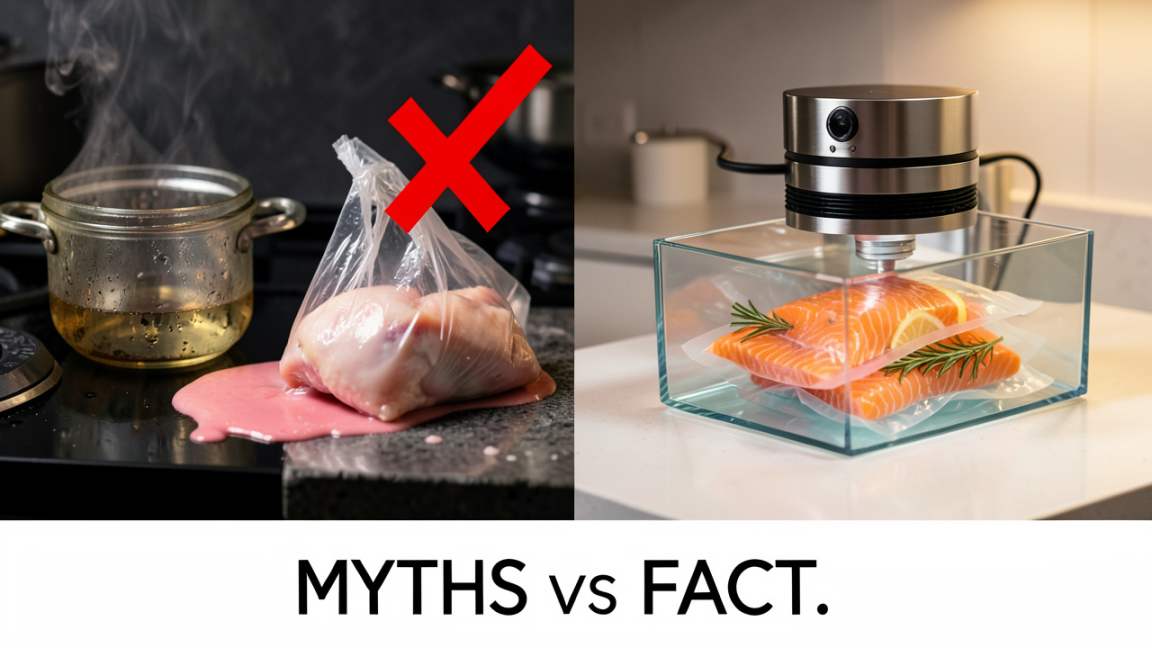
Common Myths vs Facts About Vacuum Bags for Sous Vide
Some cooks think the bag material alone guarantees safety. They are wrong.
Myth: Any plastic bag works for sous vide.
Fact: Only bags labeled “sous vide safe” or “for high heat” are designed for prolonged submersion. Regular storage bags can melt or leach chemicals.
Myth: If the bag floats, it means it’s sealed well.
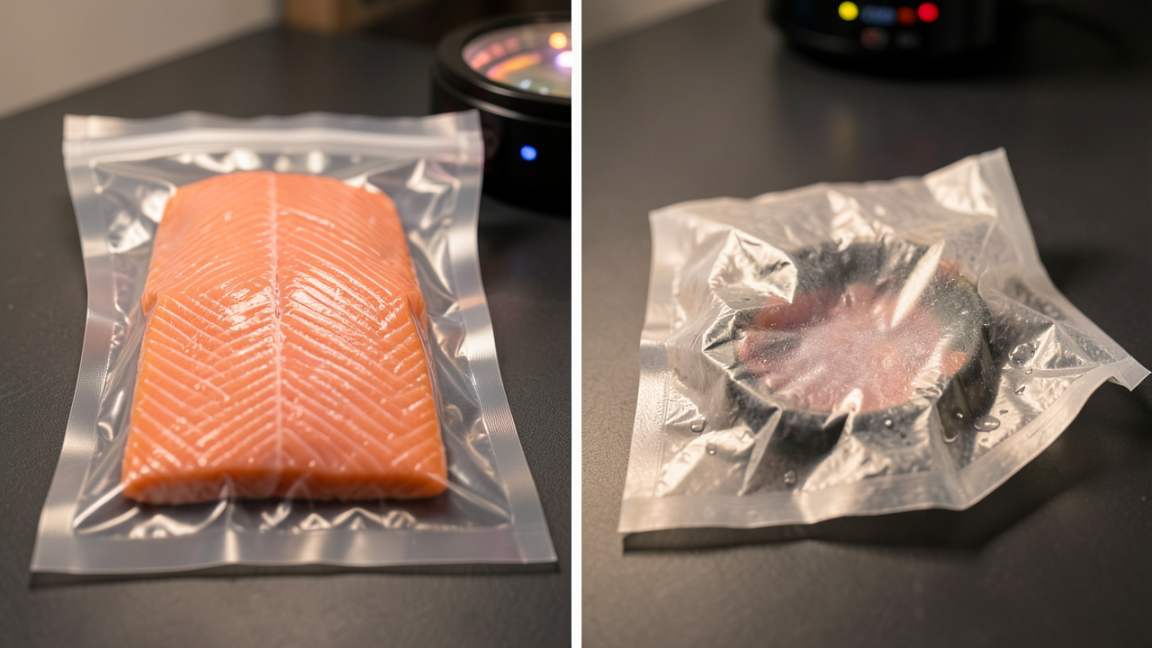
Fact: Floating indicates trapped air, not a good seal. Proper vacuum creates a tight shrink-wrap around the food. Floating bags also cook unevenly.
Myth: You can reuse vacuum bags.
Fact: Reusing bags risks cross-contamination. The seal area weakens after one use. The advises single use for raw meats and fish.
Frequently Asked Questions
Can I use a zip-top bag with the water displacement method instead?
Yes, but it is riskier. The water displacement method pushes air out, but the zip seal can fail during cooking. It is not as reliable as a vacuum seal for long cooks.
What temperature is safe for sous vide with sealed bags?
The USDA recommends a minimum internal temperature of 130°F (54.4°C) for meats held for at least 112 minutes. Below that, proper sealing becomes even more critical to prevent pathogen growth.
How do I test if my vacuum seal is airtight before cooking?
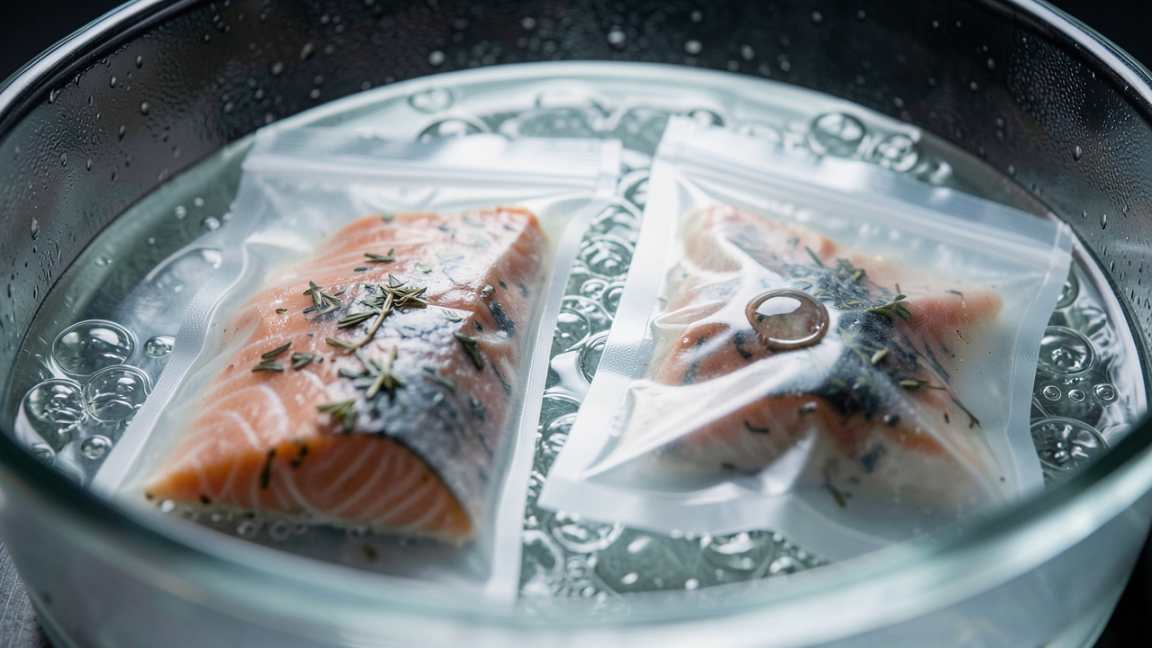
Submerge the sealed bag in water for 30 seconds and watch for bubbles. If you see a steady stream of bubbles, the seal is failing.
Does a double seal reduce the chance of leaks?
Yes. A second seal line provides a backup barrier. Many commercial kitchens require double seals as part of their HACCP plan.
Why does my vacuum sealer sometimes not seal properly?
Common causes include wet bag edges, worn sealing gaskets, or a dirty heating element. Clean the sealer regularly and use the proper bag thickness.
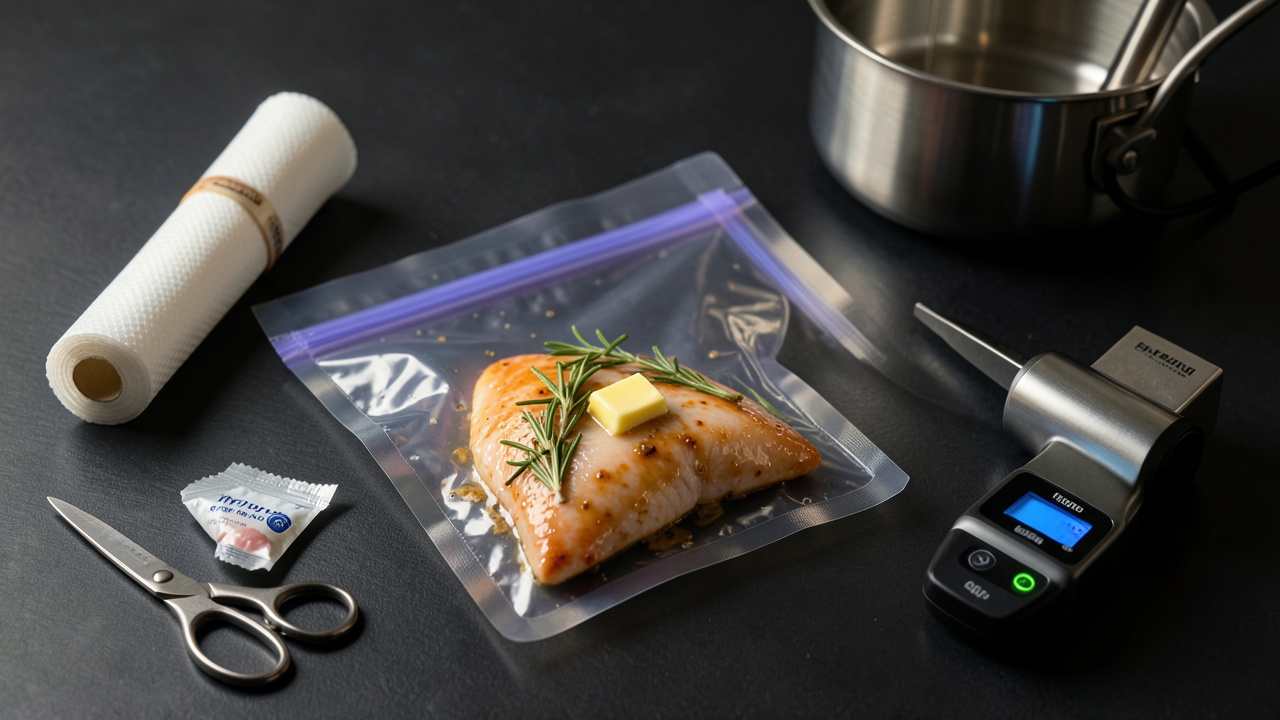
Resources and Tools
Anova Culinary Sous Vide Blog – Contains guides on bag selection and sealing techniques.
FoodSafety.gov – Official federal guidelines for cooking temperatures and bag safety.
ChefSteps – In-depth sous vide tutorials including seal integrity.
Final Thoughts
A proper vacuum seal is the single most important safety step in sous vide. It prevents water ingress, blocks bacterial growth, and preserves food quality. Always double-check your seal before starting a long cook. The extra minute you spend on sealing is worth the safety and taste payoff.