Why Waffle Batter Needs More Fat Than Standard Pancake Batter
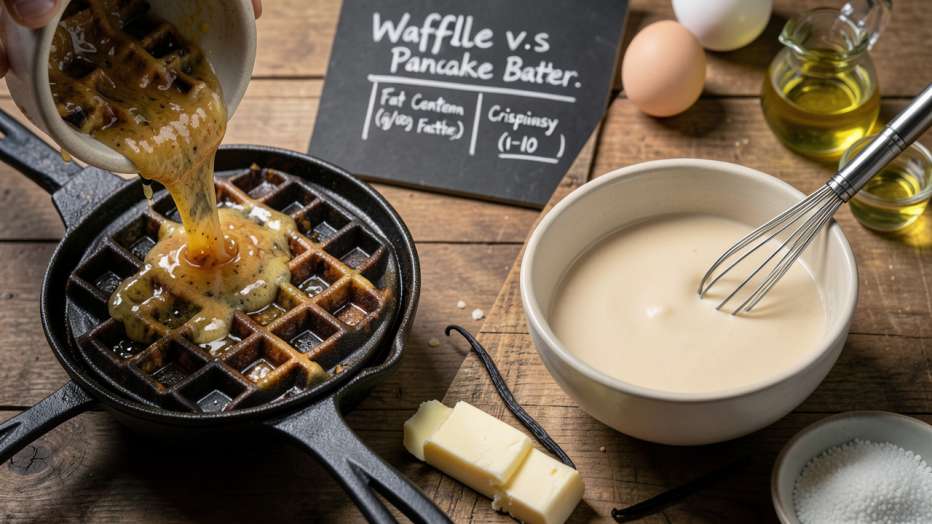
Waffle batter requires significantly more fat than pancake batter, typically 15% to 25% fat by weight compared to 5% to 10%, because the higher fat content prevents sticking to the iron, creates a crisp exterior, and keeps the interior tender. Using standard pancake batter in a waffle iron results in dry, tough waffles that are difficult to remove. Understanding this fat ratio difference is essential for achieving the ideal waffle texture and avoiding common batter failures.
Waffles and pancakes look similar, but their recipes differ in one critical way. Why waffle batter needs more fat than standard pancake batter comes down to cooking method and desired texture.
Simply put, waffle batter requires more fat because the extra oil or butter prevents sticking to the iron, creates a crispy crust, and keeps the inside soft and fluffy. Without enough fat, waffles turn out dry, tough, and hard to remove from the iron.
Key Takeaways
- Waffle batter contains 15% to 25% fat by weight, while pancake batter contains only 5% to 10% fat.
- Extra fat in waffles prevents the batter from sticking to the hot waffle iron surface.
- Higher fat content creates the crisp brown exterior that waffles are known for.
- Butter or oil in waffle batter keeps the interior tender and prevents toughness.
- Using pancake batter in a waffle iron results in dry, stuck, and poorly textured waffles.
According to the, careful fat balances are essential for baked goods. A 2019 USDA report shows that Americans consume over 50 pounds of flour each year, mostly in pancakes, waffles, and bread.
Quick Comparison Table
| Ingredient | Waffle Batter | Pancake Batter | Why Different |
|---|---|---|---|
| Fat (butter or oil) | 15-25% of flour weight | 5-10% of flour weight | Prevents sticking, creates crisp |
| Eggs | Often 1-2 per cup flour | 1 per cup flour | Structure and richness |
| Sugar | 1-2 tablespoons per cup flour | 0-1 tablespoon | Browning and flavor |
| Liquid (milk or water) | Slightly less than pancakes | Standard amount | Thicker batter holds shape |
How Does Fat Affect Waffle Texture?
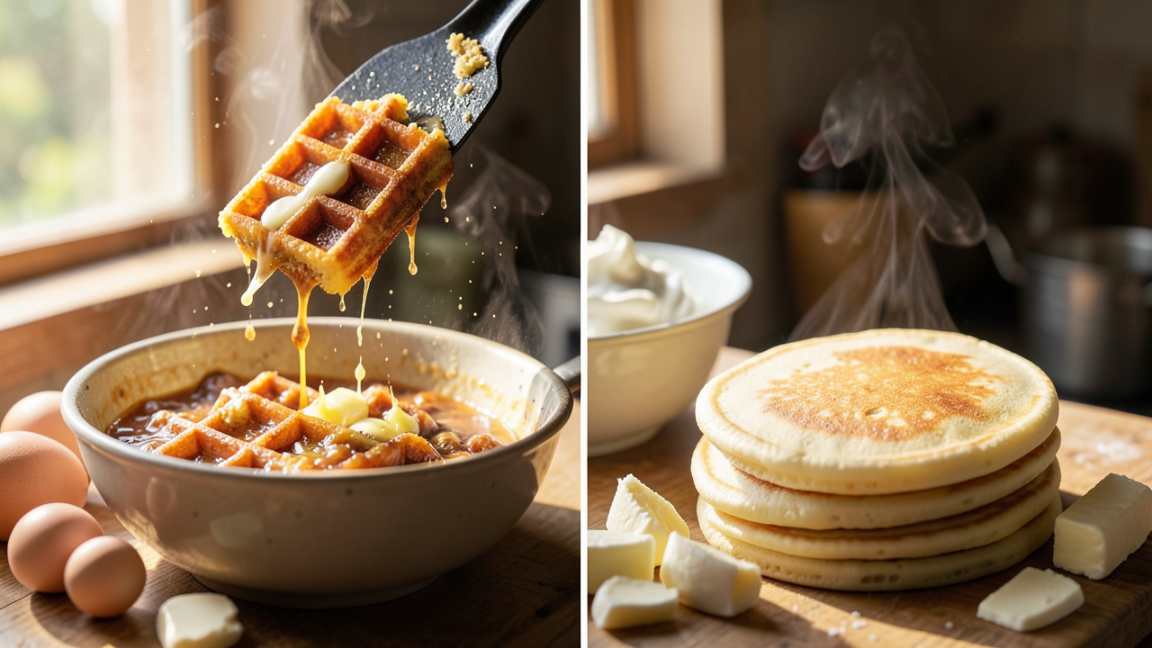
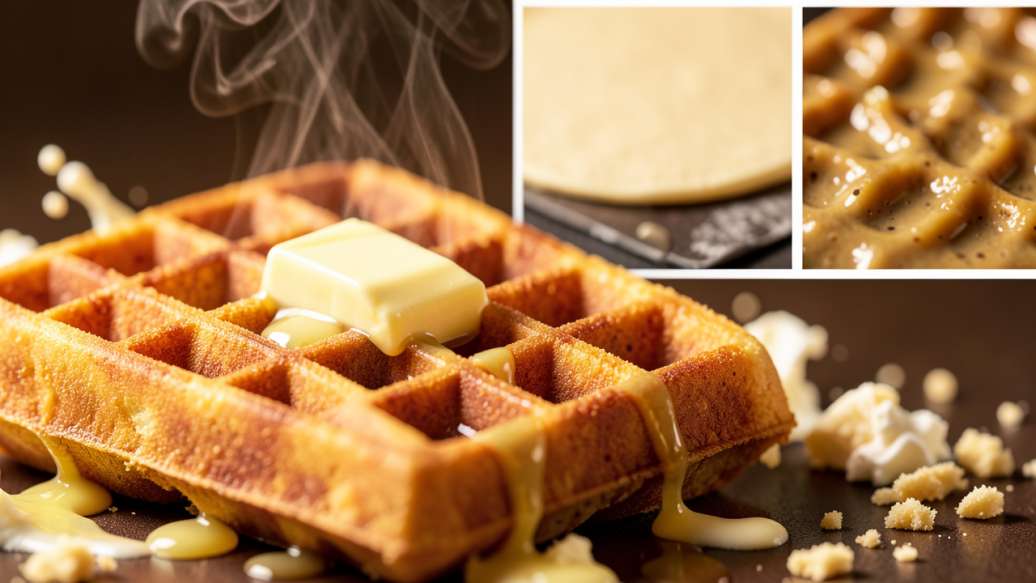
Fat plays multiple roles in waffle batter. It coats flour proteins, limiting gluten formation. This keeps waffles tender instead of tough. Fat also helps conduct heat evenly across the iron.
Tip: Melted butter works best because it distributes evenly. Cold butter can harden again once mixed with cold milk.
The explains that the Maillard reaction causes browning. Fat absorbs heat and speeds up this reaction, giving waffles their golden crust.
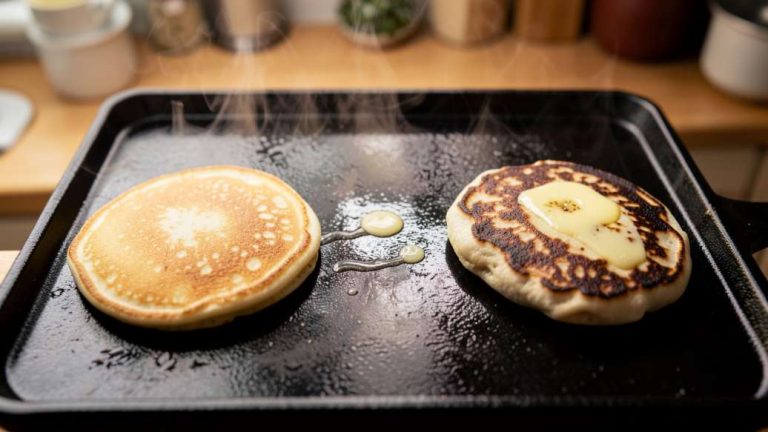
Why waffle batter needs more fat than standard pancake batter becomes clear when you compare the cooking process. Pancakes cook on a flat griddle at lower heat. They brown on one side, then flip. Waffles cook in a closed iron at higher heat. The batter must resist sticking and develop crispness through deep browning.
The Science Behind Extra Fat in Waffles
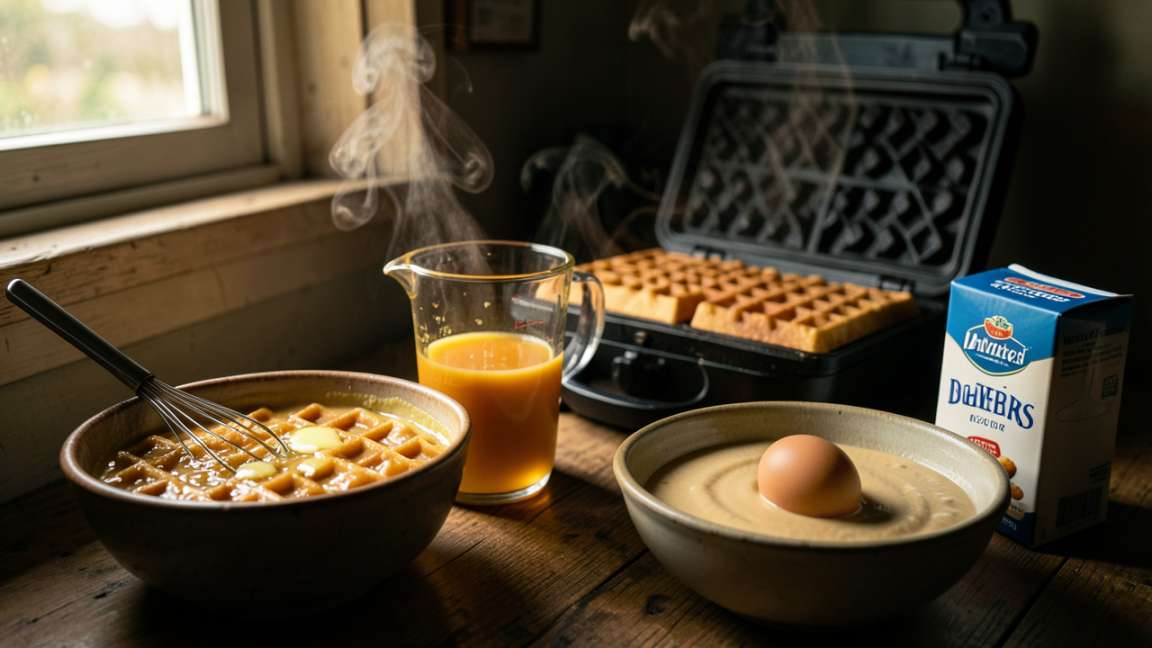
When you pour batter into a hot waffle iron, steam builds up quickly. The fat forms a barrier that prevents the steam from escaping too fast. This traps steam inside, creating a light and airy interior.
According to a study from the, the ideal pancake batter has a moisture content around 70%. Waffle batter should be closer to 60% moisture, with the missing 10% replaced by fat. This change directly affects the final texture.
- Fat coats protein and starch molecules. This limits gluten development, keeping waffles tender.
- Fat creates a nonstick barrier on the iron surface. This prevents tearing when you open the lid.
- Fat transfers heat efficiently. This promotes the crisp, deep brown crust.
- Fat slows moisture loss. This ensures the inside remains soft and fluffy.
Important: Using too little fat makes waffles dry and crumbly. Using too much makes them greasy. Aim for the 15-25% range from the table above.
Common Myths vs Facts About Waffle Batter
Myth 1: Waffles and pancakes use the exact same batter.
Fact: They share ingredients, but ratios differ. Waffle batter needs more fat than standard pancake batter by a significant margin. The higher fat content changes the cooking properties and final texture.
Myth 2: Any oil or butter works the same way in waffle batter.
Fact: Butter adds flavor and helps browning due to milk solids. Neutral oils produce a lighter color but still prevent sticking. A blend of butter and oil gives the best results for both flavor and texture.
Myth 3: Adding more fat makes waffles unhealthy, so you should skip it.
Fact: Waffles are meant to be a treat. Reducing fat too much ruins the texture. A standard waffle recipe uses about 2-3 tablespoons of butter per cup of flour, which results in 200-300 calories per waffle depending on size. This is normal for the dish.
How to Adjust Your Batter for Perfect Waffles
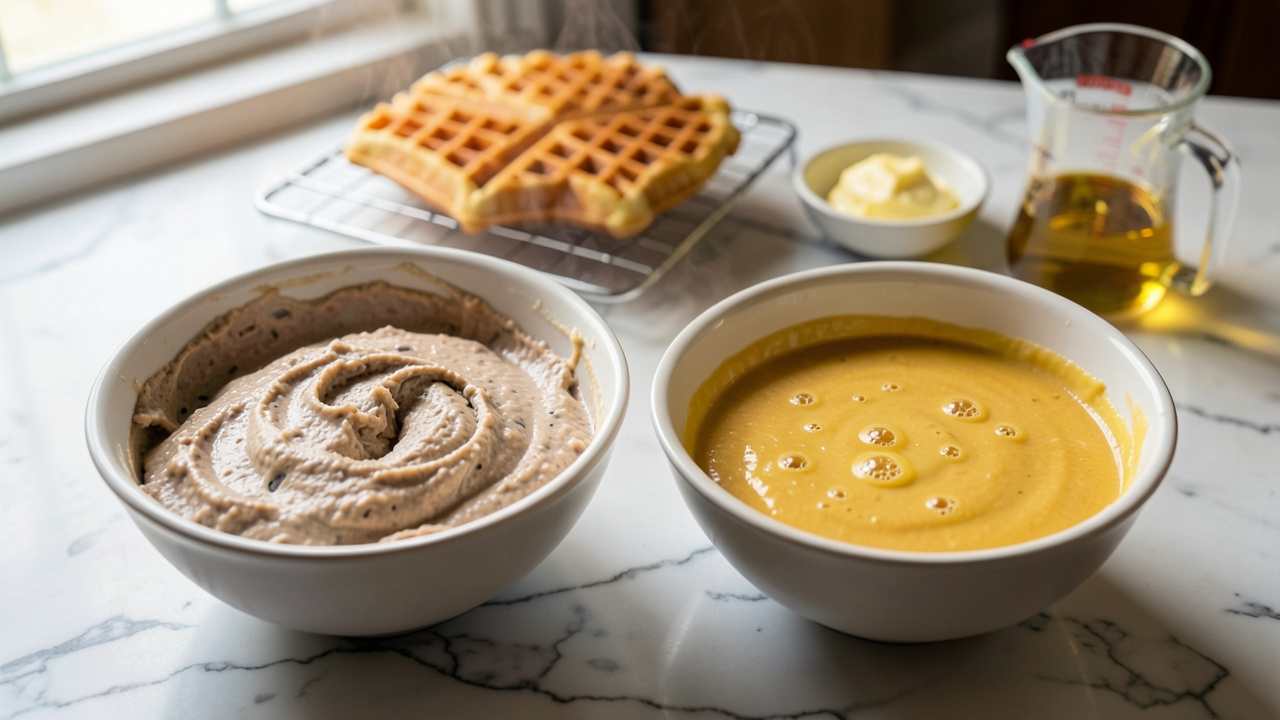
You can use your favorite pancake recipe and modify it for waffles. The adjustment is simple: add more fat and reduce liquid slightly.
- Start with your standard pancake recipe. For every 1 cup of flour, add 2 extra tablespoons of melted butter or oil.
- Reduce the milk or water by 2 tablespoons. This keeps the batter thicker.
- Separate the egg white from the yolk. Whip the white until soft peaks form, then fold it into the batter. This adds structure and lightness.
- Let the batter rest for 5 minutes. This allows starch to absorb liquid and thicken the batter.
- Preheat the waffle iron fully before pouring batter. A hot iron helps the fat create a crisp crust immediately.
- Cook until steam stops escaping. Lifting the lid too early can tear the waffle.
Warning: Do not overmix the batter after adding flour. Overmixing develops too much gluten, resulting in tough, dense waffles. Mix until just combined.
For best results, use as a reference. They recommend using melted butter for flavor and a touch of oil for better browning.
Who Needs This Knowledge?
Home cooks who want restaurant-quality waffles need to understand fat ratios. The same applies to bakers experimenting with batter-based desserts. Commercial kitchens also adjust fat content for consistency across large batches.
- Home cooks hoping to improve their weekend breakfast.
- Baking enthusiasts testing new recipes for waffle sandwiches or waffle cones.
- Restaurant chefs who need reliable, nonstick waffle production.
- Food bloggers creating content around breakfast recipes.
- Other food professionals looking for science-based adjustments.
Frequently Asked Questions
Can I use pancake batter in a waffle iron?
You can, but the results will not be good. The waffle will likely stick to the iron, turn out dry, and lack the crisp exterior. Add 2 tablespoons of oil per cup of flour to adapt the batter.
What type of fat is best for waffles?
Melted butter gives the best flavor and browning. For a neutral option, use vegetable oil or canola oil. Coconut oil works too, but it adds a mild coconut flavor.
How much fat should I add to waffle batter?
Aim for 2-3 tablespoons of butter or oil per cup of flour. This puts you in the 15-25% fat range that food scientists recommend for waffles.
Does extra fat make waffles greasy?
If you stay within the recommended range, the batter absorbs the fat during cooking. Greasiness only happens if you exceed 4 tablespoons per cup of flour or use a cold iron that doesn’t set the crust quickly.
Why do my waffles stick to the iron even with butter in the batter?
The batter may not have enough fat, or the iron might not be hot enough. Preheat the iron fully and brush a thin layer of oil on the plates before the first waffle. Also check that your batter has at least 2 tablespoons of fat per cup of flour.
Resources and Tools
King Arthur Baking Company – Expert guides and recipes for waffles and pancakes.
Serious Eats – Science-based approach to waffle making with detailed explanations.
Institute of Food Technologists – Professional resources on food science and batter chemistry.
USDA National Agricultural Library – Data on ingredients, nutrition, and food processing.
Final Thoughts
The extra fat in waffle batter is not optional – it determines the texture, crispness, and ease of cooking. Understanding the science helps you adjust any recipe for perfect waffles every time. Experiment with your favorite batter and start with the fat ratio in this guide.