Salt Timing Map: When To Salt Pasta, Meat, Vegetables, Sauces
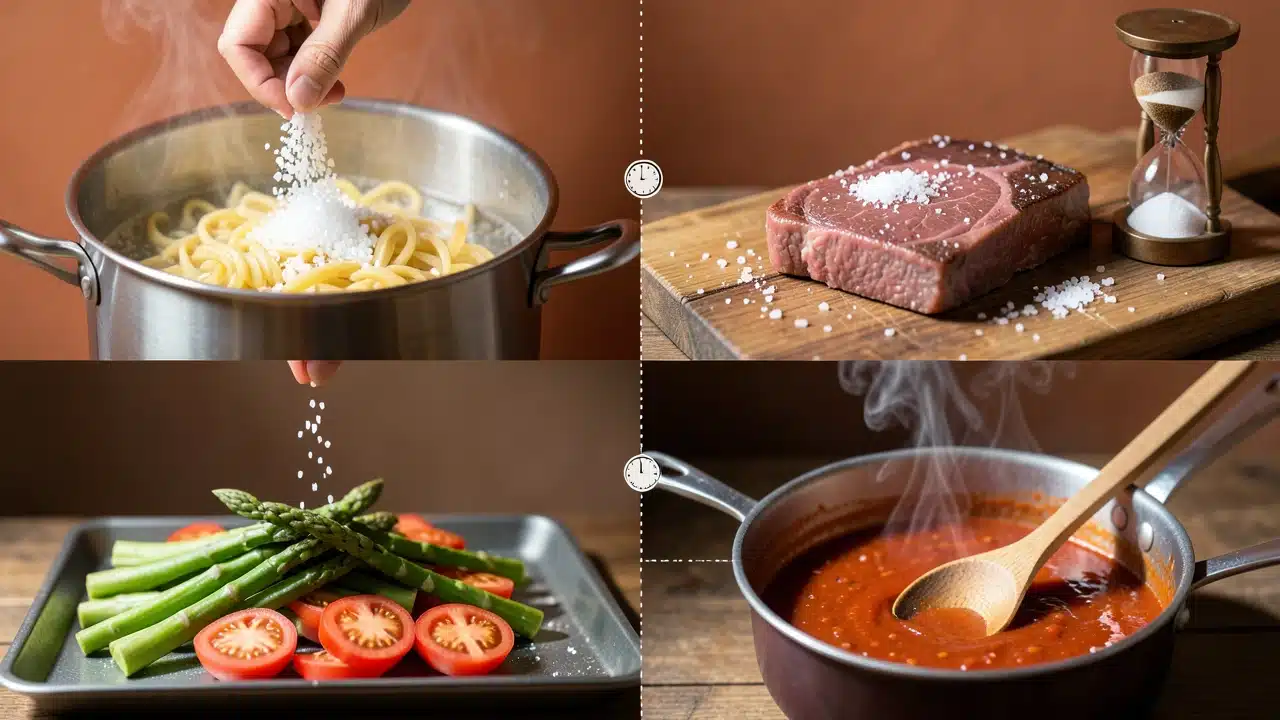
Salt timing map means salting each food when it can still absorb or balance seasoning. Salt pasta water before pasta goes in, meat either well ahead or just before cooking, watery vegetables early only when draining, and sauces lightly during cooking but finish after reduction. This prevents bland interiors, limp vegetables, and oversalted sauces.
Getting your food to taste just right often comes down to small details, and salt is a big one. Knowing exactly when to add salt to your pasta, meat, vegetables, and sauces can make a world of difference. It’s not just about making things salty; it’s about bringing out the best flavors in everything you cook.
Following a clear Salt Timing Map: When to Salt Pasta, Meat, Vegetables, Sauces helps you avoid blandness or over-salting.
You’ll learn how the timing impacts texture and taste, ensuring your dishes are always delicious and perfectly seasoned, making every meal a success.
Key Takeaways
- Adding salt at the right time can dramatically improve the flavor and texture of your food.
- Different foods require different salting techniques for optimal results.
- Salting meat before cooking helps it retain moisture and develop a better crust.
- Seasoning pasta water well is crucial for flavorful pasta.
- Vegetables can be salted at various stages depending on whether you’re roasting, steaming, or sautéing.
- Sauces benefit from tasting and adjusting salt levels at the end of cooking.
Unlock Deeper Flavor: Salting Meat for Success
Meat is a prime candidate for careful salting. The goal here is to enhance its natural taste and improve its texture during cooking.
When you salt meat, you’re not just adding a salty taste; you’re affecting how moisture is retained and how a crust forms.
This is a key part of any good Salt Timing Map: When to Salt Pasta, Meat, Vegetables, Sauces.
When to Salt Red Meats (Steak, Roasts)
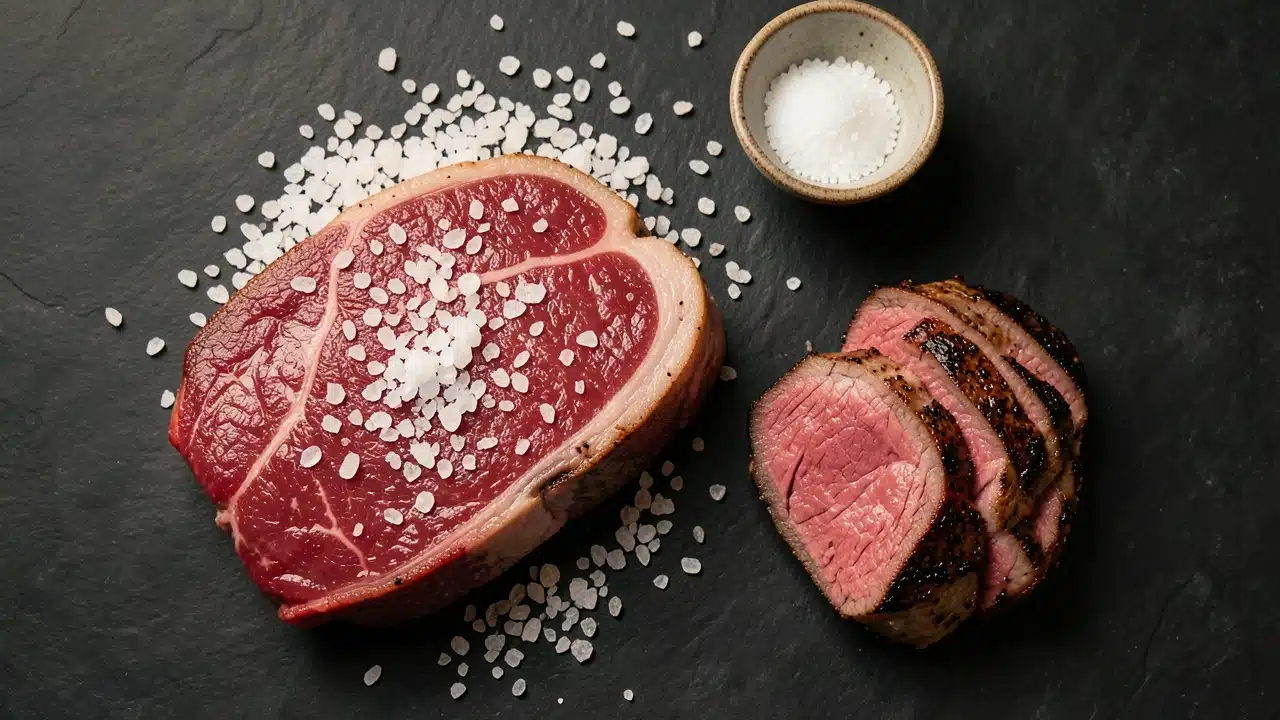
For cuts like steak or roasts, a common and effective method is to salt them generously well in advance of cooking.
This is often called dry-brining. Aim to salt at least 45 minutes before cooking, or even better, several hours or overnight.
- Dry-brining: Sprinkle salt evenly over the entire surface of the meat. The salt draws out some moisture, which then dissolves the salt, creating a concentrated brine. This brine is reabsorbed into the meat, seasoning it deeply and helping it retain moisture during cooking.
- Benefits: Deeper flavor penetration, more tender meat, and a better sear or crust when cooked.
When to Salt Poultry (Chicken, Turkey)
Poultry benefits from salting too, but the timing can be a bit more flexible. You can dry-brine poultry like you would red meat for similar benefits. Alternatively, you can salt it closer to cooking time if you’re short on time.
- Dry-brining Poultry: Similar to red meat, salting poultry 12-24 hours ahead of time yields the best results. This ensures the salt penetrates the meat thoroughly.
- Salting Closer to Cooking: If you can’t dry-brine, salting the skin and inside the cavity just before roasting can still help. It seasons the meat directly and helps the skin crisp up.
- Brining (Wet): For very moist and tender poultry, a wet brine (salt and water solution) can be used. This is usually done for several hours or overnight.
When to Salt Pork
Pork, like other meats, responds well to advance salting. Whether it's a pork loin, chops, or a whole roast, dry-brining is a great approach.
- Dry-brining Pork: Salt pork at least an hour before cooking, but ideally several hours or overnight for the best flavor and moisture retention.
Perfecting Pasta: The Art of Salting Pasta Water
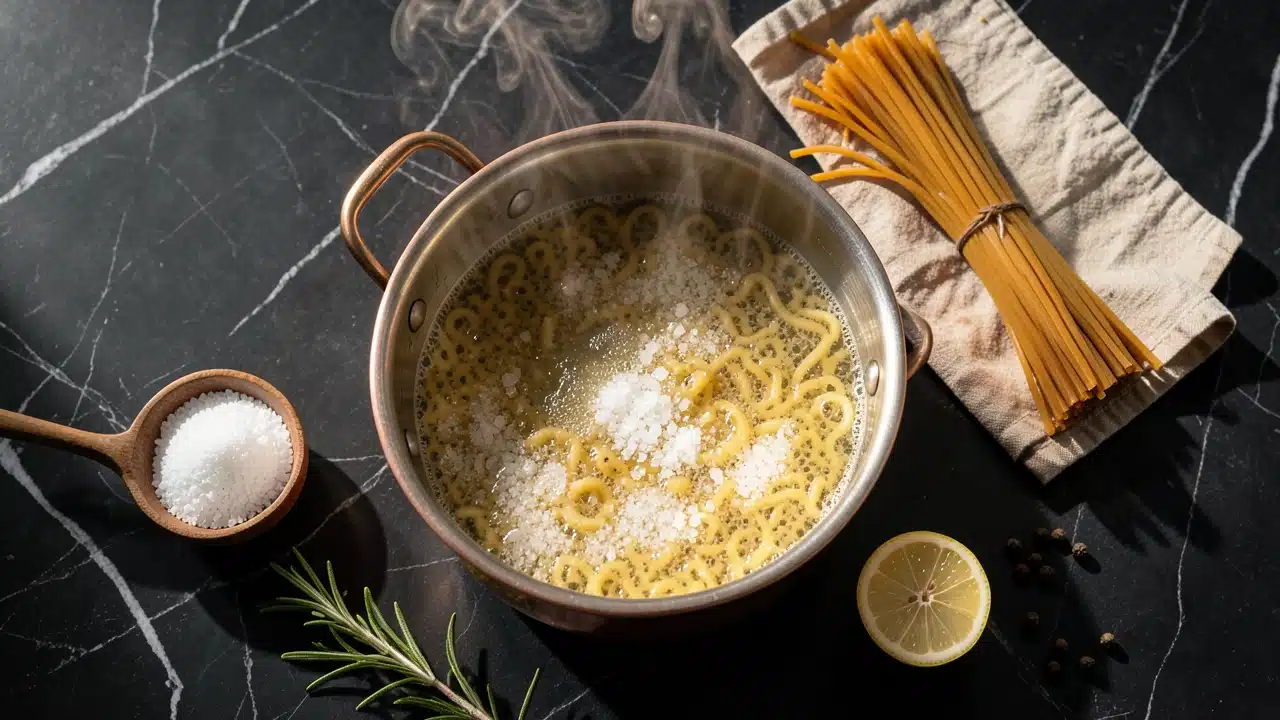
When it comes to pasta, the most critical moment for salting is the water itself. This is a fundamental step in mastering your Salt Timing Map: When to Salt Pasta, Meat, Vegetables, Sauces. Salting the water ensures that every strand of pasta is seasoned from the inside out as it cooks.
Why Salt Pasta Water?
Think of the pasta as a sponge. When you cook it in unsalted water, it absorbs plain water, and no matter how much sauce you add later, the pasta itself will taste a bit bland. Salting the water infuses the pasta with flavor from the very beginning.
How Much Salt?
A common guideline is to make the pasta water taste like the sea. This means using a generous amount of salt. For a large pot of water (about 4-6 quarts), use 1-2 tablespoons of kosher salt.
It might seem like a lot, but most of it washes away with the drained water. The pasta only absorbs a fraction of it.
When to Add Salt
First, bring your water to a rolling boil. Next, add the salt to the boiling water. Then, add your pasta.
Adding salt before the water boils won’t hurt, but adding it to already boiling water helps it dissolve faster and more evenly. Salting the water is the only time you need to worry about seasoning the pasta itself.
Vegetable Versatility: Salting for Texture and Taste
Vegetables are diverse, and their salting needs vary greatly depending on the cooking method. Understanding this helps you build a comprehensive Salt Timing Map: When to Salt Pasta, Meat, Vegetables, Sauces.
Roasting Vegetables
Roasting brings out the natural sweetness in vegetables. Salting them before roasting helps to draw out a little moisture, which can lead to crispier edges and more concentrated flavors.
- When to Salt: Toss vegetables with oil and salt (kosher salt is great for this) before placing them on the baking sheet.
- Why it Works: Salt helps to caramelize the natural sugars in vegetables, enhancing their flavor and creating appealing textures.
Sautéing or Pan-Frying Vegetables
For quick cooking methods like sautéing, timing is important to prevent vegetables from becoming soggy.
- When to Salt: It’s often best to salt vegetables towards the end of cooking or just before serving. If you salt them too early, they can release too much moisture, leading to steaming rather than sautéing.
- Exception: For firmer vegetables like potatoes or carrots that need longer to cook, you might salt them earlier to help them soften.
Steaming or Boiling Vegetables
When vegetables are steamed or boiled, they are surrounded by water, so they won’t absorb as much flavor from the cooking liquid. This means seasoning is crucial.
- When to Salt: The best approach here is to salt the vegetables after they are cooked, just before serving. You can also add a little salt to the steaming water, but it’s less effective than seasoning the vegetables directly.
Salting Leafy Greens (Spinach, Kale)
Leafy greens wilt quickly when cooked. Salting them early can help them release their water and cook down faster.
- When to Salt: Add salt when you add the greens to the pan. The salt will help them wilt and release their liquid, which can then be used to add flavor to the dish.
Sauce Savvy: Adjusting Salt for Perfect Finish
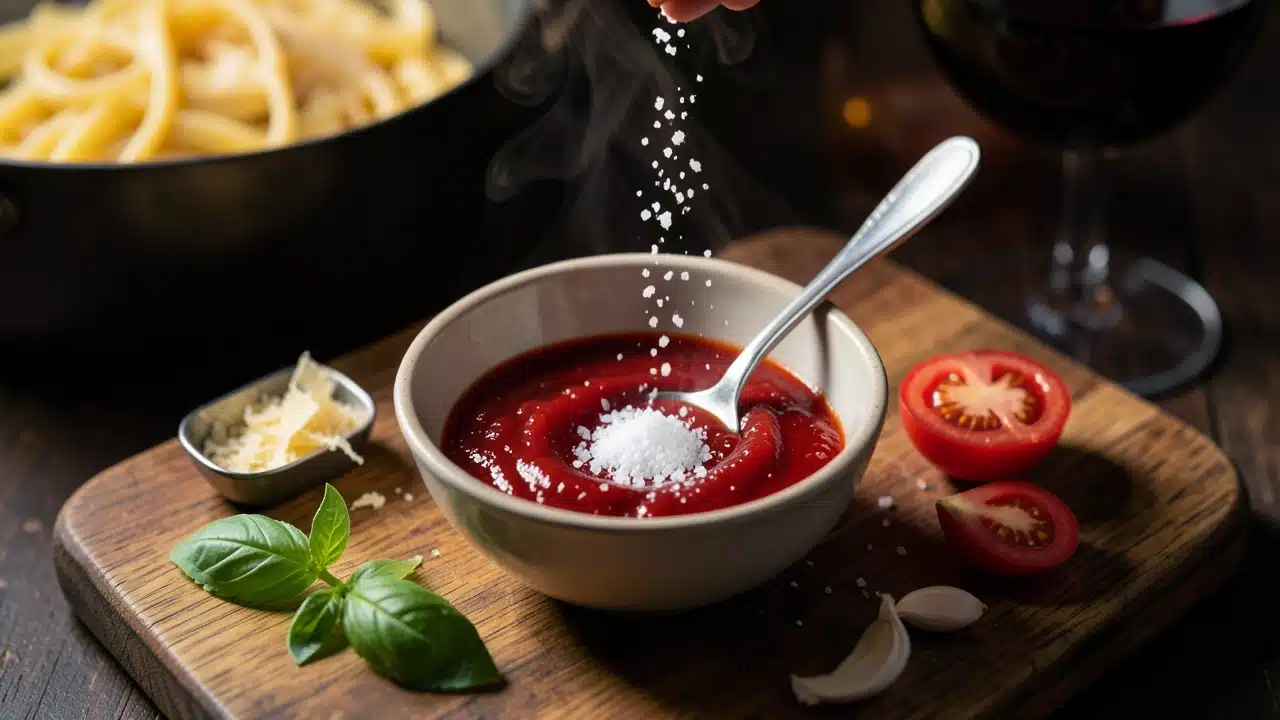
Sauces are where precision in salting truly shines. Unlike other components, sauces are often tasted and adjusted as they cook. This final stage is a critical part of the Salt Timing Map: When to Salt Pasta, Meat, Vegetables, Sauces.
Building Flavor Layers
Many sauces start with aromatics like onions and garlic, which are sautéed. You might add a pinch of salt at this stage to help soften the vegetables. As you add liquids like broth, wine, or tomatoes, you're building layers of flavor.The Crucial Tasting and Adjusting Phase
The most important time to salt sauces is at the end of the cooking process. This is because liquids reduce as they cook, concentrating all the flavors, including any salt you’ve already added. If you over-salt early on, it’s very difficult to fix.
- When to Salt: Taste your sauce frequently as it thickens. Add salt gradually, a little at a time, tasting after each addition.
- Why it Matters: This allows you to achieve the perfect balance of flavors. Salt doesn’t just make things salty; it enhances all the other tastes in the sauce, making them brighter and more complex.
- Consider Other Ingredients: Remember that ingredients like cheese, cured meats, or soy sauce can add significant saltiness. Always account for these when seasoning your sauce.
The Role of Different Salts
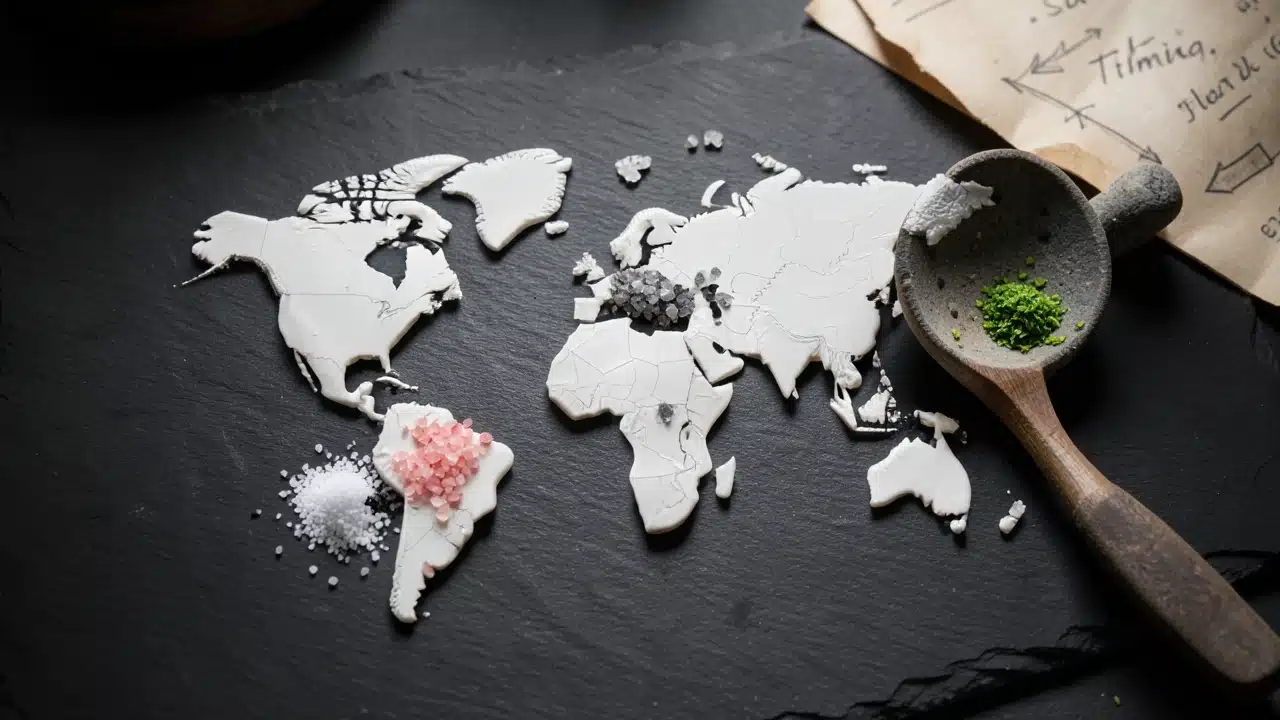
Not all salts are created equal, and their form can influence how and when you use them. Understanding this adds another layer to your Salt Timing Map: When to Salt Pasta, Meat, Vegetables, Sauces.
Kosher Salt
Kosher salt has larger, irregular crystals. This makes it easier to pinch and distribute evenly, especially when seasoning larger items like meat or vegetables. Its texture also makes it ideal for rubs and brines.
- Best for: Dry-brining meats, seasoning vegetables before roasting, salting pasta water.
Table Salt
Table salt is finely ground and often contains iodine. Due to its fine texture, it can be easy to over-salt if you’re not careful. It dissolves quickly.
- Best for: Baking (where precise measurements are key), finishing dishes where a fine salt is desired. Use sparingly for general cooking.
Sea Salt
Sea salt comes in various textures, from fine to coarse flakes. It often has a cleaner, brighter taste than table salt. Flaky sea salts are excellent for finishing dishes.
- Best for: Finishing dishes, adding a textural element, general cooking. Coarser sea salts can be used like kosher salt.
When Salt Type Matters
When following a Salt Timing Map: When to Salt Pasta, Meat, Vegetables, Sauces, consider the salt’s coarseness. Coarser salts are easier to control for larger food items, while finer salts are better for precise seasoning in baking or finishing.
Common Mistakes to Avoid
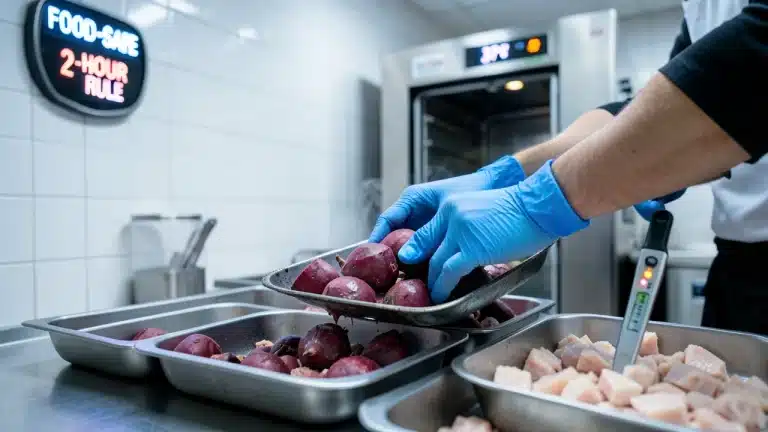
Even with a guide, it’s easy to make a few slips. Knowing these common pitfalls can help you avoid them. Salting before cooking ensures even seasoning throughout the meat, as noted by food safety experts.
- Over-salting Early: This is the most common mistake, especially with sauces. It’s hard to fix once it happens.
- Under-salting Pasta Water: Leading to bland pasta that no sauce can fully rescue.
- Salting Delicate Ingredients Too Soon: For example, salting fish just before cooking might draw out too much moisture, preventing a good sear.
- Not Tasting Enough: Relying on guesswork instead of tasting your food as you cook.
Comparison: Salting Before vs. After Cooking
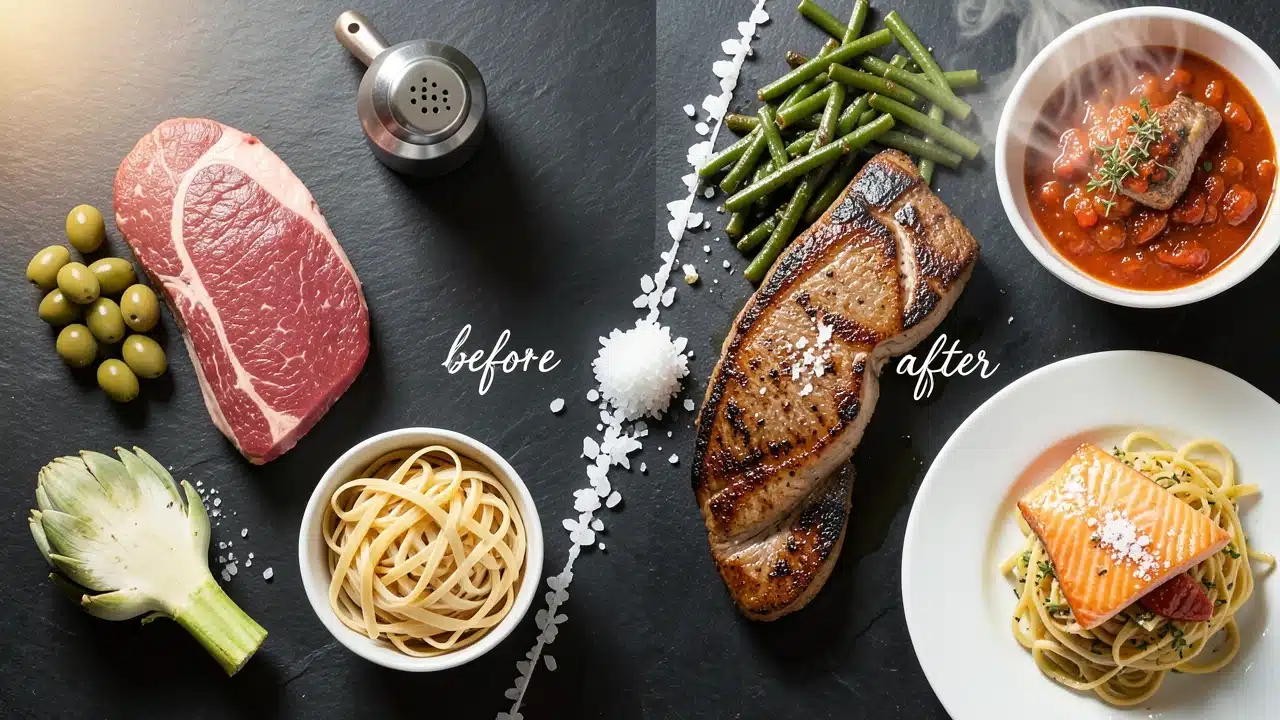
The timing of salt application significantly impacts the final dish. Here’s a quick look at the benefits of salting at different stages. Many chefs recommend you salt meats ahead of time to allow the seasoning to penetrate deeply and ensure even cooking.
| Before Cooking (e.g., Meats) | Deep, even seasoning throughout the food. | Moisture retention, better crust development, tenderness. | Steaks, roasts, whole poultry, firm vegetables. |
| During Cooking (e.g., Pasta Water) | Even seasoning infused into the core of the food. | No significant negative texture impact; essential for flavor. | Pasta, grains, some soups. |
| During Cooking (e.g., Sautéed Veggies) | Seasoning as flavors meld. | Can draw out moisture, affecting crispness if done too early. | Vegetables that need to soften, some sauces. |
| After Cooking (Finishing) | Brightens and enhances existing flavors, adds immediate salty hit. | Can add a slight crunch or pop with flaky salts. | Soups, stews, roasted vegetables, finished sauces, grilled meats. |
Frequently Asked Questions Of Salt Timing Map: When To Salt Pasta, Meat, Vegetables, Sauces
Question: When is the best time to salt meat?
Answer: For red meats, poultry, and pork, salting well in advance of cooking (dry-brining) for at least 45 minutes, and ideally several hours or overnight, yields the best flavor and texture results.
Question: Should I salt my pasta water?
Answer: Yes, absolutely. Salting pasta water generously is crucial for ensuring the pasta itself is seasoned from the inside out, making it taste much better.
Question: Is it okay to salt vegetables before cooking?
Answer: Yes, for vegetables like those you roast, salting them before cooking helps draw out moisture for crispier edges and better caramelization. For sautéing, it’s often better to salt towards the end.
Question: How do I fix an over-salted sauce?
Answer: If a sauce is too salty, you can try diluting it with more unsalted liquid (like broth or water), adding a bit of sweetness (like sugar or honey), or adding a starchy element like a potato to absorb some salt.
Question: Does the type of salt matter for the Salt Timing Map: When to Salt Pasta, Meat, Vegetables, Sauces?
Answer: Yes, the type of salt can matter. Kosher salt is great for rubs and large items due to its texture, while fine table salt or sea salt is better for precise finishing touches.
Question: When should I salt my vegetables if I’m steaming them?
Answer: For steamed vegetables, it’s best to salt them after they are cooked and just before serving, as they won’t absorb flavor from the cooking steam.
Final Thoughts
Mastering when to salt your food is key to delicious results. Remember to salt meats ahead of time for deep flavor, season pasta water generously, salt vegetables based on cooking method, and always taste and adjust sauces at the end. This approach ensures your cooking is always flavorful and perfectly balanced.