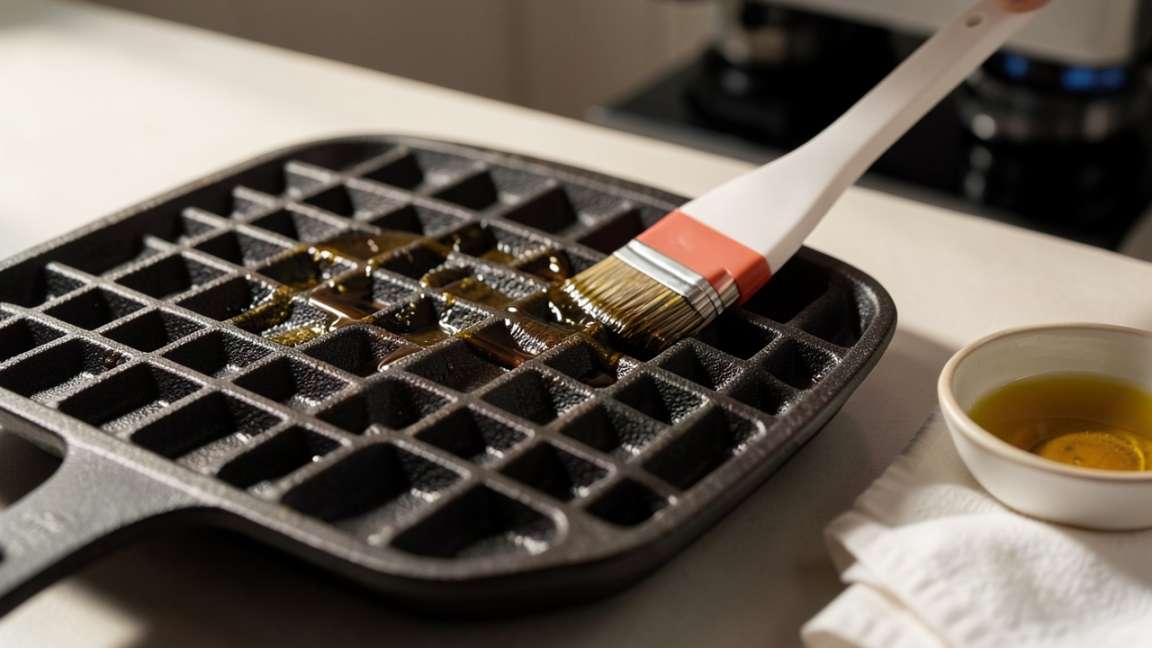
Seasoning Cast Iron Waffle Plates to Prevent Future Sticking
Seasoning cast iron waffle plates prevents future sticking by baking a thin layer of high-smoke-point oil onto the iron to form a durable polymerized coating. This process fills micropores and creates a smooth, non-stick surface that lasts for years with proper maintenance. Multiple thin coats of oils like flaxseed or grapeseed applied at consistent oven heat above 400°F produce the most effective and long-lasting non-stick performance.
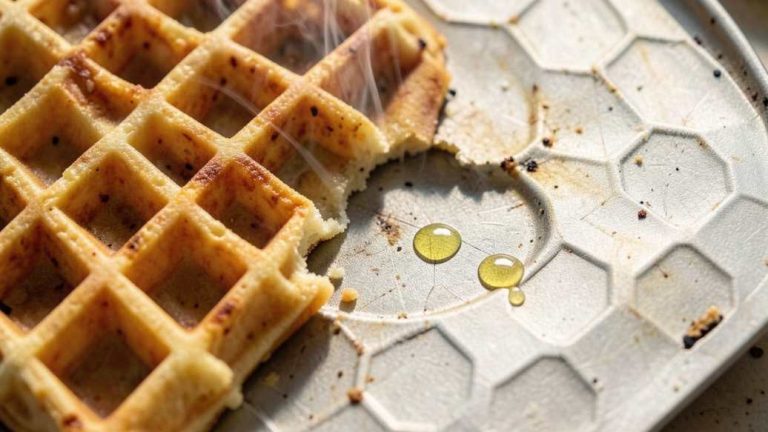
Cast iron waffle plates can stick even after multiple uses. Proper seasoning creates a natural non-stick surface that lasts for years.
Quick Verdict: Simply put, seasoning cast iron waffle plates involves baking a thin layer of oil onto the iron to form a hard, polymerized coating. This layer fills micropores and creates a smooth, non-stick surface. To prevent future sticking, you need multiple thin coats, the right oil with a high smoke point, and consistent oven heat.
Seasoning Cast Iron Waffle Plates to Prevent Future Sticking is a simple process anyone can do at home. You do not need special tools. You just need an oven, the right oil, and a little patience.
Key Takeaways
- Seasoning is a polymerization process that bonds oil to iron, creating a natural non-stick layer.
- Multiple thin coats of oil produce a more durable and stick-resistant surface than one thick coat.
- Use oils with a smoke point above 400°F such as flaxseed, grapeseed, or canola oil for best results.
- Always preheat the cast iron before applying oil to ensure even spreading and proper bonding.
- Maintenance seasoning after each use helps maintain non-stick performance and prevents rust.
Before You Start
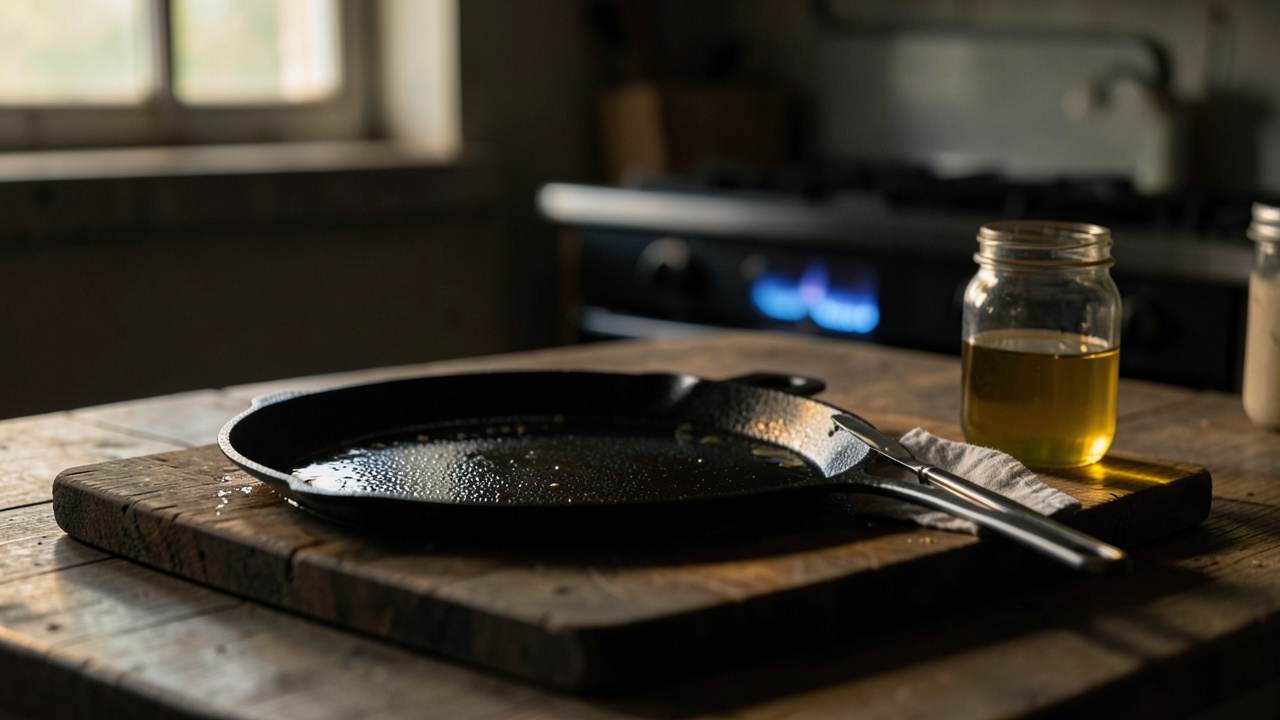
Gather everything you need. This makes the process smooth and prevents mistakes.
- Cast iron waffle plates (clean and dry)
- High smoke point oil (flaxseed, grapeseed, canola, or vegetable oil)
- Paper towels or a lint-free cloth
- Baking sheet lined with aluminum foil (to catch drips)
- Oven mitts
- Oven that reaches at least 450°F
Important: Do not use flaxseed oil if you live in a humid climate. According to, flaxseed oil seasoning can flake off over time in humid environments. Grapeseed or canola oil are more reliable choices.
Step-by-Step Seasoning Process
Follow these steps exactly. Rushing leads to uneven seasoning and future sticking.
Step 1: Clean the Plates Thoroughly
Wash the waffle plates with warm water and a small amount of mild dish soap. Use a stiff brush or non-abrasive scrub pad to remove any old food residue. Rinse completely and dry with a lint-free towel.
Warning: Never use steel wool or harsh detergents. They can damage the bare iron surface. Stick to mild dish soap and a nylon brush.
Step 2: Apply a Thin Layer of Oil
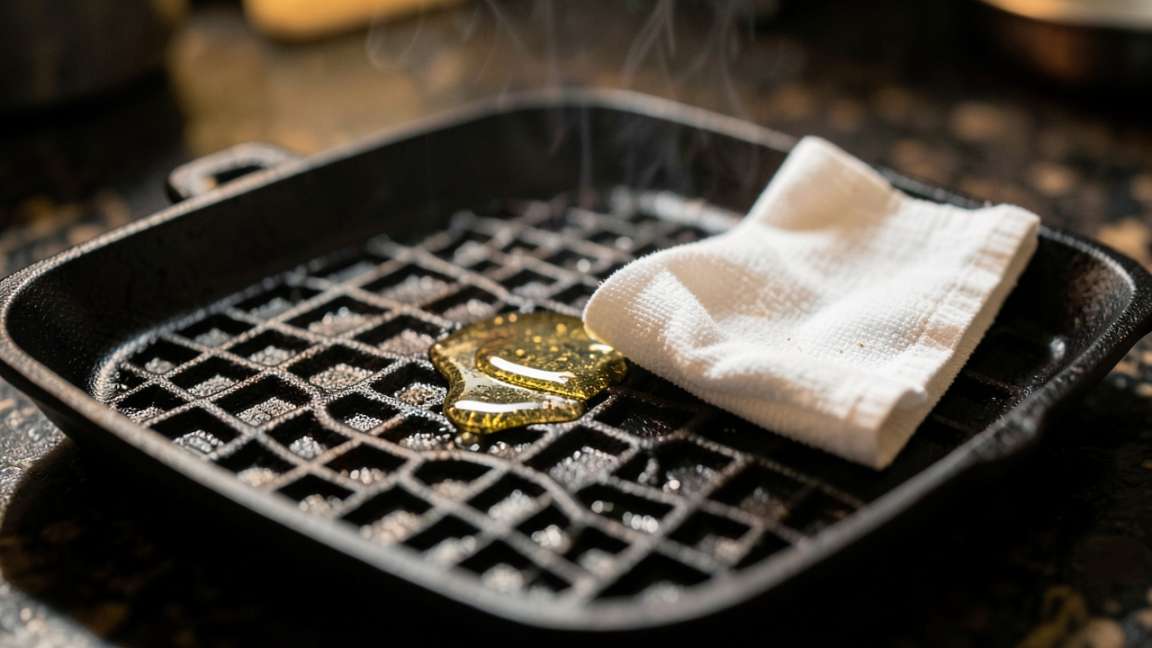
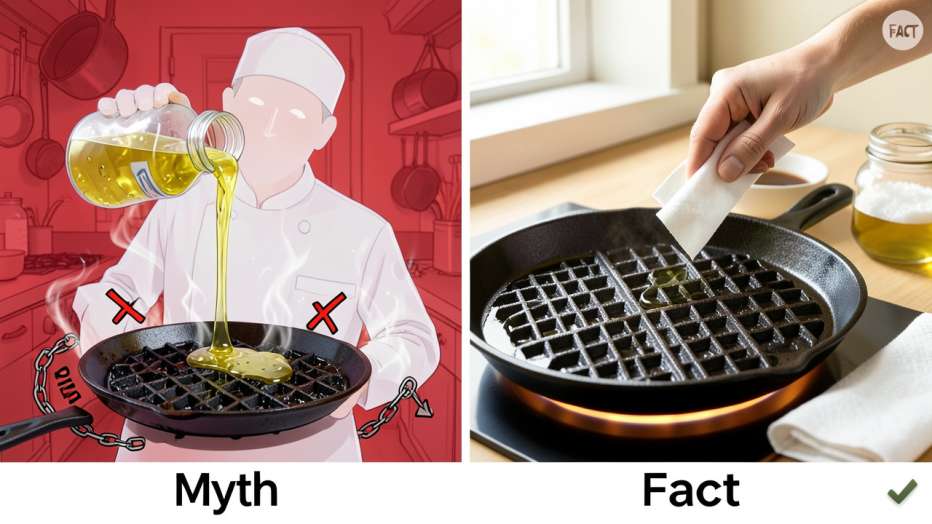
Pour a small amount of oil onto a paper towel. Rub it over every surface of the waffle plates, including the corners and edges. Use a second clean towel to wipe off all excess oil. The surface should look almost dry. A thin layer is critical-thick oil pools and creates sticky patches.
Step 3: Bake the Plates in the Oven
Preheat your oven to 450°F. Place the oiled waffle plates upside down on the prepared baking sheet. This allows excess oil to drip off. Bake for one hour. After the hour, turn the oven off and let the plates cool completely inside the oven.
Step 4: Repeat for Multiple Coats
For best results, repeat steps 2 and 3 three to four times. Each coat builds a stronger polymer layer. According to, three coats are typically enough for a new piece. More coats give even better non-stick performance.
Step 5: Cool and Store Properly
Once the final coat is cool, remove the plates from the oven. Store them in a dry place. Do not stack heavy items on top of the plates. This can crack the seasoning.
What to Expect: Timeline and Costs
The entire seasoning process takes about 4 to 5 hours when you factor in cooling time. Costs are minimal-you only need a bottle of oil. Here is a quick breakdown.
| Step | Time Needed | Cost |
|---|---|---|
| Cleaning and drying | 10-15 minutes | $0 |
| Applying oil (per coat) | 5 minutes | $0.10 in oil |
| Baking each coat | 1 hour + 30 min cool | $0.20 (oven energy) |
| Total (3 coats) | About 4-5 hours | Less than $1 |
Tip: Season multiple cast iron pieces at once to save time and energy. Place them on different racks in the oven.
Common Mistakes to Avoid
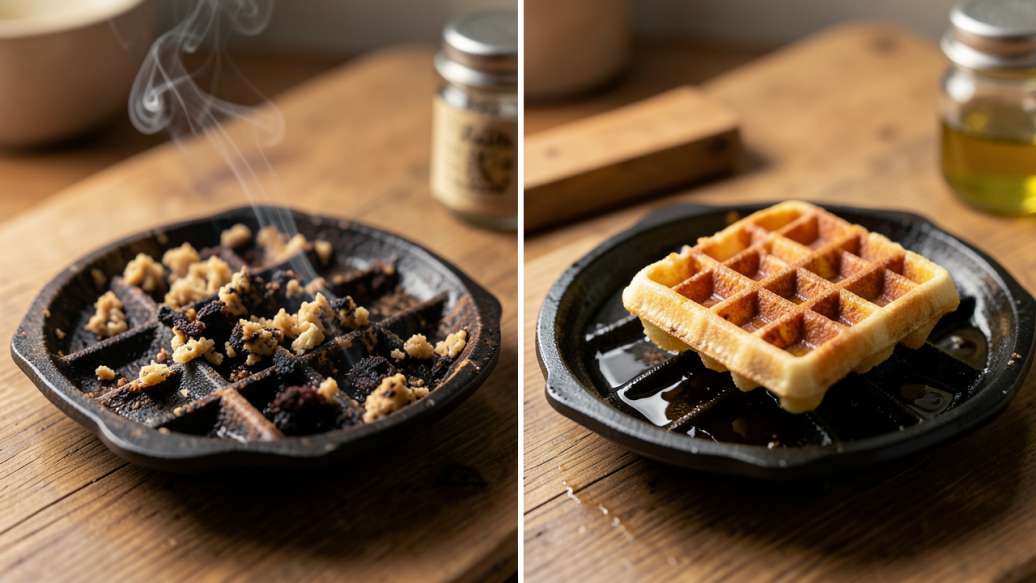
Even experienced cooks make these errors. Avoid them to get a flawless non-stick surface.
- Using too much oil. Excess oil beads up and creates sticky, uneven patches. Always wipe off thoroughly.
- Baking at the wrong temperature. Too low and the oil does not polymerize. Too high and it burns. Stick to 450°F.
- Skipping the cooling step. Removing hot plates from the oven can cause the seasoning to crack. Let them cool inside.
- Using butter or olive oil for seasoning. These have low smoke points and burn easily. Use neutral oils with high smoke points.
- Not cleaning off old seasoning before re-seasoning. Old flaky seasoning prevents new coats from bonding. Strip if needed.
Pro Tips for Long-Lasting Non-Stick Waffle Plates
Beyond the initial seasoning, these habits keep your plates performing well.
- After each use, wash the plates with hot water and a soft brush. No soap needed unless there is heavy grease. Dry immediately on the stove.
- Apply a very thin coat of oil to the warm plates after cleaning. This maintains the seasoning between uses.
- Preheat the waffle iron fully before adding batter. A hot surface helps release the waffle cleanly.
- Use a silicone brush to apply a bit of oil to the plates just before pouring batter. This extra step guarantees no sticking.
- Store the waffle plates with a paper towel between them to absorb moisture. This prevents rust and protects the seasoning.
How to Tell if Your Seasoning Needs Renewal
Seasoning does not last forever. Watch for these signs that it is time to re-season.
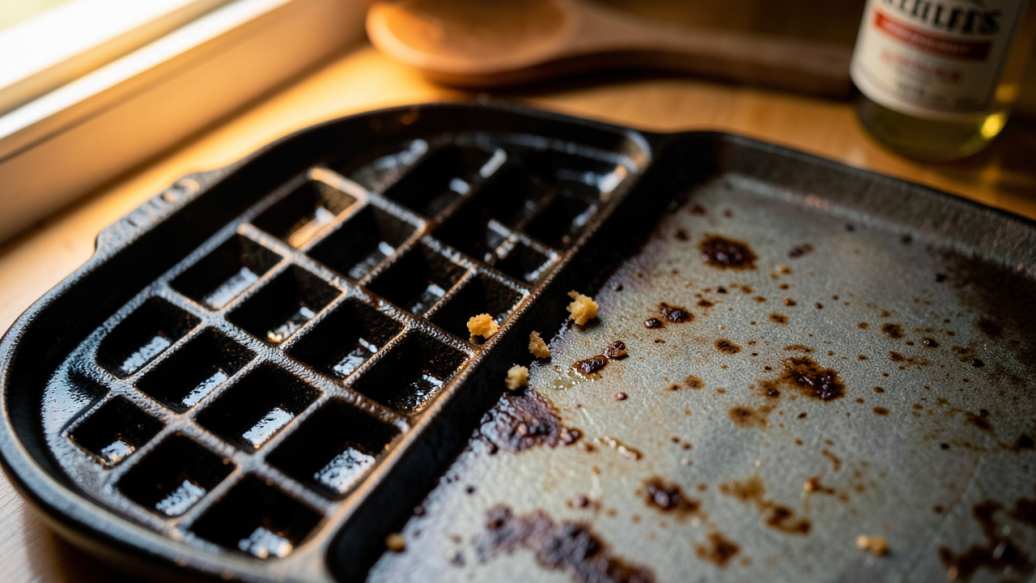
- Waffles start sticking in the same spots repeatedly.
- The plates look dull or have patches of bare gray metal.
- Rust appears on the surface.
- You see flaking or peeling seasoning.
If you see any of these, repeat the full seasoning process. According to the, properly seasoned cast iron can reduce iron leaching by up to 20% compared to unseasoned iron. Renewing seasoning also keeps your food safe and your iron healthy.
Common Myths vs Facts About Seasoning Cast Iron
There are many misconceptions about cast iron care. Here are the facts.
- Myth: You cannot use soap on cast iron. Fact: Modern mild dish soap is safe. The polymerized seasoning is bonded to the iron and will not wash off. Rinse and dry thoroughly.
- Myth: One coat of seasoning is enough. Fact: A single coat is thin and wears off quickly. According to, three to four coats provide a durable non-stick surface.
- Myth: Seasoning only works on skillets, not waffle plates. Fact: The same polymerization process works on any cast iron surface. Waffle plates have deep grooves that need extra care, but the science is identical.
Oil Comparison for Seasoning
Choosing the right oil makes a big difference. Below is a comparison of common oils used for seasoning cast iron.
| Oil Type | Smoke Point | Seasoning Durability | Best For |
|---|---|---|---|
| Flaxseed oil | 225°F | Hardest but prone to flaking | Dry climates, collectors |
| Grapeseed oil | 420°F | Strong, flexible | Everyday seasoning |
| Canola oil | 400°F | Good, neutral flavor | Budget-friendly option |
| Vegetable oil | 400°F | Moderate | Quick maintenance coats |
| Coconut oil | 350°F | Low smoke point, weak seasoning | Not recommended |
Resources and Tools
Use these trusted sources and products for the best results.
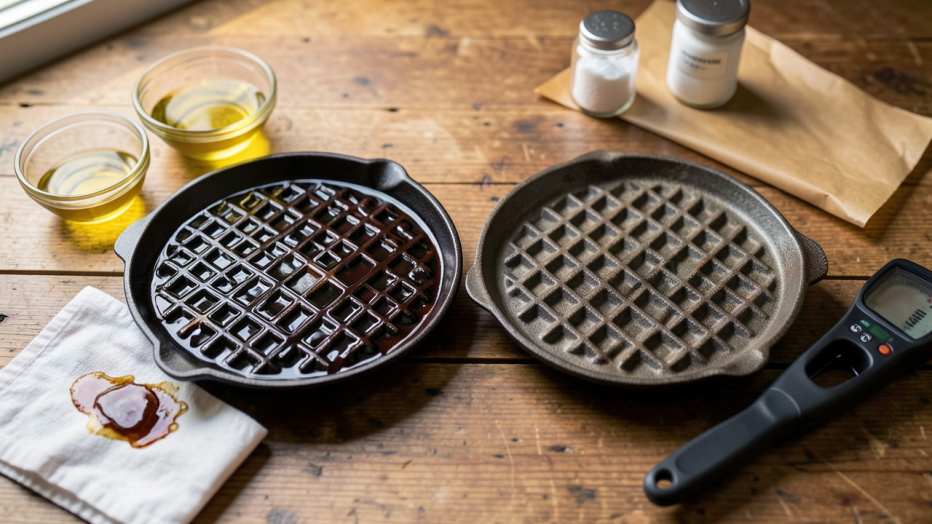
- Lodge Cast Iron Care Guide – Official instructions for seasoning and maintaining cast iron.
- America’s Test Kitchen Seasoning Guide – In-depth testing of oils and methods.
- Grapeseed Oil (brands like La Tourangelle) – High smoke point, great for seasoning. Available at most grocery stores.
- Lint-Free Cloth Set – Ideal for applying thin oil layers without leaving fibers.
- Silicone Brush – Useful for applying oil to hot waffle plates before pouring batter.
Frequently Asked Questions
How often should I season my cast iron waffle plates?
Season them every 3 to 6 months with regular use. If waffles start sticking, season them sooner. Maintenance coats after each wash help extend the interval.
Can I use cooking spray instead of oil?
Cooking sprays contain lecithin and propellants that leave a sticky residue. They are not suitable for seasoning. Always use liquid oil directly.
Do I need to strip old seasoning before re-seasoning?
Only if the current seasoning is flaking or rusted. Use a brief vinegar soak or a self-cleaning oven cycle to strip. Otherwise, just clean and apply new coats over the existing layer.
Why does my seasoning look brown instead of black?
Brown seasoning is common for the first few coats. It turns deep black as more layers build up. This is normal and does not affect performance.
Can I season waffle plates on a grill or campfire?
Yes, but temperature control is harder. Use an oven for consistent results. If you use a grill, keep it at 400-450°F and monitor closely.
Final Thoughts
Seasoning cast iron waffle plates is a simple, low-cost way to prevent sticking for years. The key is thin oil layers, consistent oven heat, and regular maintenance. Start with three coats of grapeseed or canola oil and wipe off every bit of excess. Your waffles will release perfectly every time.