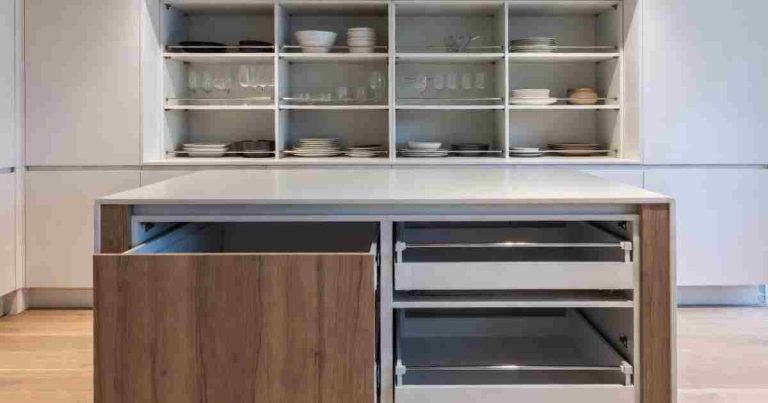
What Is The Correct Height For Kitchen Countertops? (Based On Body Height)
Figuring out What Is the Correct Height for Kitchen Countertops? (Based on Body Height) can seem tricky at first, especially if you’re new to home projects. You want your kitchen to feel just right, comfortable for everyone who uses it.
Figuring out What Is the Correct Height for Kitchen Countertops?
Don’t worry, it’s not as hard as it sounds! We’ll walk through it simply, step-by-step. First, let’s look at why this question pops up so often.
Key Takeaways
- You’ll learn how your own height affects the ideal kitchen counter height.
- Discover why standard counter heights might not work for everyone.
- Find out the simple math to calculate your perfect counter height.
- Understand how to adjust for different kitchen tasks and users.
- Get tips on measuring and planning your countertop installation.
![What Is The Correct Height For Kitchen Countertops (Based On Body Height)[1]](https://kitchentoolslab.com/wp-content/uploads/2026/05/What_Is_The_Correct_Height_For_Kitchen_Countertops__Based_On_Body_Height1.jpg)
Why Countertop Height Matters for You
The height of your kitchen countertops plays a big role in how comfortable and efficient your kitchen feels. When counters are too high or too low, it can lead to awkward bending, stretching, or even pain. This is especially true for people with different body heights.
A counter that works well for someone tall might be too high for someone shorter, making everyday tasks like chopping vegetables or preparing meals a chore.
Many homes have a standard kitchen counter height, but this doesn’t account for the variety of people who use kitchens every day. For beginners, trying to figure out what’s best can feel like a puzzle. This guide will break it down into easy steps so you can create a kitchen that feels just right for you and your family.
Many homes have a standard kitchen counter height, but this doesn't account for the variety of people who use kitchens every day.
Understanding Standard Kitchen Counter Heights
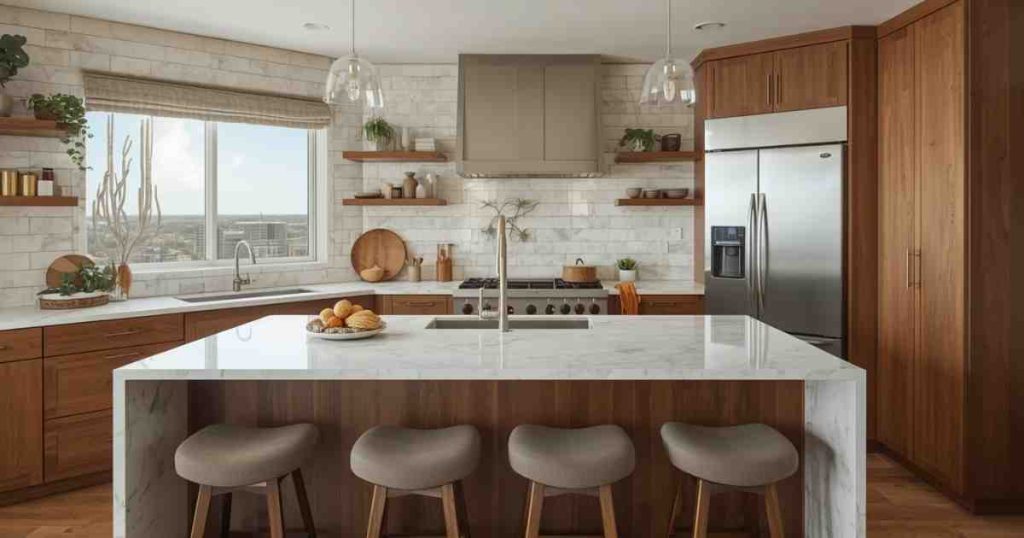
Most kitchens in North America come with countertops set at a standard height. This standard has been around for a long time and is based on general assumptions about the average person. Knowing this standard is a good starting point, even if it’s not the perfect fit for everyone.
The typical height for a kitchen countertop is 36 inches from the floor to the top of the counter surface. This measurement includes the thickness of the countertop material and any supporting cabinet structure underneath. This height was established considering factors like cabinet manufacturing ease and a generally accepted ergonomic range for the majority of adults.
The typical height for a kitchen countertop is 36 inches from the floor to the top of the counter surface.
However, with a wider range of heights and body types, this one-size-fits-all approach often falls short.
- The Standard Height: The most common countertop height in homes is 36 inches.
This standard height is often chosen because it aligns with the height of most standard base cabinets, which are typically 34.5 inches tall. When you add a 1.5-inch thick countertop material, you reach the familiar 36-inch mark. It’s a balance of tradition, ease of manufacturing, and a reasonable compromise for many users.
But what happens when you’re significantly taller or shorter than average?
The Impact of Body Height on Kitchen Work
Your body height is a primary factor in how you interact with your kitchen. When your countertops are at the wrong height, it can affect your posture and comfort level significantly. For instance, if the counter is too high, you might find yourself hunching your shoulders or straining your neck to reach it.
This can lead to discomfort and even long-term back or shoulder pain. On the flip side, if the counter is too low, you might have to bend excessively, which can strain your lower back.
Think about tasks that require a lot of time on your feet in the kitchen, like chopping vegetables, kneading dough, or even just washing dishes. If these tasks are performed at an ergonomically incorrect height, they can become physically taxing. This can make cooking, which should be an enjoyable activity, feel like a burden.
The goal is to find a height that allows you to work comfortably and efficiently without putting undue stress on your body.
- Ergonomics and Comfort: The right height reduces strain and makes kitchen tasks more enjoyable.
- Preventing Pain: Avoiding improper posture can prevent back, shoulder, and neck pain.
Consider someone who is 6 feet 5 inches tall. A standard 36-inch counter would likely feel quite low, forcing them to bend significantly. Conversely, someone who is 5 feet tall would find a 36-inch counter potentially too high, causing them to reach up uncomfortably.
These differences are why personalizing kitchen height is so important for a truly functional space.
Finding Your Ideal Countertop Height
The best way to determine the correct height for your kitchen countertops is to base it on your own body. This personalization ensures that your kitchen is comfortable and efficient for you.
The general rule of thumb is to find a height where you can stand with your elbows bent at a 90-degree angle, with your arms relaxed at your sides, and your hands hovering just above the counter surface.
This measurement provides a comfortable working height for most common kitchen tasks. When your elbows are bent at 90 degrees, your forearms are roughly parallel to the floor. Your hands should naturally rest just above where you’ll be doing most of your prep work.
This position minimizes the need to hunch or reach, promoting good posture and reducing fatigue.

The Elbow-Height Method Explained
The elbow-height method is a simple yet effective way to find your personal ideal countertop height. It takes into account your unique body proportions. To do this, stand naturally with your feet flat on the floor.
Let your arms hang loosely at your sides.
Now, bend one elbow to a 90-degree angle, as if you were holding a knife to chop something. Your forearm should be pointing forward, parallel to the floor. Gently place your other hand on the bend of your elbow to help keep it at that 90-degree angle.
You should feel your hand comfortably positioned just above the surface where you’d do most of your work.
- Stand Tall: Begin by standing naturally.
- Bend Elbows: Bend one arm to a 90-degree angle.
- Measure From Elbow: The distance from your bent elbow to the floor is a good starting point for your ideal counter height.
This method gives you a custom measurement that’s much more accurate than a standard height. It ensures that tasks like chopping, stirring, and kneading feel natural and don’t put strain on your body. It’s a practical approach that many professional kitchen designers recommend for custom builds or renovations.
Calculating Your Personal Countertop Height
Once you’ve found your comfortable elbow height, it’s time to translate that into a countertop measurement. The elbow-height method gives you the ideal height for your forearm to rest. However, you need to account for the space where your hands and the tools you use will be.
A common adjustment is to subtract about 4 to 6 inches from your elbow height measurement. This subtraction accounts for the space between your bent elbow and your hand, as well as the thickness of any cutting boards or bowls you might use. So, if your elbow-height measurement is 35 inches, subtracting 5 inches would give you a target countertop height of 30 inches.
- Example Calculation: If your elbow height is 35 inches, subtract 5 inches to get a countertop height of 30 inches.
This calculated height is your personal sweet spot. It allows you to stand comfortably, with your forearms roughly parallel to the floor, when you are performing tasks like chopping or mixing. This is different from the standard 36 inches and ensures your kitchen is optimized for your body.
Remember, this is a starting point, and you might need to make minor adjustments based on personal preference or specific kitchen activities.
For example, if you do a lot of rolling out dough, you might prefer a slightly lower counter. If you primarily use your counter for tasks that require less leverage, you might find a slightly higher counter comfortable. The key is to experiment slightly with this calculation to find what feels best for you during typical kitchen activities.
Adjusting for Different Tasks and Users
While the elbow-height method provides a great personal baseline, it’s also wise to consider the variety of tasks performed in a kitchen and who will be using it.
If you have a family with significant height differences, you might need to consider solutions that accommodate everyone. One common approach is to have different work zones at varying heights.
For instance, you could have a standard height section for general use, but a lower section specifically for tasks like baking or chopping that require more leverage.
Alternatively, if children will be using the kitchen frequently, a lower, dedicated prep area can make tasks safer and more accessible for them. Some kitchens even incorporate pull-out counter sections that can be adjusted in height.
- Multi-level Counters: Different heights for different tasks, like baking vs. general prep.
- Kid-Friendly Zones: Lower areas make it easier and safer for children to help in the kitchen.
Another consideration is specialized equipment. If you frequently use stand mixers, a standard height might be perfect. However, if you have a very tall stand mixer or other appliances that require specific clearance, you’ll want to factor that into your design.
Thinking about every person who will use the kitchen and every type of task can lead to a truly custom and functional space.
For a shared kitchen, it can be challenging to find one perfect height for everyone. In such cases, focusing on the primary user or the most frequent tasks is often the best approach. You might find that a height that works well for the main cook is the most practical choice.
If accommodating significantly different heights is a major concern, consider modular solutions or adaptable workstations.
Implementing Your Custom Countertop Height
Once you’ve figured out your ideal countertop height, the next step is putting it into practice. This involves planning your cabinetry and countertop installation to match your measurements.
It’s important to be precise during this phase to ensure the final result is comfortable and functional.
If you’re building a new kitchen or undertaking a major renovation, you’ll have the most flexibility. You can specify custom cabinet heights or choose base cabinets that are shorter or taller than the standard.
For those working with existing cabinetry, modifications might be necessary, or you may need to select a countertop thickness that helps achieve your desired final height.

Cabinetry and Base Construction
The base cabinets are the foundation for your countertops. Standard base cabinets are usually 34.5 inches tall.
If your calculated ideal countertop height is significantly different from the standard 36 inches, you’ll need to adjust your cabinet choice or construction.
For a lower countertop, you might opt for shorter custom cabinets or add a reinforced base structure to raise existing cabinets.
If you need a higher countertop, you might select taller base cabinets or add a sturdy riser system beneath standard cabinets. It’s crucial that any additions or modifications are structurally sound, as countertops can be very heavy, especially those made of stone or concrete. The cabinet structure must be able to support the weight of the countertop and anything placed on it.
- Standard Cabinets: Typically 34.5 inches tall.
- Custom Options: Consider shorter or taller cabinets for specific height needs.
- Support is Key: Ensure cabinets can handle the weight of your chosen countertop material.
When ordering custom cabinets, clearly communicate your desired final countertop height. This allows the manufacturer to build them to the correct dimensions. If you are modifying existing cabinets, work with a contractor who understands structural integrity to ensure the changes are safe and durable.
The goal is to create a stable and level base for your new countertops.
Choosing Countertop Thickness
The thickness of your countertop material can play a surprising role in achieving your perfect height. Countertops come in various thicknesses, from 0.75 inches to 2 inches or even more for some natural stone slabs. If your cabinetry is standard, you can use countertop thickness to fine-tune the final height.
For example, if your ideal countertop height is 34 inches, and you use standard 34.5-inch cabinets, you would need a countertop that is 1.5 inches thick to reach 36 inches. If you want a lower counter, say 35 inches, you could use a standard cabinet and a 0.5-inch thick countertop (though thinner countertops are less common and might not be as durable).
Here’s a simple way to think about it:
| Cabinet Height (inches) | Desired Countertop Height (inches) | Required Countertop Thickness (inches) |
|---|---|---|
| 34.5 (Standard) | 36 (Standard) | 1.5 |
| 34.5 (Standard) | 35 (Slightly Lower) | 0.5 (Less common, might require special order) |
| 34.5 (Standard) | 37 (Slightly Higher) | 2.5 (Might require thicker slabs or additional support) |
| 33 (Custom Lower) | 36 (Standard) | 3 |
When selecting countertop material, always discuss the available thicknesses with your supplier. Some materials, like laminate or solid surface, are often available in thinner profiles than granite or quartz, which are typically a minimum of 1.25 to 1.5 inches thick. Choosing the right thickness can help you hit your target height without needing to alter your base cabinets.
Considering Accessibility and Multi-User Needs
Creating a kitchen that works for everyone is a thoughtful goal. If your household includes people of very different heights or individuals with mobility challenges, you’ll want to plan accordingly. For instance, a universal design approach aims to make spaces usable by people of all ages and abilities.
This might mean incorporating adjustable-height sections or creating multiple distinct work zones. A lower counter section could be perfect for a child or someone who uses a wheelchair. Meanwhile, a standard height section could serve taller individuals.
This approach ensures that the kitchen is not only ergonomic but also inclusive.
- Universal Design: Aim for a kitchen that works for all ages and abilities.
- Zoning: Create different areas for different users and tasks.
- Adjustable Features: Consider pull-out or lift systems for flexible heights.
It’s also worth thinking about how aging in place might affect kitchen needs. As people age, they might find standard heights become less comfortable. Planning for flexibility now can make your kitchen functional for years to come.
Even small adjustments, like slightly lower appliance heights or easily accessible storage, can make a big difference.
When planning for multiple users, try to find a compromise that works best for the majority. If two people of significantly different heights will be the primary cooks, you might measure both their ideal heights and find an average, or opt for separate task areas if space allows. Open communication about preferences can help tailor the space effectively.
Installation and Final Touches
The final stages involve the actual installation of your cabinets and countertops, followed by any necessary adjustments. This is where all your planning and measuring come to fruition. Professional installation is often recommended, especially for stone countertops, to ensure everything is perfectly fitted and secure.
During installation, a good contractor will confirm all measurements and ensure the surfaces are level. They can also advise on any potential issues or last-minute adjustments that might be needed to achieve your ideal height. Attention to these details ensures your kitchen is not only beautiful but also highly functional and comfortable for your daily use.
Working with Professionals
When you're ready to install, hiring experienced professionals is a smart move. They have the tools, knowledge, and precision needed to get the job done right. This is particularly important when custom heights are involved, as precise measurements are critical.
Discuss your specific height requirements with your cabinet maker, countertop fabricator, and installer from the outset. Provide them with your calculated ideal height and any other considerations, such as sink depth or appliance integration. They can help ensure that the cabinets are built to the correct dimensions and that the countertops are fabricated and installed to meet your exact needs.
- Clear Communication: Share your height goals with all professionals involved.
- Precise Measurements: Ensure all measurements are double-checked before cutting and installation.
- Expertise Matters: Professionals can offer solutions and ensure structural integrity.
A good installer will also ensure that the finished countertop is perfectly level. This is not just an aesthetic consideration; an uneven surface can make cooking and prep work more difficult and potentially unsafe. They can also advise on how to properly seal and maintain your new countertops based on the material you choose.
Testing Your New Height
Once everything is installed, take some time to test out your new countertop height. Perform some of your usual kitchen tasks like chopping, stirring, or even just leaning on the counter. See how it feels.
Does it allow you to maintain a comfortable posture?
You might find that after a few days of use, you want to make a minor adjustment. This could involve adding a slightly thicker or thinner backsplash, or perhaps a thin mat if the height feels just a touch off for prolonged standing. Small tweaks can sometimes make a big difference in overall comfort. You can find official ergonomic guidelines from the National Institute for Occupational Safety and Health.
The goal is to achieve a space where you can move and work freely and without discomfort.
- Simulate Tasks: Perform common kitchen activities to test comfort.
- Posture Check: Pay attention to your shoulders, back, and neck.
- Minor Adjustments: Be open to small changes for optimal ergonomics.
Consider how different members of your household feel using the space. If you’ve designed for multiple users, check if those zones are working as intended. The most important thing is that the kitchen feels welcoming and easy to use for everyone who spends time there.
Your kitchen should be a place of joy and creativity, not a source of physical strain.
Frequently Asked Questions Of What Is The Correct Height For Kitchen Countertops? (Based On Body Height)
What is the standard height for kitchen countertops?
The standard height for kitchen countertops in most homes is 36 inches from the floor to the top of the counter.
Can I adjust my existing countertops to a different height?
Yes, it is often possible to adjust existing countertops, though it might involve modifying or replacing base cabinets, or adding risers. This may require professional help.
What if I have very different heights in my household?
For households with significant height differences, consider creating different work zones at varying heights, using adjustable elements, or finding a comfortable compromise height for the primary user.
How do I measure my ideal elbow height correctly?
Stand naturally, bend one elbow to a 90-degree angle, and measure from the floor to that bent elbow. Then, subtract about 4-6 inches to get your target countertop height.
Is it worth getting custom height countertops?
Yes, custom height countertops can significantly improve comfort, efficiency, and reduce physical strain, especially if you are taller or shorter than average, making your kitchen a much more enjoyable space to work in.
Wrap Up
Finding the right countertop height for your kitchen is about making it fit you. By using your body height and simple measurements, you can create a comfortable workspace. This makes cooking and kitchen tasks much more enjoyable and pain-free. For more details on countertop height standards, refer to the Countertop article on Wikipedia.
Your personalized kitchen awaits! Learning about proper kitchen ergonomics helps in designing a comfortable cooking area.


![What Is Kitchen Ergonomics How Good Design Reduces Fatigue And Injury[1]](https://kitchentoolslab.com/wp-content/uploads/2026/05/What_Is_Kitchen_Ergonomics__How_Good_Design_Reduces_Fatigue_And_Injury1-768x403.jpg)
![Kitchen Work Zones How To Organize Your Kitchen Into Functional Areas[1]](https://kitchentoolslab.com/wp-content/uploads/2026/05/Kitchen_Work_Zones__How_To_Organize_Your_Kitchen_Into_Functional_Areas1-768x448.jpg)